If two countries adhere to a gold standard, the exchange rate for their currencies is
fixed.
An increase in the inflation rate increases employment only if the increase in inflation is
unexpected.
Aggregate expenditure includes consumption spending, unplanned investment
spending, government purchases, and net exports.
If a country is producing efficiently and is on the production possibilities frontier, the
only way to produce more of one good is with an advance in technology.
The United Kingdom has a health care system under which the government owns most
of the hospitals and employs most of the doctors.
The additional benefit to a consumer from consuming one more unit of a good or
service is the marginal benefit.
Human capital refers to the accumulated skills and training that workers possess.
The payment received by suppliers of entrepreneurial skills is called rent.
The purchase of foreign stocks and bonds by a U.S. brokerage firm is an example of
capital inflows to the United States.
If real equilibrium GDP is above potential GDP, expansionary fiscal policy should be
pursued.
Expansionary fiscal policy involves increasing government purchases or increasing
taxes.
Consumption spending refers to ________ spending on goods and services.
A) household
B) business
C) government

D) foreign
Which type of businesses earns the majority of revenues in the United States?
A) corporations
B) partnerships
C) sole proprietorships
D) none of these
In 2011, ________ of the uninsured were younger than age 34.
A) 10%
B) 27%
C) 54%
D) 83%

Individuals who have never been the best at doing anything
A) cannot have a comparative advantage in producing any product.
B) can still have a comparative advantage in producing some product.
C) perform all tasks at a higher opportunity cost than others.
D) must have an absolute advantage in at least ones task.
Sole proprietorships are ________ type of business.
A) the most profitable
B) the least common
C) the most common
D) the least risky
Figure 5-3
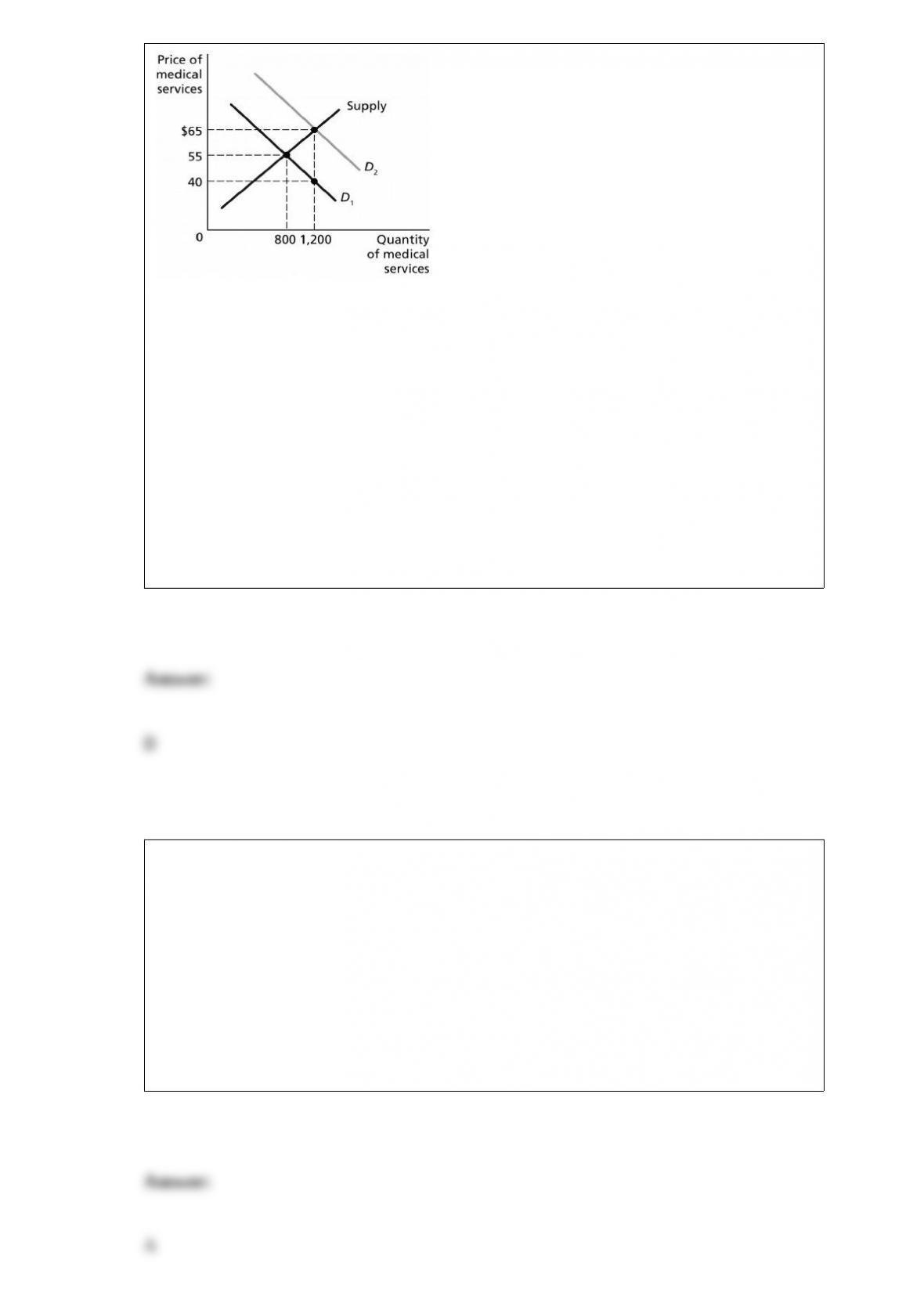
Figure 5-3 represents the market for medical services with and without insurance, and
the effect of a third-party payer system on the demand for medical services.
Refer to Figure 5-3. If consumers paid the full price of medical services, the
equilibrium quantity would be
A) 400.
B) 800.
C) 1,200.
D) >1,200.
If the economy experiences a negative supply shock, which of the following will be
true?
A) Inflation will rise, and real GDP will fall.
B) Inflation will rise, and real GDP will rise.
C) Inflation will fall, and real GDP will fall.
D) Inflation will fall, and real GDP will rise.
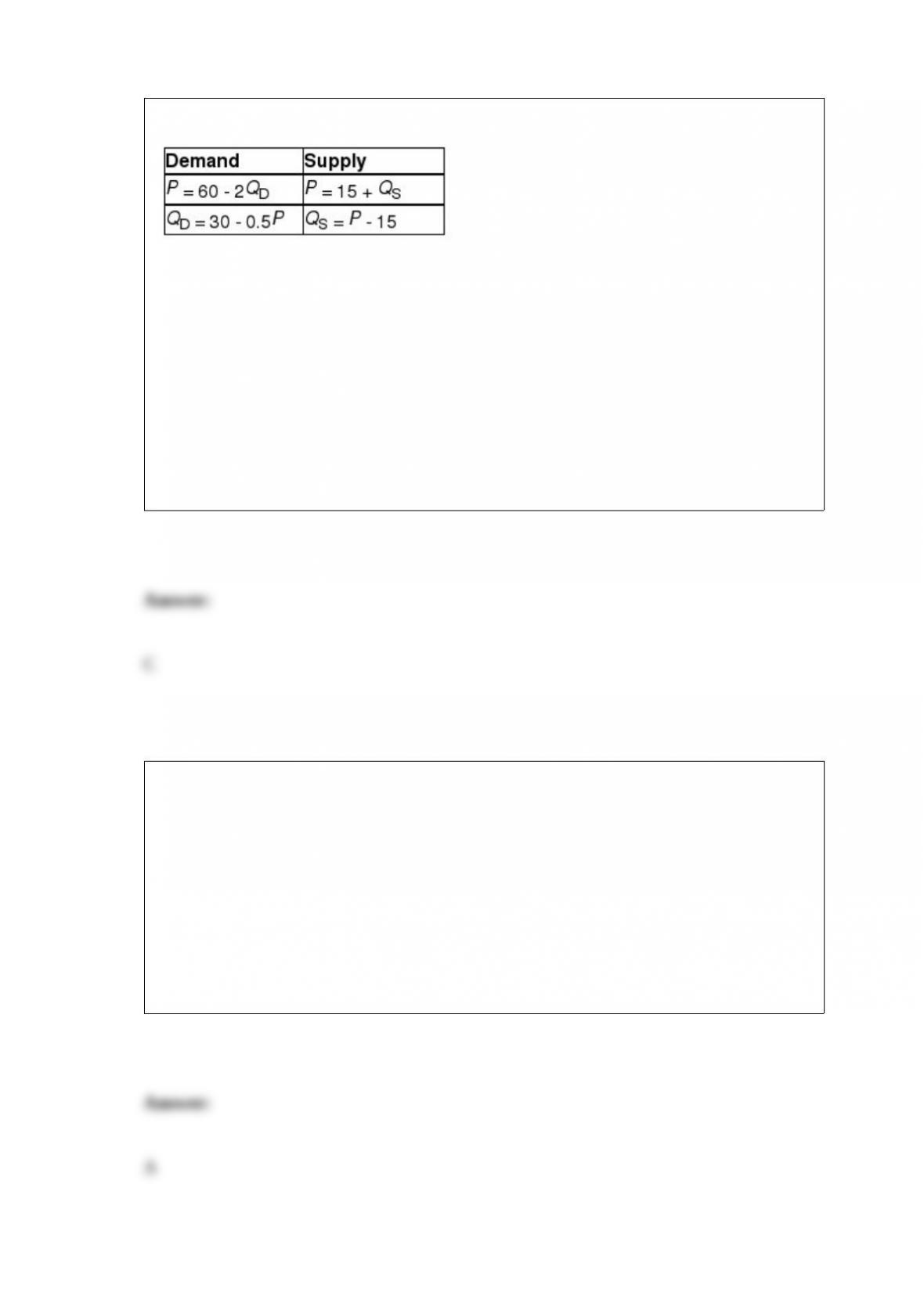
Table 4-7
Refer to Table 4-7. The equations above describe the demand and supply for Pauline’s
Pickled Pomegranates. What are the equilibrium price and quantity (in thousands) for
Pauline’s Pickled Pomegranates?
A) $60 and 20 thousand
B) $15 and 45 thousand
C) $30 and 15 thousand
D) $20 and 10 thousand
The “underground economy” refers to
A) the buying and selling of goods that is concealed from the government.
B) the production of goods and services used by the government for covert spy
operations.
C) the sector of the economy that earns profits that are higher than average.
D) the formal sector of the economy in developing countries.

John Maynard Keynes argued that if many households decide at the same time to
increase saving and reduce spending,
A) this may benefit the economy in the short run, but not in the long run.
B) the economy will benefit in the short run and benefit by an even greater amount in
the long run.
C) this will have a major negative impact on the economy in both the short run and in
the long run.
D) this may benefit the economy in the long run, but could be counterproductive in the
short run.
A Big Mac costs $4.56 in the United States and 9.2 zlotys in Poland. If the exchange
rate is 3 zlotys per dollar, purchasing power parity predicts that
A) the dollar is undervalued.
B) the dollar is overvalued.
C) the zloty is overvalued.
D) both the zloty and dollar are undervalued.
If the Federal Reserve chooses to fight high unemployment with expansionary
monetary policy and firms and consumers expect this policy to increase inflation, which
of the following would you expect to see?
A) an upward shift of the short-run Phillips curve

B) a downward shift of the short-run Phillips curve
C) a decrease in the long-run aggregate supply curve
D) Both B and C are correct answers.
Suppose that at the beginning of a loan contract, the real interest rate is 4% and
expected inflation is currently 6%. If actual inflation turns out to be 7% over the loan
contract period, then
A) borrowers gain 1% of the loan value.
B) lenders gain 1% of the loan value.
C) borrowers lose 3% of the loan value.
D) lenders gain 3% of the loan value.
The production possibilities frontier model assumes all of the following except
A) labor, capital, land and natural resources are fixed in quantity.
B) the economy produces only two products.
C) any level of the two products that the economy produces is currently possible.
D) the level of technology is fixed and unchanging.
What is the difference between a “change in demand” and a “change in quantity
demanded”?
Explain and show graphically the effect of a decrease in U.S. budget deficits that
decrease U.S. interest rates on the demand and supply of U.S. dollars for euros.
Present two arguments as to why the Fed should adopt inflation targeting as a
framework for monetary policy.
How will an increase in federal government spending without an increase in taxes affect
real GDP and the price level in the short run in a closed economy and in an open
economy?
Use the following information to draw a graph showing the short-run and long-run
Phillips curves, and be sure your graph shows the point where the short-run and
long-run Phillips curves intersect.
Natural rate of unemployment = 4 percent
Current rate of unemployment = 5 percent
Expected inflation rate = 3 percent
Current inflation rate = 2 percent
Explain how “menu costs” affect the slope of the short-run aggregate supply curve.