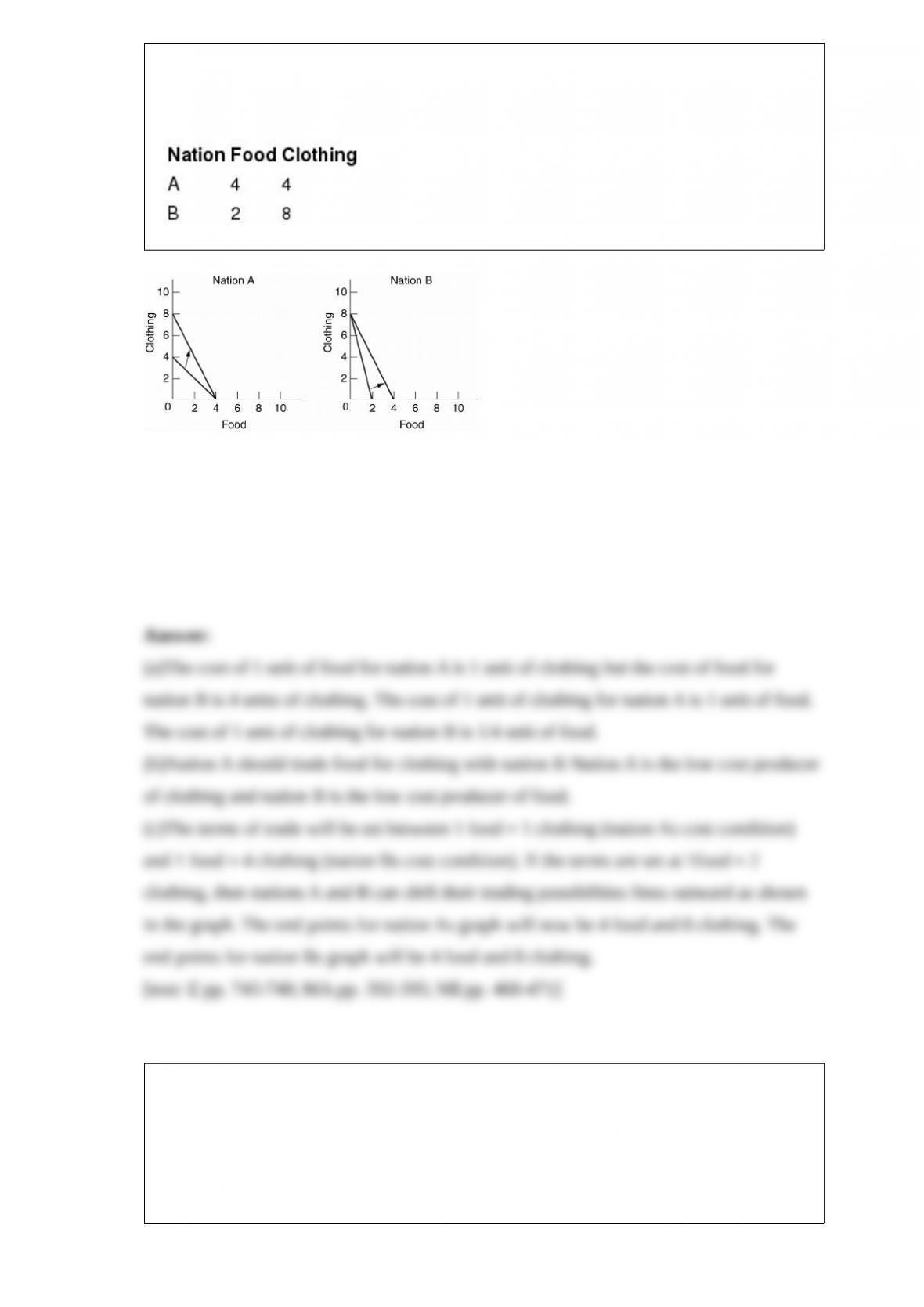
1) Use the extreme points from a production possibilities schedule below to draw two
straight line production possibilities curves for two nations, A and B using the below
graphs. Assume constant costs.
(a)What is the cost ratio for the two products?
(b)If each nation specializes according to comparative advantage, who should produce and
trade each product? Why?
(c)What will be the range for the terms of trade? If the terms are set at 1 food = 2 clothing,
show how the trading possibilities lines will change in the graph. Explain.
2) Suppose firm X implements a new method for extracting copper from copper-bearing
ore. This is an example of:
A.product innovation.
B.process innovation.
C.economics of scale.
D.the inverted-U theory.
3) a single-price monopoly is economically undesirable because, at the profit
maximizing output:
a.marginal revenue exceeds product price at all profitable levels of production.
b.monopolists always price their products on the basis of the ability of consumers to
pay rather than on costs of production.
c.mc > p.
d.society values additional units of the monopolized product more highly than it does
the alternative products those resources could otherwise produce.
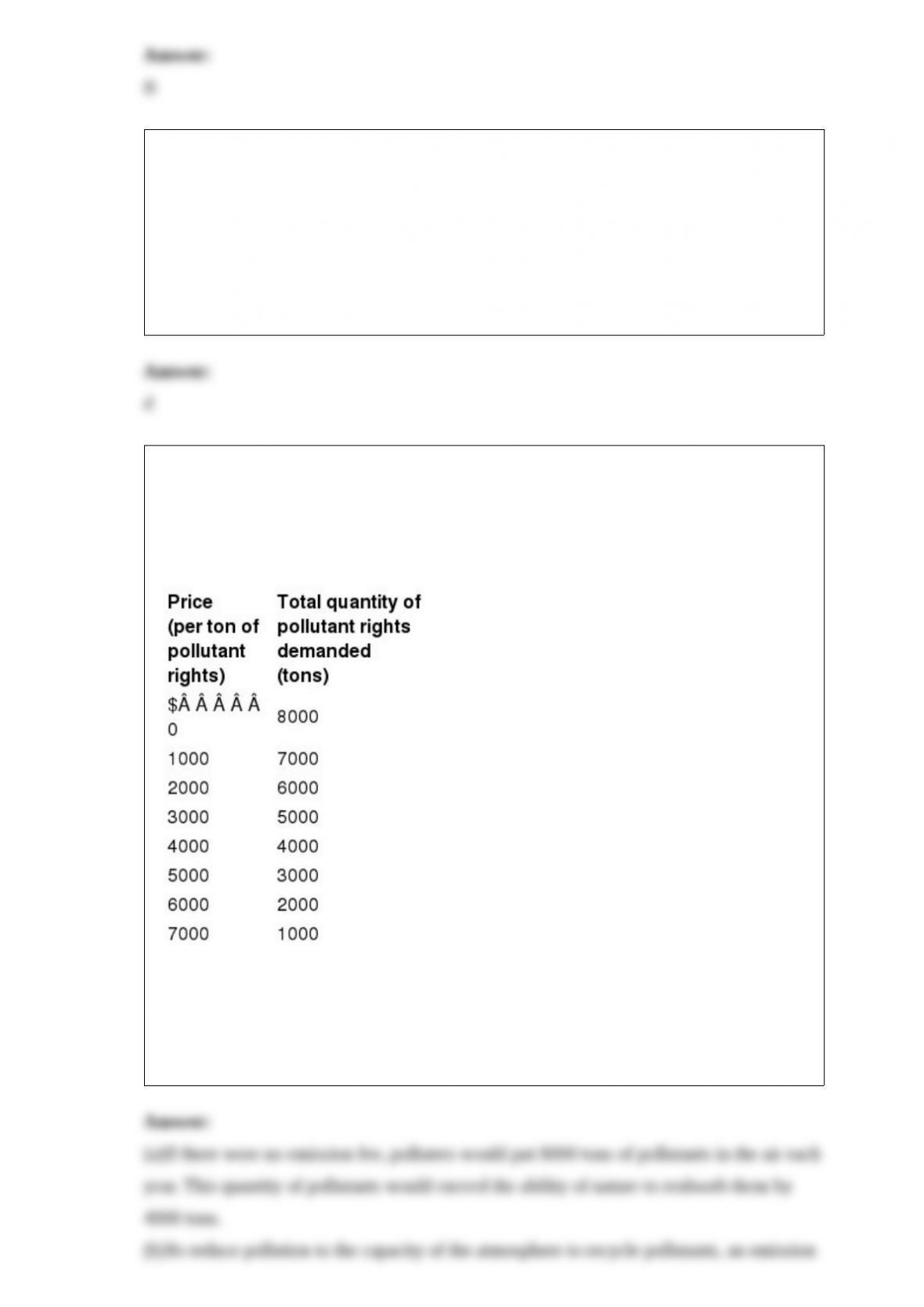
4) Assume the atmosphere of an urban area is able to reabsorb 4000 tons of pollutants
per year. The schedule below shows the price polluters would be willing to pay for the
right to dispose of 1 ton of pollutants per year and the total quantity of pollutants they
would wish to dispose of at each price.
(a)If there were no emission fee, how many tons of pollutants would there be and how
much greater would this amount be than the capacity for reabsorption?
(b)What pollution fee should the urban authorities charge to solve the problem?
(c)What would happen in this market for pollution rights if quantity demanded
increased by 1000 tons at each price?
5) economists:
a.always put the independent variable on the horizontal axis and the dependent variable
on the vertical axis.
b.always put the dependent variable on the horizontal axis and the independent variable
on the vertical axis.
c.are somewhat arbitrary in assigning independent and dependent variables to the
horizontal and vertical axes.
d.measure the slope of a line differently than do mathematicians.
6) Employers will hire more units of a resource if:
A.the price of the resource increases.
B.the productivity of the resource increases.
C.the price of the good being produced declines.
D.the price of a complementary resource rises.
7)
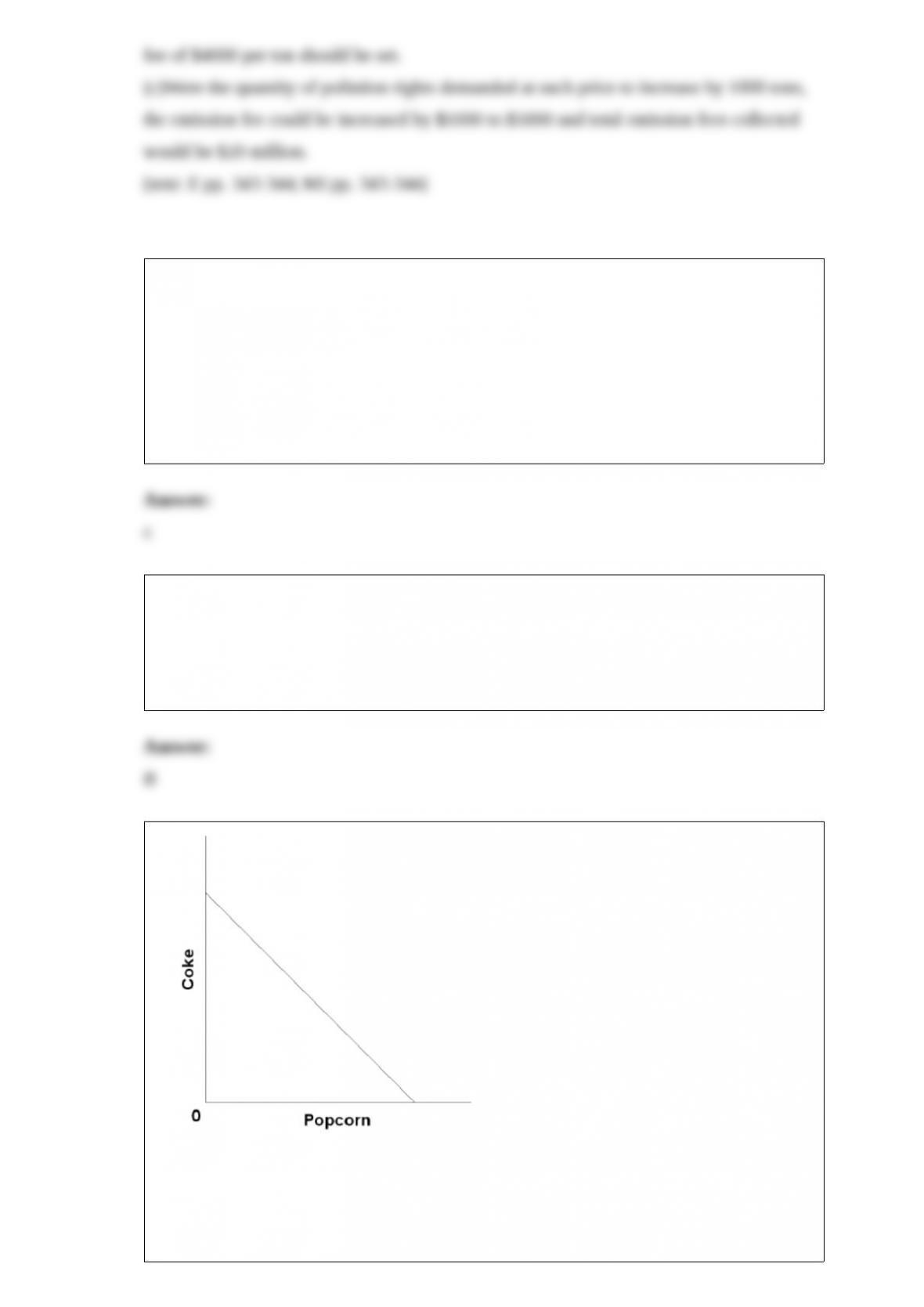
suppose elroy’s budget line is as shown on the above diagram. if his tastes change in
favor of coke and against popcorn, the budget line will:
a.become steeper.
b.become flatter.
c.shift rightward.
d.be unaffected.
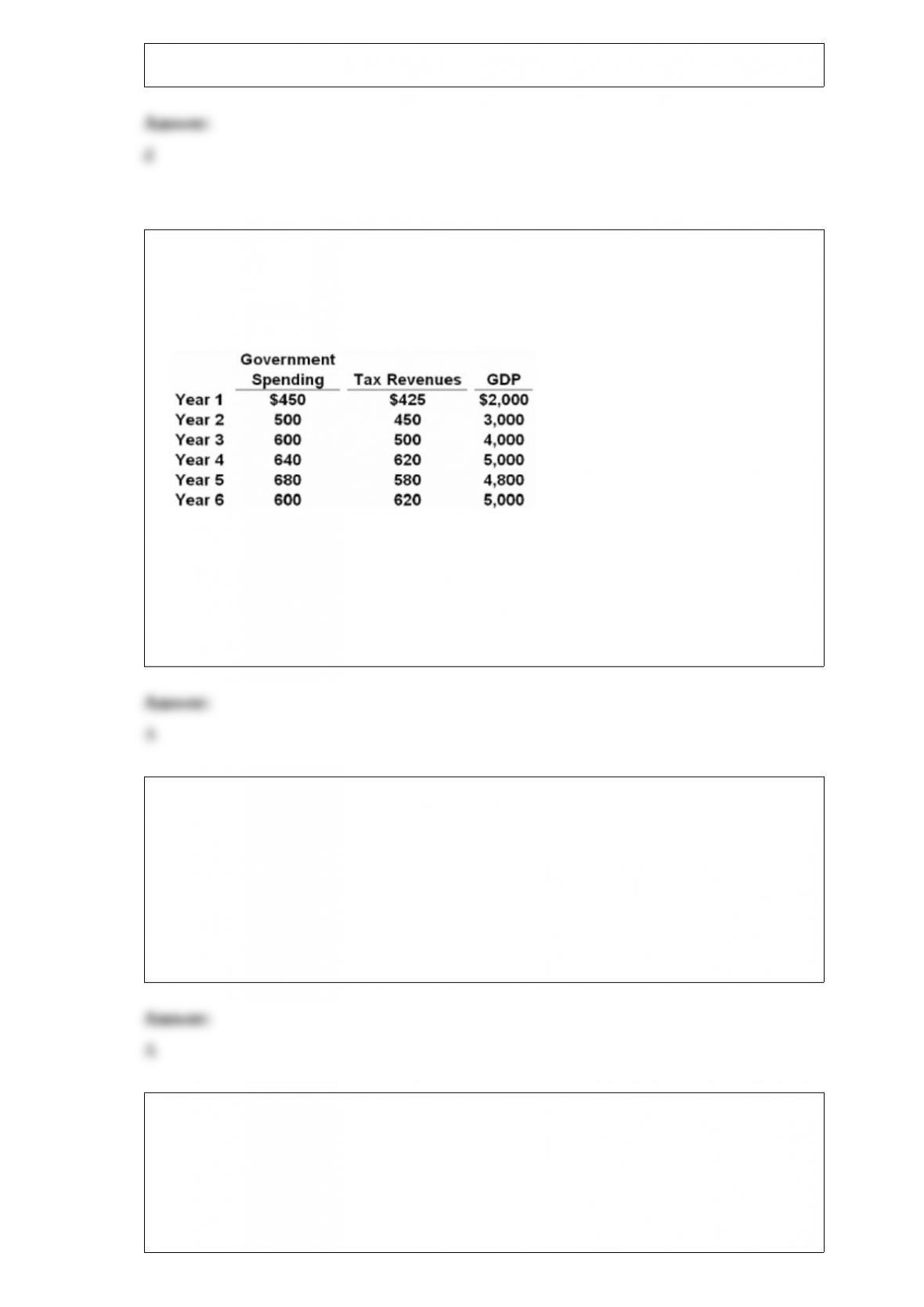
8) Answer the next question(s) using the following budget information for a
hypothetical economy. Assume that all budget surpluses are use to pay down the public
debt.
Refer to the above data. If year 1 is the first year of this nation’s existence and year 6 is
the present year, this nation’s public debt is:
A.$275 billion.
B.$100 billion.
C.$3540 billion.
D.$230 billion.
9) Suppose that government imposes a specific excise tax on product X of $2 per unit
and that the price elasticity of demand for X is unitary (coefficient = 1). If the incidence
of the tax is such that the producers of X pay $1.75 of the tax and the consumers pay
$.25, we can conclude that the:
A.supply of X is highly inelastic.
B.supply of X is highly elastic.
C.demand for X is highly inelastic.
D.demand for X is highly elastic.
10) In his Progress and Poverty, Henry George argued that:
A.poverty is associated with the personal characteristics of individuals and therefore
cannot be remedied by government antipoverty programs.
B.economic rent could be heavily taxed without impairing the supply of land or
therefore the productive capacity of the economy.
C.rents should not be taxed because rental income is the basic source of saving, which
ultimately permits a high level of investment and economic growth.
D.taxes on rents are undesirable because they have a severe disincentive effect on
landlords.
11)
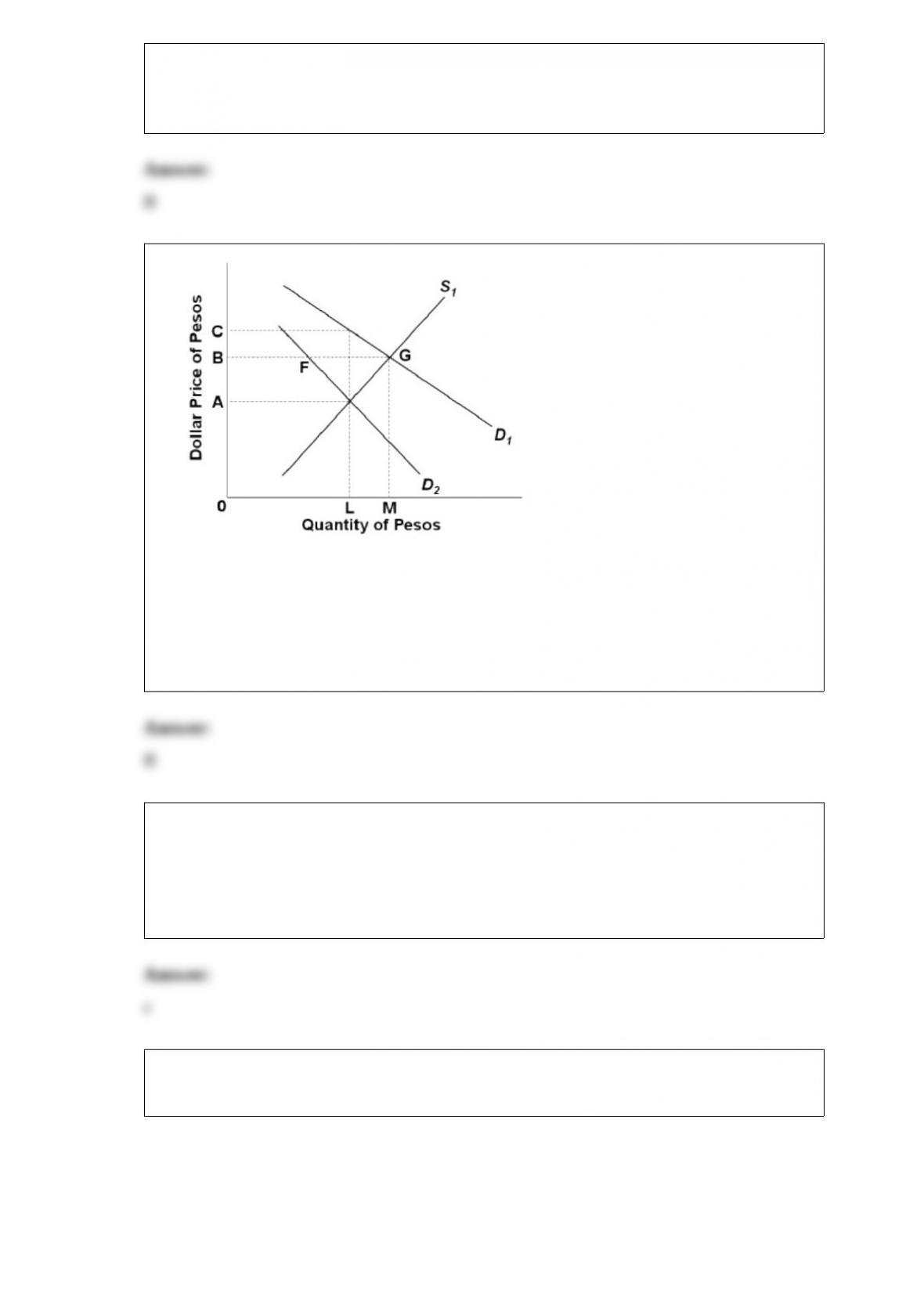
Refer to the above diagram. The initial demand for and supply of pesos are shown by
D1 and S1. The exchange rate will be:
A.M dollars for one peso.
B.1/B pesos for one dollar.
C.A dollars for one peso.
D.C dollars for one peso.
12) as output increases, total variable cost:
a.increases more rapidly than does total cost.
b.increases continuously at a decreasing rate.
c.increases at a decreasing rate and then at an increasing rate.
d.increases at a constant rate.
13) the following data confronting a firm:
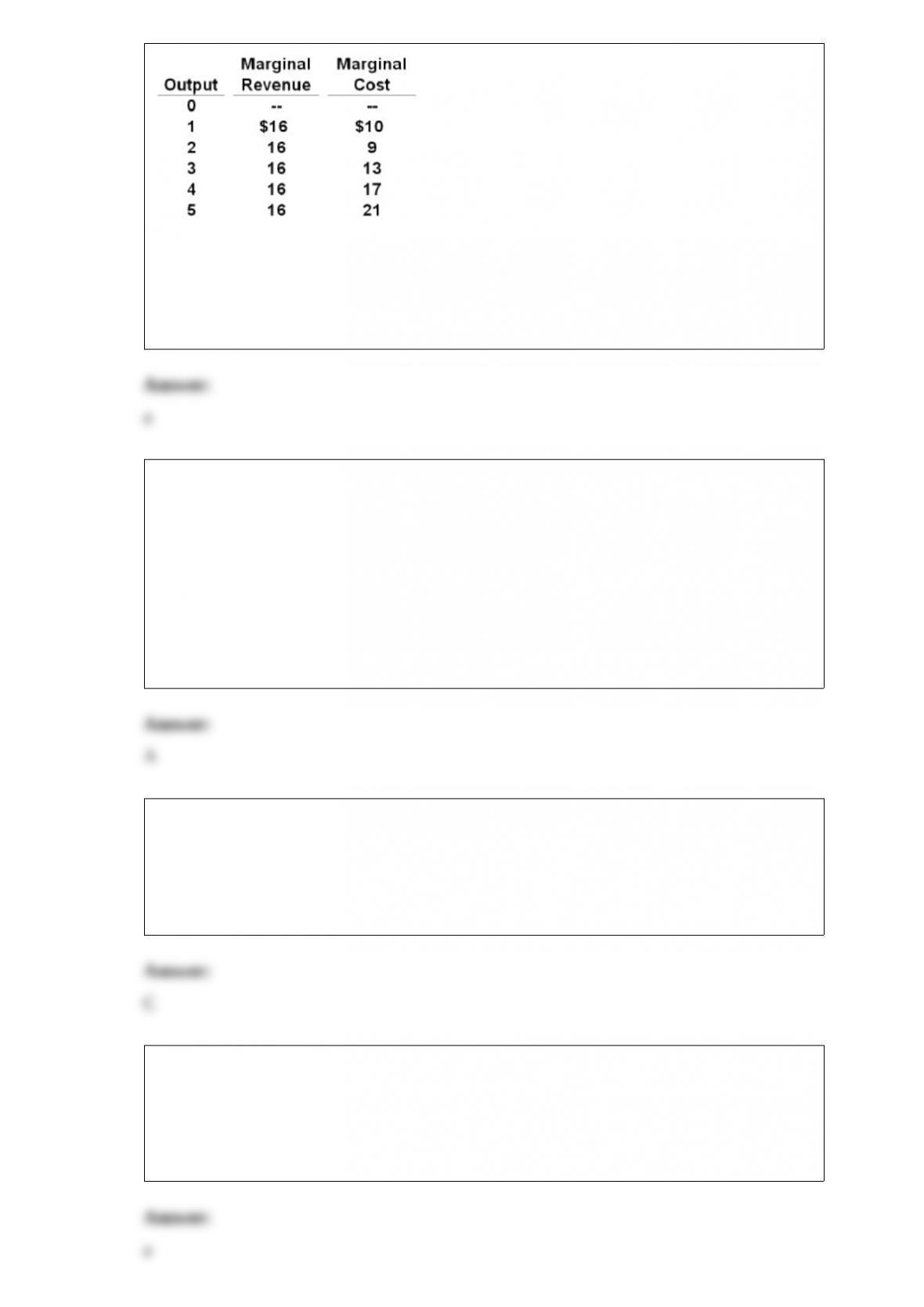
refer to the above data. at the profit-maximizing output the firm’s total revenue is:
a.$48.
b.$32.
c.$80.
d.$64.
14) The traditional monetary rule is the idea that:
A.the annual rate of increase in the money supply should be equal to the potential
annual growth rate of real GDP.
B.the annual rate of increase in the money supply should be equal to the long-term
increase in the price level.
C.an expansionary fiscal policy should always be accompanied by an easy monetary
policy.
D.monetary policy only affects the economy 6 to 9 months after the money supply is
changed.
15) The public debt is the amount of money that:
A.state and local governments owe to the Federal government.
B.Americans owe to foreigners.
C.the Federal government owes to holders of U.S. securities.
D.the Federal government owes to taxpayers.
16) an example of a quasi-public good is:
a.public higher education.
b.an automobile.
c.a dvd player.
d.national defense.