
On a diagram of a production possibility frontier, economic growth is represented by
the slope of the production possibility frontier.
Answer:
The Coase Theorem asserts that government intervention is a prerequisite for
addressing externality problems.
Answer:
Optimal decisions are made at the point where marginal benefit is maximized.
Answer:
All renters benefit from rent control and all landlords lose.
Answer:

The Fed has adopted an interest rate target for most of the time since World War II.
Answer:
Seth’s grandmother gave him a $50 savings bond for his birthday. The bond pays $50 at
maturity, which is in five years. If the interest rate is 5%, the bond has a present value
of $43.19.
Answer:
An adverse supply shock causes the short-run aggregate supply curve to shift left,
increasing the price level.
Answer:
The branch of economics which studies the behavior of entire economies and policies
that affect the economy as a whole is called
A) public economics.
B) microeconomics.
C) macroeconomics.
D) normative economics.
Answer:
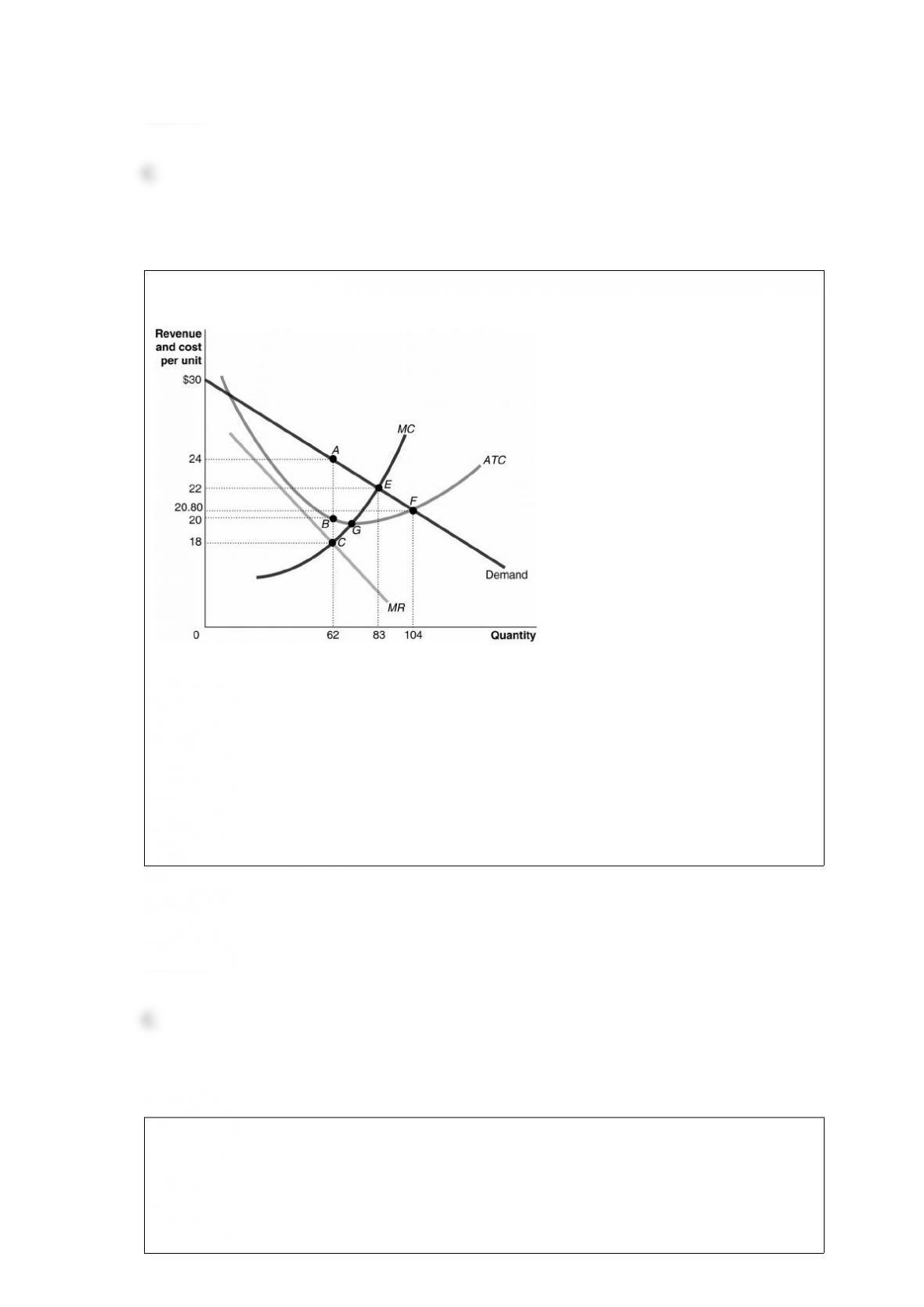
Figure 15-6
Figure 15-6 shows the cost and
demand curves for a monopolist. The monopolist earns a profit of
A) $0.
B) $170.
C) $248.
D) $372.
Answer:
The more excess reserves banks choose to keep,
A) the larger the deposit multiplier.
B) the smaller the deposit multiplier.
C) the higher the required reserve ratio.
D) the lower the required reserve ratio.
Answer:
A decrease in capital outflows from the United States will
A) decrease the balance on the financial account.
B) increase the balance on the financial account.
C) increase the balance on the capital account.
D) decrease the balance on the current account.
Answer:
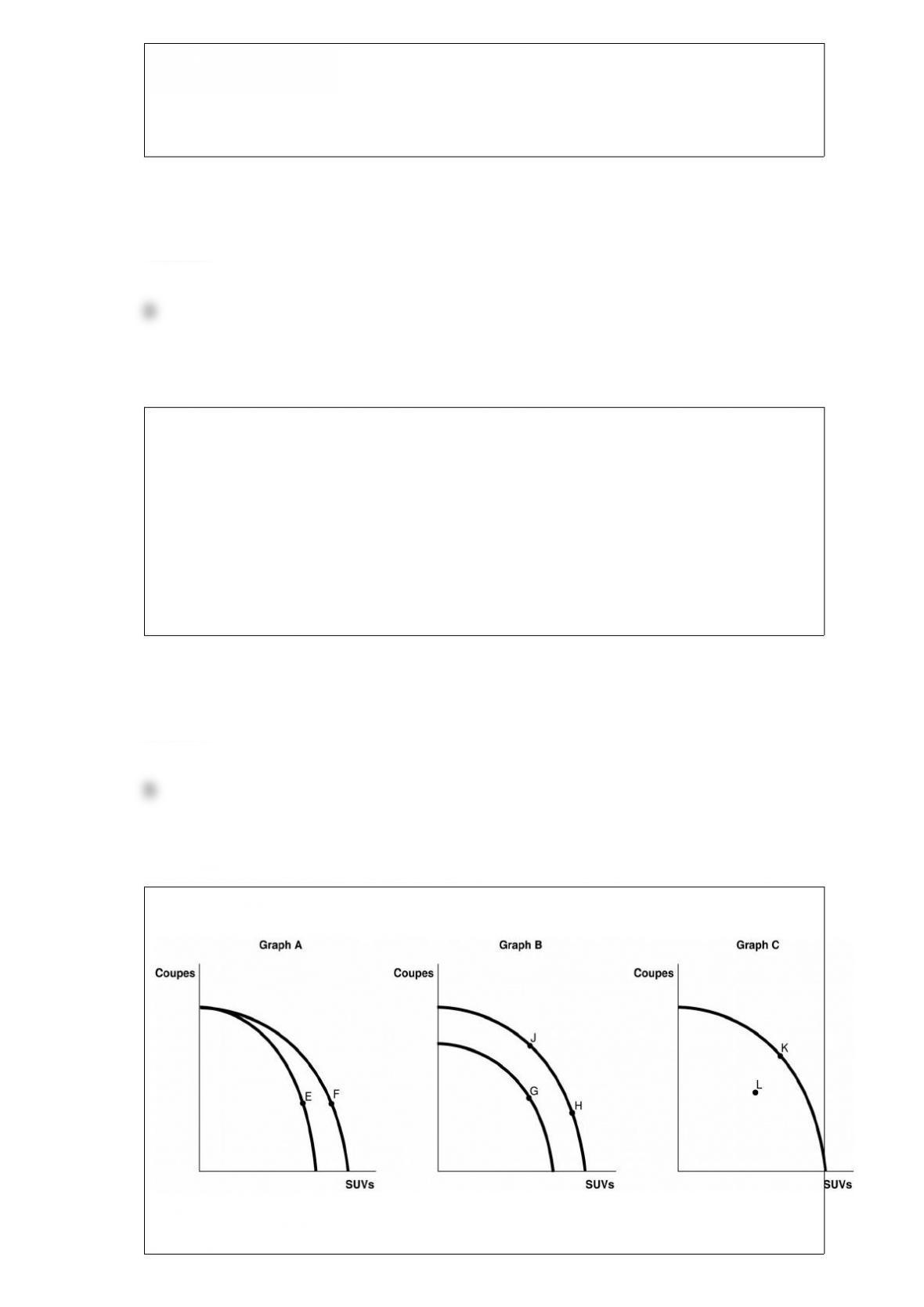
Figure 2-7
Mercedes Benz produces a full line of luxury automobiles, including coupes, sedans,
and SUVs, at a variety of manufacturing plants across the globe. Assume Mercedes

Benz produces both coupes and SUVs at its Tuscaloosa, Alabama factory. Figure 2-7
shows changes to its production possibilities frontier in response to new developments
and different strategic production decisions at this factory.
In response to changing consumer demands, Mercedes-Benz cuts back on the
production of SUVs and increases its production of coupes. This strategy is best
represented by
A) movement from E to F in Graph A.
B) movement from G to H in Graph B.
C) movement from K to L in Graph C.
D) movement from H to J in Graph B.
Answer:
Growth in labor productivity in health care has been ________ labor productivity in the
economy as a whole.
A) approximately equal to
B) slightly faster than
C) almost twice as fast as
D) less than half as fast as
Answer:
For-profit producers will produce only private goods because
A) markets exist for private goods but not for public goods.

B) the cost of production can be easily determined.
C) buyers will be willing to pay for the goods since the benefits are excludable.
D) all external benefits can be internalized using market prices.
Answer:
Article Summary. In what is being called a “bail-in,” the finance ministers of the
17-nation Eurozone agreed to step in to assist the banking system in the nation of
Cyprus. With this arrangement, the banks receive an infusion of capital, but
depositors are being changed a special bank levy of up to 10% on deposit accounts.
Like in the United States, Cyprus does have deposit insurance which guarantees
deposits up to a certain level, but the size of the debt owed by the Cypriot banks
was so large that agreeing to the special bank levy and ignoring the deposit
insurance seemed necessary to get support from the European Union. Some
analysts have also stated that the levy may have been needed to prevent bank runs
on foreign-owned accounts, which have been estimated to make up one-third of the
total deposits in Cypriot banks. Source: Megan McArdle, “After Cyprus Bank
Bailout, Depositors Race to Withdraw Their Cash. Is the Rest of Europe Next?”
Daily Beast, March 17, 2013.
In 2013, the European Union agreed to essentially bail out the banks in the nation of
Cyprus, but in doing so also included what is being called a special bank levy which
was changed to bank depositors. This levy may have been needed to prevent bank runs,
which are situations in which
A) a majority of the shareholders in a bank decide to sell off all their shares of stock.
B) many depositors simultaneously decide to withdraw money from a bank.
C) a majority of the bank’s loans go into default all at once.
D) a bank stops paying interest on all of its interest-bearing accounts.
Answer:
Cassie’s Quilts alters, reconstructs and restores heirloom quilts. Cassie has just spent
$800 purchasing, cleaning and reconstructing an antique quilt which she expects to sell
for $1,500 once she is finished. After having spent $800, Cassie discovers that she
would need some special period fabric that would cost her $200 in material and time in
order to complete the task. Alternatively, she can sell the quilt “as is” now for $900.
What is the marginal cost of completing the task?
A) $200
B) $500
C) $1,000
D) $1,000 plus the value of her time
Answer:
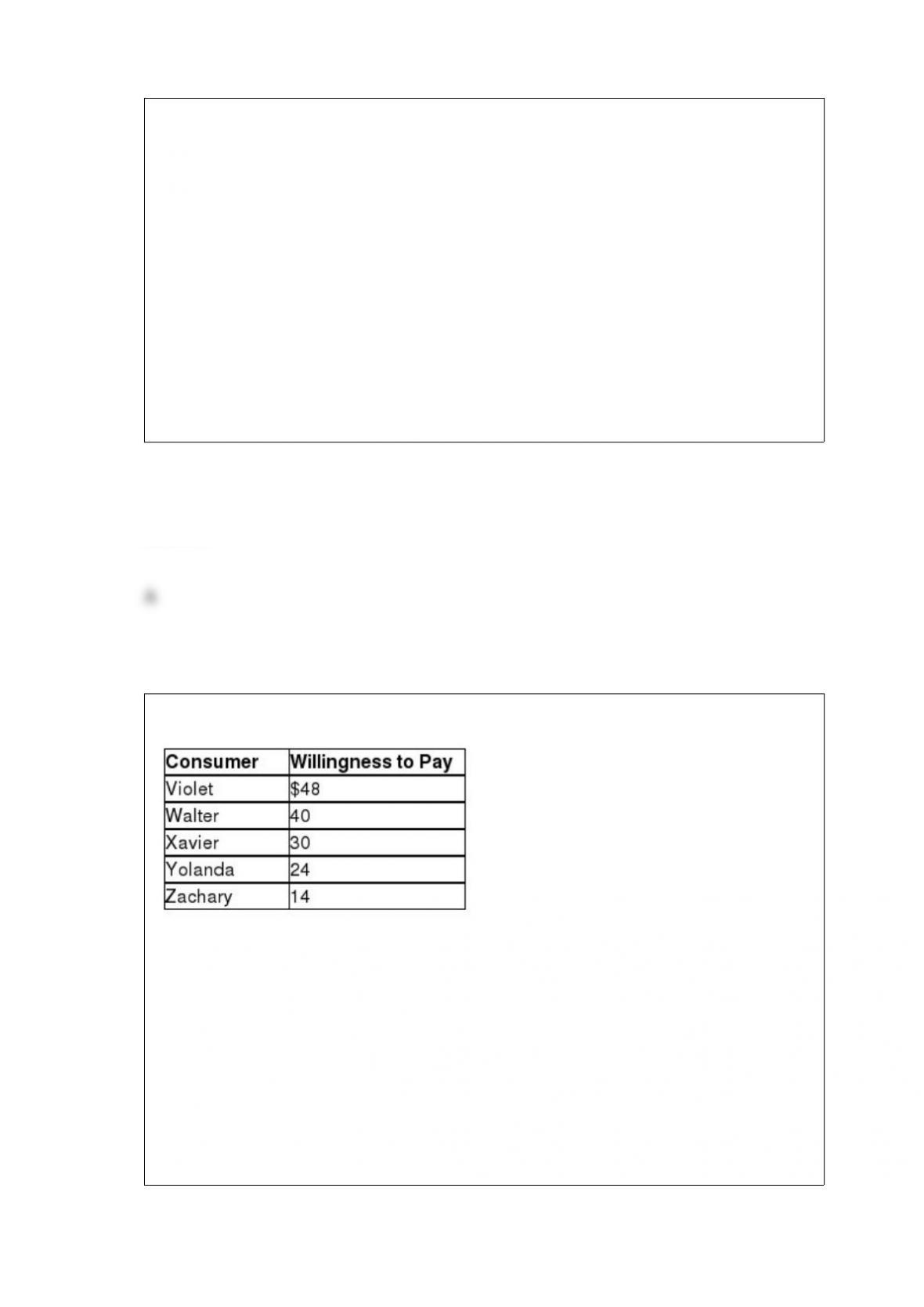
Table 4-5
The table above lists the highest prices five consumers are willing to pay for a concert
ticket. If the price of one ticket rises from $20 to $38,
A) only three tickets will be sold.
B) consumer surplus decreases from $62 to $12.
C) consumer surplus increases from $88 to $142.
D) no one will buy a ticket.

Answer:
How would the elimination of a sales tax affect the market for a product that had been
subject to the tax?
A) The demand for the product would rise and the equilibrium price would fall by the
amount of the tax.
B) The equilibrium price for the product would fall by less than the amount of the tax.
C) The reduction in government revenue from the tax would be made up by an increase
in property taxes.
D) The supply of the product would become more elastic.
Answer:
Gertrude Stork’s Chocolate Shoppe normally employs 4 workers. When the Chocolate
Shoppe hired a 5th worker the Shoppe’s total output decreased. Therefore,
A) the marginal product of the 5th worker is negative.
B) the total output of Gertrude Stork’s Chocolate Shoppe is negative.
C) the average product of the 5th worker is negative.
D) the 5th worker should be hired only if he is willing to accept a wage lower than the
wage paid to the other 4 workers.
Answer:

The purchase or building by a corporation of a facility in a foreign country is called
A) foreign direct investment.
B) foreign portfolio investment.
C) foreign capital depreciation.
D) globally-directed investment.
Answer:
For the recessions in the United States since the 1950s,
A) inflation has been nonexistent.
B) the inflation rate rises on average by about 2.5 percentage points 12 months after a
recession begins.
C) the inflation rate falls on average by about 2.5 percentage points 12 months after a
recession begins.
D) deflation occurs.
Answer:
Which of the following statements is true?
A) The marginal revenue of a monopolistically competitive firm will be positive at high
prices and negative at low prices.
B) Because the demand curve for a monopolistically competitive firm is
downward-sloping its marginal revenue will be negative.
C) The marginal revenue of a monopolistically competitive firm will be always be
positive.
D) The marginal revenue of a monopolistically competitive firm will be positive at low
prices and negative at high prices.
Answer:
A permanent tax cut would likely ________ consumption spending ________ than
would a tax rebate like the one issued in 2008.
A) increase; more
B) increase; less
C) decrease; more
D) decrease; less
Answer:
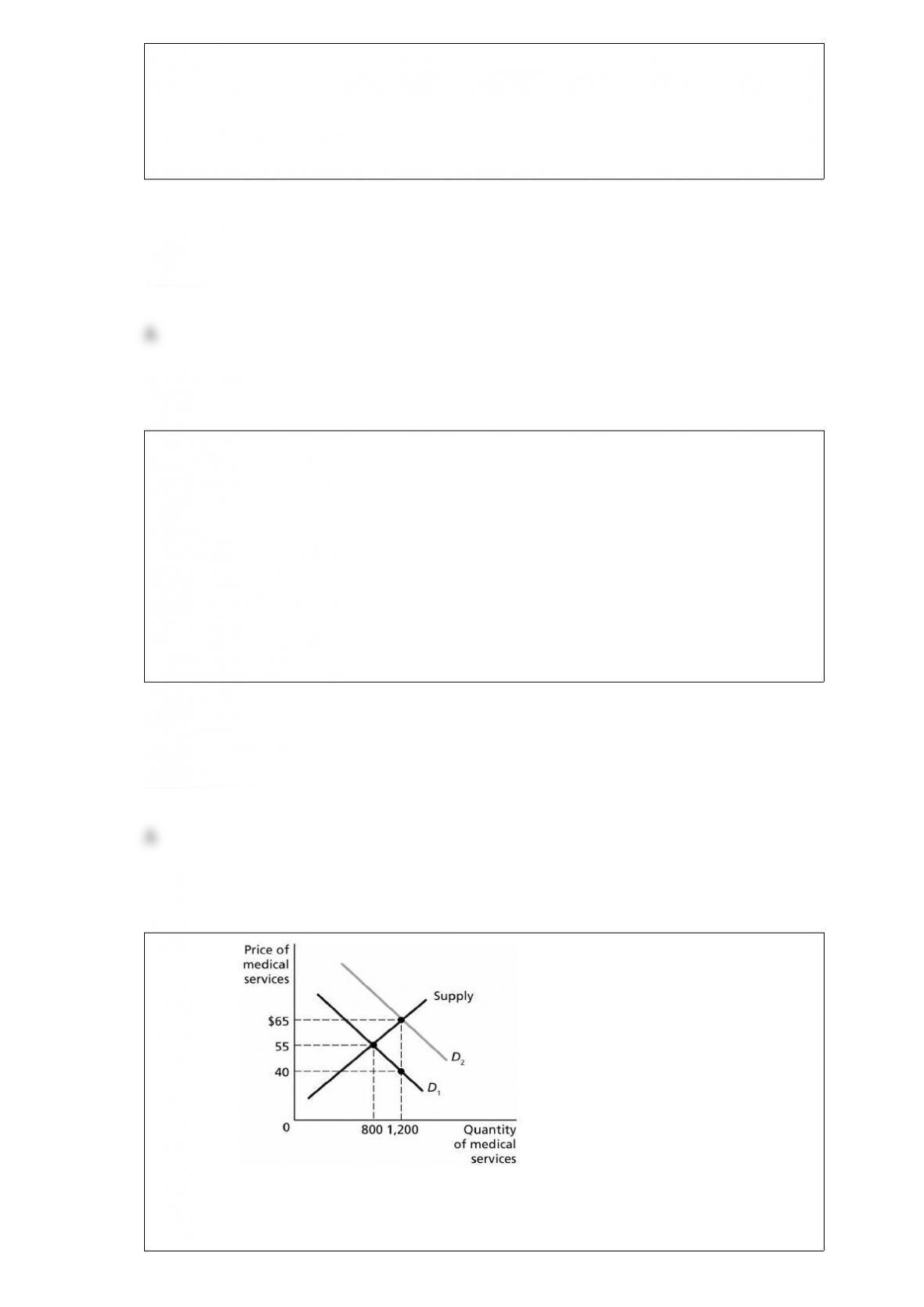
Figure 7-5 Figure 7-5 represents the market for
medical services with and without insurance, and the effect of a third-party payer
system on the demand for medical services. With insurance and a third-party payer
system, what price do consumers pay for medical services?
A) $40
B) $55
C) $65
D) >$65
Answer:
The health care system in ________ is referred to as a universal health insurance
system, under which every resident is required to enroll in either a private or the
government-provided health insurance program.
A) Canada
B) Japan
C) the United Kingdom
D) the United States
Answer:
Table 2-8
Table 2-8 shows the output per month of two people, Wilma and Betty. They can either
devote their time to making marble statues or making marble benches.
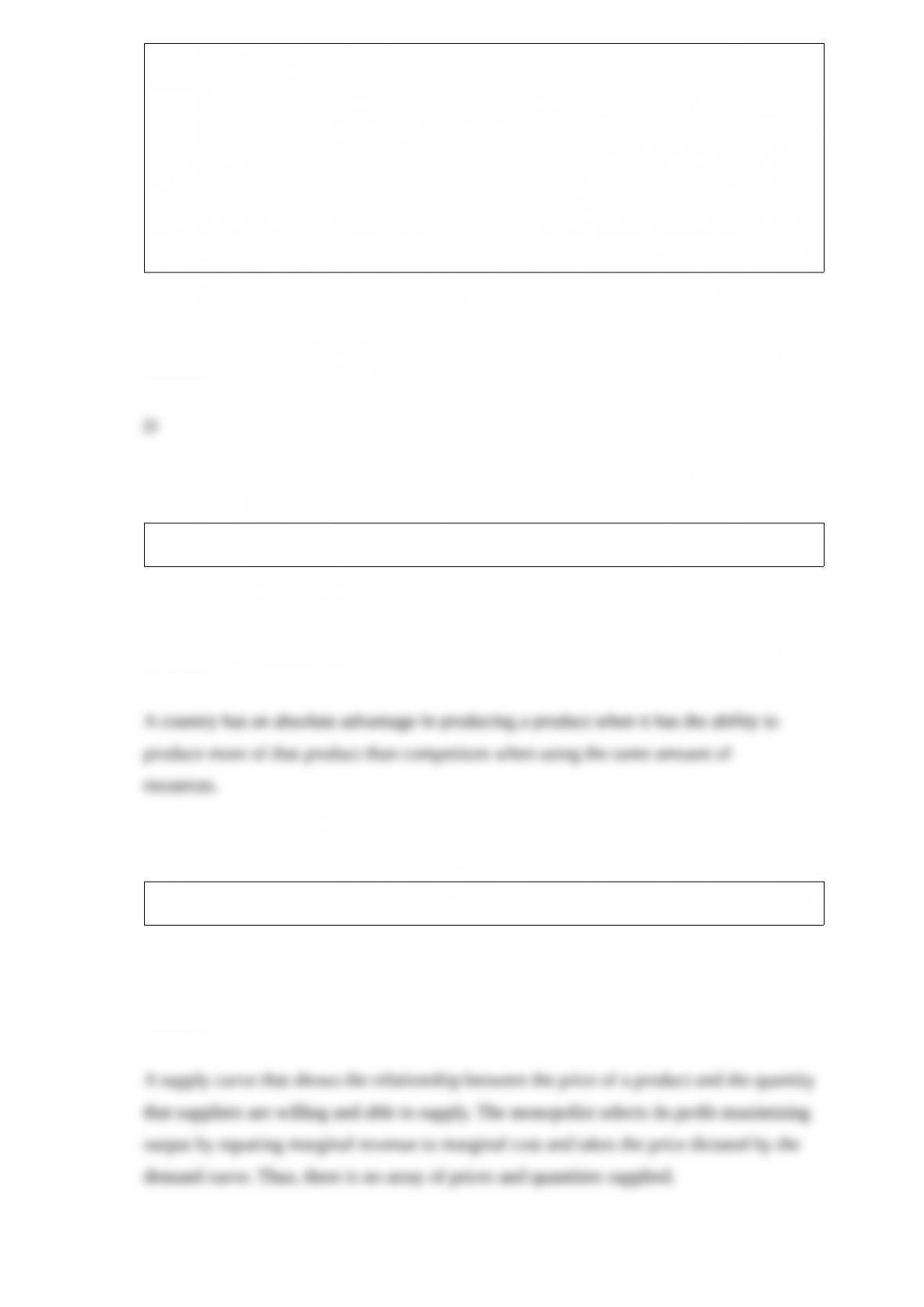
Which of the following statements istrue?
A) Wilma has a comparative advantage in making both products.
B) Betty has a comparative advantage in making both products.
C) Betty has a comparative advantage in making statues and Wilma in making benches.
D) Betty has a comparative advantage in making benches and Fred in making statues.
Answer:
What does it mean for a country to have an absolute advantage in producing a product?
Answer:
Explain why the monopolist has no supply curve?
Answer:
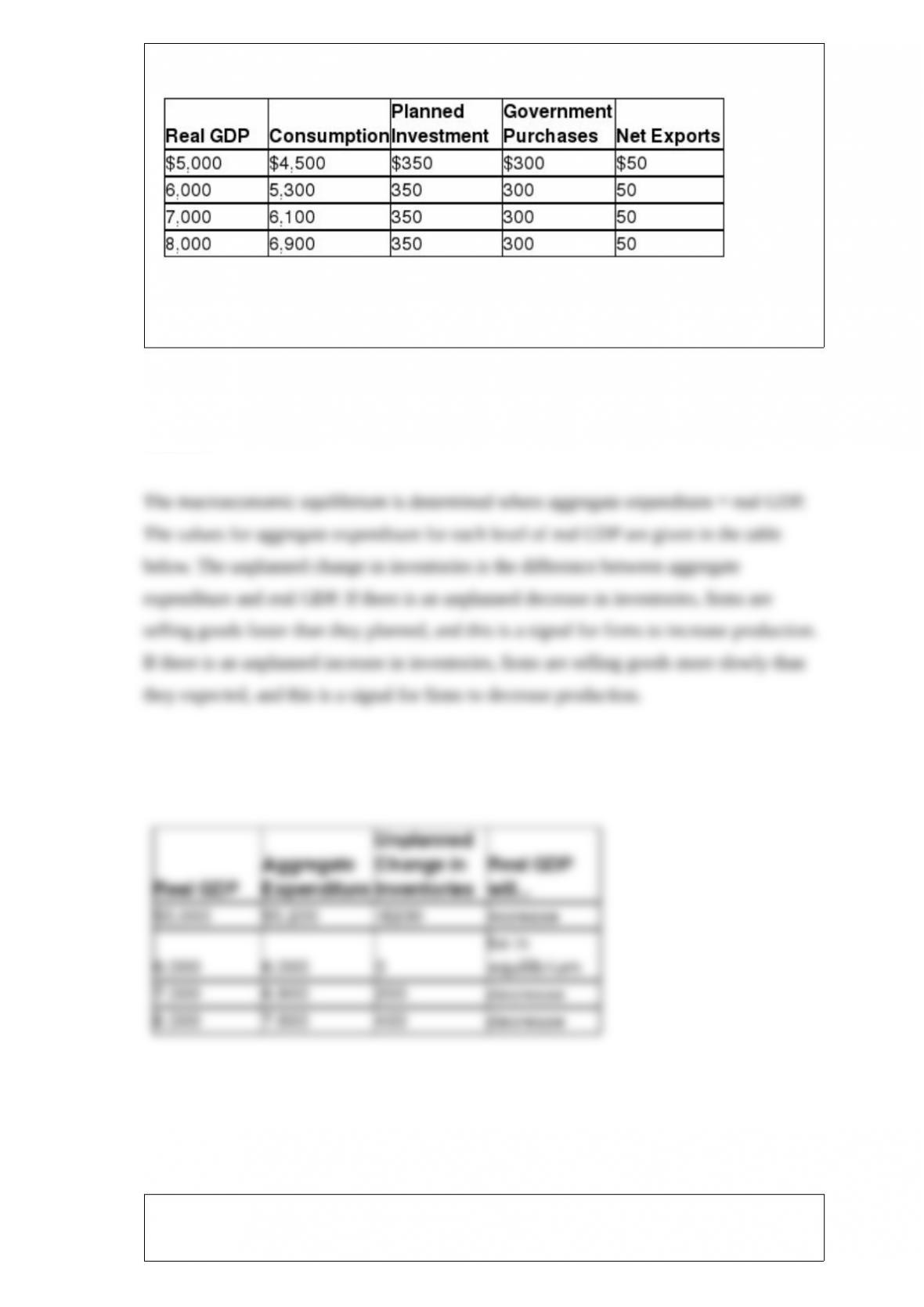
Table 23-11
Using the table above, calculate the unplanned change in inventories for each level of
GDP, and explain what will happen to GDP.
Answer:
What is the Difference between a market equilibrium and a competitive market
equilibrium?
Answer:
What is the natural rate of unemployment, and what types of unemployment constitute
the natural rate of unemployment?
Answer:
What is a banking panic, and what role did banking panics play in the decision by
Congress to establish the Federal Reserve?
Answer:
What is deadweight loss? When is deadweight loss equal to zero?

Answer:
What is the marginal product of labor and what is the average product of labor.
Answer:
How can improvements in health increase a country’s total income?
Answer: