
1) the trade model of the swedish economists heckscher and ohlin maintains that:
a.absolute advantage determines the distribution of the gains from trade
b.comparative advantage determines the distribution of the gains from trade
c.the division of labor is limited by the size of the world market
d.a country exports goods for which its resource endowments are most suited
2) concerning the covering of exchange market risks–assuming that a depreciation of
the domestic currency is anticipated, one can say that there is an incentive for:
a.exporters to rush to cover their future needs
b.importers to rush to cover their future needs
c.both exporters and importers to rush to cover their future needs
d.neither exporters nor importers to rush to cover their future needs
3) concerning the price elasticities of supply and demand for commodities, empirical
estimates suggest that most commodities have:
a.inelastic supply schedules and inelastic demand schedules
b.inelastic supply schedules and elastic demand schedules
c.elastic supply schedules and inelastic demand schedules
d.elastic supply schedules and elastic demand schedules
4) multinational enterprises face problems since they:
a.cannot benefit from the advantages of comparative advantage
b.may raise political problems in countries where their subsidiaries operate
c.can invest only at home, but not overseas
d.can invest only overseas, but not at home
5) although free trade provides benefits for consumers, it is often argued that import
protection should be provided to domestic producers of strategic goods and materials
vital to the nation’s security.
a.true
b.false
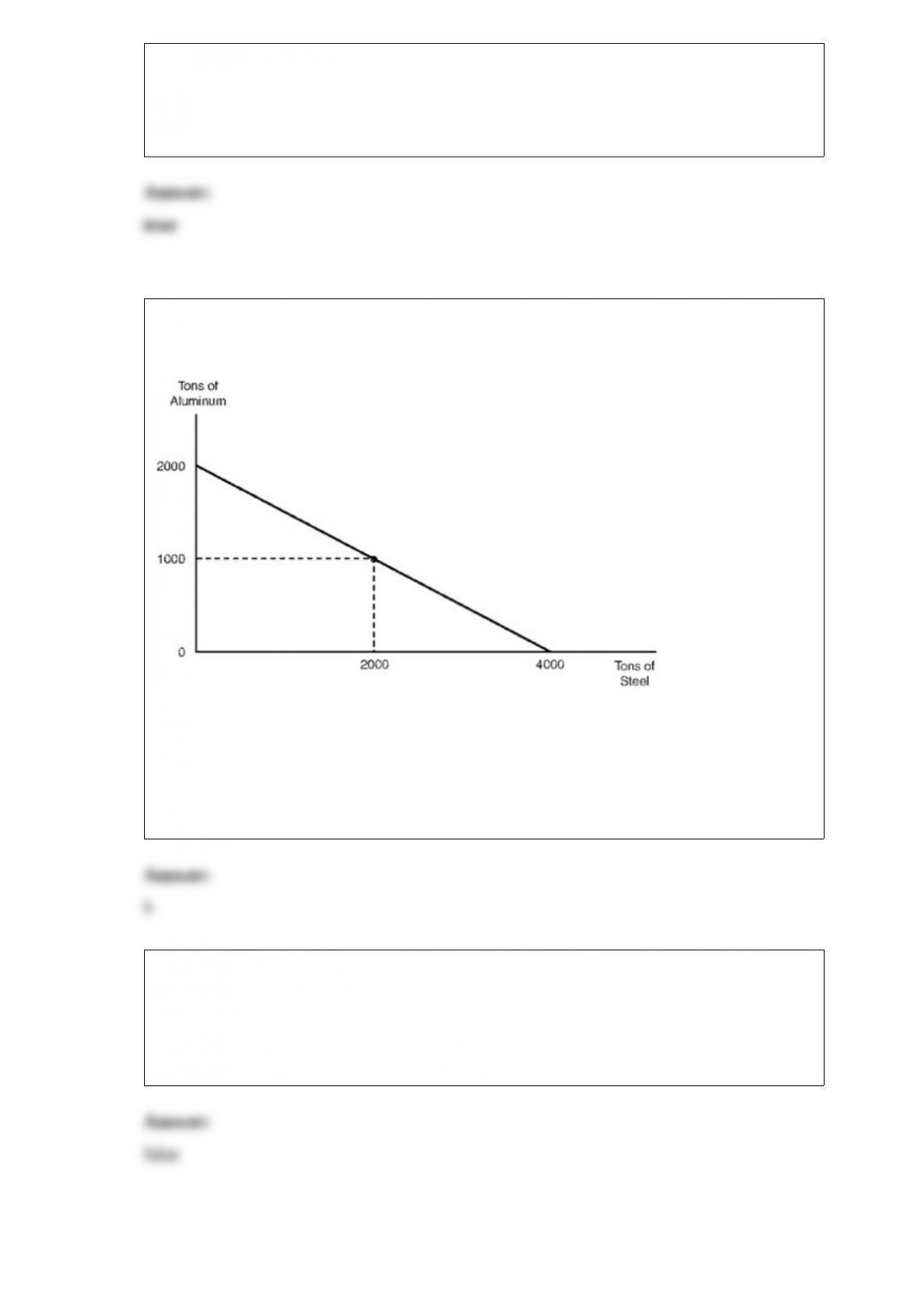
6) figure 2.1. production possibilities schedule
refer to figure 2.1. if the relative cost of aluminum were to rise, then the production
possibilities schedule would:
a.become steeper
b.become flatter
c.shift inward in a parallel manner
d.shift outward in a parallel manner
7) under the government procurement policy of the world trade organization,
federal-state-local governments are prevented from discriminating in favor of the
products of domestic suppliers on contracts valued at $1 million and more.
a.true
b.false

8) economic interdependence occurs through
a.trade
b.labor migratin
c.capital flows
d.all of these
9) with floating exchange rates, countries require sizable amounts of international
reserves for the stabilization of exchange rates.
a.true
b.false
10) under a debt-for-debt swap, a commercial bank sells its loans at a discount to a
developing country government for local currency which it then uses to finance an
equity investment in the debtor country.
a.true
b.false
11) the u.s.-japaneses agreement in 1981 to limit imports of small japanese cars to the
u.s.
a.affected japanese automakers uniformly
b.resulted in losses to the japanese auto industry
c.cost the u.s.consumer an extra $660 or so per japanese import purchased
d.did not save any u.s. jobs
12) if we consider the interests of both consumers and producers, then a policy of tariff
reduction in the u.s. auto industry is:
a.in the interest of the united states as a whole, but not in the interest of auto-producing
states
b.in the interest of the united states as a whole, and in the interest of auto-producing
states
c.not in the interest of the united states as a whole, nor in the interest of auto-producing

states
d.not in the interest of the united states as a whole, but is in the interest of
auto-producing states
13) all of the following are important long-run determinants of exchange rates except
a.consumer tastes
b.trade policy
c.labor productivity
d.interest rates
14) regarding the benefits of regional trade agreements, which of the following is not a
benefit?
a.regional trade agreements may help manage immigration flows
b.regional trade agreements promote regional security
c.regional trade agreements may help lock in policy shifts towards market oriented
reform
d.regional trade agreements may promote democracy
15) in 1974 the united states revoked a 41-year ban on u.s. citizen’s ownership of gold.
a.true
b.false
16) given a system of floating exchange rates, an expansionary monetary policy by the
federal reserve will cause
a.the dollar to appreciate and will decrease u.s. net exports
b.the dollar to appreciate and will increase u.s. net exports
c.the dollar to depreciate and will increase u.s. net exports

d.the dollar to depreciate and will decrease u.s. net exports
17) which trade theory is tantamount to a short-run version of the factor price
equalization theory?
a.specific factors theory
b.product life cycle theory
c.economies of scale theory
d.overlapping demand theory
18) within a customs union, broader markets may also promote greater competition
among producers.
a.true
b.false