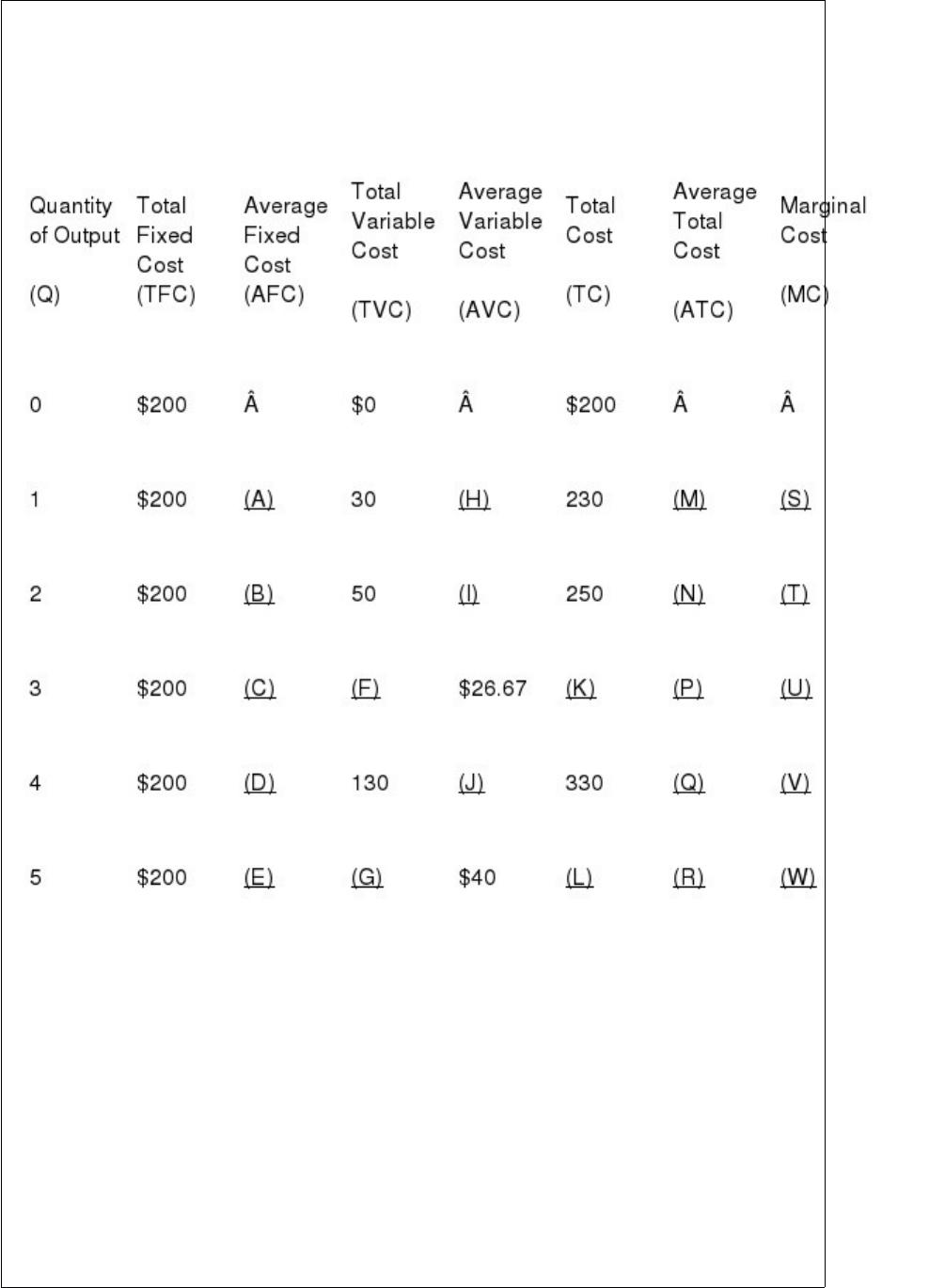
Exhibit 22-13
What dollar amounts go in blanks (M) and (N), respectively?
a. $200; $125
b. $120; $150
c. $230; $125
d. $150; $300
e. There is not enough information to answer this question.
The nominal interest rate is the
a. interest rate in current dollars, unadjusted for expected inflation.
b. real interest rate minus the expected inflation rate.
c. interest rate determined in the loanable funds market.
d. a and c
e. all of the above
Which of the following statements is false?
a. Asymmetric information can exist both before and after a transaction.
b. Moral hazard occurs when one party to a transaction changes his or her behavior in a
way that is hidden from and costly to the other party.
c. Adverse selection has the potential to eliminate some markets.
d. none of the above
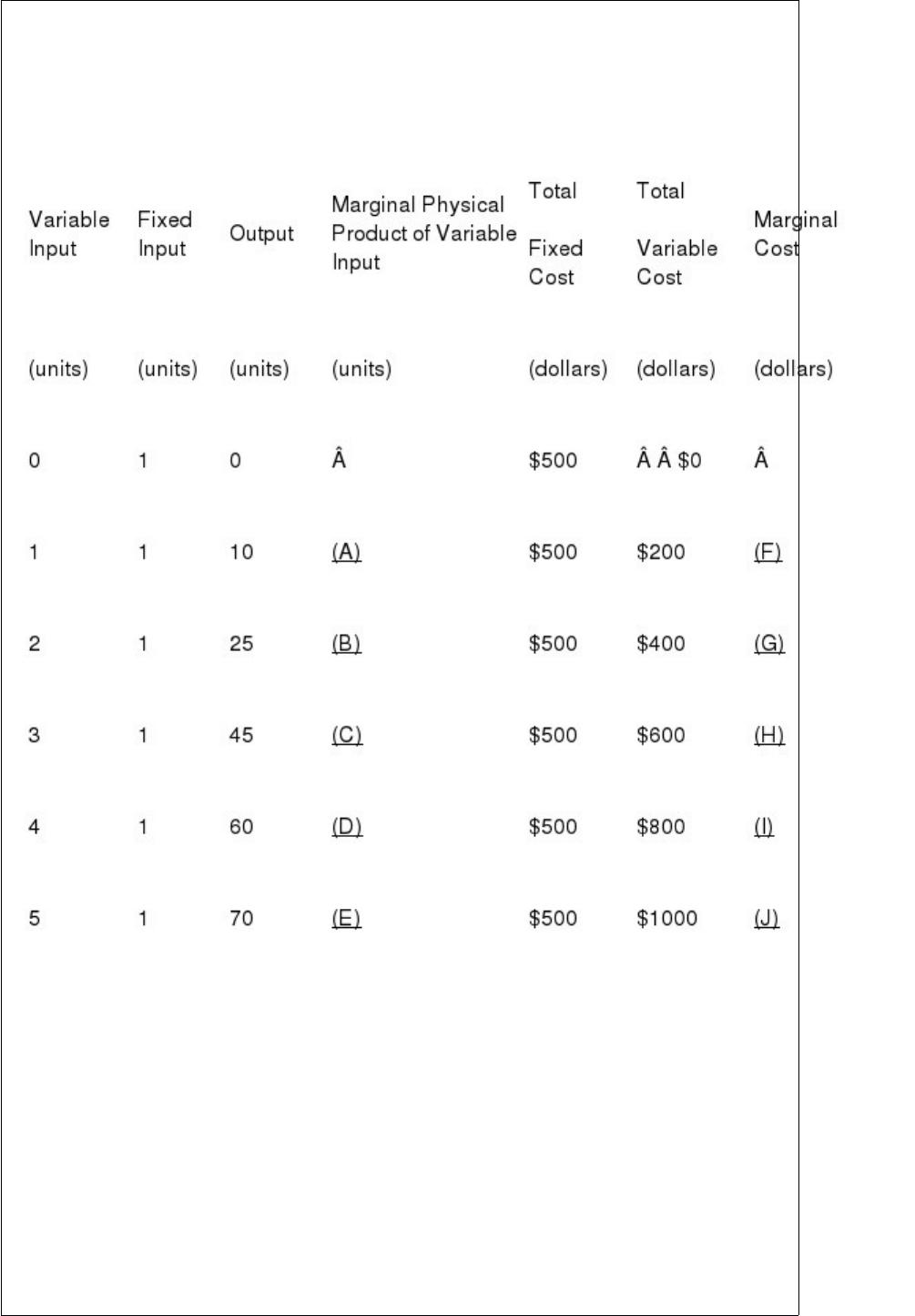
Exhibit 22-3
The average variable cost of producing 45 units of output is
a. $1.33.
b. $1.60.
c. $2.00.
d. $2.44.
e. $13.33.
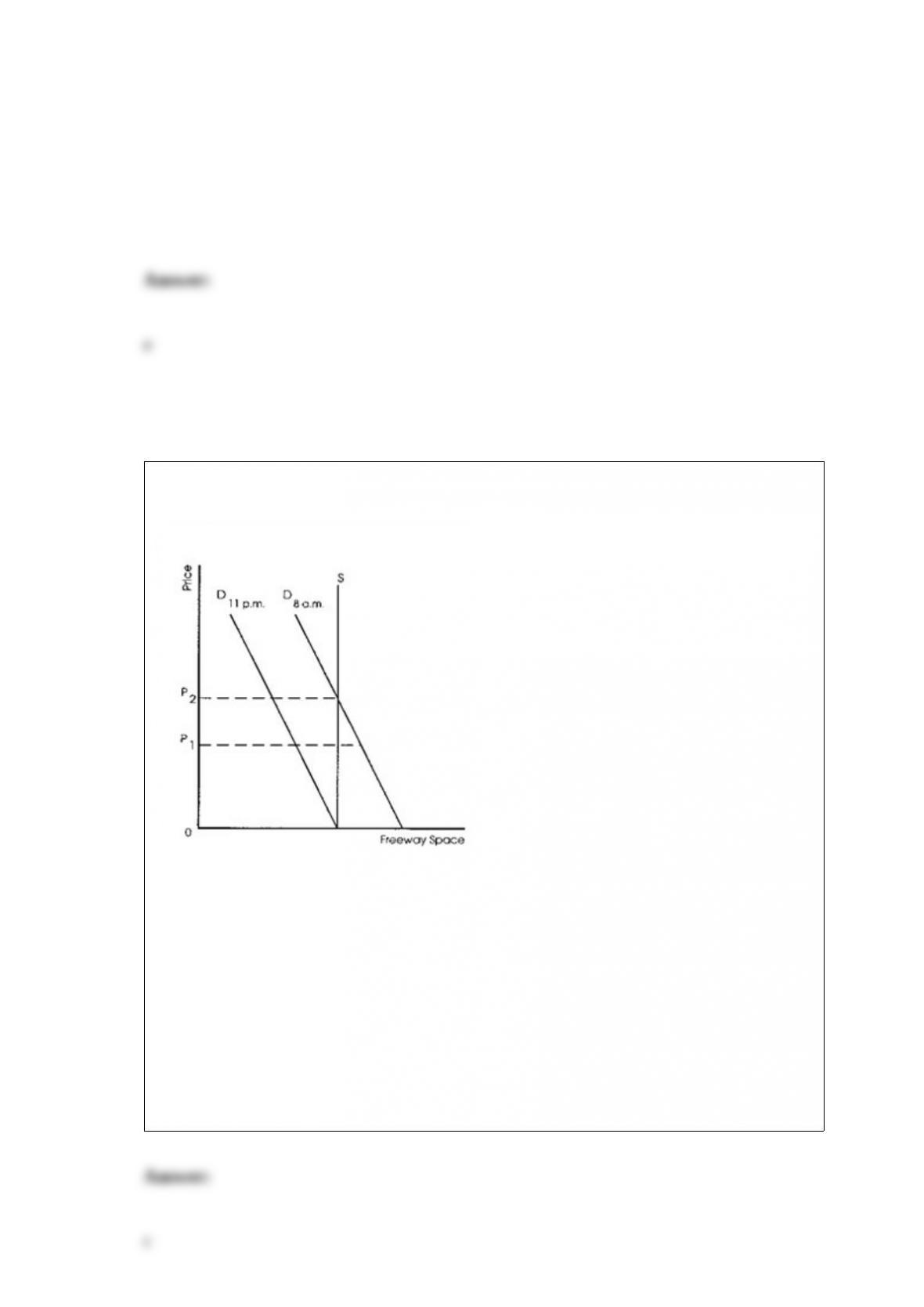
Exhibit 5-1
which shows supply and demand for freeway space at both 8 a.m. and 11 p.m. A toll of
P2 creates __________ at 8 a.m. and __________ at 11 p.m.
a. a shortage; a surplus
b. a surplus; a shortage
c. equilibrium; a surplus
d. a shortage; equilibrium
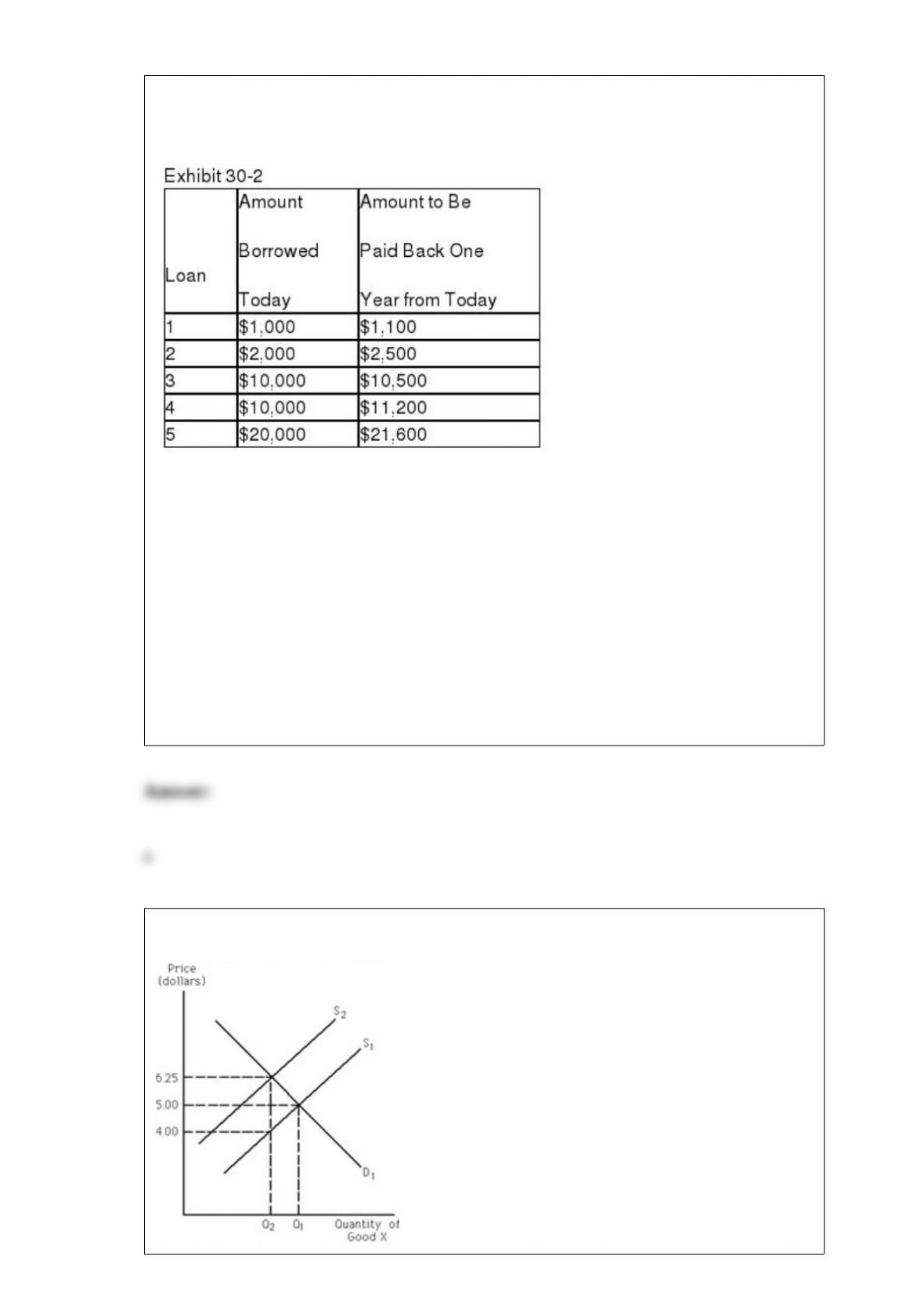
The interest and interest rate for loan 2 are, respectively,
a. $500 and 25.0 percent.
b. $2,500 and 25.0 percent.
c. $500 and 12.5 percent.
d. $2,500 and 12.5 percent.
e. none of the above
Exhibit 20-2
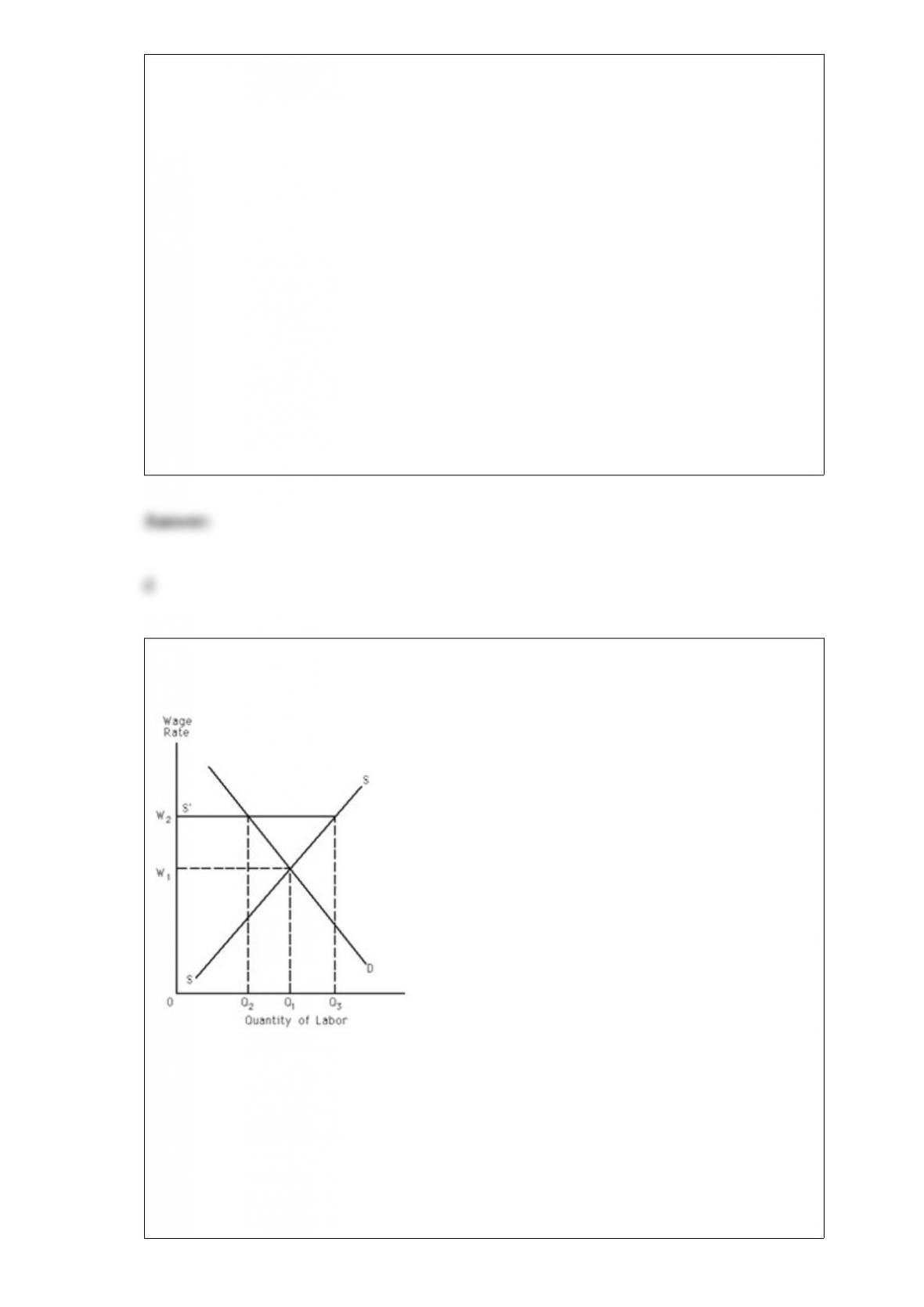
The market for good X is initially in equilibrium at $5. The government then places a
per-unit tax on good X, as shown by the shift of S1 to S2. As a result,
a. consumers end up paying $6.25 per unit, and producers end up receiving $5.00 per
unit, but keeping only $4.00 per unit.
b. consumers end up paying $6.25 per unit, and producers end up receiving and keeping
$4.00 per unit.
c. consumers end up paying $5.00 per unit, and producers end up receiving and keeping
$5.00 per unit.
d. consumers end up paying $6.25 per unit, and producers end up receiving $6.25 per
unit, but keeping only $4.00 per unit.
e. none of the above
Exhibit 28-2
The union wants management to believe the supply curve of labor is S’S instead of SS.
What does supply curve S’S represent?
a. It represents a situation where management cannot hire workers for less than W2, and
if the firm wants to hire more workers than it hires at equilibrium, it will have to pay a
wage between W1 and W2.
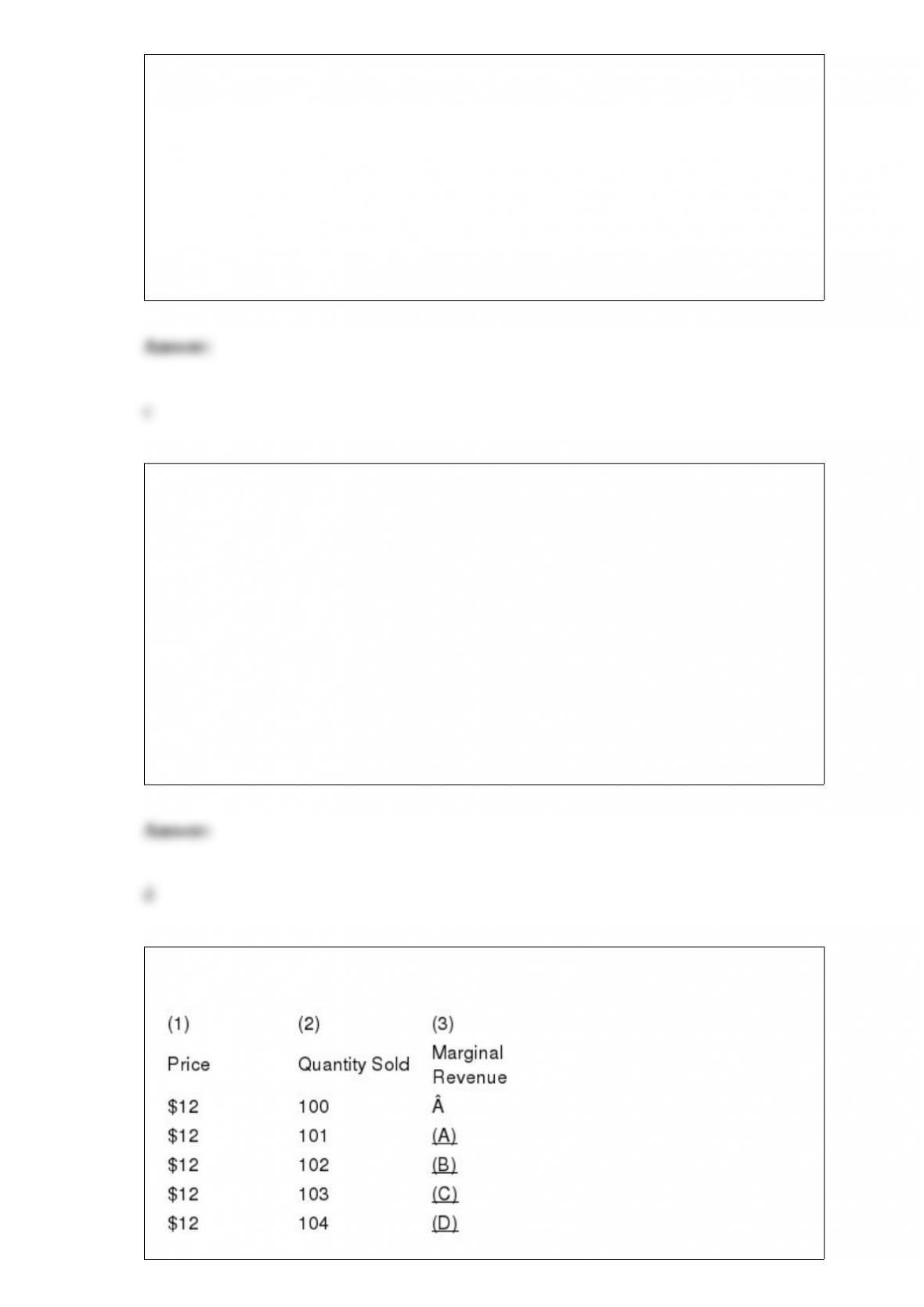
b. It represents a situation where management cannot hire workers for more than W2,
and if the firm wants to hire more workers than Q2 it will have to pay more than W1.
c. It represents a situation where management cannot hire workers for less than W2, and
if the firm wants to hire more than Q3 workers it will have to pay more than W2.
d. It represents a situation where management cannot hire Q1 – Q2 workers for less than
W2, but that Q3 – Q1 workers can be hired for less.
Suppose you are consuming a particular good and you could somehow give back the
last unit you consumed. What would happen to total and marginal utility (assuming that
the marginal utility of the unit given back is positive)?
a. Both total and marginal utility would decrease.
b. Both total and marginal utility would increase.
c. Total utility would increase but marginal utility would decrease.
d. Total utility would decrease but marginal utility would increase.
e. There would be no change in marginal utility but total utility would decrease.
Exhibit 23-1
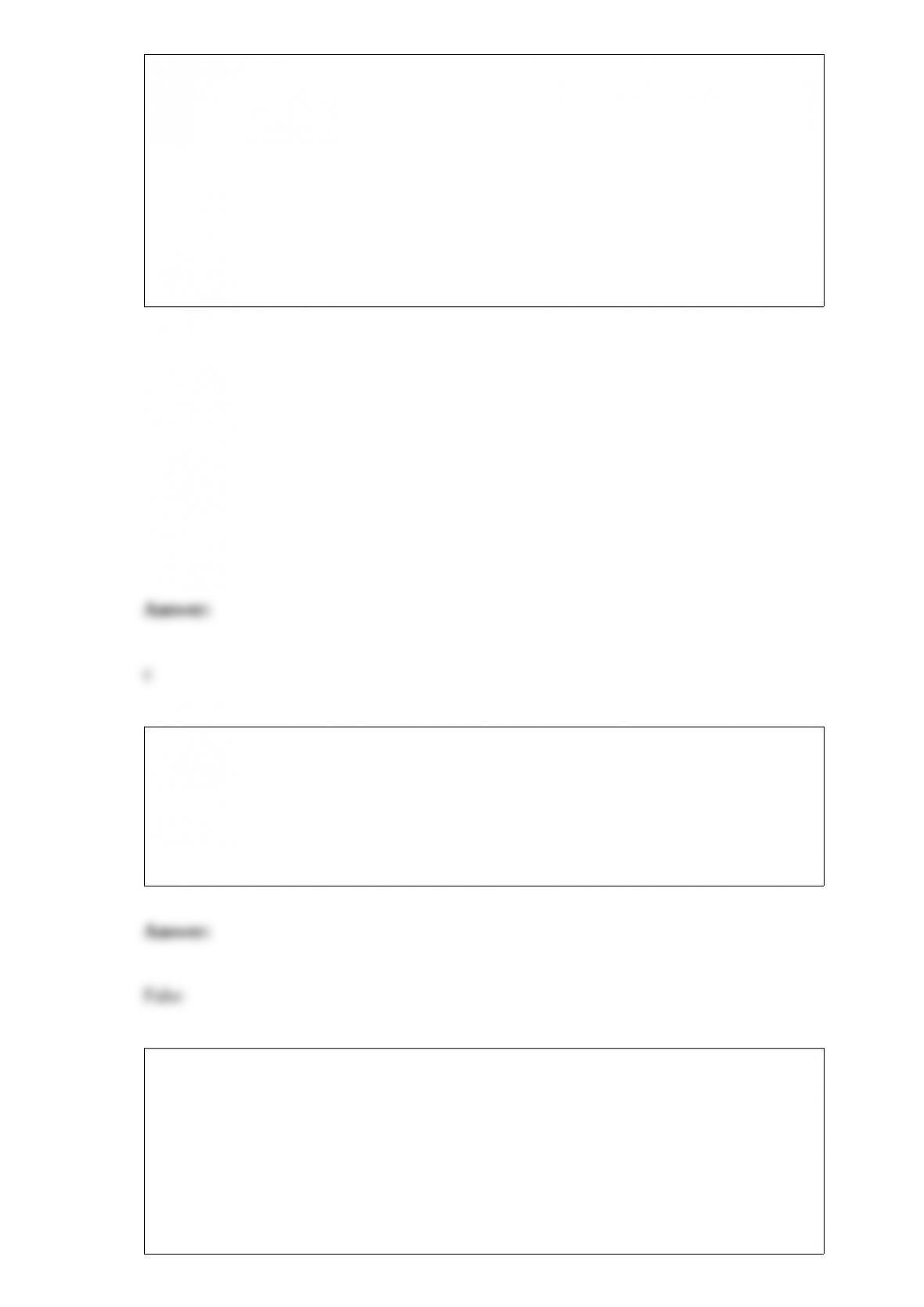
The demand curve facing the firm represented by the information in this table is
a. downward-sloping.
b. upward-sloping.
c. horizontal.
d. vertical.
A decrease in the quantity of resources available causes a movement down along a
given PPF.
a. True
b. False
A “closed shop” is
a. an organization in which a worker is not required to be a member of the union to be
hired, but must become a member within a certain period of time after being employed.
b. an organization in which an employee must belong to the union before he or she can
be hired.
c. an organization of domestic firms that is closed to foreign firms.
d. a political organization that seeks to raise tariffs on foreign-produced goods imported
into the United States.
e. none of the above
“New industries need to be protected or they won’t have the opportunity to grow up.”
This is a statement of the __________ argument for trade restrictions.
a. national-defense
b. infant-industry
c. anti-dumping
d. tariff
e. none of the above
Exhibit 5-5
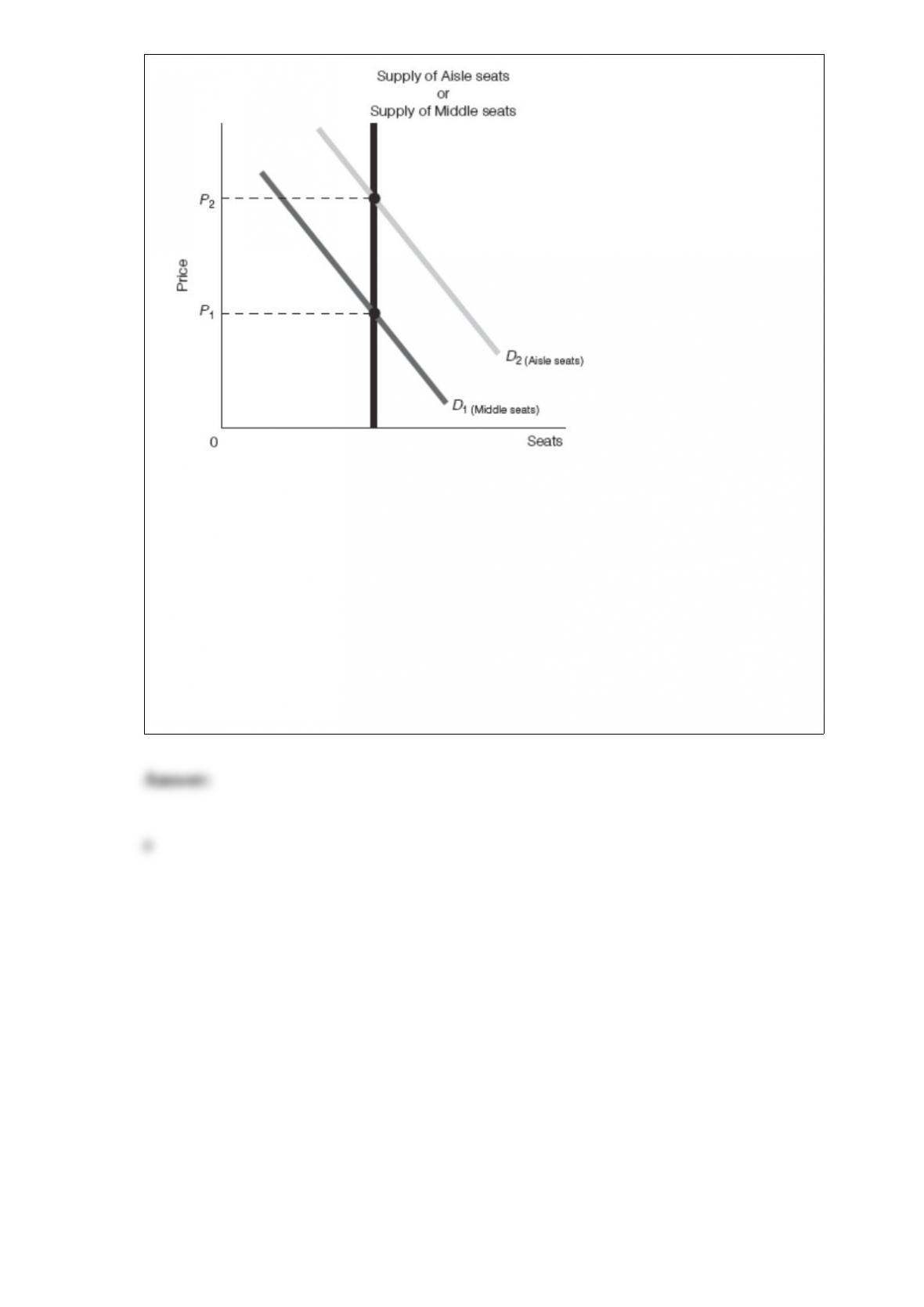
If the airline charges a price that is between P1 and P2 for both aisle seats and middle
seats, the result will be
a. a surplus of middle seats and a shortage of aisle seats.
b. a surplus of aisle seats and a shortage of middle seats.
c. a shortage of middle seats and the equilibrium quantity of aisle seats.
d. a shortage of aisle seats and the equilibrium quantity of middle seats.