
One reason why McDonald’s charges a single price for its products is that it is difficult
and costly for the company to determine each individual consumer’s willingness to pay.
A real appreciation of the dollar is caused by either a nominal appreciation of the dollar,
a rise in the foreign price level, or a fall in the U.S. price level.
The social cost of a good or service is the cost borne by the producer.
If price is equal to average variable cost, a perfectly competitive firm breaks even.

In the short run, a firm that incurs losses might choose to produce rather than shut down
if the amount of its revenue is less than its fixed cost.
If Estonia has an absolute advantage in the production of two goods compared to
Norway, Estonia can not benefit from trade with Norway.
On average, people in the United States spend a smaller percentage of their income on
health care than do people in most other countries.
Market economies tend to grow more quickly than centrally-planned economies.

Chips and salsa are complements. If the price of salsa decreases, the demand for chips
will increase.
In an optimal two-part tariff pricing schedule, consumer surplus is zero.
Consider a country that produces only two goods: pineapples and tractors. Suppose it is
possible for this country to increase its production of pineapples without producing
fewer tractors. In this case, its current output combination is inefficient.
An increase in the labor force shifts the production possibility frontier inwards over
time.
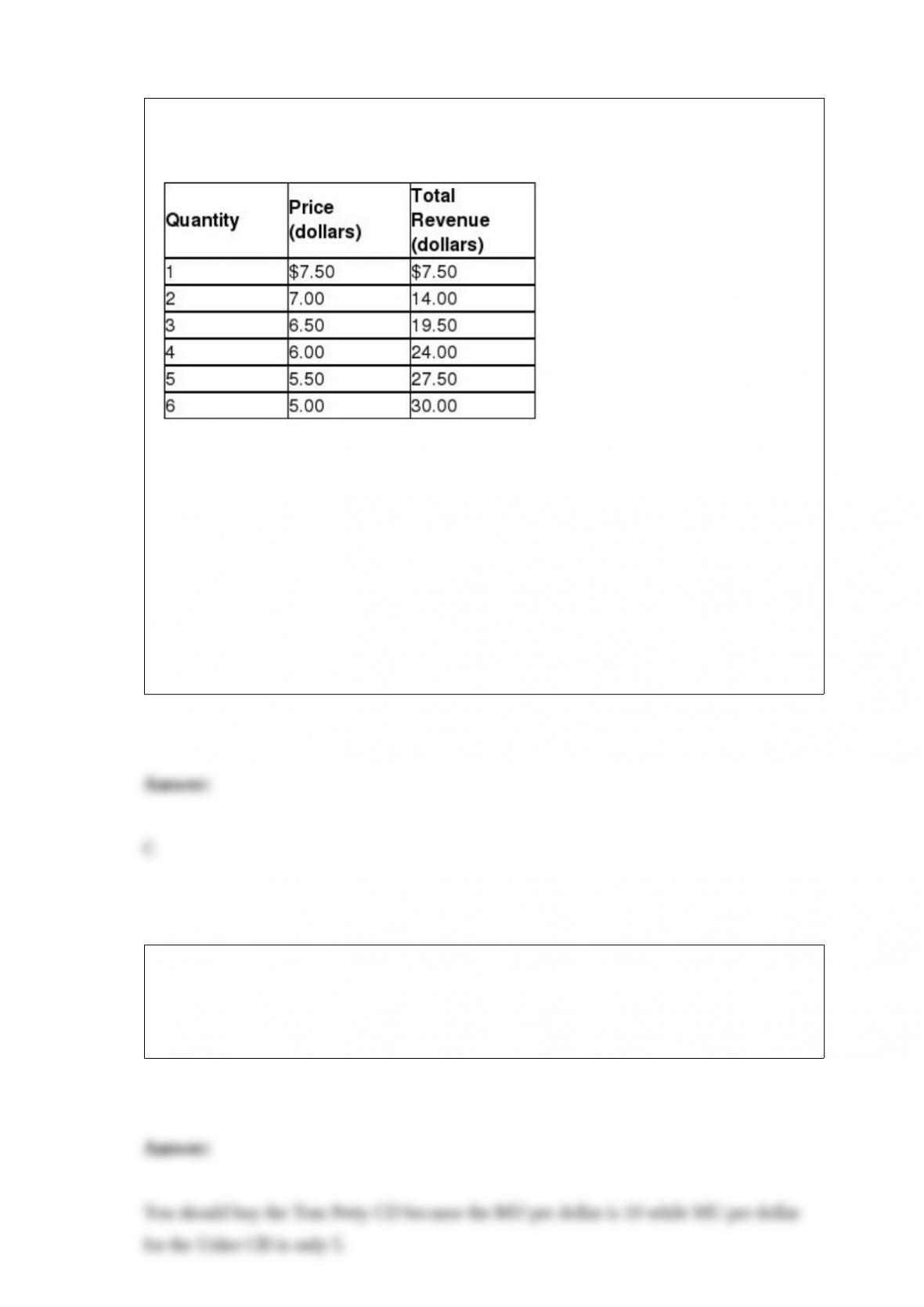
Table 13-1
What portion of the marginal revenue of the 5th unit is due to the output effect and what
portion is due to the price effect?
A) output effect = $3.00; price effect = $0.50
B) output effect = $1.50; price effect = $2.00
C) output effect = $5.50; price effect = -$2.00
D) output effect = $4.00; price effect = -$0.50
You wish to buy only one CD. Use the rule of equal marginal utility per dollar to
determine which one to purchase: (a) Usher’s latest CD for $15 which gives you 75
units of utility, or (b) Tom Petty and the Heartbreakers’ Greatest Hits for $10 that gives
you 100 units of utility?

In the long run, most economists agree that a permanent increase in government
spending leads to
A) no decrease in private spending.
B) a decrease in private spending by less than the amount that government spending
increased.
C) a decrease in private spending by the same amount that government spending
increased.
D) a decrease in private spending by more than the amount that government spending
increased.
Global warming refers to the effect of global pollutants such as carbon dioxide on
climates on the earth. Climate-induced changes in temperatures affect, among other
things, agriculture. Which of the following is a reason why policymakers are still
debating if this problem should be addressed and how it should be addressed?
A) Scientists agree about the damage caused by carbon emissions but disagree about the
methods of reducing emissions.
B) The marginal cost of reducing carbon emissions is known with certainly but the
marginal benefit from reduction is not known with certainty.
C) The marginal cost of reducing carbon emissions is not known with certainly but the
marginal benefit from reduction is known with certainty.
D) There is much disagreement about all aspects of the problem: how much carbon
emissions contribute to damage from climate change which in turn informs the benefits
from reduction, and what methods to use which in turn determines the cost of reduction.
Price discrimination is possible in which of the following market structures?
a. perfect competition
b. monopoly
c. oligopoly
d. monopolistic competition
A) a, b, c, and d
B) c and d only
C) b and c only
D) b, c, and d only
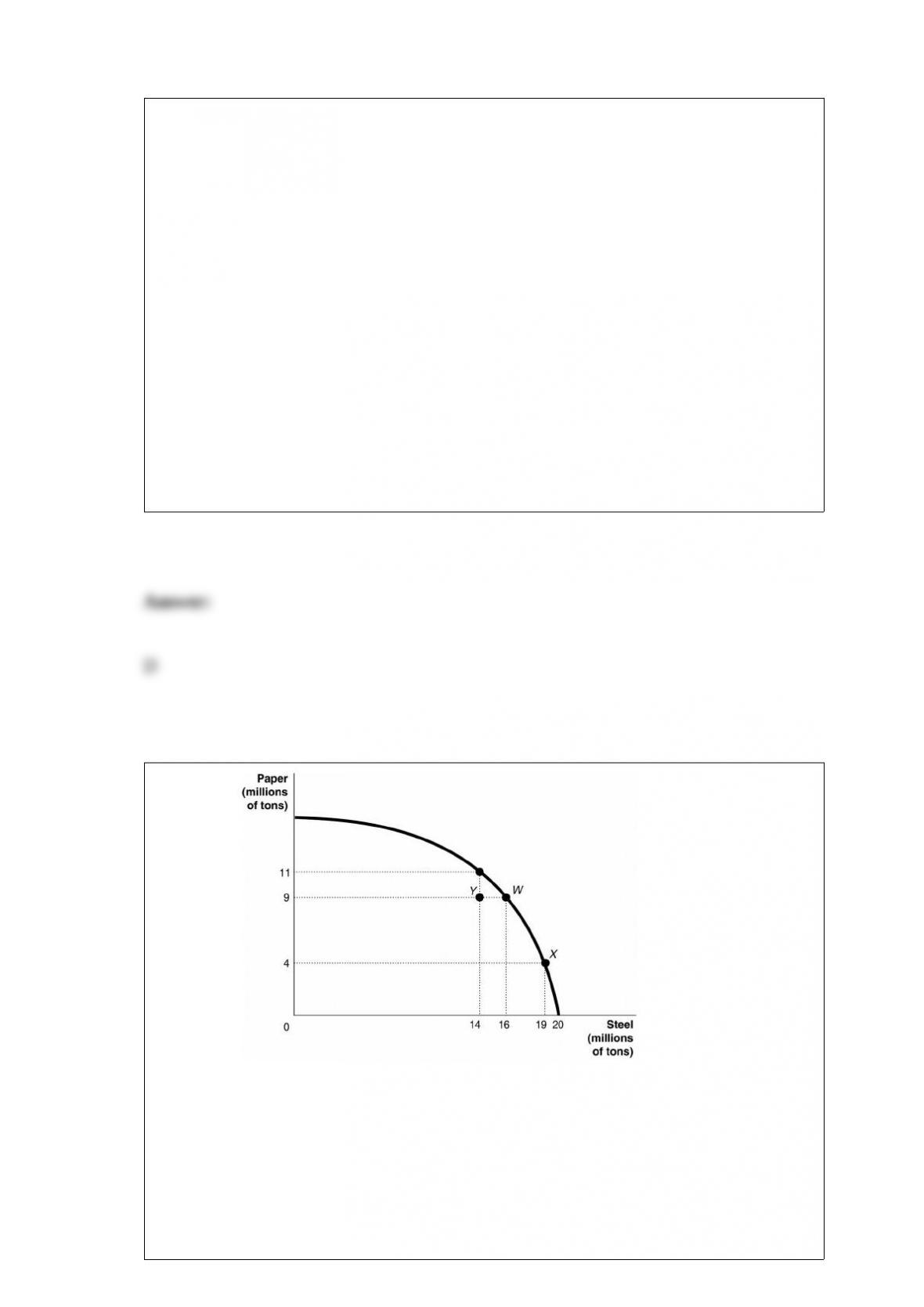
Figure 2-5
If the economy is currently producing at point W, what is the opportunity cost of
moving to point Y?
A) 2 million tons of steel
B) 14 million tons of steel

C) 2 million tons of paper
D) 9 million tons of paper
According to the U.S. Treasury,
A) the government will not accept cash in payment of taxes.
B) creditors do not have to accept cash in payment of debts.
C) firms do not have to accept cash as payment for goods and services.
D) U.S. dollars must be accepted as payment for any good or service sold in the United
States.
The largest proportion of M1 is made up of
A) currency.
B) checking account deposits.
C) traveler’s checks.
D) savings account deposits.
E) time deposits.

As more output is produced, the marginal product of labor declines
A) because of the law of diminishing returns.
B) if firms reduce the wage paid to labor.
C) if the firm’s output supply curve is inelastic.
D) because the firm’s marginal revenue declines.
According to the World Bank, Albania does one of the worst jobs as a country enforcing
the rule of law. The consequence of a weak rule of law is
A) difficulty in attracting investment and low economic growth.
B) a decrease in cash transactions and increased efficiency.
C) more risk taking on the part of entrepreneurs and greater economic investment.
D) strong property rights enforcement leading to greater investment.
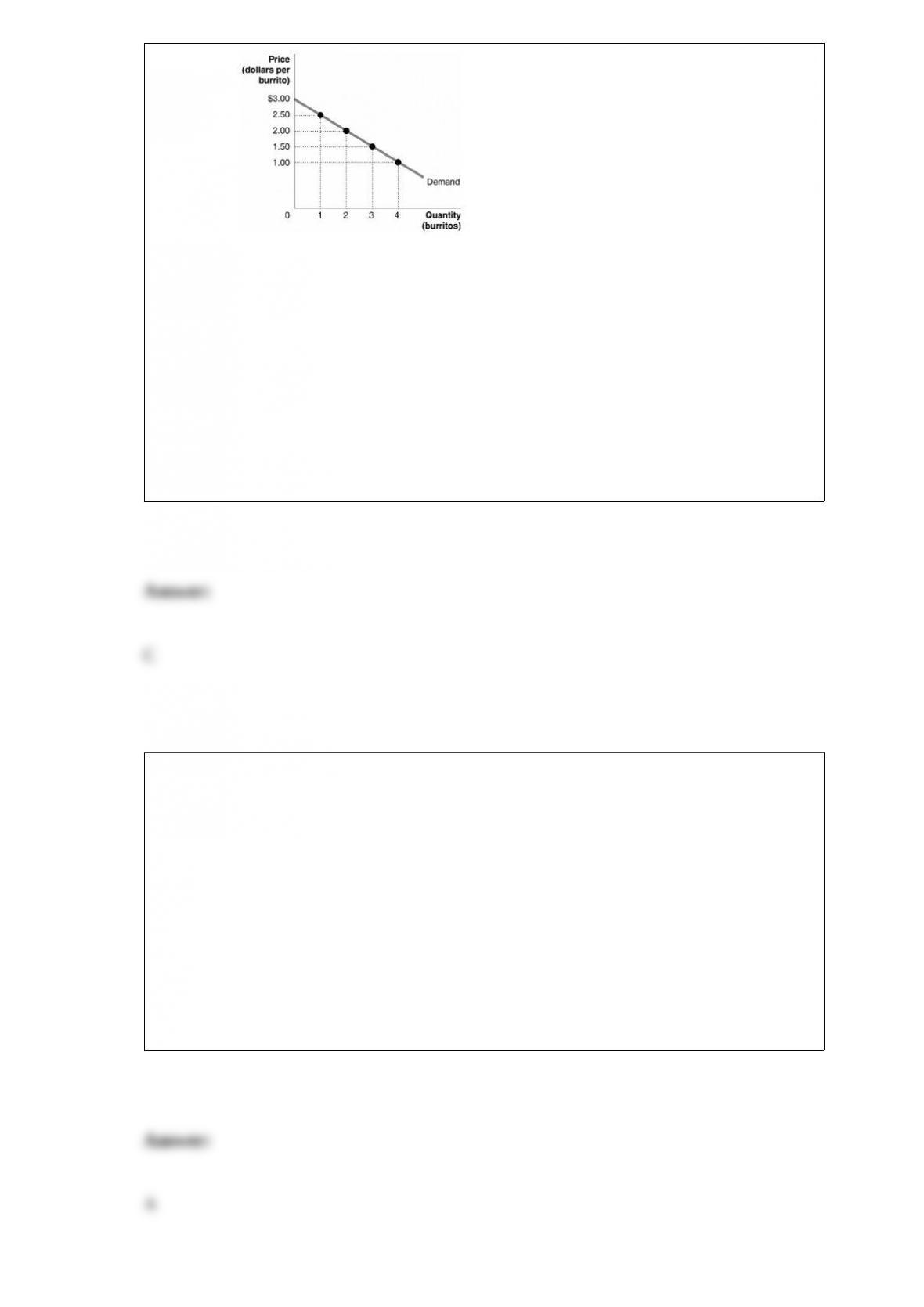
Figure 4-1 Figure 4-1 shows Arnold’s demand curve for
burritos.
If the market price is $1.00, what is Arnold’s consumer surplus?
A) $1.00
B) $2.00
C) $6.00
D) $7.00
Parker Hannifin benefitted when the Federal Reserve slashed the federal funds rate to
near-zero levels in 2008. Lower interest rates increased demand for its machinery
components, which would allow Parker Hannifin to ________ employment and
________ prices.
A) increase; increase
B) increase; decrease
C) decrease; increase
D) decrease; decrease

If, in response to a decrease in the price of grapes, the quantity of grapes demanded
increases, economists would describe this as
A) an increase in demand.
B) an increase in quantity demanded.
C) a change in consumer income.
D) an increase in consumers’ taste for coffee.
Dr. Goldfinger decides to invest in companies which he believes can “improve the
productivity and efficiency” of health care services. What would Dr. Goldfinger need to
do to try to achieve allocative efficiency?
A) invest in companies that produce goods and services based on consumer preferences
B) invest in companies that produce goods and services at the lowest possible cost
C) invest in companies that fairly distribute their products and services
D) invest in companies that produce up to the point where the marginal cost of the last
unit produced is zero
An open economy is an economy that has
A) interactions in trade or finance with other economies.

B) its own stock market.
C) governmental regulations regarding public information that is included in corporate
finance reports.
D) governmental regulations regarding the number of hours retail establishments must
remain open on a daily basis.
Suppose you borrow $1,000 at an interest rate of 12 percent. If the expected real interest
rate is 5 percent, then the rate of inflation over the upcoming year that would be most
beneficial to you would be a rate of inflation
A) equal to 0 percent.
B) greater than 7 percent.
C) equal to 7 percent.
D) less than 7 percent.
In reference to the federal income tax system, a tax bracket is
A) the estimated amount of federal income tax firms withhold from their employees’
paychecks.
B) the formula the federal government uses to determine the dollar amount of the
personal exemption and the amounts taxpayers are allowed for deductions from their
incomes.

C) used to determine the average tax rate.
D) the income range within which a tax rate applies.
One of the assumptions of monopolistic competition is that firms produce differentiated
products. What does this assumption imply about the demand curve facing a
representative firm?
In a corporation, what are “inside directors” and “outside directors”?
How does the principal-agent problem extend to managers and employees?
How do government policies that enforce property rights affect economic growth?
How will the purchase of $100 million of government securities by the Federal Reserve
change bank reserves and total checking account deposits in the banking system as a
whole? Assume that banks do not hold any excess reserves, that households and firms
do not change the amount of currency they hold, and that the required reserve ratio is 20
percent.