
The largest component of private investment expenditure is
a. inventories
b. the capital stock
c. new home construction
d. purchases of newly-produced plant and equipment
e. government investment in private industries
Suppose that in 2009, private investment spending was $500 billion, government
investment was $300 billion, and depreciation was $250 billion. How much did the
capital stock increase in 2009 (assume there were no other changes that affect the
capital stock)?
a. $300 billion
b. $500 billion
c. $550 billion
d. $800 billion
e. $1.05 trillion
The demand curve for a product will shift rightward when the price of a substitute
decreases.
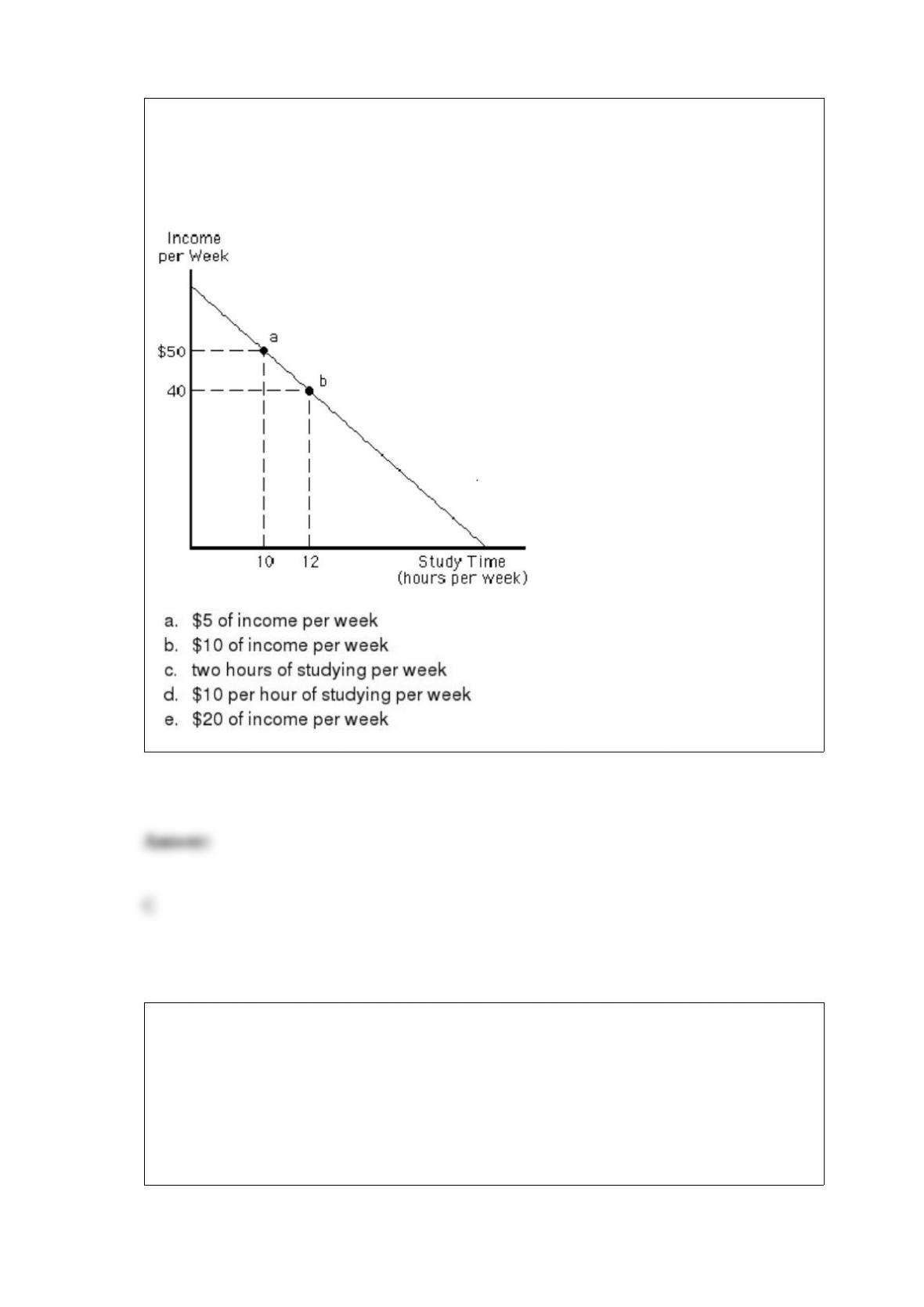
Figure 2-1 illustrates the trade-off for a particular student between time spent studying
per week and income per week from working part-time. What is the opportunity cost
for this person of moving from point b to point a?
Figure 2-1
If the Fed had not changed the money supply after the recession in the early 1990s, then
the long run effects would have been
a. a return to the original output and price level
b. increased long run GDP equilibrium and price level
c. unchanged long run output, but an increased price level
d. a decreased long run output and price level
e. a return to the original long run output, but a decreased price level

If capital is not being used efficiently, an economy cannot be operating at a point along
its production possibilities frontier.
Mike recently lost his job as a construction worker. During this unemployment spell,
Mike actively searched for work but recently took a job that paid cash ‘œunder the table’
while he continued to search and collect unemployment payments. Mike would be
considered __________ by the Bureau of Labor Statistics but his inclusion would cause
the officially reported unemployment rate to __________ the true unemployment rate.
a. an involuntary part-time worker; overestimate
b. a discouraged worker; underestimate
c. unemployed; underestimate
d. unemployed; overestimate
e. employed; equal
Jim is negotiating a contract for a labor union. The union wants to increase members’
real wages by 4 percent. The inflation rate is predicted to be 7 percent. To attain the
union’s goal, Jim needs to negotiate a raise in the nominal
a. wage of 4 percent
b. wage of 7 percent
c. wage of 11 percent
d. rate of 3 percent
e. rate of 28 percent
Which of the following is the result of a banking panic?
a. A decrease in the demand deposit multiplier
b. An increase in the money supply
c. An increase in bank reserves
d. A decrease in the money supply
e. An increase in the demand deposit multiplier
The beneficiaries of the minimum wage are confined to those in poverty.
The phase of the business cycle characterized by rising employment is called
a. a recession
b. a low-tax phase

c. a high-inflation phase
d. an expansion
e. a depression
Suppose the current interest rate is 5% and you pay $250 for a bond. What is the total
payment that should be made to you in one year?
a. $12.50
b. $262.50
c. $237.50
d. $255.00
e. $267.50.
An economy is said to be saving lives efficiently
If output rises, then income
a. drops by an equal amount
b. remains stable
c. rises twice as fast as output
d. rises slowly
e. rises by an equal amount
In the long run, if the inflation rate is positive, a currency depreciates to maintain
purchasing power parity.
A rational consumer who prefers one apple to two oranges, and two oranges to one
orange,
If there are diminishing marginal returns to labor,
When calculating the price elasticity of demand, we assume that the price of the good
changes while all other variables affecting
As there is a movement upward and leftward along the AD curve,
a. aggregate expenditure decreases
b. the price level remains constant
c. equilibrium GDP increases
d. aggregate expenditure increases

e. the interest rate falls
An upward shift of the consumption function could be caused by a(n)
a. increase in the interest rate
b. decrease in the interest rate
c. decrease in wealth
d. increase in the autonomous production
e. increase in disposable income