
Economists generally agree that land rents are
a. price determining, not price determined.
b. price determined, not price determining.
c. too high.
d. too low.
e. Economists generally do not agree on anything.
The demand curve facing a firm in monopolistic competition is downward sloping,
because the firm
a. sells a differentiated product.
b. is the entire industry by itself.
c. is small relative to the market.
d. b and c
e. none of the above
There is a flexible exchange rate system and only two countries in the world, the United
States and Mexico. If the inflation rate in the United States rises relative to the inflation
rate in Mexico, it follows that
a. the dollar will appreciate and the peso will depreciate.

b. both the dollar and the peso will appreciate, although the peso will appreciate before
the dollar appreciates.
c. the dollar will depreciate and the peso will appreciate.
d. both the dollar and the peso will depreciate, although the peso will depreciate before
the dollar depreciates.
e. There is not enough information to answer the question.
Economists are nearly unanimous in their belief that small firms in highly competitive
markets with many rivals are more likely to innovate than are firms with larger market
shares.
a. True
b. False
Which of the following statements is true?
a. The short run is always somewhere between six and twelve months.
b. In the short run, changes in output can only be brought about by a change in the
quantity of variable inputs.
c. The long run is any period of time over one year.
d. In the short run, there are variable costs but no fixed costs.
e. b and d
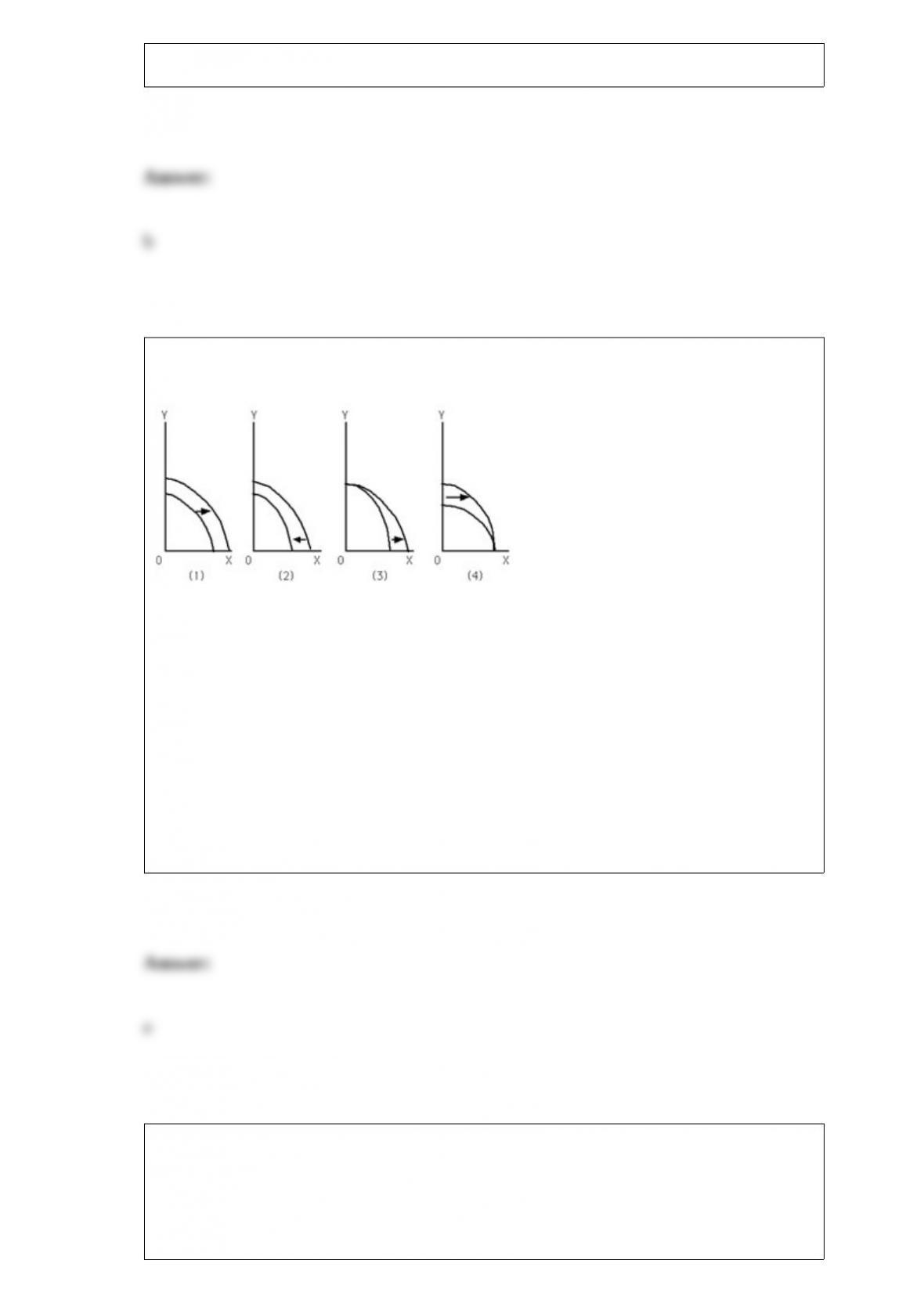
Exhibit 2-6
Which graph depicts the result of a decrease in the unemployment rate?
a. (1)
b. (2)
c. (3)
d. (4)
e. none of the above
As the marginal physical product of a variable input __________, the marginal cost
__________.
a. increases; increases

b. increases; decreases
c. decreases; increases
d. b and c
Under a target price system, the government can adjust the deficiency payment paid to a
farmer by deciding to pay some percentage of the difference between the target price
and the market price.
a. True
b. False
In the case of externalities, government can use taxes and subsidies to turn an
inefficient outcome into an efficient outcome.
a. True
b. False

In the United States, the percentage of national income that goes to labor (union plus
nonunion) was higher when union membership was relatively high and unions were
strong, compared to when union membership was relatively low.
a. True
b. False
To resolve the diamond-water paradox, it is important to note that under most
circumstances,
a. the marginal utility of water is lower than the marginal utility of diamonds.
b. the marginal utilities of water and diamonds are about the same.
c. the marginal utility of water is higher than the marginal utility of diamonds.
d. the marginal utilities of water and diamonds are inversely related.
e. the marginal utilities of water and diamonds are directly related.
Exhibit 26-1
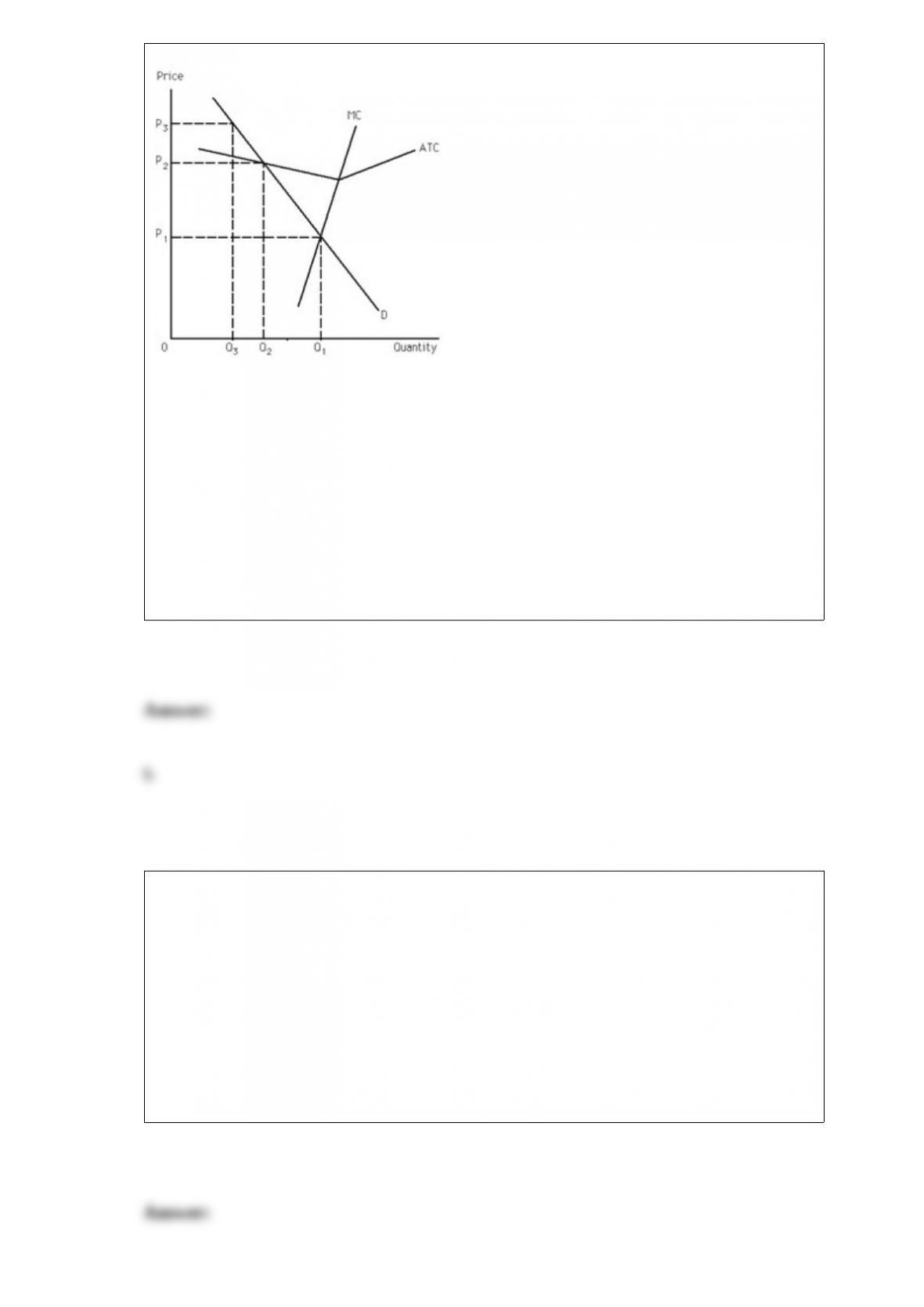
If average-cost pricing is imposed on the natural monopoly firm, what price is charged?
a. P1
b. P2
c. P3
d. any of the three prices
The merger of two firms producing personal computers is an example of a __________
merger.
a. horizontal
b. vertical
c. conglomerate
d. parallel
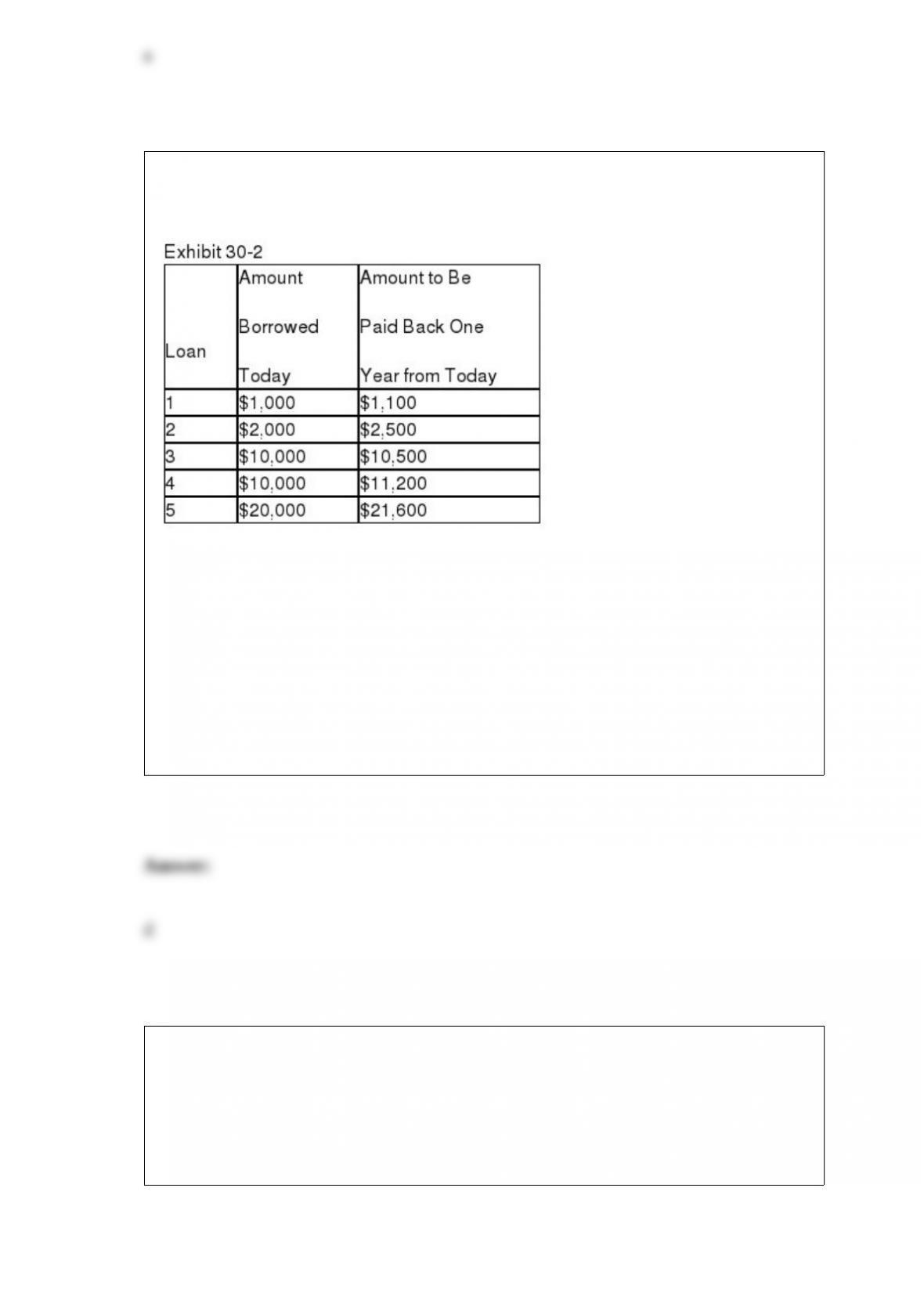
The interest and interest rate on loan 1 are, respectively,
a. $1,100 and 100 percent.
b. $1,100 and 10 percent.
c. 10 percent and $100.
d. $100 and 10 percent.
The law of comparative advantage can be used to explain why many couples divide up
their household duties along gender lines.
a. True
b. False
The Taft-Hartley Act allowed the federal government laws regulating the formation of
unions to take precedence over (override) union laws enacted by the individual states.
a. True
b. False
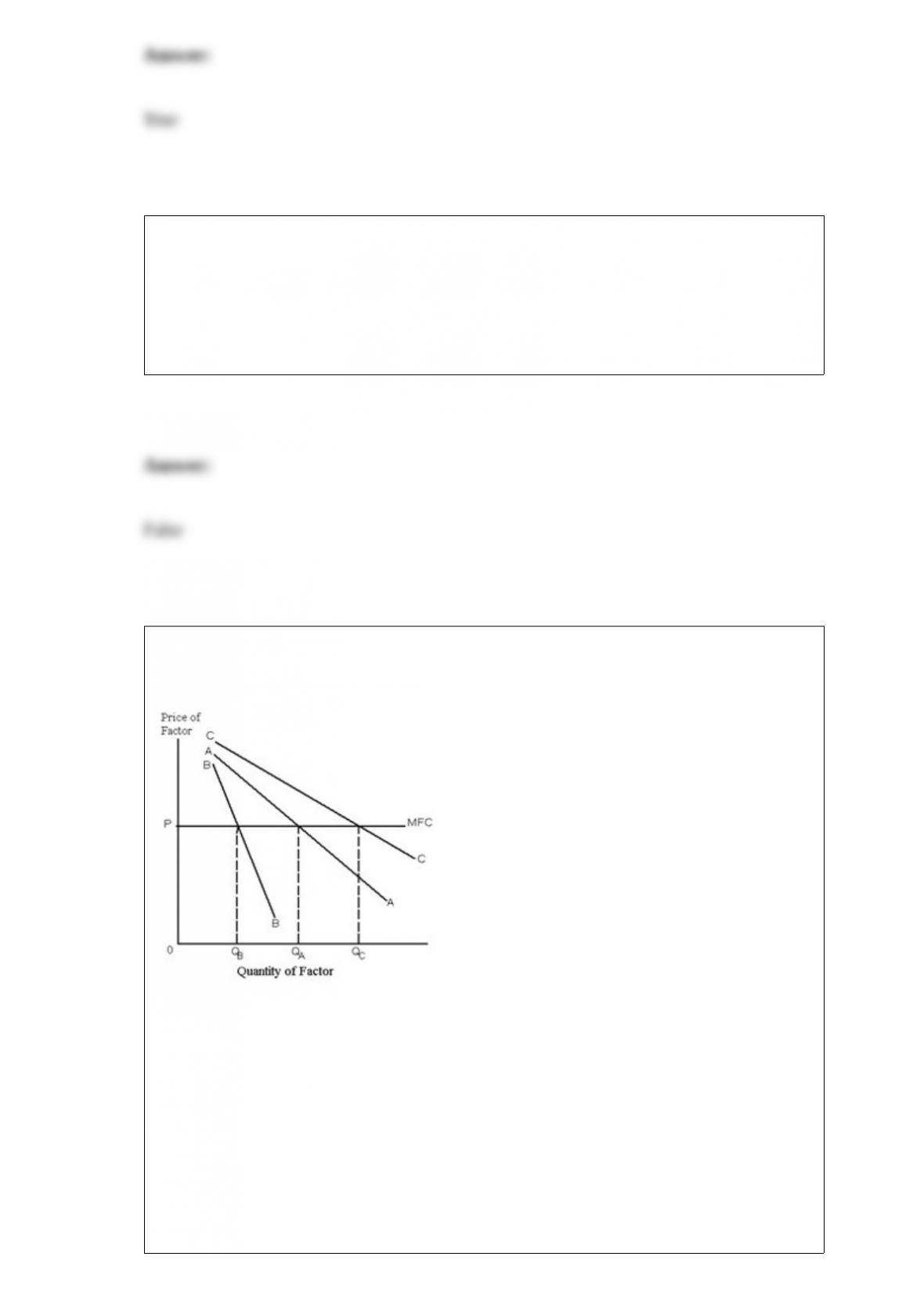
Exhibit 27-6
Let AA and MFC represent the value of marginal product curve and the marginal factor
cost curve of a monopolist, respectively. Which of the following is a possible
profit-maximizing factor quantity the monopolist will employ?
a. QA
b. QB
c. QC
d. none of the above is possible
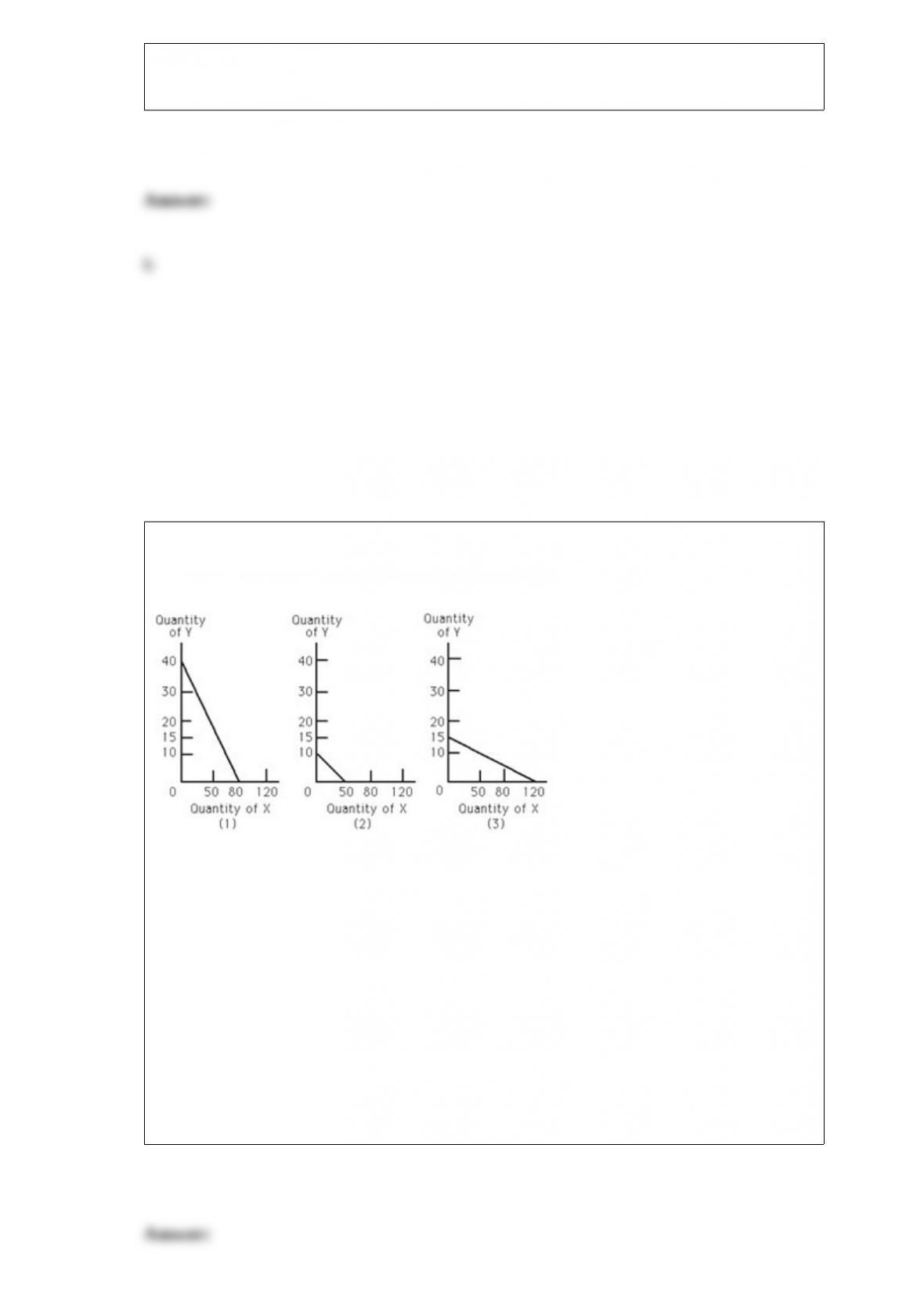
Exhibit 21-7
Which of the following graphs represents a budget constraint of a consumer whose
income is $120?
a. (1)
b. (2)
c. (3)
d. (1) and (2)
e. This cannot be determined from the information provided.

Stating that income elasticity of demand for potatoes equals 0.15 is equivalent to stating
that if income
a. decreases by 10 percent, potato purchases decrease by 1.5 percent.
b. increases by 10 percent, potato purchases increase by 15 percent.
c. decreases by 1.5 percent, potato purchases decrease by 10 percent.
d. increases by 15 percent, potato purchases decrease by 10 percent.
e. none of the above
Something that provides utility is called a
a. good.
b. bad.
c. want.
d. need.
e. a and d