1) given fixed exchange rates, assume mexico initiates contractionary monetary and
fiscal policies to combat inflation. these policies will also:
a.reduce a balance-of-payments surplus
b.reduce a balance-of-payments deficit
c.increases both imports and exports
d.decrease both imports and exports
2) constant opportunity costs suggest that the relative cost of producing one product in
terms of the other will remain the same no matter where a nation chooses to locate on
its production-possibilities schedule.
a.true
b.false
3) a multilateral contract stipulates the maximum price at which importing nations will
purchase guaranteed quantities from producing nations and the minimum price at which
producing nations will sell guaranteed amounts to importing nations.
a.true
b.false
4) the asset market theory of exchange rate determination suggests that the most
important factor influencing the demand for domestic and foreign securities is:
a.expected return on these assets relative to one another
b.ability of these assets to easily be converted into cash
c.riskiness of these assets relative to one another
d.
5) ____ refers to highly educated and skilled people who migrate from poor developing
countries to wealthy industrial countries.
a.direct investment
b.portfolio investment
c.transfer pricing
d.brain drain
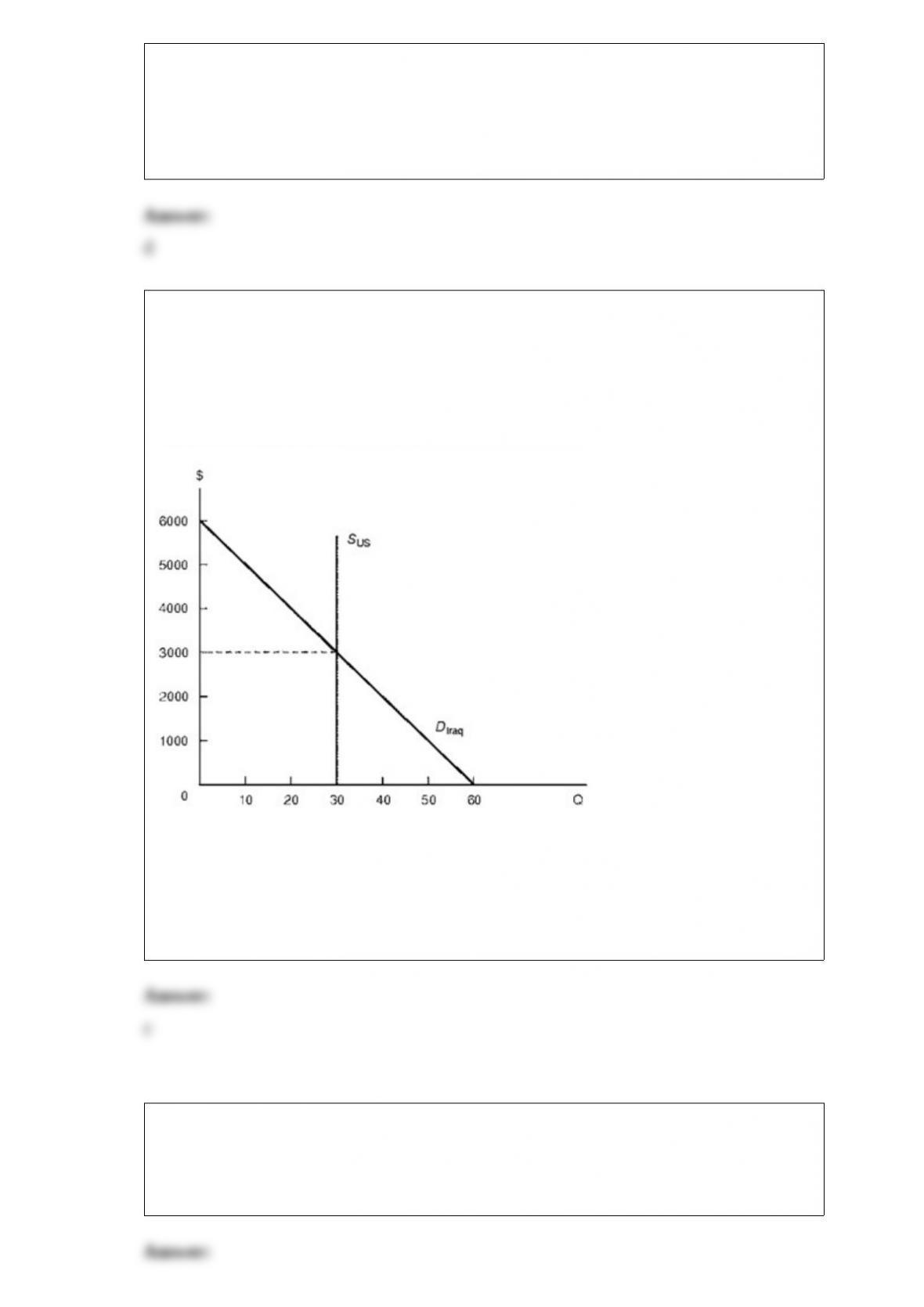
6) figure 6.3 represents the iraqi computer market. assume iraq purchases all of its
computers from the united states.
figure 6.3 iraqi computer market and economic sanctions
consider figure 6.3. with free trade, iraq purchases ____ computers at a price of $____,
and realizes $____ of consumer surplus from the availability of computers.
a.30, $3,000, $25,000
b.30, $3,000, $35,000
c.30, $3,000, $45,000
d.30, $3,000, $55,000
7) according to the equation of exchange, the total expenditures on final goods equals
the monetary value of the final goods sold.
a.true
b.false
8) starting from a position where the nation’s money demand equals the money supply
and its balance of payments is in equilibrium, economic theory suggests that the
nation’s balance of payments would move into a surplus position if there occurred in the
nation:
a.a decrease in the money supply
b.an increase in the money supply
c.a decrease in the money demand
d.none of the above
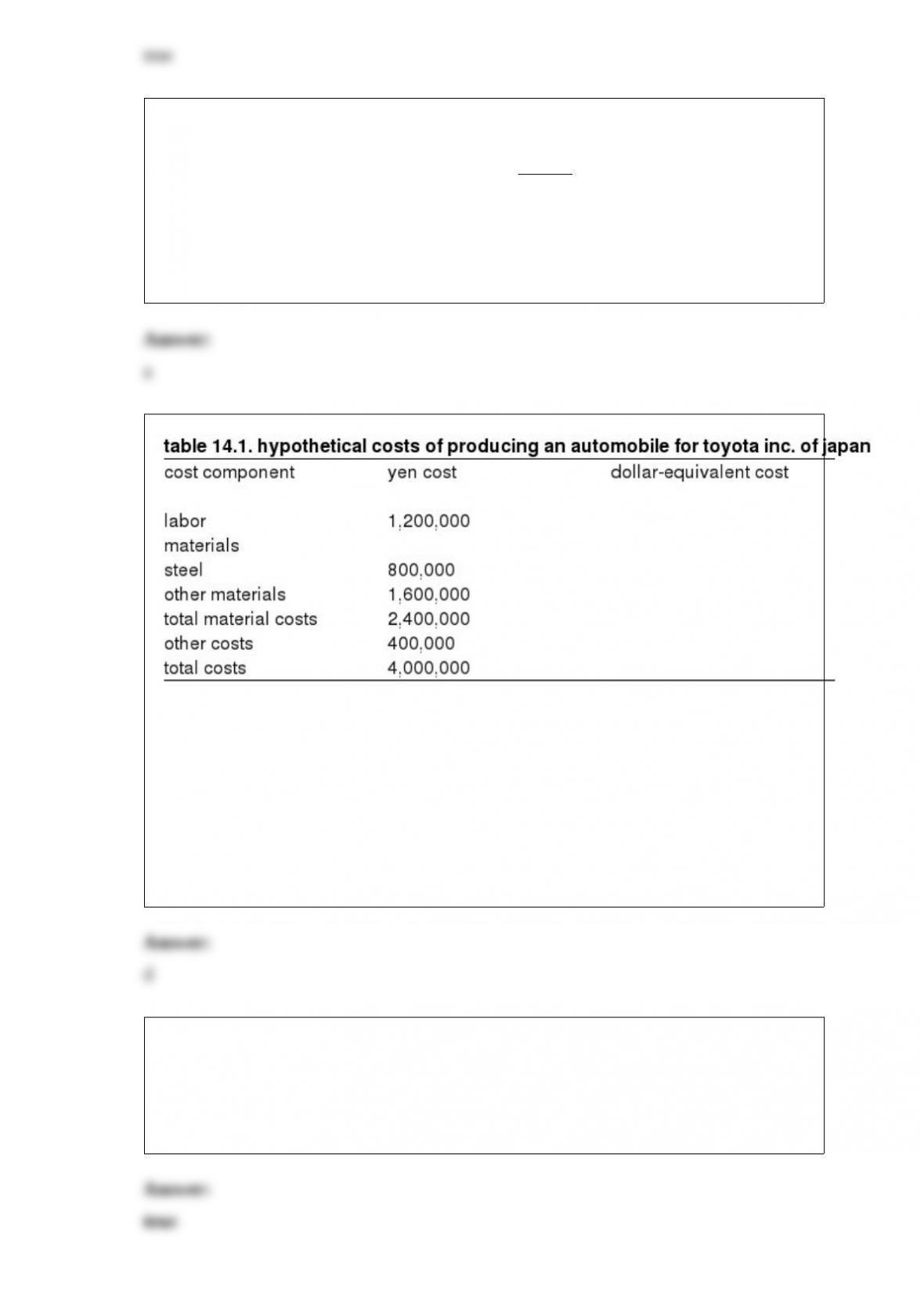
9) refer to table 14.1. assume that toyota inc. obtains all of its automobile inputs from
japanese suppliers. if the yen’s exchange value appreciates from 200 yen = $1 to 100
yen = $1, the yen cost of a toyota automobile equals:
a.4,000,000 yen
b.6,000,000 yen
c.8,000,000 yen
d.10,000,000 yen
10) current trade rules permit countries to enact measures to protect the health and
safety of their citizens as long as all goods are treated equally, the tobacco companies
argue.
a.true
b.false
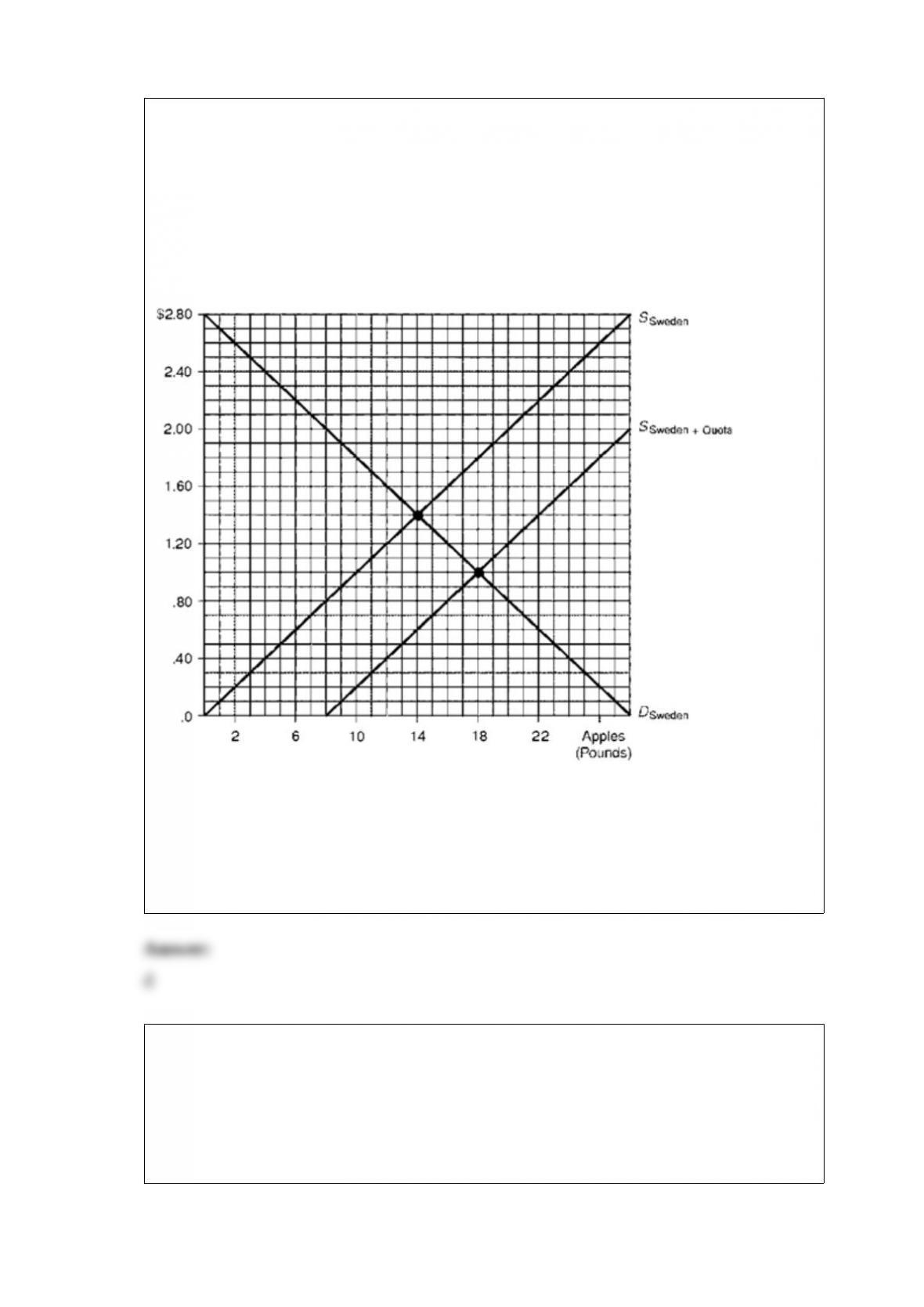
11) figure 5.3 illustrates the apple market for sweden, assumed to be a ‘small” country
that is unable to affect the world price. ssweden is the domestic supply and dsweden is
the domestic demand. ssweden+quota is sweden’s supply schedule with an import
quota.
figure 5.3. sweden’s apple market
consider figure 5.3. in the absence of trade, sweden’s equilibrium price and quantity of
apples would be:
a.$0.60 and 22 pounds
b.$0.60 and 14 pounds
c.$1.00 and 18 pounds
d.$1.40 and 14 pounds
12) figure 5.4 illustrates the calculator market for venezuela, assumed to be a ‘small”
country that is unable to affect the world price. svenezuela is the domestic supply
schedule and dvenezuela is the domestic demand schedule.
figure 5.4. venezuelan calculator market
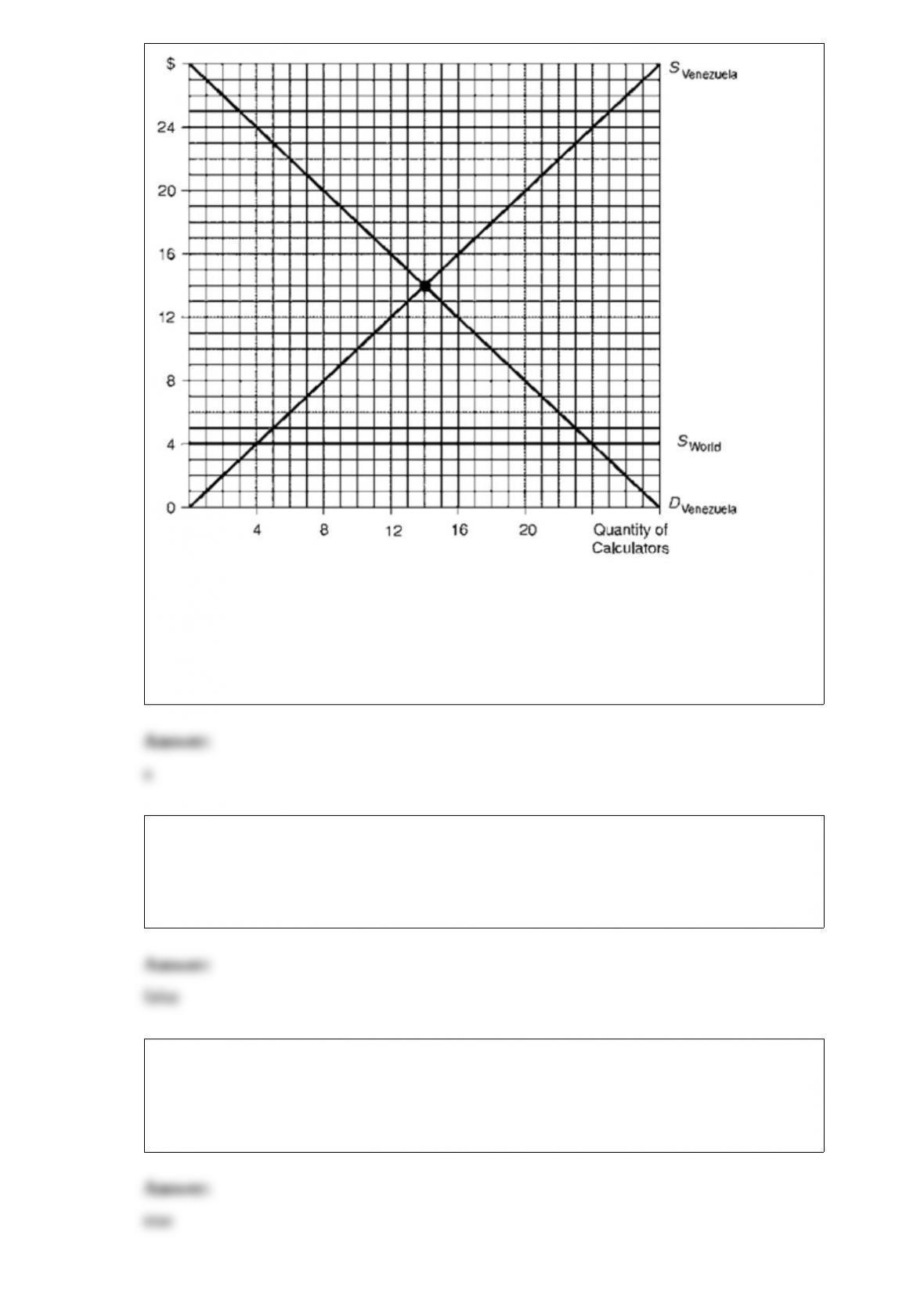
consider figure 5.4. the production subsidy results in an overall welfare loss for
venezuela totaling:
a.$8
b.$12
c.$16
d.$20
13) foreign-owned companies in the united states operate under more strict antitrust,
environmental, and other regulations than u.s.-owned companies.
a.true
b.false
14) a product will be traded only if the cost of transporting it between nations is less
than the pretrade difference between their relative product prices.
a.true
b.false