An inward shift of the production possibilities frontier represents
A) positive economic growth.
B) negative economic growth.
C) a rise in the unemployment rate.
D) technological improvement.
The poverty rate is defined as the percentage of the
A) labor force that is poor according to the federal government’s definition of poverty.
B) population that is exempt from paying federal income taxes.
C) population who qualify to receive welfare payments and food stamps.
D) population that is poor according to the federal government’s definition of poverty.
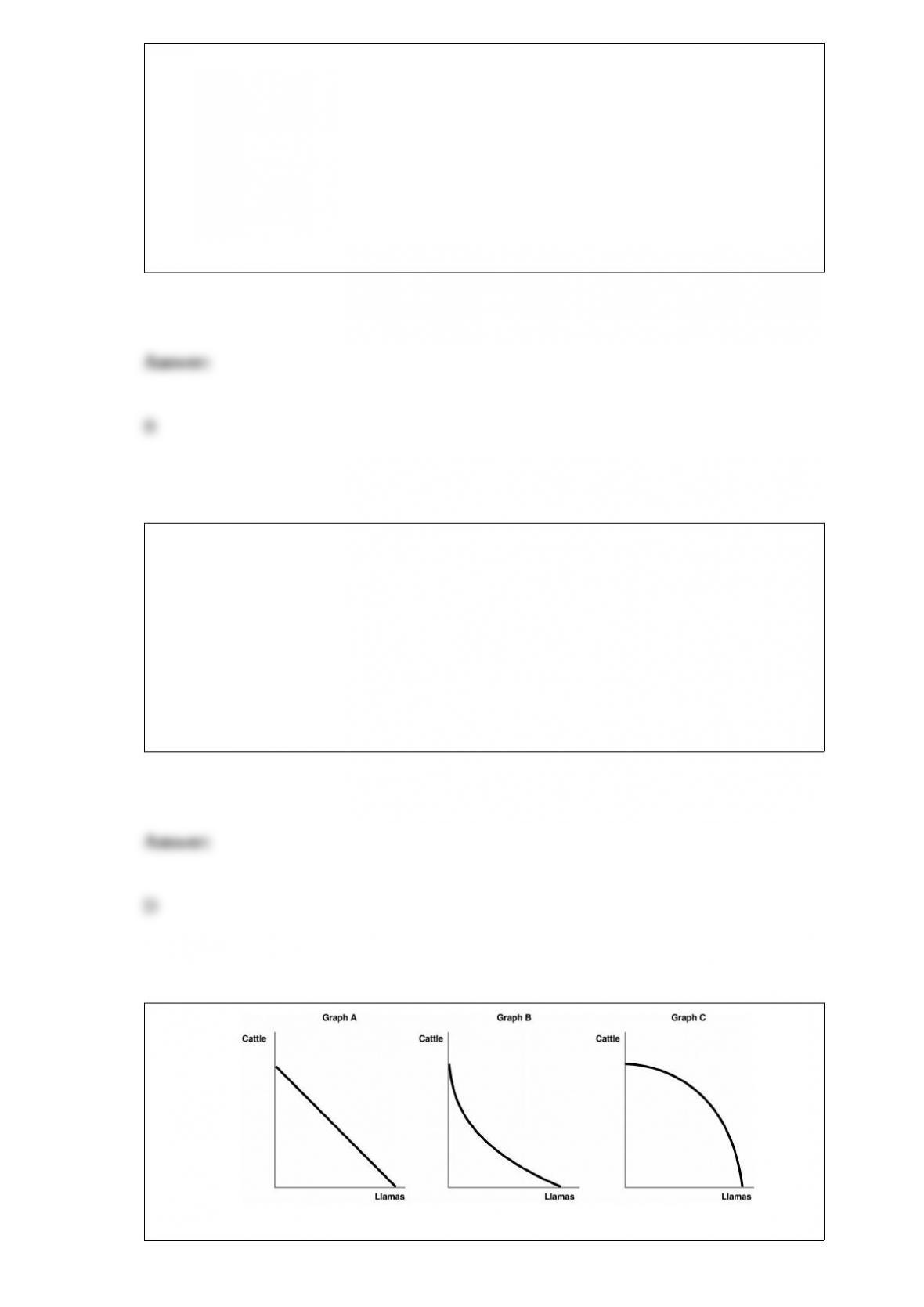
Figure 2-3

Sergio Vignetto raises cattle and llamas on his land. A portion of his land is more
suitable for raising cattle, and the other portion is better suited for raising llamas. Which
of the graphs in Figure 2-3 represent(s) his production possibilities frontier?
A) Graph A
B) Graph B
C) Graph C
D) either Graph A or Graph C
E) either Graph B or Graph C
If, for a given percentage increase in price, quantity demanded falls by a
proportionately smaller percentage, then demand is
A) unit-elastic.
B) perfectly elastic.
C) relatively inelastic.
D) relatively elastic.
The term “payroll taxes” is often used to refer to
A) individual income taxes that are withheld from paychecks.
B) corporate income taxes.

C) Social Security and Medicare taxes.
D) sales taxes.
All of the following are part of an economic model except
A) assumptions.
B) hypotheses.
C) data.
D) opinions.
Most economists believe that the return of ________ during the 2007-2009 recession is
a key reason why the recession was so severe.
A) high tariffs
B) financial instability
C) rapid inflation
D) high interest rates
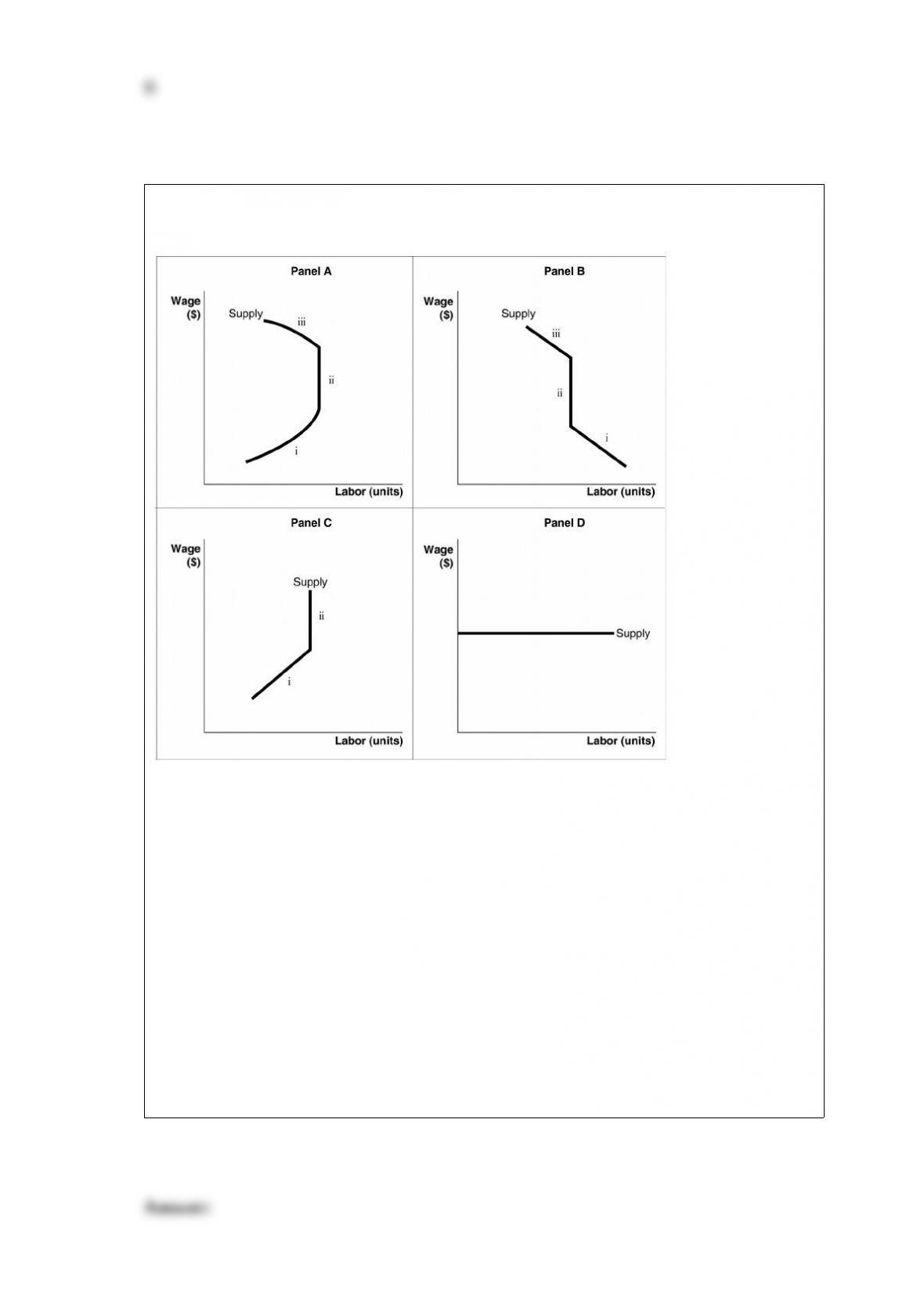
Figure 17-3
Which of the following statements is true?
A) Panel B correctly describes a situation in which the income effect dominates the
substitution effect at low wages (segment i) and again at very high wages (segment iii).
B) Panel B incorrectly describes a situation in which the income effect dominates the
substitution effect at low wages (segment i) and a situation in which the substitution
effect dominates the income effect at very high wages (segment iii).
C) Panel B incorrectly describes a situation in which the income effect dominates the
substitution effect at low wages (segment i).
D) Panel B incorrectly describes a situation in which the income effect dominates the
substitution effect at very high wages (segment iii)
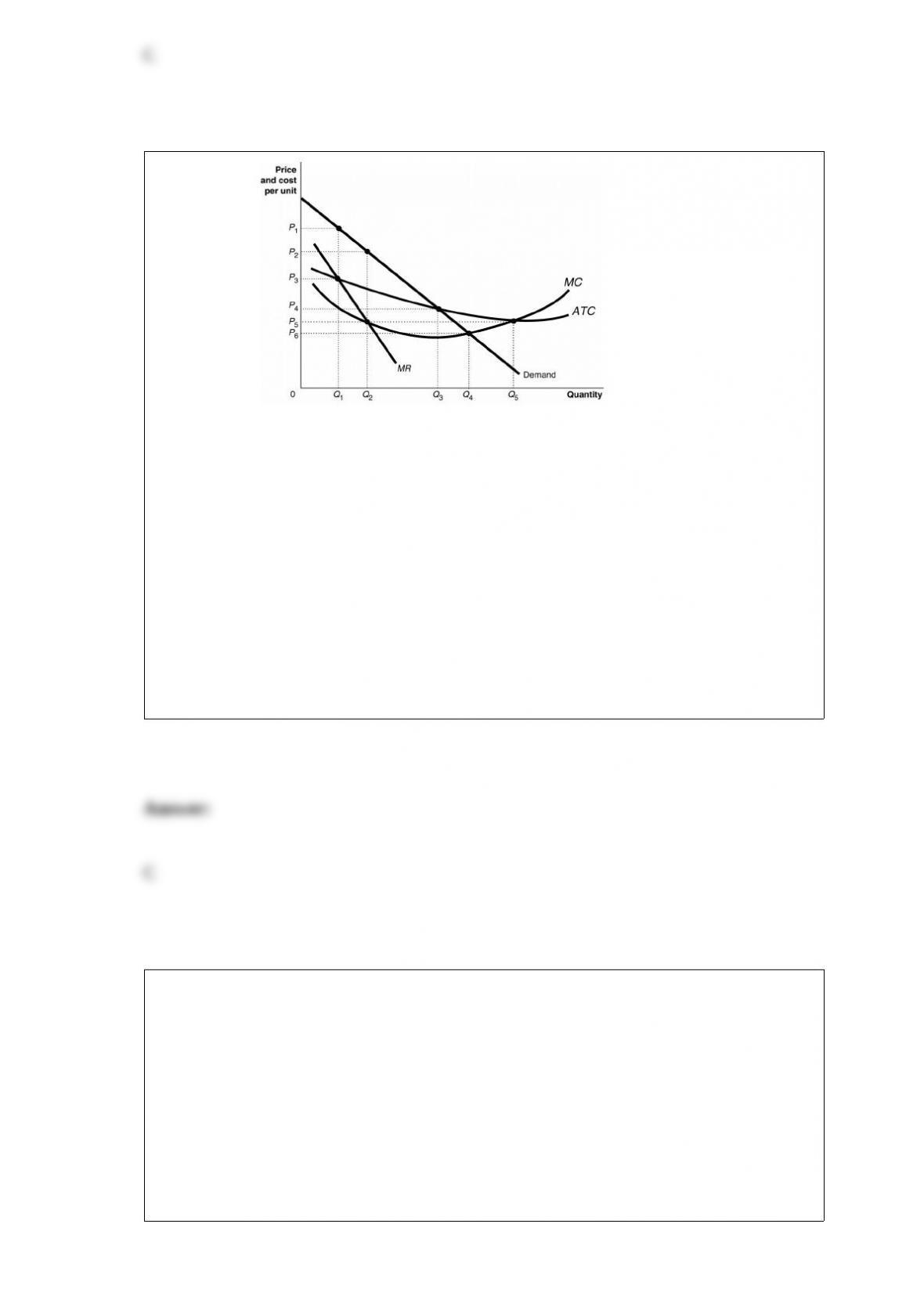
Figure 15-16 Figure 15-16 shows the
market demand and cost curves facing a natural monopoly.
Which of the following would be true if government regulators require the natural
monopoly to produce at the economically efficient output level?
A) This results in a misallocation of resources.
B) The marginal cost of producing the last unit sold exceeds the marginal benefit.
C) The firm will sustain persistent losses and will not continue in business in the long
run.
D) The firm will break even.
The “interest rate effect” can be described as an increase in the price level that raises the
interest rate and chokes off
A) government spending.
B) government spending and unplanned investment.
C) investment and consumption spending.
D) net exports.

Which of the following explains why purchasing power parity does not completely
explain long-run fluctuations in exchange rates?
A) Some goods and services produced in any country are not traded internationally.
B) Consumer preferences for goods and services across countries are very similar.
C) Most countries do not impose barriers to trade.
D) Most countries have free markets with little, if any, government regulation.
With the exception of during recessions, workers in Canada are eligible for
unemployment benefits for about twice as long a period of time as workers in the
United States. As a result,
A) the average duration of unemployment is longer in the United States than in Canada.
B) the unemployment rate in Canada is usually higher than in the United States.
C) the opportunity cost of job search in Canada is lower than in the United States.
D) frictional unemployment is higher, on average, in the United States than in Canada.

All of the following actions were taken by the Thai government to help Thailand
maintain its peg against the dollar in the 1990s except
A) borrowing dollars from the International Monetary Fund in exchange for baht.
B) buying baht on the foreign exchange market to support higher demand for the baht.
C) increasing domestic interest rates to attract more foreign investors.
D) imposing restrictions on exports to the United States to prevent too many dollars
from entering the economy.
Double taxation refers to
A) corporations paying taxes on profits and individuals paying taxes on wage income.
B) individuals paying taxes on wage income and individuals paying taxes on dividends.
C) corporations paying taxes on profits and individuals paying taxes on dividends.
D) corporations paying taxes on capital gains and individuals paying taxes on wage
income.