
Average cost
a. is always larger than marginal cost.
b. declines for some range of output, hits a minimum, and then increases.
c. is always smaller than marginal cost.
d. is total cost/price of the product.
One intention of deposit insurance is to reduce the danger of
a. excess lending.
b. excess profits.
c. risky lending.
d. bank runs.
e. All of the above are correct.
The exchange rate is
a. another term for “interest rate.”
b. another term for “growth rate.”

c. the rate at which goods trade for one another across international borders.
d. the price of one currency in terms of another currency.
To a bank, an asset is an obligation that it owes to someone else.
a. True
b. False
Assume that the MPC is 0.85 and investment spending rises by $100 million. How
much consumption spending will this generate in the second round of spending?
a. $15 million
b. $85 million
c. $100 million
d. $118 million
e. $185 million

If a tax is progressive, the average tax rate
a. remains the same as income rises.
b. rises as income rises.
c. falls as income rises.
d. falls with passage of time.
Economists believe mergers can sometimes achieve greater efficiency than two
companies that do not merge.
a. True
b. False
Figure 10-2
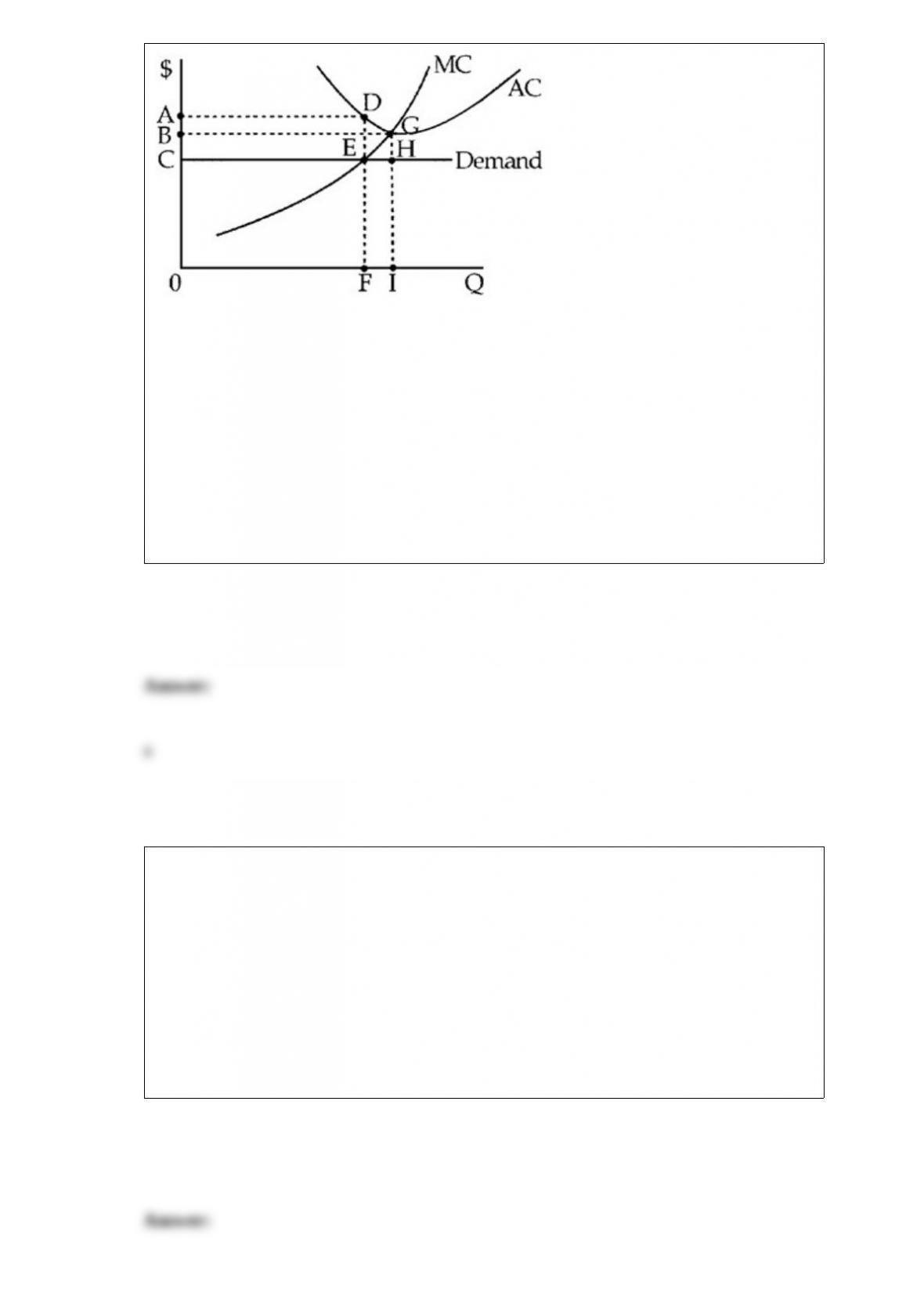
Figure 10-2 shows demand and short-run cost curves for a perfectly competitive firm.
At its profit-maximizing level of output, the firm’s short-run TC is represented by area
a. ADFO.
b. BGHC.
c. BGIO.
d. ADGIO.
The inability of Congress to pass a stimulus package after September 11, 2001, could be
used as an argument for
a. activist fiscal policy.
b. activist monetary policy.
c. expansionary fiscal policy.
d. contractionary monetary policy.

What does the production possibility curve imply about the resource allocation?
a. Only some points on the curve are efficient.
b. All points on the curve are equally efficient.
c. A point which lies below the curve is more efficient.
d. A point which lies above the curve is readily achievable.
The substitution effect of a wage increase
a. probably leads most workers to want to work more.
b. certainly leads all workers to want to work more.
c. probably leads most workers to want to work less.
d. certainly leads most firms to want to employ more workers.
The principal determinants of total and average cost curves are the firm’s technology

and the prices of its inputs.
a. True
b. False
An inferior good is a good whose quantity demanded
a. rises when its price falls.
b. falls when the price of a related good falls.
c. falls when the consumer’s total utility rises.
d. rises when the consumer’s real income falls.
Figure 20-8

Which of the graphs in Figure 20-8 represents the effects of a currency appreciation?
a. 1
b. 2
c. 3
d. 4
Along the inelastic portion of a demand curve, the
a. change in price will always be less than the change in quantity demanded.
b. percentage change in price will be less than the percentage change in quantity
demanded.
c. change in price will always be more than the change in quantity demanded.
d. percentage change in price will be more than the percentage change in quantity
demanded.
Input prices are fixed for a period of time and this causes firms to increase production
as prices increase.
a. True

b. False
The Lehman Brothers bankruptcy triggered a financial panic that featured
a. an increase in Treasury interest rates and an increase in most other interest rates.
b. an increase in Treasury interest rates and a decrease in most other interest rates.
c. a decrease in Treasury interest rates and an increase in most other interest rates.
d. a decrease in Treasury interest rates and a decrease in most other interest rates.
Supply and demand analysis
a. can be used to understand solutions to pollution, but not causes.
b. can be used to analyze how externalities lead to environmental problems.
c. cannot be used to analyze pollution, which is a physical and chemical problem.
d. cannot be used to solve the pollution problem, but can be used to analyze it.

Voluntary programs for reducing pollution
a. have been more successful in the United States in encouraging recycling than any
other type of program.
b. are most appropriate when surveillance and enforcement are impractical.
c. work most reliably when voluntary reduction of pollution over a long period is
encouraged.
d. are enforced by legal authority.
A cartel is
a. a group of oligopolists who try to behave like a single monopolist and split the
benefits among themselves.
b. a government-approved organization for the exchange of technical information
among firms.
c. a form of competition among oligopolists.
d. a regulated industry that is officially permitted to set the price of its product above
long-run average total cost.

The average revenue curve can also be described as the demand curve.
a. True
b. False
Legal limits on prices will tend to cause misallocation of resources because
a. production (or opportunity) cost no longer corresponds to market price.
b. people are unable to determine their preferences at the high or low price.
c. producers no longer have incentive to be profitable.
d. consumers no longer have incentive to spend their income efficiently.
e. All of the above are correct.
Because the consumer’s budget is limited, purchase decisions among available goods
must of necessity be interdependent.
a. True

b. False
The horizontal axis on the aggregate demand-aggregate supply model measures
a. the price of the specific product produced.
b. the level of total output.
c. the price level.
d. the level of employment.
The individual income tax, the inheritance tax, and the head tax are all examples of
direct taxes.
a. True
b. False

The purchasing power parity theory of exchange rate determination holds that the
exchange rate between any two national currencies is fixed to reflect differences in the
price levels in the two countries.
a. True
b. False
A demand schedule is a table showing how the ____ of some product during a specified
period of time changes as ____ changes, holding all other determinants of quantity
demanded constant.
a. demand; the price of its complement
b. demand; the quantity supplied
c. quantity demanded; the price of its substitute
d. quantity demanded; the price of that product
One of the reasons why the Phillips curve is no longer viewed as a “menu” of possible
choices available to policy makers is that
a. in the 1970s and 1980s there was no inflation at all.

b. analysis indicates there was no such “menu” in the 1960s.
c. in the 1970s and 1980s much inflation came from the supply side.
d. economic theory is unable to explain the curve and, therefore, it has been rejected.
The cause of the “greenhouse effect” is the
a. increasing use of glass in construction.
b. growth of desertification.
c. burning of “fossil fuels.”
d. decline in carbon dioxide in the atmosphere.
Throughout history, governments have used price controls to
a. protect buyers.
b. protect sellers.
c. serve the “public interest.”
d. All of the above are correct.