
1) depreciation of the dollar will:
a.increase the prices of u.s. imports, but decrease the prices of u.s. exports.
b.decrease the prices of u.s. imports, but increase the prices of u.s. exports.
c.increase the prices of both u.s. imports and exports.
d.decrease the prices of both u.s. imports and exports.
2) If the rate of exchange for a pound is $4, the rate of exchange for the dollar is:
A.1/4pound.
B.4 pounds.
C.$.25.
D.$1.00.
3) in performing its stabilization function it may be appropriate for government to:
a.increase both government spending and taxes when the economy is experiencing
rapid inflation.
b.reduce government spending and increase taxes when the economy experiences
substantial unemployment.
c.increase government spending and reduce taxes when the economy experiences rapid
inflation.
d.increase government spending and reduce taxes when the economy experiences
substantial unemployment.
4) A bank that has assets of $85 billion and a net worth of $10 billion must have:
A.liabilities of $75 billion.
B.excess reserves of $10 billion.
C.liabilities of $10 billion.
D.excess reserves of $75 billion.
5) suppose that as the price of y falls from $2.00 to $1.90 the quantity of y demanded
increases from 110 to 118. then the price elasticity of demand is:
a.4.00
b.2.09
c.1.37
d.3.94
6) a normal good is one:
a.whose amount demanded will increase as its price decreases.
b.whose amount demanded will increase as its price increases.
c.whose demand curve will shift leftward as incomes rise.
d.the consumption of which varies directly with incomes.
7)
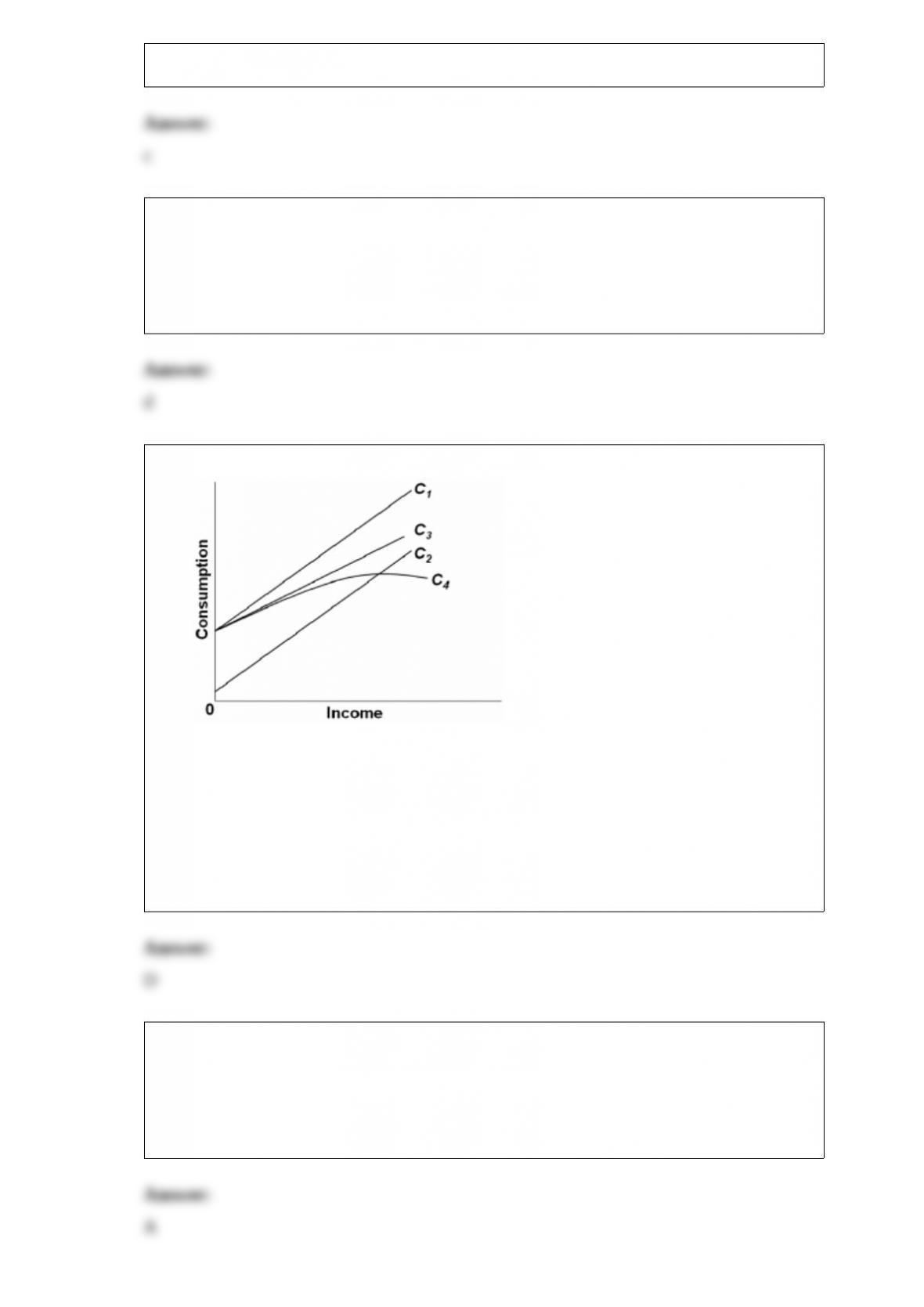
(Advanced analysis) Refer to the above diagram, in which C1 is the before-tax
consumption schedule. Other things being equal, the economy would enjoy the greatest
built-in stability with consumption schedule:
A.C1.
B.C2.
C.C3.
D.C4.
8) The sales tax is a regressive tax because the:
A.percentage of income paid as taxes falls as income rises.
B.administrative costs associated with the collection of the tax are relatively high.
C.percentage of income paid as taxes is constant as income rises.
D.tax tends to reduce the total volume of consumption expenditures.
9)
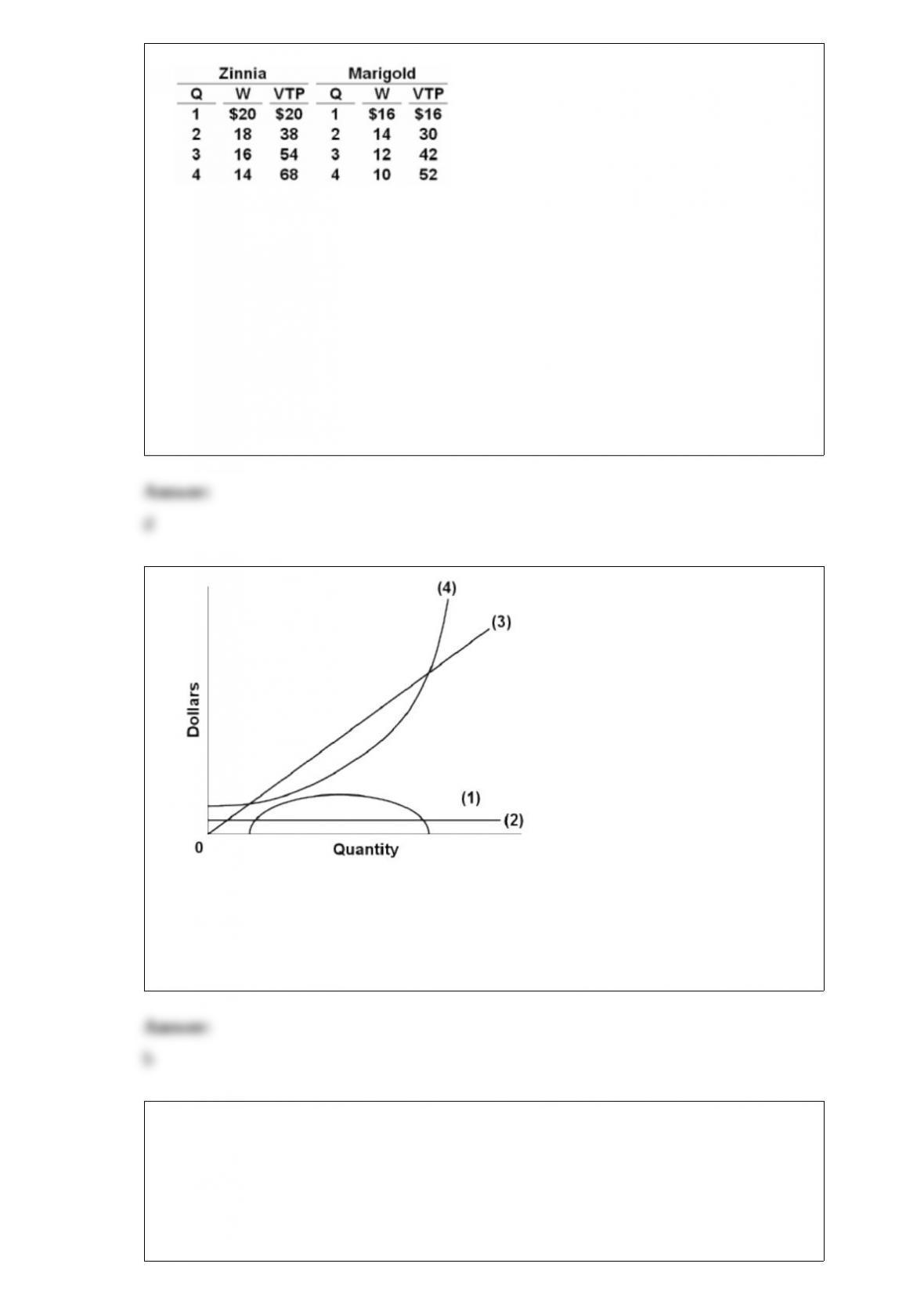
symbols: q = number of workers demanded; w = wage rate; and vtp = value of the
cumulative total product (output) of the particular number of workers.
assumptions: (1) the current wage in zinnia is $20 and the current wage in marigold is
$12; (2) full employment exists in both countries.
refer to the above data, symbols, and assumptions. the combined number of workers in
the two nations is:
a.2.
b.3.
c.5.
d.4.
10)
curve (3) in the above diagram is a purely competitive firm’s:
a.total cost curve.
b.total revenue curve.
c.marginal revenue curve.
d.total economic profit curve.
11) If the exchange rate changes so that more Mexican pesos are required to buy a
dollar, then:
A.the peso has appreciated in value.
B.Americans will buy more Mexican goods and services.
C.more U.S. goods and services will be demanded by the Mexicans.
D.the dollar has depreciated in value.
12)
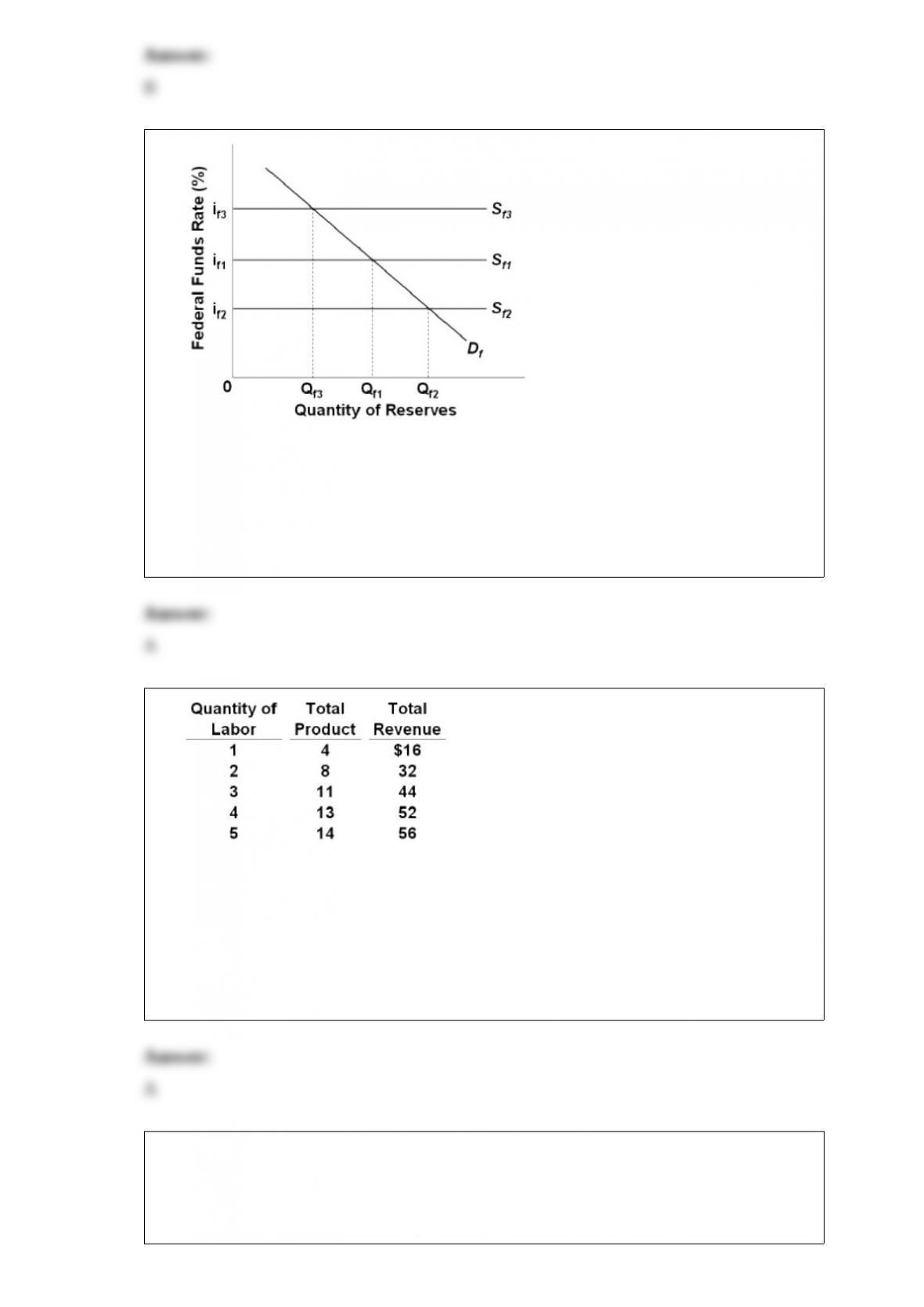
Refer to the above diagram for the Federal funds market. If the Fed wants the Federal
funds rate to be i1, what quantity of reserves do they need to make available to banks?
A.Qf1.
B.Qf2.
C.Qf3.
D.It cannot be determined with the information given.
13)
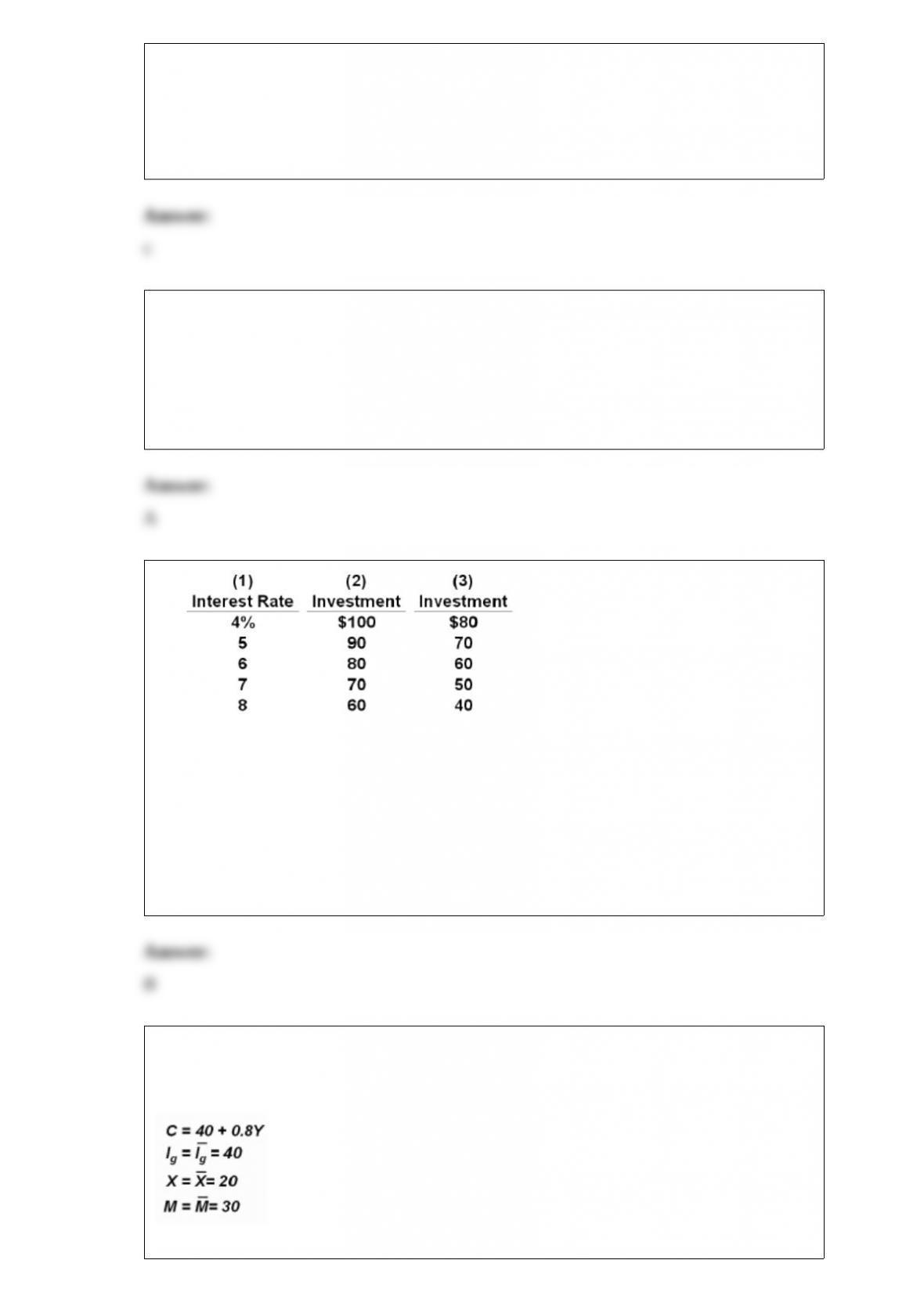
Refer to the above data. If the market wage rate is $8 and the firm hires its
profit-maximizing number of workers, the firm’s total revenue will exceed its total wage
payment by:
A.$20.
B.$16.
C.$12.
D.$8.
14) suppose that scoobania, which has full employment, can obtain 1 unit of capital
goods by sacrificing 2 units of consumer goods domestically, but can obtain 1 unit of
capital goods from another country by trading 1 unit of consumer goods for it. this
reality illustrates:
a.a rightward (outward) shift of the production possibilities curve.
b.increasing opportunity costs.
c.achieving points beyond the production possibilities curve through international
specialization and trade.
d.productive efficiency.
15) A competitive employer is using labor in such an amount that labor’s MRP is $10
and its wage rate is $8. This firm:
A.should hire more labor because this will increase profits.
B.should hire more labor, although this may either increase or decrease profits.
C.is currently hiring the profit-maximizing amount of labor.
D.is selling its product in an imperfectly competitive market.
16)
Refer to the above table, in which investment is in billions. Suppose the Fed reduces the
interest rate from 6 to 5 percent at a time when the investment demand declines from
that shown by columns (1) and (2) to that shown by columns (1) and (3). As a result of
these two occurrences, investment will:
A.increase by $10 billion.
B.decrease by $10 billion.
C.increase by $20 billion.
D.decrease by $20 billion.
17) (Advanced analysis) Answer the next question(s) on the basis of the following
information for a private open economy:
Refer to the above information. This nation is incurring:
A.a trade surplus.
B.balance in its international trade.
C.a trade deficit.
D.unemployment.
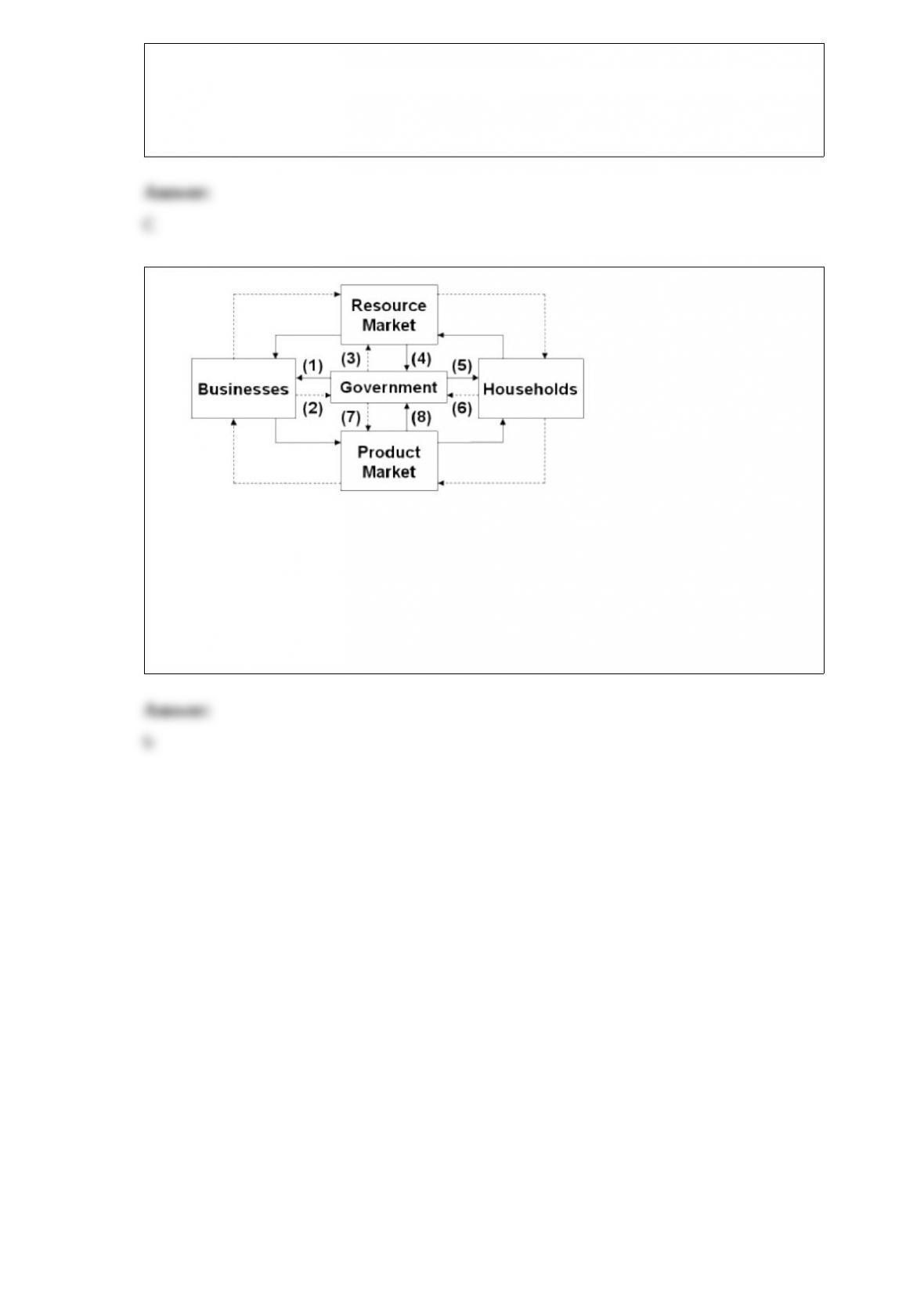
18)
refer to the above diagram, in which solid arrows reflect real flows; broken arrows are
monetary flows. if the economy were experiencing inflation due to excess aggregate
spending, it would be most appropriate for government to:
a.increase flows (3) and (7) and reduce flows (2) and (6).
b.decrease flows (3) and (7) and increase flows (2) and (6).
c.increase flows (2) and (3) and reduce flows (6) and (7).
d.increase all of the monetary flows.