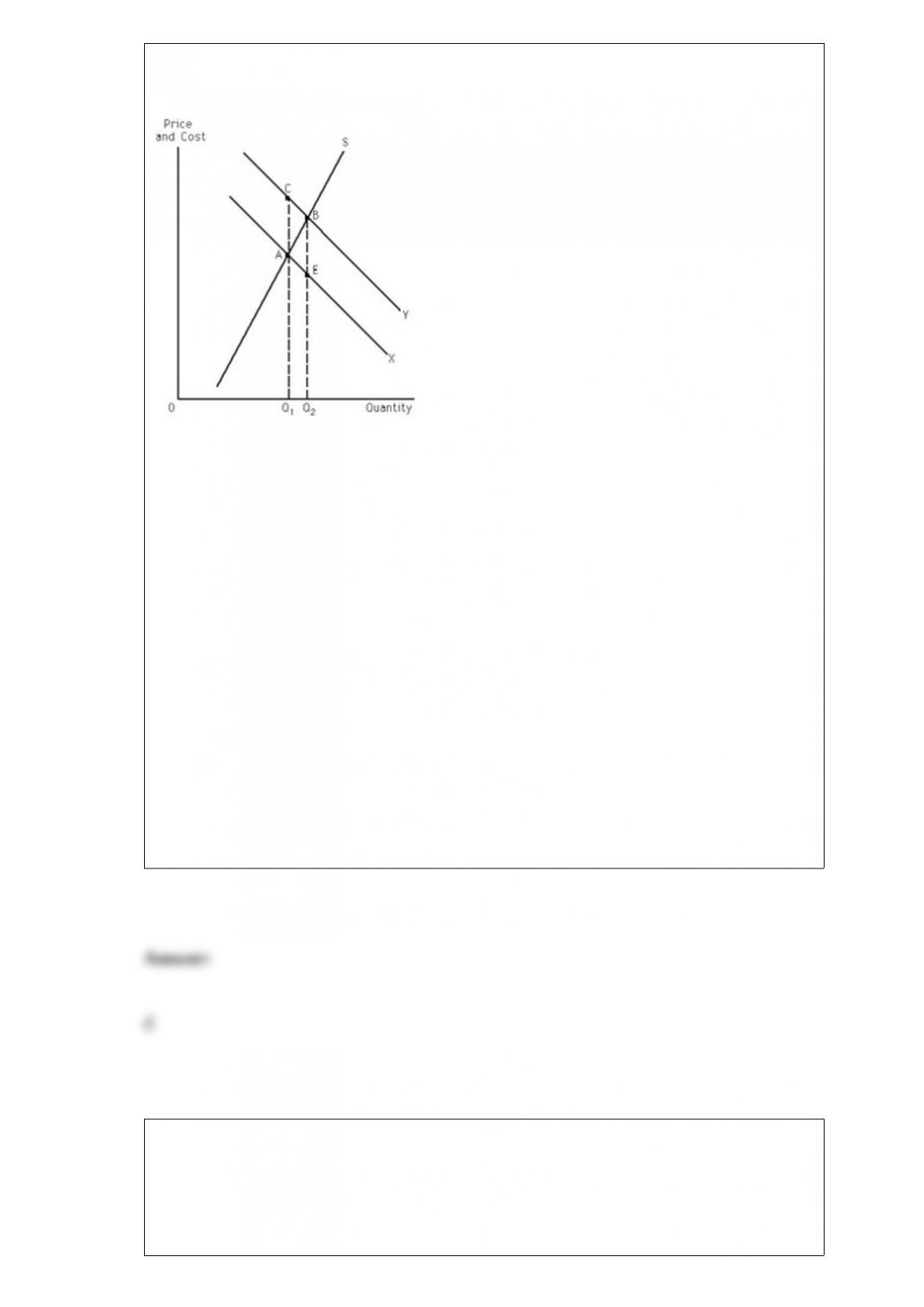
Exhibit 31-2
This graph represents a positive externality situation. Given this, which of the two
curves, X or Y, represents marginal social benefits and why?
a. Curve X, because if there is a positive externality, negative external benefits are
associated with it: social costs external benefits – private benefits, therefore the
marginal social benefit curve must lie below the marginal private benefit curve.
b. Curve X, because if there is a positive externality, external benefits are associated
with it: social benefits = external benefits + private benefits, therefore the marginal
social benefit curve must lie below the marginal private benefit curve.
c. Curve Y, because if there is a positive externality, external costs are associated with
it: social benefits = external costs + private benefits, therefore the marginal social
benefit curve must lie above the marginal private benefit cost curve.
d. Curve Y, because if there is a positive externality, external benefits are associated
with it: social benefits = external benefits + private benefits, therefore the marginal
social benefit curve must lie above the marginal private benefit curve.
Something that provides disutility is called a
a. good.
b. want.

c. need.
d. bad.
e. none of the above
The answer is: “The difference between the price buyers pay for a good and the
maximum or highest price they would have paid for the good.” This is the definition for
a. taxes.
b. producers’ surplus.
c. consumers’ surplus.
d. the sum of producers’ and consumers’ surpluses.
e. the welfare triangle.

Based on the data provided in this table,what type of relationship exists between
variables X and Y?
a. inverse
b. direct
c. independent
d. There is no relationship between variables X and Y.
All sellers may be tempted to raise the price of what they sell, but a negative unintended
effect of raising the price could be __________ in units sold large enough to
__________ the seller’s total revenue earned.
a. an increase; raise
b. an increase; lower
c. a decrease; raise
d. a decrease; lower
Which of the following statements is true?
a. The lower the elasticity of demand for cars, the higher the elasticity of demand for
the workers that produce cars.
b. The higher the elasticity of demand for cars, the lower the elasticity of demand for
the workers that produce cars.
c. The lower the elasticity of demand for cars, the lower the elasticity of demand for the
workers that produce cars.
d. The fewer the substitute factors for union labor, the higher the elasticity of demand
for union labor.
e. c and d
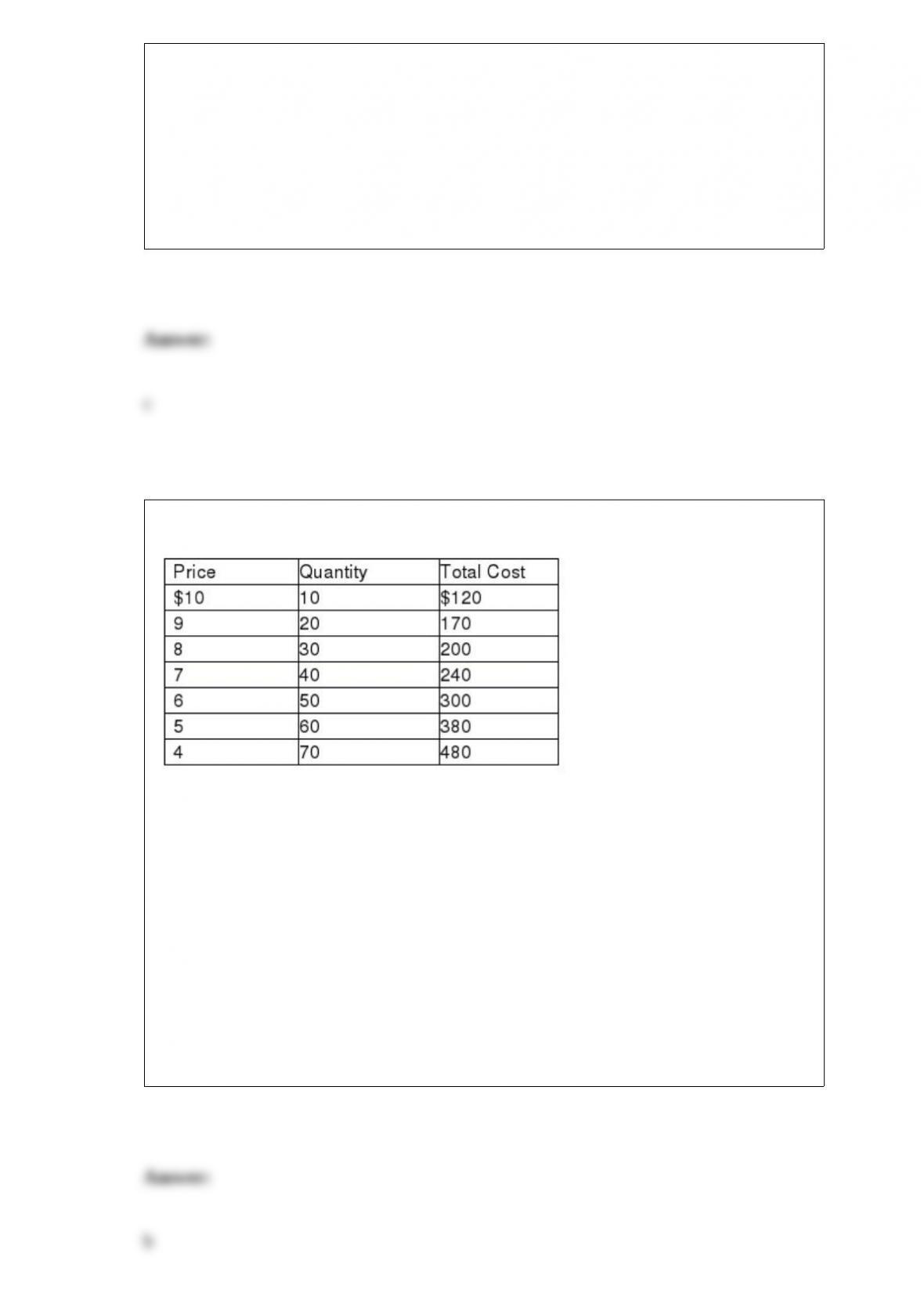
Exhibit 25-7
A monopolistic competitive firm that seeks to maximize profits will sell __________
units and charge a price of __________ .
a. 10; $10
b. 40; $7
c. 20; $9
d. 60; $5
e. 70; $7

A public franchise is a right granted
a. to one firm by another firm; for example, McDonald’s Corporation grants restaurant
owners a franchise to make its hamburgers.
b. to a firm by government that prevents other firms from producing the same product
or service.
c. to a cooperative of buyers that allows the group to purchase goods at wholesale
prices.
d. by government that enables a person to engage in arbitrage.
The hotel industry contains some aspects that economists consider to be part of the
€hidden fee€ economy.
a. True
b. False
Exhibit 27-5

The marginal revenue product of the fourth unit of labor is
a. $60.
b. $180.
c. $360.
d. $6.
If, for a perfectly competitive firm, price is greater than average variable cost, then it
follows that
a. total revenue is greater than total cost.
b. total revenue is greater than total variable cost.
c. the firm will lose more or earn less by shutting down in the short run than by
continuing to produce.
d. b and c
e. There is not enough information to answer the question.
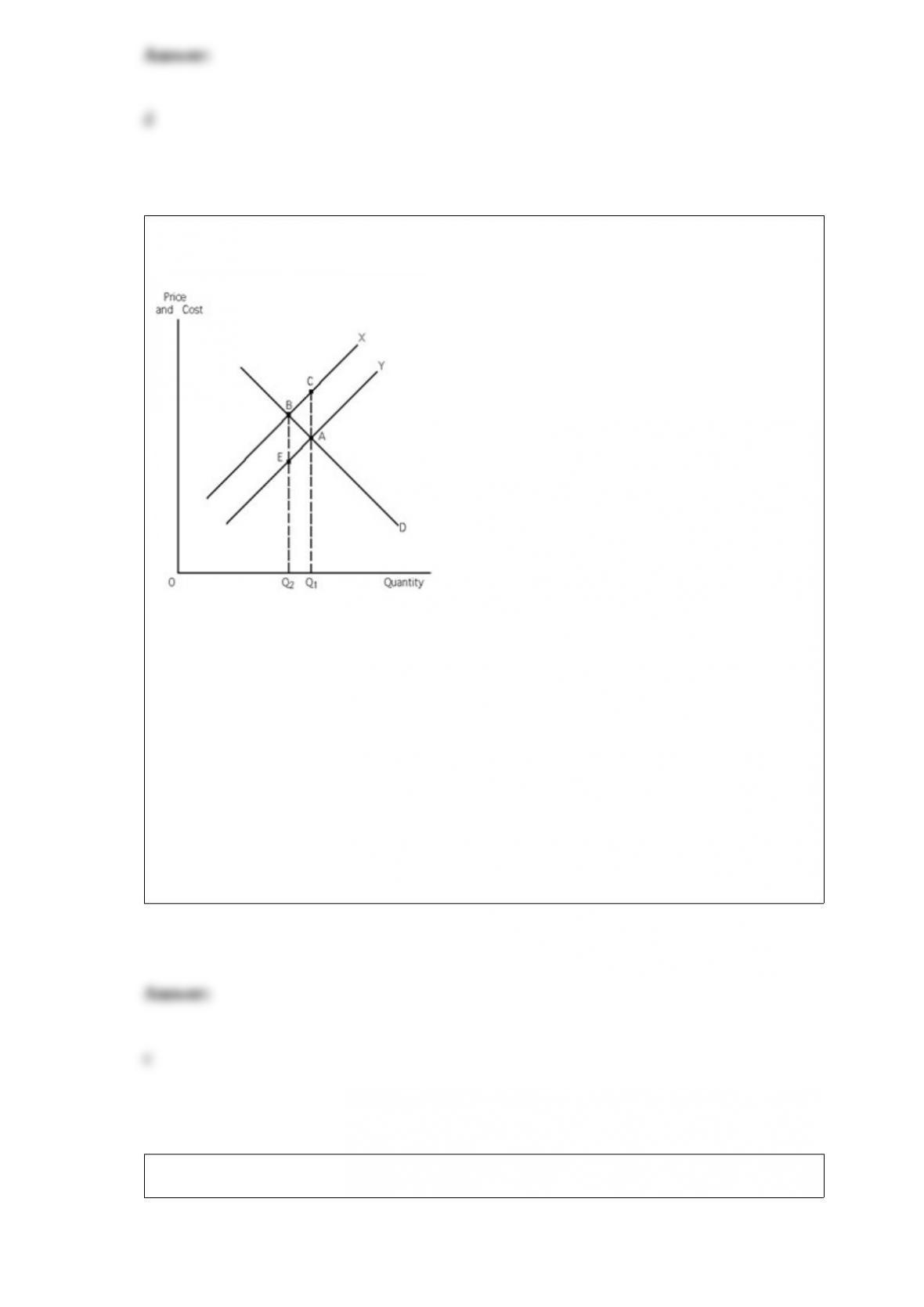
Exhibit 31-1
If the exhibit represents a negative externality situation, the triangle ABC is
representative of
a. social failure.
b. optimal failure.
c. market failure.
d. socially optimal output.
e. none of the above
Exhibit 24-10
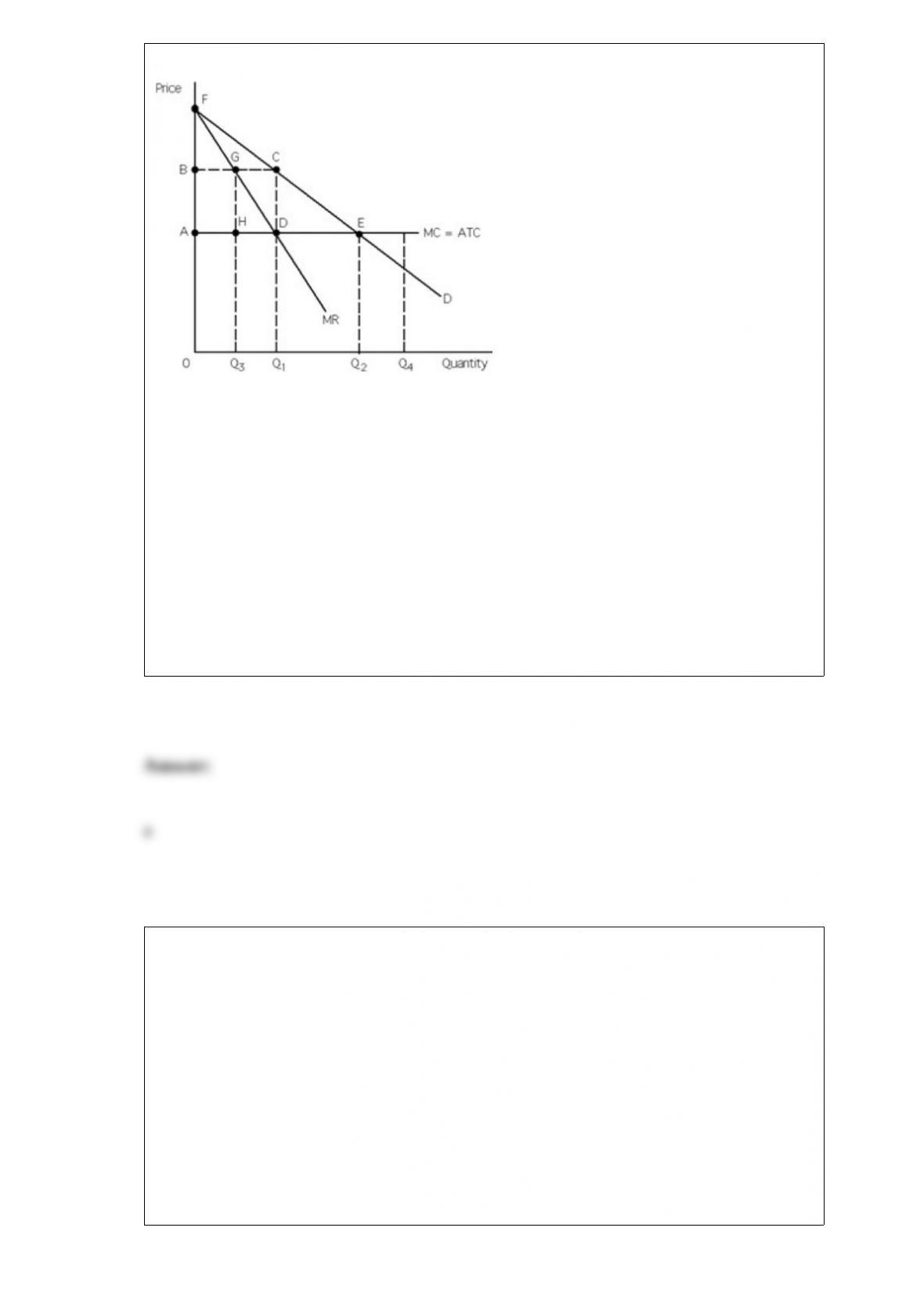
The profit-maximizing single-price monopolist earns total revenue equal to what area?
a. 0BCQ1
b. 0ADQ1
c. DCE
d. ABCD
e. GFC
Which of the following statements is true?
a. Explicit costs always equal implicit costs.
b. Zero economic profit is a smaller dollar figure than normal profit.
c. Zero economic profit is a larger dollar figure than normal profit.
d. Saying that a firm earned zero economic profit is the same as saying it earned normal
profit.
e. none of the above
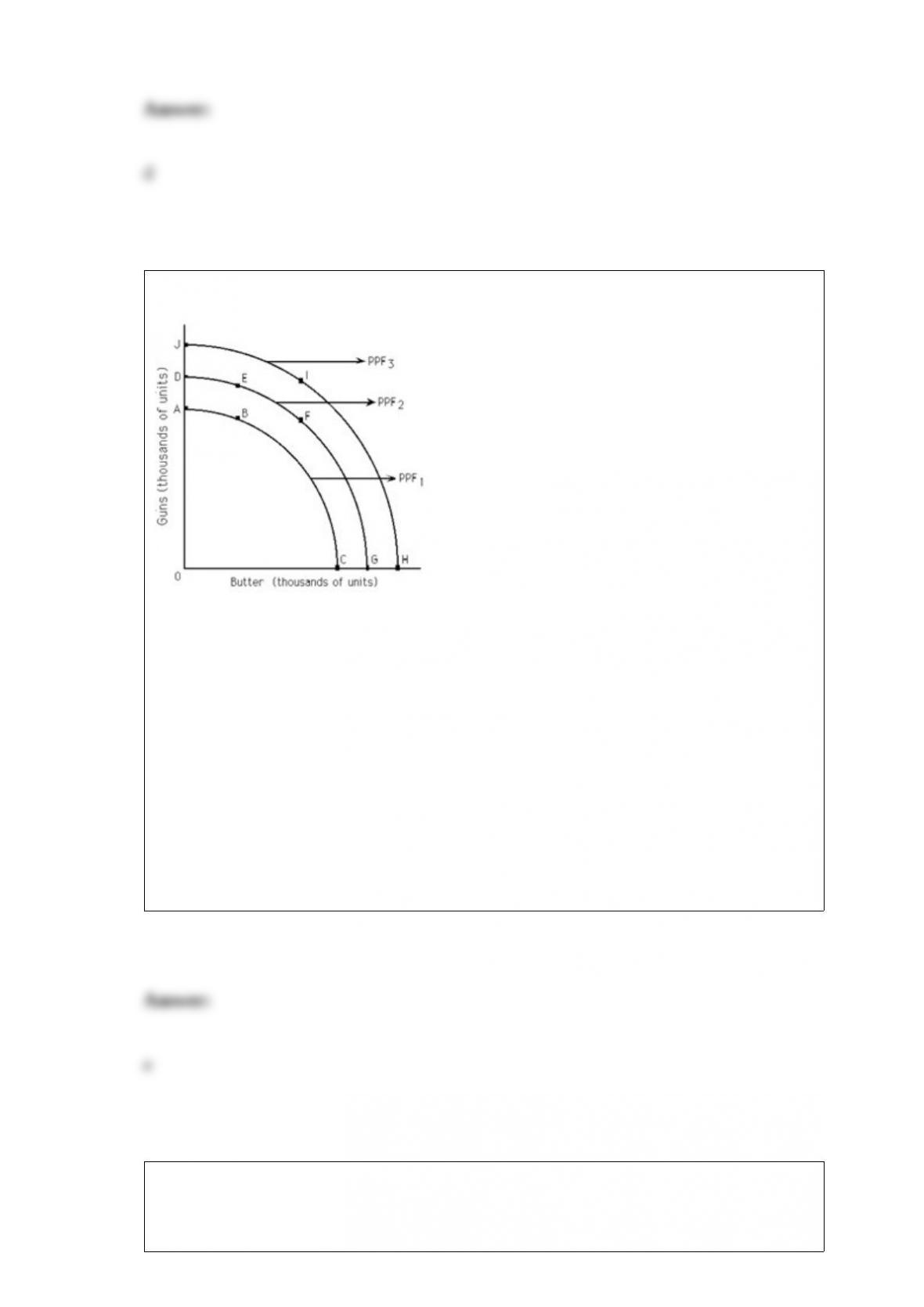
Exhibit 2-2
If PPF2 is the relevant production possibilities frontier, then point __________
illustrates productive inefficiency.
a. A
b. B
c. C
d. J
e. a, b, or c
If the demand for computer software rises as incomes rise, then computer software is a
(an)

a. inferior good
b. substitute (good) for computers
c. normal good
d. complement (good) for computers
e. c and d
Adverse selection exists when
a. the parties on one side of the market, who have information not known to others, self
select in a way that benefits the parties on the other side of the market.
b. the parties on one side of a market charge more for something than the parties on the
other side of the market want to pay.
c. one party to a transaction changes his or her behavior in a way that is hidden from
and costly to the other party.
d. the parties on one side of the market, who have information not known to others, self
select in a way that adversely affects the parties on the other side of the market.
e. none of the above
The NCAA rule governing the limits on the amount of a scholarship a college can offer
an athlete is an effective price floor.
a. True
b. False
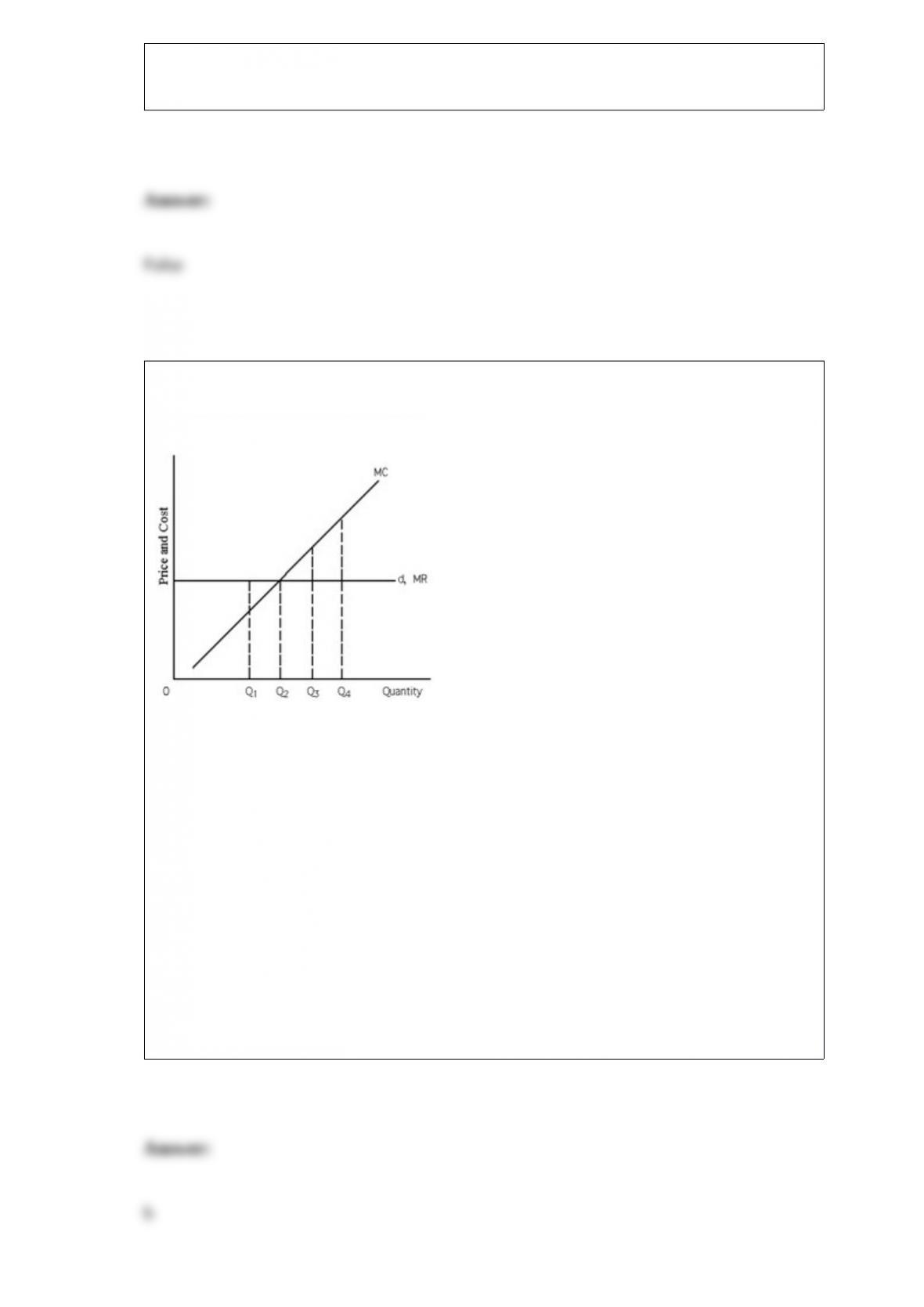
Exhibit 23-2
If the firm produces the quantity of output at which marginal revenue (MR) equals
marginal cost (MC), is it guaranteed maximum profit or minimized loss?
a. Yes, when MR = MC, it follows that MR – MC = 0, and thus the firm maximizes
profit and minimizes losses.
b. No, at the quantity of output at which MR = MC, it could be the case that average
variable cost is greater than price and the firm would do better to shut down.
c. Yes, when the firm produces the quantity at which MR = MC, it has maximized both
revenue and profit.
d. Yes, because if the MC curve is rising, the average total cost curve always lies below
it and thus profit is earned.
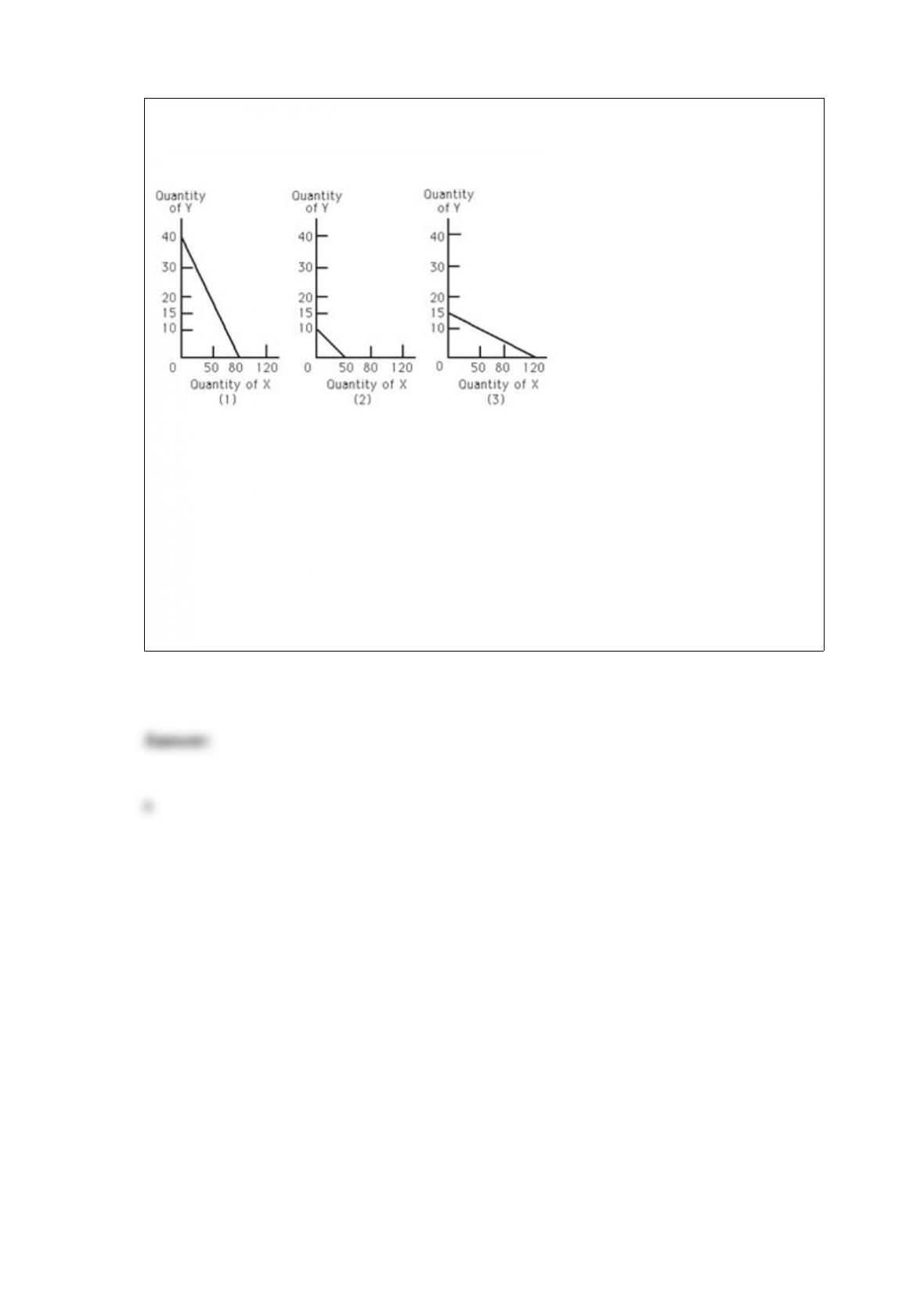
Exhibit 21-7
The relative price of X in terms of Y is the greatest on graph
a. (1).
b. (2).
c. (3).
d. This cannot be determined based on the information provided