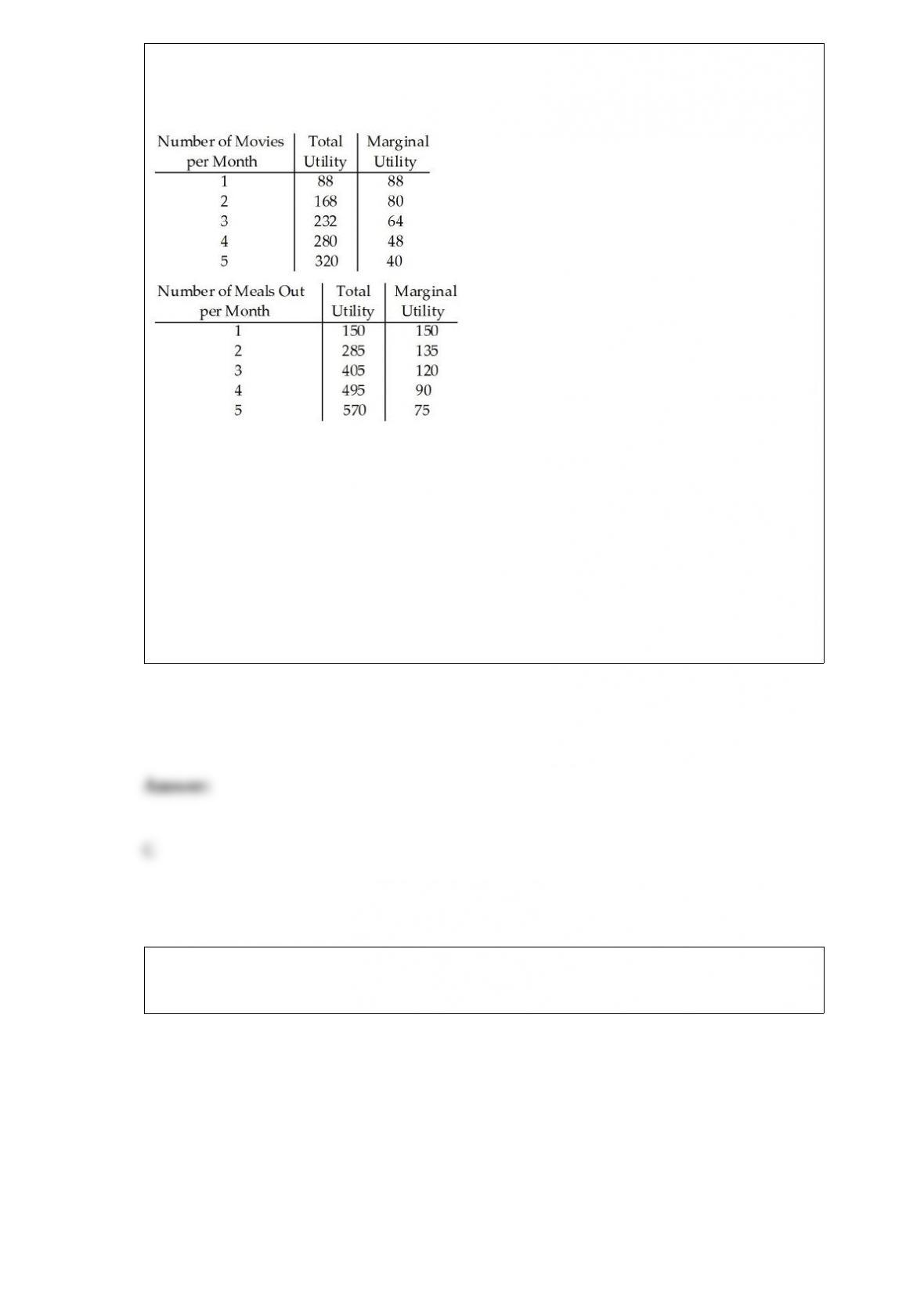
Refer to Table 7.8. Jessy spends no more than $75 per month on movies and eating out.
The price of a movie is $8 and the price of a meal out is $15. If Jessy watches two
movies per month, what is her marginal utility per dollar?
Table 7.8
A) 80
B) 12
C) 10
D) 9
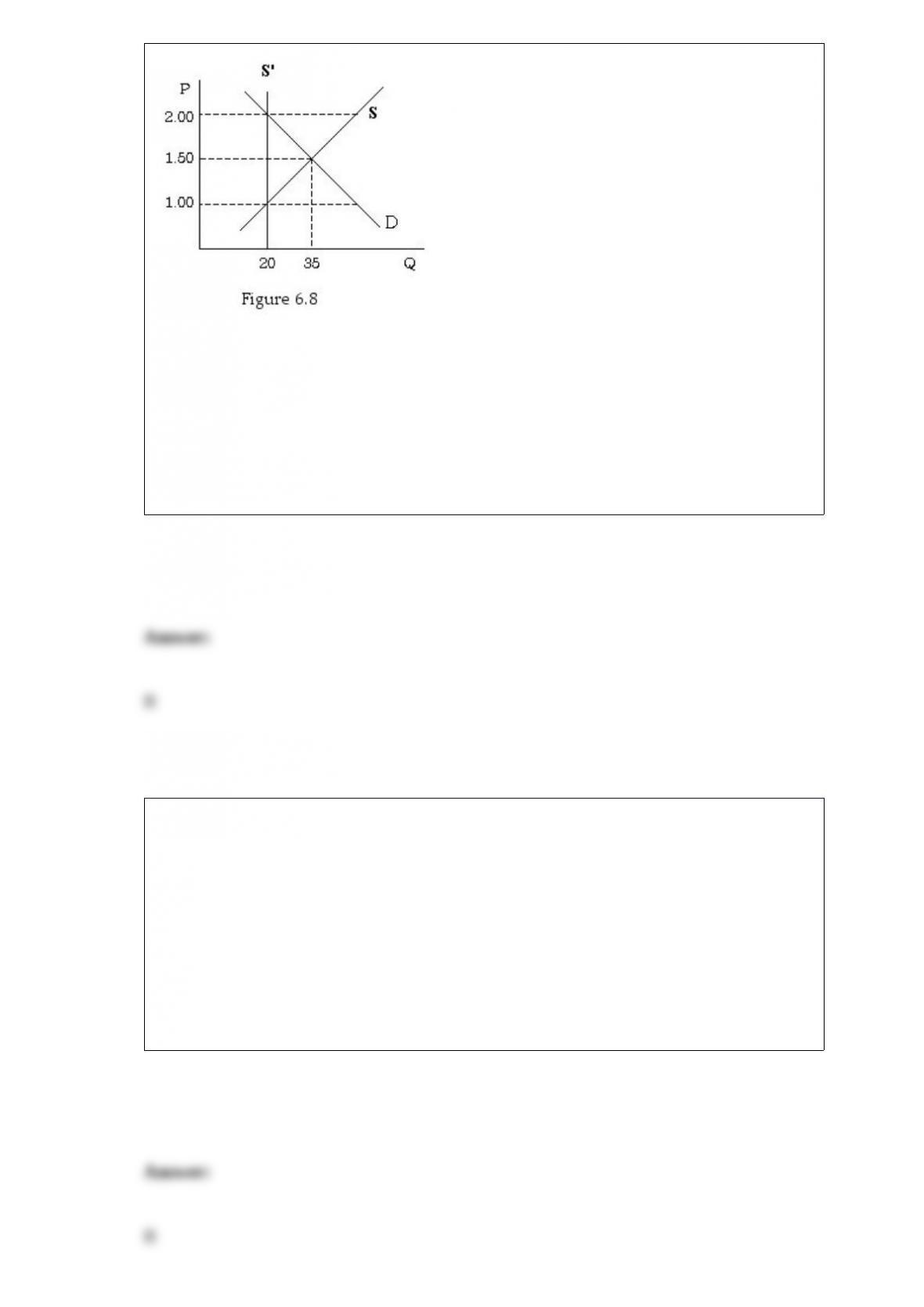
Figure 6.8 shows the market for taxicab services in a small town. If the government
limits taxicab services to 20 per day, then the deadweight loss is equal to:
A) $15.
B) $7.50.
C) $3.75.
D) $20.
Which type of barrier to entry allows the electric company to maintain a monopoly over
the production of electricity?
A) a patent
B) economies of scale
C) diseconomies of scale
D) ownership of a scarce factor of production

While marketable pollution permits may ________ the total amount of pollution, they
may ________ pollution in local areas.
A) increase; decrease
B) decrease; increase
C) decrease; not change
D) not change; increase
Suppose a ticket to a concert costs $39, and parking costs $5. Further, in order to watch
the concert, you must miss 2 hours of work where your hourly wage is $15 per hour.
The total opportunity cost of watching a concert is:
A) $74.
B) $44.
C) $39.
D) $30.
Which of the following companies was broken up by the government?

A) Standard Oil
B) Office Depot
C) Wonder Bread
D) Southwest Airlines
An increase in supply caused no change in the equilibrium price of a good. Thus,
demand must be:
A) perfectly inelastic.
B) vertical.
C) perfectly elastic.
D) unitary elastic.
At Tony’s Restaurant, the quantity of large pizzas sold is 200 at the unit price $15.
Suppose the price elasticity of demand for pizzas by the initial value method is 1.5, and
you would like to increase the quantity sold to 250. Then the new price must be:
A) $13.
B) $12.50.

C) $11.50.
D) $11.25.
The key region of the brain for benefit valuation is the:
A) insular cortex.
B) amygdala.
C) Nucleus Accumbens (NAcc).
D) prefrontal cortex (PFC).
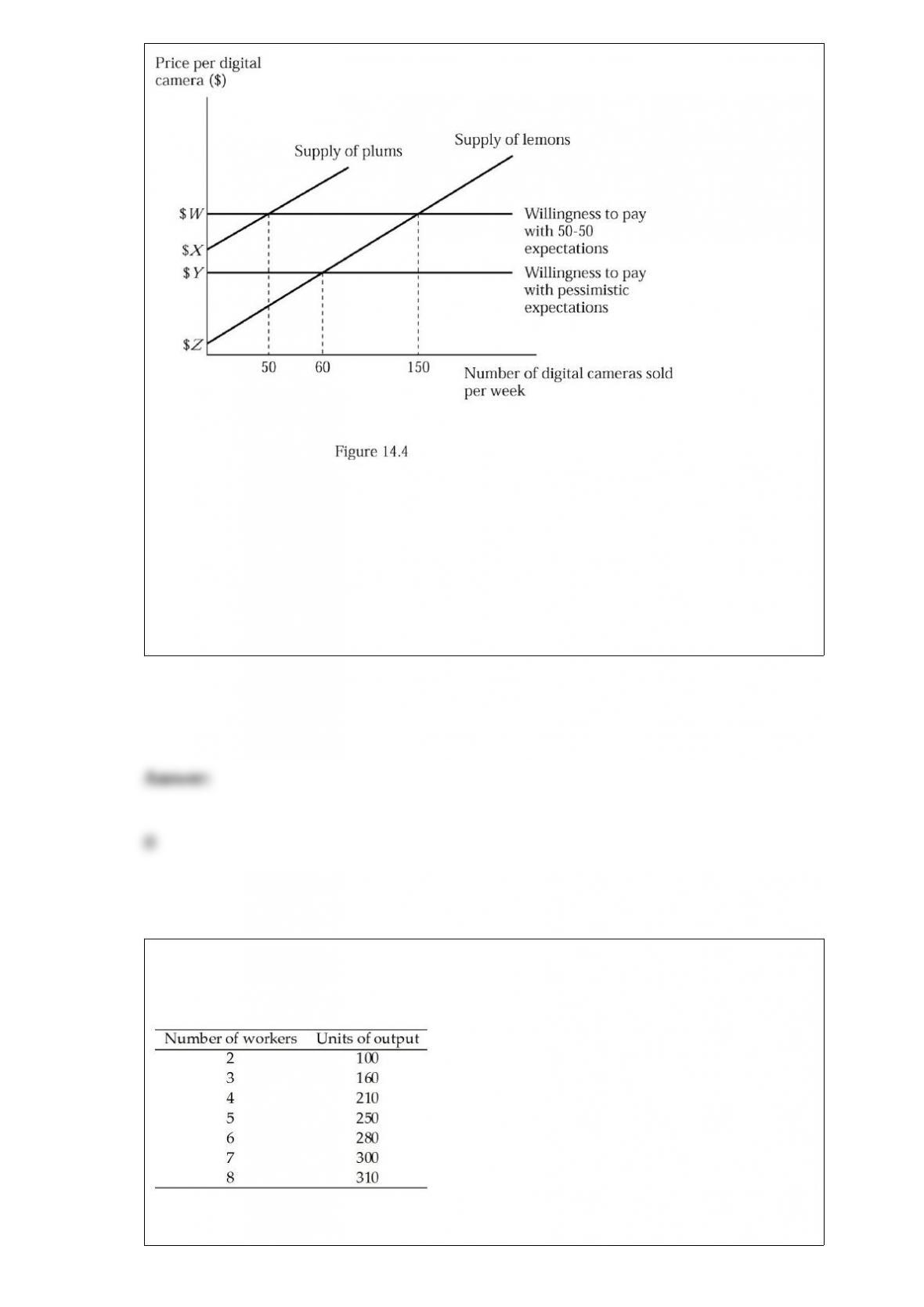
Figure 14.4 represents the market for used 12 megapixel digital cameras. Suppose
buyers are willing to pay $400 for a plum (high-quality) used digital camera and $200
for a lemon (low-quality) used digital camera. If buyers believe that all of used digital
cameras in the market are lemons (low quality), what number of used digital cameras
sold will actually be lemons?
A) 50
B) 60
C) 110
D) 150
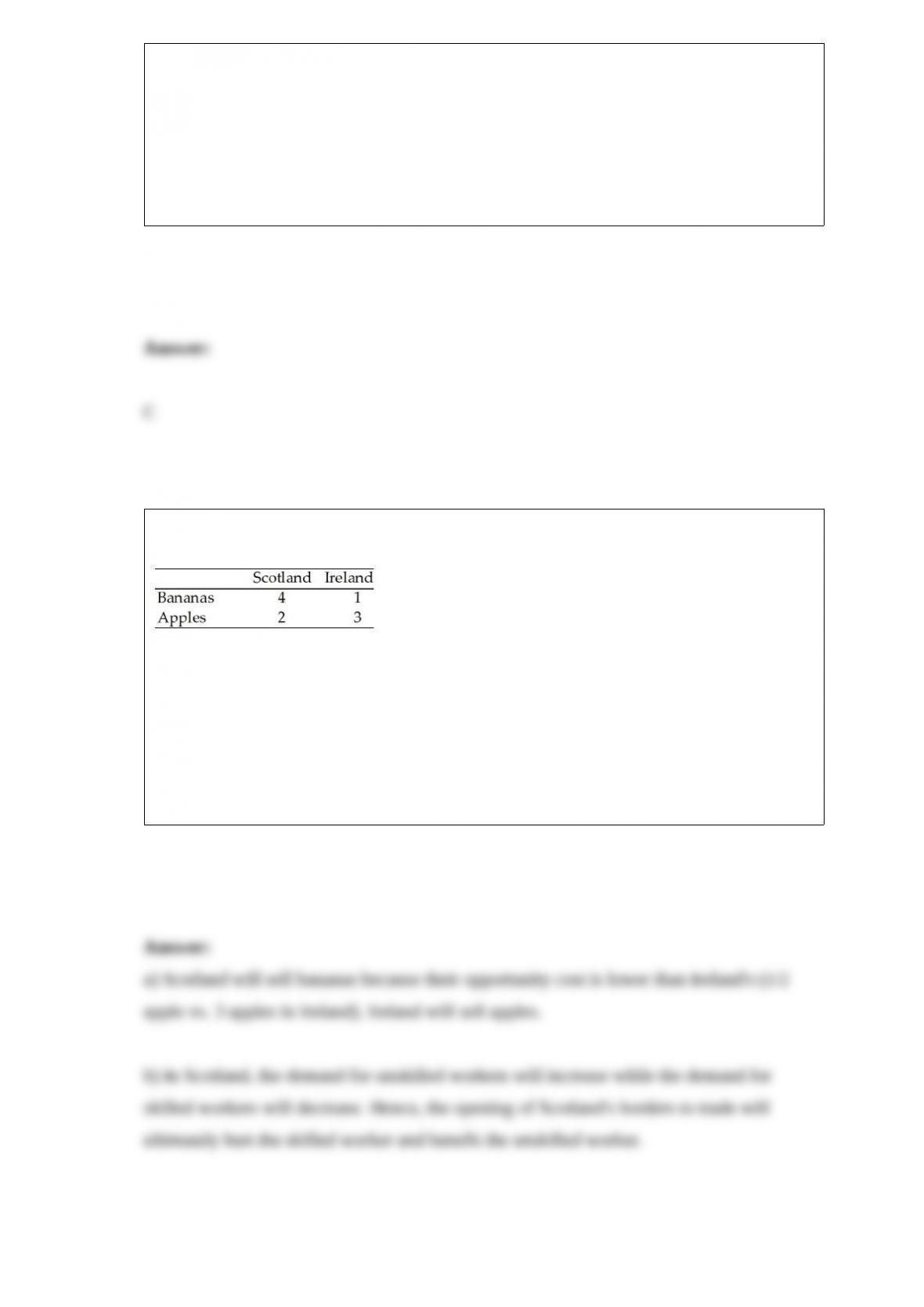
Refer to Table 17.1. If the price of output is $2 per unit and we observe the firm hiring
four workers, if the firm is maximizing profit, the wage rate must be between ________
and ________.
Table 17.1
A) $40; $50
B) $50; $90
C) $80; $100
D) $320; $500
Consider the following daily production possibilities of apples and bananas in Ireland
and Scotland:
Supposed that the production of apples require skilled workers while the bananas
require unskilled workers. If Scotland and Ireland choose to trade with each other in
order to take advantage of their opportunity costs:
a) Who will sell bananas? Who will sell Apples?
b) Which worker will gain in Scotland? Which worker will be hurt?

Suppose Jones’ company and Smith’s company both pollute. Under a system of
marketable pollution permits, which of the following must be true in order for Smith
and Jones to benefit from trading the right to pollute?
A) Smith and Jones must be able to reduce pollution at exactly the same cost.
B) Smith and Jones must have different abatement costs.
C) Smith and Jones must have a social conscience and must be devoted to pollution
abatement.
D) The government must direct Smith and Jones toward beneficial trades.
Since a large or a small wind turbine have similar installation, operating and
maintenance costs, but a large turbine has four times the generating capacity but costs
less than three times as much as a small turbine, the average cost of generating
electricity with wind is:
A) constant at each output.
B) increasing as output increases.
C) decreasing as output increases.
D) at first decreasing and then increasing as output rises.
When people interact in markets for their own self interest, it is described as the:

A) principle of supply and demand.
B) principle of voluntary exchange.
C) laws of each state.
D) principle of scarcity.
A firm experiences diminishing marginal returns because:
A) all factors of production are variable.
B) people “learn by doing.”
C) all factors of production are fixed.
D) at least one factor of production is fixed.
An external benefit is the benefit experienced by people who:
A) do not decide how much of the good to produce or consume.
B) did not know why they are experiencing the benefit.
C) decide how much of the good to produce or consume.
D) consume the good.
Suppose that at Pollo Loco’s Restaurant 5 cooks can make 70 meals. Assuming that
there are diminishing returns to labor, it will require ________ to make 70 more meals.
A) an additional 5 cooks
B) more than an additional 5 cooks
C) less than an additional 5 cooks
D) a total of 10 cooks
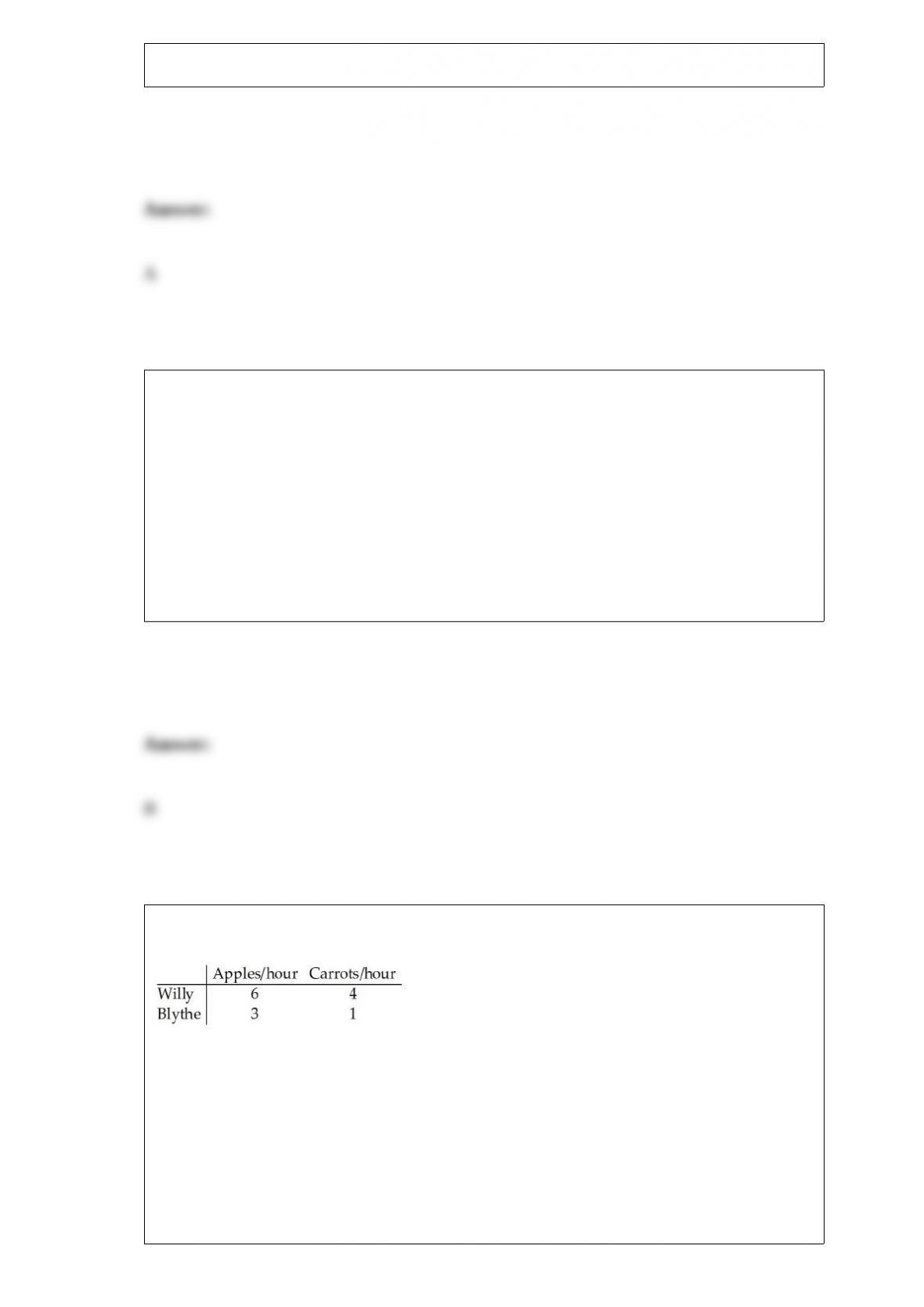
Table 3.1 illustrates Willy and Blythe’s hourly production for apples and carrots. Based
on the table, Blythe’s opportunity cost of 1 apple is:
Table 3.1
A) 1 carrot.
B) 4 carrots.
C) 6 carrots.
D) 1/3 carrot.

Two goods are substitutes if:
A) the supply of one good decreases when the price of the other increases.
B) the supply of one good decreases when the price of the other decreases.
C) the demand for one good decreases when the price of the other increases.
D) the demand for one good decreases when the price of the other decreases.
How is utility defined?
A) ease of use
B) government provided goods like electricity
C) the satisfaction experienced from consuming a good
D) the change in benefit from producing one additional unit of a good
Average fixed costs in the short run:
A) increase as the quantity produced increases.
B) decrease as the quantity produced increases.
C) first decrease, then increase eventually as the quantity produced increases.
D) first increase, then decrease eventually as the quantity produced increases.
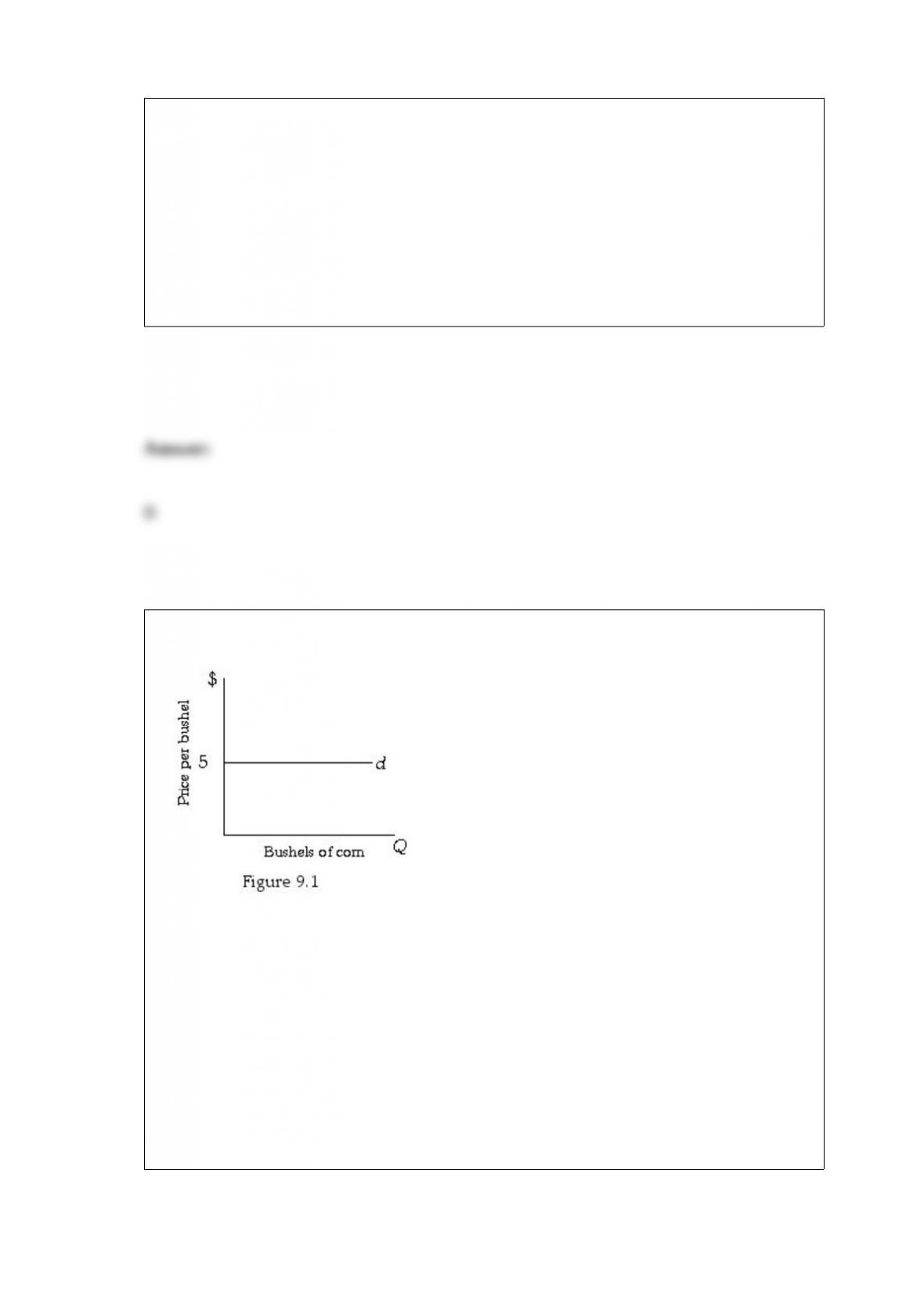
Refer to Figure 9.1. A farmer earns a total revenue of $900. Each bushel of corn is sold
for $5. This farmer must be selling ________ bushels of corn.
A) 180
B) 450
C) 900
D) 4,500
Which of the following is most likely to be a variable cost for a firm?
A) the interest payments made on equipment loans
B) an annual payment for insurance on the firm’s plant
C) the monthly rent on office space that it leased for 5 years
D) the payments made to match workers’ 401K contributions
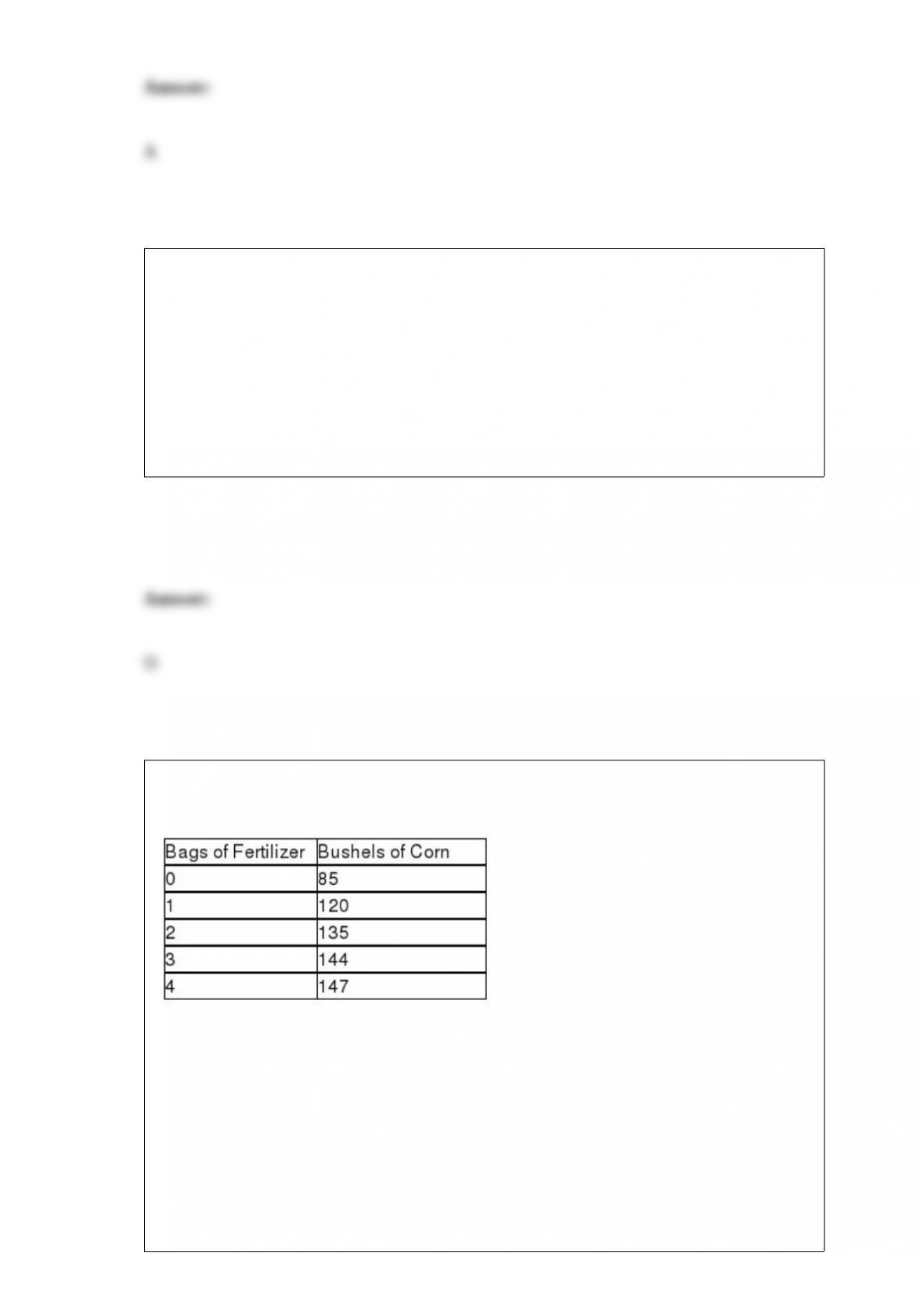
Fertilizer and Corn Yield
This Application addresses the economic concept of:
A) the marginal principle.
B) the principle of voluntary exchange.
C) the principle of diminishing returns.
D) the real-nominal principle.

Which of the following is NOT a characteristic of perfectly competitive market?
A) there are many sellers.
B) the product is homogeneous
C) there are barriers to entry
D) all of the above
In a perfectly competitive market, if price is greater than average total cost at the level
of output where marginal cost equals marginal revenue:
A) the firm must be in long-run equilibrium.
B) the firm is earning an economic profit greater than zero.
C) the firm is earning an economic profit less than zero.
D) We cannot determine whether the firm is earning positive or negative profits.
Based on the determinants of elasticity as discussed in the text, explain what the price
elastic of demand of the following products would be: a) diamond rings; and b) salt.
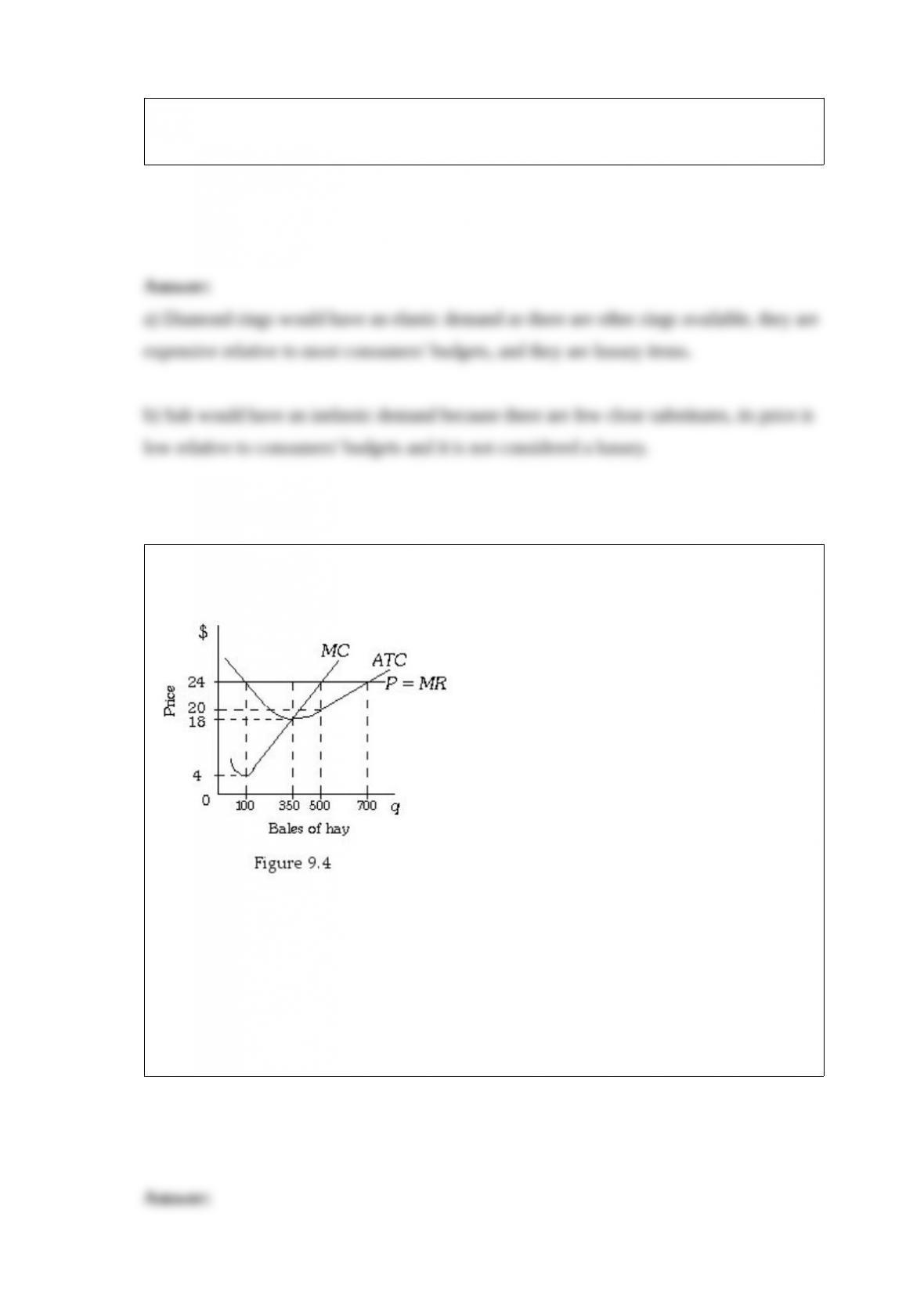
Refer to Figure 9.4. If the market price of hay falls to $18, then to maximize profits this
farmer should produce:
A) 350 bales of hay.
B) 500 bales of hay.
C) 750 bales of hay.
D) a level of output that is indeterminate from this information.

If the demand for school ball caps is inelastic, an increase in price will result in:
A) a decrease in profits.
B) an increase in total revenue.
C) a decrease in total revenue.
D) an increase in the quantity demanded.
A cartel is:
A) a group of firms that coordinate their pricing and quantity decisions.
B) a type of oligopoly in which the demand curve is “kinked.”
C) a duopoly market where firms have the exact product.
D) a group of firms that all produce the same level of output.
The demand for labor is:

A) derived from the demand for the products it is used to produce.
B) determined by the demand for consumer products.
C) determined by the price of consumer products.
D) all of the above.