
Which of the following statements represents a correct and sequentially accurate
economic explanation?
a. Good X is an inferior good and good Y is a substitute for X. Income rises, the
demand for X falls, the price of X falls, and the demand for Y rises.
b. Good X is an inferior good and good Y is a substitute for X. Income rises, the
demand for X falls, the price of X falls, and the demand for Y falls.
c. Good X is an inferior good and good Y is a substitute for X. Income falls, the demand
for X rises, the price of X rises, and the demand for Y falls.
d. Good X is an inferior good and good Y is a substitute for X. Income rises, the
quantity demanded of X rises, the price of X rises, and the demand for Y falls.
e. none of the above
When a firm employs 1 unit of factor X it produces 28 units of output and when it
employs 2 units of factor X it produces 57 units of output. It follows that marginal
revenue product of the second unit of factor X is
a. $22.00.
b. $29.00.
c. $0.53.
d. $114.
e. There is not enough information to answer the question.

A(n) _______________ good is one in which as income rises or falls, there is no
change in the demand for the good.
a. normal
b. inferior
c. neutral
d. substitute
e. complementary
If the demand for a good is inelastic and the price of the good decreases, then
a. total revenue increases.
b. total revenue decreases.
c. total revenue is not affected.
d. the direction of the change in total revenue cannot be determined from the
information given.
The monopoly power problem is that a monopoly
a. produces a smaller output than that produced by a perfectly competitive firm.

b. charges a higher price than the price a perfectly competitive firm would charge.
c. creates a deadweight loss to society.
d. a and b
e. a, b, and c
Which of the following statements is true?
a. Monopolistic competitive firms will earn economic profits in the long run because of
their ability to control the price of the product.
b. Monopolistic competitive firms that earn economic profits in the short run commonly
will find their profits competed away in the long run.
c. Monopolistic competitive firms will earn zero economic profits in both the short and
the long run.
d. Monopolistic competitive firms must earn economic profits in the long run, or they
will shut down.
e. Monopolistic competitive firms must earn economic profits in the short run, or they
will shut down.
Union training programs are meant to shift the __________ labor to the __________.

a. demand curve for; left
b. demand curve for; right
c. supply curve of; left
d. supply curve of; right
The proponents of fixed exchange rates argue that flexible exchange rates
a. hamper international trade because of uncertainty over what the exchange rate will
be.
b. force a nation to use its domestic macroeconomic policies to maintain an exchange
rate.
c. lead to trade protectionism.
d. a and b
e. a, b, and c
Refer to Exhibit 25-6. The monopolistic competitor in the exhibit is
Exhibit 25-6
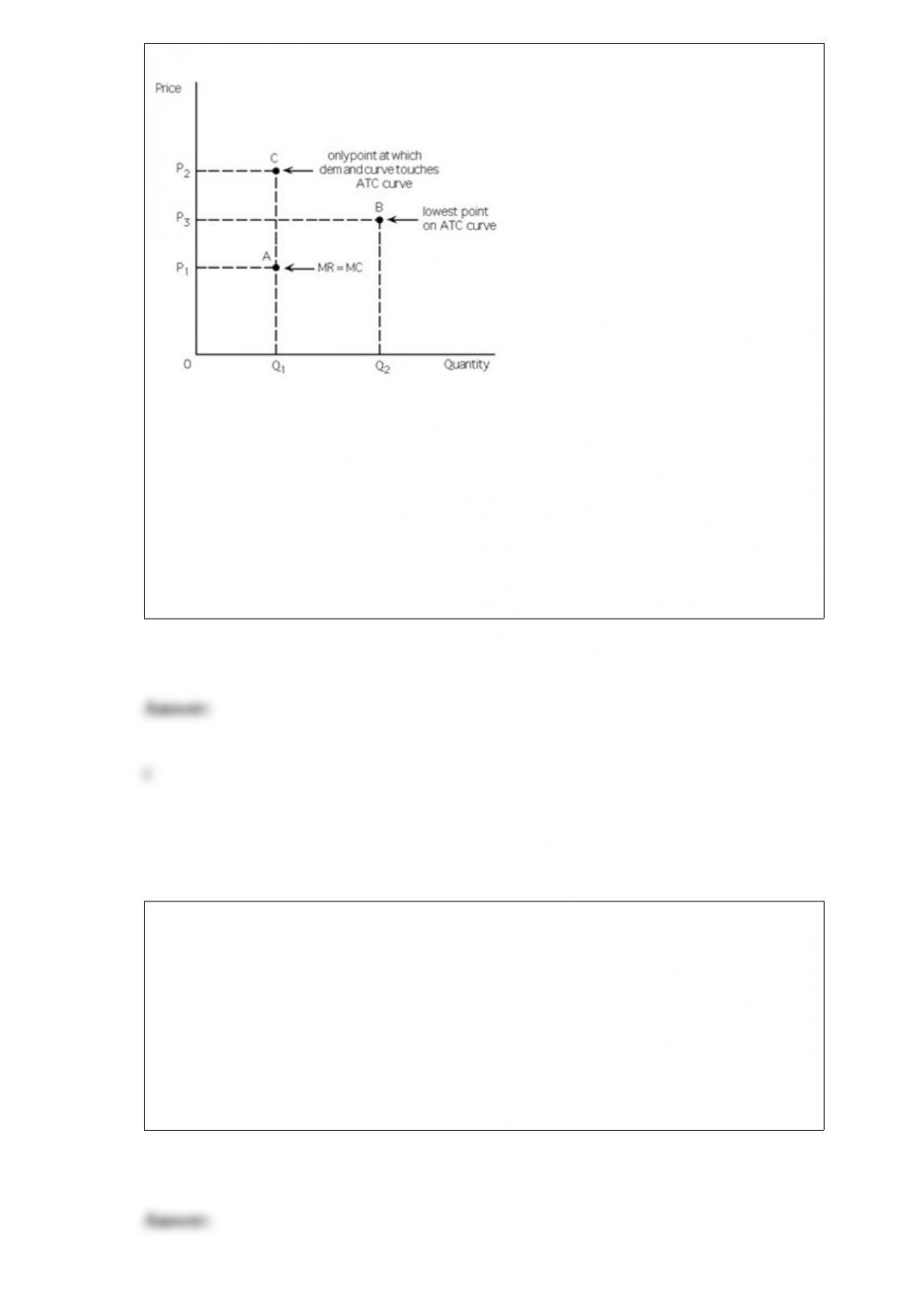
a. earning positive economic profits.
b. taking losses.
c. earning a normal profit.
d. exhibiting productive efficiency.
e. a and d
When quantity demanded of a good increases, total revenue
a. increases.
b. decreases.
c. increases, if demand is elastic.
d. increases, if demand is inelastic.

In the case of a monopsony, higher wage rates (over some range) do not necessarily
imply fewer persons working.
a. True
b. False
The addition to total cost that results from employing one additional unit of a resource
is called
a. average factor cost.
b. marginal factor cost.
c. average total cost.
d. marginal cost.
The closed shop was prohibited by the
a. Norris-LaGuardia Act.

b. Clayton Act.
c. Wagner Act.
d. Taft-Hartley Act.
e. none of the above
If a firm is earning an economic profit, it is earning an accounting profit, too.
a. True
b. False
The “visible hand” is a metaphor used to describe
a. market coordination.
b. managerial coordination.
c. the separation of ownership from control.
d. how price changes motivate individual coordination.
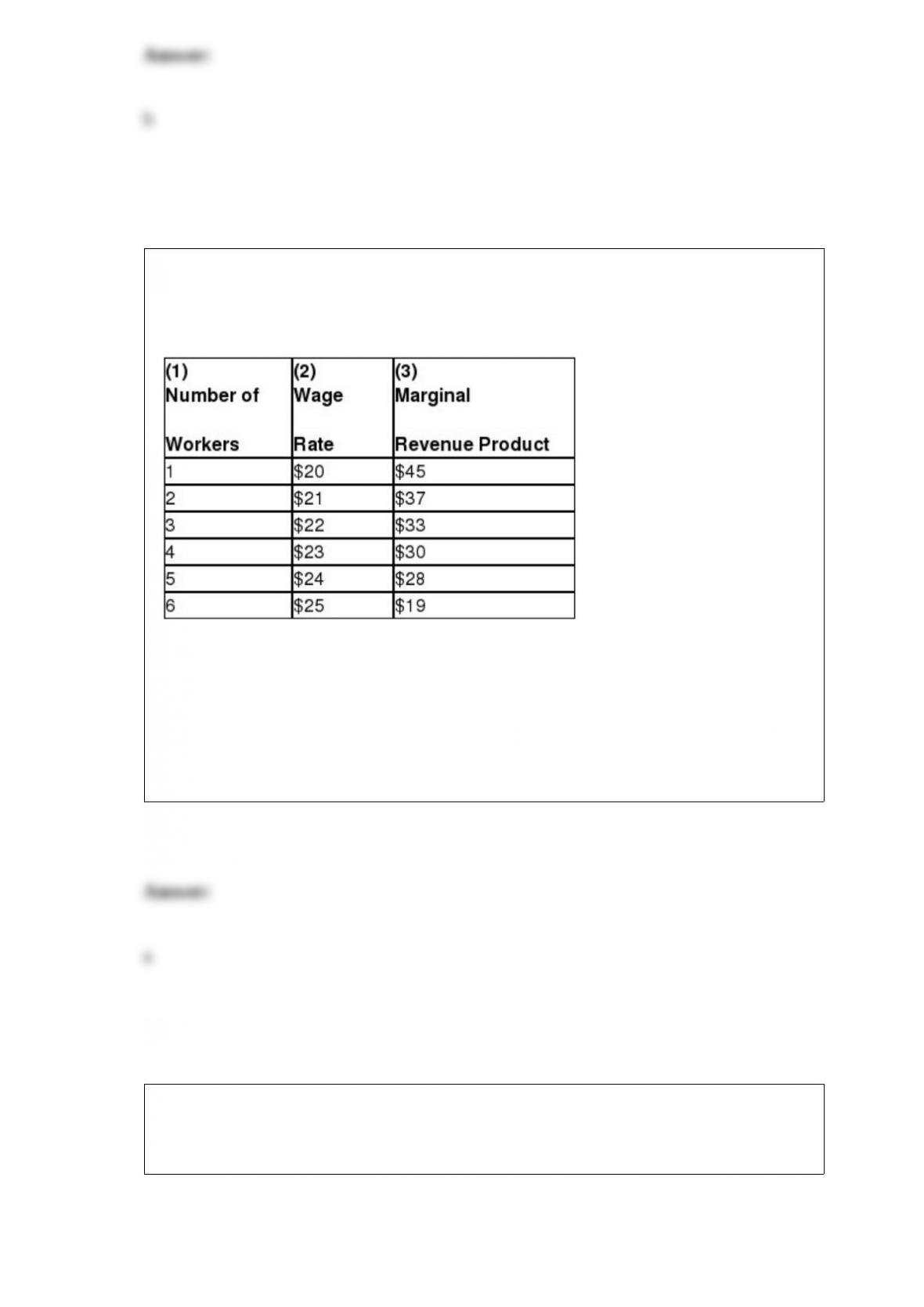
Refer to Exhibit 28-12. As the firm increases employment from 2 to 3 workers, its
marginal factor cost (MFC) is
Exhibit 28-12
a. $24.
b. $11.
c. $33.
d. $8.
Refer to Exhibit 23-7. The perfectly competitive, profit-maximizing firm will produce
__________ units of output.
Exhibit 23-7
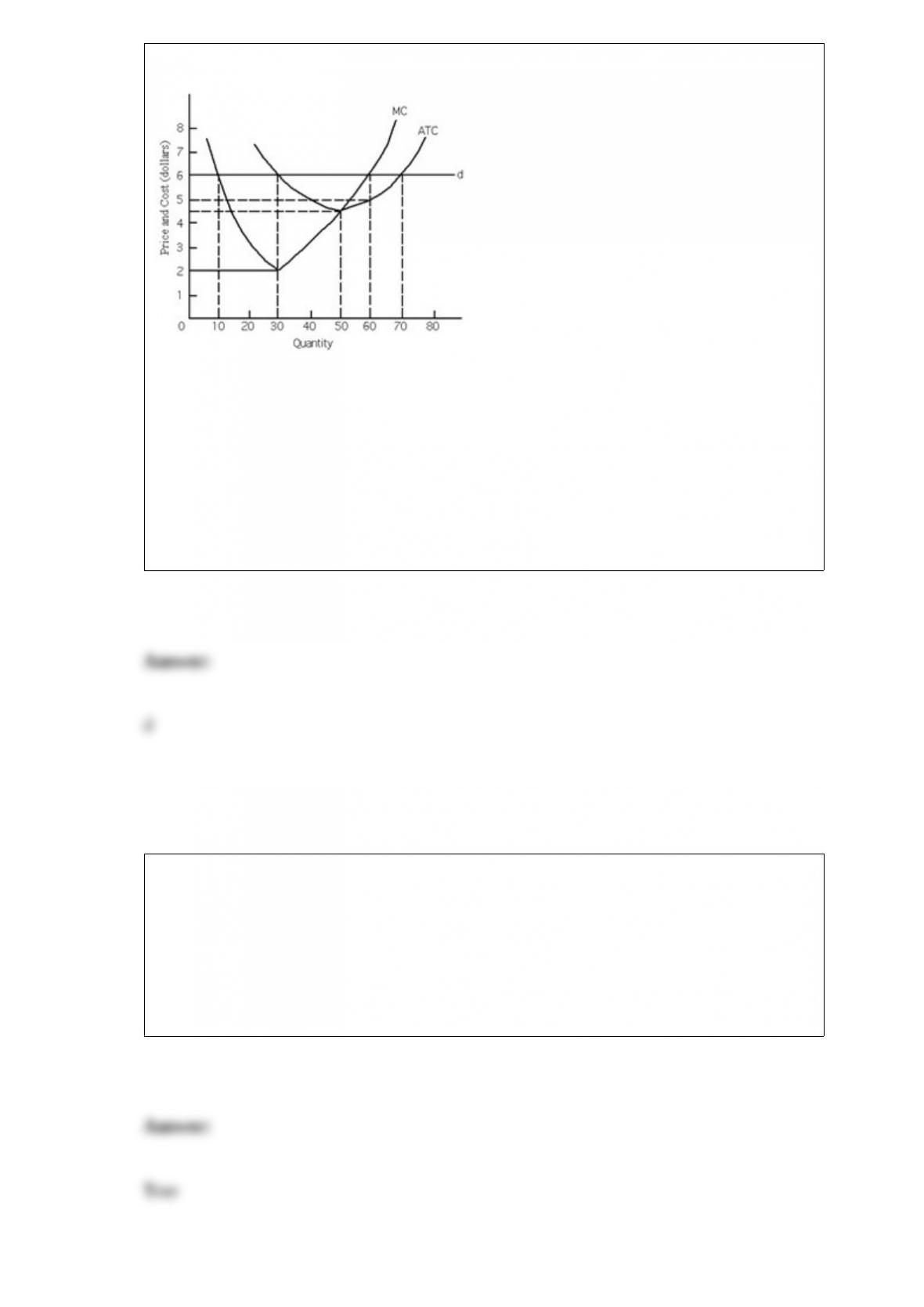
a. 10
b. 30
c. 50
d. 60
e. 70
Compared to those people who prefer to play it safe, individuals who are more
comfortable taking risks are more likely to reach the top of the income distribution, or
to hit the bottom, ceteris paribus.
a. True
b. False
Which of the following statements is true?
a. Employers are not concerned with determining a potential employee’s productivity
because they know that with experience the employee’s output will increase.
b. Employers are not concerned with determining a potential employee’s productivity
because they realize that they cannot accurately determine it beforehand.
c. Employers are not concerned with determining a potential employee’s productivity
because they know that they can train the employee after he’s hired.
d. Employers are concerned with determining a potential employee’s productivity due to
the high costs of training new employees.
e. a, b, and c
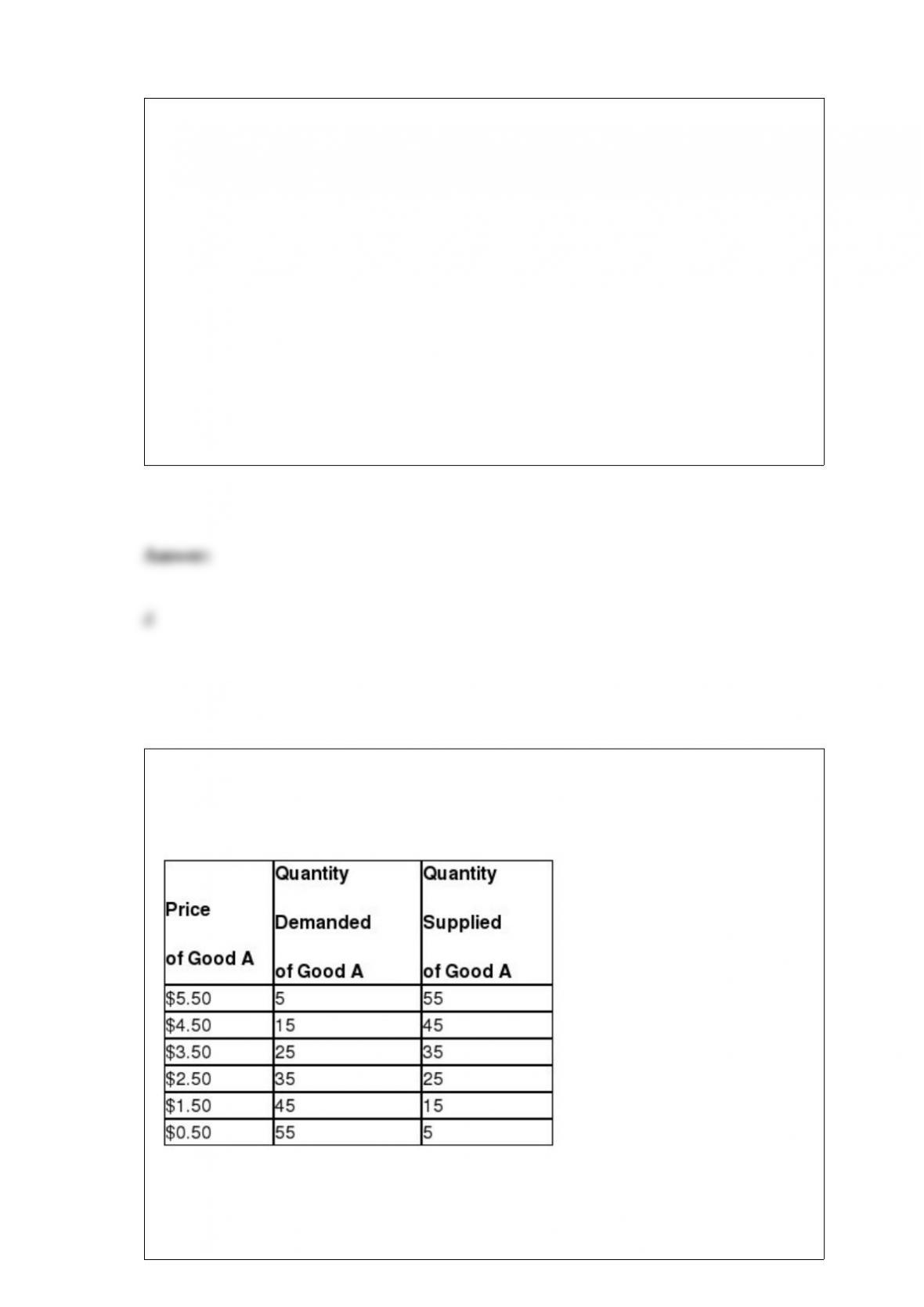
Refer to Exhibit 20-3. When price decreases from $1.50 to $0.50, the price elasticity of
supply is
Exhibit 20-3
a. 0.
b. 1.0.
c. 5.0.
d. 0.1.
e. 0.5.
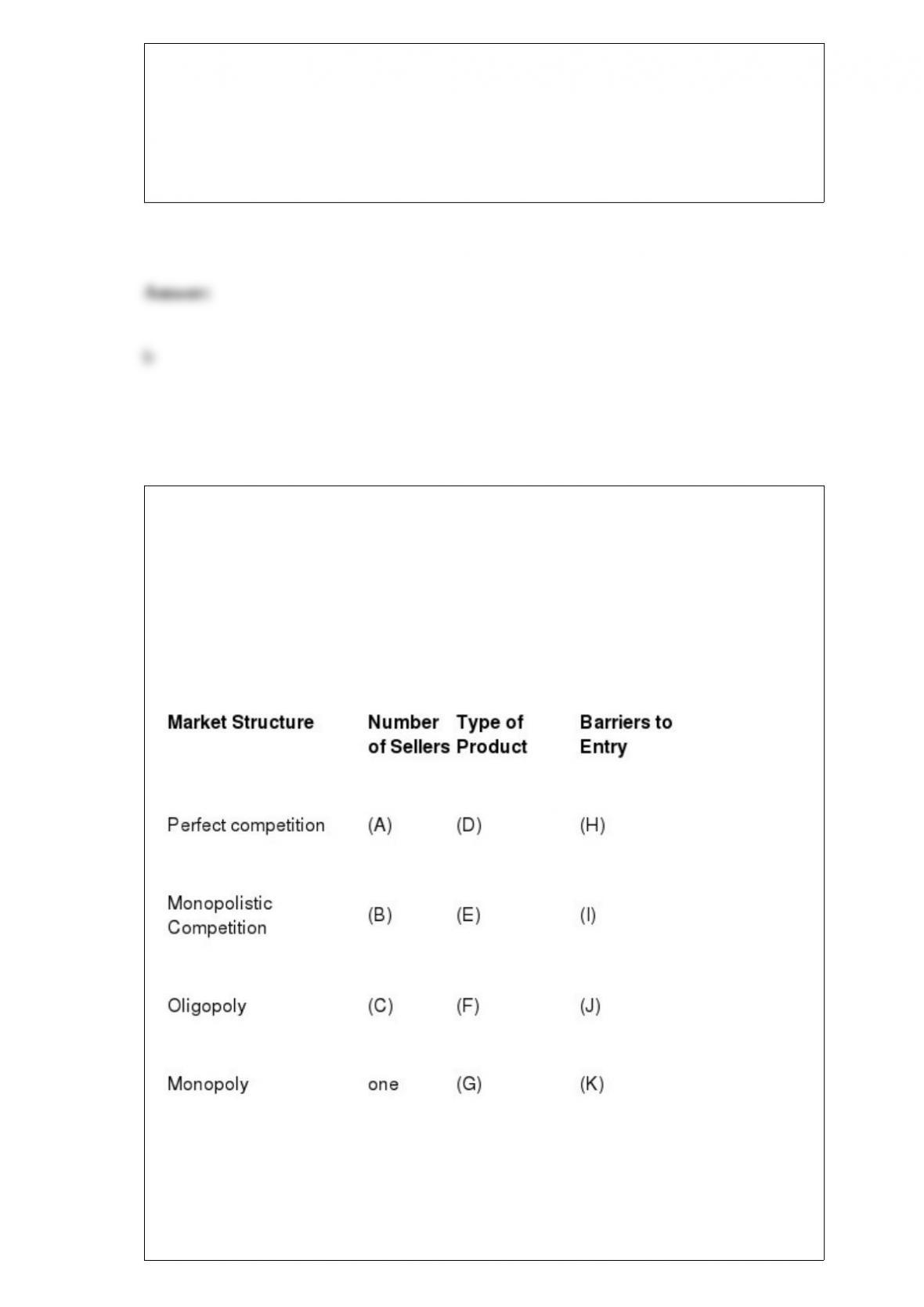
Refer to Exhibit 25-9. The type of product sold in a perfectly competitive market is
___________ [blank (D)].The type of product sold in a monopolistic competitive
market is ____________ [blank (E)].The type of product sold in an oligopoly is
_________ [blank (F)]. The type of product sold in a monopoly is ___________ [blank
(G)].
a. unique; homogeneous or differentiated; differentiated; homogeneous
b. differentiated; homogeneous; homogeneous or differentiated; unique
c. homogeneous; homogeneous; differentiated; unique
d. homogeneous; differentiated; homogeneous or differentiated; unique
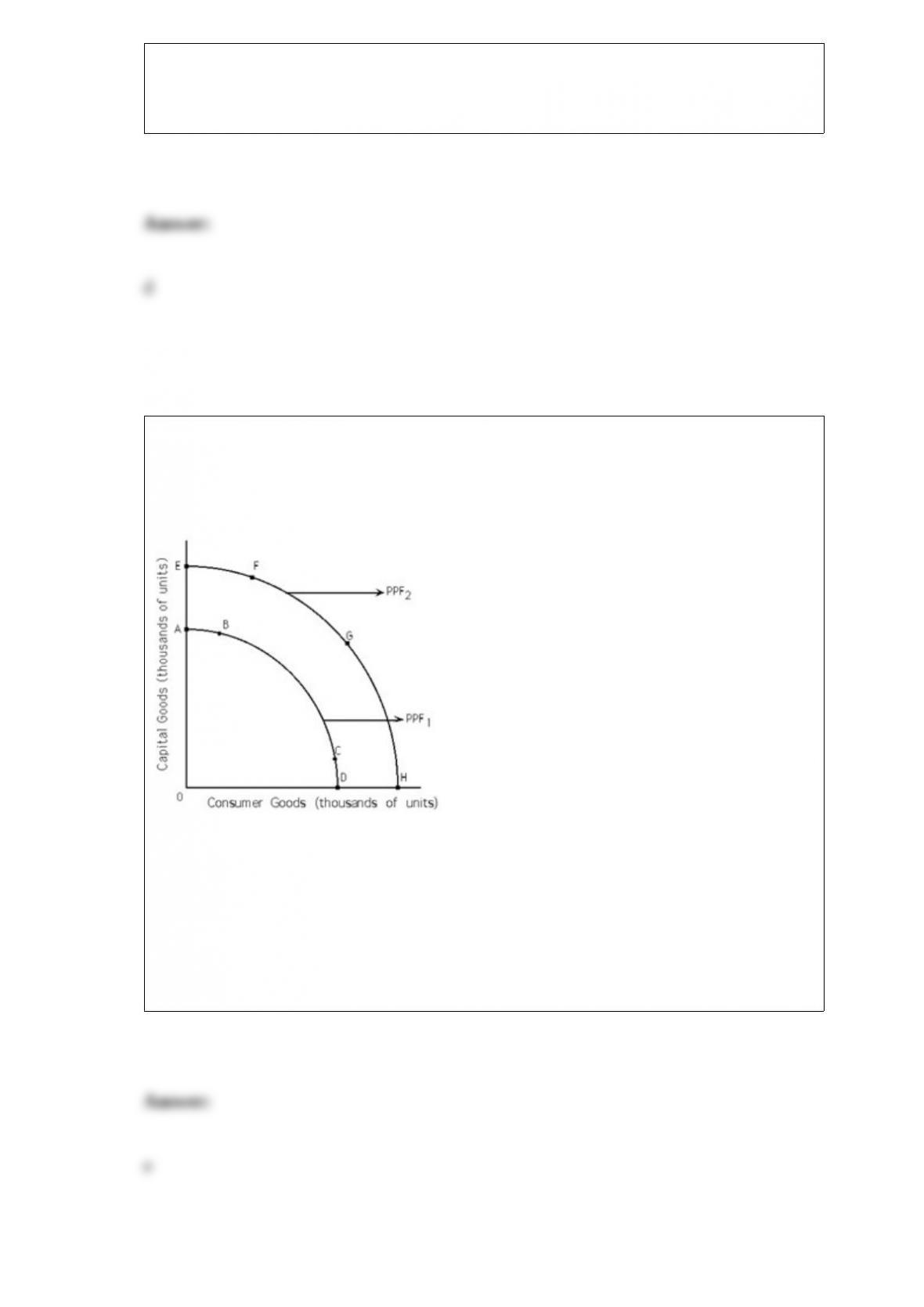
Refer to Exhibit 2-3. If PPF1 is the relevant production possibilities frontier, PPF2 may
depict
Exhibit 2-3
a. economic growth.
b. an increase in resources.
c. an increase in technology.
d. both b and c
e. all of the above