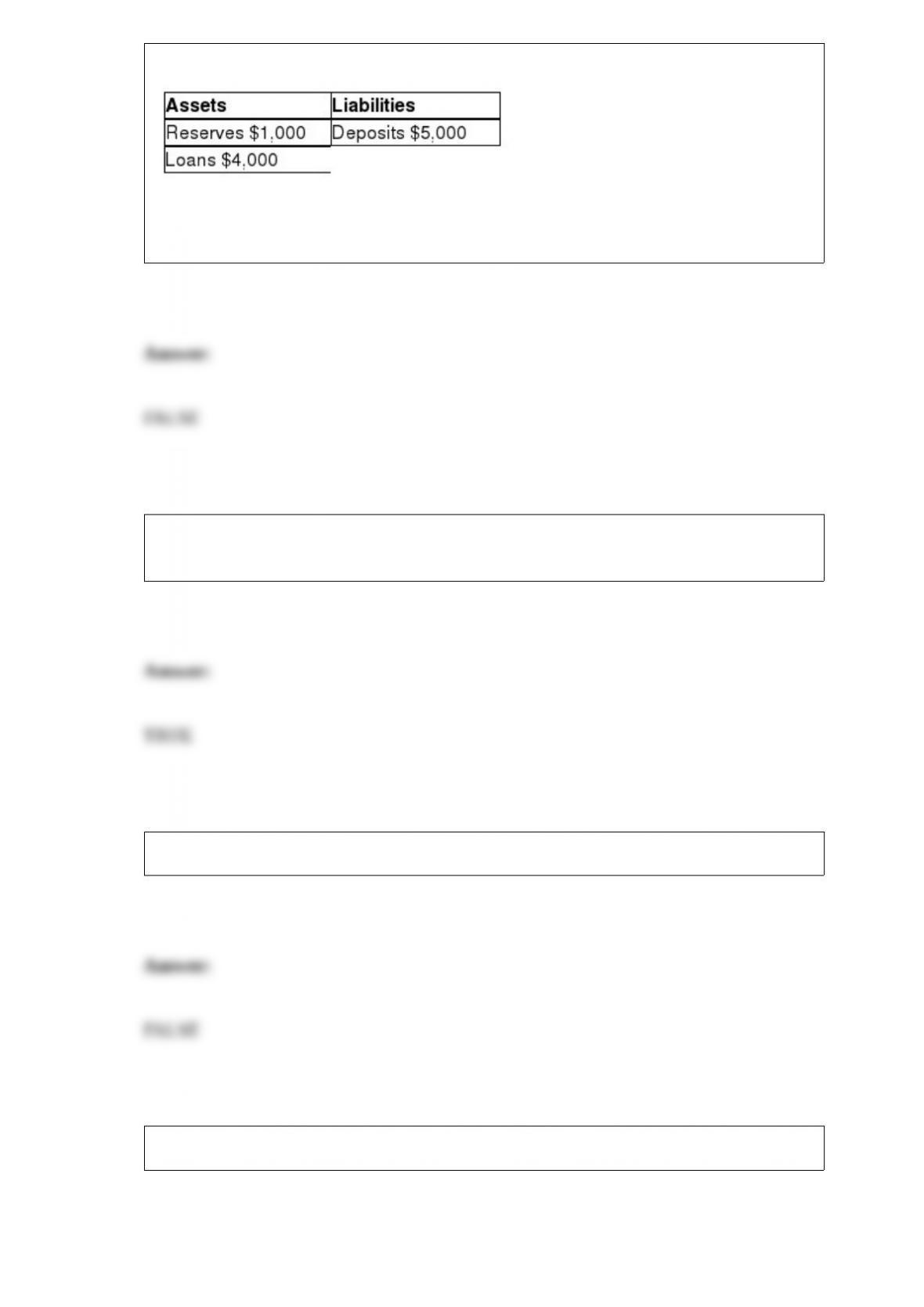
Consider the following T-account for a bank:
If the required reserve ratio is 10 percent, the bank at this point can make no more
loans.
If the population increases and input prices increase, the equilibrium price of a product
will definitely increase.
An increase in the price level shifts the aggregate demand curve to the left.
Imports are goods and services bought domestically but produced in other countries.

In a two-good, two country world, if one country has a comparative advantage in the
production of one good, it can benefit by trading with other countries.
When foreign investors in Thailand began to realize that Thailand could not maintain its
peg to the dollar indefinitely, they began to ________ in Thailand and exchange
________. This change in investment by foreigners is termed capital flight.
A) purchase more investments; dollars for baht to purchase these investments
B) sell off their investments; the baht they received for dollars
C) sell off their investments; the dollars they received for baht
D) purchase more investments; baht for dollars to purchase these investments
At the beginning of the recession of 2007-2009, real GDP in the United States was
________ potential GDP, and in June 2009, real GDP was ________ potential GDP.
A) below; above
B) below; below

C) above; below
D) above; above
In 1973, the Club of Rome published a book titled The Limits to Growth, which
predicted that economic growth would likely end in high-income countries because of
A) declining populations.
B) rapid increases in government debt.
C) increases in outsourcing of the production of goods and services to low-income
countries.
D) increasing pollution and the depletion of natural resources.
Of the $840 billion American Recovery and Reinvestment Act stimulus package which
was enacted in 2009, approximately one-third took the form of ________ and
two-thirds took the form of increases in ________.
A) discretionary government spending; transfer payments
B) tax rebates; tax cuts
C) treasury bond purchases; the money supply
D) tax cuts; government expenditures

All of the following are sources of comparative advantage except
A) climate and natural resources.
B) relative abundance of labor and capital.
C) a strong foreign currency exchange rate.
D) technology.
________ spending follows a smooth trend whereas, ________ spending is more
volatile and subject to fluctuations.
A) Consumer; government
B) Consumer; investment
C) Investment; consumer
D) Government; consumer
Figure 13-3
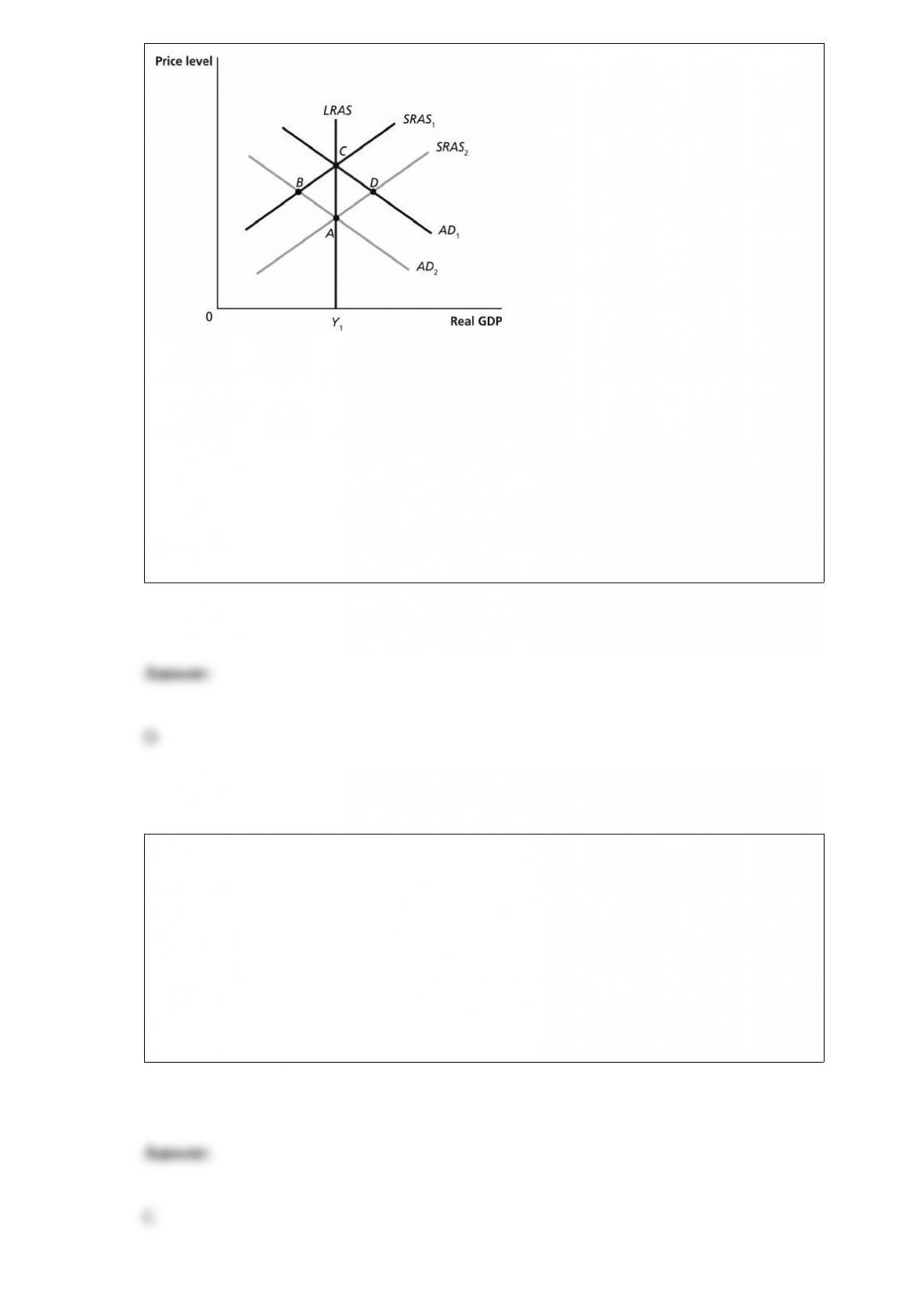
Refer to Figure 13-3. Which of the points in the above graph are possible short-run
equilibria but not long-run equilibria? Assume that Y1 represents potential GDP.
A) A and B
B) A and C
C) C and D
D) B and D
National saving equals
A) income – taxes – consumption.
B) taxes – government spending.
C) income – consumption – government spending.
D) private saving + public saving – net foreign investment.
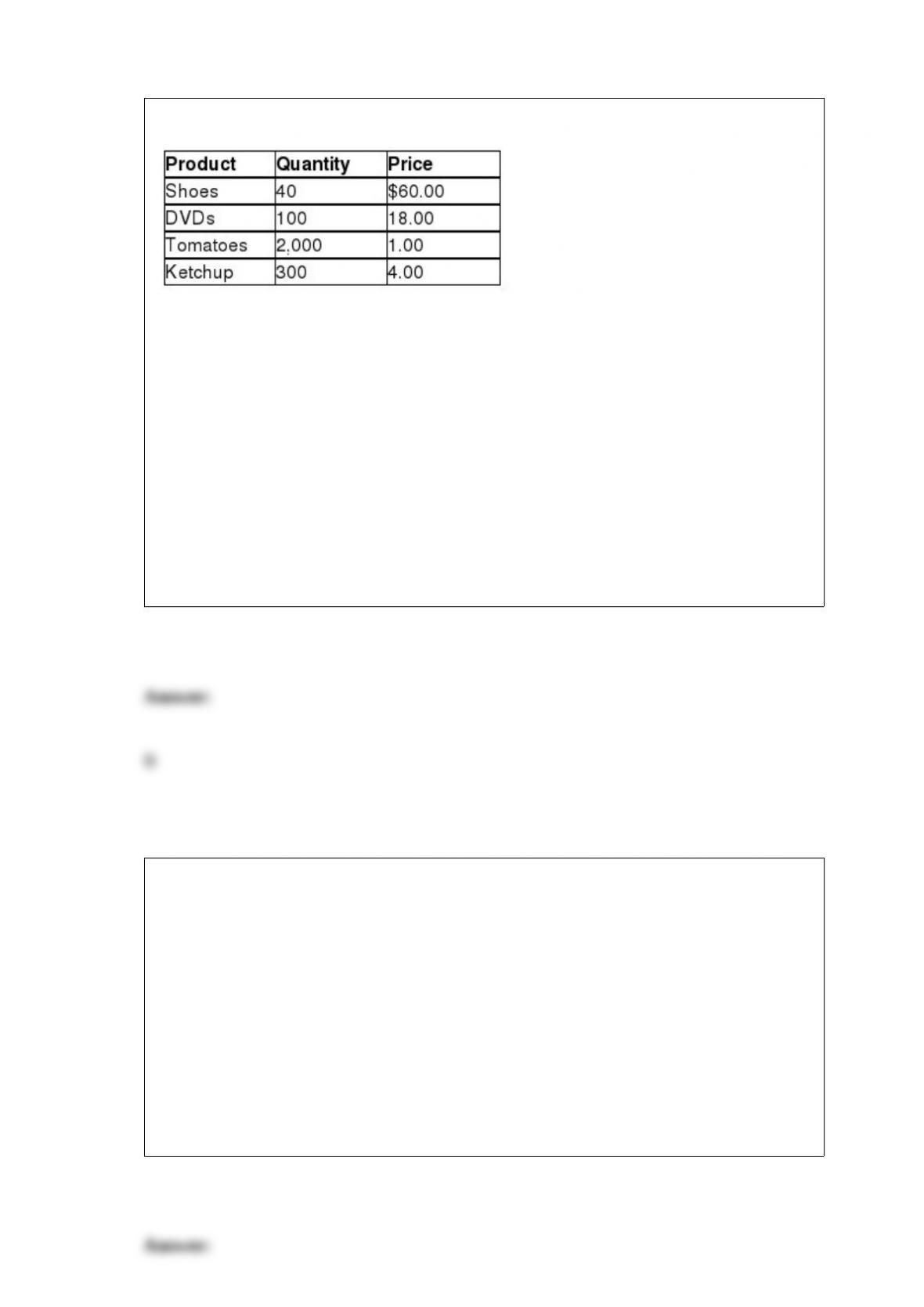
Table 8-2
Refer to Table 8-2. Suppose that a simple economy produces only four goods and
services: shoes, DVDs, tomatoes, and ketchup. Assume one half of the tomatoes are
used in making the ketchup and the other half of the tomatoes are purchased by
households. Using the information in the above table, nominal GDP for this simple
economy equals
A) $7,400.
B) $6,400.
C) $5,800.
D) 2,440 units.
A decrease in the tax rate will ________ the disposable income of households and
________ the size of the multiplier effect.
A) increase; increase
B) decrease; increase
C) increase; decrease
D) decrease; decrease
E) increase; not change
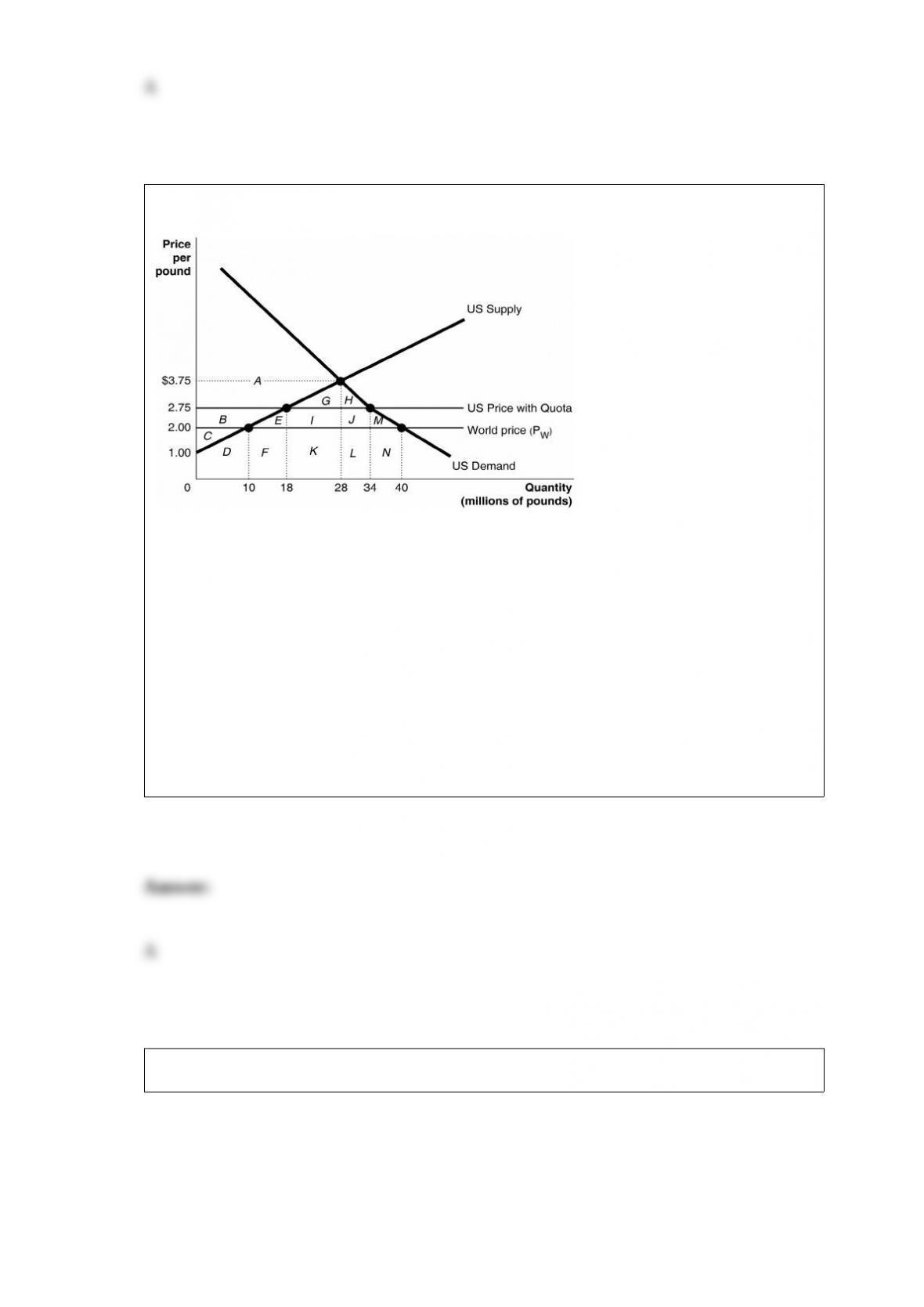
Figure 7-3
Since 1953 the United States has imposed a quota to limit the imports of peanuts.
Figure 7-3 illustrates the impact of the quota.
Refer to Figure 7-3. What is the value of the deadweight loss as a result of the quota?
A) $5.25 million
B) $8 million
C) $17.25 million
D) $20 million
Figure 19-1
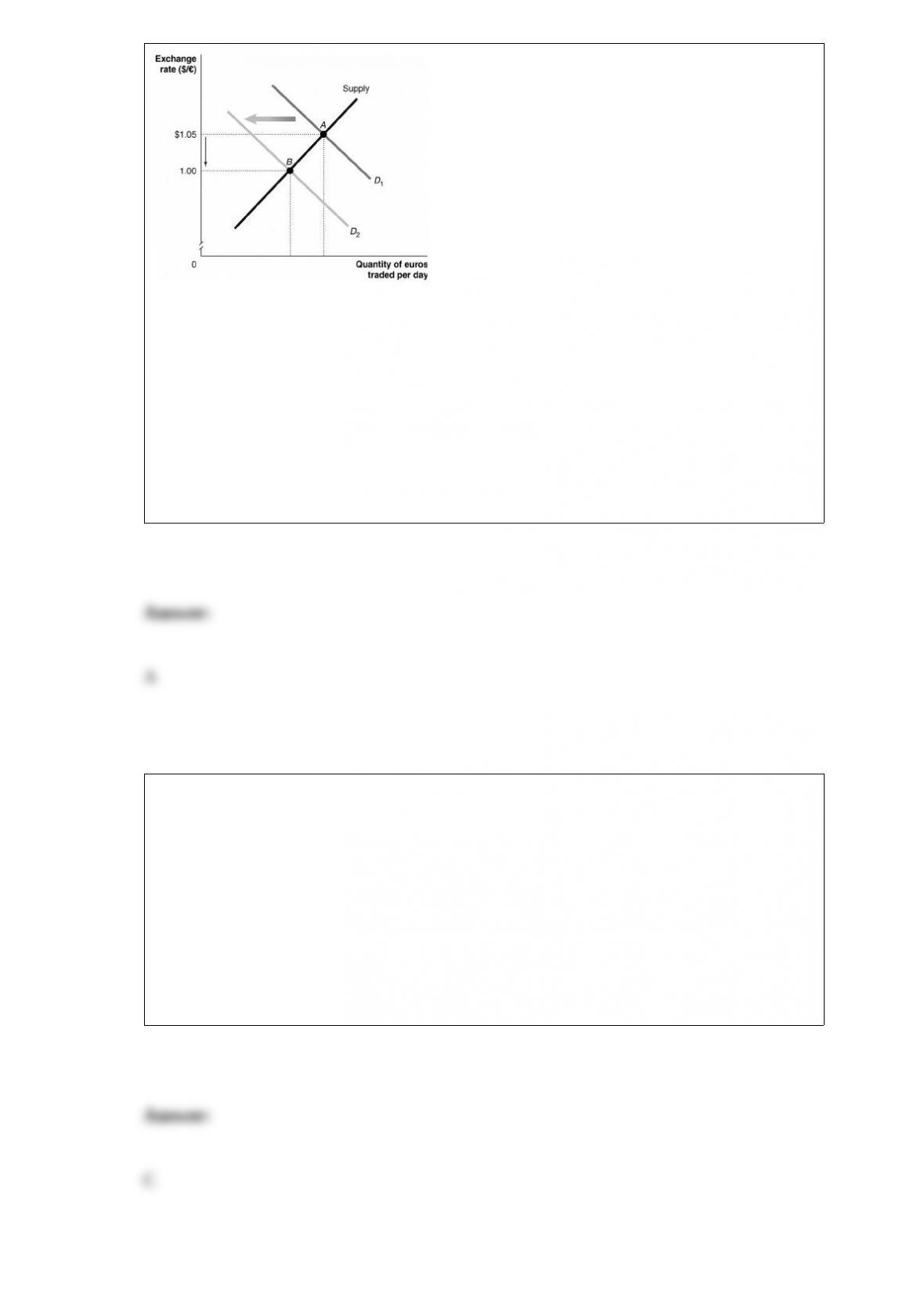
Refer to Figure 19-1. Which of the following would cause the change depicted in the
figure above?
A) U.S. productivity rises relative to European productivity.
B) Europeans decrease their preferences for U.S. goods relative to European goods.
C) The European Union increases its quotas on French wine.
D) an increase in the price level of U.S. goods relative to European goods
If the exchange rate changes from $0.08 = 1 mexican peso to $0.09 = 1 mexican peso,
then
A) both the peso and dollar have appreciated.
B) both the peso and dollar have depreciated.
C) the peso has appreciated and the dollar has depreciated.
D) the peso has depreciated and the dollar has appreciated.
Which of the following would increase the value of the dollar in the long run?
A) an increase in inflation in the United States relative to other countries
B) an increase in the demand for American goods relative to goods from other countries
C) a decrease in U.S. tariffs on foreign goods
D) an increase in the supply of dollars on the foreign exchange market
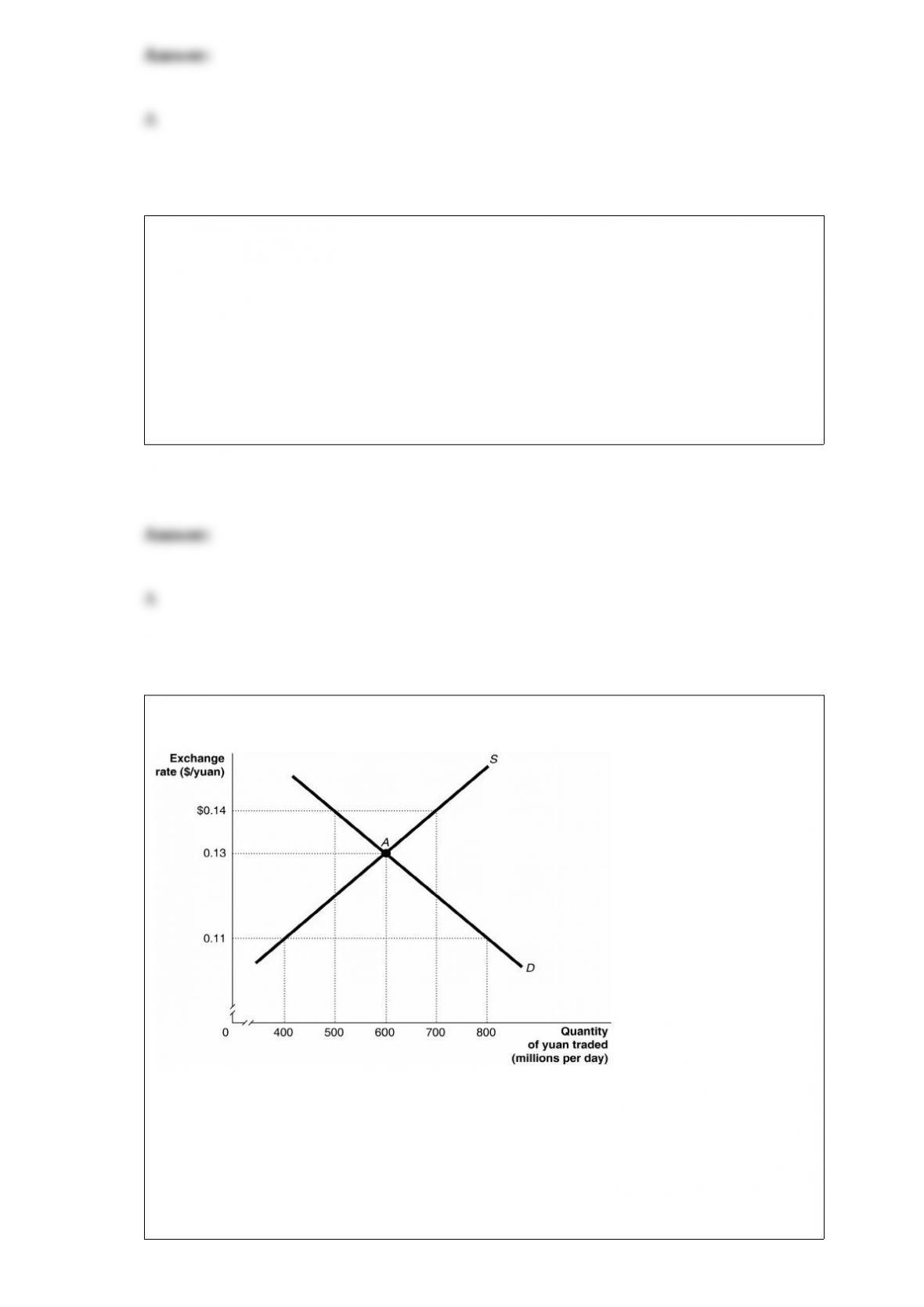
Table 4-4
Table 4-4 shows the demand and supply schedules for the low-skilled labor market in
the city of Westover.
Refer to Table 4-4. Suppose that the quantity of labor demanded increases by 40,000 at
each wage level. What are the new free market equilibrium hourly wage and the new
equilibrium quantity of labor?
A) W = $10.00; Q = 390,000
B) W = $9.50; Q = 380,000
C) W = $8.50; Q = 380,000
D) W = $8.00; Q = 390,000
A firm can fund an expansion of its operations by
A) issuing bonds.
B) buying stock.
C) paying dividends.
D) loaning money.
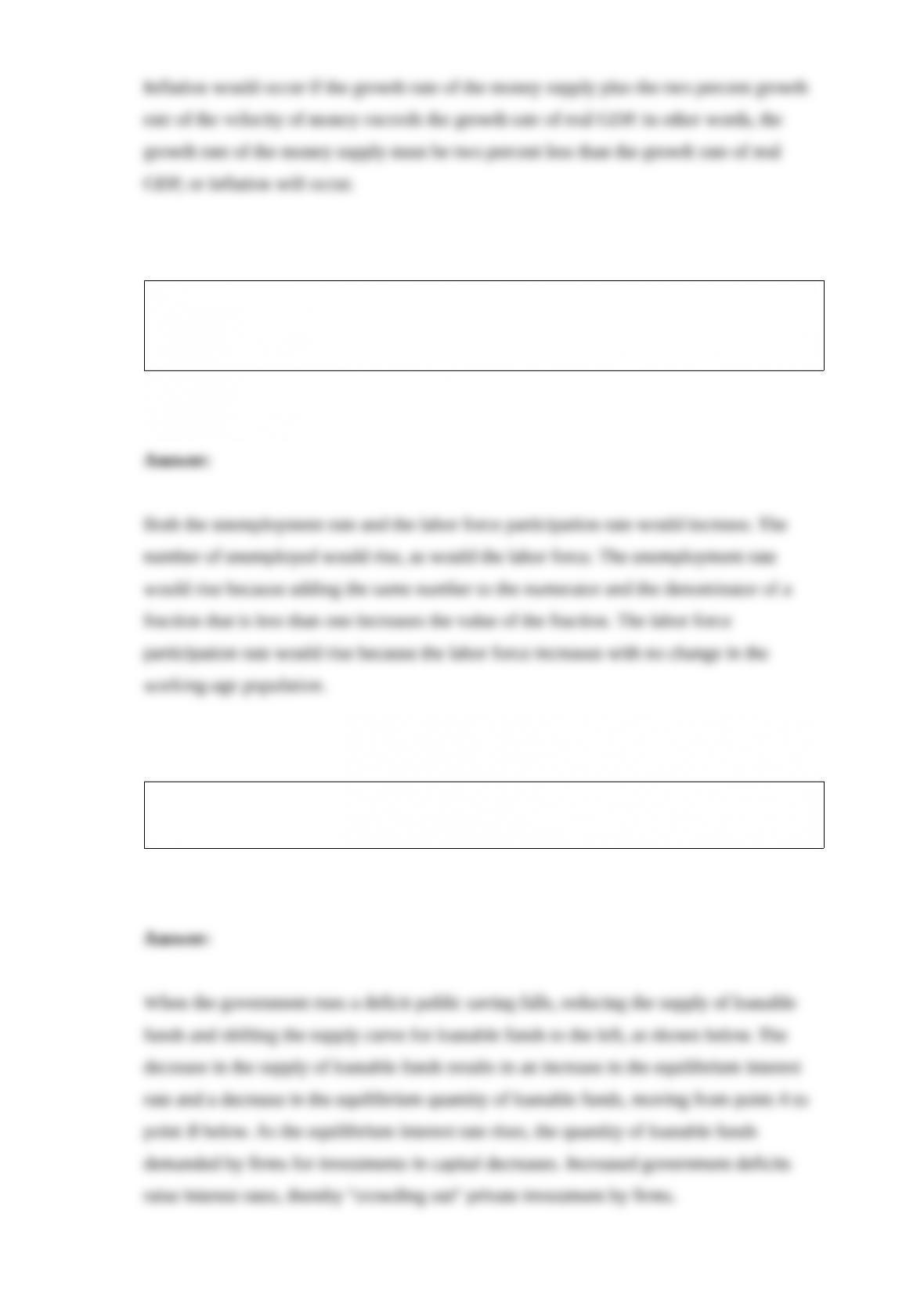
Figure 19-5
Refer to Figure 19-5. Suppose the pegged exchange rate is $0.14/yuan and U.S.
consumers increase their demand for Chinese products. Using the figure above, this
would
A) increase the surplus of Chinese yuan.
B) decrease the surplus of Chinese yuan.

C) decrease the shortage of Chinese yuan.
D) increase the shortage of Chinese yuan.
What actions could the Federal Reserve take to achieve consistent growth in real GDP
at 4 percent per year?
A) The Fed could increase in the growth rate of the money supply by 1% each year
until the inflation rate was exactly equal to 4 percent.
B) The Fed could maintain a growth rate of the money supply of 4 percent, regardless
of whether inflation was rising or falling in the economy.
C) The Fed could follow contractionary monetary policy that would reduce the federal
funds rate to zero so investment will rise consistently.
D) The Fed has no direct control over real GDP in the long run, so there are no actions
it could take to achieve that goal.
If the price of gasoline increases, what will be the impact in the market for public
transportation?
A) The demand curve for public transportation shifts to the right.
B) The quantity of public transportation demanded increases.
C) The demand curve for public transportation shifts to the left.
D) The quantity of public transportation demanded decreases.

How would the equilibrium interest rate respond to a change from an income tax to a
consumption tax?
A) The equilibrium interest rate would rise.
B) The equilibrium interest rate would fall.
C) The equilibrium interest rate would be unaffected.
D) The equilibrium interest rate may rise or fall based on whether the demand or supply
of loanable funds changes.
Suppose the velocity of money is not fixed, but stable at about two percent growth per
year. How could the quantity theory of money be modified to include a stable growth
rate of the velocity of money? In this modified quantity theory of money with velocity
growing at two percent per year, what would the growth rate of the other variables in
the theory need to be to cause inflation?
The Bureau of Labor Statistics does not count discouraged workers as unemployed.
Suppose discouraged workers were counted as unemployed. Explain how the
unemployment rate and the labor force participation rate would change.
Explain and show graphically how government deficits can “crowd out” private
investment.
Table 15-7
Refer to Table 15-7. Suppose the table above illustrates the values of real and potential
GDP and the price level, if the Fed did not vote to change their current policy to be
more contractionary or expansionary. Suppose that the Fed used an appropriate policy
and was successful in keeping real GDP at potential in 2013. Draw an aggregate
demand and supply curve to illustrate your answer.
Is it possible for a firm to have a comparative advantage in producing something
without having an absolute advantage? Why or why not?
If you own a bond with a 3 percent coupon rate and new bonds are paying 8 percent,
what will happen to your bond’s market price?