What is the difference between actual investment (as defined in GDP) and planned
investment?
a. Planned investment does not include unplanned inventory changes; actual investment
does.
b. There is no difference; they are the same.
c. Planned investment does not include depreciation; actual investment does.
d. Planned investment includes inventories; actual investment does not.
e. Planned investment includes depreciation; actual investment does not.
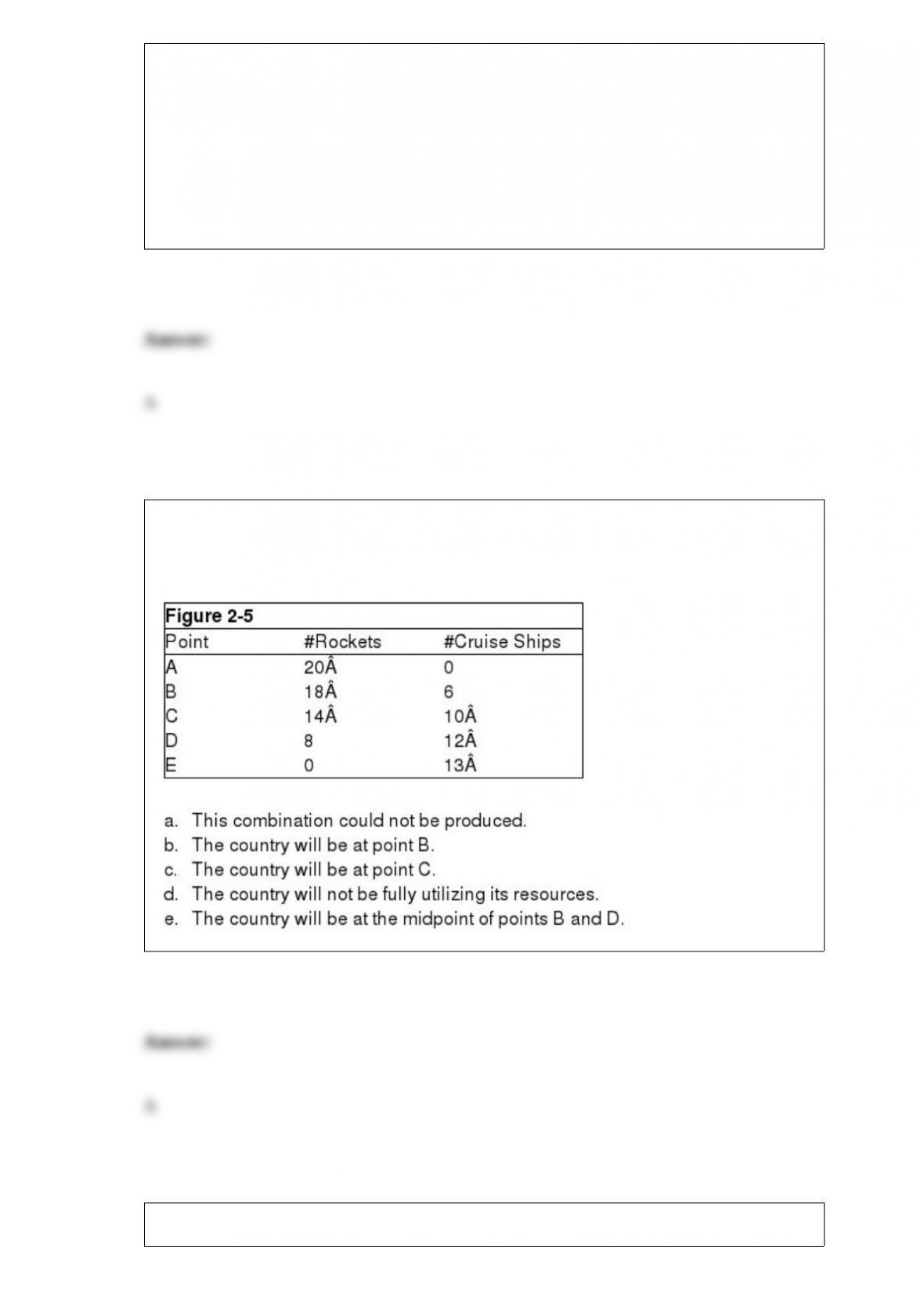
Figure 2-5 shows five different combinations of rockets and cruise ships that a country
could manufacture. Suppose it decided to produce 18 rockets and 12 cruise ships.
Which of the following would be true?
Suppose that the opportunity cost of producing a rocking chair in Mexico is 50

basketballs and the opportunity cost of a rocking chair in Japan is 80 basketballs. Japan
and Mexico can realize mutual gains if the terms of trade are
a. greater than 80 basketballs per rocking chair, and Japan produces rocking chairs
b. between 50 and 80 basketballs per rocking chair, and Japan produces basketballs
c. greater than 80 basketballs per rocking chair, and Mexico produces basketballs
d. less than 50 basketballs per rocking chair, and Japan produces basketballs
e. between 50 and 80 basketballs per rocking chair, and Japan produces rocking chairs
Improvements in the quality of goods and services over time
a. cause GDP statistics to understate true output growth from year to year
b. cause GDP statistics to overstate true output growth from year to year
c. are fully accounted for in the Bureau of Economic Analysis’ measurement of GDP
d. are reflected in higher prices and therefore do not affect the measurement of real
GDP
e. are offset by declining productivity over time
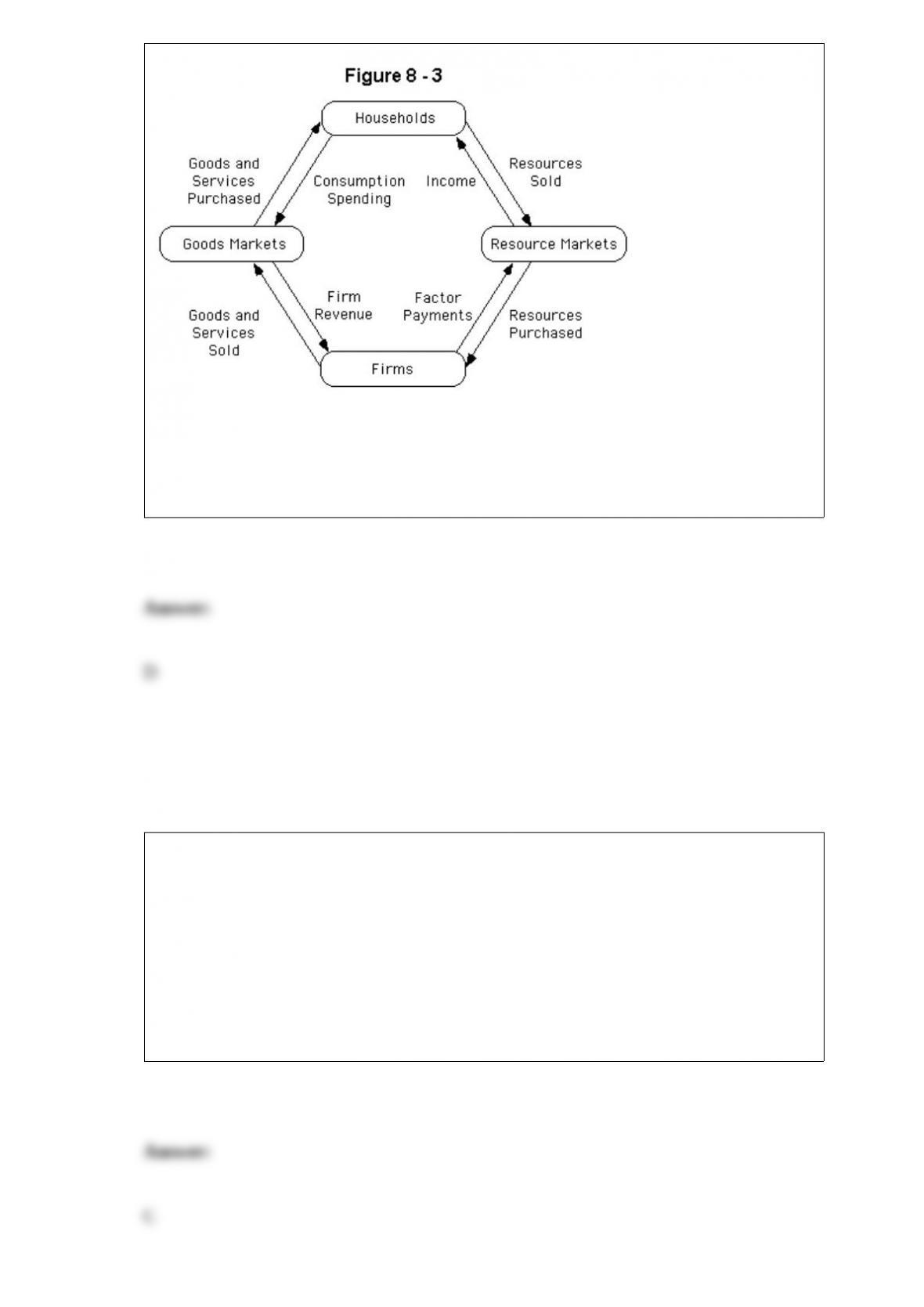
Refer to Figure 8-3. This figure is known as
a. the classical aggregate production function
b. the Keynesian aggregate production function
c. the full-employment model
d. the circular flow diagram
e. Say’s diagram
The aggregate production function shows how much output the economy can produce
a. with different quantities of labor, land, capital and states of technology
b. with different quantities of labor and capital, for given amounts of land and a given
state of technology
c. with different quantities of labor, for given amounts of land and capital, and a given
state of technology
d. with a given amount of money
e. with different amounts of money and given amounts of land, labor, capital, and a
given state of technology
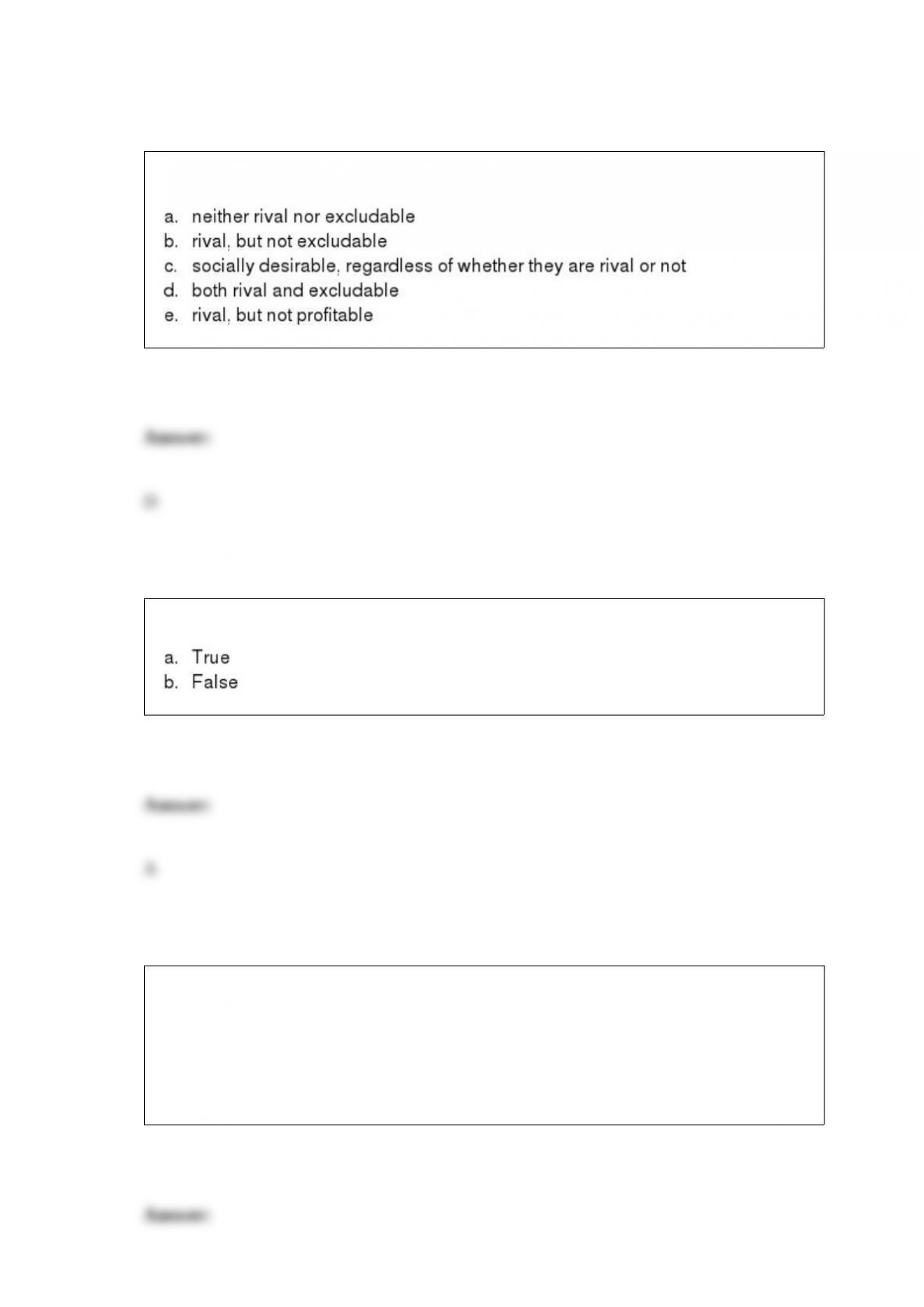
Private markets are most likely to produce goods that are
Copyrights and patents are examples of barriers to entry.
Why do Americans want to buy pounds?
a. To buy goods and services from British firms and to buy British assets.
b. To purchase a British soccer shirt in New York.
c. To purchase stock in British companies on the New York Stock Exchange.
d. To purchase Canadian bonds.
e. To buy goods and services only.
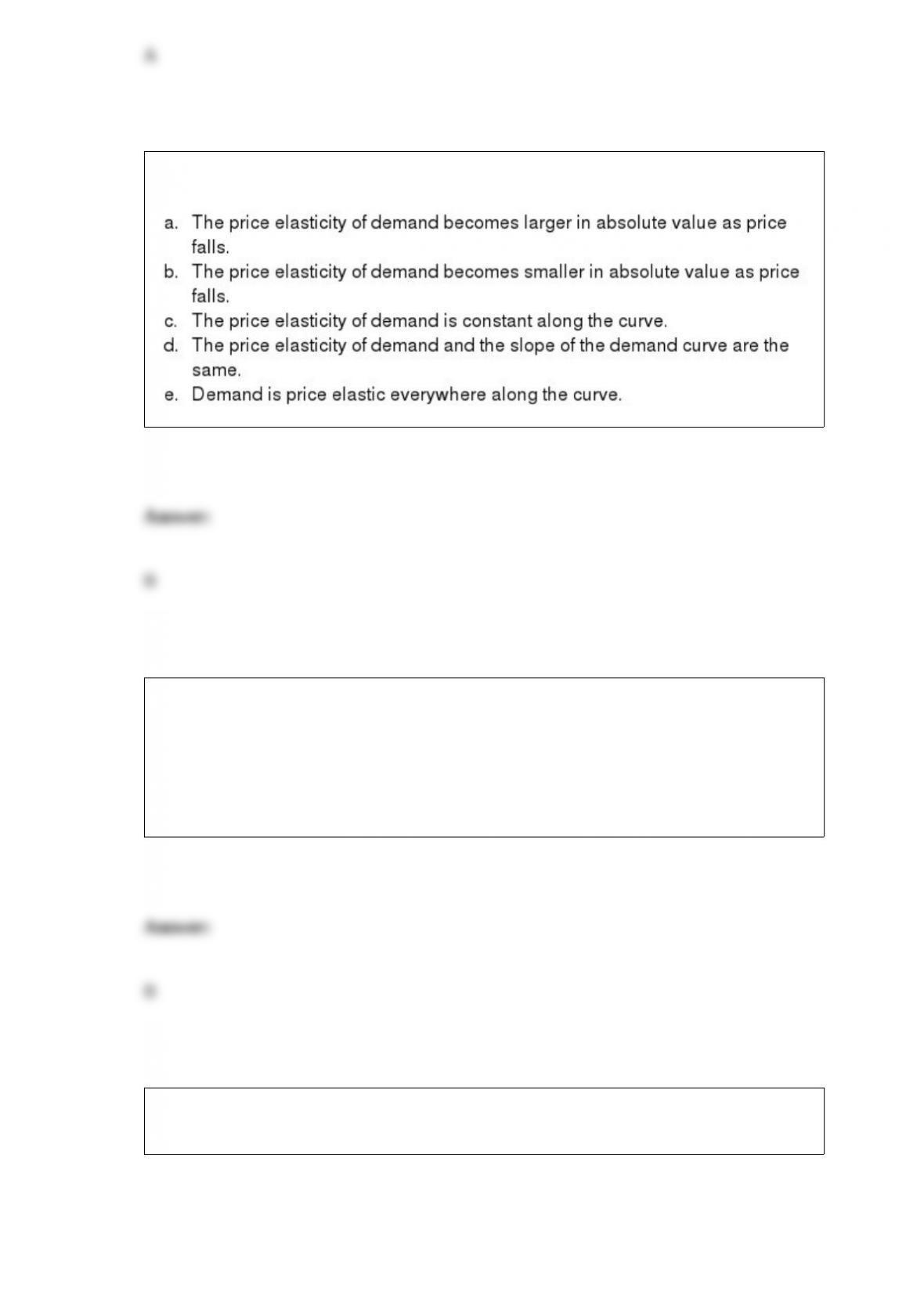
Which of the following statements about straight-line demand curves is true?
If aggregate expenditure at a particular level of income is less than output,
a. output will increase
b. output will decrease
c. output will remain the same
d. output will rise slightly and then level off
e. we cannot determine what will happen to output
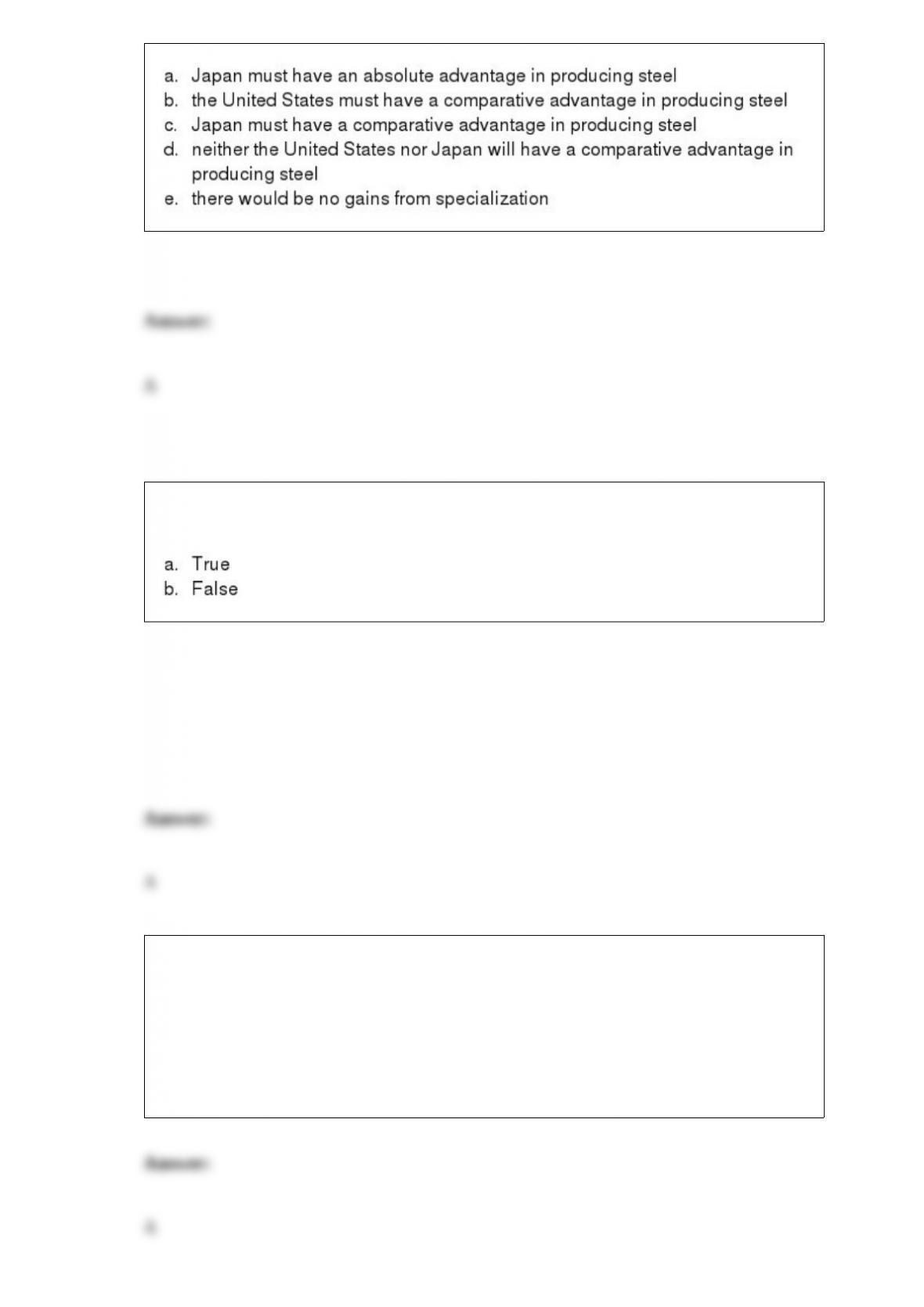
If Japan could produce more steel in a year than the United States using the same
amount of resources, then
The formula for determining changes in demand deposits is the reciprocal of the
required reserve ratio (i.e., 1/RRR) multiplied by the change in reserves.
Increases in government purchases, investment spending, and autonomous consumption
all tend to
a. increase real GDP and raise the interest rate
b. increase real GDP and lower the interest rate
c. increase real GDP but leave the interest rate unchanged
d. decrease real GDP and lower the interest rate
e. decrease real GDP and raise the interest rate

In the short-run macro model, cyclical unemployment is caused by insufficient
spending.
The slope of the aggregate expenditure line is
a. less than zero
b. less than 1.0
c. equal to 1.0
d. greater than 1.0
e. the same as the slope of the 45-degree line
A firm in a perfectly competitive market can increase total revenue by raising the price
of its product.
Teachers often earn less than truck drivers because
Government expenditures are a subcategory of government outlays.