1) A $20 billion decrease in investment in a private closed economy that has an MPS
of .5 will reduce saving by $10 billion once the multiplier process has ended.
2) illegal immigration helps improve the standard of living for u.s. citizens by keeping
prices lower.
3)
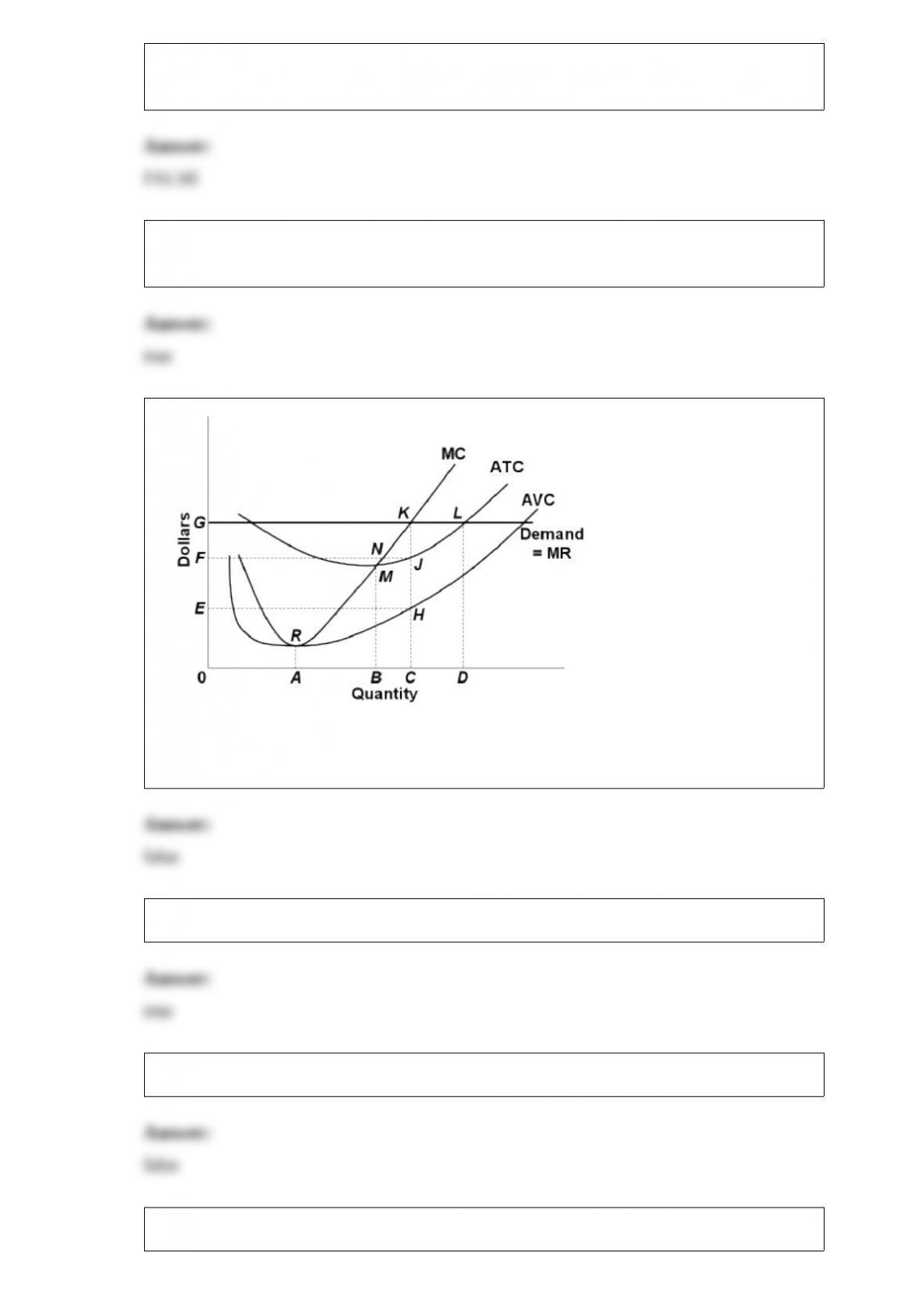
refer to the above diagram. if this represents a typical firm in the industry and the firm
is producing at the profit-maximizing level of output in the short run, then in the long
run we would expect economic profits in this market to rise.
4) along a demand curve, product price and consumer surplus are inversely related.
5) modern economic growth is defined as increases in real gdp over time.
6) technological progress in the health care industry has typically reduced costs and
increased supply.
7) Demand-pull inflation can be restrained by increasing government spending and
reducing taxes.
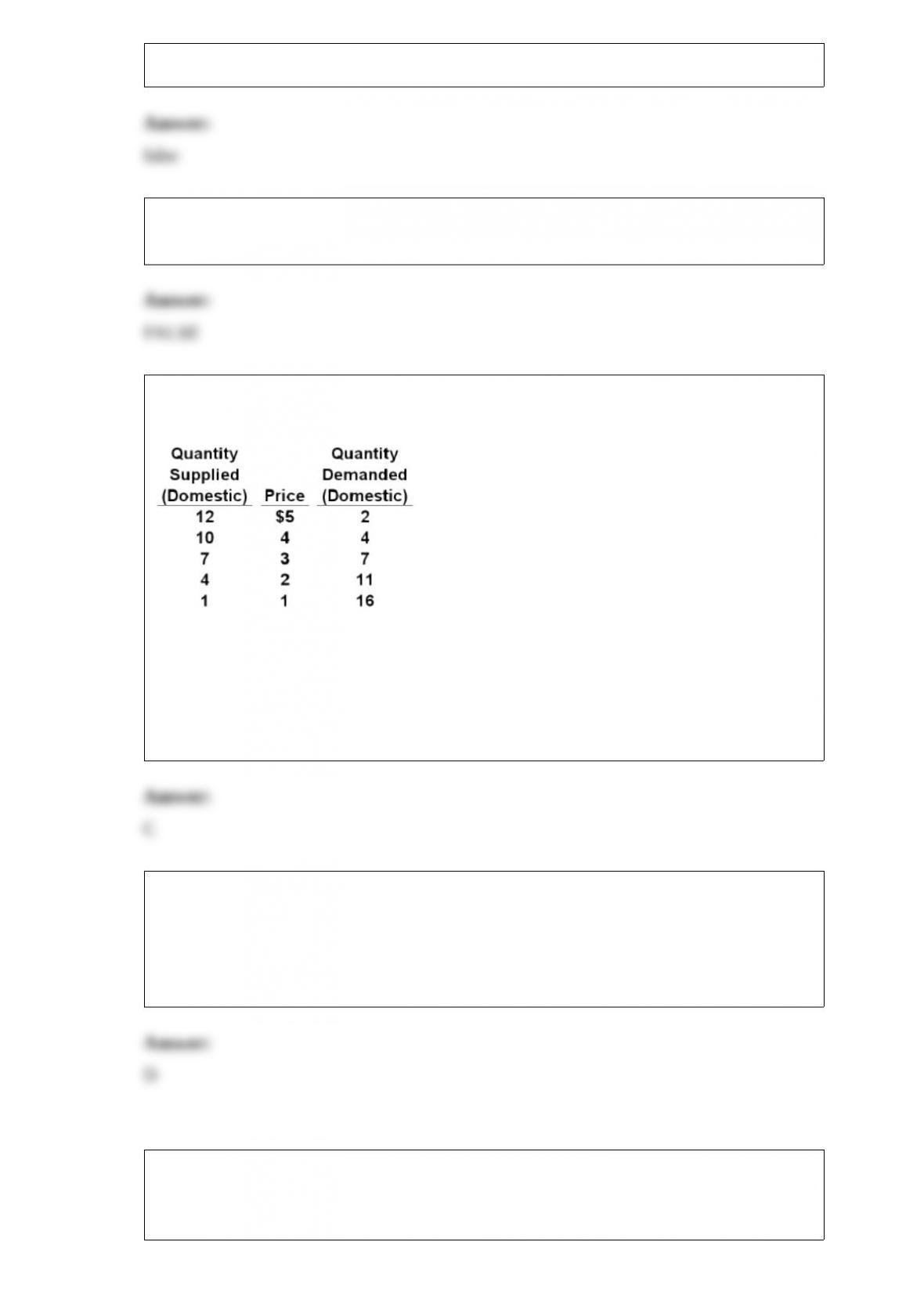
8) The following domestic supply and demand schedules for a product. Suppose that the
world price of the product is $1.
Refer to the above data. The total amount of revenue collected from a $1 per unit tariff
on this product will be:
A.$22.
B.$8.
C.$7.
D.$14.
9) Between 1995 and 2004 in the United States:
A.average U.S. household wealth increased and median household declined.
B.average U.S. household wealth declined and median household wealth increased.
C.both average and median U.S. household wealth declined.
D.both average and median U.S. household wealth increased.
10) According to mainstream economists, a restrictive monetary policy might be
frustrated, wholly or in part, by:
A.Treasury sales of gold bullion.
B.a Treasury surplus.
C.the desire of households and businesses to hold smaller money balances.
D.a decrease in V.
11) an increase in the price of a product will reduce the amount of it purchased because:
a.supply curves are upsloping.
b.the higher price means that real incomes have risen.
c.consumers will substitute other products for the one whose price has risen.
d.consumers substitute relatively high-priced for relatively low-priced products.
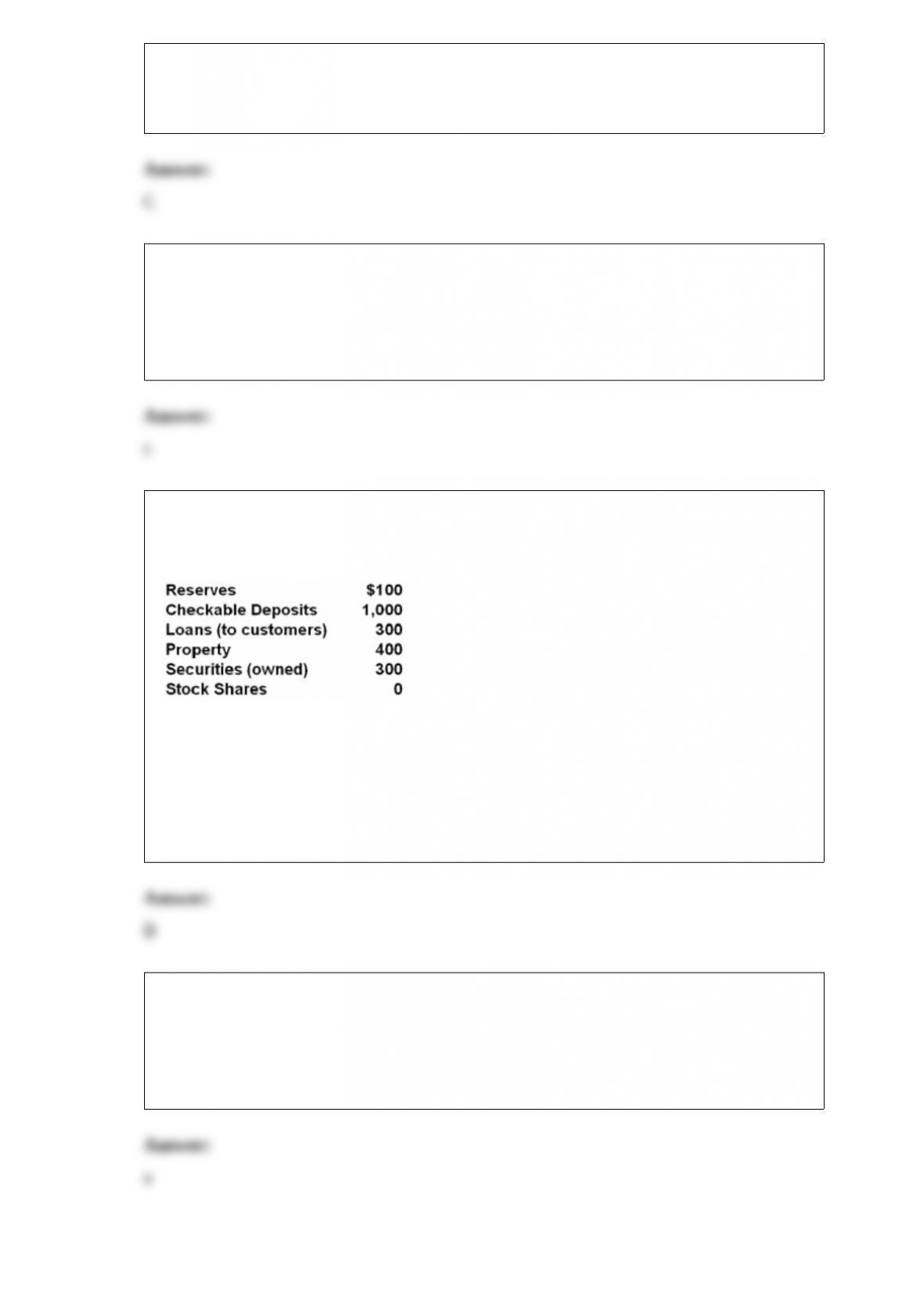
12) The following information for the Moolah Bank.
Refer to the above information and assumed that Moolah bank is “loaned up.” If it
receives a $100 deposit of currency, it could safely expand its loans by:
A.$100.
B.$90.
C.$900.
D.$1000.
13) which of the following industries most closely approximates pure competition?
a.agriculture
b.farm implements
c.clothing
d.steel
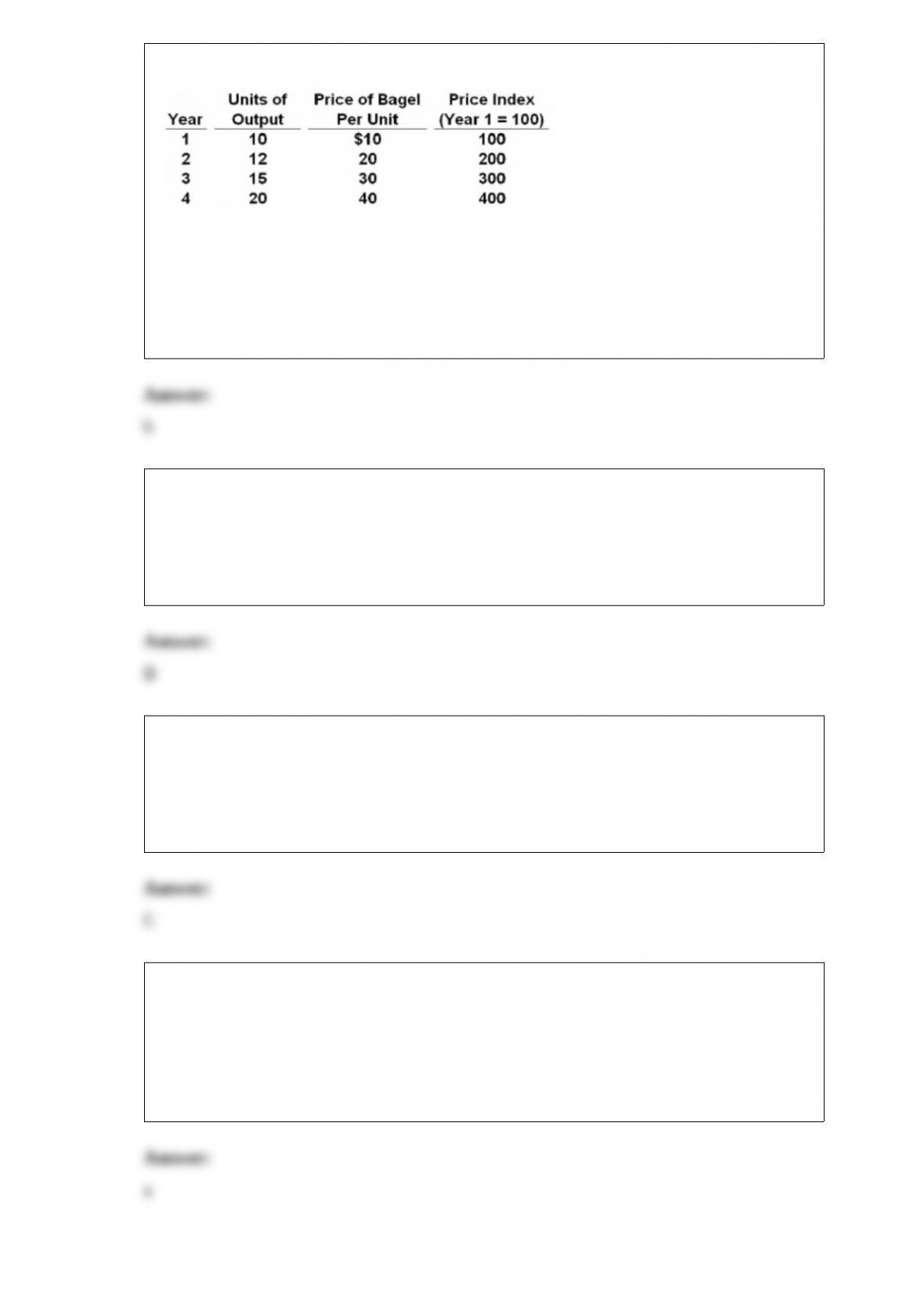
14) use the following table for a hypothetical single-product economy.
refer to the above data. nominal gdp in year 3 is:
a.$100.
b.$450.
c.$225.
d.$150.
15) Other things equal, an increase in the productivity of capital goods will:
A.increase the demand for loanable funds and decrease the equilibrium interest rate.
B.increase the demand for loanable funds and increase the equilibrium interest rate.
C.increase the supply of loanable funds and decrease the equilibrium interest rate.
D.increase the supply of loanable funds and increase the equilibrium interest rate.
16) If the minimum wage is set too high, in some labor markets we can expect to see:
A.a shortage of labor.
B.an increase in on-the-job training.
C.a surplus of labor.
D.a decline in wage costs.
17) if the exchange rate changes from $1 = 2 euros to $1 = 3 euros:
a.the dollar has appreciated in value.
b.the dollar has depreciated in value.
c.the dollar has neither appreciated nor depreciated, but the euro has appreciated in
value.
d.u.s. exports to europe will increase.
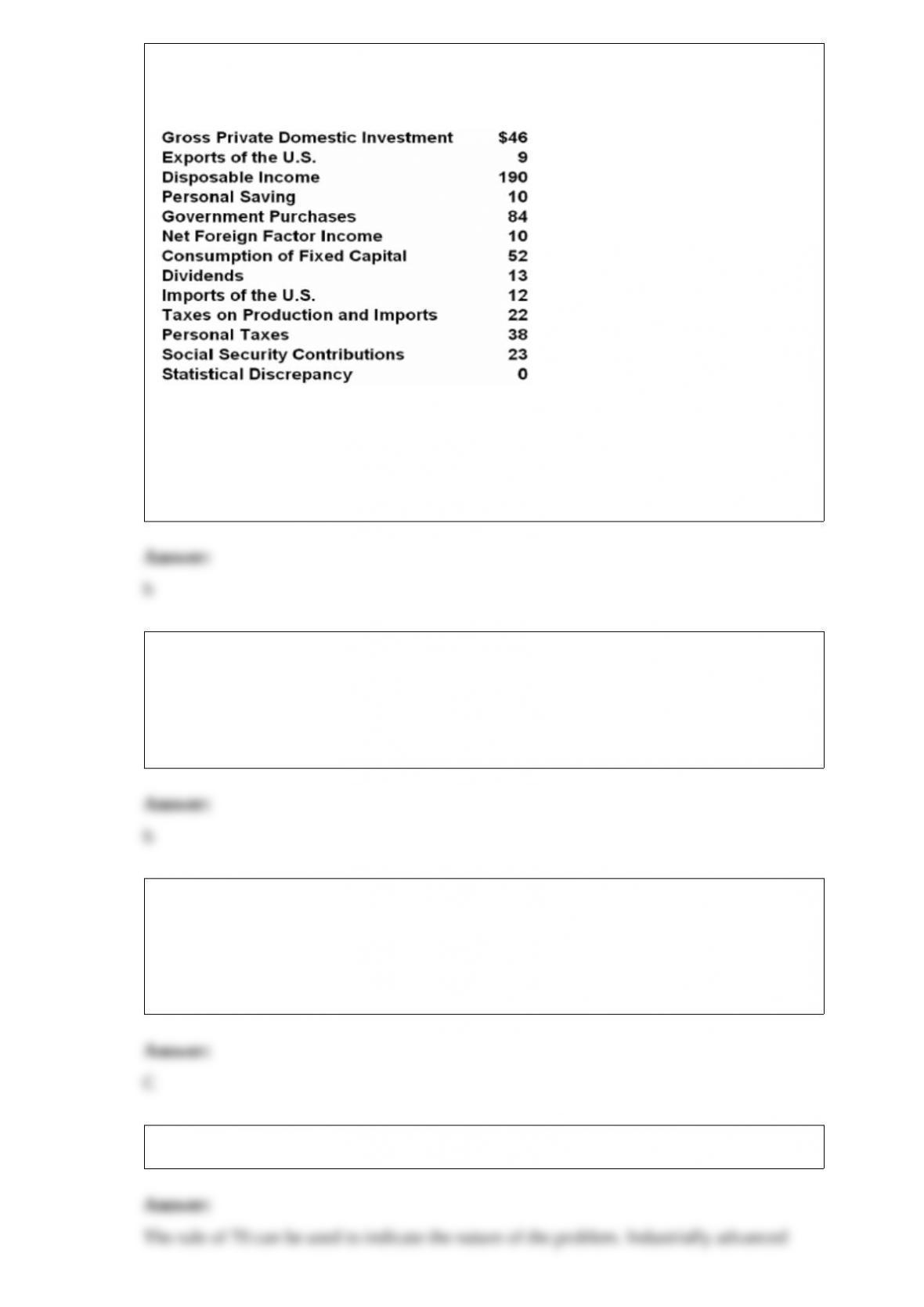
18) answer the next question(s) on the basis of the following data. all figures are in
billions of dollars.
refer to the above data. the net domestic product is:
a.$233.
b.$255.
c.$230.
d.$348.
19) exchange rates are particularly important because:
a.they present a challenge to financial speculators.
b.they link the price levels of various nations to one another.
c.they represent exceptions to the laws of demand and supply.
d.equilibrium is never achieved in such markets.
20) In energy economics, “BTU” stands for:
A.Boiling Temperature Unit.
B.Base Tax Utility.
C.British Thermal Unit.
D.Base Technology Utility.
21) Discuss the problem of population in developing nations using the rule of 70.

22) Why dont economists agree with backing paper money with a certain commodity,
such as gold?
23) Do changes in relative expected returns on stocks, real estate and production
facilities affect the value of a nations currency?
24) What was the gold standard?

25) A monopolistically competitive firm is producing 50 units of output in the short run
where marginal cost is $3.00, average total costs are $5.00, price is $4.50, average
variable cost is $4.00, and marginal revenue is $3.00. How much profit is the firm
making? What output recommendation would you make for the firm?
26) How do preferences and risk contribute to income inequality?
27) Why are reserves listed in the assets column of a banks balance sheet?