
Producer surplus is the Difference between the lowest price a firm is willing to accept
for a product and the price it actually receives for the product.
A depreciation of a country’s currency always lowers the domestic firm’s profits.
“Cost disease” refers to the tendency for low productivity in the service sector to lead to
higher costs in those industries.
The marginal product of labor is the increase in output as a result of hiring an additional
worker while the marginal revenue product of labor is the increase in profit as a result
of hiring an additional worker.

The ratio at which a country can trade its exports for imports from other countries is
called comparative advantage.
The Clayton Act of 1936 outlawed price discrimination that reduced competition.
The “rational expectations” school of economists, including Robert Lucas and Thomas
Sargent, argue that changes in monetary policy cannot affect unemployment rates in the
short run or long run.
When Jack’s income increases by $1,000, he spends an additional $850 dollars. This
implies that his marginal propensity to consume is 0.85.

Examining the conditions that could lead to inflation in an economy is an example of
microeconomics topic.
The short-run supply curve for a perfectly competitive firm is that part of the firm’s
marginal cost curve that lies above the minimum point of its average variable cost
curve.
Which of the following is evidence of a surplus of bananas?
A) Firms raise the price of bananas.
B) The price of bananas is lowered in order to increase sales.
C) The equilibrium price of bananas rises due to an increase in demand.
D) The quantity demanded of bananas is greater than the quantity supplied.
A study of the effects of the minimum wage on employment of low-skilled workers
estimated the price elasticity of demand for low-skilled workers is -0.75. Suppose that
the government is considering raising the minimum wage from $7.25 per hour to $7.75
per hour. Based on this information, calculate the percentage change in the employment
of low skilled workers. Use the midpoint formula.
Sarita can bake either a combination of 25 cakes and 15 pies or a combination of 10
cakes and 20 pies. If she now bakes 10 cakes and 20 pies, what is the opportunity cost
of baking an additional 15 cakes?
A) 5 pies
B) 10 pies
C) 15 pies
D) 20 pies
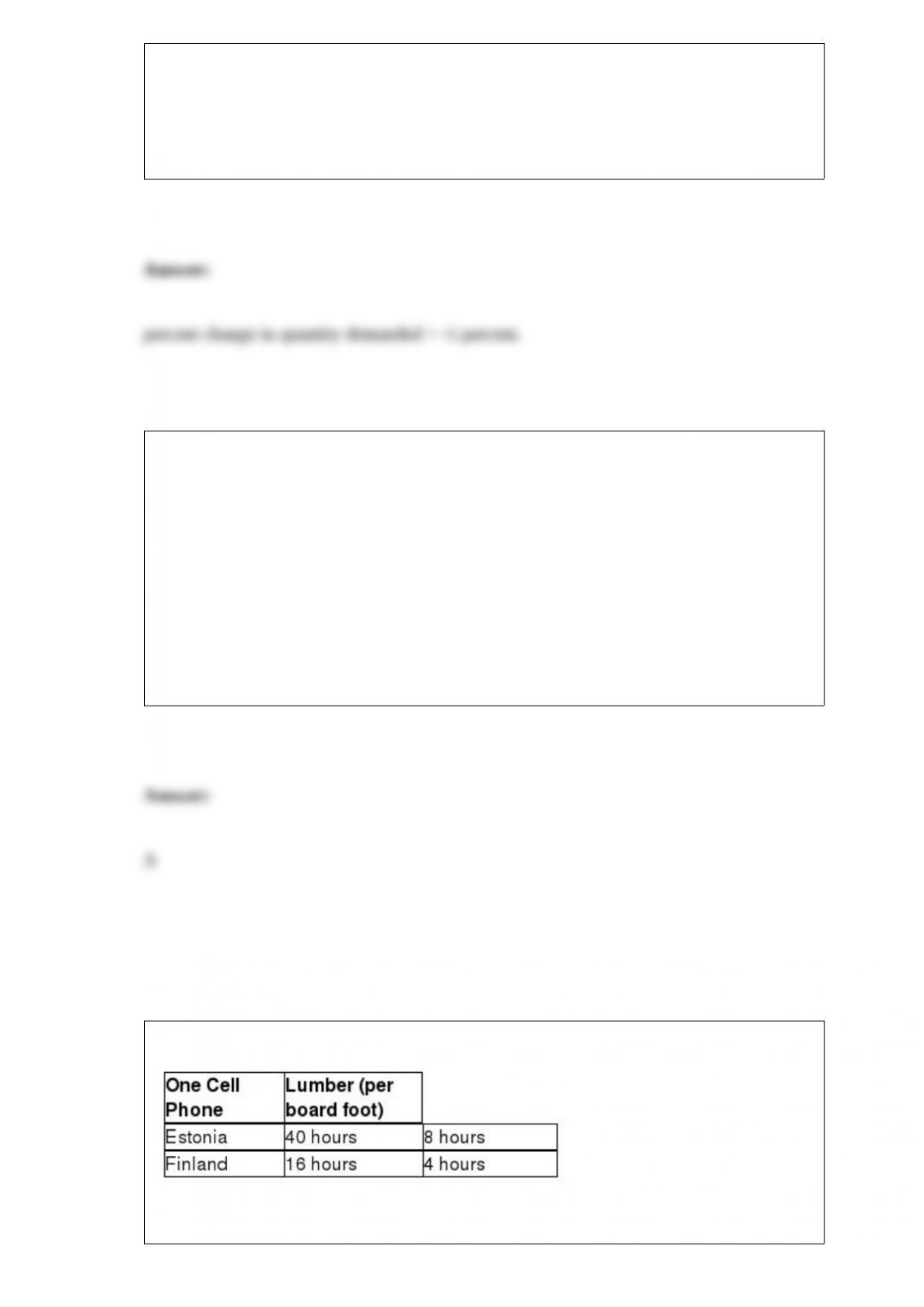
Table 2-16
Table 2-16 shows the number of labor hours required to produce a cell phone and a
board foot of lumber in Estonia and Finland. If the two countries specialize and trade,

who should export cell phones?
A) There is no basis for trade between the two countries.
B) Estonia
C) Finland
D) They should both be importing cell phones.
Using the money demand and money supply model, an open market purchase of
Treasury securities by the Federal Reserve would cause the equilibrium interest rate to
A) increase.
B) decrease.
C) not change.
D) increase if the economy is in a recession.
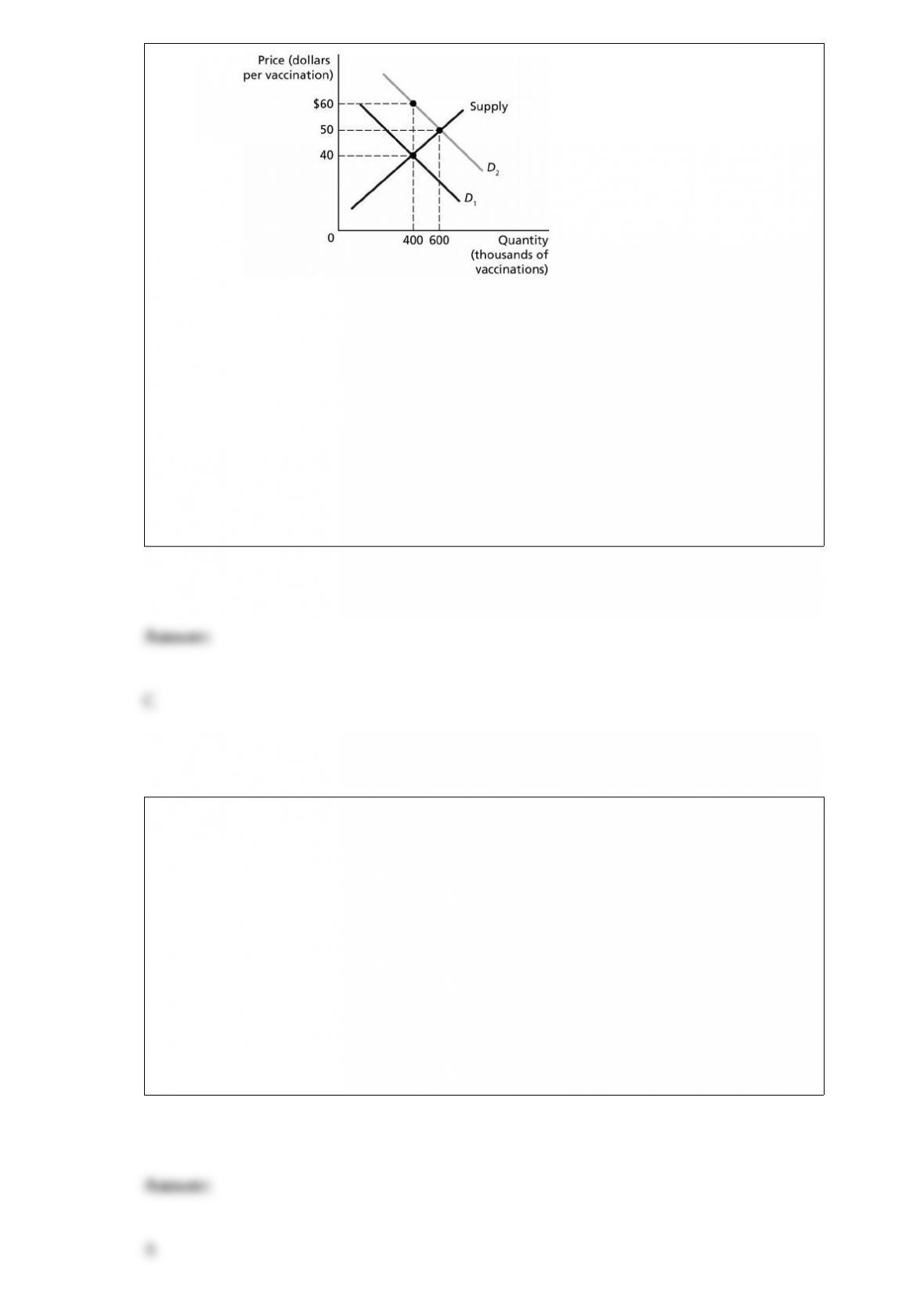
Figure 5-1 Figure 5-1 represents the market
for vaccinations. Vaccinations are considered a benefit to society, and the figure shows
both the marginal private benefit and the marginal social benefit from vaccinations. The
market equilibrium price is
A) $60.
B) $50.
C) $40.
D) <$40.
Your roommate is having trouble grasping how monetary policy works. Which of the
following explanations could you use to correctly describe the mechanism by which the
Fed can affect the economy through monetary policy? Increasing the money supply
A) lowers the interest rate, and firms increase investment spending.
B) causes people to spend more because they know prices will rise in the future.
C) raises the interest rate and consumers decrease spending on durable goods.
D) lowers the interest rate, raises the value of the dollar, lowers the prices of exports,
and raises net exports.
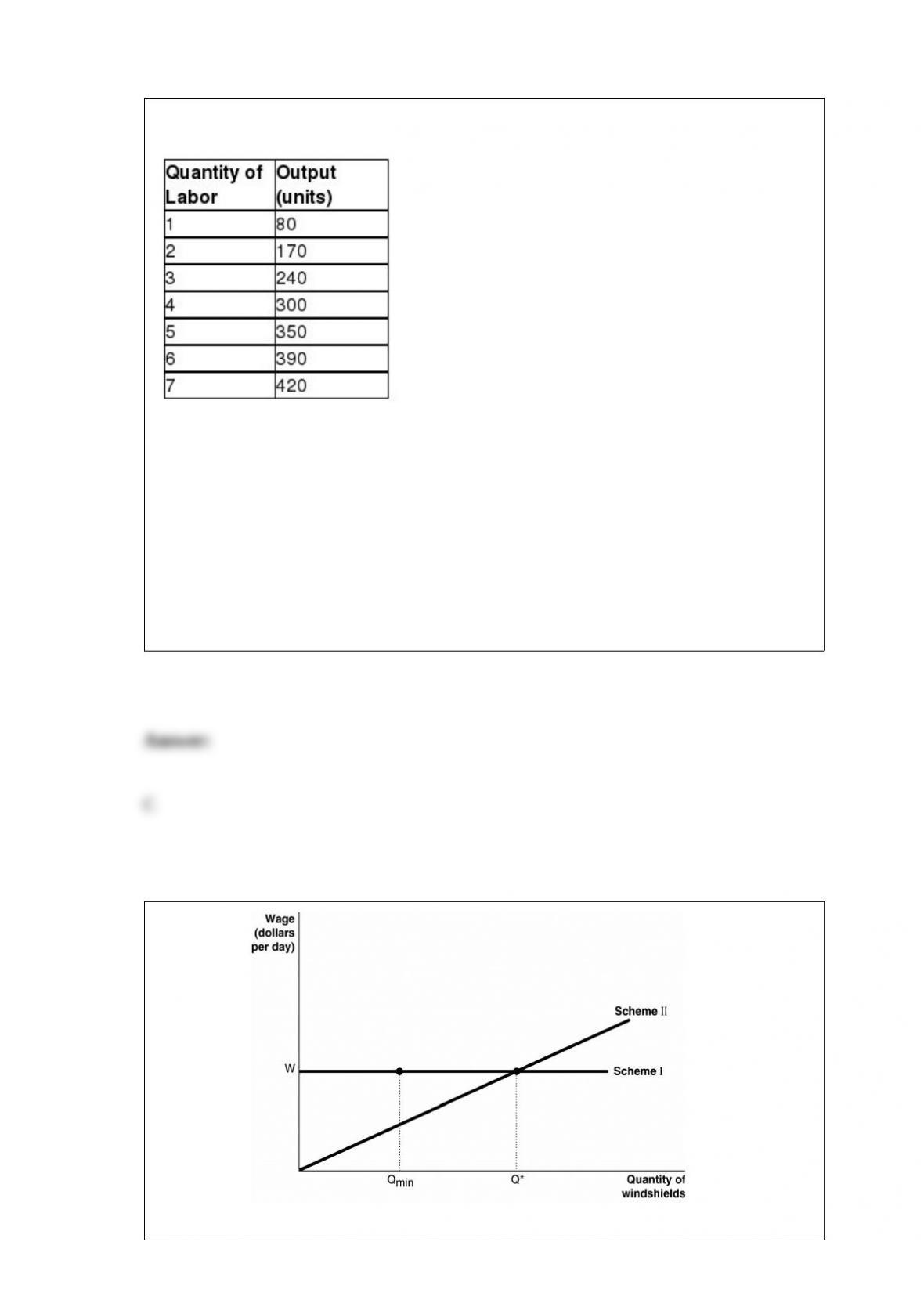
Table 17-1
The marginal product of the fourth unit of labor is
A) 300.
B) 75.
C) 60.
D) 15.
Figure 17-6 Figure 17-6
shows two different compensation schemes for the Safelite Glass Corporation, an

installer of auto glass windshields. Under Scheme I, the firm pays a consistent wage of
$80 per day based on an 8-hour workday. Qmin represents the cut-off point under the
hourly-wage system: if a worker installed fewer than Qmin windshields, the worker got
fired. Scheme II represents a piece-rate scheme with an earnings floor: no worker
would get less than $80 per day (for an 8-hour workday) and would have to produce at
least Qmin. For any output level beyond Q* the worker earned an additional $20 for
each unit produced.
Suppose Qmin = 2 windshields and Q* = 5 windshields. Under Scheme II, a worker has
to install Q* windshields before she earns an additional $20 per windshield installed.
What is a potential problem with this scheme?
A) Workers might be more concerned with increasing output beyond Q* and less
concerned with the quality of their work.
B) Any increase in output between Qmin and Q* benefits the employer only.
C) It violates labor laws because workers are not compensated for output between Qmin
and Q*.
D) Workers have no incentive to produce output to between Qmin and Q*.
When demand is elastic, a fall in price causes total revenue to rise because
A) when price falls, quantity sold increases so total revenue automatically rises.
B) the increase in quantity sold is large enough to offset the lower price.
C) the percentage increase in quantity demanded is less than the percentage fall in price.
D) the demand curve shifts.

Figure 3-2
A decrease in productivity would be represented by a movement from
A) A to B.
B) B to A.
C) S1 to S2.
D) S2 to S1.
When the price level in the United States falls relative to the price level of other
countries, ________ will fall, ________ will rise, and ________ will rise.
A) imports; exports; net exports
B) exports; imports; net exports
C) net exports; exports; imports
D) net exports; imports; exports
Open market operations refer to the buying and selling of ________ by the ________ to
control the money supply.
A) Treasury securities; Treasury Department
B) Treasury securities; Federal Reserve
C) stocks and bonds; Treasury Department
D) stocks and bonds; Federal Reserve
Suppose that the required reserve ratio is 20 percent and you deposit $50,000 of
currency into Comerica Bank. What is the potential increase in deposits in the banking
system brought about by your deposit? What is the potential change in the money
supply?
Assume that it will cost a plumber an additional $35,000 each year by keeping her shop
open for one additional hour per week. What must the additional revenue from keeping
the shop open this additional hour per week be to make staying open for the extra hour
economically rational?
Workers and firms are currently expecting the price level to increase from 110 to 114.
The Federal Reserve then announces that it will be reducing the growth rate of the
money supply. If the Fed’s announcement is credible, and firms and workers have
rational expectations, describe how the expectations of firms and workers will be
affected and how the change in expectations will affect the unemployment rate.
Using aggregate demand and aggregate supply, explain what happens in the short run if
the Federal Reserve raises interest rates in the economy. Be sure to detail what happens
to aggregate demand, the price level, the level of GDP, and unemployment. Assume that
the economy is at full employment before the interest rate increase.
Explain why a centrally-planned economy might not grow as rapidly as a market
economy.
Why is it necessary for a firm that practices price discrimination be a price maker rather
than a price taker?
Explain and show graphically how a decrease in government spending affects the
equilibrium interest rate and equilibrium quantity of loanable funds in the market for
loanable funds.
The demand for labor is a derived demand. Explain what is meant by the term “derived
demand.”
What is a firm? What other terms do economists use interchangeably with the term
“firm”?
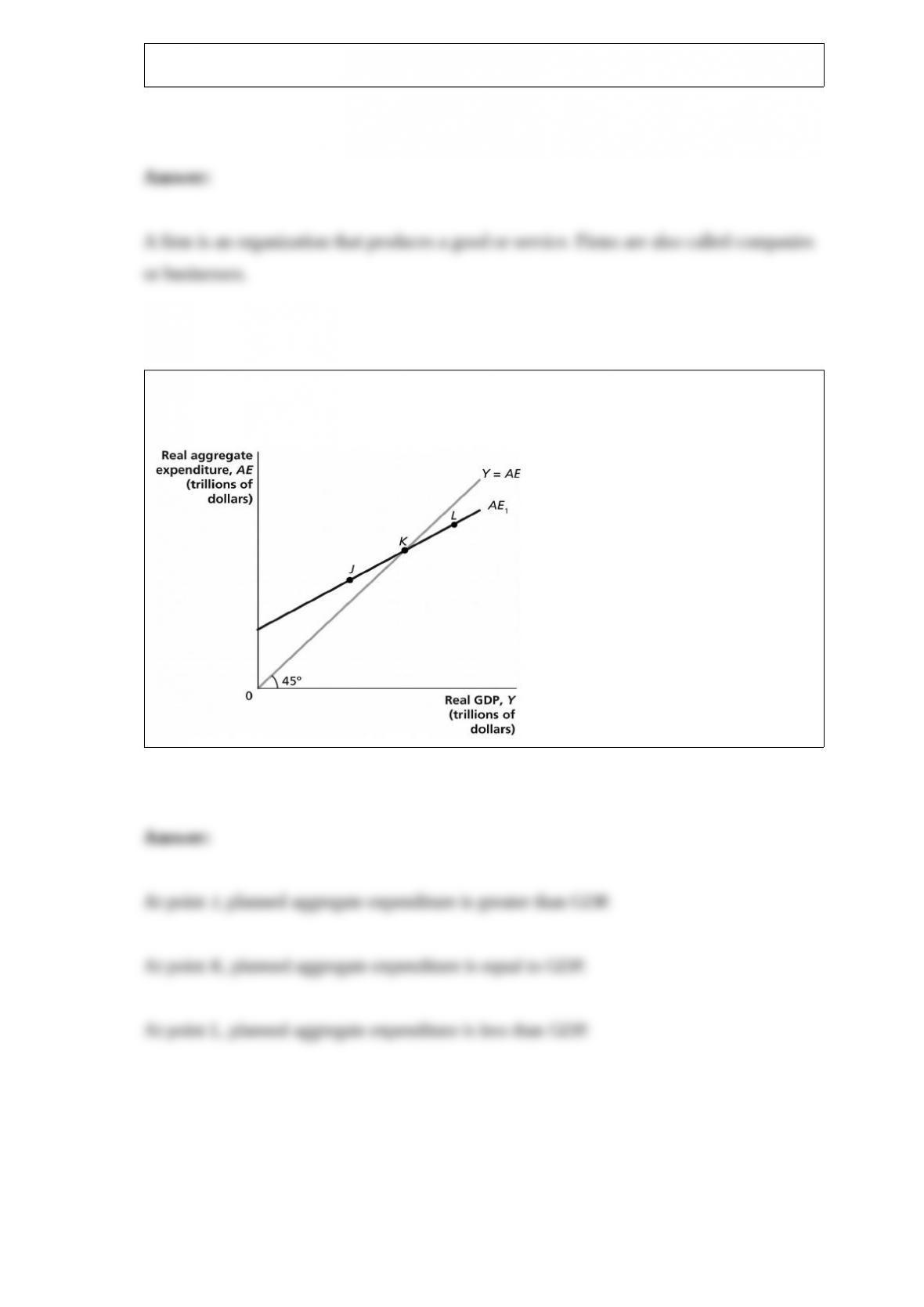
At each of the three points in the following graph, indicate whether planned aggregate
expenditure is greater than, equal to, or less than GDP?