
Calculate the government purchases multiplier if the marginal propensity to consume
equals 0.8, the tax rate is 0.1, and the marginal propensity to import equals 0.2.
A) 2.1
B) 1.9
C) 1.7
D) 1.4
How can economic growth help a country combat “brain drain”?
A) Economic growth increases the incomes of low-skilled workers relative to
high-skilled workers.
B) Economic growth opens up opportunities for better jobs and higher incomes for
skilled workers.
C) Economic growth allows highly skilled persons to earn more in a foreign country
than in their native country.
D) Economic growth combined with decreasing returns to human capital require
workers to achieve steadily higher and higher levels of education over time.
The phrase “demand has increased” means that
A) a demand curve has shifted to the left.
B) there has been an upward movement along a demand curve.

C) there has been a downward movement along a demand curve.
D) a demand curve has shifted to the right.
Commodity money is a good
A) used as money that has no secondary use.
B) that is designated as money by law.
C) used as money that also has value independent of its use as money.
D) used as money that has no intrinsic value.
The fastest growing category of government expenditure is
A) grants to state and local governments.
B) defense spending.
C) transfer payments.
D) government purchases.

Georg, a German citizen, just purchased 10 shares of stock in Microsoft, a U.S.
company. This purchase is an example of
A) foreign direct investment.
B) foreign public investment.
C) foreign portfolio investment.
D) contractual globalization.
Which of the following government provisions would help increase the accumulation of
knowledge capital?
A) patents
B) copyrights
C) education subsidies
D) All of the above are correct.
When an investor buys a corporate bond,
A) the investor becomes part owner of the corporation.

B) the principal of the bond is a loan to the corporation.
C) the interest made on the bond represents the bondholder’s limited liability in the
company.
D) the face value of the bond is equal to what the investor paid for the bond.
During a(n) ________ many firms experience increased profits, which increases
________ and investment spending.
A) expansion; government spending
B) recession; cash flow
C) expansion; cash flow
D) recession; business confidence
Figure 4-1
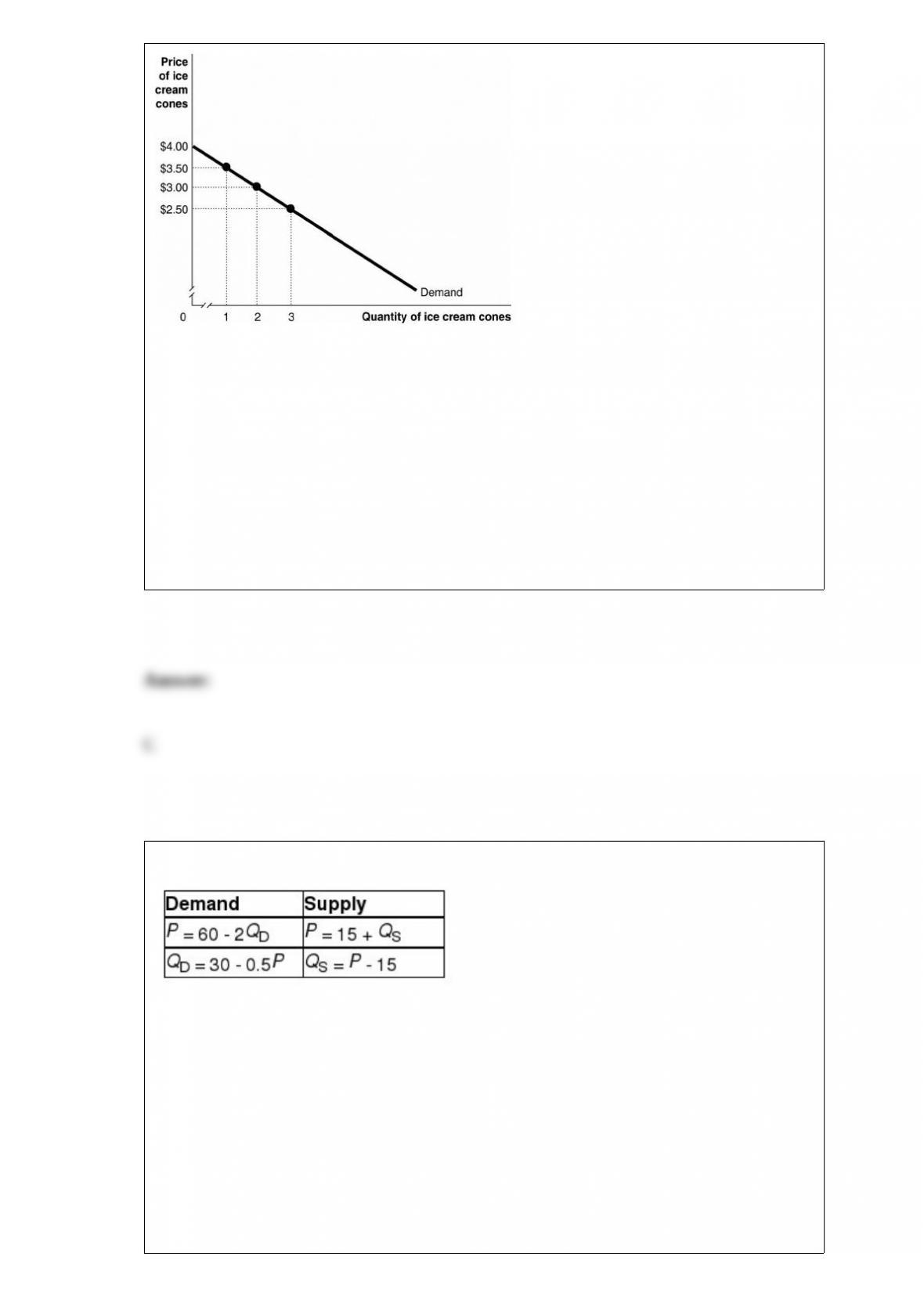
Figure 4-1 shows Kendra’s demand curve for ice-cream cones.
Refer to Figure 4-1. If the market price is $2.50, what is Kendra’s consumer surplus?
A) $9.00
B) $7.50
C) $1.50
D) $0
Table 4-7
Refer to Table 4-7. The equations above describe the demand and supply for Pauline’s
Pickled Pomegranates. The equilibrium price and quantity for Pauline’s Pickled
Pomegranates are $30 and 15 thousand units. What is the value of consumer surplus?
A) $50 thousand
B) $112.5 thousand
C) $225 thousand
D) $337.5 thousand
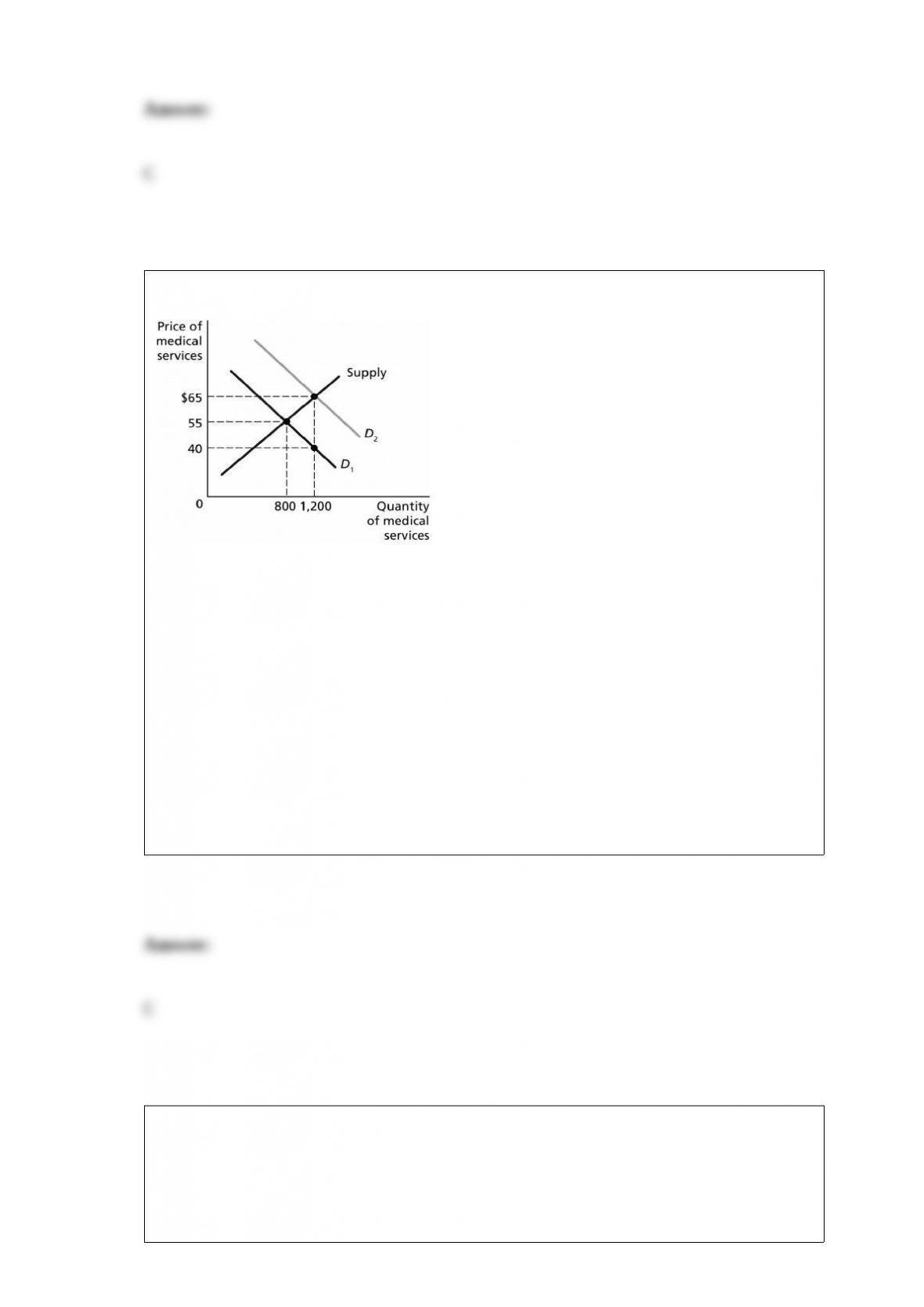
Figure 5-3
Figure 5-3 represents the market for medical services with and without insurance, and
the effect of a third-party payer system on the demand for medical services.
Refer to Figure 5-3. With insurance and a third-party payer system, what price do
doctors receive for medical services?
A) $40
B) $55
C) $65
D) >$65
Which of the following statements about the budget deficit is true?
A) In 1992, the federal budget was balanced.
B) In 2000, the federal budget was in surplus.
C) In 2004, the federal budget was in surplus.
D) In 2011, the federal budget was in surplus.
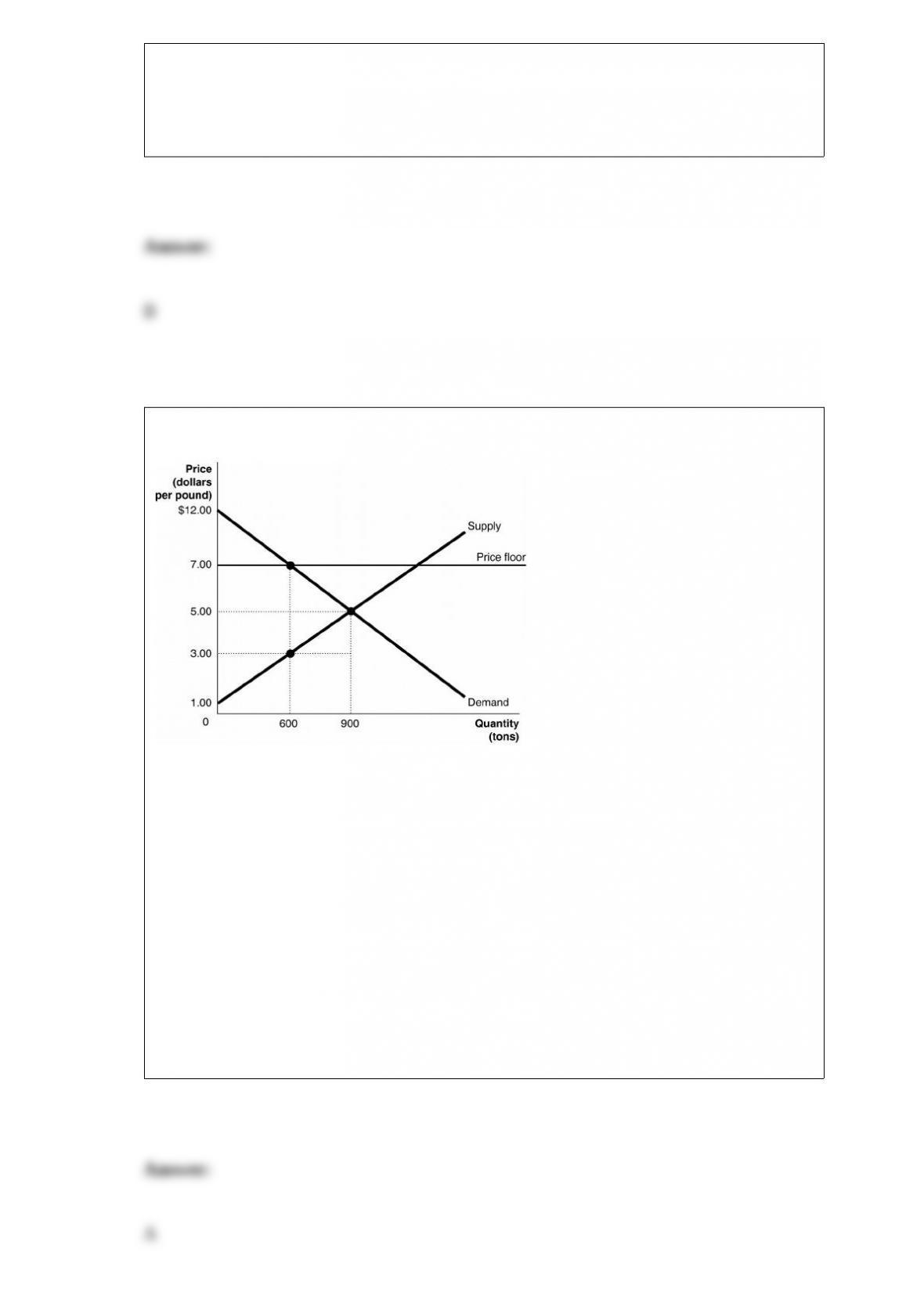
Figure 4-6
Figure 4-6 shows the demand and supply curves for the coffee market. The government
believes that the equilibrium price is too low and tries to help almond growers by
setting a price floor at $7.00.
Refer to Figure 4-6. What is the value of producer surplus after the imposition of the
price floor?
A) $3,000
B) $3,600
C) $4,200
D) $4,500

Which of the following is a drawback to having a common currency across countries, as
in the European Union?
A) A common currency increases barriers to trade across countries, reducing
opportunities for economic growth.
B) With a common currency, individual countries are no longer able to run independent
monetary policies.
C) Having a common currency implies that the prices of goods across countries must
always be the same, regardless of consumer preferences for goods across countries.
D) None of the above is a drawback to a common currency.
Macroeconomics seeks to understand
A) economic growth, business cycles, and inflation.
B) industry sales, marketing strategies and corporate growth.
C) product demand, product cost, and profit maximization.
D) public choices, private choices, and consumer maximization.
If the number employed is 190 million, the working-age population is 230 million, and
the number unemployed is 10 million, then the unemployment rate is

A) 5%.
B) 5.2%.
C) 8%.
D) 10%.
E) 50%.
Which of the following will lead to a decrease in the equilibrium interest rate in the
economy?
A) an increase in the price level
B) a sale of government securities by the Fed
C) a decrease in GDP
D) an increase in the discount rate
E) an increase in the reserve requirement