A bus is mostly filled with passengers and ready to travel from Los Angeles to San
Francisco. At the last minute, a person comes running up to the bus and takes a seat.
The change in the bus company’s total cost as a result of transporting one more
passenger on this trip is called:
a. marginal cost.
b. average total cost.
c. variable cost.
d. fixed cost.
e. opportunity cost.
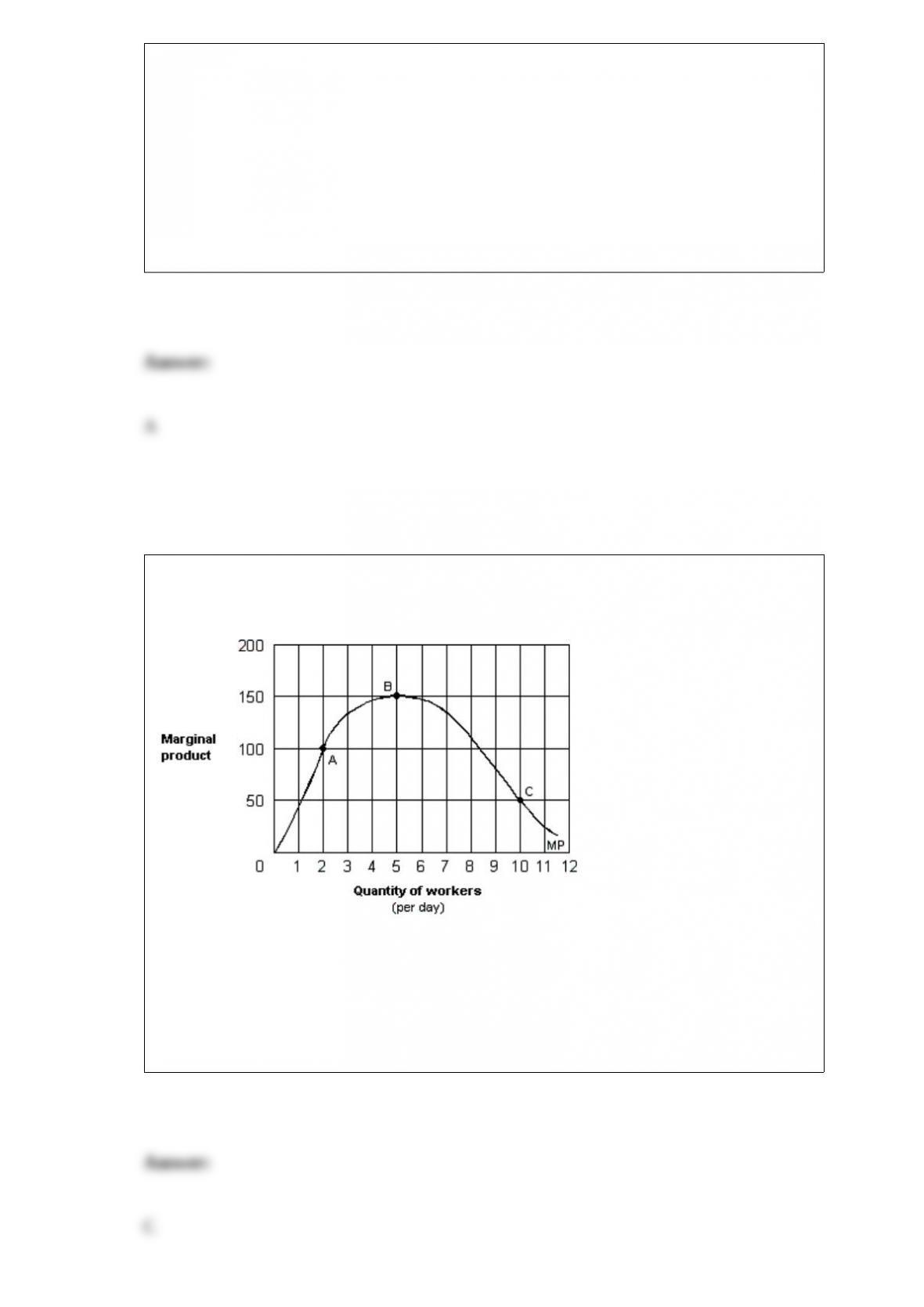
Exhibit 7-3 A marginal product curve
As shown in Exhibit 7-3, the marginal product of labor for the last worker hired when 5
workers are employed per day is:
a. 50.
b. 100.
c. 150.
d. 175.
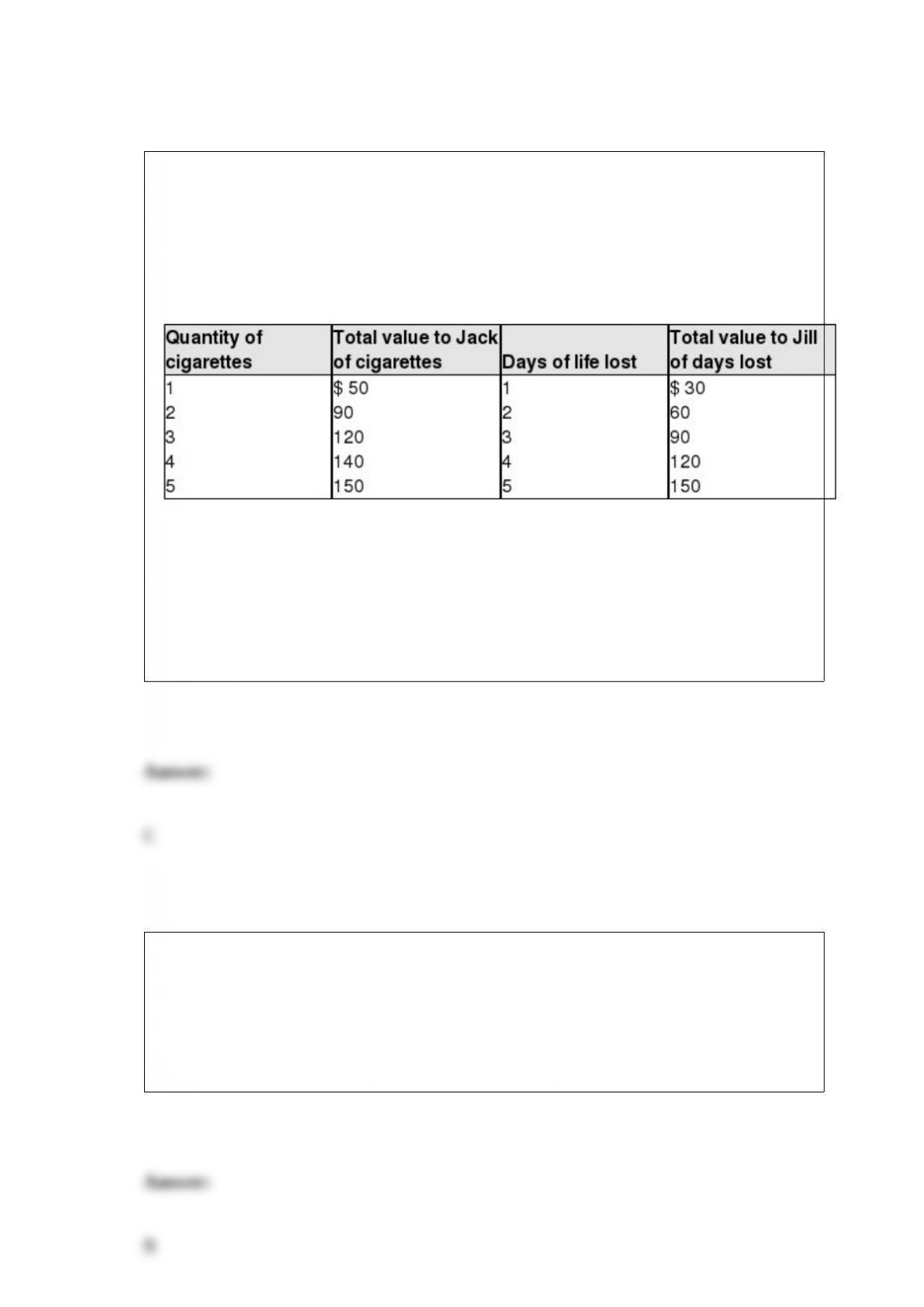
Exhibit 14-2 Cigarette smoking data
Jack enjoys smoking, while Jill fears that second-hand smoke will shorten her life. The
following table shows the value Jack places on each cigarette he smokes, and the value
Jill places on her shortened life. Use the table to answer the following question(s):
As shown in Exhibit 14-2, if non-smokers have a right to a smoke-free environment,
and smokers have the right to negotiate, how many days of life will Jill lose?
a. 0. c. 3.
b. 1. d. 5.
A monopsonist can pick the ____, while a monopolist can pick ____.
a. the price it will charge; the wage it will pay
b. the wage it will pay; the price it will charge
c. the market price for its output; the quantity it will produce
d. marginal product of labor; the marginal cost of labor
e. number of competitors; the number of buyers

Which of the following is a result of discrimination?
a. Two groups of workers earning different wages.
b. Two groups of workers paid the same wage, but proportionally fewer of one group
are employed.
c. Equal pay and equal employment opportunities for two groups of workers with
different productivities.
d. No workers from a particular group are employed.
An economic theory claims that a rise in gasoline prices will cause gasoline purchases
to fall, Ceteris paribus. The phrase “Ceteris paribus” means that:
a. other relevant factors like consumer incomes must be held constant.
b. the gasoline prices must first be adjusted for inflation.
c. the theory is widely accepted but cannot be accurately tested.
d. consumers’ need for gasoline remains the same regardless of the price.
Economists believe that scarcity forces everyone to:
a. satisfy all their wants.
b. abandon consumer sovereignty.
c. lie about their wants.
d. create unlimited resources.
e. make choices.

Within different price ranges along a linear demand curve, elasticities are:
a. constant.
b. different.
c. equal.
d. the same as slope.
e. negative 1.
If the quantity demanded exceeds the quantity supplied in a market, then the result is
which of the following?
a. Deadweight loss c. Underproduction
b. Inefficiency d. Each of these are true.
Exhibit 4-8 Demand and supply curves
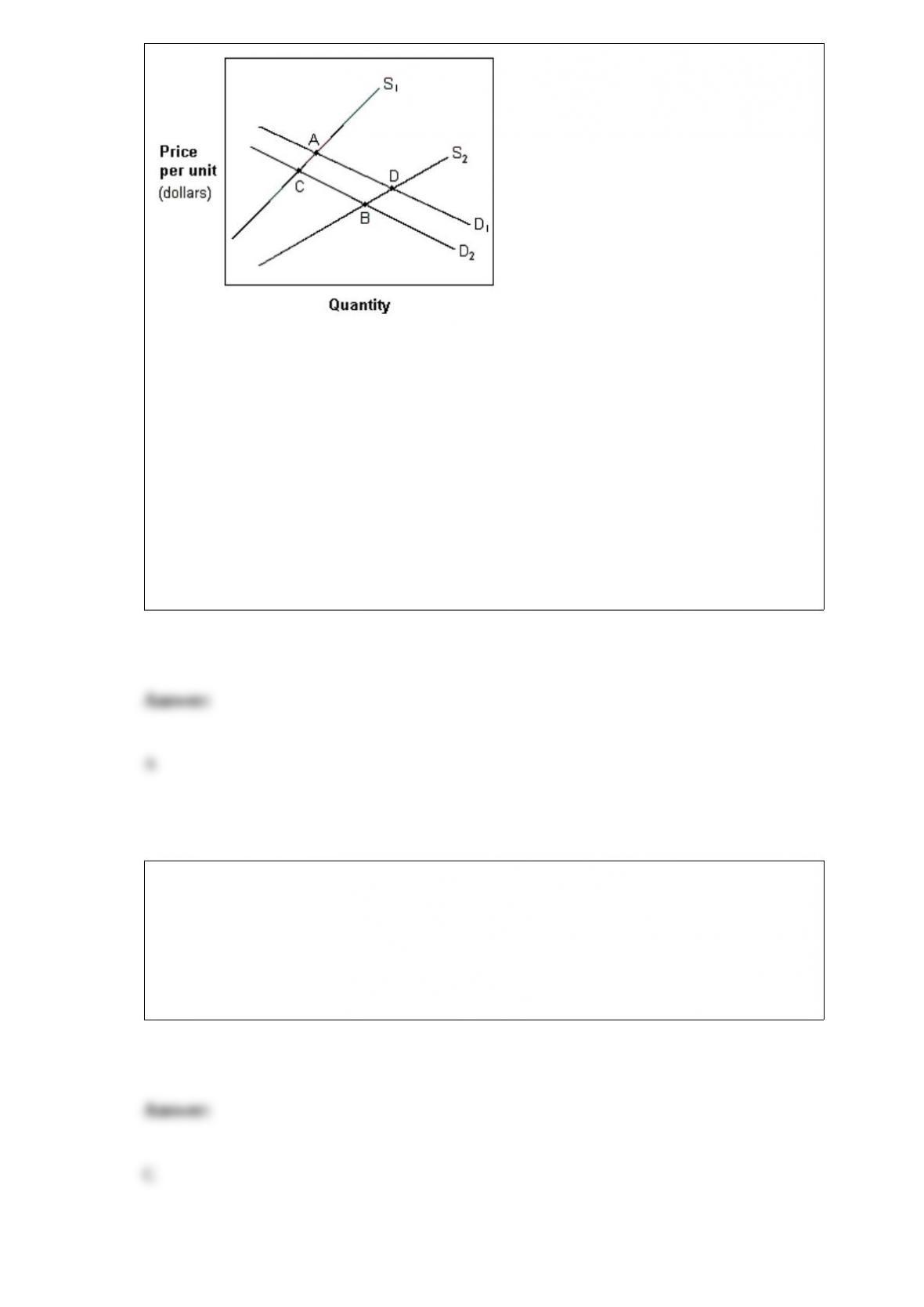
In Exhibit 4-8, a movement from A to D is best described as a(n):
a. increase in the quantity demanded and an increase in supply.
b. increase in supply and demand.
c. increase in both the quantity demanded and supplied.
d. increase in the quantity supplied and in the demand.
e. decrease in the quantity demanded and a decrease in supply.
Although a monopoly can charge any price it wishes, it chooses:
a. the highest price.
b. price equal to marginal cost.
c. the price that maximizes profit.
d. competitive prices.
e. a fair price.

Economic regulation occurs when:
a. monopoly is the optimal market structure
b. the industry is highly competitive
c. the product is important to economic welfare
d. the government owns the assets of the industry
e. the product price, if left unregulated, would be too low
Assume no price ceiling exists and a market is in equilibrium. Then a price ceiling is
established which is below the market equilibrium. What would result?
a. Shortage.
b. Equilibrium.
c. Surplus.
d. Equity.
Exhibit 1A-8 Straight line relationship
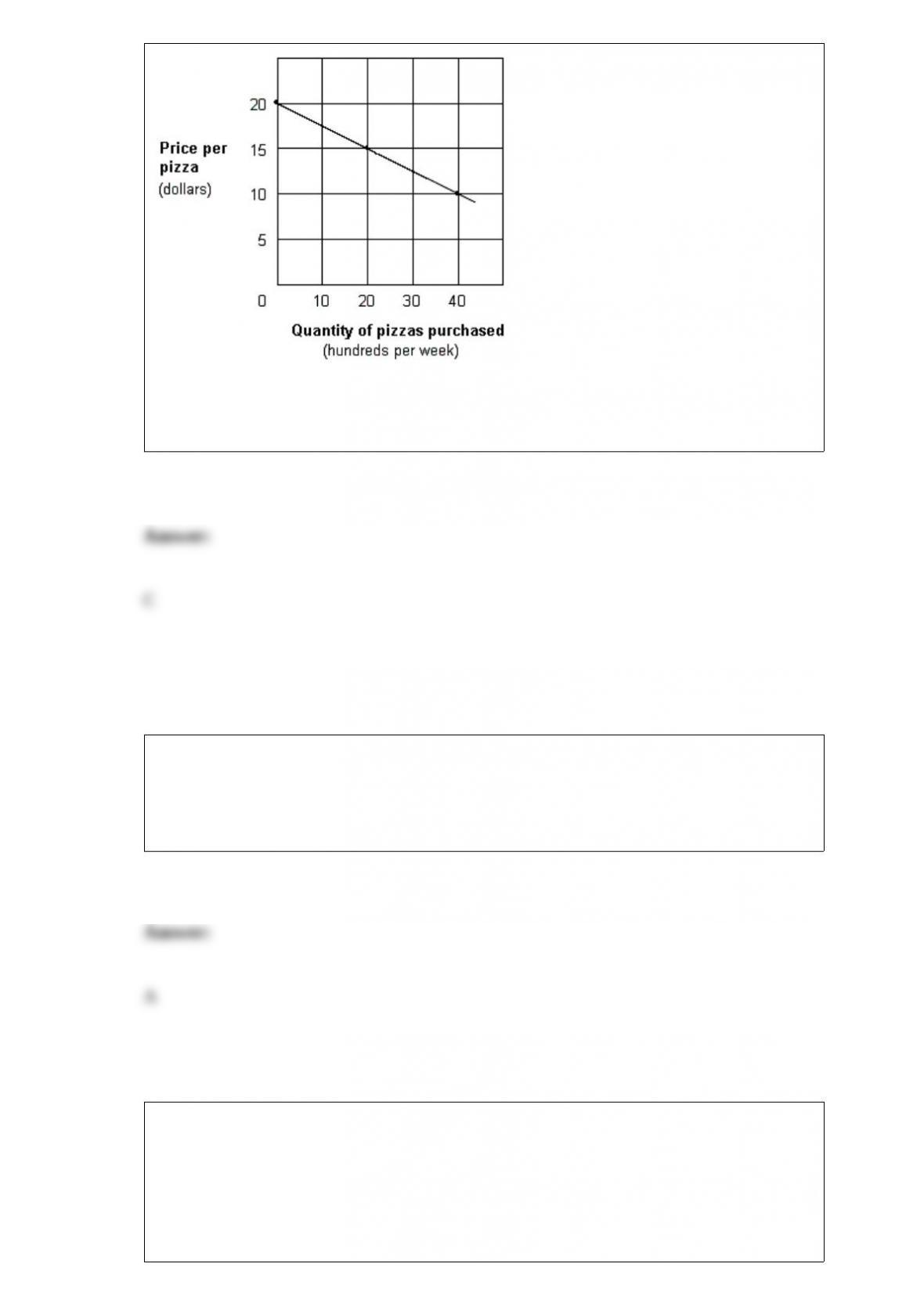
What is the slope of the line shown in Exhibit 1A-8?
a. 1. c. 1/4.
b. 1/2. d. 0.
If U.S. buyers purchased $500 billion of foreign goods and foreign buyers purchased
$400 billion of U.S. goods, the U.S. balance of trade would be:
a. $100 billion. c. $400 billion.
b. $100 billion. d. none of these.
The Secretary of Labor states that wage rates in the country have risen by 2 percent this
past year. The head of a local labor union states that wage gains should have been
higher. The Secretary’s statement is a (n) ____ economic statement, and the labor head’s
statement is a (n) ____ economic statement.
a. normative; normative
b. normative; positive
c. positive; normative
d. positive; positive
e. proper; improper
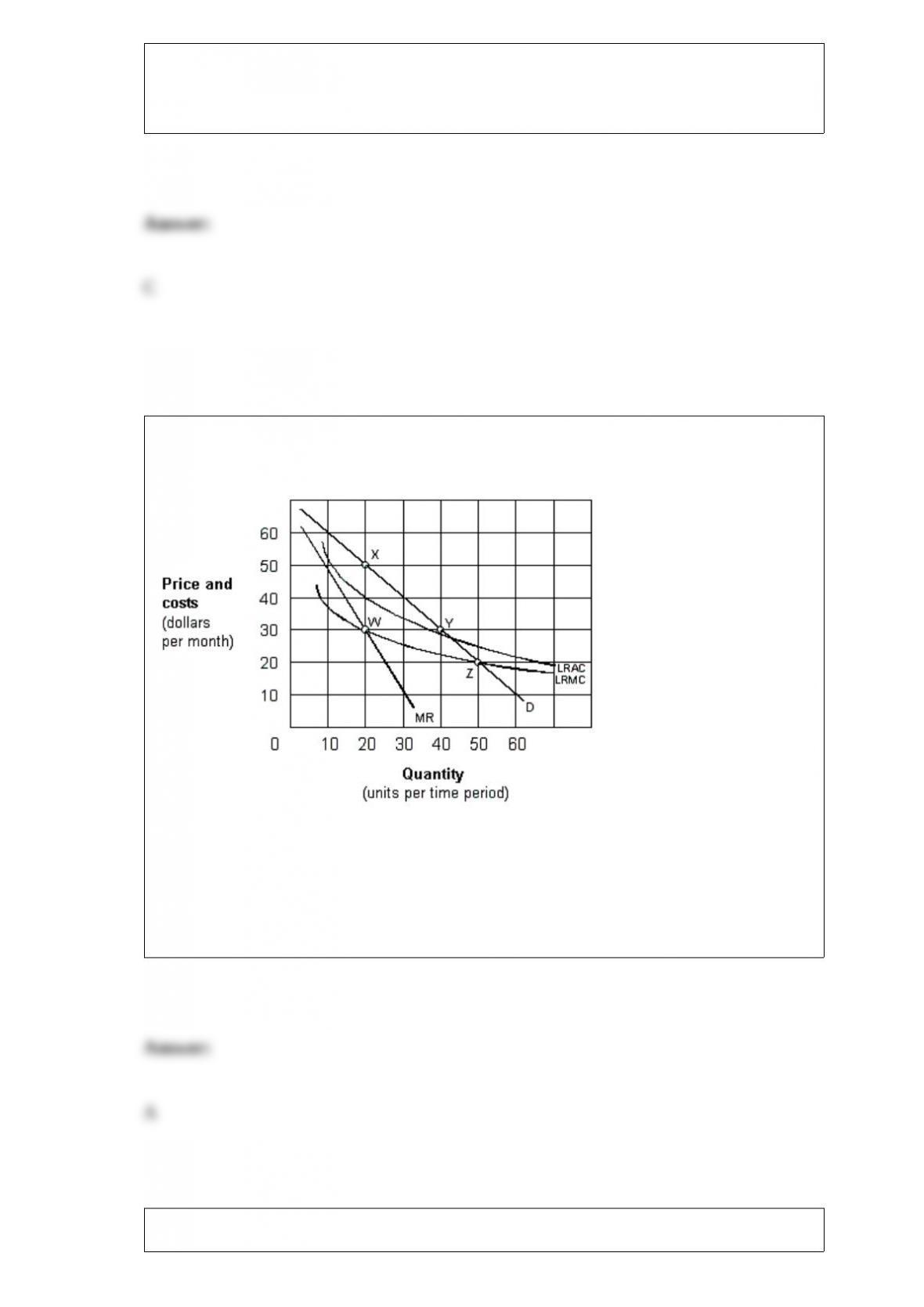
Exhibit 13-2 Public utility monopolist
As shown in Exhibit 13-2, an unregulated monopolist would operate at point:
a. W. c. Z.
b. Y. d. None of these.
A kink in the demand curve facing an oligopolist is caused by:
a. the belief that competitors will follow price increases but not match price decreases.
b. excessive advertising.
c. rapidly rising marginal revenues.
d. the assumption that competitors will follow price reductions but not price increases.
Which of the following is not an example of market failure?
a. Lack of competition.
b. Externalities.
c. Equilibrium.
d. Extreme income inequality.
Borrowing from foreign banks by U.S. firms represents a capital inflow.
Distinguish economies and diseconomies of scale. How can the extent to which
economies and diseconomies of scale explain the size and number of real world firms in
an industry?
Public goods are overproduced in the marketplace.
In the long run, all costs are fixed costs.
If demand for a good is price elastic, it must also be income elastic.
As an individual consumes more of a good, the marginal utility of that good declines.
To maximize profit, a monopsonist hires workers up to the point at which marginal
factor cost (MFC) equals marginal revenue product (MRP).
In long-run equilibrium, a perfectly competitive firm’s short-run marginal cost curve
crosses the long-run average cost curve at the lowest point on the long-run average cost
curve.
If the price of a good decreases, the resulting increase in the quantity purchased
decreases the marginal utility of the good.