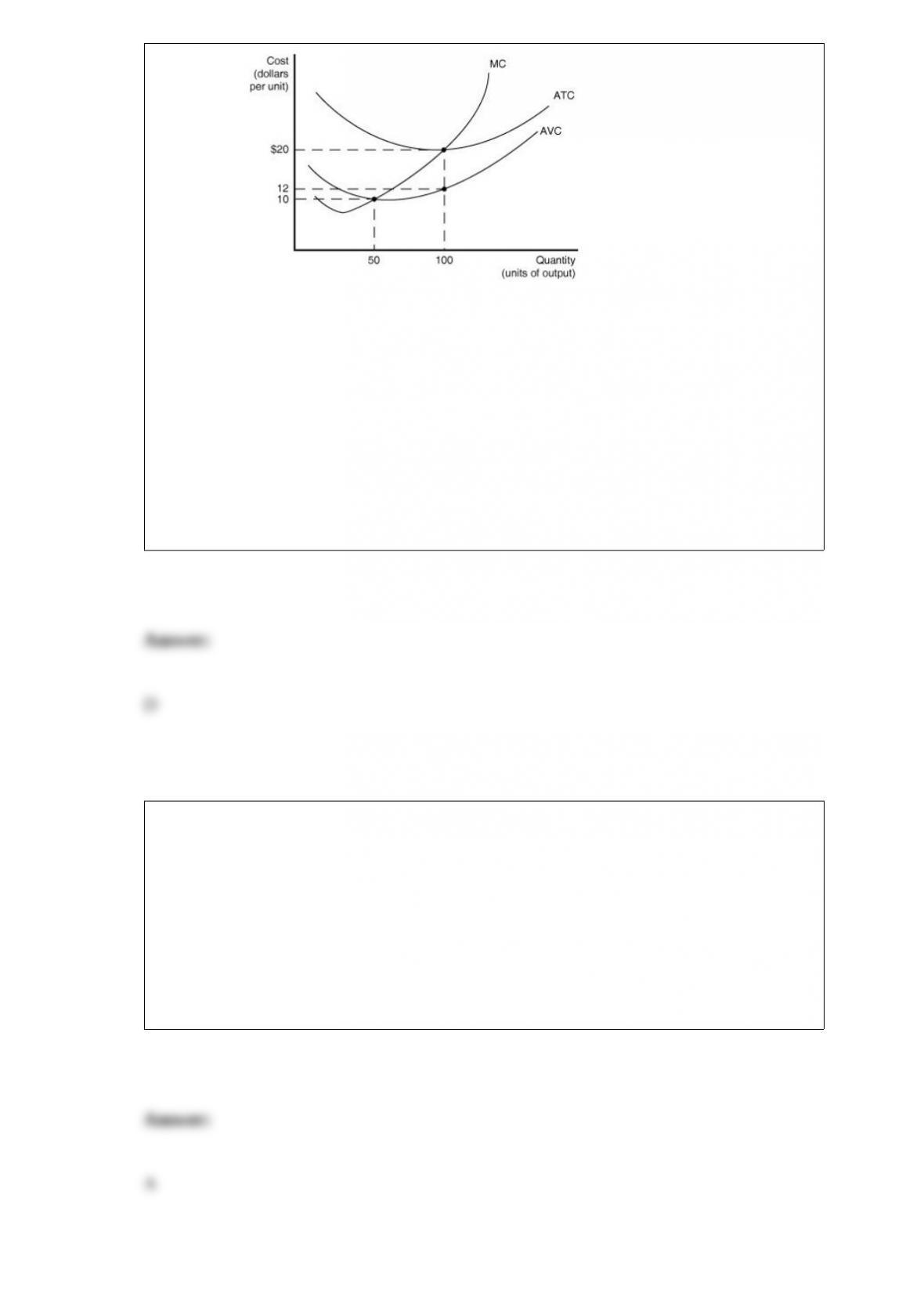
Figure 11-7 Figure 11-7 shows the cost
structure for a firm.
When output level is 100, what is the total cost of production?
A) $20
B) $1,000
C) $1,200
D) $2,000
The level of real GDP in the long run is called
A) potential GDP.
B) short-run GDP.
C) frictional GDP.
D) low-capacity GDP.
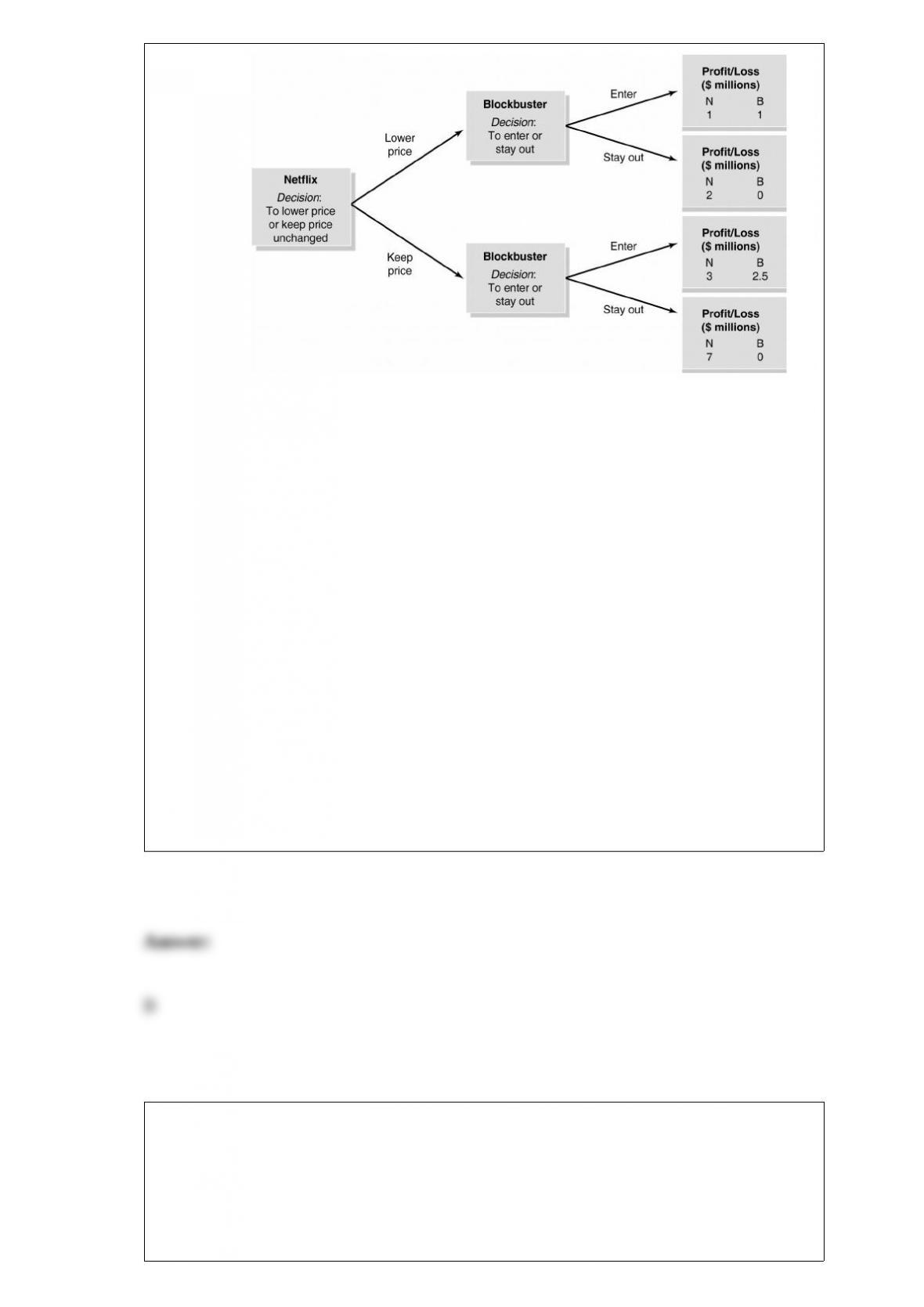
Figure 14-5 A
few years ago Netflix (N) pioneered an online DVD rental service. Blockbuster (B), a
brick and mortar DVD/video rental company, waited until Netflix had been in business
for over a year before deciding whether to establish its own online rental service. At this
point, Netflix had to decide whether or not to lower its subscription price in order to
deter Blockbuster’s entry into the market. Figure 14-5 shows the decision tree for the
Netflix-Blockbuster entry game.
Does it make sense for Netflix to lower its price in order to deter Blockbuster’s entry
into the online DVD rental market?
A) Yes, because Netflix stands to make a profit of $7 million by lowering its price and
keeping Blockbuster out of the market.
B) No, because Netflix will make a higher profit by keeping its subscription price
unchanged, whether Blockbuster enters the market or not.
C) Yes, because it is always profitable to remain a monopoly.
D) No, because Blockbuster will enter the market regardless of Netflix’s decision about
its subscription price.
If the required reserve ratio is 5 percent, then the simple deposit multiplier is
A) 2.
B) 5.
C) 10.
D) 20.
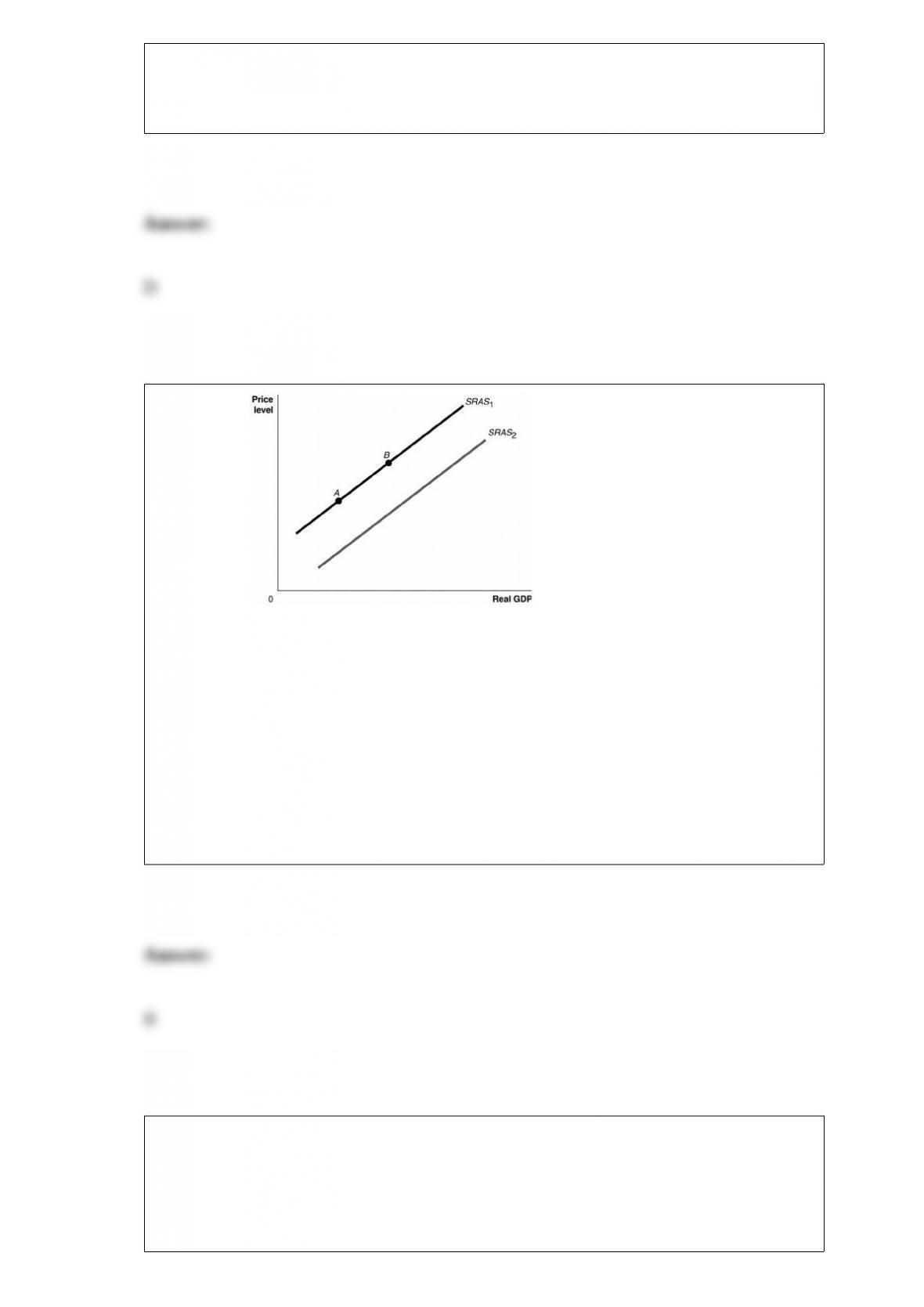
Figure 24-2
Ceteris paribus, an increase in the expected future price level would be represented by a
movement from
A) SRAS1 to SRAS2.
B) SRAS2 to SRAS1.
C) point A to point B.
D) point B to point A.
Marginal utility is
A) the change in total utility divided by the price of the last unit of a good or service
consumed.

B) the change in total utility a person receives from consuming an additional unit of a
good or service.
C) the utility from consuming a given quantity of a good or service.
D) the decrease in total utility from consuming more and more units of a good or
service.
The Business Cycle Dating Committee defines a recession as
A) two consecutive quarters of declining real GDP.
B) two consecutive quarters of declining nominal GDP.
C) a significant decline in activity visible in industrial production, employment, real
income, and wholesale/retail trade lasting more than a few months.
D) a significant decline in inflation and unemployment lasting more than a few months.
In addition to requiring that CEO’s personally certify the accuracy of financial
statements, the Sarbanes-Oxley Act of 2002 also requires that
A) CEO’s conduct audits of their corporations themselves.
B) firms raise funds for expansion through the sale of bonds only, not stocks.
C) auditors disclose any potential conflicts of interest.
D) corporations issue financial statements monthly rather than quarterly.
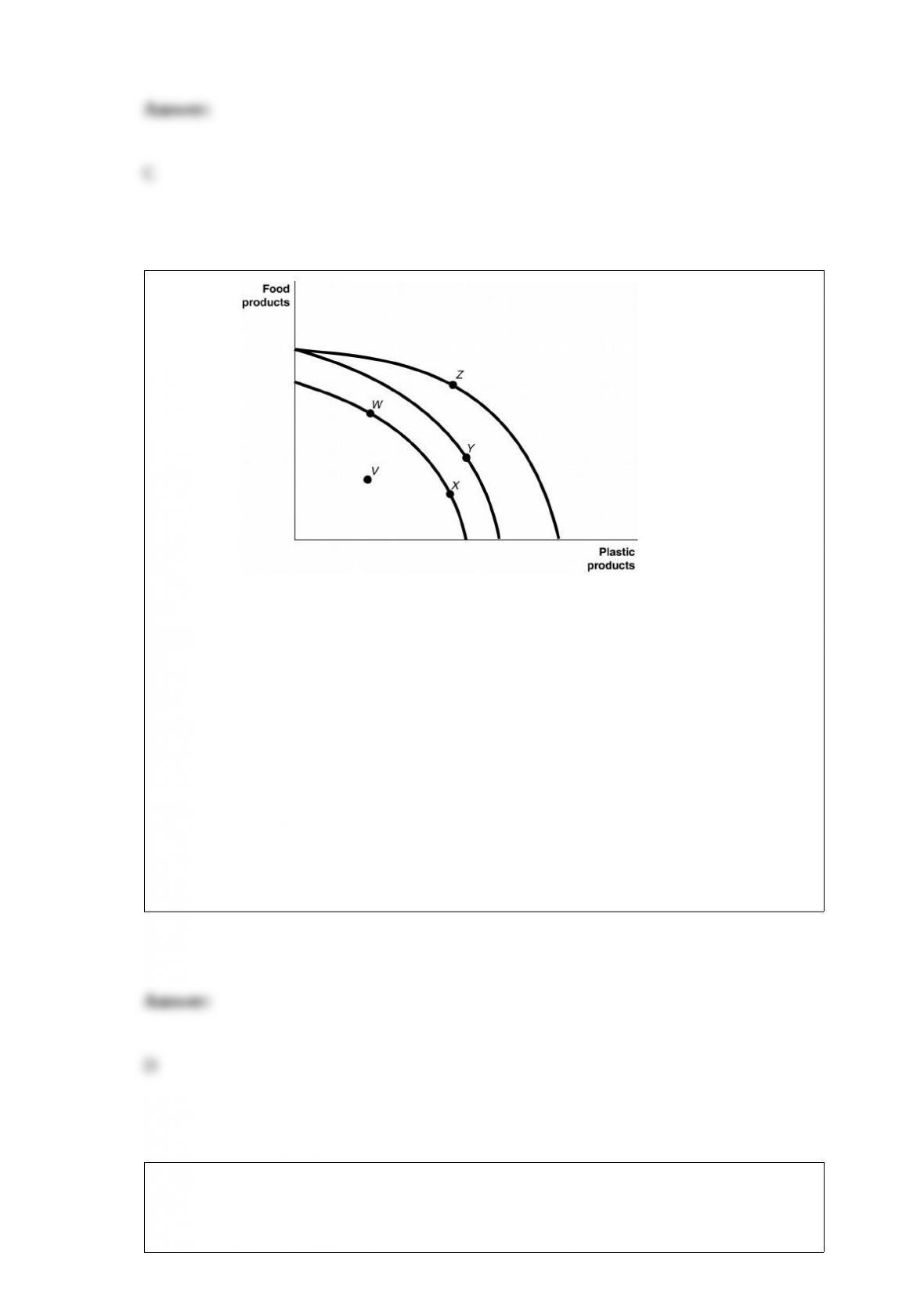
Figure 2-4
Figure 2-4 shows various points on three Different production possibilities frontiers for
a nation.
A movement from ________ is the result of advancements in plastic production
technology.
A) V to X
B) W to X
C) Z to W
D) Y to Z
In 2011, Microsoft filed a complaint with the European Commission accusing Google
of taking steps to monopolize the Internet search engine business. Microsoft’s primary
complaint was that
A) Google is the only Internet search engine available to Windows operating system
users.
B) the European Union contracts exclusively with Google for its Internet search engine
use.
C) Google was using its dominant position as an Internet search engine to exclude
competitors.
D) Google owns the Internet advertising companies that pay for ads on search engine
sites, and has prohibited ads from being sold to competitors.
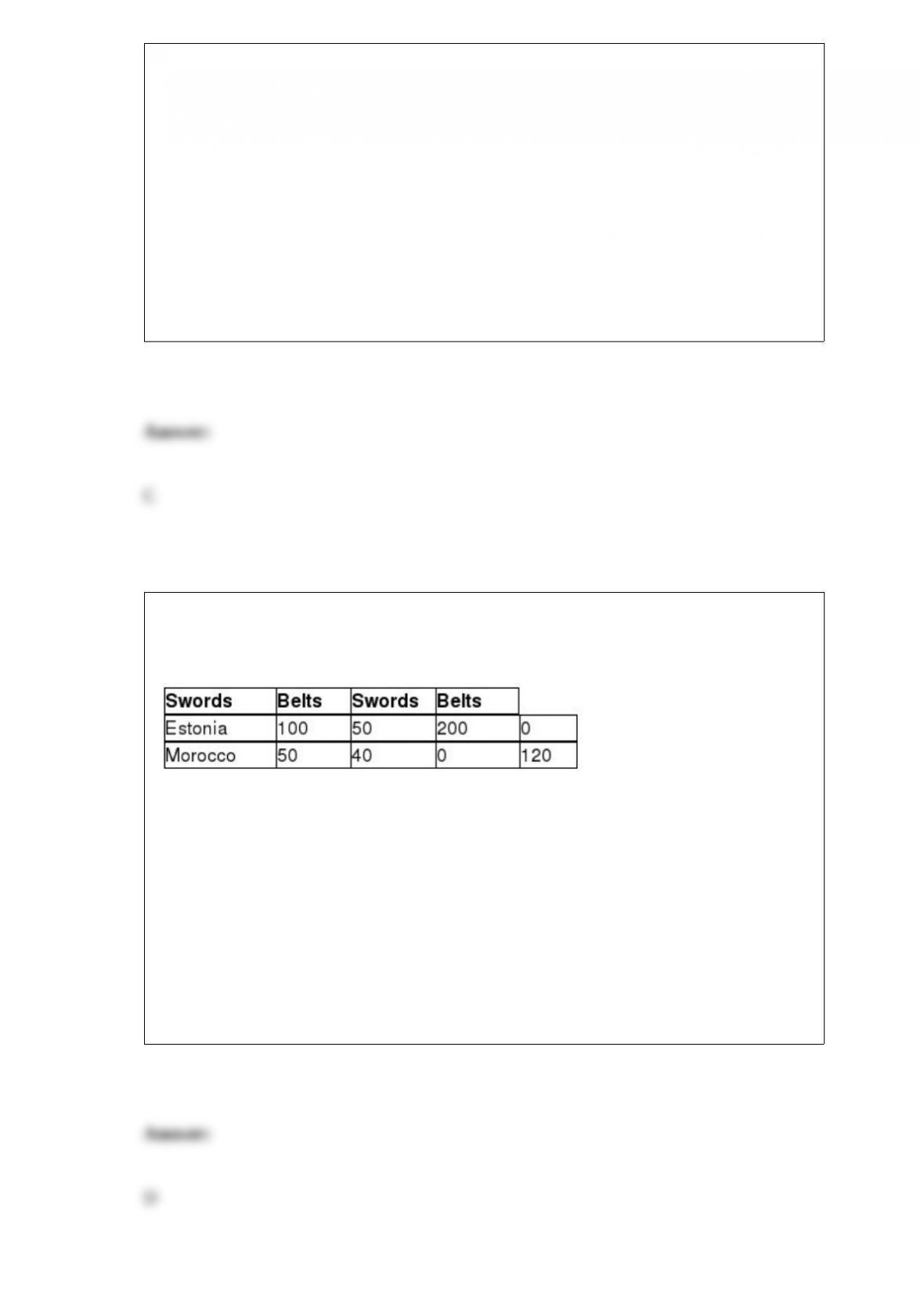
Table 7-6 Production and
Consumption Production
Without Trade With Trade
Estonia and Morocco can produce both swords and belts. Table 7-6 shows the
production and consumption quantities without trade, and the production numbers with
trade. Prior to trade, what was the opportunity cost to produce 1 belt in Estonia?
A) 1/2 of a sword
B) 4/5 of a sword
C) 1.25 swords
D) 2 swords

Which of the following is a reason why a firm would experience diseconomies of scale?
A) To finance an increase in the size of its plant a firm must borrow more money or sell
more shares of stock.
B) As the size of the firm increases, it becomes more difficult to find markets where it
doesn’t already have operations.
C) As the size of the firm increases it becomes more difficult to coordinate the
operations of its manufacturing plants.
D) As the size of the firm increases, it must operate in other countries where differences
in language, customs and laws increase its average costs.
Medical research that ends in a cure for a serious disease produces positive
externalities. What is the impact of this positive externality on economic efficiency?
A) At equilibrium, less than the economically efficient quantity of medical research is
produced.
B) A deadweight loss occurs because at equilibrium the marginal social cost of medical
research is greater than the marginal social benefit.
C) At equilibrium, more than the economically efficient quantity of medical research is
produced.
D) A deadweight loss occurs because at equilibrium the marginal social cost equals the
marginal social benefit.
The estimated price elasticities of demand for the products listed in the table as
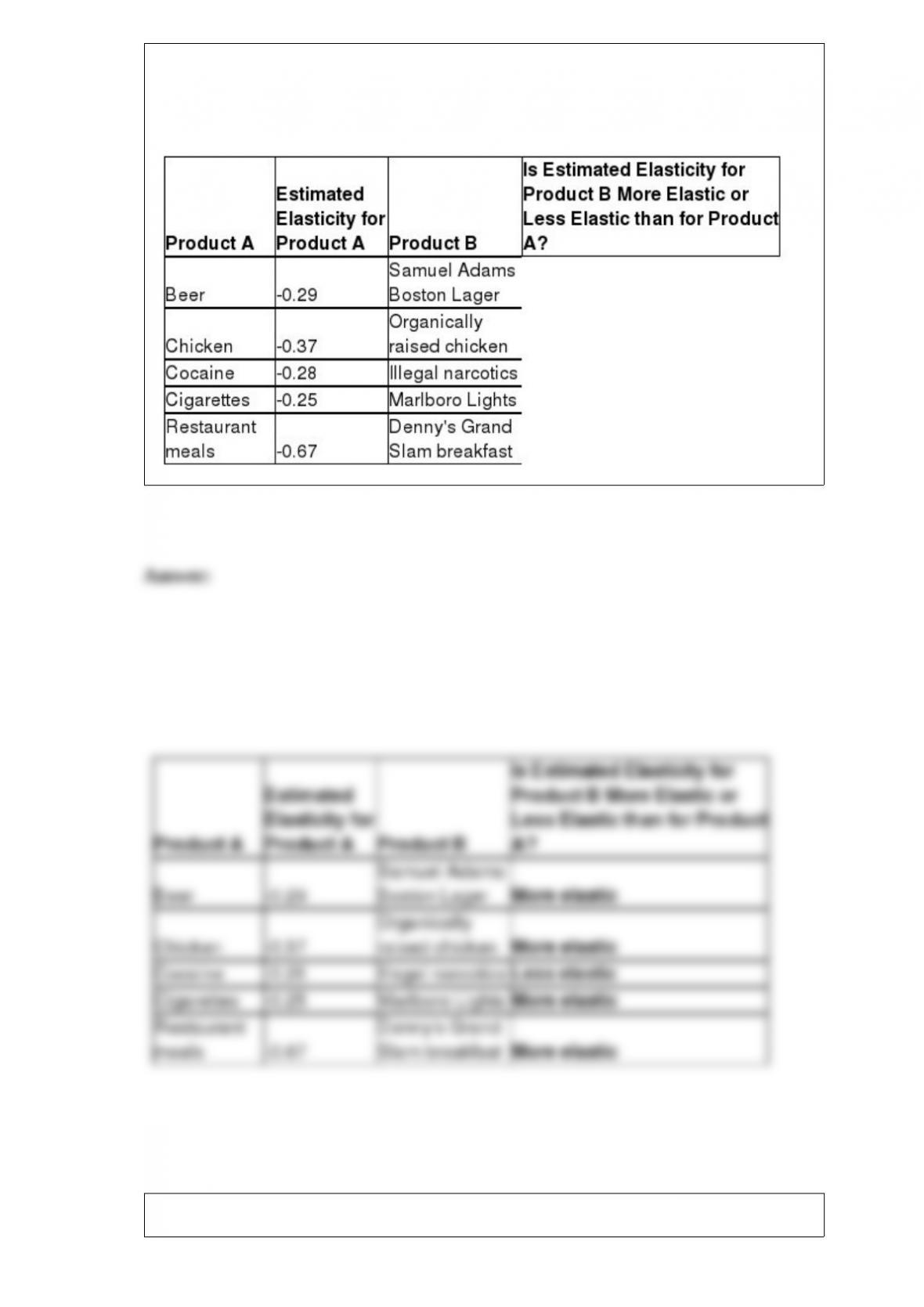
“Product A” are from Table 6-2 in the text. Indicate whether the products listed as
“Product B” will have a more elastic or less elastic demand than the corresponding
Product A.
Table 4-1

The table above lists the highest prices three consumers, Tom, Dick and Harriet, are
willing to pay for a short-sleeved polo shirt. If the price of one of the shirts is $28
dollars,
A) Tom will buy two shirts, Dick will buy one shirt and Harriet will buy no shirts.
B) Tom will receive $12 of consumer surplus from buying one shirt.
C) Tom and Dick receive a total of $70 of consumer surplus from buying one shirt each.
Harriet will buy no shirts.
D) Harriet will receive $25 of consumer surplus since she will buy no shirts.
Some economists believe that the economy benefits from firms having market power.
Which of the following is an argument that has been made to support this position?
A) Large firms are better able than small firms to spend funds on research and
development required to develop new products.
B) Competition is very rare in the U.S. economy and few new products are produced by
smaller, competitive firms.
C) Research has shown that the deadweight loss from monopolies is a small percentage
of the value of production in the United States.
D) Large firms can afford to lobby the U.S. government in order to impose restrictions
on imports and reduce the outsourcing of jobs to other countries.

There is a strong link between changes in the money supply and inflation
A) in both the short run and the long run.
B) in neither the short run nor the long run.
C) in the short run, but not in the long run.
D) in the long run, but not in the short run.