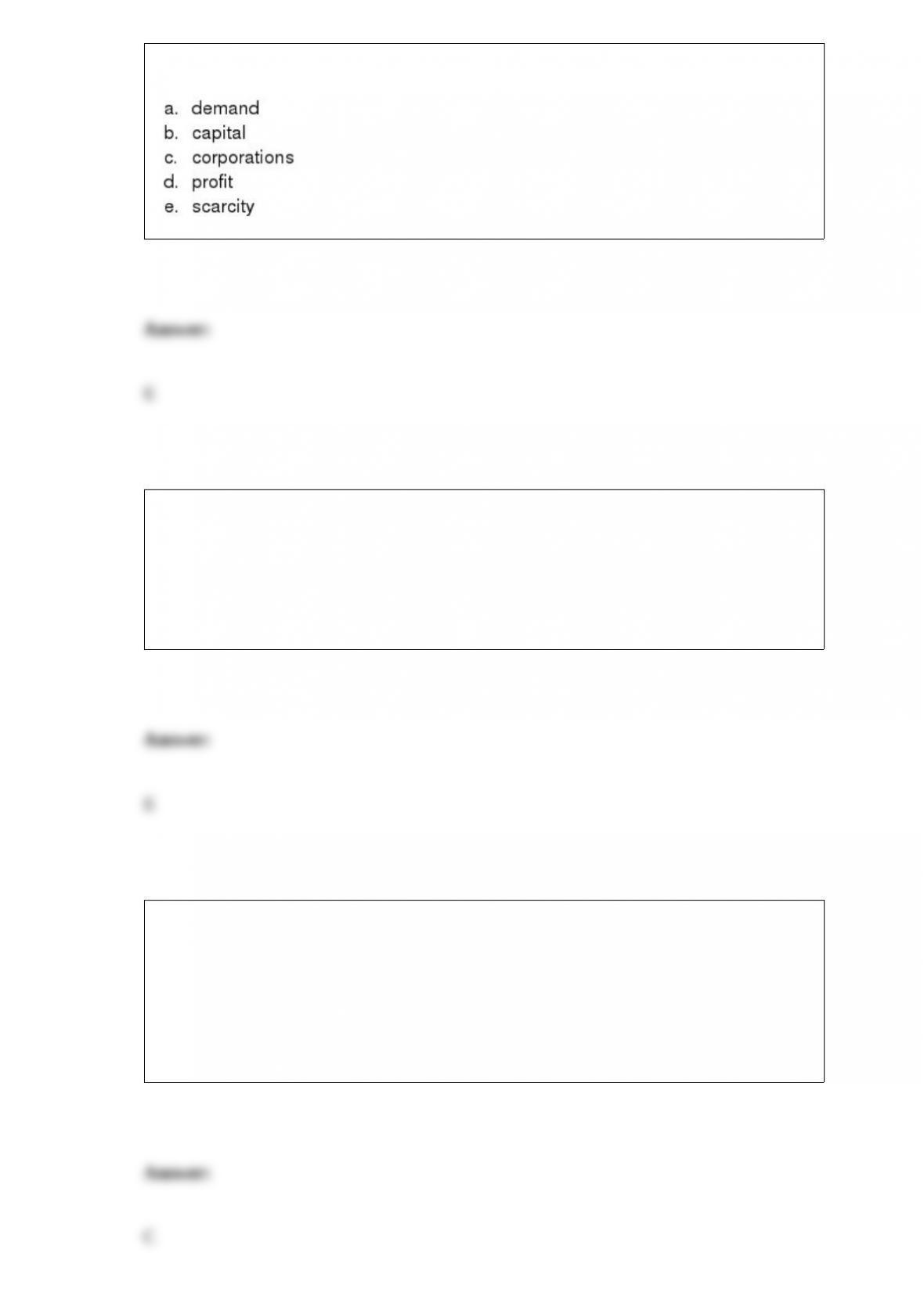
The study of economics would be superfluous if __________ did not exist.
For which of the following would purchasing power parity have the least relevance?
a. Pens
b. Toothpicks
c. Paper clips
d. Pencils
e. Shoe shines
If you borrow money at a 9% nominal rate and the inflation rate is 2%, what is the real
interest rate on the loan?
a. 9.0%
b. 11.0%
c. 7.0%
d. 2.0%
e. 4.5%
Inventories ‘” goods produced but not sold ‘” are included in GDP because we want to
measure total production, not just what is purchased
In the classical model, the loanable funds market will clear when saving
a. equals investment plus government purchases minus net taxes
b. equals net taxes
c. equals investment
d. equals investment plus government purchases
e. minus taxes equals investment plus government purchases
If an excise tax is imposed on steak,
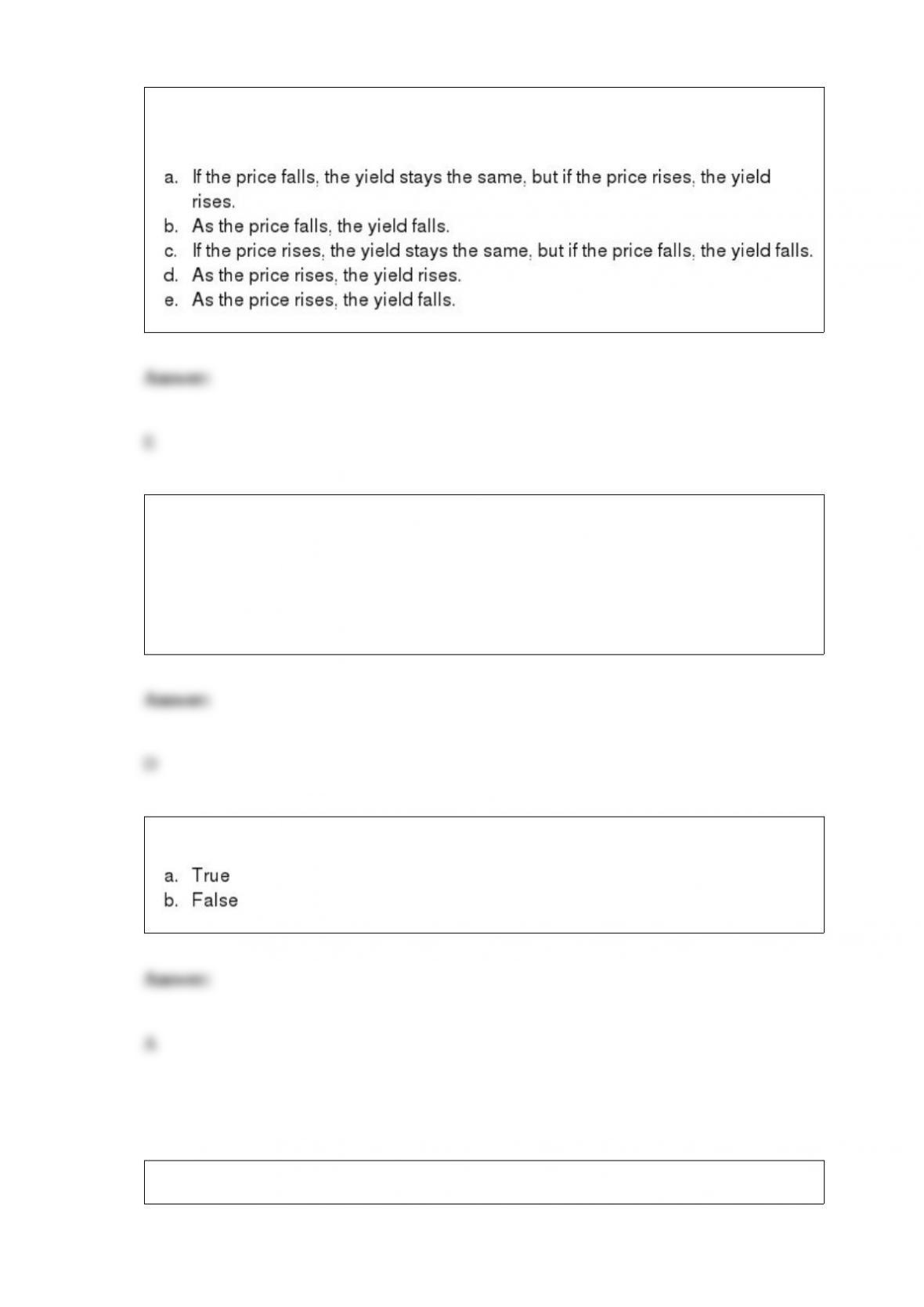
There is a specific relationship between the price of a bond and its yield. Which of the
following describes that relationship?
The required reserve ratio is
a. the minimum fraction of vault cash balances that banks must hold as reserves.
b. the minimum fraction of all assets that banks must hold as reserves.
c. the minimum fraction of all liabilities that banks must hold as reserves.
d. the minimum fraction of checking account balances that banks must hold as reserves.
e. the minimum fraction of loans that banks must make sure are repaid.
In the classical model, even when a country runs a trade deficit, Say’s law holds.
Because of the free rider problem
Private investment expenditure, which is a flow, affects the stock of capital.
Half of American recessions since the early 1950s have been caused at least in part by
rapid increases in oil prices.
Suppose $X is the present value of $Y to be received next year. If you have $X and let
it earn interest at percent annually, how much money do you expect to have after one
year?
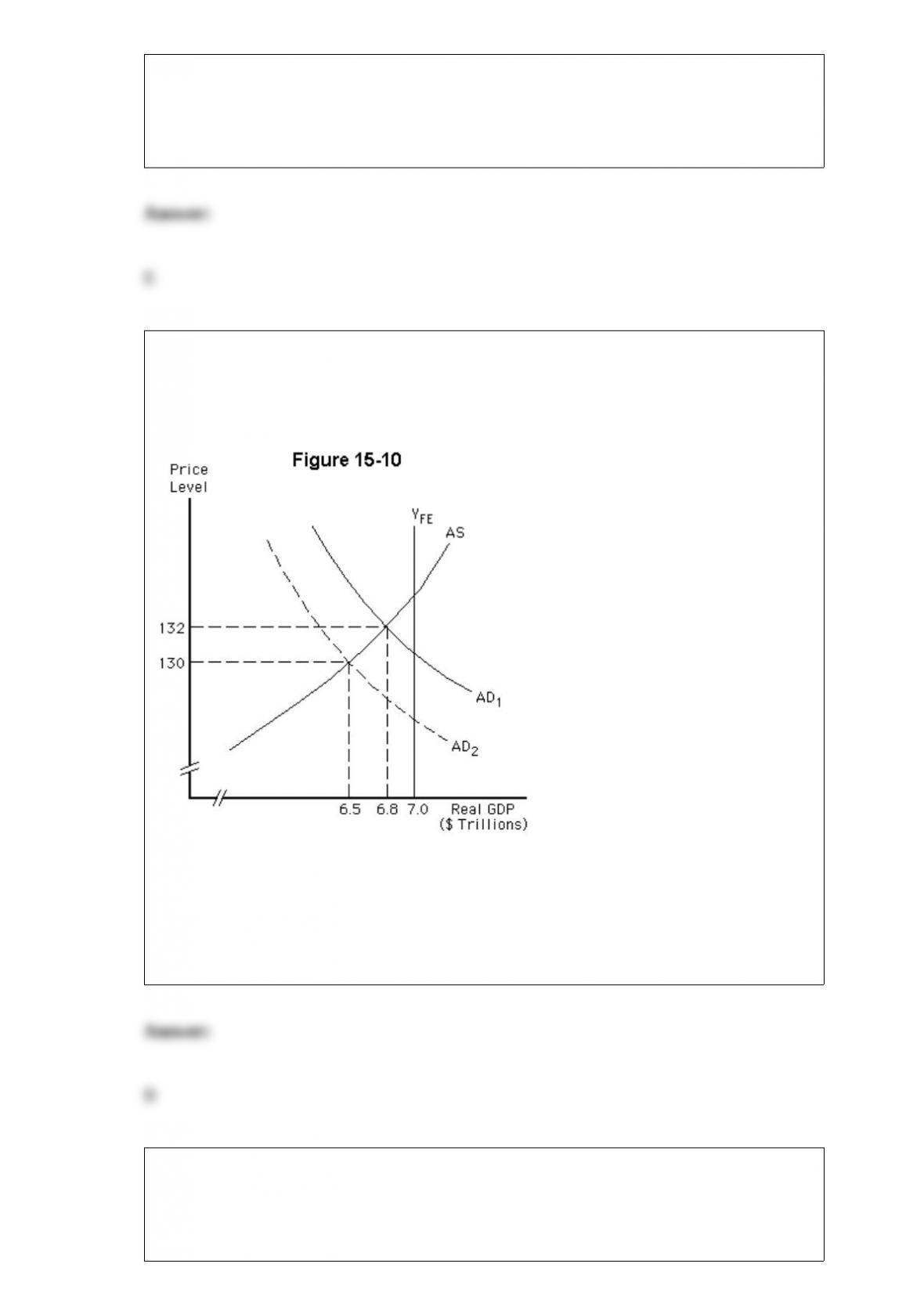
In Figure 7-4, marginal product of labor is increasing for levels of employment
The largest component of GDP is
a. tax revenue
b. government purchases of goods and services
c. the nation’s capital stock
d. private investment spending
e. private consumption expenditures
Refer to Figure 15-10. Suppose that output in the economy is currently below full
employment. If real GDP is $6.8 trillion and a demand shock lowers real GDP to $6.5
trillion, what would we expect to occur in the long run?
a. The aggregate supply curve will shift upward as wages fall.
b. The aggregate supply curve will shift downward as wages fall.
c. The aggregate demand curve will shift rightward as wages fall.
d. The aggregate demand curve will shift leftward as wages fall.
e. No further changes in aggregate supply or aggregate demand without government
intervention.
Which statement best describes economic fluctuations?
a. Expansions and contractions typically have about the same lengths.
b. Expansions typically last 7 years, while recessions typically last 3 years.
c. Expansions tend to be shorter than contractions.

d. The percent change in output is larger during recessions than during expansions.
e. Expansions and contractions vary in duration and magnitude, with expansions
tending to last longer than contractions.