1) a firm that produces a single product but owns plants in many different stages of the
production process – for example, a steel producer that owns iron ore mines and rolling
mills – best illustrates a:
a.vertically integrated firm.
b.multinational corporation.
c.virtual corporation.
d.conglomerate.
2) One policy dilemma posed by cost-push inflation is that:
A.an increase in aggregate demand will increase inflation and the unemployment rate
simultaneously.
B.tax rates can be reduced without lowering tax revenues.
C.the reduction of aggregate demand to restrain inflation will cause a further reduction
in the real GDP.
D.the adjustment of aggregate demand can neither increase real GDP nor reduce
inflation.
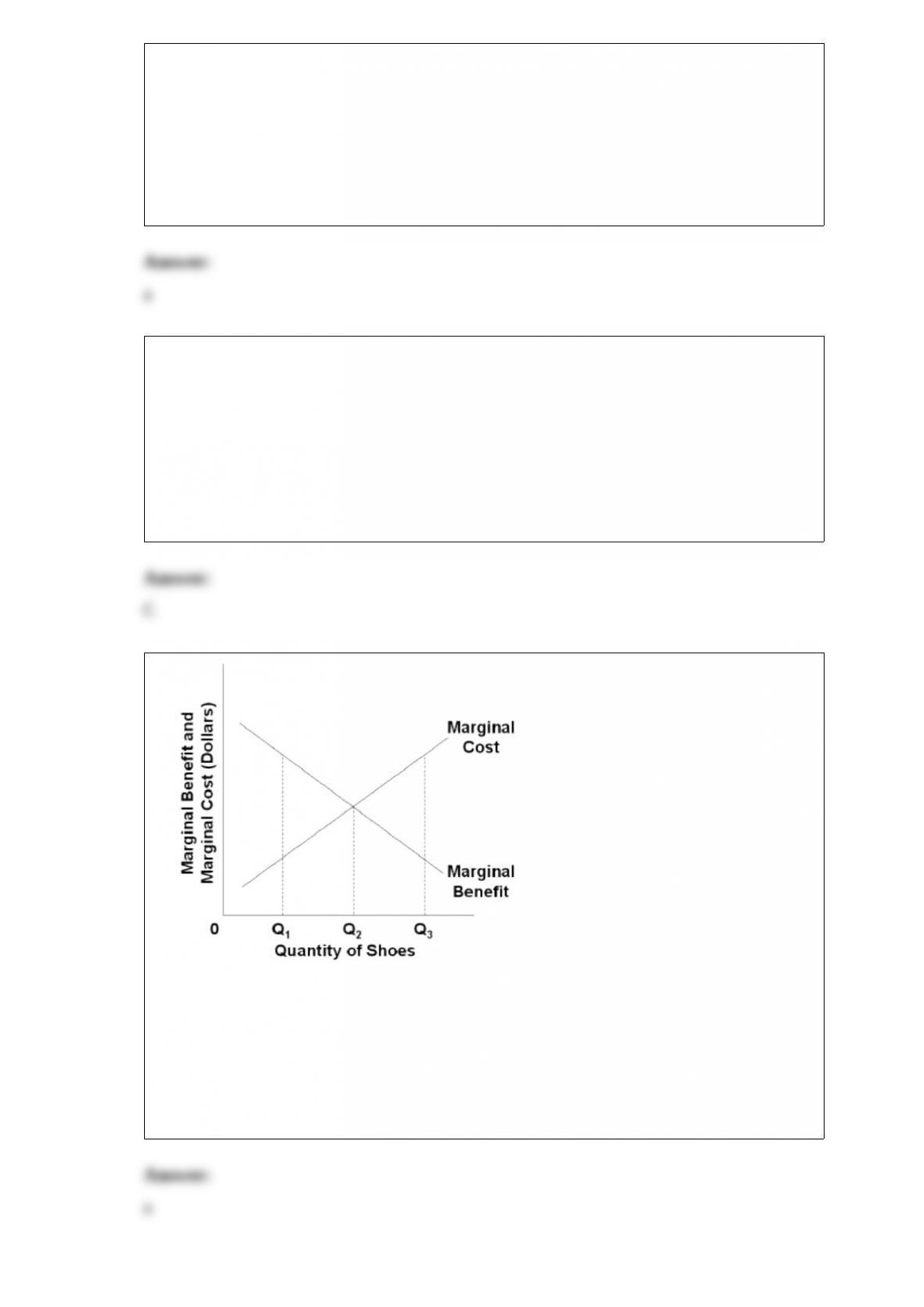
3)
refer to the above diagram for athletic shoes. if the current output of shoes is q1, then:
a.society would consider additional units of shoes to be more valuable than alternative
uses of those resources.
b.society would consider additional units of shoes to be less valuable than alternative
uses of those resources.
c.society would experience a net loss by producing more shoes.
d.resources are being allocated efficiently to the production of shoes.

4) Critics of the minimum wage argue that as an antipoverty device it is “poorly
targeted.” By this they mean that:
A.the minimum wage only applies to a small percentage of the labor force.
B.many who benefit from the minimum wage are not poor.
C.the government has been unable to enforce the minimum wage.
D.the average level of wages in the economy is considerably higher than the minimum
wage.
5) Under an international gold standard:
A.exchange rates would fluctuate inversely with the domestic interest rates of the
participating countries.
B.each nation must agree to depreciate its currency in direct proportion to the growth of
its real GDP.
C.gold would flow into a nation experiencing a balance of payments surplus.
D.exchange rates would fluctuate directly with the domestic price levels of the various
trading countries.
6) The Alcoa case:
A.supported the structuralist approach to antitrust.
B.struck down the treble damages provision of the antitrust laws.
C.called for Federal regulation of any industry with a four-firm concentration ratio in
excess of 50 percent.
D.outlawed all conglomerate mergers.
7) suppose that an economy is producing on its production possibilities curve, but is not
producing quantities of each good where the marginal benefit equals the marginal cost
for each good. this economy:
a.should not change its production because it cannot improve its allocation by shifting
resources.
b.can improve its allocation by lowering the unemployment rate.
c.can improve its allocation by producing more of one good and less of the other.
d.can improve its allocation by producing more of both goods.
8) barriers to entering an industry:
a.are justified because they result in allocative efficiency.
b.are justified because they result in productive efficiency.
c.are the basis for monopoly.
d.apply only to purely monopolistic industries.
9) (Consider This) Changing World Technologies receives a $42 per barrel federal
biofuel subsidy. The purpose of such a subsidy would be to:
A.increase the supply of both biofuel and conventional oil.
B.increase the supply of biofuel and reduce the demand for conventional oil.
C.increase the demand for biofuel and reduce the supply of conventional oil.
D.increase the demand for biofuel and increase the supply of conventional oil.
10) if a price reduction reduces a firm’s total revenue:
a.the demand for the product is inelastic in this price range.
b.the product is an inferior good.
c.in this price range the elasticity coefficient of demand is greater than 1.
d.this price decline will increase the firm’s profits.
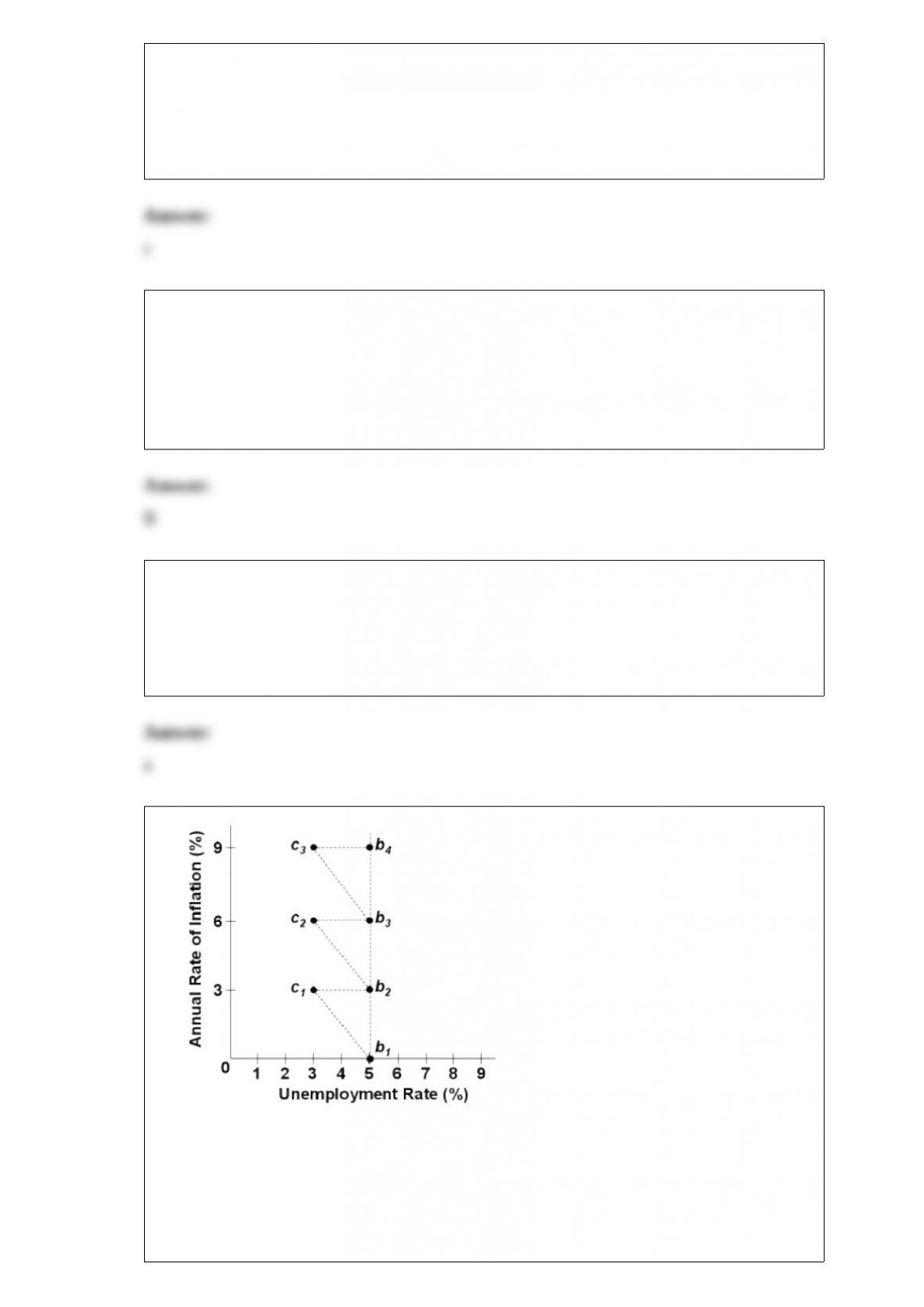
11)
The above diagram is the basis for explaining:
A.the traditional Phillips Curve.
B.the long-run Phillips Curve.
C.how central planning can make full employment and price level stability compatible
goals.
D.new policies for eliminating unemployment.
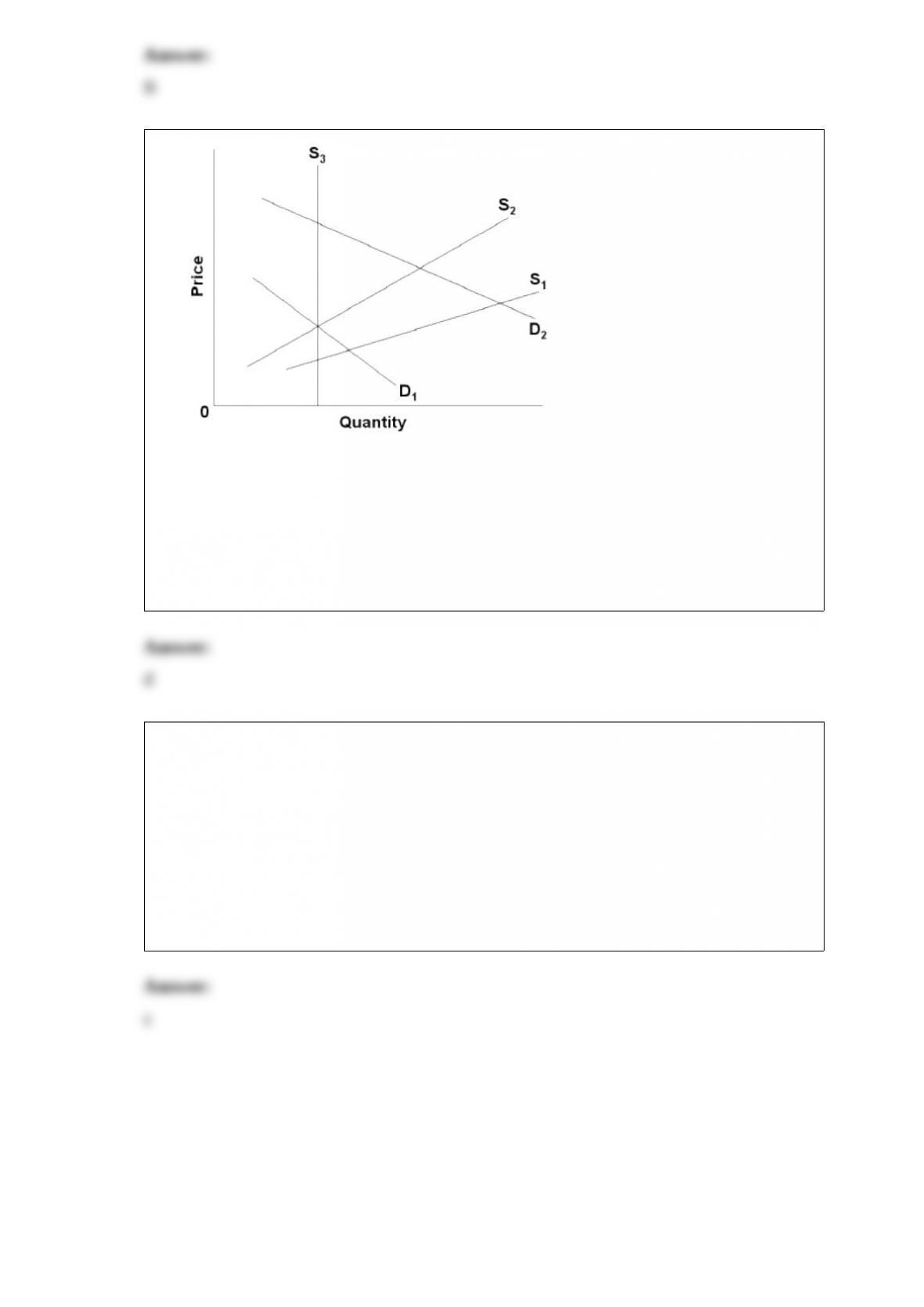
12)
the above diagram concerns supply adjustments to an increase in demand (d1to d2) in
the immediate market period, the short run, and the long run. in the long run the
increase in demand will:
a.have no effect on either equilibrium price or quantity.
b.increase equilibrium price, but not equilibrium quantity.
c.increase equilibrium quantity, but not equilibrium price.
d.increase both equilibrium price and quantity.
13) with respect to local finance:
a.death and gift taxes are the major source of revenue and most expenditures are for
hospitals and health services.
b.the corporate income tax is the major source of revenue and natural resource
development the major type of expenditure.
c.property taxes are the basic source of revenue and education is the major type of
expenditure.
d.sales and excise taxes are the major source of revenue and highway construction and
maintenance is the major type of expenditure.