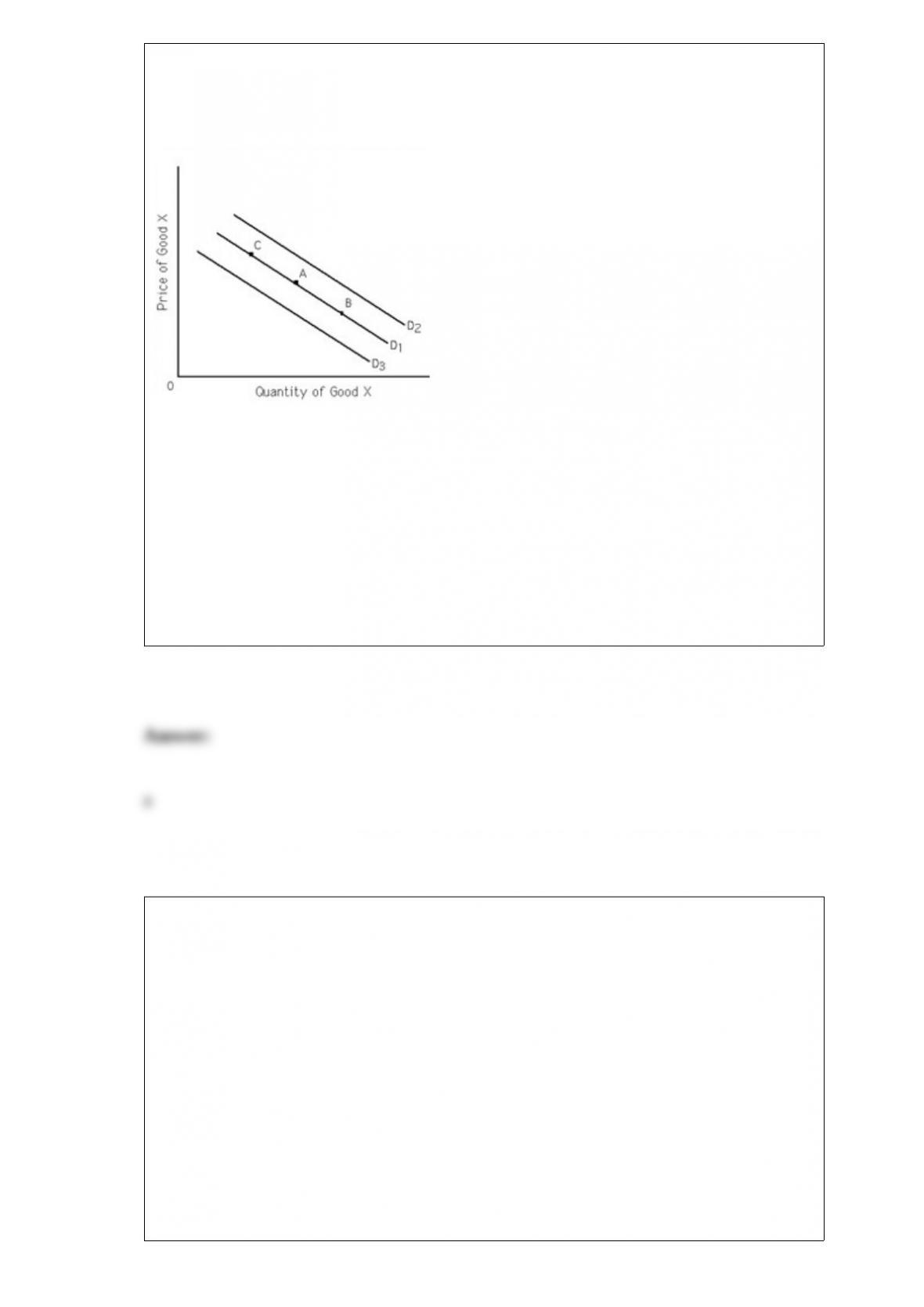
Refer to Exhibit 3-6. If an increase in income causes the demand for good X to shift
from D1 to D2,then good X is
Exhibit 3-6
a. a normal good.
b. an inferior good.
c. a substitute good.
d. a complementary good.
e. a neutral good.
There are two divorce laws, A and B. Under A, it takes only one person to agree to a
divorce and the divorce is granted. Under B, it takes two persons to agree to a divorce
before it is granted. According to Coase,
a. there will be the same number of divorces under both laws if transaction costs are
zero.
b. there will be more divorces under law A.
c. there will be more divorces under law B.
d. taxes should be imposed on those parties who seek divorces.
e. subsidies should be granted to those persons who unwillingly get divorces.

The federal government and many state governments gave tax credits to first-time home
buyers in 2009 and 2010.An effect of these tax credits was to
a. make the price of houses higher than they would have been without the tax credit.
b. lower house prices.
c. shift the demand curve for houses leftward.
d. b and c
e. none of the above
If we define poverty as income below $10,000 per year, we have set a(n) __________
definition of poverty.
a. relative
b. constrained
c. absolute
d. denominated

The price of good B has a pattern such that P = $20 on Monday through Thursday of
every week, and P = $25 on Fridays.If speculators begin participating in the market for
good B, their actions will likely lead to a(n) ______________ in the price of good B on
Monday through Thursday and a(n) _______________ in the price of good B on Friday.
a. increase; increase
b. increase; decrease
c. decrease; increase
d. decrease; decrease
Profit can be earned by buying _____________ and selling ____________________.
a. at one price; at the same price
b. low; high
c. high: low
d. none of the above
Given a 10 percent increase in wages, firm A cuts back on labor more than firm B. It

follows that, ceteris paribus,
a. firm A likely has a higher labor cost-total cost ratio than firm B.
b. firm B likely has a higher labor cost-total cost ratio than firm A.
c. the elasticity of demand for labor is likely higher for firm B than firm A.
d. firm B likely has higher fixed costs than firm A.
e. firm A likely has higher per-unit costs than firm B.
Suppose one firm in a perfectly competitive industry experiences an increase in its costs
of production. Which of the following best describes the most likely long run
adjustment to this situation?
a. Eventually, all firms in the industry will also experience this same increase in costs.
b. Eventually, the price of the product will increase, and consumers will pay for the
increase in costs.
c. The firm in question may suffer losses and exit the industry.
d. none of the above
A positive externality exists when

a. a person’s or group’s actions cause a benefit that is felt by others.
b. a person’s or group’s actions cause a cost that is felt by others.
c. market output is less than socially optimal output.
d. a and c
e. b and c
Which of the following statements is true?
a. The nominal interest rate is always higher than the real interest rate since the nominal
interest rate equals the real interest rate plus the expected inflation rate.
b. The nominal interest rate is always lower than the real interest rate since the nominal
interest rate equals the real interest rate minus the expected inflation rate.
c. The nominal interest rate can equal the real interest rate, but to do so the expected
inflation rate must be zero percent.
d. It is the nominal interest rate-not the real interest rate-that matters to borrowers.
Every time you make a __________, you incur a(n) __________.
a. decision; efficient effect
b. choice; opportunity cost
c. competitive move; price
d. decision; mistake
e. none of the above
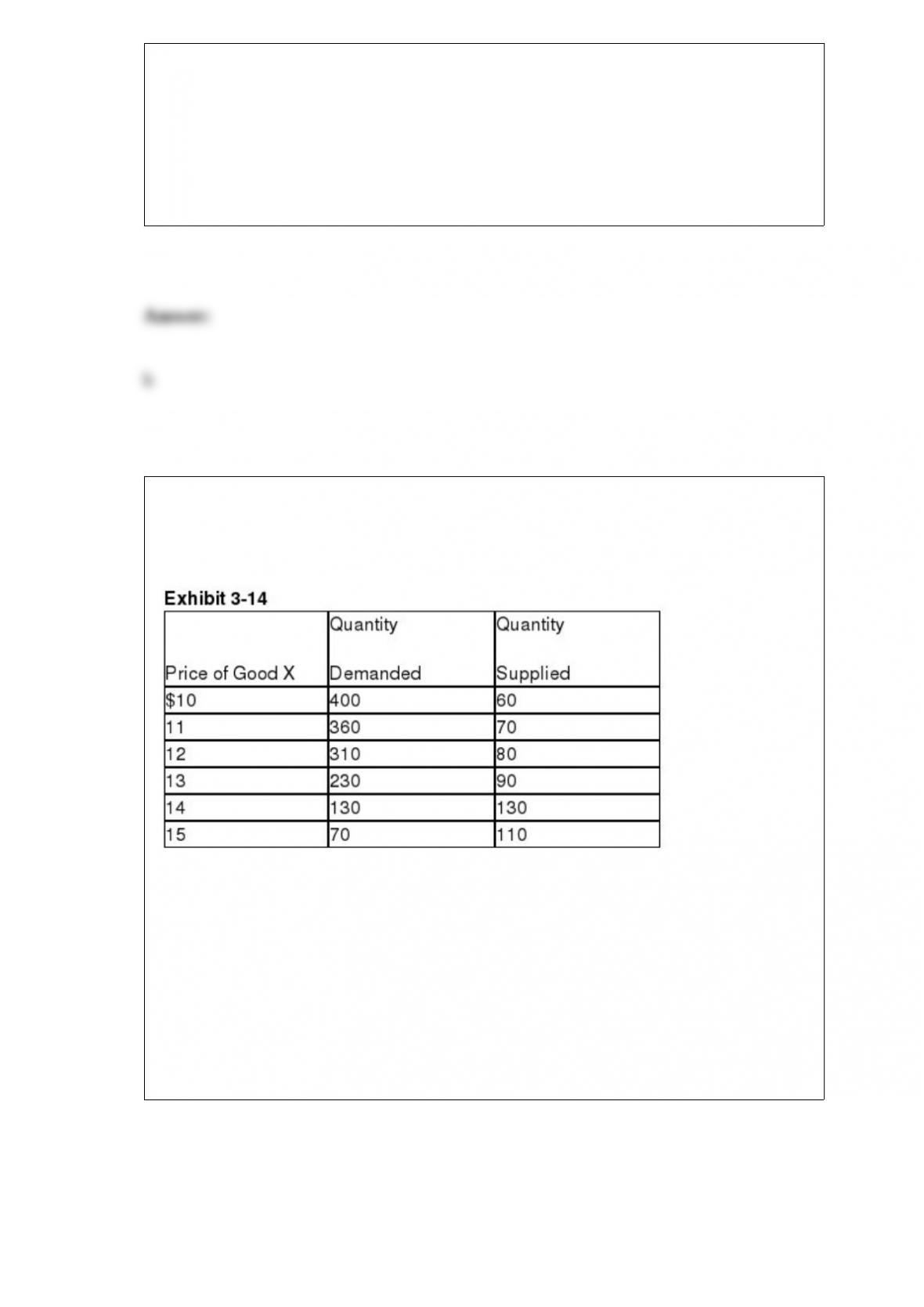
Refer to Exhibit 3-14.At a price of $12, there is a ____________ unit____________ of
good X.
a. 195; shortage
b. 230; shortage
c. 195; surplus
d. 230; surplus
e. 180; shortage
The prisoner’s dilemma can be used to help analyze such diverse topics as the arms race
and the need for speed limit laws.
a. True
b. False
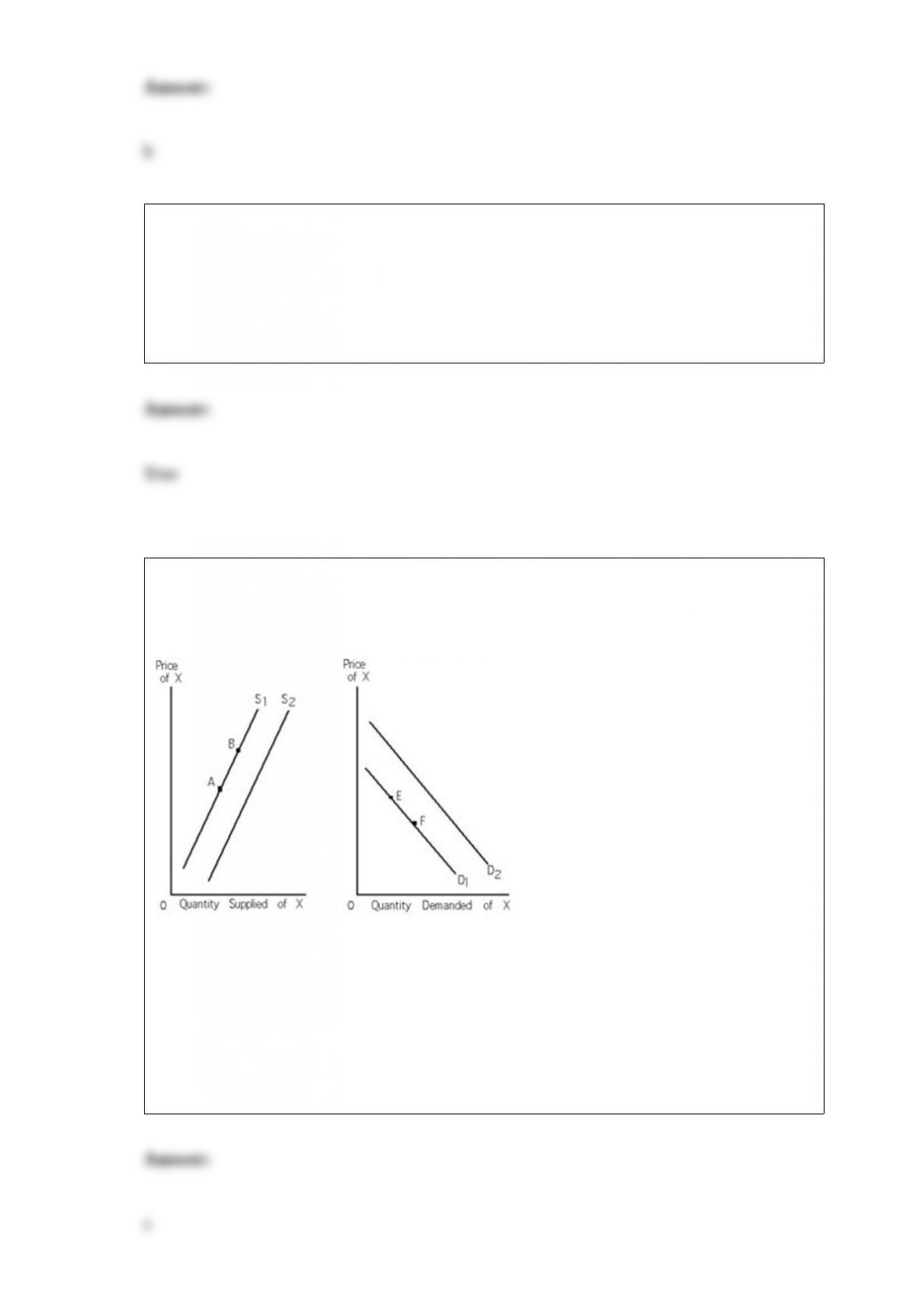
Refer to Exhibit 3-9. X is produced using input Z. If the price of Z rises, an economist
would expect a movement in the market for X from
Exhibit 3-9
a. E to F.
b. A to B.
c. F to E.
d. B to A.
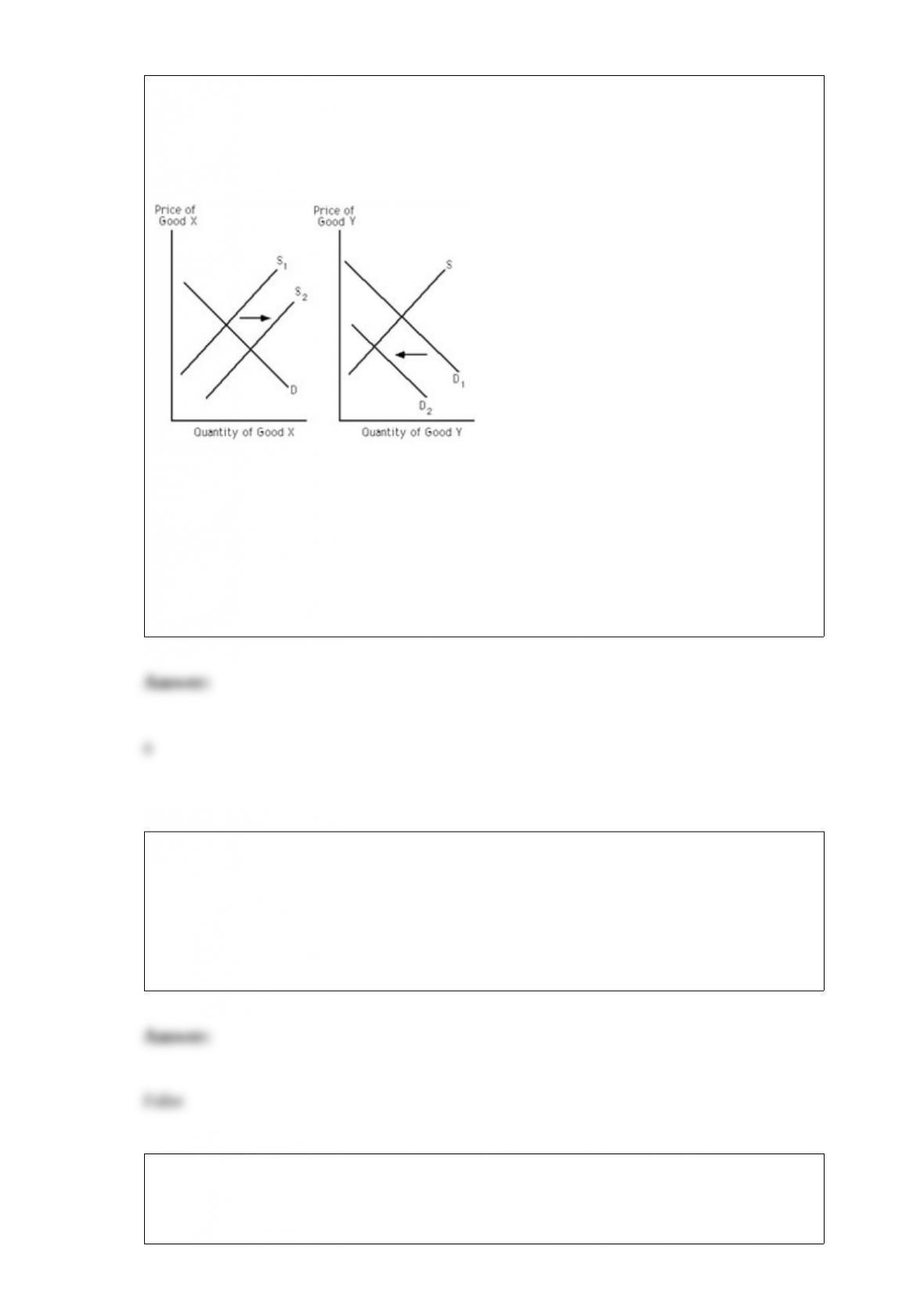
Refer to Exhibit 20-4. As a consequence of the depicted change in supply of X, the
demand curve for Y shifted from D1 to D2. What is true of the cross elasticity of
demand for Y?
Exhibit 20-4
a. Ec > 0
b. Ec < 0
c. Ec = 0
d. It cannot be determined from the information provided.
Applied to any investment, the phrase “there’s no such thing as a free lunch” means that
higher returns come with lower risks, and lower returns come with higher risks.
a. True
b. False
Refer to Exhibit 39-5. Low price elasticity of demand for corn coupled with
unpredictable weather makes both price and total revenue in the market for corn
extremely volatile. Which of the supply curves would result in the least volatility?
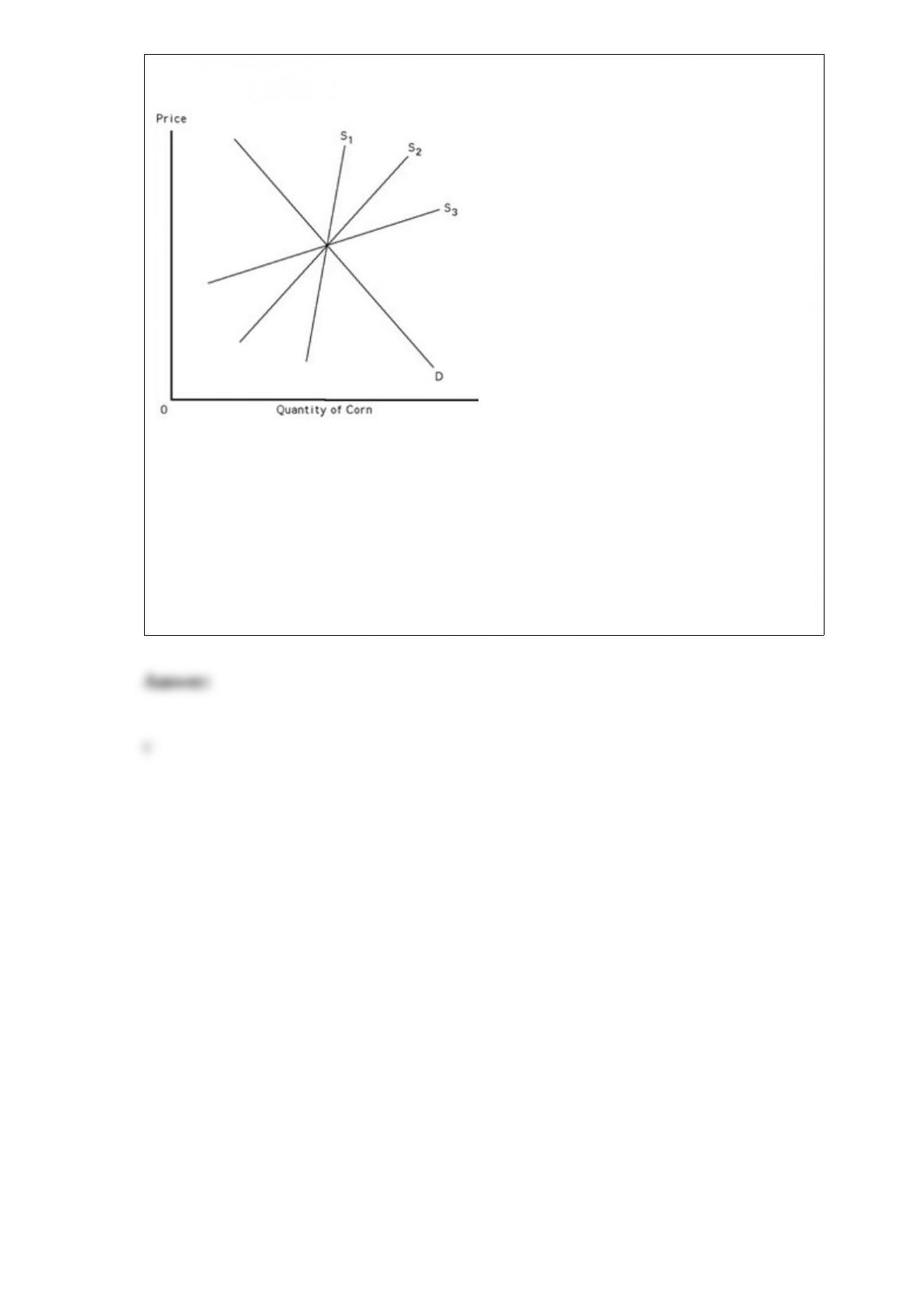
Exhibit 39-5
a. S1.
b. S2.
c. S3.
d. The changes are not dependent upon elasticity of supply.