
If price exceeds average variable cost but is less than average total cost, a firm
A) should further differentiate its product.
B) should stay in business for a while longer until its fixed costs expire.
C) is making some profit but less than maximum profit.
D) should shut down.
Goods with upward sloping demand curves are referred to as
A) Marshall goods.
B) Giffen goods.
C) substitute goods.
D) luxury goods.
Figure 15-15
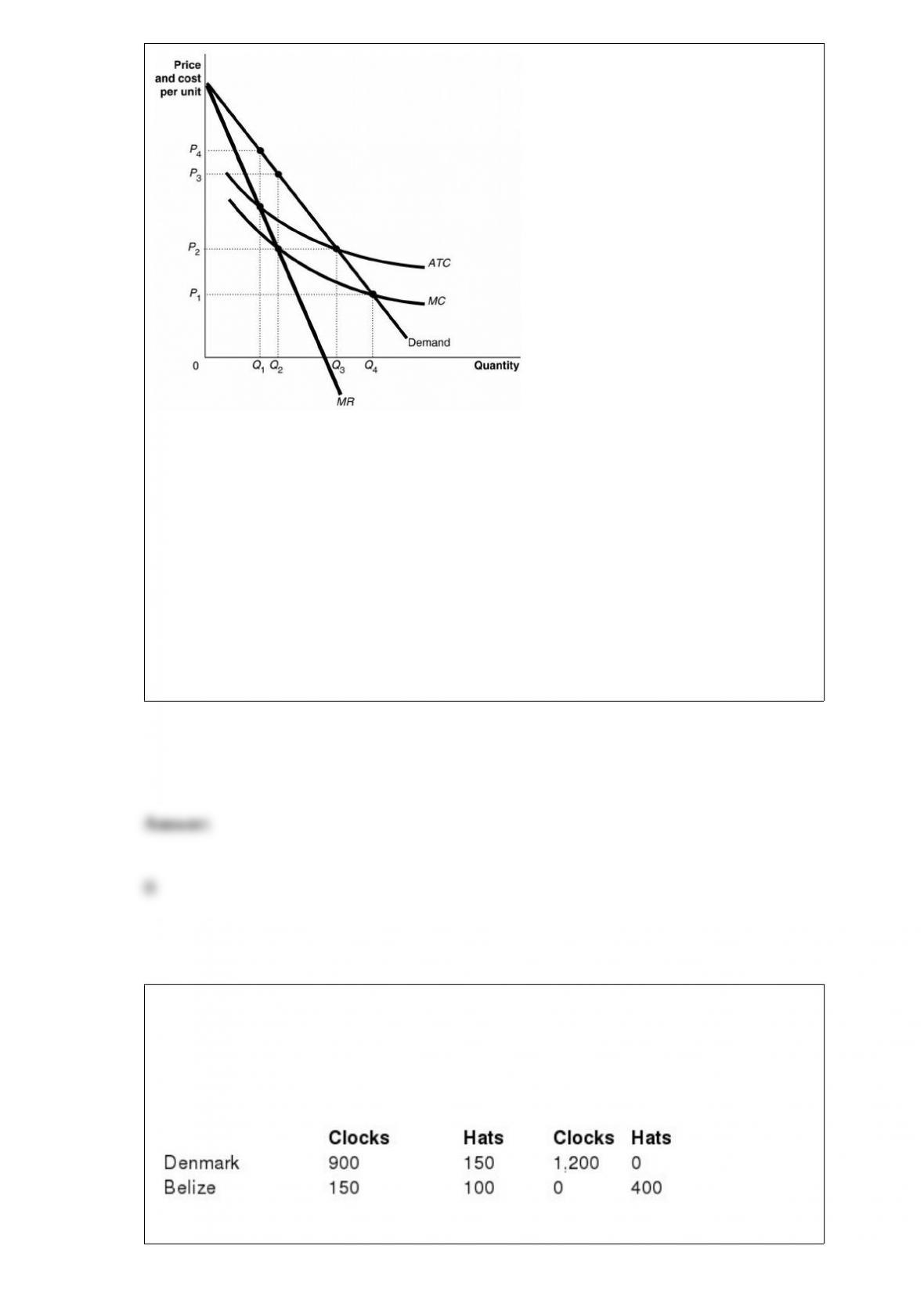
Figure 15-15 shows the cost and demand curves for the Erickson Power Company.
Refer to Figure 15-15. The firm would maximize profit by producing
A) Q1 units.
B) Q2 units.
C) Q3units.
D) Q4units.
Table 9-6
Production and
Consumption Production
Without Trade With Trade

Denmark and Belize can produce both clocks and hats. Table 9-6 shows the production
and consumption quantities without trade, and the production numbers with trade.
Refer to Table 9-6. If the actual terms of trade are 1 hat for 1.8 clocks and 150 hats are
traded, how many clocks will Belize consume?
A) 150
B) 270
C) 930
D) 1,200
When demand is unit-elastic, a change in price causes total revenue to stay the same
because
A) the percentage change in quantity demanded exactly offsets the percentage change in
price.
B) buyers are buying the same quantity.
C) total revenue never changes with price changes.
D) the change in profit is offset by the change in production cost.
If the quantity demanded for a good rises as income rises then the income elasticity of
demand for this good is ________ than 0, and the good is ________ good.

A) greater; an inferior
B) less; a normal
C) less; an inferior
D) greater; a normal
Economic efficiency in a competitive market is achieved when
A) economic surplus is equal to consumer surplus.
B) consumers and producers are satisfied.
C) the marginal benefit equals the marginal cost from the last unit sold.
D) producer surplus equals the total amount firms receive from consumers minus the
cost of production.
Table 14-3
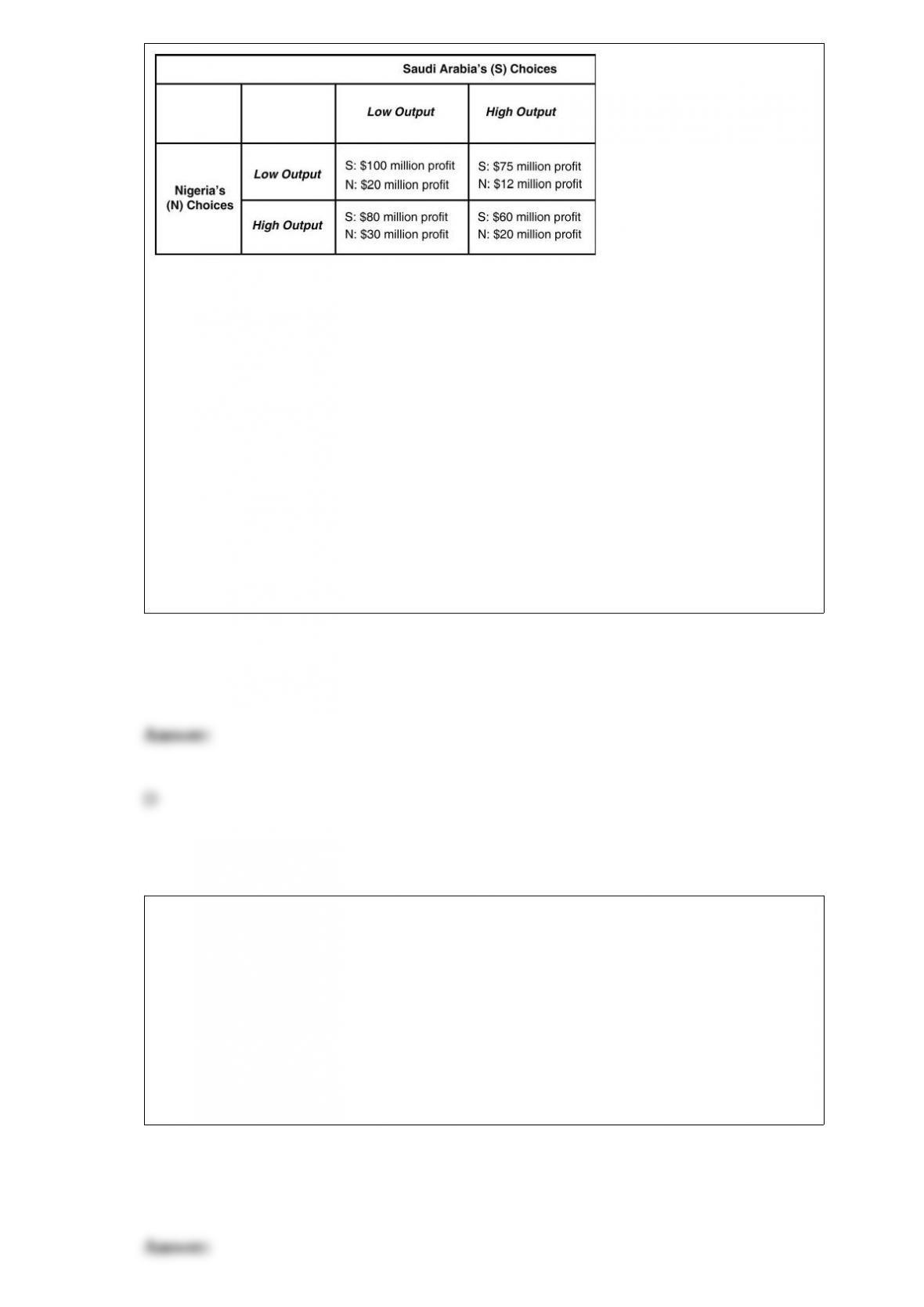
Suppose OPEC has only two producers, Saudi Arabia and Nigeria. Saudi Arabia has far
more oil reserves and is the lower cost producer compared to Nigeria. The payoff
matrix in Table 14-3 shows the profits earned per day by each country. “Low output”
corresponds to producing the OPEC assigned quota and “high output” corresponds to
producing the maximum capacity beyond the assigned quota.
Refer to Table 14-3. Is there a dominant strategy for Nigeria and, if so, what is it?
A) Yes, it has a dominant strategy depending on what Saudi Arabia does.
B) No, there is no dominant strategy.
C) Yes, the dominant strategy is to produce a low output.
D) Yes, the dominant strategy is to produce a high output.
To maximize profit a monopolist will produce where
A) marginal revenue is equal to marginal cost.
B) demand for its product is unit-elastic.
C) revenue per unit is maximized.
D) average total cost is equal to average revenue.

A production possibilities frontier with a bowed outward shape indicates
A) the possibility of inefficient production.
B) constant opportunity costs as more and more of one good is produced.
C) increasing opportunity costs as more and more of one good is produced.
D) decreasing opportunity costs as more and more of one good is produced.
If a perfectly competitive firm’s price is less than its average total cost but greater than
its average variable cost, the firm
A) is earning a profit.
B) should shut down.
C) is incurring a loss.
D) is breaking even.

If a monopolist’s price is $50 at 63 units of output and marginal revenue equals
marginal cost and average total cost equals $43, then the firm’s total profit is
A) $3,150.
B) $2,709.
C) $441.
D) $7.
Assume that you own a small boutique hotel. In an attempt to raise revenue you reduce
your rates by 20 percent. However, your revenue falls. What does this indicate about the
demand for your boutique hotel rooms?
A) Boutique hotel rooms are inferior goods.
B) Demand is inelastic.
C) The demand curve for your hotel rooms is vertical.
D) Demand is elastic.
For years economists believed that market structure explained the ability of some firms
to earn economic profits. For example, firms in industries with little competition and
high barriers to entry would earn higher profits than firms in competitive industries with
low entry barriers. Which of the following has caused economists to question this

explanation and seek other explanations for why firms are profitable?
A) Studies have shown that, on average, firms in competitive industries earn higher
profit rates than firms in industries with little competition.
B) In recent years new technologies have increased the potential entry of new firms in
industries with high entry barriers.
C) Studies have shown that firms in industries that have little competition and high
entry barriers are not very profitable. Economists conclude from this that some
competition is necessary in order to force firms to lower their costs and develop
products that satisfy new consumer demands.
D) The market structure explanation fails to explain how firms in the same industry can
have very different levels of profit.
Voluntary exchange between buyers and sellers generates ________ in a market
economy.
A) scarcity
B) allocative efficiency
C) productive efficiency
D) equity
If a monopolist practices perfect price discrimination
A) the firm will break even in the long run.
B) consumers surplus will be equal to the deadweight loss.
C) producer surplus will equal consumer surplus.
D) consumer surplus will be zero.
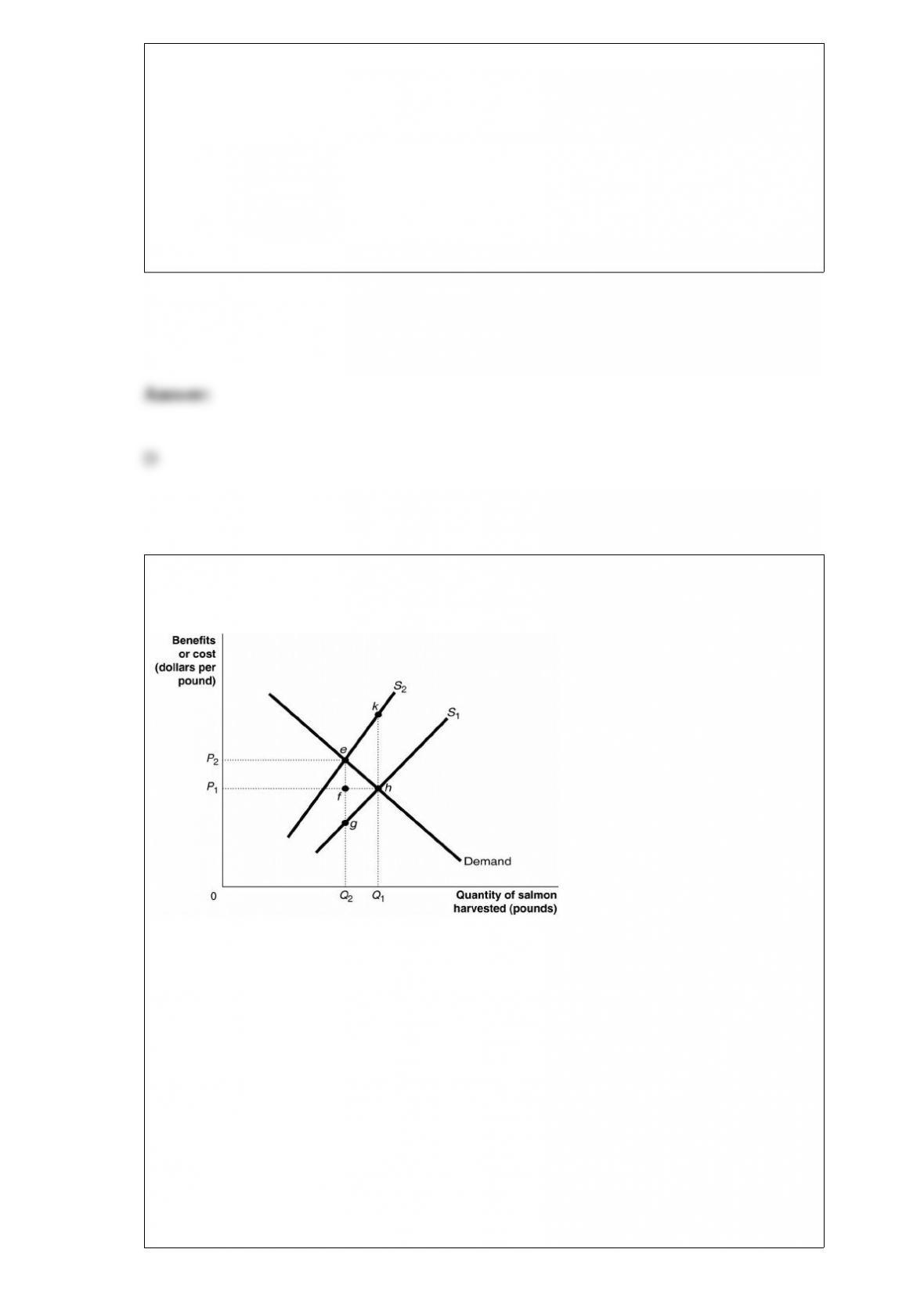
Figure 5-15
Figure 5-15 shows the market for Atlantic salmon, a common resource. The current
market equilibrium output of Q1 is not the economically efficient output. The
economically efficient output is Q2.
Refer to Figure 5-15. The current market equilibrium output is partly the result of
overfishing. In that case, what does S1 represent?
A) the private marginal benefit of harvesting salmon
B) the social marginal benefit of harvesting salmon
C) the private marginal cost of harvesting salmon

D) the social marginal cost of harvesting salmon
The political process is more likely to serve the interests of individuals whose
preferences are in the middle, rather than individuals with preferences that are much to
the left or right of the political center. This statement is best explained by which of the
following?
A) logrolling
B) the voting paradox
C) the Arrow impossibility theorem
D) the median voter theorem
Table 9-2
Sarita and Gabriel own S&G Bakery. Table 9-2 lists the number of pies and cakes Sarita
and Gabriel can each bake in one day.
Refer to Table 9-2. Select the statement that accurately interprets the data in the table.

A) Sarita has a comparative advantage in baking pies.
B) Gabriel has an absolute advantage in baking cakes.
C) Gabriel has a comparative advantage in baking pies.
D) Gabriel has a comparative advantage in baking pies and baking cakes.
Economies of scale exist as a firm increases its size in the long run because of all of the
following except
A) the firm can afford more sophisticated technology in production.
B) labor and management can specialize even further in their tasks.
C) as a larger input buyer, the firm can purchase inputs at a lower per unit cost.
D) as a firm expands its production, its profit margin per-unit of output increases.
A perfectly competitive apple farm produces 1,000 bushels of apples at a total cost of
$36,000. The price of each bushel is $50. Calculate the firm’s short-run profit or loss.
A) loss of $14,000
B) profit of $14,000
C) profit of $50,000
D) There is insufficient information to answer the question.
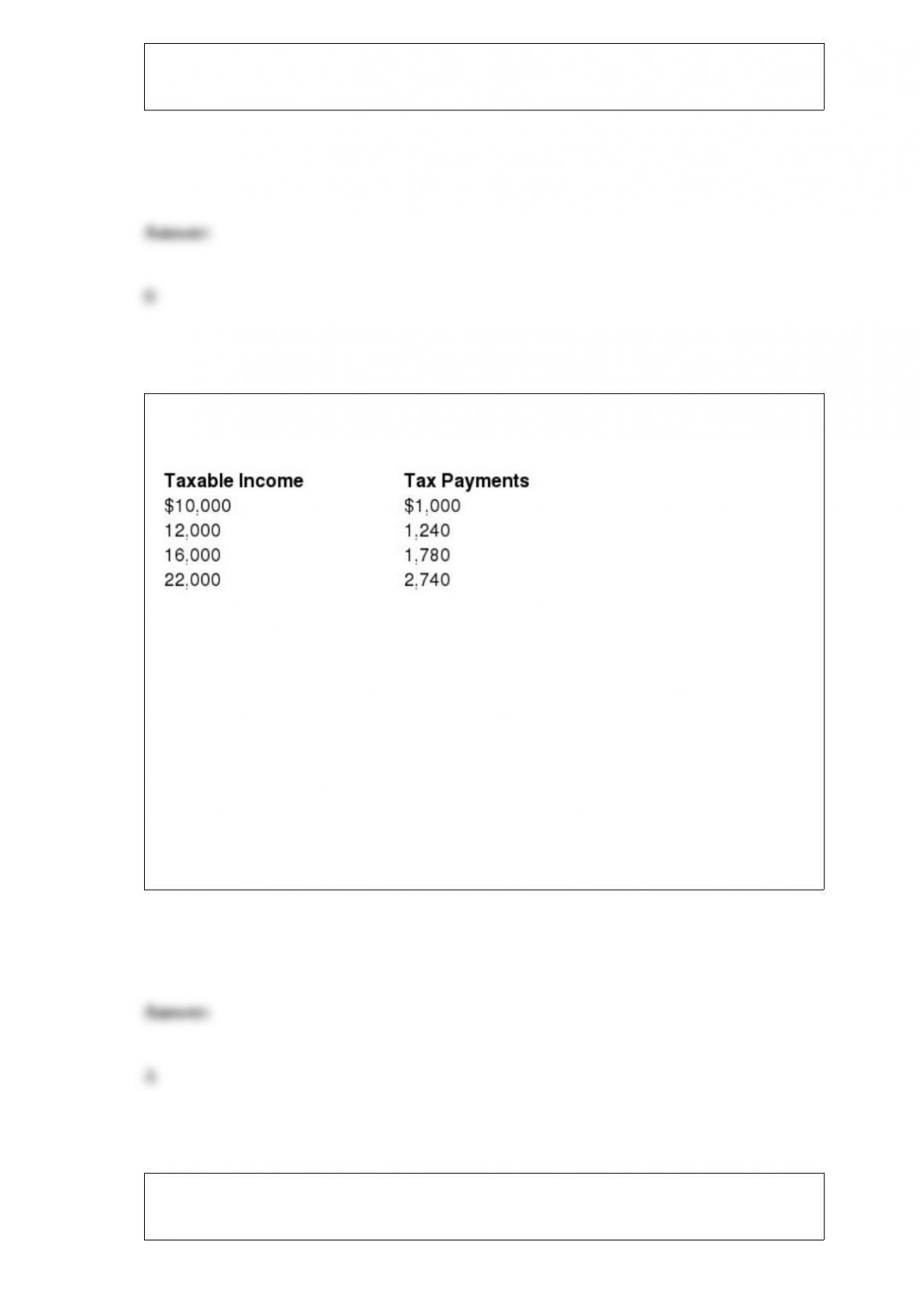
Table 18-7
Table 18-7 shows the amount of taxes paid on various levels of income.
Refer to Table 18-7. The tax system is
A) progressive throughout all levels of income.
B) proportional throughout all levels of income.
C) regressive throughout all levels of income.
D) progressive between $10,000 and $12,000 of income and regressive between
$16,000 and $22,000.
Protectionism

A) is the use of cheap labor to protect firms from paying high wages.
B) is the use of trade barriers to protect domestic firms from foreign competition.
C) refers to reductions in tariffs and other barriers that protect consumers from paying
high prices.
D) refers to the use of copyright and trademark laws to protect inventors and artists
from losing the rights to their creative efforts.
Consider the following economic agents:
a. the government
b. consumers
c. producers
Who, in a centrally planned economy, decides what goods and services will be
produced with the scarce resources available in that economy?
A) the government
B) producers
C) consumers
D) consumers and producers
E) the government, consumers and producers
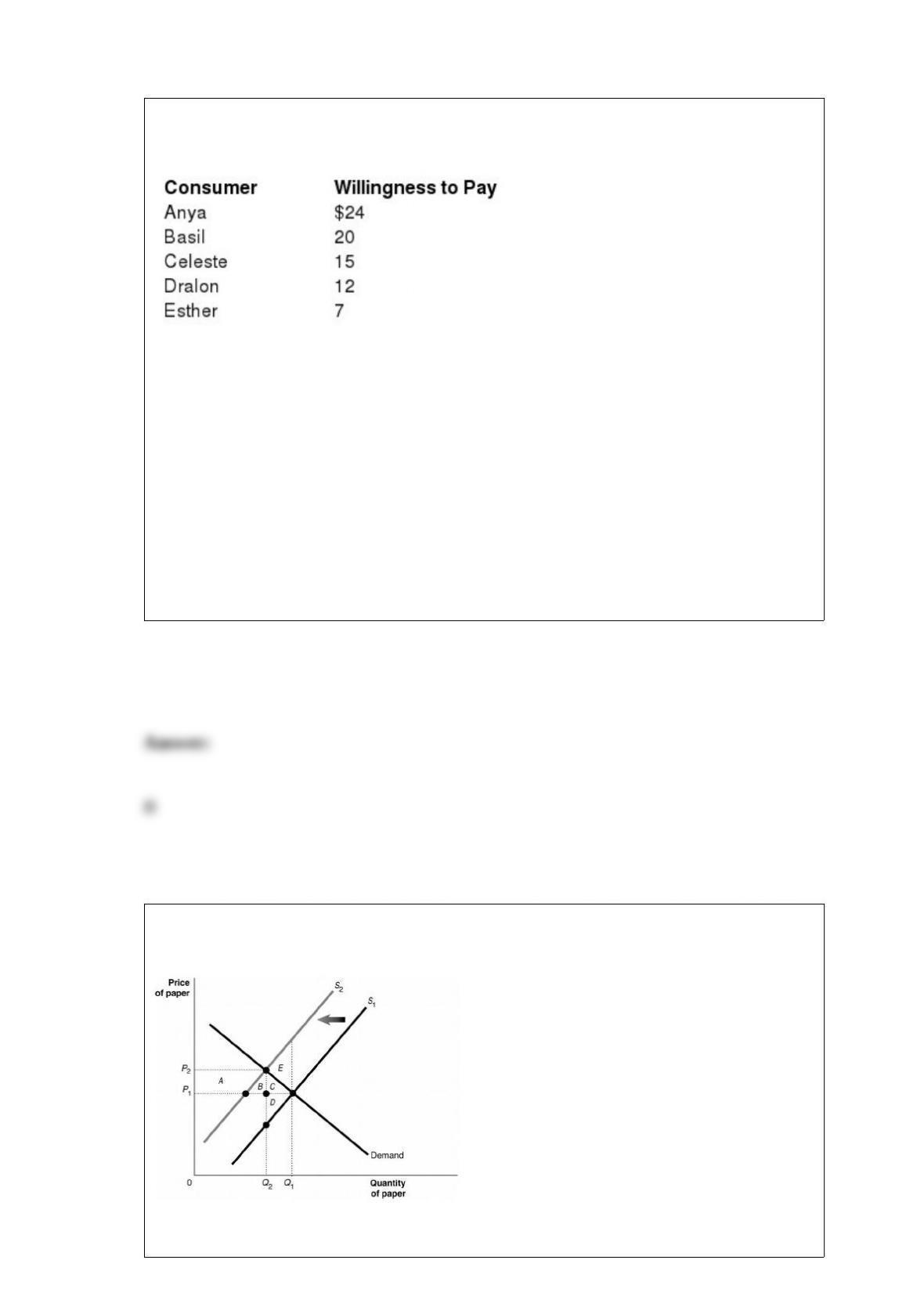
Table 4-2
Refer to Table 4-2. The table above lists the highest prices five consumers are willing to
pay for a theater ticket. If the price of one of the tickets is $18
A) Anya and Basil will each buy two tickets.
B) Basil will receive $2 of consumer surplus from buying one ticket.
C) Anya and Basil receive a total of $26 of consumer surplus from buying one ticket
each. No one else will buy a ticket.
D) Celeste, Dralon, and Esther will receive a total of $34 of consumer surplus since
they will buy no tickets.
Figure 5-4
Suppose there are several paper mills producing paper for a market. These mills,

located upstream from a fishing village, discharge a large amount of wastewater into the
river. The waste material affects the number of fish in the river, and the use of the river
for recreation and as a public water supply source. Figure 5-4 shows the paper market.
Use this Figure to answer the following question(s).
Refer to Figure 5-4. What is the deadweight loss from producing at the market
equilibrium?
A) area C
B) area E
C) area D
D) area F
What is the marginal rate of substitution?
A) the price ratio
B) the rate at which the consumer must give up one good to purchase an additional unit
of the other goods in the market
C) the rate at which the consumer is willing to trade one good for another so that she
increases her utility
D) the rate at which the consumer is willing to trade one good for another without any
loss in utility
The rate at which a firm is able to substitute one input for another while keeping the
level of output constant is called the
A) opportunity cost of inputs.
B) marginal rate of technical substitution.
C) input trade-off rate.
D) isoquant substitution rate.
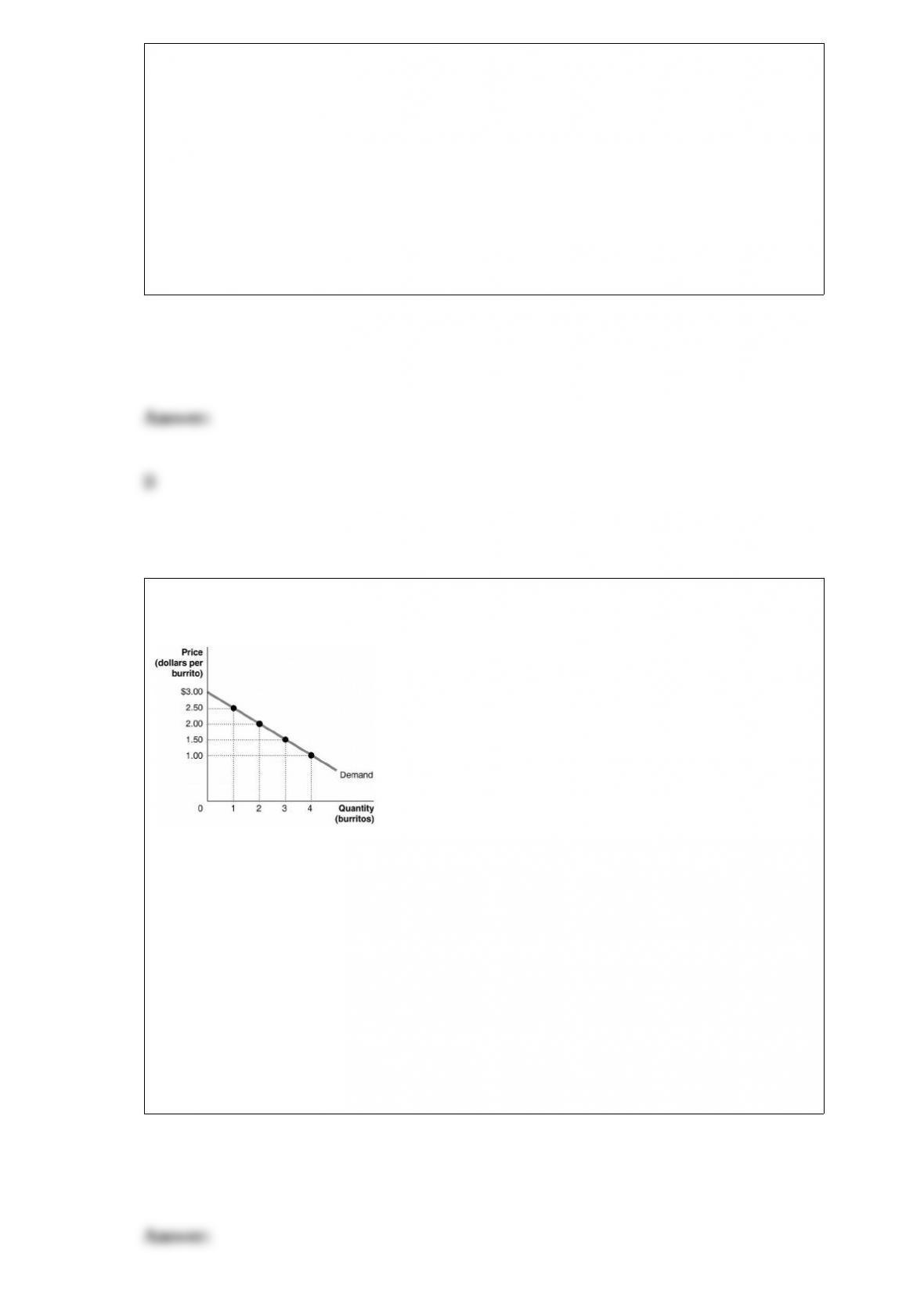
Figure 4-1
Figure 4-1 shows Arnold’s demand curve for burritos.
Refer to Figure 4-1. If the market price is $1.00, what is the maximum number of
burritos that Arnold will buy?
A) 1
B) 2
C) 3
D) 4

Personnel economics is
A) the study of the factors that determine wage rates.
B) the study of how workers are affected by tax law changes.
C) the application of economic analyses to human resource issues.
D) the application of economic analysis to the hiring decision.
A firm’s demand curve for labor slopes downwards because
A) of the law of diminishing marginal returns.
B) firms supply less labor as the wage rate rises.
C) workers supply less labor services as the wage rate falls.
D) of rising marginal product.
Which of the following tax systems would help reduce income inequality the most?

A) a regressive tax system
B) a proportional tax system
C) a progressive tax system
D) a consumption tax system
An example of a barrier to entry is
A) product differentiation.
B) high profits.
C) superior technological knowledge.
D) increasing marginal costs