1) Which of the following explains why the aggregate demand schedule is downward
sloping?
A.the real-balances effect
B.the interest-rate effect
C.the foreign purchases effect
D.all of these
2) when total product is diminishing, marginal product is:
a.positive and increasing.
b.positive and decreasing.
c.constant.
d.negative.
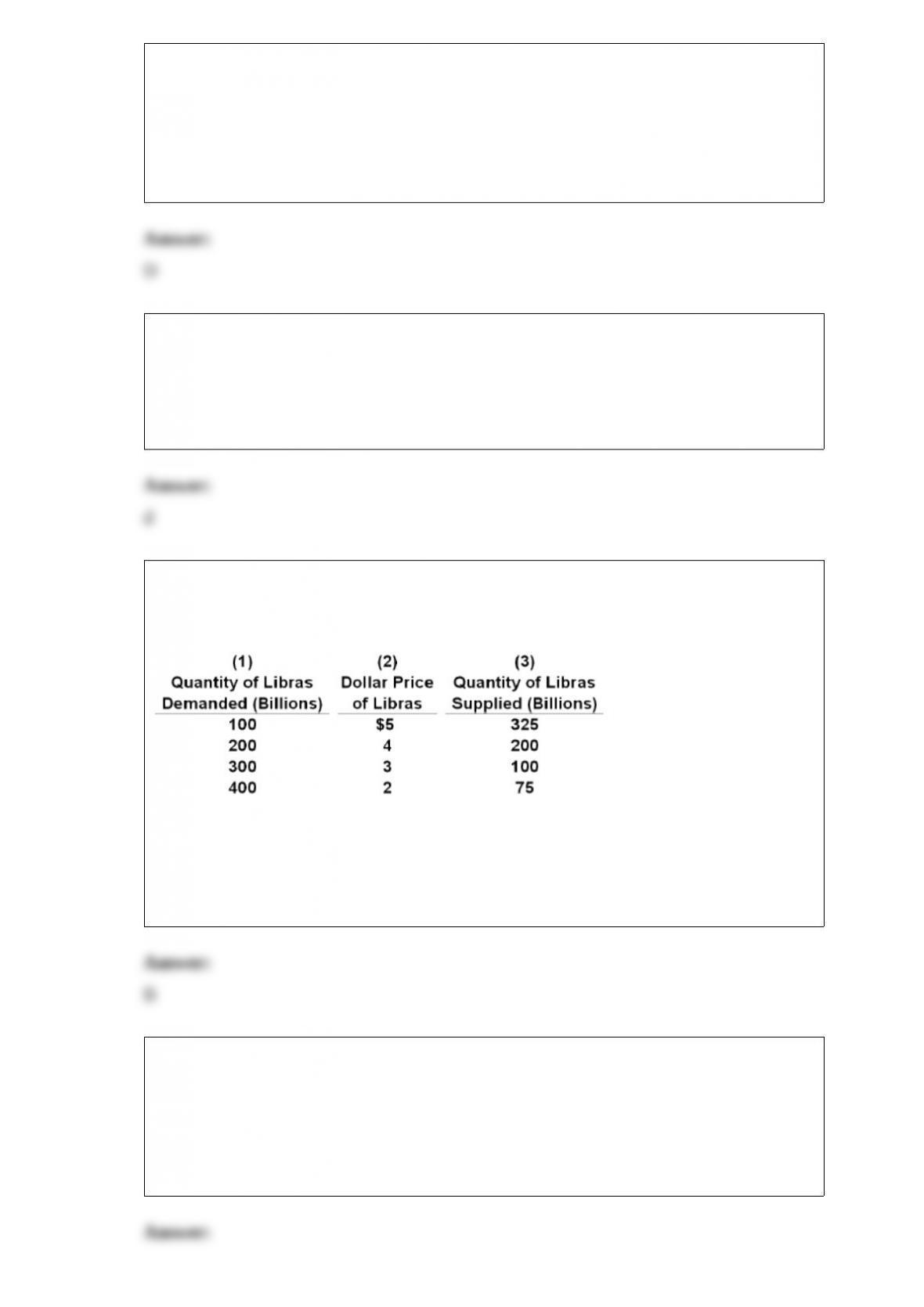
3) The following table which indicates the dollar price of libras, the currency used in
the hypothetical nation of Libra. Assume that a system of freely floating exchange rates
is in place.
Refer to the above table. The exchange rate is:
A.4 libras for one dollar.
B..25 libras for one dollar.
C..40 libras for one dollar.
D.3 libras for one dollar.
4) If APC = .6 and MPC = .7, the immediate impact of an increase in personal taxes of
$20 will be to:
A.have no effect on consumption.
B.decrease consumption by $14.
C.decrease consumption by $12.
D.increase consumption by $14.
5) Commercial banks and thrifts usually hold only small amounts of excess reserves
because:
A.the presence of such reserves tends to boost interest rates and reduce investment.
B.the Fed constantly uses open market operations to eliminate excess reserves.
C.the Fed does not pay interest on reserves.
D.the Fed does not want commercial banks and thrifts to be too liquid.
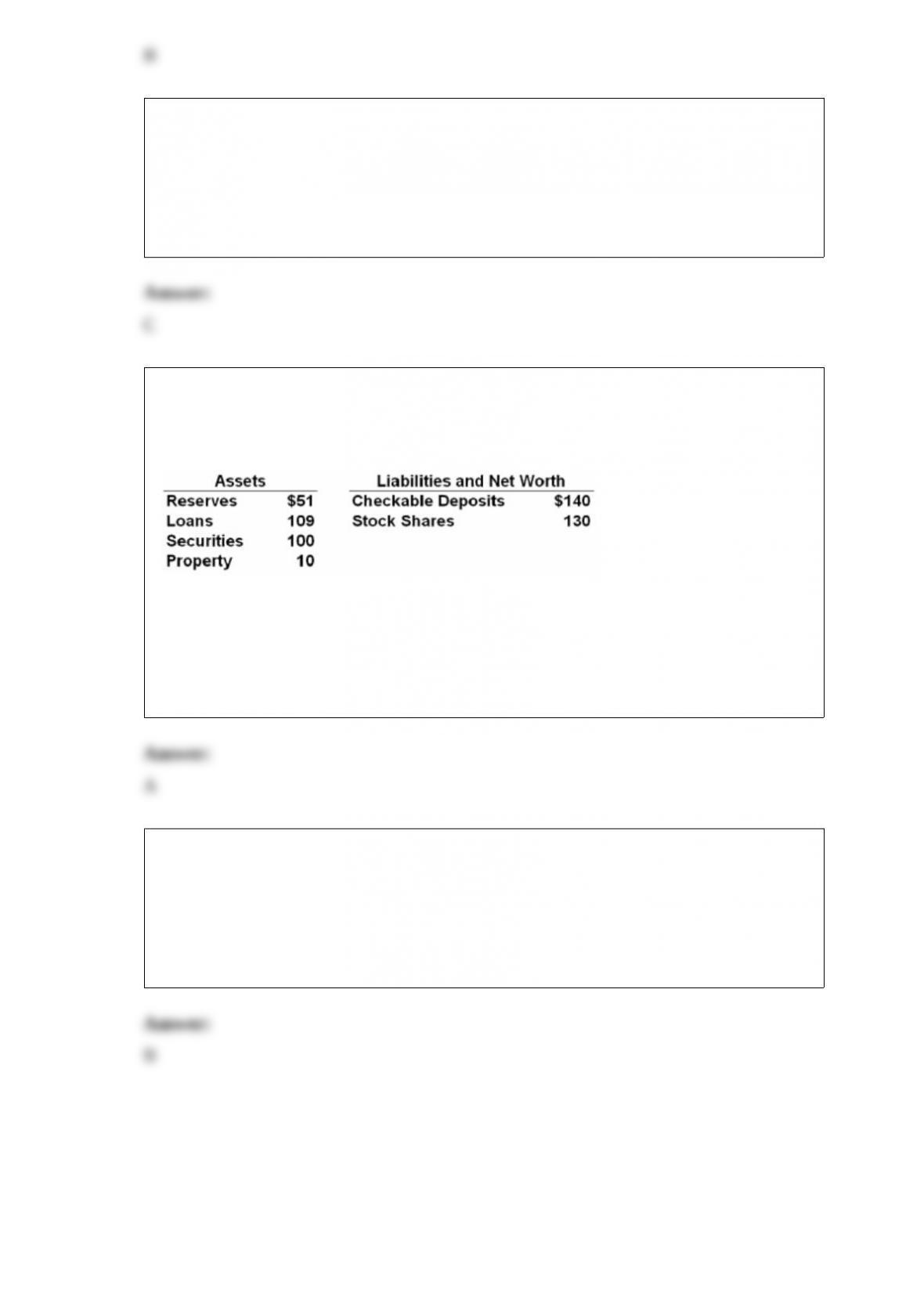
6) The following consolidated balance sheet for the commercial banking system.
Assume the required reserve ratio is 30 percent. All figures are in billions.
Refer to the above data. The commercial banking system has excess reserves of:
A.$9 billion.
B.$7 billion.
C.$6.1 billion.
D.$5 billion.
7) A tax that takes a larger proportion of income from low-income groups than from
high-income groups is a:
A.stabilizing tax.
B.regressive tax.
C.progressive tax.
D.proportional tax.
8)
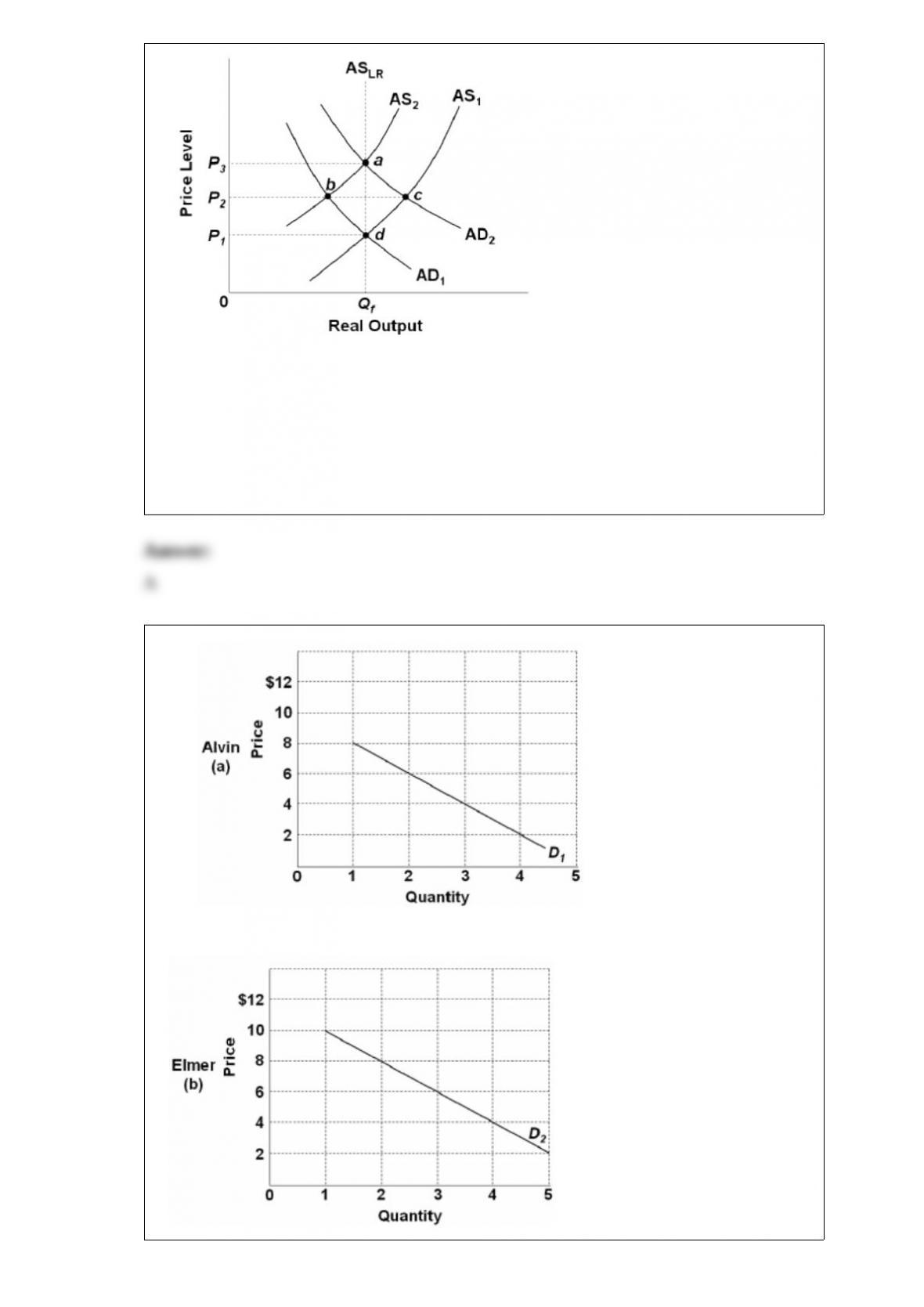
Refer to the above diagram. The initial aggregate demand curve is AD1 and the initial
aggregate supply curve is AS1. Cost-push inflation in the short run is best represented
as a:
A.leftward shift of the aggregate supply curve from AS1 to AS2.
B.rightward shift of the aggregate demand curve from AD1 to AD2.
C.move from d to b to a
D.move from d directly to a
9)
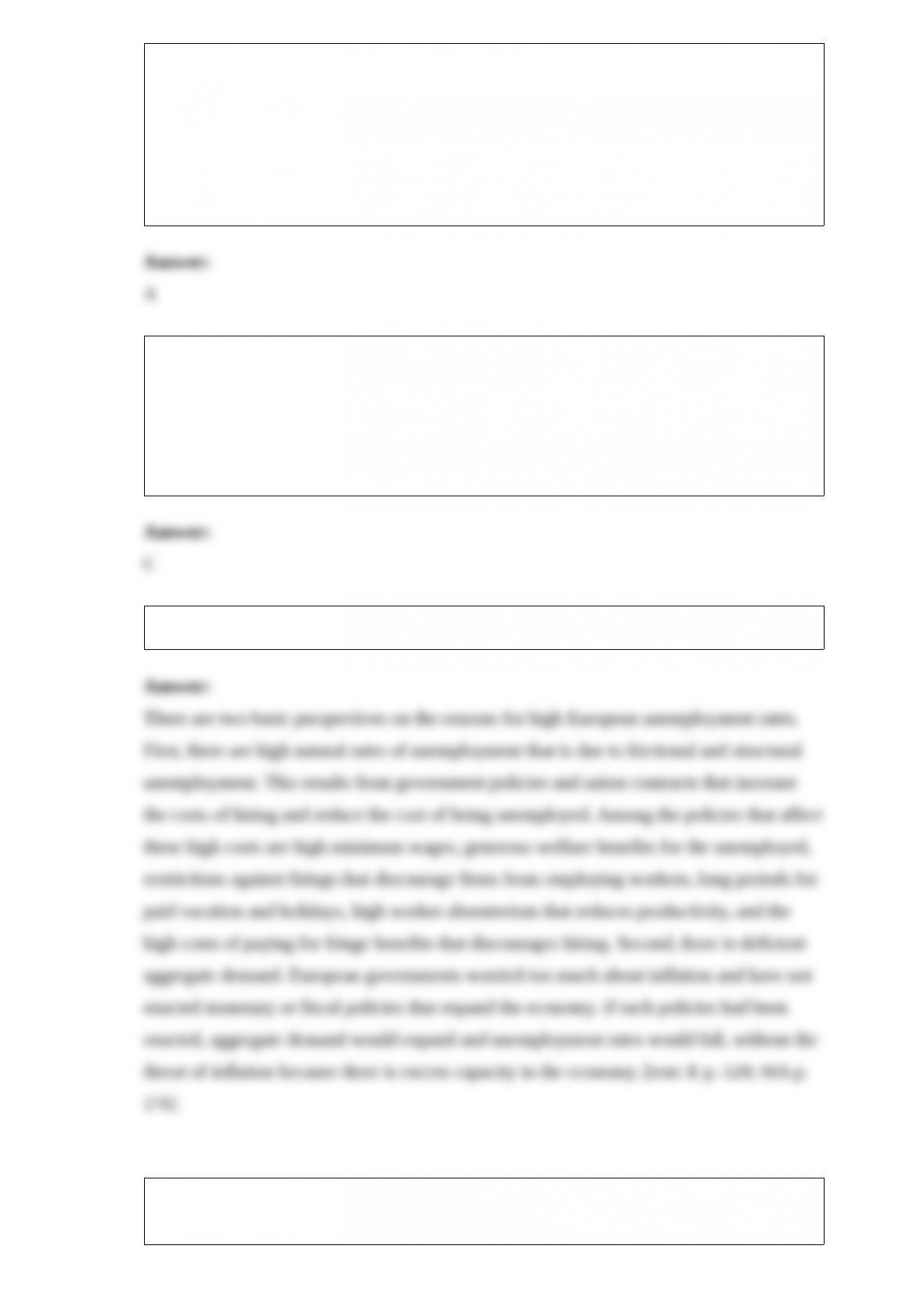
Refer to the above diagrams in which figures (a) and (b) show demand curves reflecting
the prices Alvin and Elmer are willing to pay for a public good, rather than do without
it. The collective willingness to pay for the 1st unit of this public good is:
A.$18.
B.$14.
C.$10.
D.$6.
10) Suppose a worker feels unhappy with his job and consequently quits. This
illustrates:
A.the voice mechanism.
B.featherbedding.
C.the exit mechanism.
D.blacklisting.
11) (Consider This) Why was unemployment in Europe so high in recent years?
12) What obstacles might a group of oligopolists encounter in forming a cartel or an
informal understanding?
13) What are the major arguments in the case for income inequality?
14) Describe the three types of mergers and give examples.
15) What are the components of national income? What is the relative share going to
wages and salaries and to corporate profits?
16) (Last Word) Based on the discussion in the text, use the ADAS framework to depict
why the rise in oil prices has had less effect on prices than in the past.
17) Contrast the public interest theory of regulation with the legal cartel theory of
regulation.
18) What are some measurement issues involved in accurately measuring poverty?
19) Explain and evaluate this statement: No tax on income can be a just tax unless it
leaves individuals in the same relative condition in which it found them.