
A normal good is a good for which demand increases as:
a. the income of consumers increases.
b. its own price increases.
c. the price of close substitutes decreases.
d. the total number of consumers increases.
e. a reflection of changing consumer tastes.
There is only one gas station within hundreds of miles. The owner finds that when she
charges $3 a gallon, she sells 199 gallons a day, and when she charges $2.99 a gallon,
she sells 200 gallons a day. The marginal revenue of the 200th gallon of gas is:
a. $.01.
b. $1.
c. $2.99.
d. $3.
e. $600.
BigBiz, a local monopsonist, currently hires 50 workers and pays them $6 per hour. To
attract an additional worker to its labor force, BigBiz would have to raise the wage rate
to $6.25 per hour. What is BigBiz’s marginal factor cost?
a. $6.25 per hour.
b. $12.50 per hour.
c. $18.75 per hour.
d. $20 per hour.
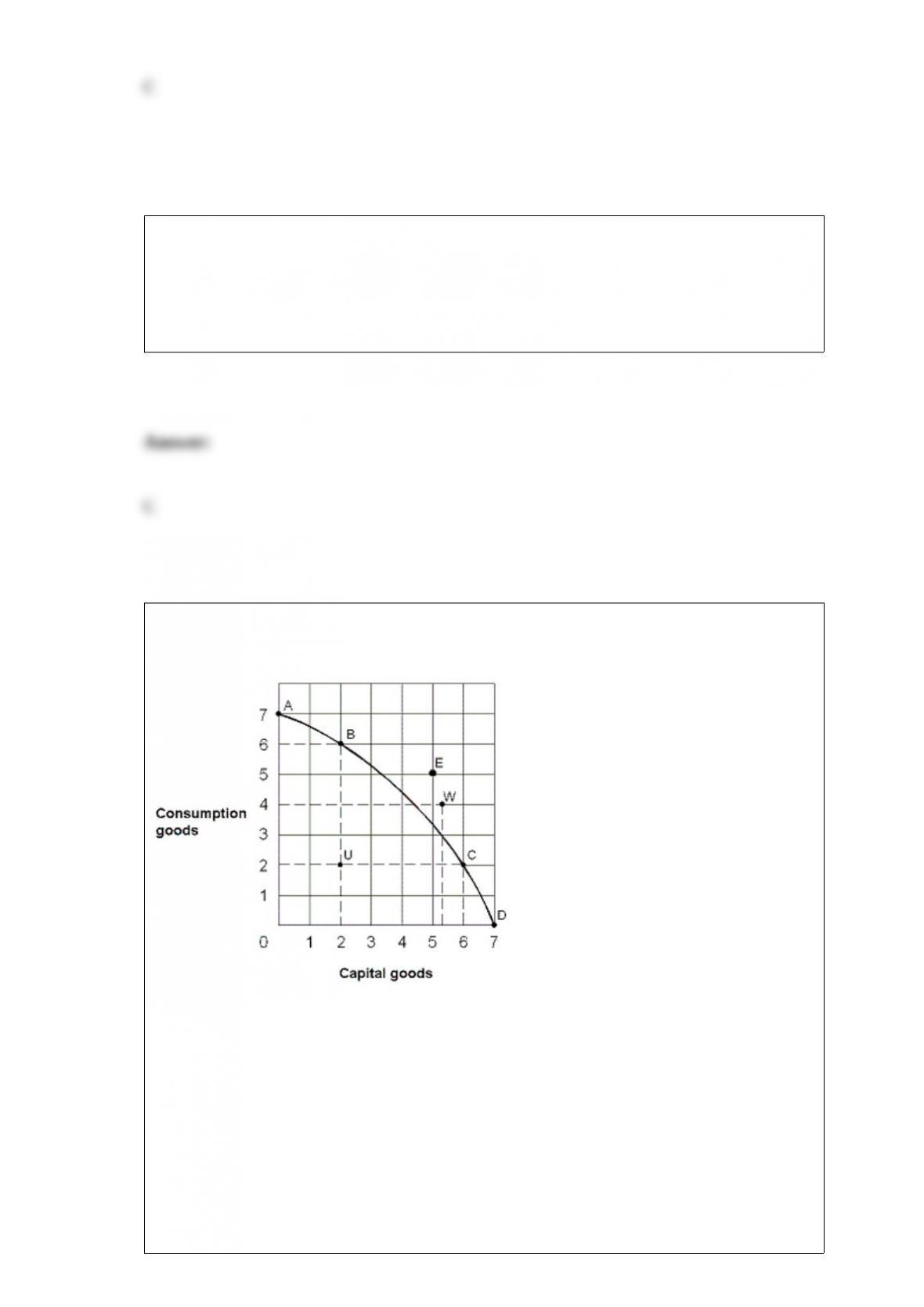
Any point inside the production possibility curve is:
a. efficient. c. inefficient.
b. nonfeasible. d. optimal.
Exhibit 2-16 Production possibilities curve
In Exhibit 2-16, to move from U to B, the opportunity cost:
a. would be 4 units of consumption goods.
b. would be 2 units of capital goods.
c. would be zero.
d. would be 5 units of capital goods.

e. cannot be estimated.
The statement “as more of a good is consumed, the utility a person derives from each
additional unit diminishes” is known as the:
a. water and diamond paradox.
b. law of diminishing marginal utility.
c. law of total utility.
d. marginal-utility-to-price ratio equalization rule.
e. law of diminishing demand.
A demand curve for The Steel Porcupines’ concert tickets would show the:
a. quality of service that customers demand when they buy a ticket.
b. number of people who like to attend the concert.
c. number of tickets the promoters are willing to sell at each price.
d. number of concert tickets that will be purchased at each price.

Robinson Crusoe’s decision to produce more capital goods and fewer consumer goods
in a given period causes:
a. a decrease in the resources available in its economy.
b. an increase in economic growth in future periods.
c. a decrease in economic growth in future periods.
d. no change in the availability of resources in its economy.
e. a decrease in the ability to produce goods in the next period.
A strength of the market economy is that:
a. it results in an equal distribution of wealth.
b. resources are used efficiently.
c. planners rather than consumers determine answers to the basic economic questions.
d. information for production and distribution decisions passes directly from the
government to buyers.
A country is said to have an absolute advantage in the production of a good when:
a. its opportunity cost of producing the good is lower than another country.
b. it can produce the good using fewer resources than another country.
c. it specializes in the production of the good.
d. all of these.

Cartel agreements are difficult to maintain because individual members:
a. can gain by raising their price above the price that is best for the cartel.
b. are often unable to police the price and output policies of other members.
c. can gain by secretly raising their price above the price that is best for the cartel.
d. can enforce price arrangements vigorously in court.
If the market price is $5 and you are currently producing at a level where average total
cost is $3 and falling, you should:
a. b or c, it doesn’t matter.
b. shut down.
c. produce only enough to cover variable costs.
d. produce where MR = MC.
e. produce until the average total cost and average revenue are equal.
In the 1945 Alcoa antitrust case, the Court found ALCOA:
a. not guilty of violating the Sherman Antitrust Act because it was a good monopoly.
b. did not have a good reason for having a large market share, so found it guilty.
c. guilty because its firm size was a per se violation of antitrust laws.
d. not guilty because it did not engage in any illegal or unfair acts.
e. was no threat to industrial democracy.
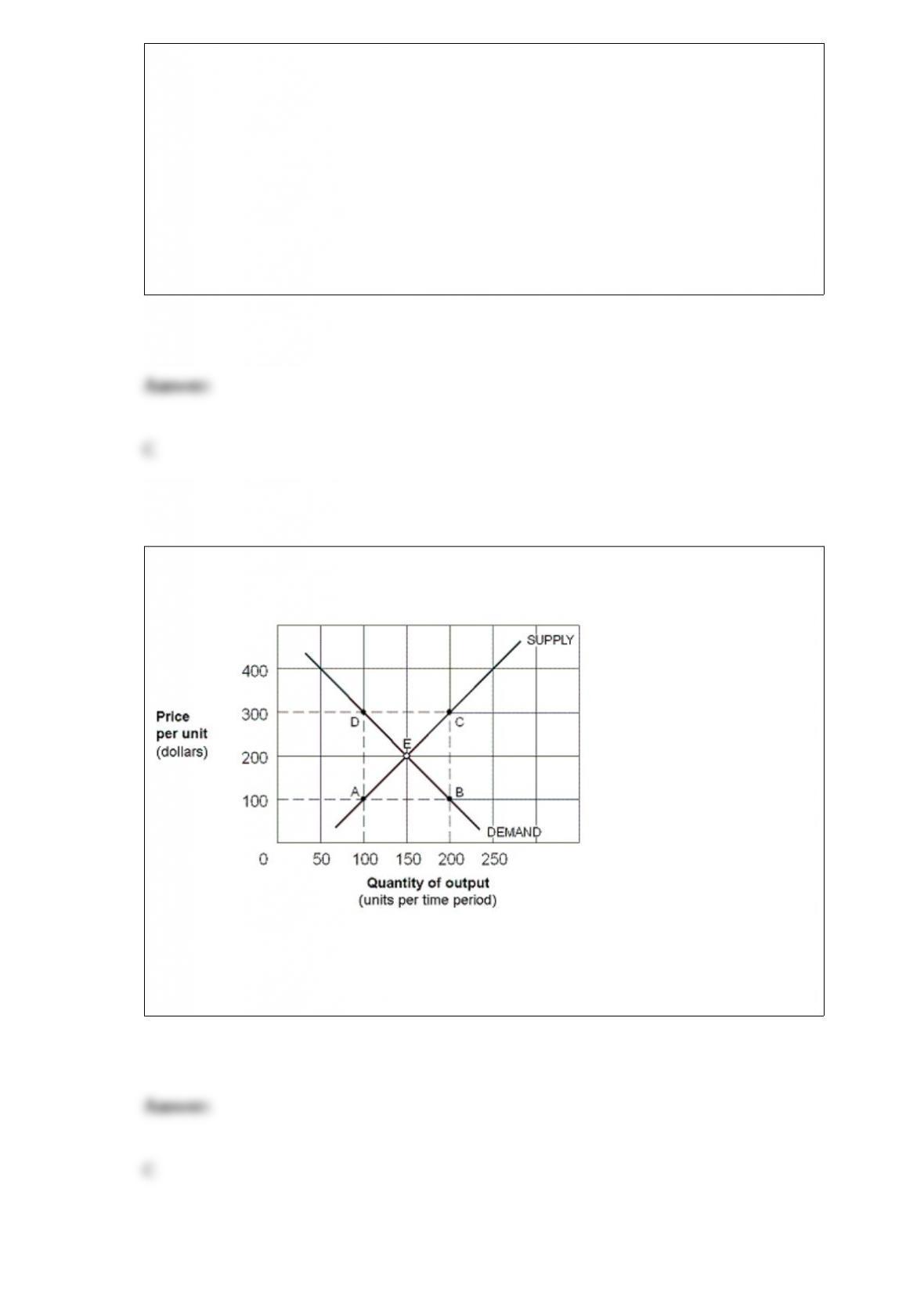
Exhibit 5-9 Supply and demand curves for good X
As shown in Exhibit 5-9, assuming good X is a normal good, an increase in consumer
income, other factors held constant, could move the equilibrium from point E to point:
a. A. c. C.
b. B. d. D.

Demand sensitivity depends on all of the following except:
a. how low is the price of the good.
b. the sensitivity of firms’ output to changes in its price.
c. the consumer’s income.
d. the availability and closeness of substitutes.
e. the amount of time a consumer has to adjust to price changes.
A nation’s trade deficit will expand when its:
a. currency appreciates.
b. economy is shrinking.
c. investment environment is less attractive to foreigners.
d. all of these are true.
The government defines poverty as an income level less than three times the cost of a
minimal diet.

When making a rational decision which requires the consideration of costs and benefits
involved, the opportunity cost of a decision is often not taken into consideration when
indeed it should be.
If a good has a price elasticity of demand coefficient greater than 1, total revenue can be
increased by raising the price.
Each and every point along a production possibilities curve represents an efficient
output option for an economy.
Indifference curve analysis is based on a mythical unit called a util.

When determining whether a family’s income is below the official poverty rate,
non-cash benefits from the government, such as food stamps, housing and medical
benefits, are also included.
Describe the two basic strategies of unions in increasing wage rates for their members.
Marginal utility measures the increase in total utility you derive from consuming one
more unit of a good.
If a firm’s marginal cost exceeds its average cost, then its average cost must be rising.

Economic theories, or models, enable us to predict and to give reasonable explanations
regarding economic variables.