
According to the “Rule of 70,” how many years will it take for real GDP per capita to
double when the growth rate of real GDP per capita is 5%?
A) less than 1 year
B) 5 years
C) 14 years
D) 35 years
Potential GDP refers to
A) the level of GDP attained when all firms are producing at capacity.
B) the level of GDP attained by the country with the highest growth in real GDP in a
given year.
C) the difference between the highest level of real GDP per quarter and the lowest level
of real GDP per quarter within any given year.
D) the extent to which real GDP is above or below nominal GDP.
Which of the following statements is true?
A) An inverse relationship has a positive slope value.
B) A direct relationship has a negative slope value.
C) A curved line has slope values that change at every point.
D) A straight line has a slope of one.
All of the following would be considered explicit costs of operating a business except
A) rent paid to a landlord.
B) bonuses paid to employees.
C) a normal rate of return for investors.
D) corporate income taxes.
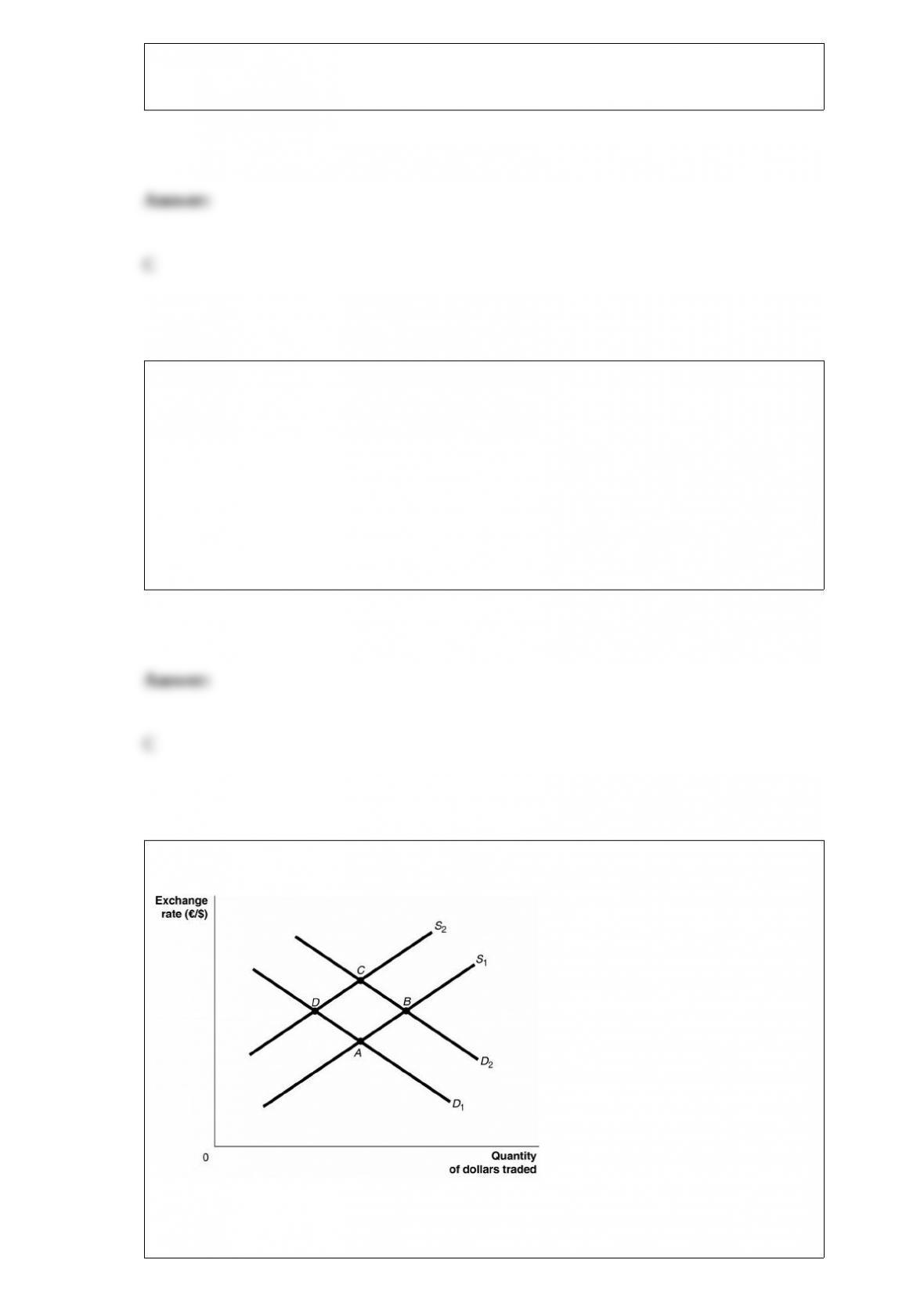
Figure 18-1
Refer to Figure 18-1. The appreciation of the euro is represented as a movement from
A) D to A.

B) D to C.
C) B to C.
D) A to C.
E) A to B.
In the United States during the Great Depression, tariffs were ________ than they were
following World War II, and ________ than they are today.
A) higher; higher
B) higher; lower
C) lower; higher
D) lower; lower
Who owns a corporation?
A) the board of directors
B) the stockholders
C) the employees
D) the CEO
In 2013, health care’s share of gross domestic product in the United States was about
A) 6.5 percent.
B) 17.3 percent.
C) 45 percent.
D) 62.5 percent.
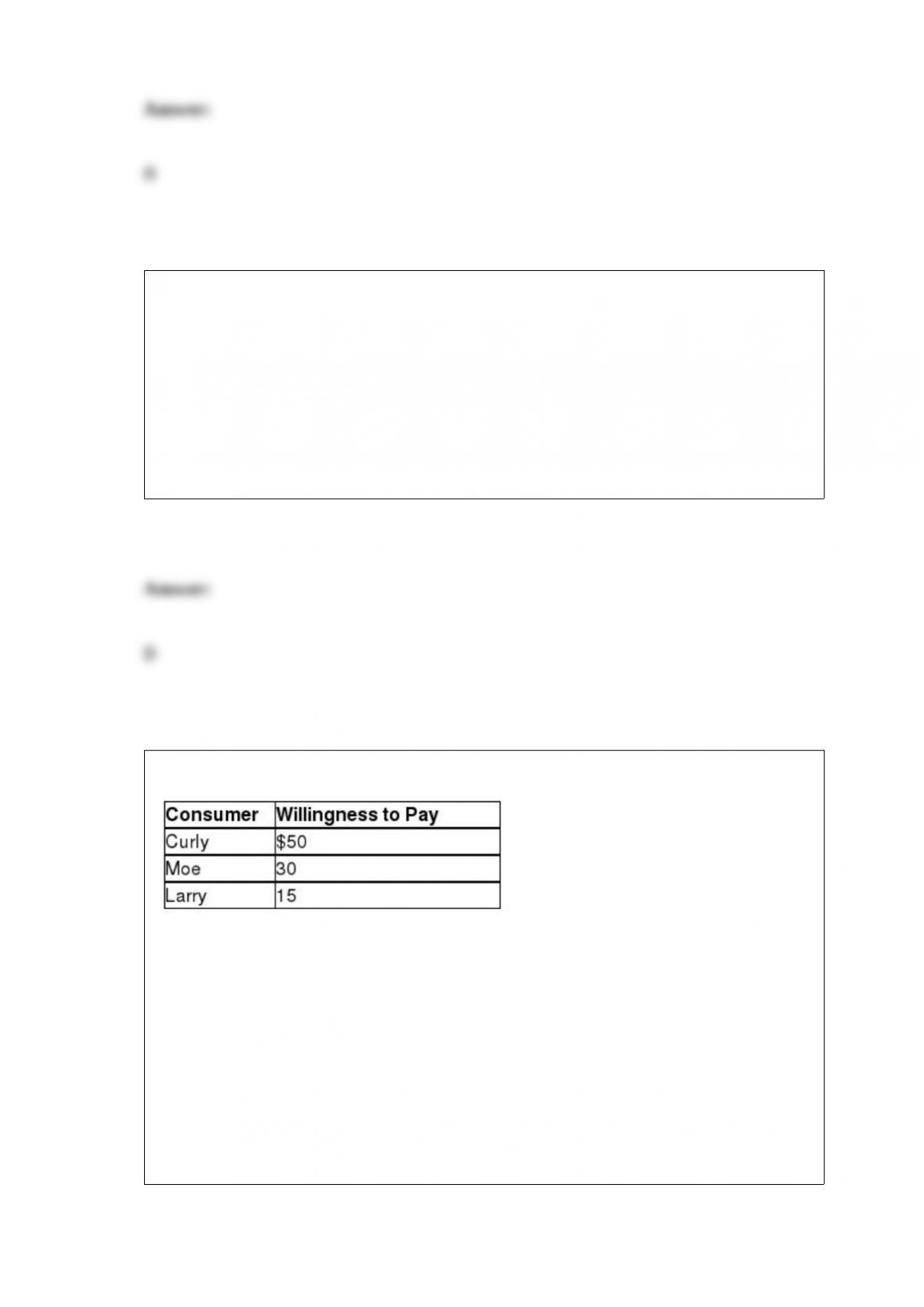
Table 4-1
Refer to Table 4-1. The table above lists the highest prices three consumers, Curly,
Moe, and Larry, are willing to pay for a bottle of champagne. If the price of one of the
bottles is $95 dollars, total consumer surplus will be
A) $0.
B) $35.
C) $80.
D) $95.
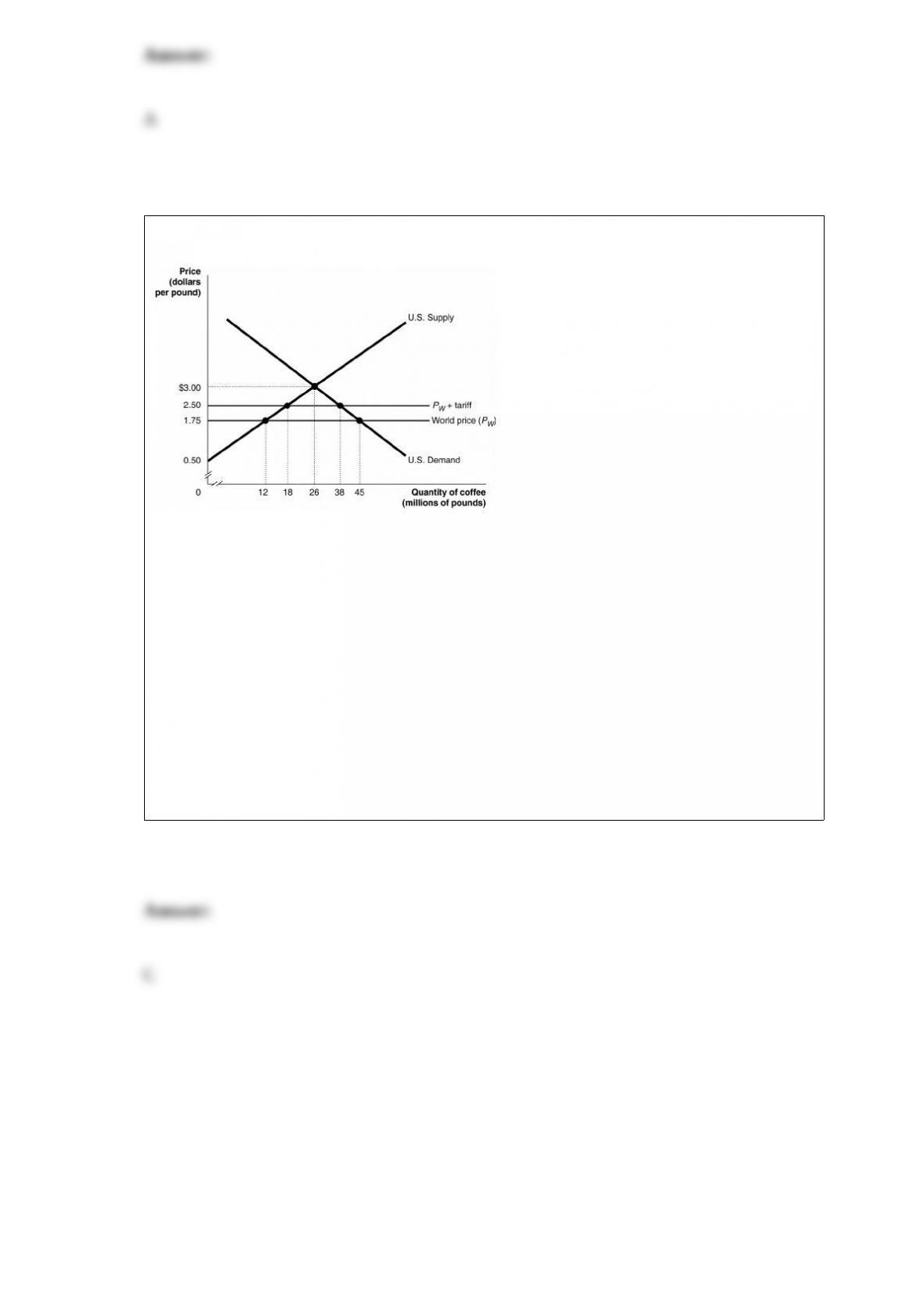
Figure 7-2
Suppose the U.S. government imposes a $0.75 per pound tariff on coffee imports.
Figure 7-2 shows the impact of this tariff.
Refer to Figure 7-2. If the tariff was replaced by a quota which limited coffee imports
to 20 million pounds, the amount of revenue received by coffee importers would equal
A) $5 million.
B) $15 million.
C) $50 million.
D) $78 million.