
Assume that the hourly price for the services of tarot card readers has risen and sales of
these services have also risen. One can conclude that
A) the law of demand has been violated.
B) the number of tarot card readers has increased.
C) the demand for tarot card readers has increased.
D) tarot card readers are deliberately charging high prices because they provide services
for superstitious clients.
Economists who support market-based reforms for health care believe that increased
competition among providers of health care would ________ costs and ________
economic efficiency.
A) increase; increase
B) increase; decrease
C) decrease; increase
D) decrease; decrease
Figure 16-2
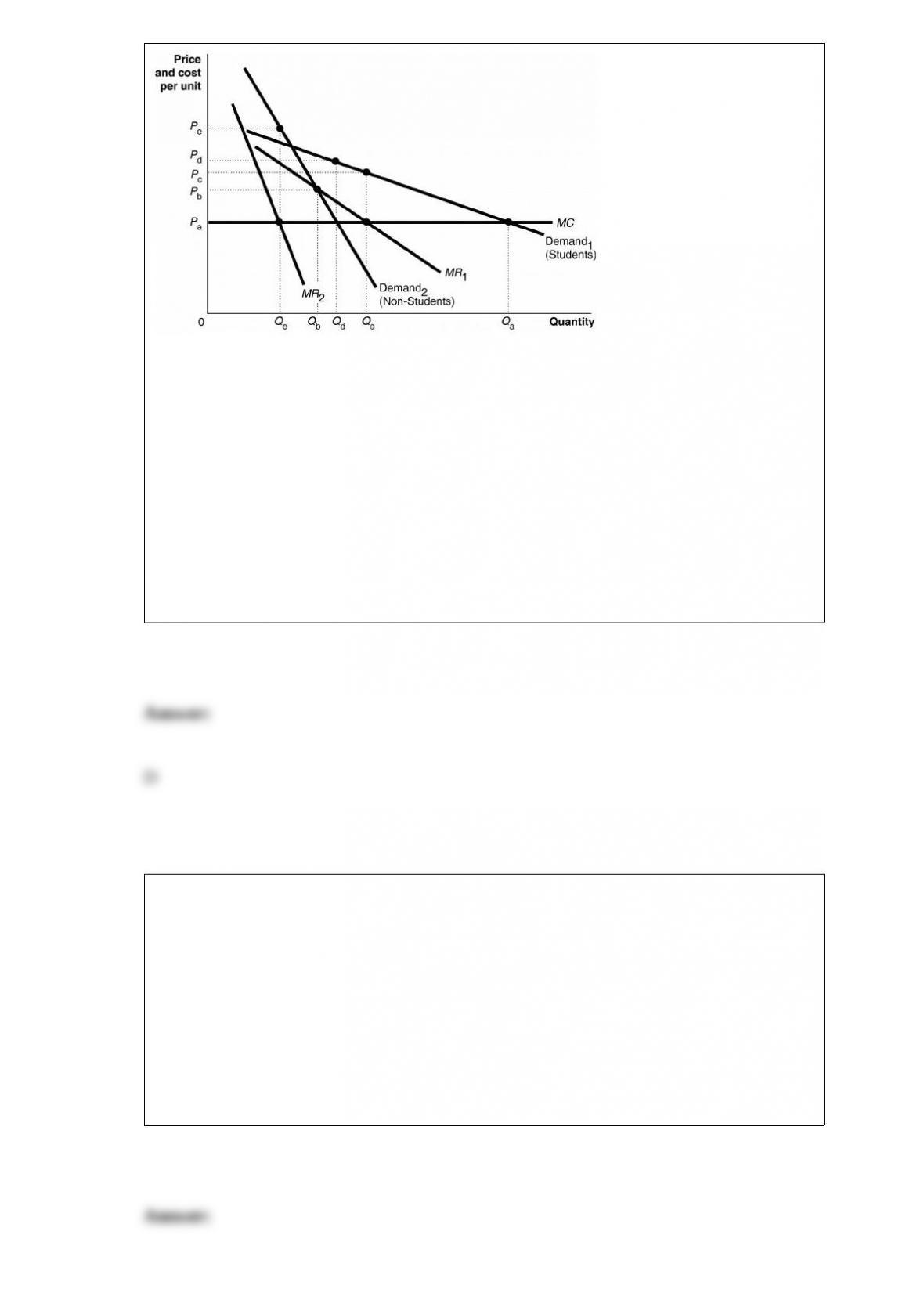
Plato Playhouse, a theatre
company in the university town of Wegg, caters to two groups of customers: students
and the non-student population. Figure 16-2 shows the demand curves for the two
groups of customers. What is the price charged in the two markets?
A) price in the student market = price in the non-student market = Pa
B) price in the student market = price in the non-student market = P
C) price in the student market = Pd;price in the non-student market = Pe
D) price in the student market = Pc;price in the non-student market = Pe
Models that focus on factors such as technology shocks rather than “monetary”
explanations of fluctuations in real GDP are called
A) nonmonetary business cycle models.
B) real business cycle models.
C) rational expectations models.
D) short-run macroeconomic models.
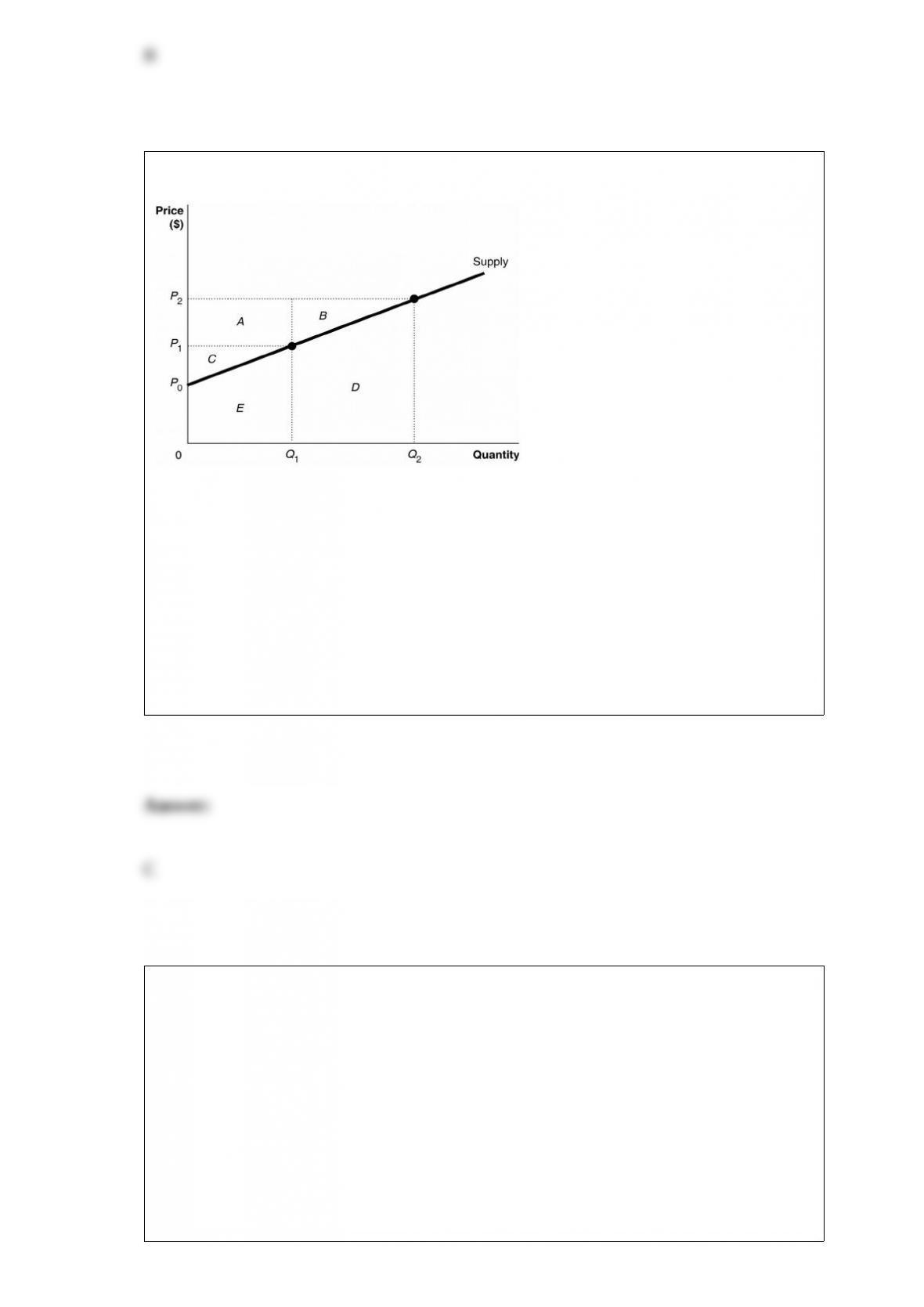
Figure 4-2
What area represents producer surplus at a price of P2?
A) A + B
B) B + D
C) A + B + C
D) A + B + C + D + E
Which of the following correctly describes the automatic mechanism through which the
economy adjusts to long-run equilibrium?
A) the leftward shift of the short-run aggregate supply curve that occurs after a
recession
B) the rightward shift of the short-run aggregate supply curve that occurs after a
recession
C) the leftward shift of the aggregate demand curve that occurs after a recession
D) the rightward shift of the aggregate demand curve that occurs after a recession
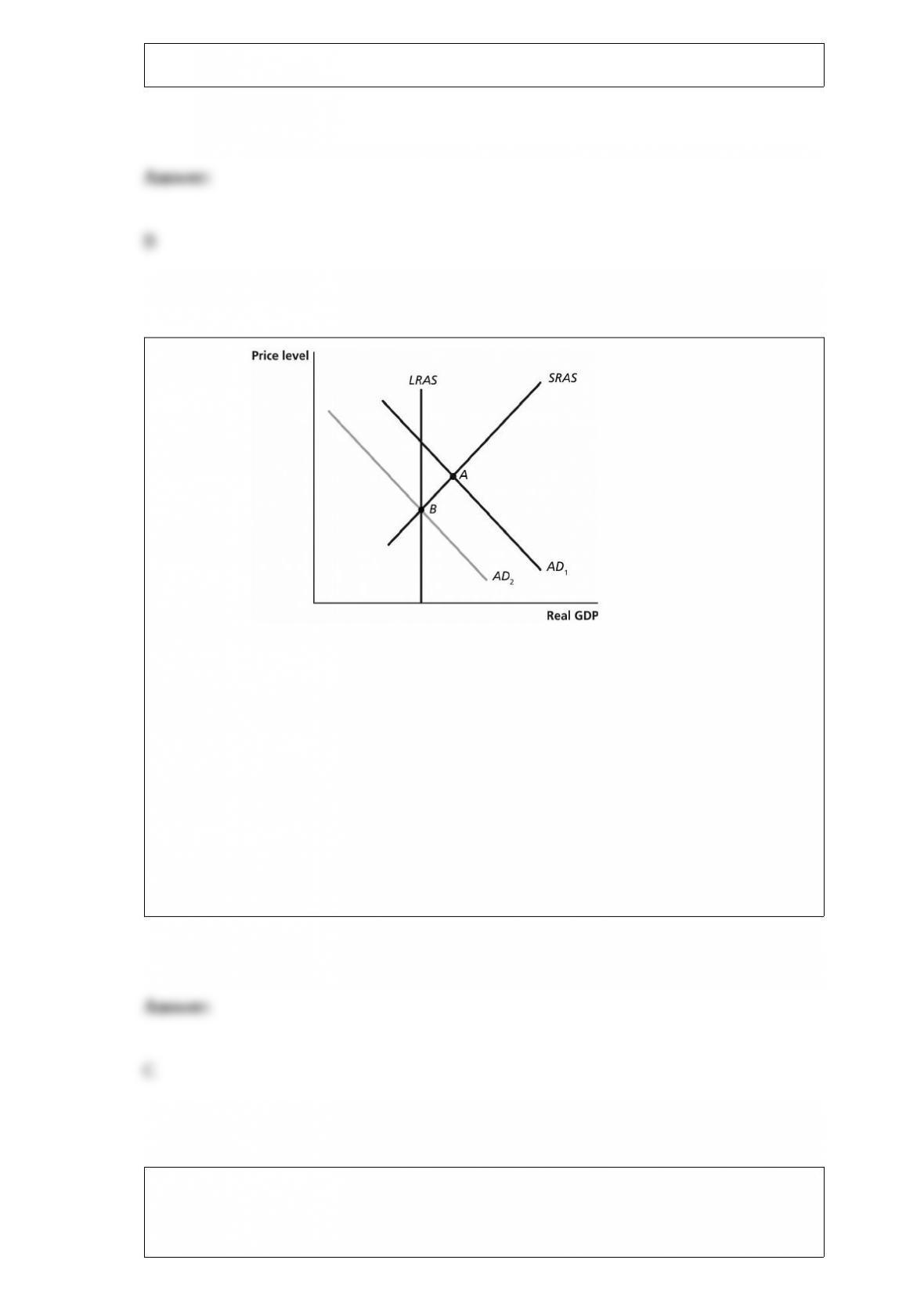
Figure 27-4
In the graph above, suppose the economy is initially at point A. The movement of the
economy to point B as shown in the graph illustrates the effect of which of the
following policy actions by the Congress and the president?
A) an increase in transfer payments
B) an increase in interest rates
C) an increase in the marginal income tax rate
D) an open market purchase of Treasury bills
Jennifer Borts moves her office from the premises she rents at a local mall to her home.
As a result of this move
A) Jennifer’s explicit costs fall and her implicit costs rise.
B) Jennifer’s total costs fall.
C) Jennifer’s implicit costs fall.
D) Jennifer’s opportunity costs fall.
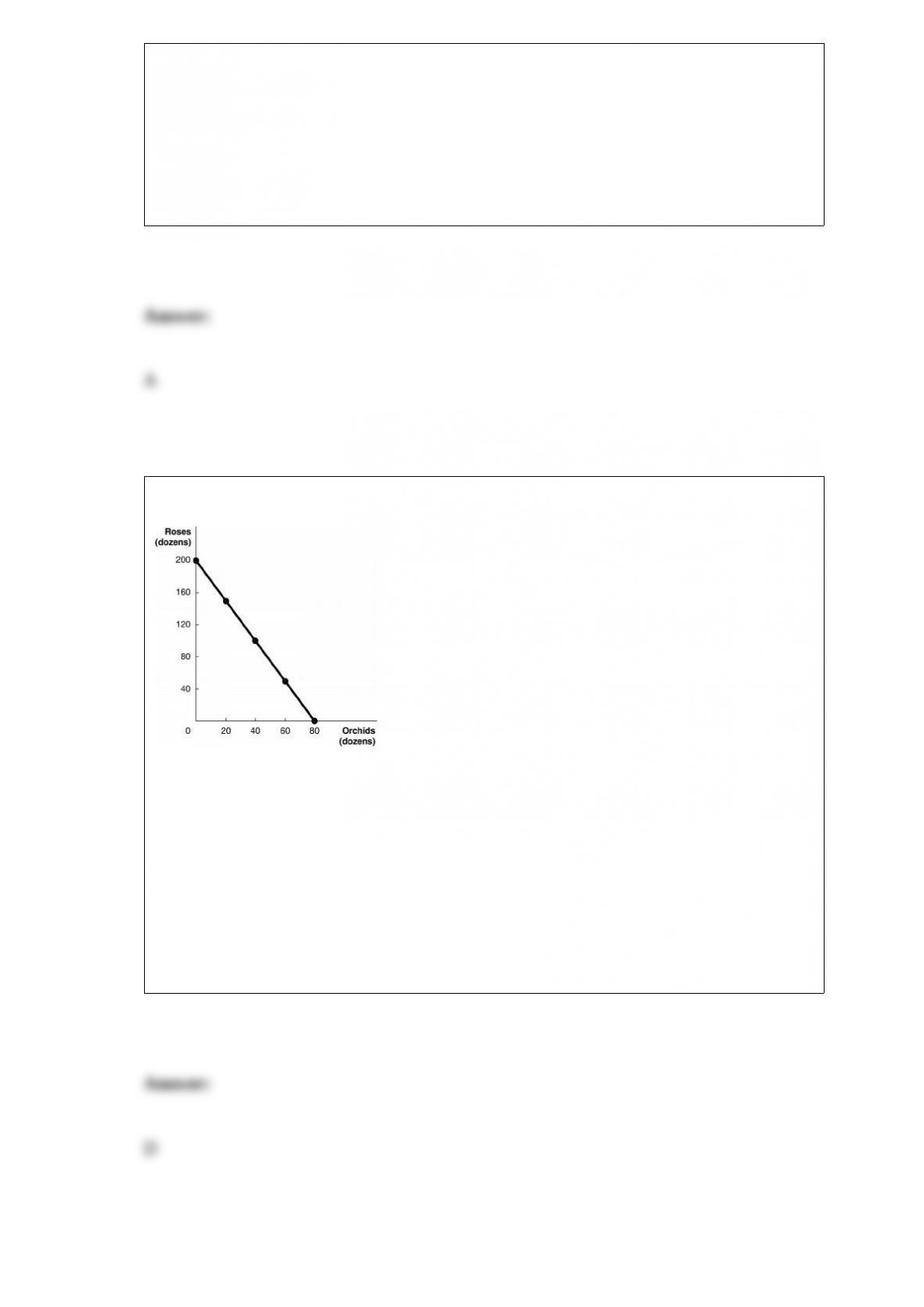
Figure 2-8
Figure 2-8 above shows the production possibilities
frontier for Vidalia, a nation that produces two goods, roses and orchids. What is the
opportunity cost of 80 dozen orchids?
A) 0 roses
B) 2.5 dozen roses
C) 40 dozen roses
D) 200 dozen roses

________ dictates the lowest wage that firms may pay for labor.
A) A maximum wage requirement
B) A minimum wage law
C) The black market wage
D) A price ceiling wage
In recent economic history, the U.S. federal budget was in surplus during
A) 2001 through 2005.
B) 1998 through 2001.
C) 1990 through 1997.
D) 1980 through 1989.
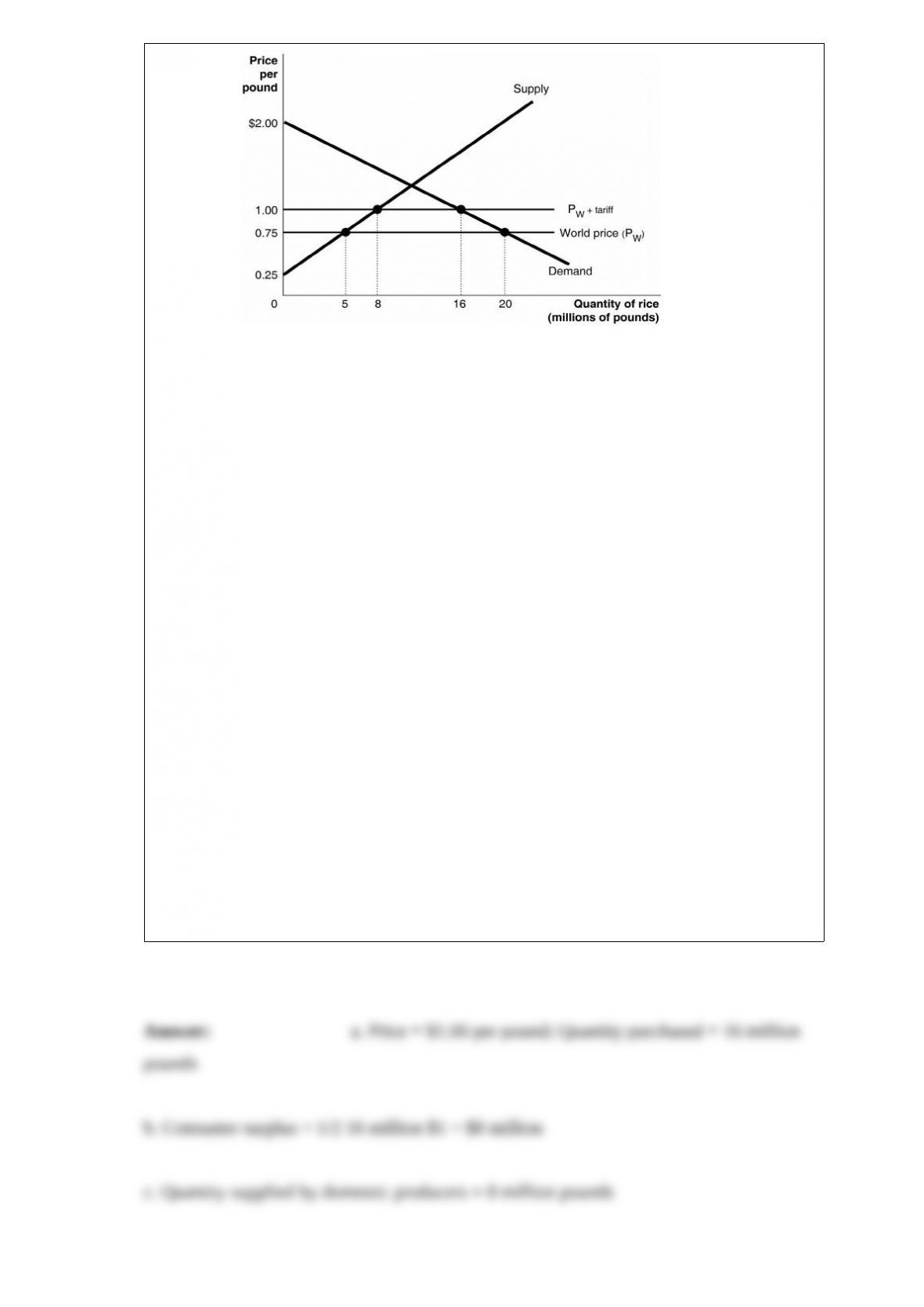
Figure 9-6
Suppose the U.S. government imposes a $0.25 per pound tariff on rice imports. Figure
9-6 shows the demand and supply curves for rice and the impact of this tariff. Use the
figure to answer questions a-i.
a. Following the imposition of the tariff, what is the price that domestic consumers must
now pay and what is the quantity purchased?
b. Calculate the value of consumer surplus with the tariff in place.
c. What is the quantity supplied by domestic rice growers with the tariff in place?
d. Calculate the value of producer surplus received by U.S. rice growers with the tariff
in place.
e. What is the quantity of rice imported with the tariff in place?
f. What is the amount of tariff revenue collected by the government?
g. The tariff has reduced consumer surplus. Calculate the loss in consumer surplus due
to the tariff.
h. What portion of the consumer surplus loss is redistributed to domestic producers? To
the government?
i. Calculate the deadweight loss due to the tariff.
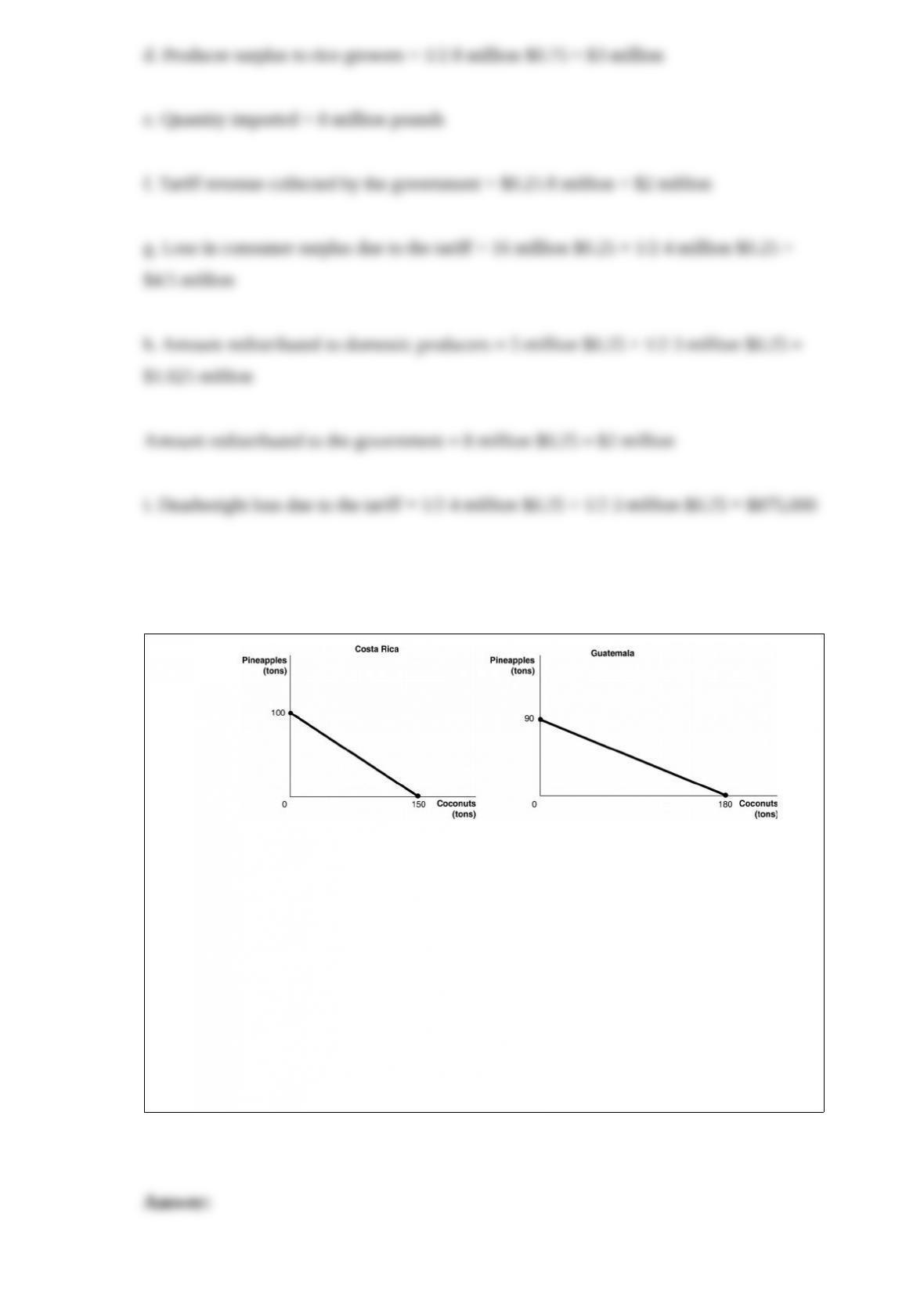
Figure 2-8
Figure 2-8 shows the production possibilities frontiers for Costa Rica and Guatemala.
Each country produces two goods, pineapples and coconuts.
Which country has a comparative advantage in the production of coconuts?
A) Guatemala
B) They have equal productive abilities.
C) Costa Rica
D) neither country
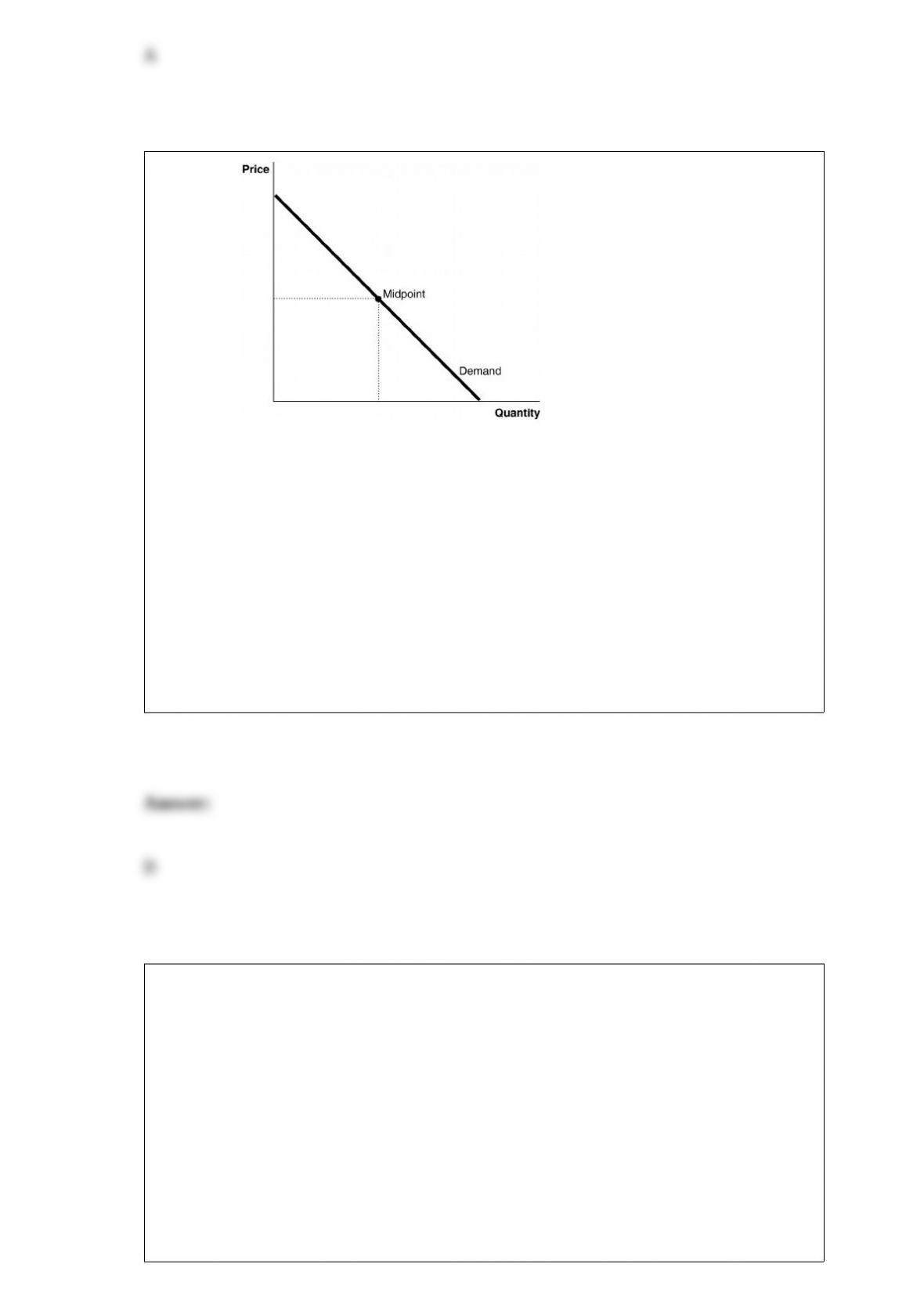
Figure 6-4
Which of the following statements is true about the price elasticity of demand?
A) The elasticity coefficient is constant along the demand curve.
B) The elastic portion of a straight-line downward-sloping demand curve corresponds
to the segment above the midpoint.
C) The inelastic portion of the demand curve corresponds to the segment above the
midpoint.
D) At the midpoint of the demand curve, the elasticity coefficient is zero.
Why do some economists point to a decline in the quality of labor as an explanation for
the productivity slowdown in the mid-1970s?
A) The average level of education of citizens of the United States rose dramatically
during this period of time.
B) The skill level required to perform many jobs increased during this period of time,
although the skills of the labor force did not increase as quickly.
C) Scores on standardized tests during that period of time began to rise.
D) Increases in the amount of capital available reduced labor quality.
If the demand for a life-saving drug was perfectly inelastic and the price doubled, the
quantity demanded would
A) also double.
B) decrease by 50%.
C) be cut in half.
D) remain constant.
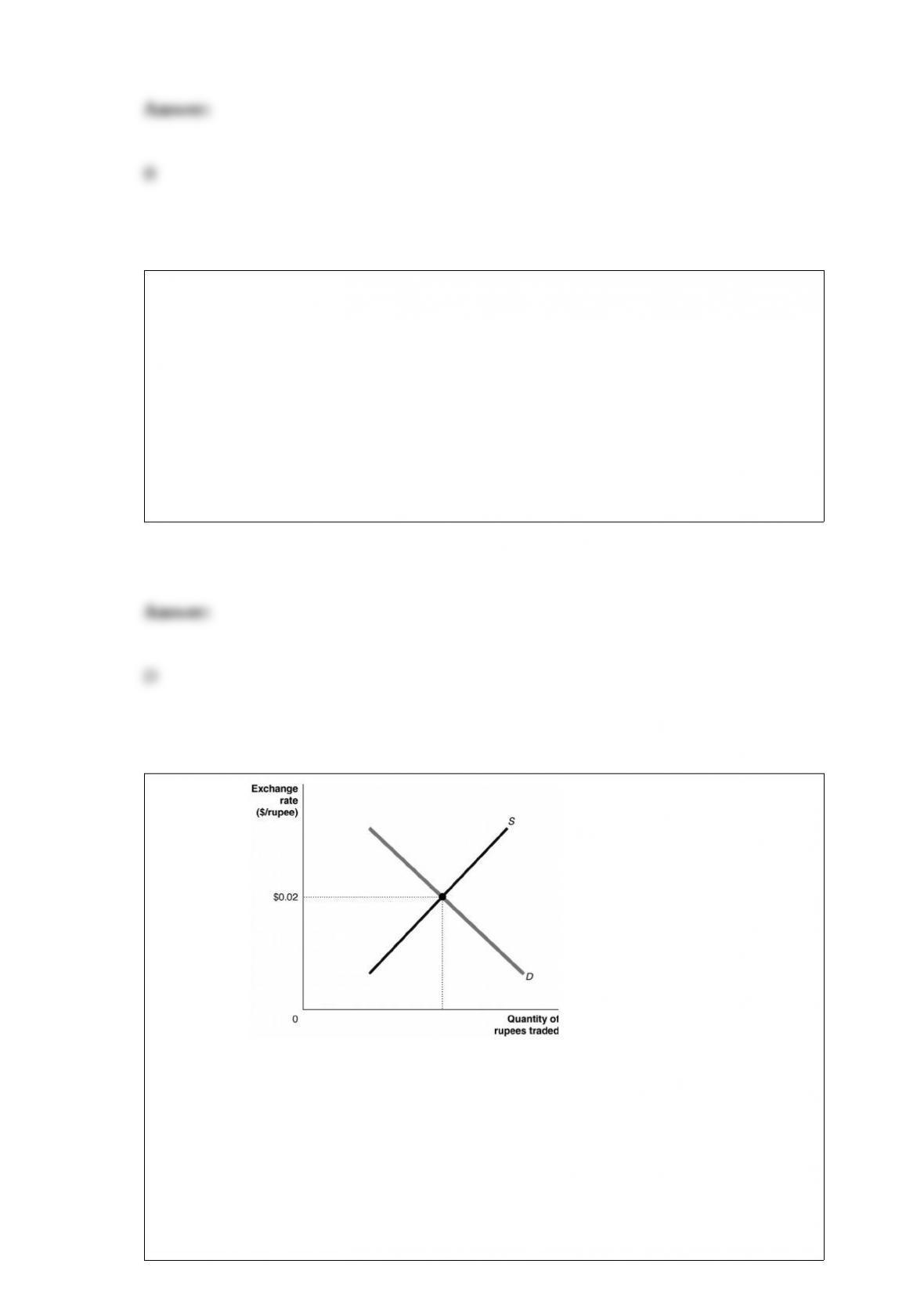
Figure 19-7
Which of the following is true?
A) U.S imports are more expensive at exchange rates greater than $.02/rupee than at the
equilibrium exchange rate.
B) The rupee is overvalued at exchange rates less than $.02/rupee.
C) To achieve an exchange rate greater than $.02/rupee, the Reserve Bank of India must
buy surplus dollars with rupees.
D) Indian exports to the United States are more expensive at exchange rates greater
than $.02/rupee than at the equilibrium exchange rate.
Which of the following is not part of an oligopolist’s business strategy?
A) deciding on how to manage relations with suppliers
B) choosing what new technologies to adopt
C) selecting which new markets to enter
D) independently setting a product’s price without consideration of its rivals’ pricing
policies
In a market economy, those who are willing and able to buy what is produced
A) receives what the government allows them to receive.
B) receive the most of what is produced.
C) receive no more than everyone else in the market.
D) solely determine what is produced.