Subsidies are most likely to:
A. reduce consumer surplus.
B. increase total economic surplus.
C. reduce total economic surplus.
D. leave total economic surplus unchanged, but transfer surplus from producers to
consumers.
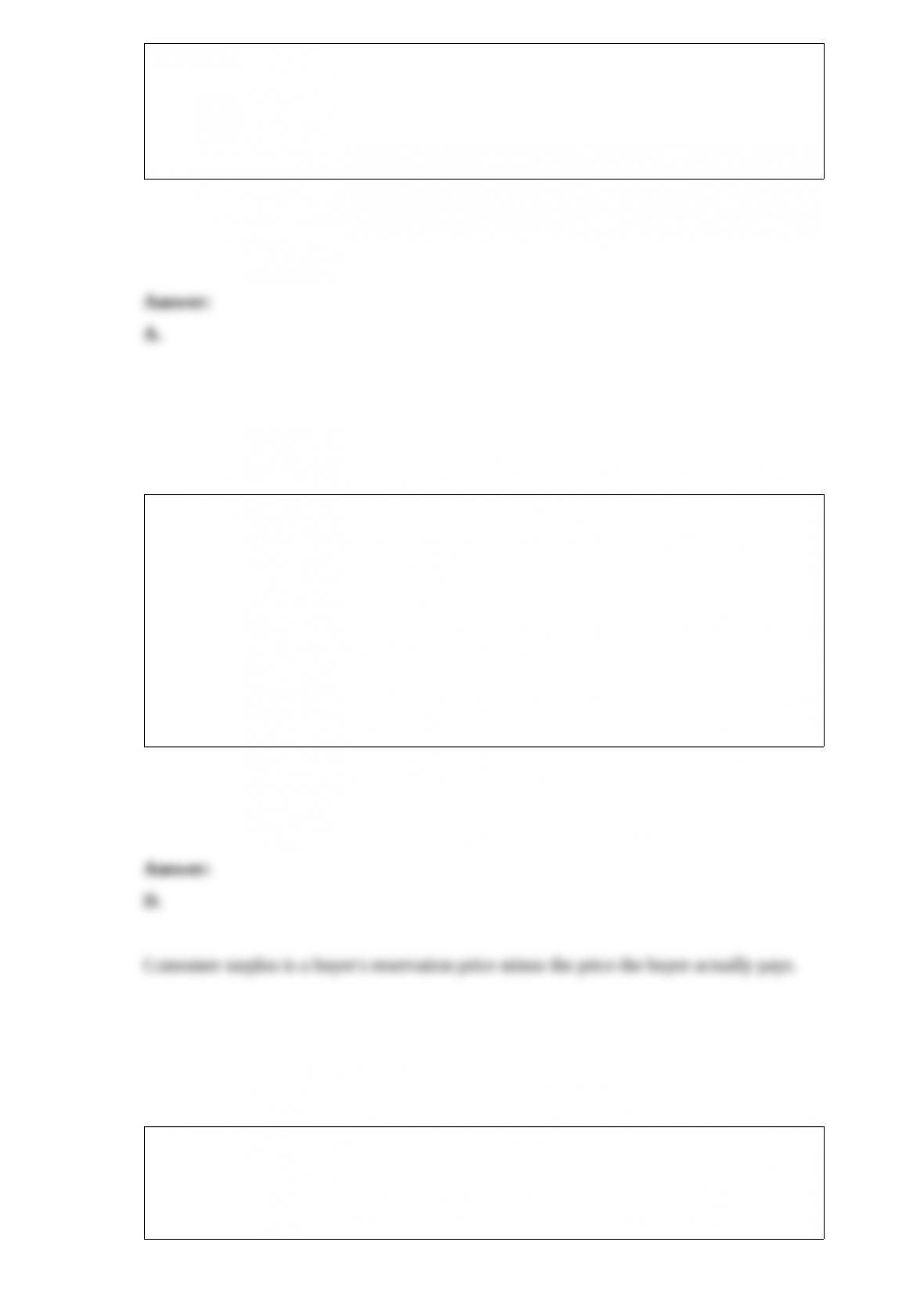
Suppose the figure below shows Annie’s demand curve for physical therapy. The
marginal cost of each visit to the physical therapist is $150.
If Annie had first-dollar medical insurance, then she would choose to have _____ visits
a year.
A. 40
B. 25
C. 10
D. 0
If an individual consumer is willing to pay $11 for one unit of a good but is able to
purchase it for $7, then his or her consumer surplus from the purchase of that unit
would be:
A. $18.
B. $11.
C. $7.
D. $4.
According to Okun’s law, each extra percentage point of ______ unemployment is
associated with a ______ widening of a negative output gap, measured in relation to
potential output.
A. frictional; 2 percent
B. frictional; 0.5 percent
C. cyclical; 2 percent
D. cyclical; 0.5 percent
The sum of producer surplus and consumer surplus is:
A. normal profit.
B. total economic profit.
C. total surplus.
D. the marginal benefit of a good.
Suppose Matt and Gabe must both choose between two jobs, a safe job that pays $250
per week and a risky job that pays $300 per week. The value of safety to each is $75 per
week. Having more income than the other is worth $75 per week to each, and having
less income than the other means a $75-per-week reduction in satisfaction. Having the
same income as the other means no change in satisfaction. The payoff matrix below
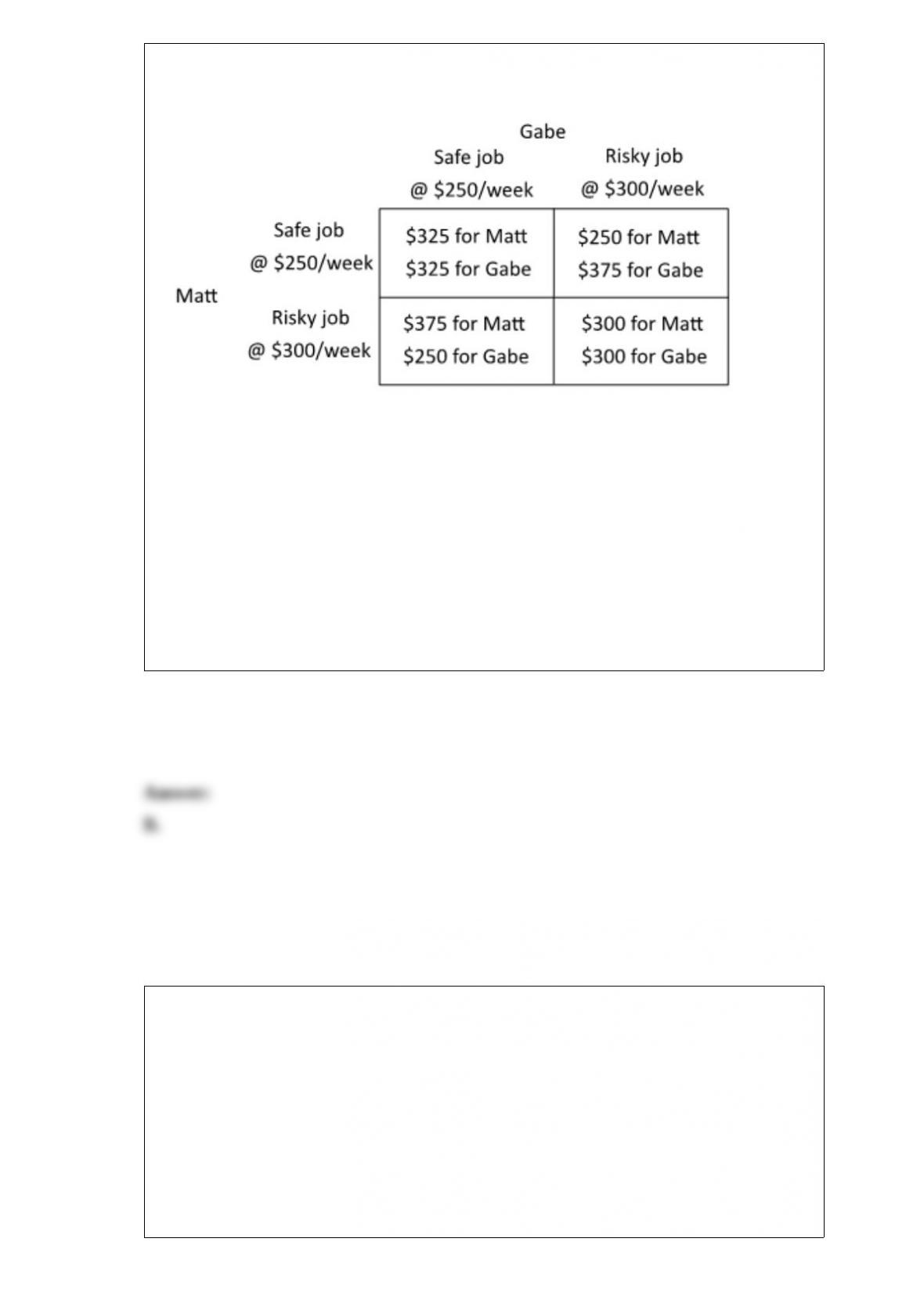
summarizes this situation.
If we compare the payoffs when both choose the risky job to the payoffs when both
choose the safe job, then we can see that:
A. each would be better off if they both picked the risky job.
B. each would be better off if they both picked the safe job.
C. it is socially optimal for both to pick the risky job.
D. both are equally off with either outcome.
If the professional opinions of economists regarding the natural rate of unemployment
vary between 4.5 and 6 percent, then when the actual rate of unemployment equals 10.5
percent:
A. the natural rate of unemployment equals 10.5 percent.
B. there is a probably recessionary gap.
C. there is probably an expansionary gap.
D. the economy is probably at potential output.
Insurance that pays all expenses generated by the insured activity is known as:
A. total-dollar insurance coverage.
B. last-dollar insurance coverage.
C. cradle-to-grave insurance coverage.
D. first-dollar insurance coverage.
A positional externality:
A. only occurs in sports.
B. arises in situations in which rewards depend on absolute performance.
C. results in under investment in performance enhancement.
D. arises in situations in which rewards depend on relative performance.

The government should only provide a pure public good if ______ and ______.
A. the good is indeed a public good; the majority of voters want it to be provided
B. the good’s benefits exceed its costs; there is no less costly way to provide it
C. voters desire the good; no new taxes will be needed
D. the good’s benefits exceed its costs; the government can afford to provide the good
Assume that Dusty has $30 in income, the price of a loaf of bread is $1.50, and the
price of a jar of peanut butter is $3. Suppose that at the original income of $30, the price
of a loaf of bread increased to $3 and the price of a jar of peanut butter decreased to $2.
Dusty can buy a maximum of ______ loaves of bread or a maximum of ______ jars of
peanut butter.
A. 10; 15
B. 15; 10
C. 20; 15
D. 15; 20
The seven Fed governors, the president of the Federal Reserve Bank of New York, and
four of the presidents of the other regional Federal Reserve Banks constitute the:
A. National Monetary Commission.
B. Board of Governors.
C. Federal Open Market Committee.
D. Federal Reserve System.
The effect on short-run equilibrium output of a one-unit increase in autonomous
expenditure is called:
A. the marginal propensity to consume.
B. average labor productivity.
C. Okun’s law.
D. the income-expenditure multiplier.
The figure below shows Ava’s demand curve for days in the hospital. The marginal cost
of an additional day in the hospital is $200.
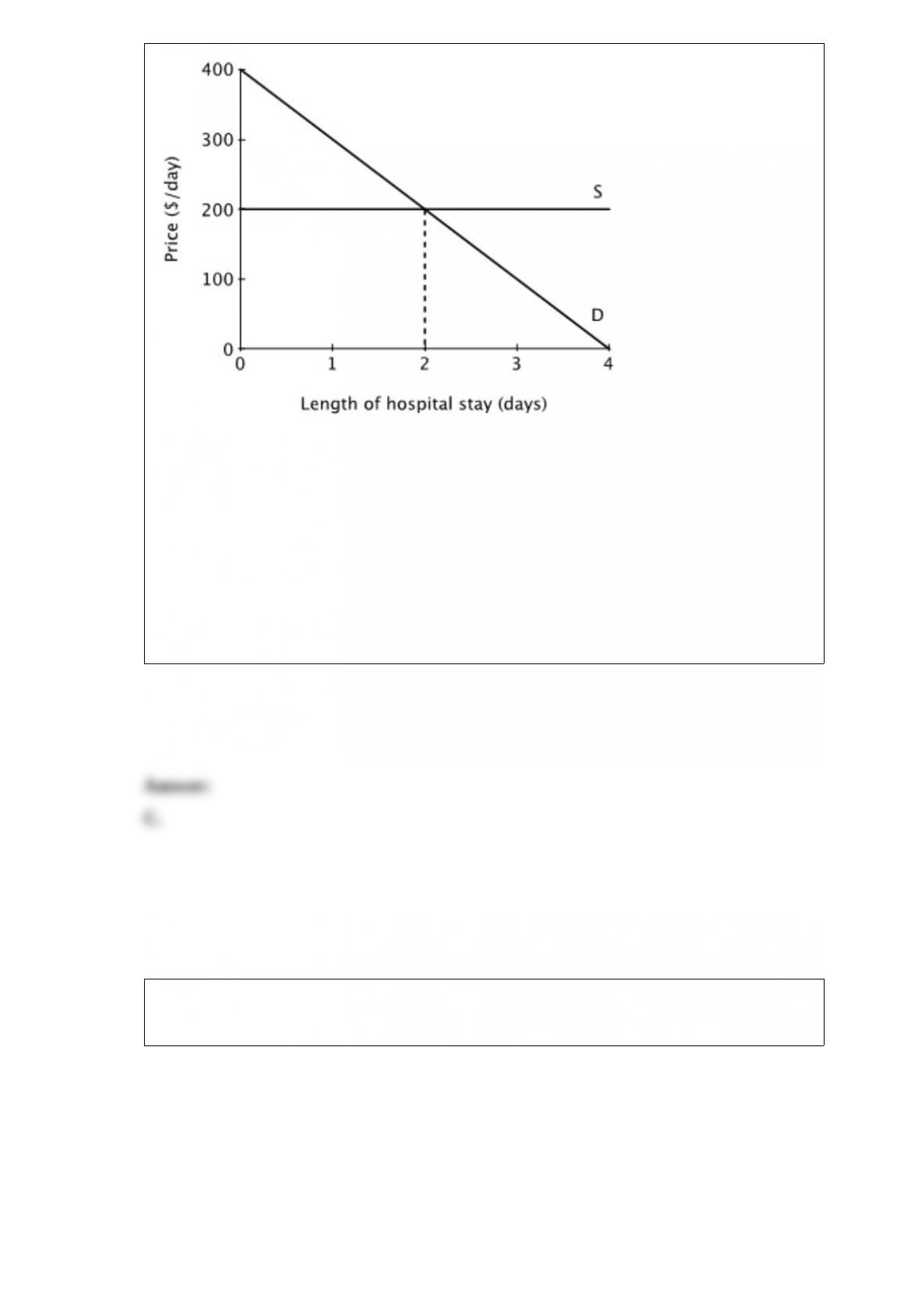
If Ava had to pay the entire marginal cost of spending a day in the hospital, then she
would choose to stay ______ day(s).
A. 0
B. 1
C. 2
D. 3
Suppose the figure below shows Luke’s demand curve for check-ups along with the
supply curve for check-ups.
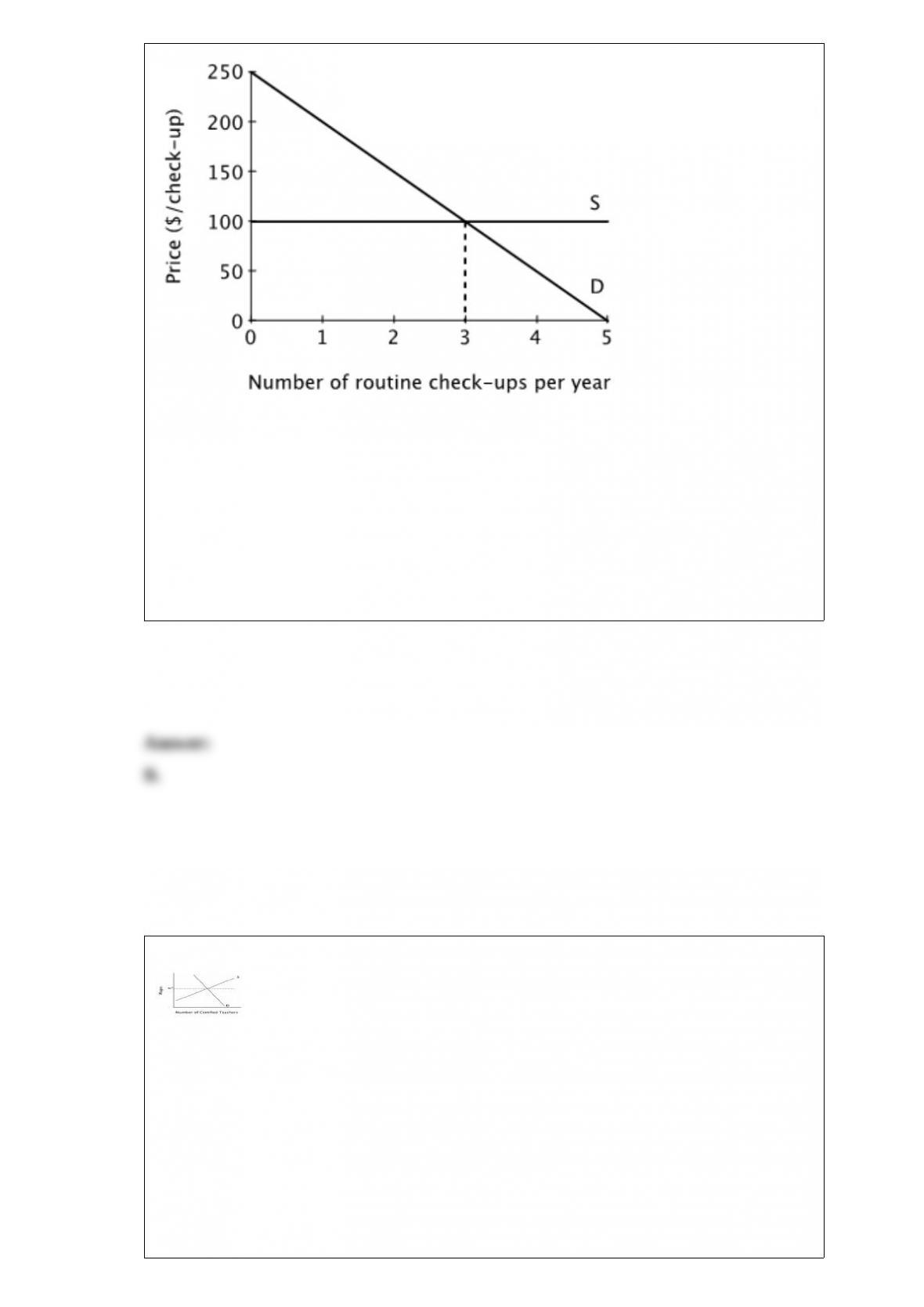
What is the marginal cost of one extra check-up?
A. $50
B. $100
C. $150
D. $200
Suppose that this graph describes the current labor market for high school teachers:
Suppose supply of labor decreases. At the new equilibrium, wages would be______ and
______ teachers would be hired.
A. higher; more
B. higher; fewer
C. lower; fewer
D. lower; more
Wealth is the same as:
A. net worth.
B. assets.
C. capital gains.
D. savings.
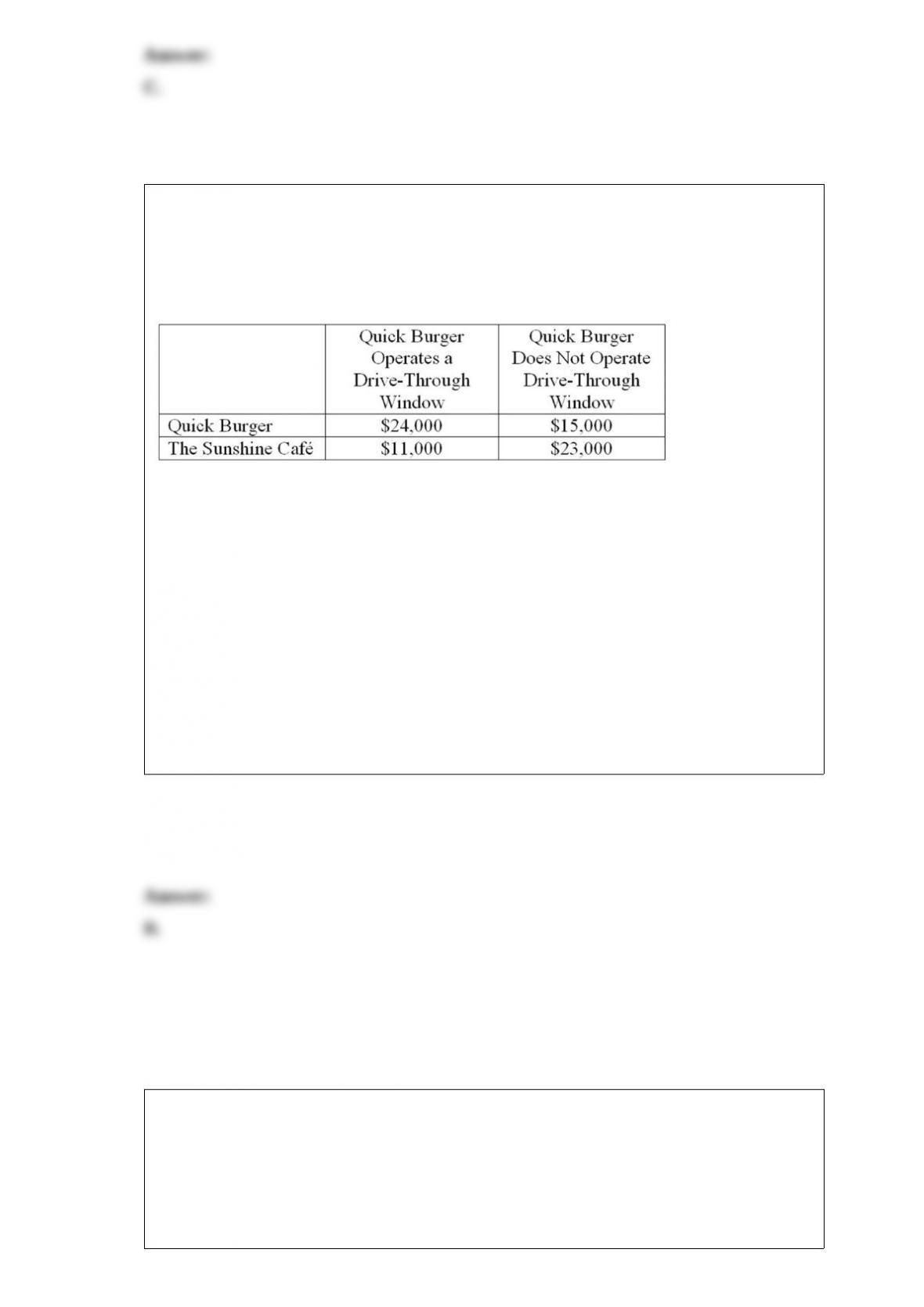
Assume that the graph below describes the current labor market for nurses in a
mid-sized city and that the labor market is perfectly competitive.
If supply shifts from S0 to S1 and demand shifts from D0 to D1, then the equilibrium
wage will ______, and the equilibrium number of nurses will ______.
A. stay the same; stay the same
B. stay the same; increase
C. increase; stay the same
D. increase; increase
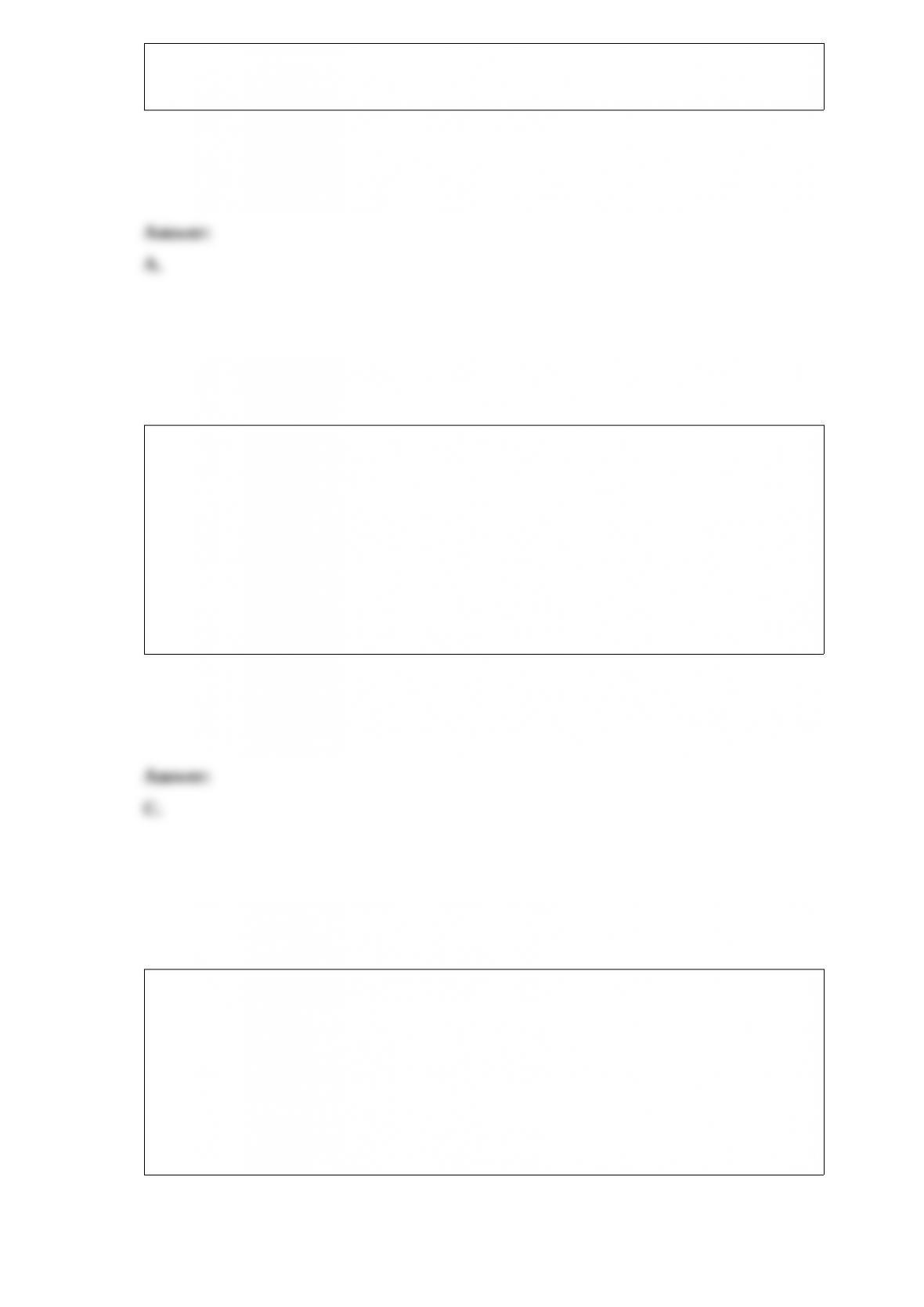
Consider two restaurants located next door to each other: Quick Burger and The
Sunshine Café. If Quick Burger opens a drive-through window, the increased traffic and
noise will bother customers seated outside at The Sunshine Café. The table below
shows the monthly payoffs to Quick Burger and The Sunshine Café when Quick Burger
does and does not operate a drive-through window.
Is it socially optimal for Quick Burger to operate a drive-through window?
A. No, because The Sunshine Café’s payoff is lower when Quick Burger operates a
drive-through window.
B. No, because total payoffs are higher when Quick Burger does not operate a
drive-through window.
C. Yes, because Quick Burger’s payoff is higher when Quick Burger operates a
drive-though window.
D. Yes, because total payoffs are higher when Quick Burger operates a drive-through
window.
The change in wealth during a period equals:
A. saving + capital gains – capital losses.
B. saving – capital gains + capital losses.
C. saving – investment + capital gains – capital losses.
D. public saving + private saving – transfers.
Starting from potential output, if consumer confidence increases and consumers decide
to spend more, then this will shift the ______ curve to the right and generate ______.
A. aggregate demand; a recessionary output gap
B. aggregate supply; a recessionary output gap
C. aggregate demand; an expansionary output gap
D. aggregate supply; an expansionary output gap
The introduction of credit cards and debit cards has ______ velocity.
A. increased
B. decreased
C. had no impact on
D. eliminated

Capital income in the U.S. equals approximately ______ of GDP.
A. one third
B. two fifths
C. one half
D. two thirds
The price of a gallon of gasoline at the pump increased by 10 percent at the same time
that the inflation rate was 5 percent. The nominal price of gasoline _____, and the real
price of gasoline _____.
A. increased; also increased
B. increased; decreased
C. increased; did not change
D. decreased; increased
Adam Smith believed that the individual pursuit of self-interest:
A. is impossible in a perfectly competitive market.
B. should usually be discouraged.
C. always leads to an efficient outcome.
D. often promotes the broader interests of society.
Government policies that are used to affect planned aggregate expenditure, with the
objective of eliminating output gaps, are called ______ policies.
A. structural
B. cyclical
C. productivity
D. stabilization

Pat earns $1,000 per week and spends $850 per week on living expenses, puts $50 in a
savings account, and buys $100 worth of shares in a stock mutual fund. Pat’s saving is
_____, and Pat’s saving rate is _____.
A. $50; 5.0%
B. $50; 5.9%
C. $100; 10%
D. $150; 15%
Player 1 and Player 2 are playing a game in which Player 1 has the first move at A in
the decision tree shown below. Once Player 1 has chosen either Up or Down, Player 2,
who can see what Player 1 has chosen, must choose Up or Down at B or C. Both
players know the payoffs at the end of each branch.
Suppose Player 1 and Player 2 enter into a binding agreement in which Player 1 agrees
to pay Player 2 a fixed amount of money to get Player 2 to play Up when it is Player 2’s
turn. How much will Player 1 have to pay Player 2 to get Player 2 to play Up?
A. $0
B. at least $10.
C. at least $20.
D. at least $50.
Samantha is lending Jack $1,000 for one year. The CPI is 1.60 at the time the loan is
made, and they both expect it to be 1.68 in one year. If Samantha and Jack agree that
Samantha should earn a 3% real return for the year, the nominal interest rate on this
loan should be ______ percent.
A. 3
B. 5
C. 8
D. 11
If the price of motel rooms increases by 10% while the prices of other goods and
services increase by 5% on average, the relative price of motel rooms has:
A. increased.
B. decreased by 5%.
C. decreased by 10%.
D. remained constant.
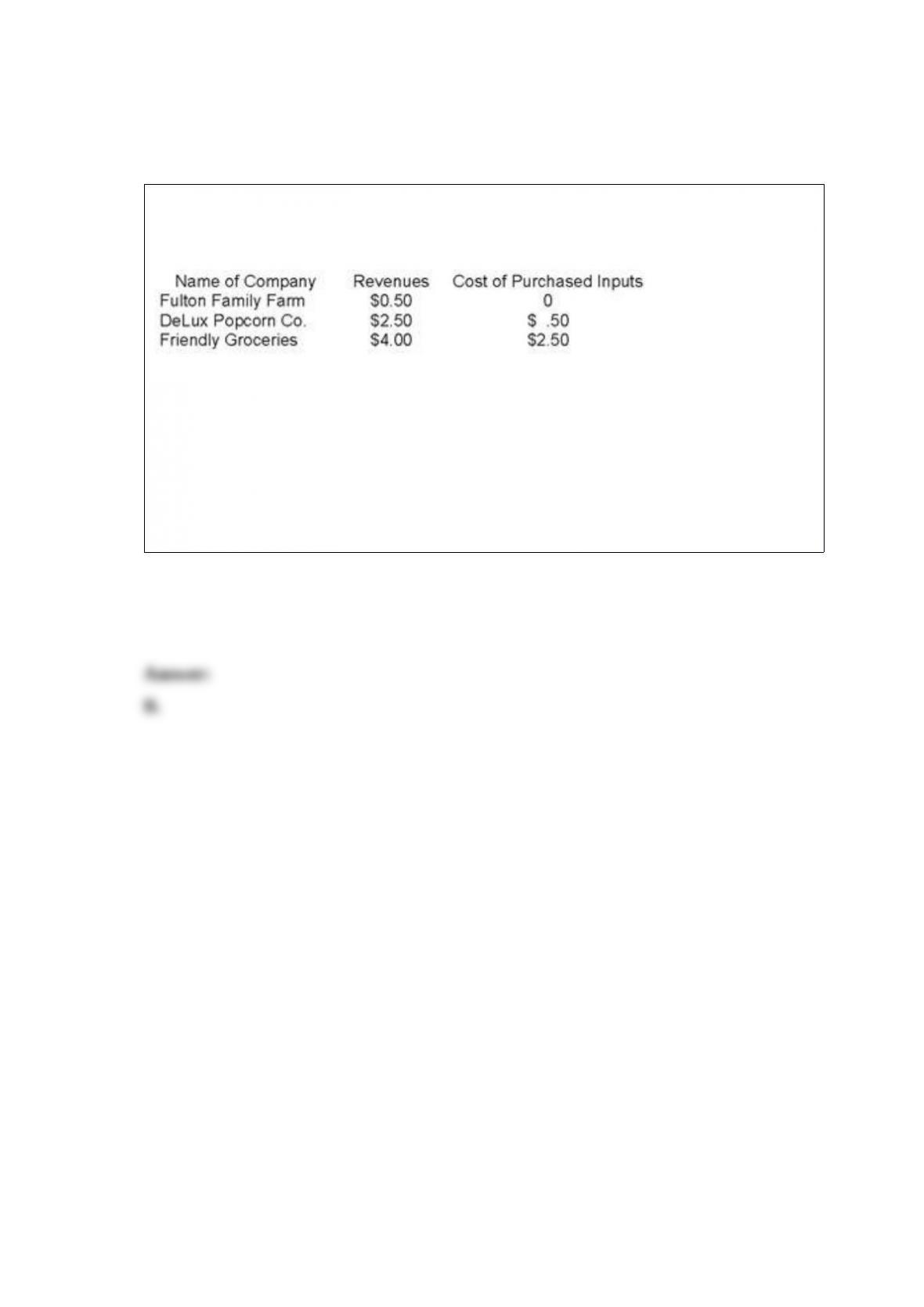
Suppose a jar of DeLux popcorn that is ultimately sold to a customer at Friendly
Groceries is produced by the following production process:
What is the value added of Fulton Family Farm?
A. $0.00
B. $0.50
C. $1.50
D. $2.50