What is the poverty rate?
A) the rate at which the number of people relative to the size of the population fall
below the poverty line
B) the percentage of the population earning an annual income below the poverty line,
according to the federal government’s definition
C) the percentage of working adults whose annual income is sufficiently low as to be
are exempt from paying income taxes
D) the percentage of households who qualify for government assistance to meet the
minimal requirement for adequate nutrition
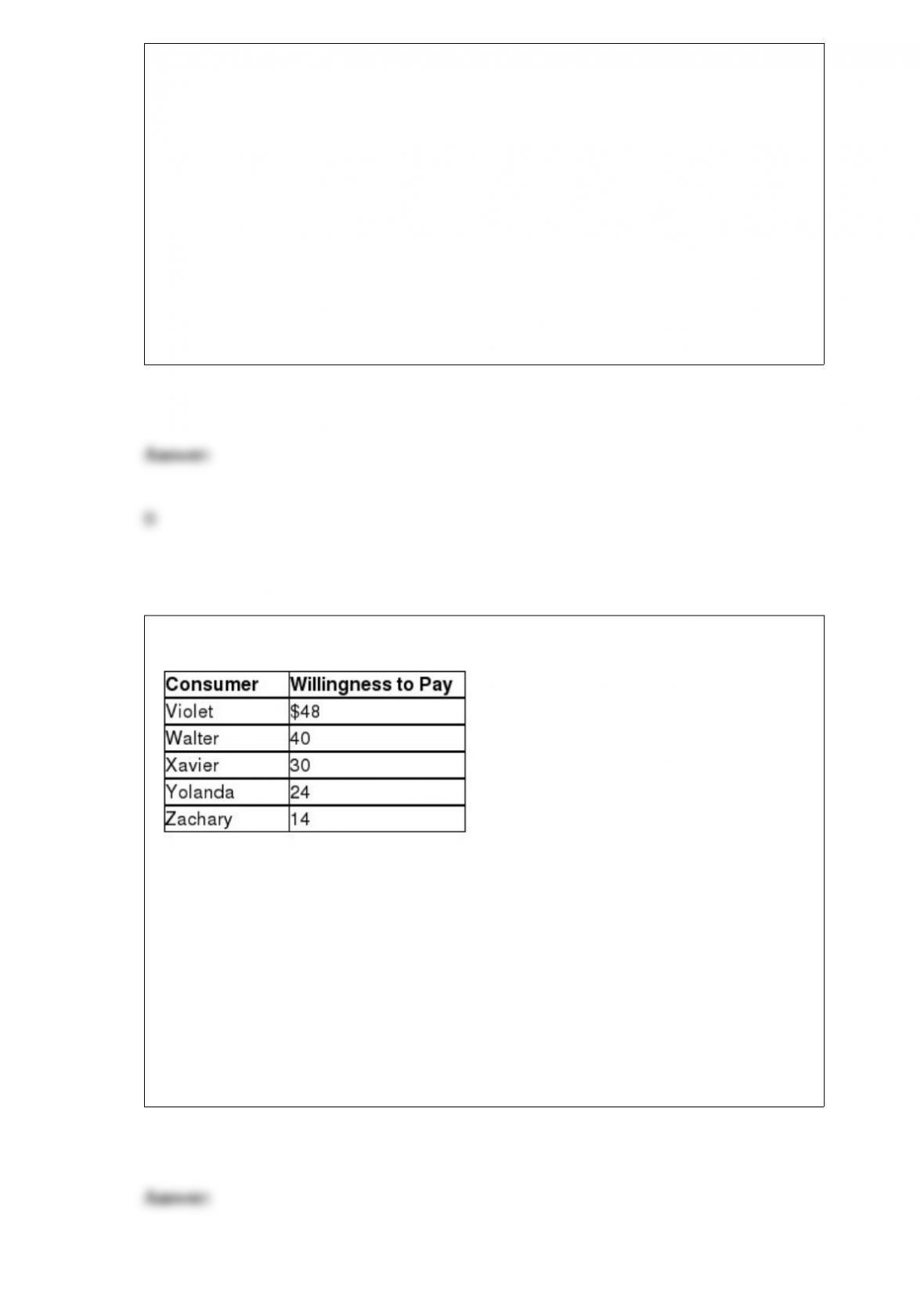
Table 4-2
The table above lists the highest prices five consumers are willing to pay for a concert
ticket. If the price of one of the tickets is $20
A) everyone will buy a ticket except for Zachary.
B) only Violet and Walter will buy tickets.
C) Xavier’s consumer surplus is $50.
D) the total consumer surplus from the purchase of tickets will be $122.
According to the signaling hypothesis,
A) signaling about job openings occurs in help wanted classified ads.
B) a college diploma signals to employers that a person has certain desirable
characteristics.
C) a slowdown in output signals to companies the need to hire more labor.
D) a high unemployment rate is a signal to the government to take some policy action.
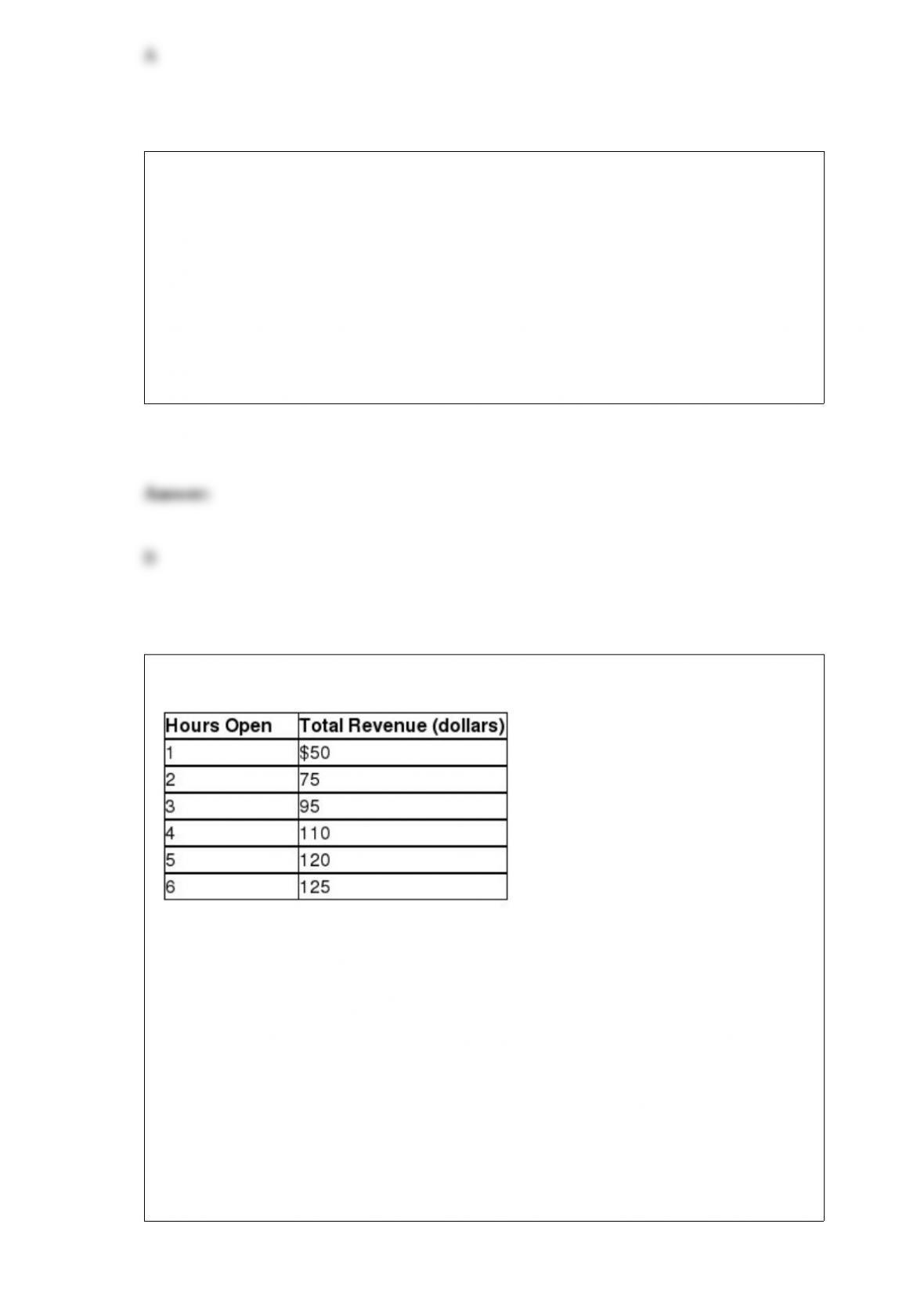
Table 1-1
Lydia runs a small nail salon in the town of New Hope. She is debating whether she
should extend her hours of operation. Lydia figures that her sales revenue will depend
on the number of hours the nail salon is open as shown in the table above. She would
have to hire a worker for those hours at a wage rate of $10 per hour. What is Lydia’s
marginal cost if she decides to stay open for two hours instead of one hour?
A) $10
B) $20
C) $25
D) $40

All of the following are considered intellectual property except
A) books.
B) films.
C) software.
D) shares fo stock.
Figure 4-16
Suppose the market is initially in equilibrium at price P1 and now the government
imposes a tax on every unit sold. Which of the following statements best describes the
impact of the tax? For demand curve D1,
A) the producer bears a smaller share of the tax burden if the supply curve is S2.
B) the producer bears a smaller share of the tax burden if the supply curve is S1.
C) the producer’s share of the tax burden is the same whether the supply curve is S1or
S2.
D) the producer bears the entire burden of the tax if the supply curve is S2 and the
consumer bears the entire burden of the tax if the supply curve is S1.
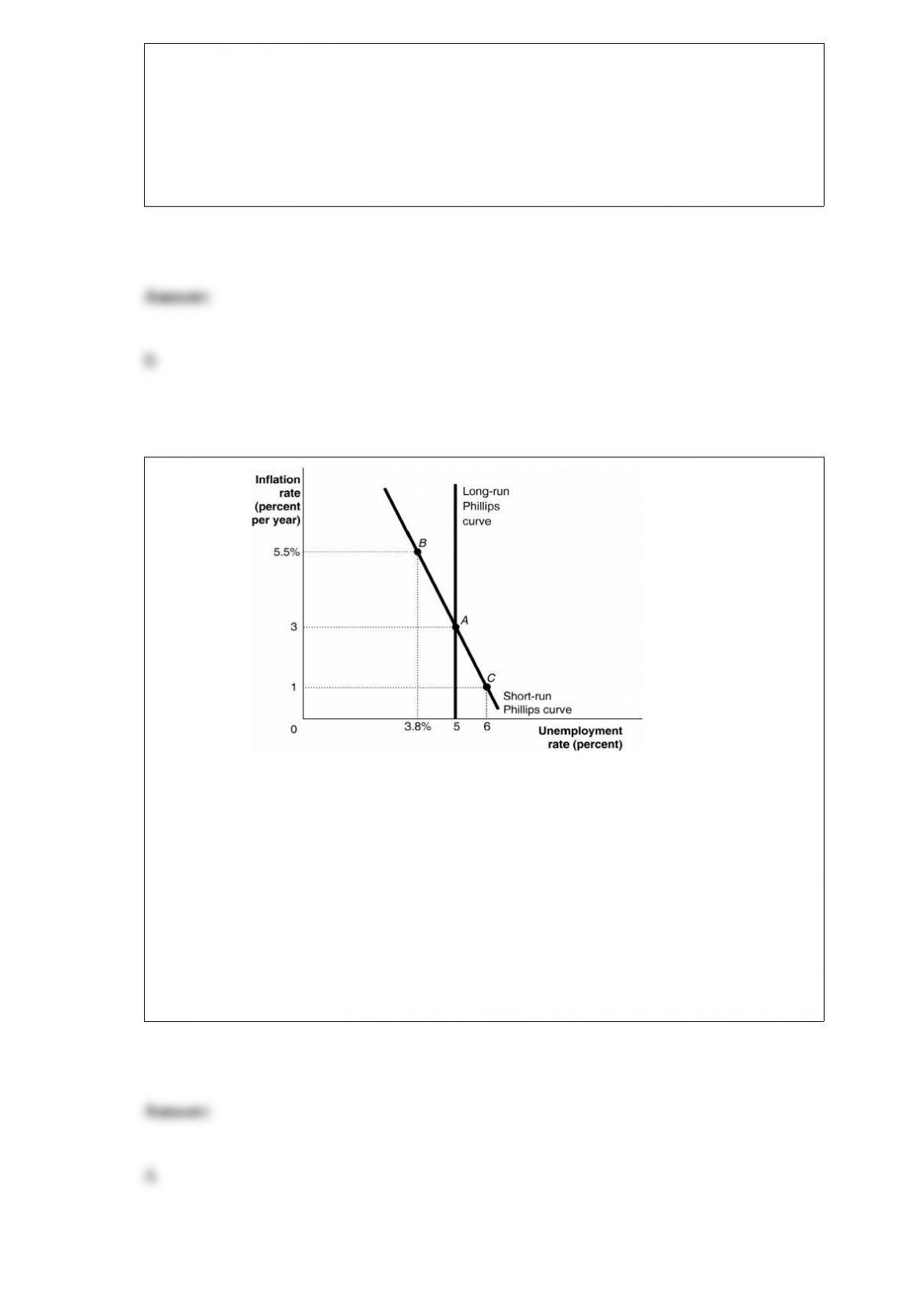
Figure 28-2
The nonaccelerating inflation rate of unemployment, or NAIRU, is associated with
which point rate in the figure above?
A) A
B) B
C) C
D) all of the above

An increase in unemployment insurance payments would, in effect, ________ the
amount of time spent searching for a job, which would increase ________
unemployment.
A) increase; cyclical
B) increase; frictional
C) decrease; cyclical
D) decrease; frictional
When you purchase a new set of spurs, you do so in the
A) resource market.
B) product market.
C) input market.
D) factor market.
For each watch that Switzerland produces, it gives up the opportunity to make 50
pounds of chocolate. Germany can produce 1 watch for every 100 pounds of chocolate
it produces. Which of the following is true about the comparative advantage between
the two countries?
A) Switzerland has the comparative advantage in chocolate.
B) Switzerland has the comparative advantage in watches.
C) Germany has the comparative advantage in watches and chocolate.
D) Germany has the comparative advantage in watches.
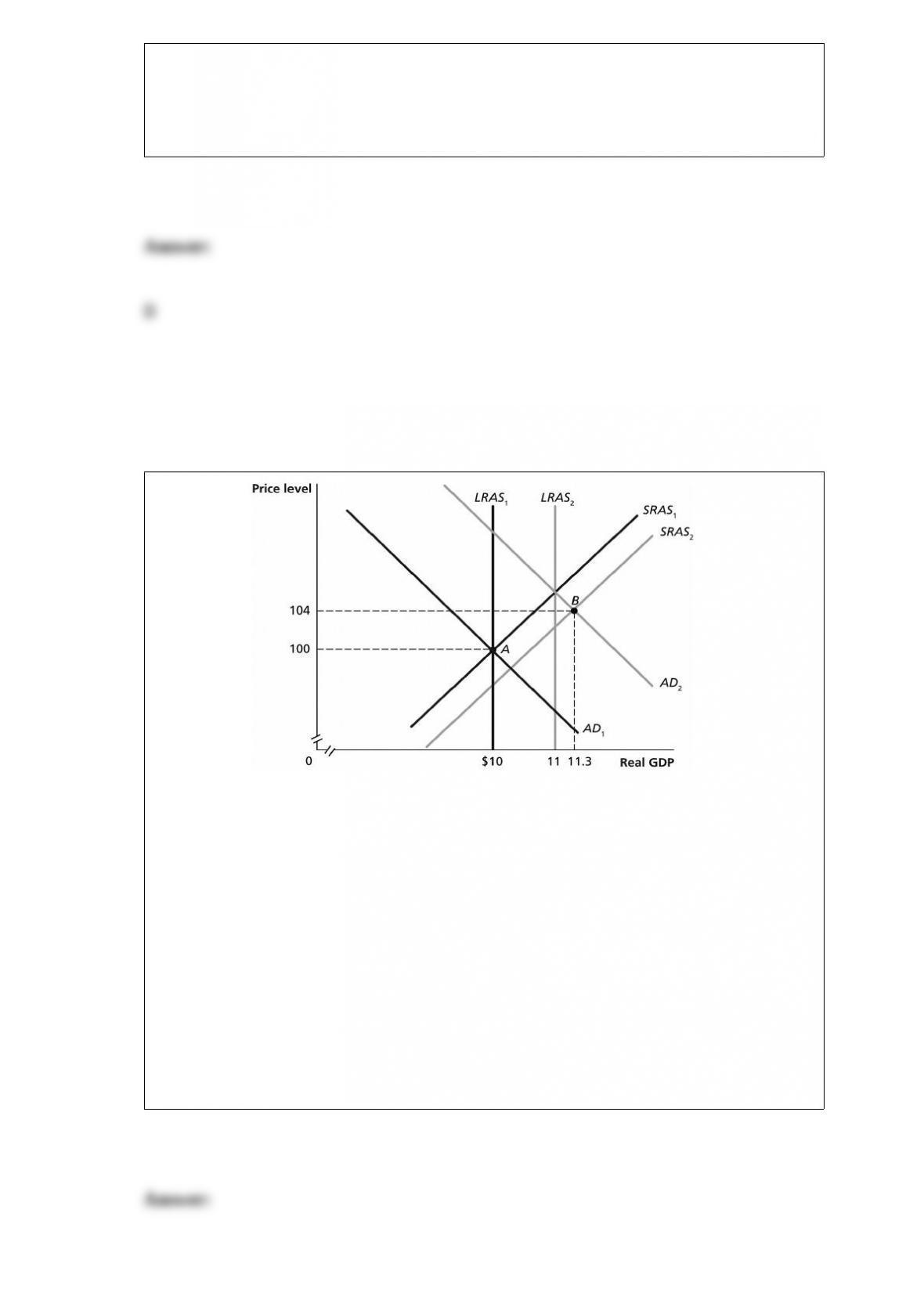
Figure 16-6
In the dynamic model of AD–AS in the figure above, if the economy is at point A in year
1 and is expected to go to point B in year 2, and no fiscal or monetary policy is pursued,
then at point B
A) the unemployment rate is very low.
B) firms are operating at below capacity.
C) the economy is below full employment.
D) income and profits are falling.
E) there is pressure on wages and prices to fall.

A monopoly firm is the only seller of a good or service that
A) has a perfectly elastic demand.
B) has no close complements.
C) does not need to be advertised.
D) does not have a close substitute.
The price elasticity of demand is equal to
A) the value of the slope of the demand curve.
B) the change in quantity demanded divided by the change in price.
C) the percentage change in price divided by the percentage change in quantity
demanded.
D) the percentage change in quantity demanded divided by the percentage change in
price.
Because of the positive externality of vaccinations, economic efficiency would be
improved

A) if fewer people were vaccinated.
B) if more people were vaccinated.
C) only if all people were vaccinated.
D) only if no people were vaccinated.
Which of the following is counted as “capital” in economics?
A) the money people have
B) the machines workers have to work with
C) the accumulated skills and training workers have
D) the wealth people have
Which of the following equations is incorrect?
A) ATC – AFC = AVC
B) AVC + AFC = ATC
C) AFC = ATC – AVC
D) ATC = AVC – AFC

What factors are most important for determining exchange rate fluctuations in the long
run?
A) relative price levels across countries
B) relative rates of productivity growth across countries
C) preferences for domestic and foreign goods across countries
D) All of the above are correct.
Which of the following statements is true?
A) In general, if a product has few substitutes it will have an elastic demand.
B) The more time that passes the more inelastic the demand for a product becomes.
C) The demand curve for a necessity is more elastic than the demand curve for a luxury.
D) The more narrowly we define a market, the more elastic the demand for a product
will be.

Table 19-18
A very simple economy produces three goods: cameras, legal services, and books. The
quantities produced and their corresponding prices for 2008 and 2013 are shown in the
table above. What is real GDP in 2013, using 2008 as the base year?
A) $28,885
B) $11,790
C) $11,200
D) $10,275
In his book The Wealth of Nations, Adam Smith employed the example of a pin factory
in order to explain what economic concept?
A) the relationship between the marginal and average product of labor
B) the law of diminishing returns
C) why no firm would want to hire so many workers as to experience a negative
marginal product of labor
D) the division of labor