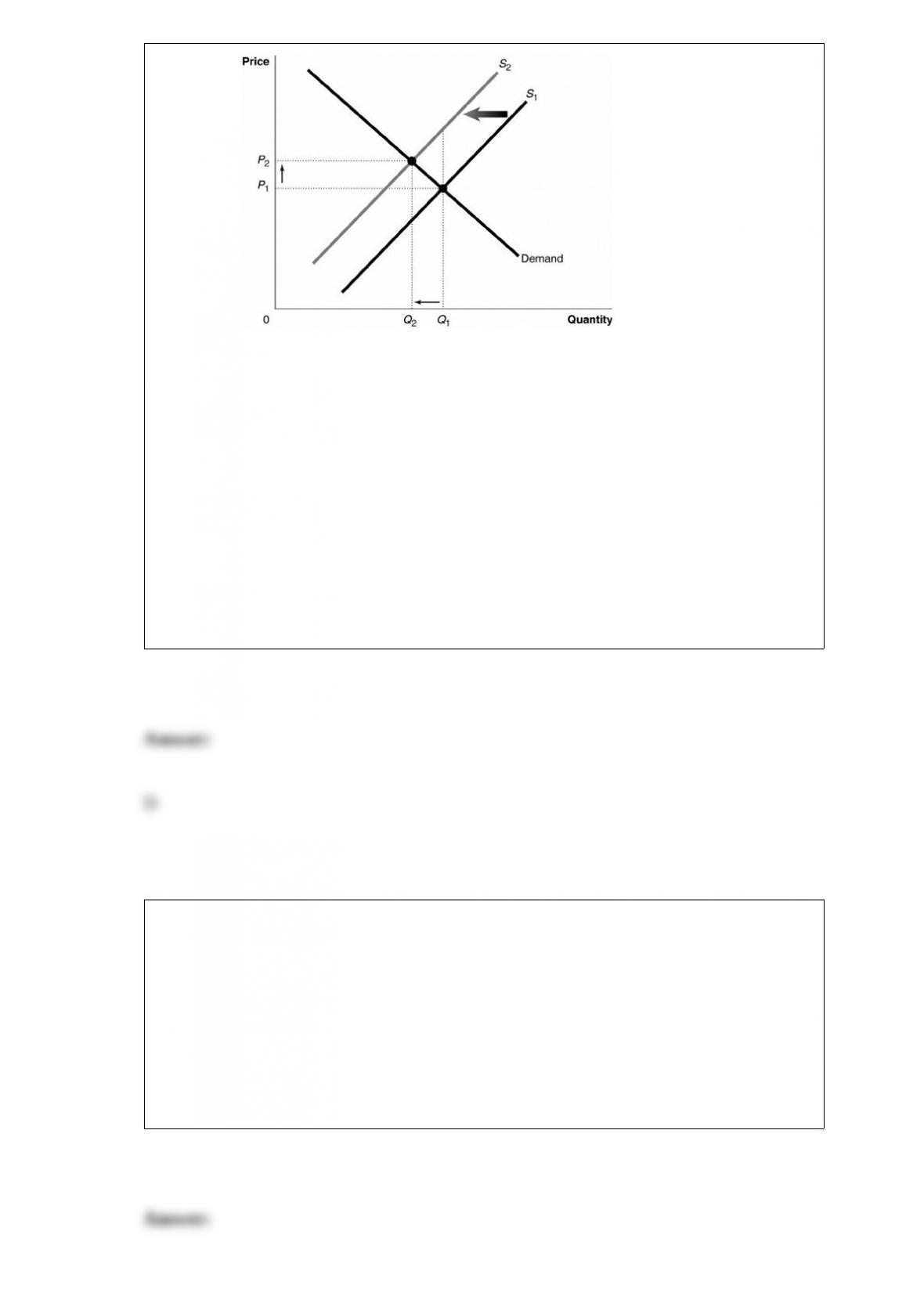
Figure 5-1 Figure 5-1 shows a
market with an externality. The current market equilibrium output of Q1 is not the
economically efficient output. The economically efficient output is Q2. If, because of an
externality, the economically efficient output is Q2 and not the current equilibrium
output of Q1, what does S1 represent?
A) the market supply curve reflecting external cost
B) the market supply curve reflecting implicit cost
C) the market supply curve reflecting social cost
D) the market supply curve reflecting private cost
The currency adopted by most countries in Western Europe is referred to as the
A) euro.
B) Eurodollar.
C) yen.
D) pound.

Which of the following is an example of the way the financial markets in the United
States can encourage technological progress more efficiently than other countries?
A) Even when entrepreneurs cannot secure sufficient funding for projects from banks,
venture capital firms may be willing to lend money.
B) The level of legal protection for investors in the United States is relatively low.
C) Because the financial market in the United States is so large, the quantity of trading
in corporate stocks and bonds makes those investments less liquid.
D) Banks in the United States are more willing to take on risk because the government
guarantees each bank cannot lose more than $100,000 on any given loan that defaults.
What do Sony, Microsoft, and Nintendo have in common?
A) Each achieved a dominant position in its industry because it owned a key input in
the production of its product.
B) The industry in which each firm competes is an oligopoly because of
government-imposed barriers to entry.
C) Each company was founded in the same state.
D) The profitability of each firm depends on its interactions with other firms.
A consequence of increasing marginal costs of producing laptop computers in the
United States is
A) the United States will import laptop computers from countries that don’t experience
increasing marginal costs.
B) the United States will stop short of complete specialization in the production of
laptop computers.
C) the United States will not export laptop computers.
D) the United States will likely impose trade restrictions on imported laptop computers.
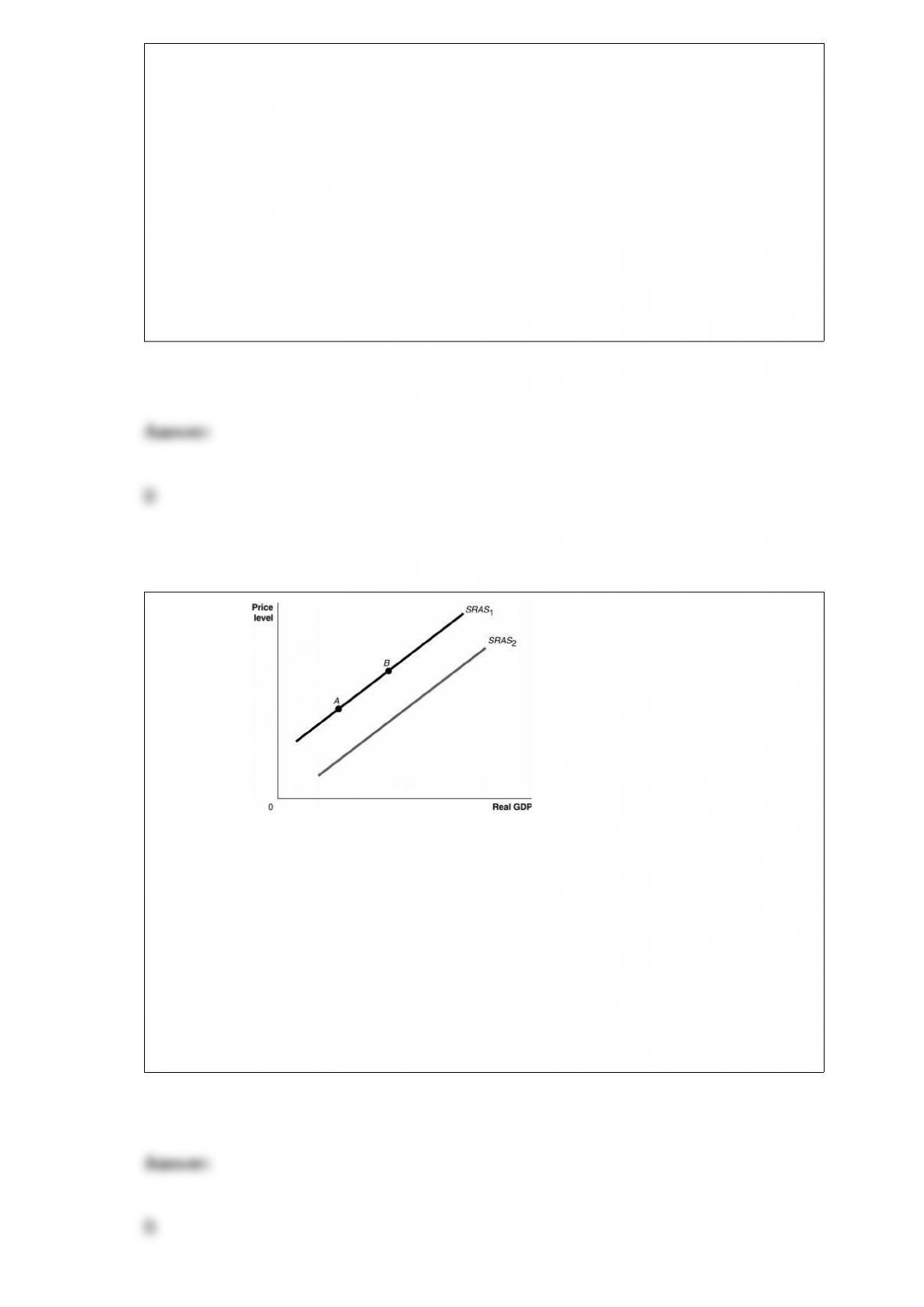
Figure 13-2
Ceteris paribus, an increase in workers and firms adjusting to having previously
underestimated the price level would be represented by a movement from
A) SRAS1 to SRAS2.
B) SRAS2 to SRAS1.
C) point A to point B.
D) point B to point A.

Tax cuts on business income increase aggregate demand by increasing
A) business investment spending.
B) consumption spending.
C) government spending.
D) wage rates.
An increase in the price level will
A) shift the aggregate demand curve to the left.
B) shift the aggregate demand curve to the right.
C) move the economy up along a stationary aggregate demand curve.
D) move the economy down along a stationary aggregate demand curve.
Why is it necessary for all economic systems to not only provide people with goods and
services, but also restrict them from getting as much of these goods and services as they
wish?
A) Failure to do this could reduce the efficiency of the system by producing some
goods and services that are not as highly valued as others.

B) Failure to do this could lead to an inequitable allocation of goods and services
produced.
C) Failure to do this could lead to drastic shortages of good and services.
D) Failure to do this could reduces efficiency and leads to an inequitable allocation of
output.
If the amount you owe on your house is greater than the price of the house, you have
A) no value to your house.
B) a mortgage rate that is too high.
C) negative equity in your house.
D) a reverse mortgage on your house.
Table 2-10
Table 2-10 shows the output per day of two pet groomers, Tammi and Horace. They can
either devote their time to grooming dogs or bathing cats.
What is Tammi’s opportunity cost of grooming a dog?

A) half a bathed cat
B) two bathed cats
C) two-thirds of a bathed cat
D) one and a half bathed cats
The short-run Phillips curve will shift if there is
A) an increase in the unemployment rate.
B) an increase in inflation that is unanticipated.
C) a decrease in inflation that is unanticipated.
D) a change in inflation expectations.