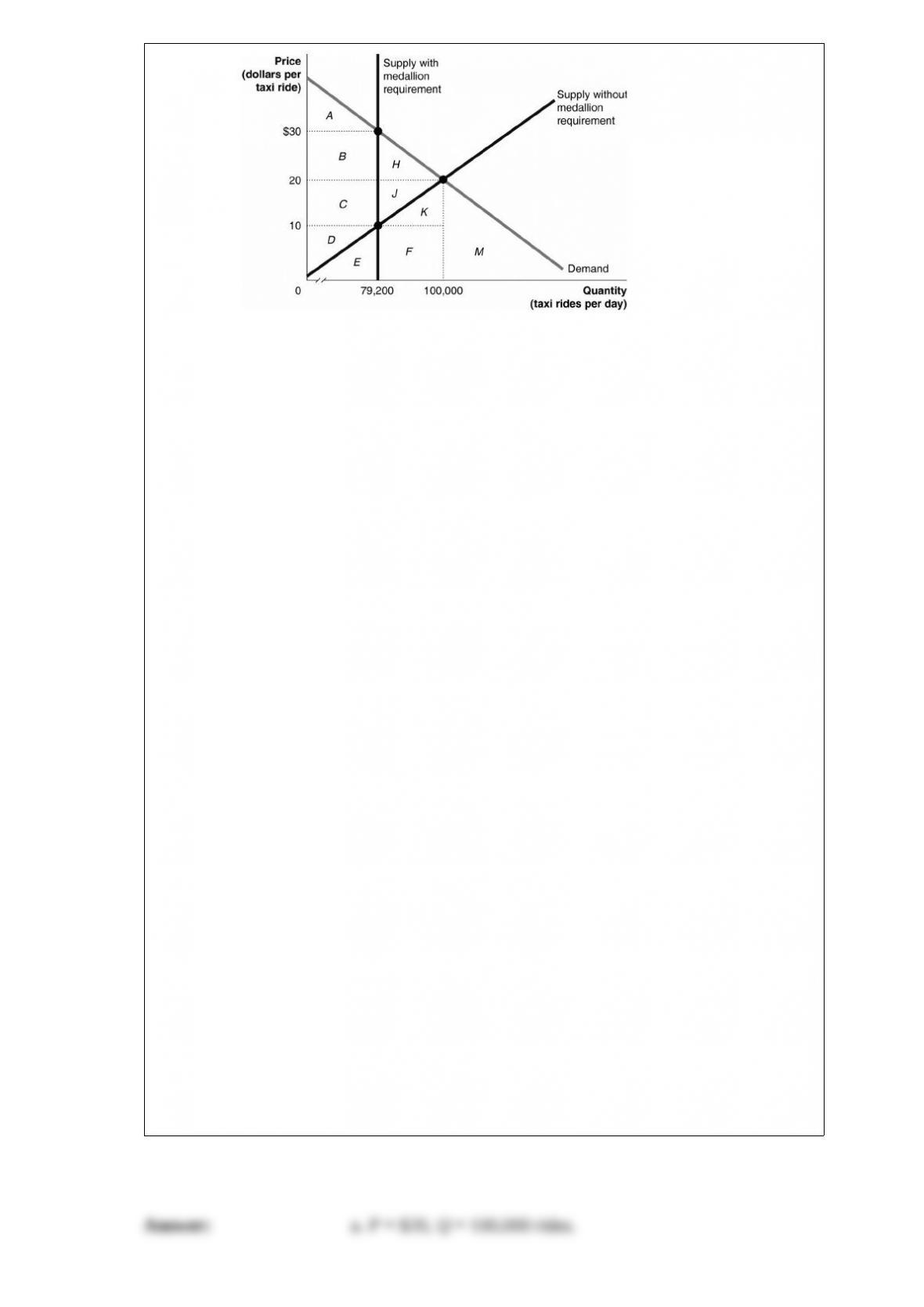
Figure 4-8 Figure 4-8 shows the
market for taxi rides. The following question(s) are based on this figure.
To legally drive a taxicab in New York City, you must have a medallion issued by the
city government. Assume that only 13,200 medallions have been issued. Let’s also
assume this puts an absolute limit on the number of taxi rides that can be supplied in
New York City on any day, because no one breaks the law by driving a taxi without a
medallion. Assume as well that each taxi provides 6 trips per day. In that case, the
quantity supplied of taxi rides is 79,200 (or 6 rides per taxi 13,200 taxis). This is shown
in the diagram with a vertical line at this quantity. Assume that there are no government
controls on the prices that drivers can charge for rides.
a. What would the equilibrium price and quantity be in this market if there were no
medallion requirement?
b. If there were no medallion requirement, indicate the area that represents consumer
surplus.
c. If there were no medallion requirement, indicate the area that represents producer
surplus.
d. If there were no medallion requirement, indicate the area that represents economic
surplus.
e. What are the price and quantity with the medallion requirement?
f. With a medallion requirement in place, what area represents consumer surplus?
g. With a medallion requirement in place, what area represents producer surplus?
h. With a medallion requirement in place, what area represents the deadweight loss?
i. Based on your answers to parts (c) and (g), are taxicab drivers better off with the
medallion requirement for taxicabs than without?
j. Are consumers better off with or without the medallion requirement for taxicabs?
As the economy nears the end of an expansion, which of the following do we typically
see?
A) rising firm profits
B) rising levels of firm investment
C) rising interest rates
D) falling wages relative to output prices
A critical function of the government in facilitating the operation of a market economy
is
A) producing goods and services for low income households.
B) setting up and enforcing private property rights.
C) ensuring an equal distribution of income to all citizens.
D) controlling the market prices of food items.
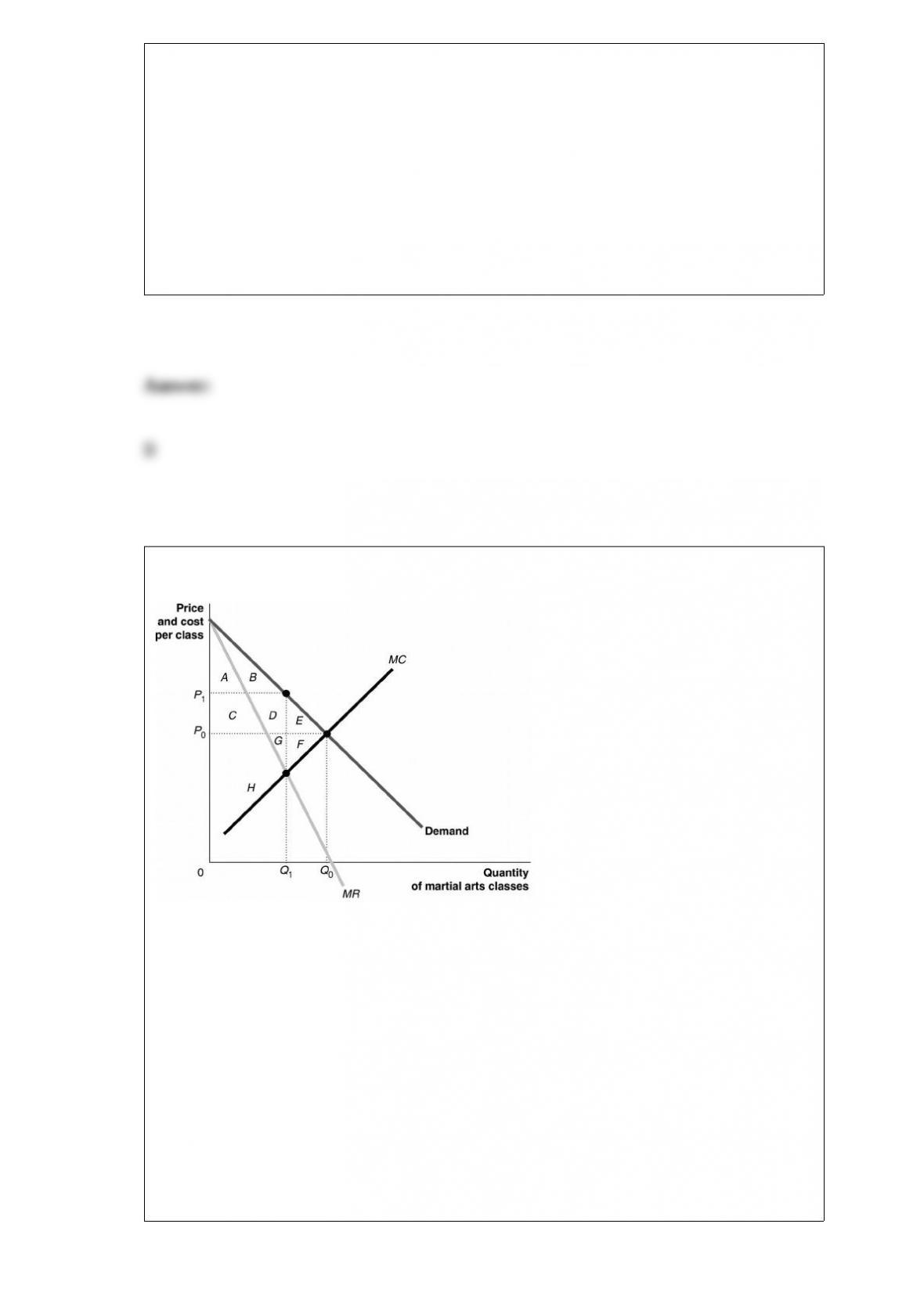
Figure 16-6
Watanabe Sensei operates the only
martial arts school in Hartfield. For simplicity, assume that consumers have identical
demand curves and that Sensei knows what this demand curve is. Figure 16-6 shows
this demand curve. If Sensei acts as a monopolist, his profit-maximizing price is
________ and the number of classes sold is ________.
A) P0; Q0
B) P0; Q1
C) P1; Q0
D) P1; Q1
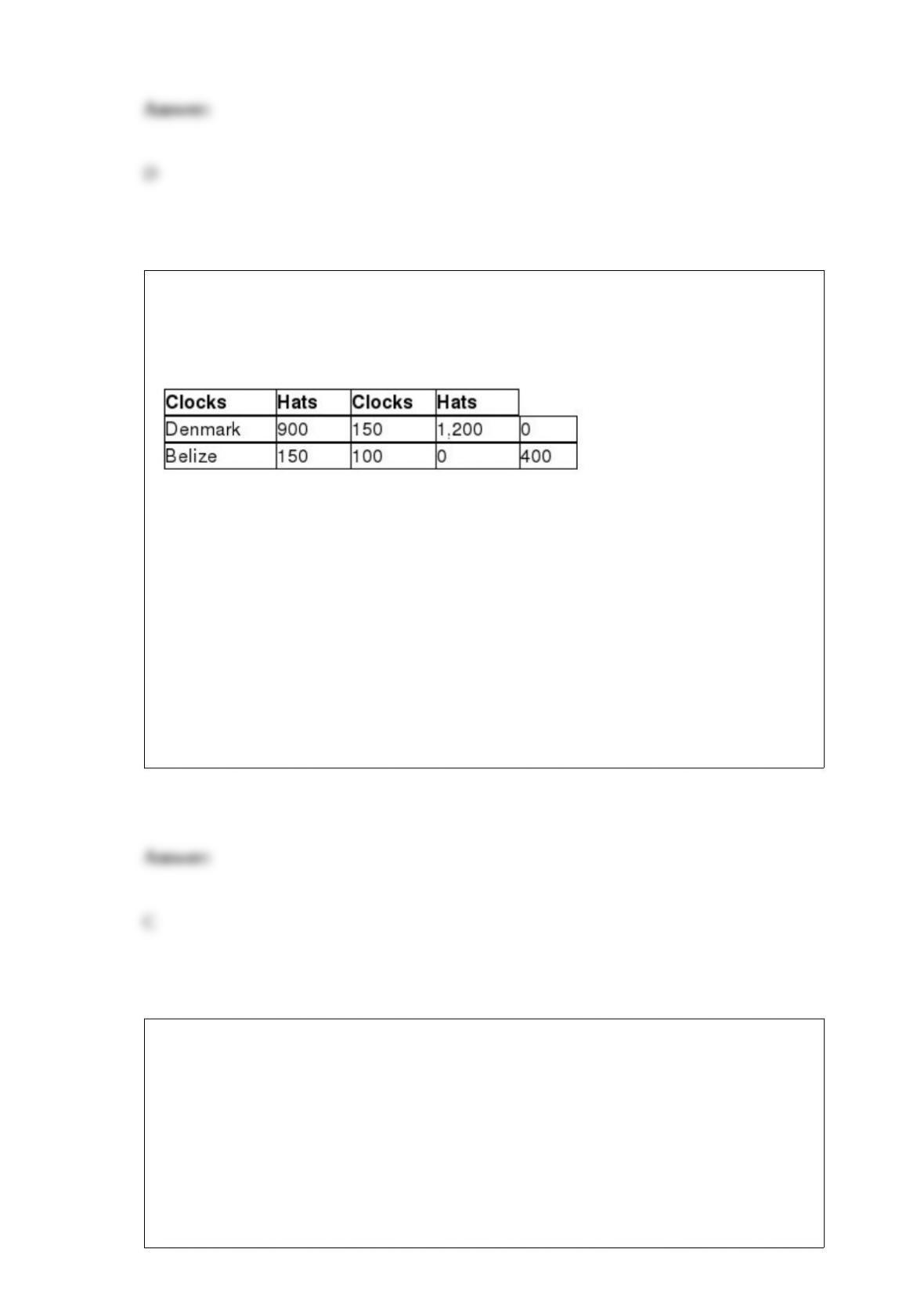
Table 9-6
Production and
Consumption Production
Without Trade With Trade
Denmark and Belize can produce both clocks and hats. Table 9-6 shows the production
and consumption quantities without trade, and the production numbers with trade. If the
actual terms of trade are 1 hat for 1.8 clocks and 150 hats are traded, how many clocks
will Denmark consume?
A) 270
B) 900
C) 930
D) 1,200
The cities of Francistown and Nalady are five miles apart. Francistown enacts a rent
control
law that puts a ceiling on rents well below their equilibrium market value. Predict the
impact of this law on the competitive equilibrium rent in Nalady, which does not have a
rent control law.
a. Illustrate your answer with one demand and supply graph for the apartment market in
Francistown and another demand and supply graph for the apartment marketing Nalady.
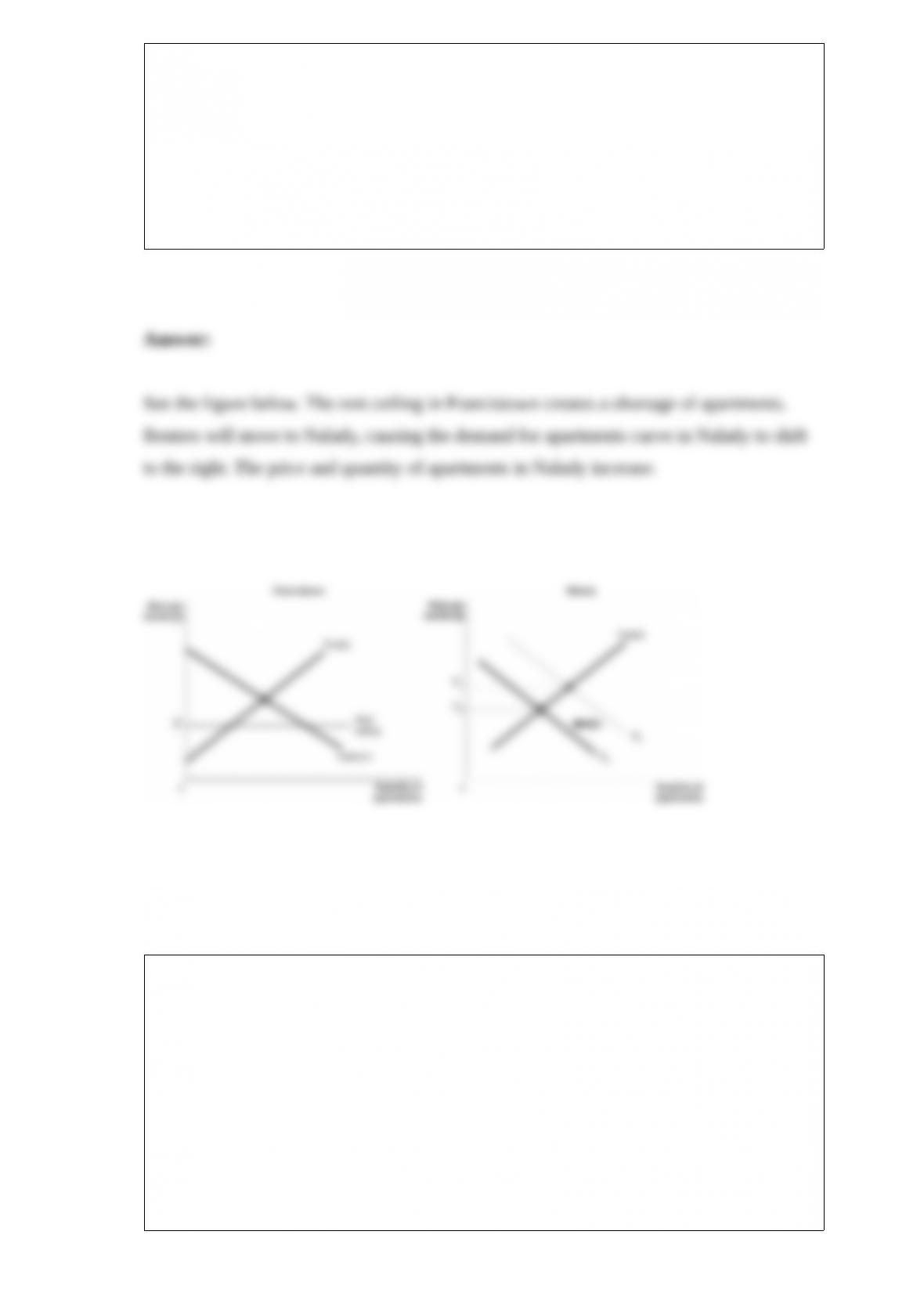
b. Make sure that your graphs clearly show (1) the initial equilibrium before the rent
control in both markets and (2) what happens after the imposition of rent control.
c. Clearly show any shifts in the demand or supply curves, and the movement along the
curves for each market.
d. Label your graphs fully and provide written explanation for your graphs.
Suppose an excise tax of $0.75 is imposed on every pack of cigarettes sold and sellers
are responsible for paying this tax. How would the imposition of the tax be illustrated in
a graph?
A) The supply curve for cigarettes would shift to the left by $0.75.
B) The supply curve for cigarettes would shift to the left by less than $0.75.
C) The supply curve for cigarettes would shift to the left by more than $0.75.
D) The supply curve for cigarettes would shift to the right by $0.75.

Molly Sharp is producing a documentary about the plight of the six-toed ferrets of Sri
Lanka. Molly has spent $125,000 of her own money on this project and the
documentary is now complete. Molly just found out that no studio is willing to release
her documentary and she must now shop it to cable television networks, where she
knows she will not be able to recoup her investment. Which of the following statements
regarding Molly Sharp’s documentary is true?
A) She should not try to have her documentary aired on television because she cannot
recoup her $125,000 investment.
B) Since the $125,000 is a sunk cost, she should still try to have her documentary aired
on television even though she will not see a profit.
C) The $125,000 is a variable cost, so will not be incurred if she chooses not to have her
documentary aired.
D) The $125,000 investment is an economic cost, and she will still make an accounting
profit even if the television network willing to air her documentary pays her less than
$125,000.
A reduction in the rate of inflation is referred to as
A) unemployment.
B) recession.
C) disinflation.
D) deflation.

Firms that face downward-sloping demand curves for their output in the product market
are called
A) price takers.
B) price dictators.
C) monopolists.
D) price makers.
According to a study by economists Raymond Fisman and Edward Miguel, as the
________ increases, so does the number of parking violations by the country’s United
Nations delegates.
A) level of corruption in a country
B) population of a country
C) per capita income of a country
D) rate of investment in a country

________ is defined as the value of a household’s assets minus the value of its
liabilities.
A) Household income
B) Household wealth
C) Personal household consumption
D) Planned household investment
If workers in nuclear power plants underestimate the true risk of their jobs
A) employers will pay compensating differential to compensate employees fully for the
risk they have assumed.
B) safety legislation will not make workers better off.
C) the wages of these workers will not be high enough to compensate them fully for the
risk they have assumed.
D) the supply of workers in this occupation will exceed demand.
Table 9-6

Mateo and Celeste produce custom saddles and spurs. Table 9-6 lists the number of
saddles and pairs of spurs Mateo and Celeste can each produce in one month. Select the
statement that accurately interprets the data in the table.
A) Celeste has a comparative advantage in making saddles.
B) Mateo has an absolute advantage in making spurs.
C) Mateo has a comparative advantage in making saddles.
D) Mateo has a comparative advantage in making saddles and making spurs.
Which of the following would result in a higher absolute value of the price elasticity of
demand for a product?
A) A wide variety of substitutes are available for the good.
B) The time period under consideration is short.
C) The good is a necessity.
D) The expenditure on the good is small relative to one’s budget.
Public schools in the United States get most of their operating funds from
A) government production and subsidies.
B) income taxes on corporate profits.
C) local property taxes.

D) tariffs collected on imported goods.
In an effort to discover whether or not workers understand inflation, economist Robert
Shiller conducted a survey. When asked about the effect of general inflation on their
wages or salary, the most popular response coming from workers was:
A) “My wages usually catch up to rising prices within a year.”
B) “The price increase will create extra profit for my employer…. There will be no
effect on my pay.”
C) “My wages have always increased by more than the rate of inflation.”
D) None of the above is correct.