
An increase in the demand for a good will lead to a
a. rightward shift of the MRP of labor curve.
b. leftward shift of the MRP of labor curve.
c. movement up and along a given MRP of labor curve.
d. movement down and along a given MRP of labor curve.
The price elasticity of demand would most likely be highest for which of the following
goods?
a. food (in general)
b. cars (in general)
c. clothing (in general)
d. Ford cars
e. a, b, or c
Refer to Exhibit 27-8. The marginal physical product of the second and third units of
factor X, respectively [blanks (A) and (B)], are,
Exhibit 27-8
(1)

Quantity of
Factor X (2)
Quantity of
Output (3)
Product
Price (4)
Marginal
Physical Product (5)
Marginal
Revenue Product
0 20 $24
1 28 $24 (C)
2 34 $24 (A) (D)
3 37 $24 (B) (E)
4 38 $24 (F)
a. 19 and 20.
b. 4.58 and 4.07.
c. 10 and 11.
d. 6 and 3.
e. none of the above
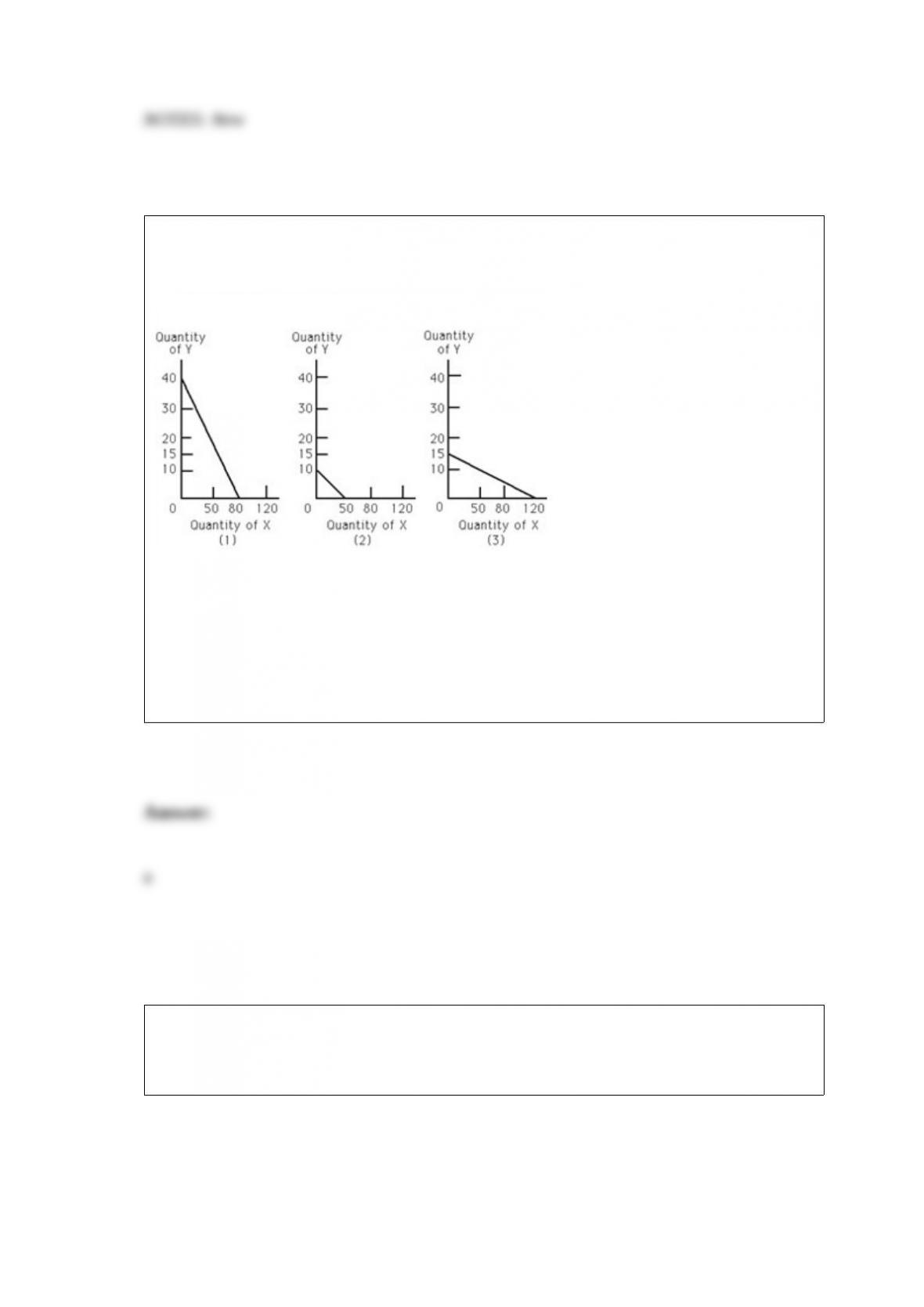
Refer to Exhibit 21-7. The relative price of X in terms of Y is the greatest on graph
Exhibit 21-7
a. (1).
b. (2).
c. (3).
d. This cannot be determined based on the information provided
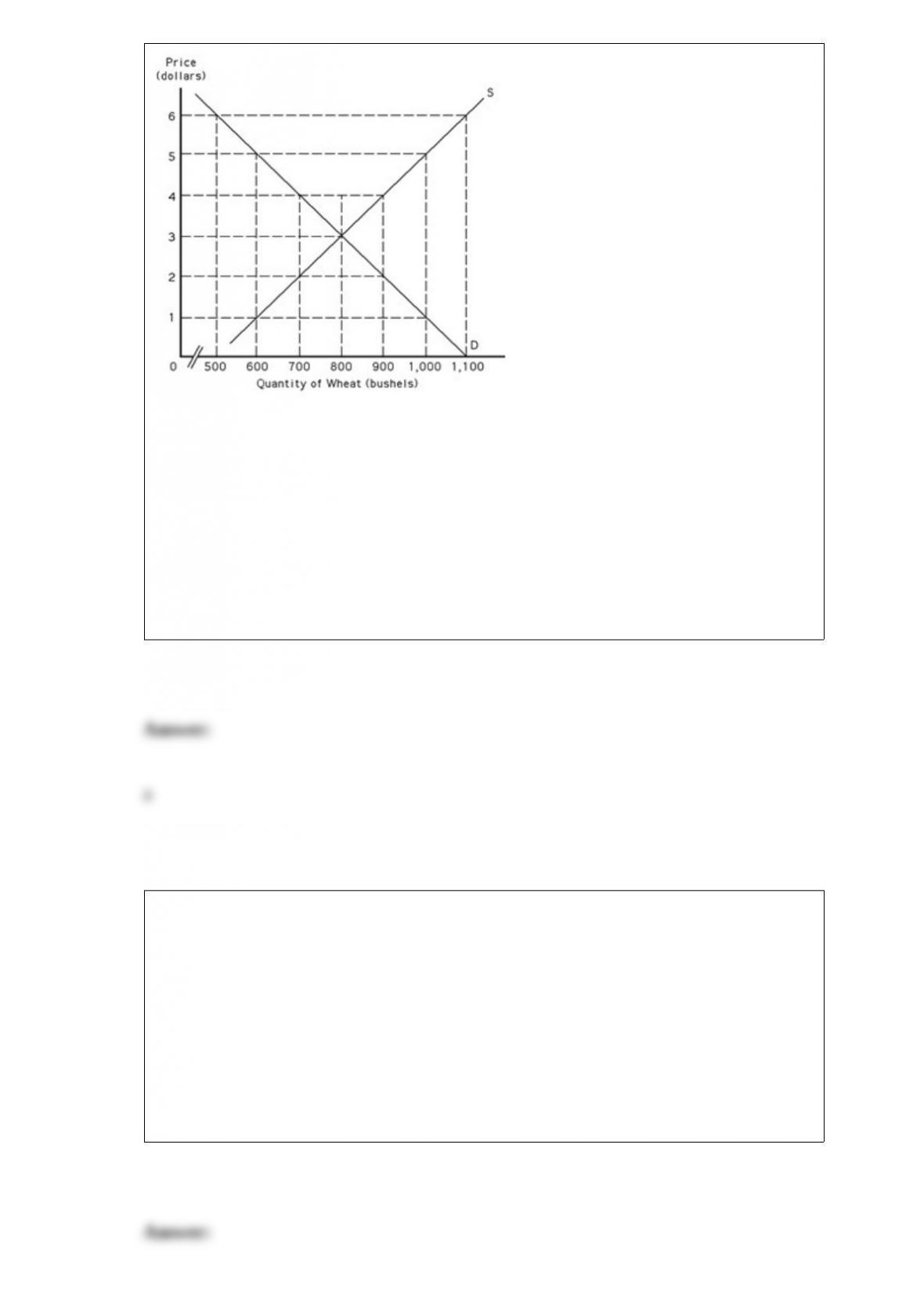
Refer to Exhibit 39-4. If the government sets a target price at $5 per bushel, consumers
will end up paying __________ for the quantity of wheat they purchase.
Exhibit 39-4
a. $1,000
b. $2,000
c. $3,000
d. $4,000
e. $5,000
Elite colleges and universities use standardized test scores (such as SAT and ACT
scores) and high school grades as
a. a means to raise student utility.
b. a means to turn a university education from a “good” to a “bad.”
c. rationing devices.
d. none of the above

Which of the following is not a realistic scenario faced by government regulators of a
natural monopoly?
a. The monopolist may have an incentive to prevent the regulators from learning the
true costs of production.
b. The monopolist may want to give the regulators information on the costs of
production but may not have it to give.
c. The regulators may not care whether the monopolist gives them the true costs of
production.
d. Any cost information that is given to the regulators may be outdated by the time the
regulators act on it.
e. All of the above are realistic.
Suppose that for a given good demand decreases and supply increases at the same
time.If demand decreases by a greater amount than supply increases, then equilibrium
price __________ and equilibrium quantity __________ for that good.
a. rises; rises
b. rises; falls
c. falls; rises
d. falls; falls

If a negative externality exists, __________ for the socially optimal output to be
reached.
a. supply needs to increase
b. supply needs to decrease
c. demand needs to increase
d. b and c
e. none of the above
If a monopsonist is hiring factors, it will choose to hire that quantity of labor at which
__________ and pay a wage rate that is __________.
a. MR = MC; equal to labor’s MRP
b. the supply curve of labor intersects the demand curve for labor; equal to labor’s MRP
c. MRP = MFC; equal to labor’s MRP
d. MRP = MFC; less than labor’s MRP
e. the supply curve of labor intersects the demand curve for labor; less than MFC

The coupon rate is equal to the annual coupon payment
a. divided by the face value of the bond.
b. divided by the price paid for the bond.
c. multiplied by the price paid for the bond.
d. divided by the current market value of the bond.
Suppose the government sets a price floor that is above the equilibrium price for a given
good. It can be said that at the price floor,
a. although sellers are selling all of the product that they desire at this price, the
consumers are not able to buy all that they desire.
b. although consumers are purchasing all of the product that they desire at this price, the
sellers are not selling all that they desire.
c. both sellers and buyers are satisfied with the quantity that is being exchanged.
d. both sellers and buyers are exchanging the equilibrium quantity of this good.
e. b and d
Studies show that, in the United States,
a. price elasticity of demand for agricultural products has hovered around 3.2 for many
years.
b. as real income has been increasing, the per-capita demand for food has been
decreasing.
c. as real income has been increasing, the per-capita demand for food has been
increasing by much more.
d. none of the above
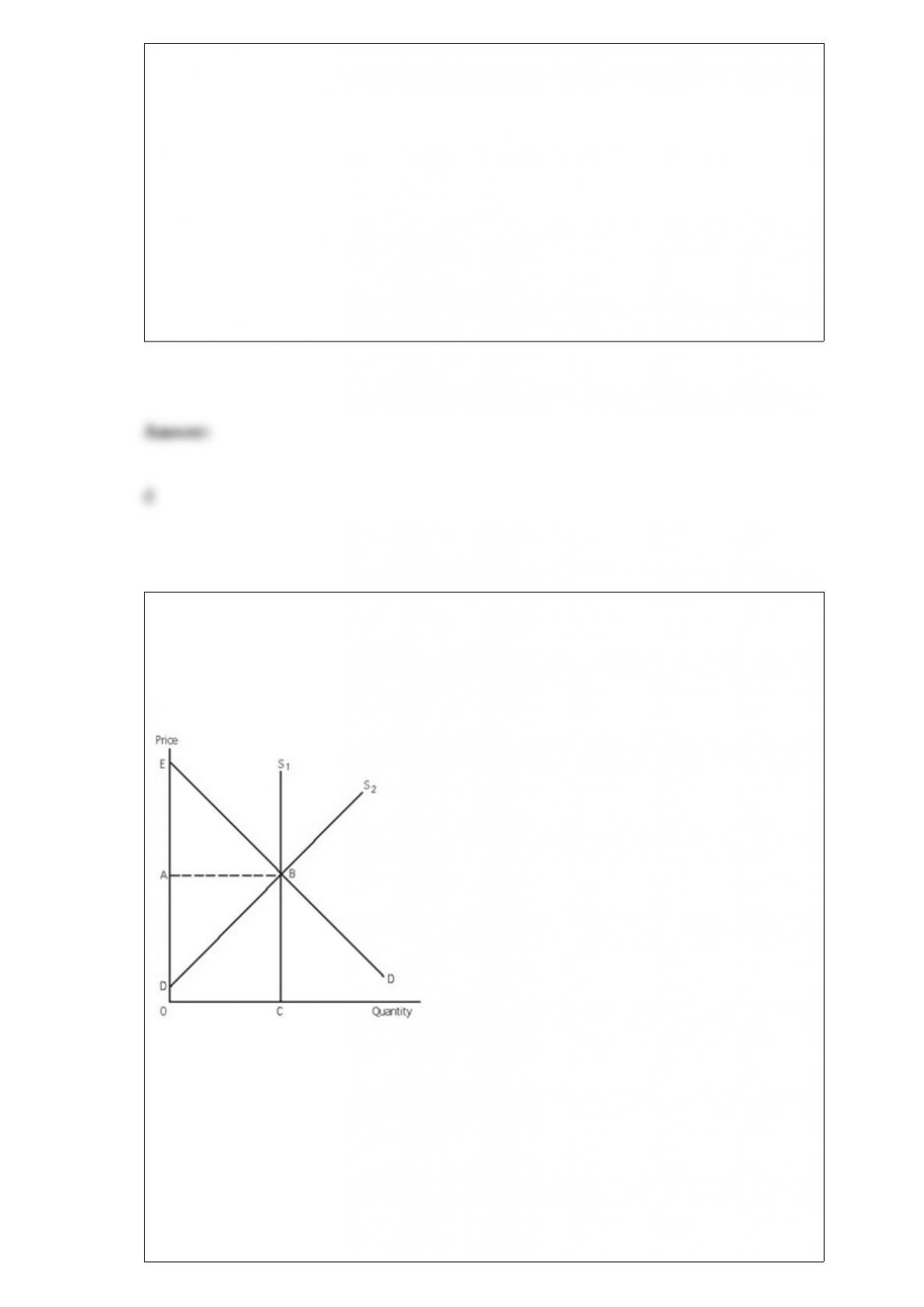
Refer to Exhibit 30-1. Suppose the supply curve is S2 and the price is A. Economic rent
equals area
Exhibit 30-1
a. EBD.
b. ABD.
c. ODBC.
d. EBA.
e. none of the above
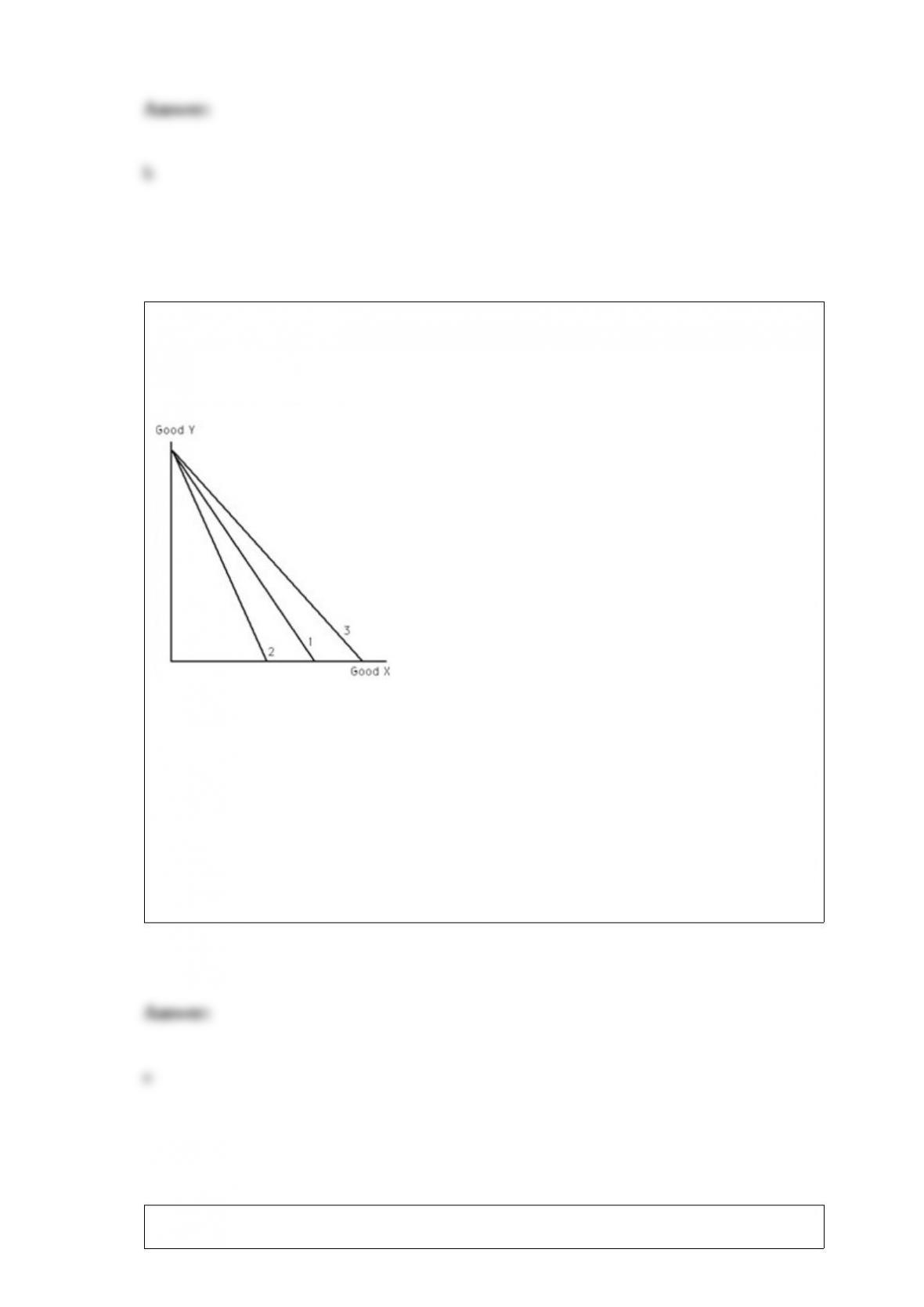
Refer to Exhibit 21-8. If the price of good X rises, the budget constraint moves from
budget constraint
Exhibit 21-8
a. 1 to 2.
b. 2 to 3.
c. 3 to 1.
d. 1 to 3.
e. a or c
An increase in productivity in the agricultural sector in conjunction with an income

inelastic demand for farm products
a. causes prices to fall.
b. causes prices to rise.
c. causes prices to remain constant.
d. may cause prices to rise, fall, or remain the same, depending upon the relative shifts
in the supply and demand curves.