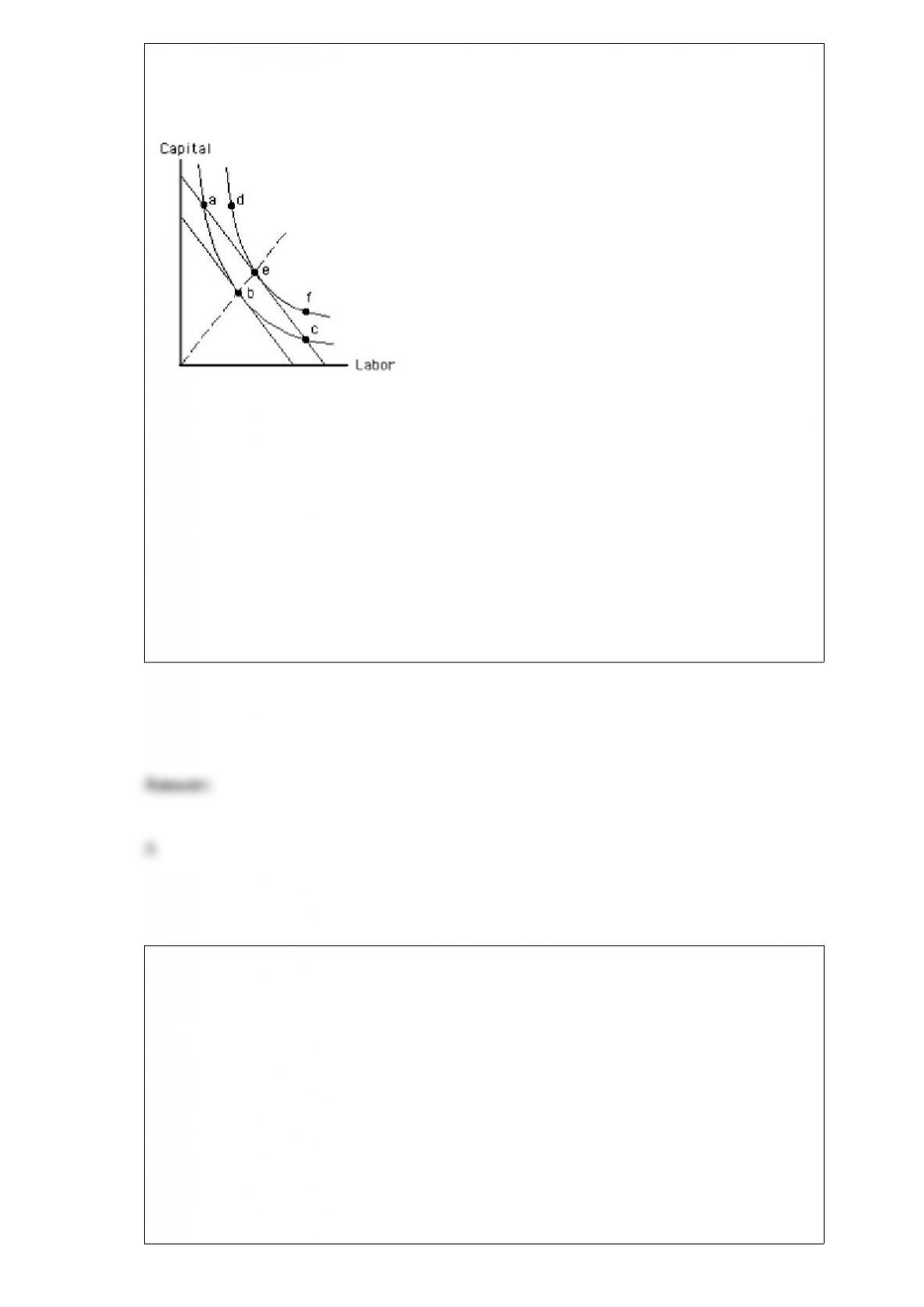
Exhibit 7-17
In Exhibit 7-17, the firm would prefer producing at point b to
a. points a and c only because b represents the same output at lower cost
b. points a and c only because b represents higher output at the same cost
c. points a and c only because b represents higher output at lower cost
d. point e only because b represents lower cost
e. all other points on the graph
A family on a trip budgets $800 for restaurant meals and fast food. If the price of a
fast-food meal for the whole family is $20, how many meals can the family buy if they
don’t eat at restaurants?
a. 8
b. 15
c. 20
d. 40

e. 160
For each watch Denmark produces, it gives up the opportunity to make 50 pounds of
cheese. Germany can produce one watch for every 100 pounds of cheese it produces.
Which of the following is true concerning production possibilities curves in both
countries?
a. The slopes of the countries’ production possibilities frontiers cannot be determined
unless the number of workers in each country is known.
b. The countries’ production possibilities frontiers have the usual bowed-out shape.
c. On a graph with cheese on the vertical axis, the slope of Germany’s production
possibilities frontier is everywhere equal to 1/100.
d. On a graph with cheese on the vertical axis, the slope of Germany’s production
possibilities frontier is steeper than Denmark’s.
e. On a graph with cheese on the vertical axis, the slope of Germany’s production
possibilities frontier is everywhere equal to negative 1/100.
In the short run, how will a profit-maximizing monopolist react if its marginal cost
suddenly increases? It will
a. lower price to expand revenue possibilities
b. restrict output to extract a higher price from customers
c. maintain the current price if profit is still positive
d. increase plant size to lower marginal cost
e. decrease plant size to lower marginal cost
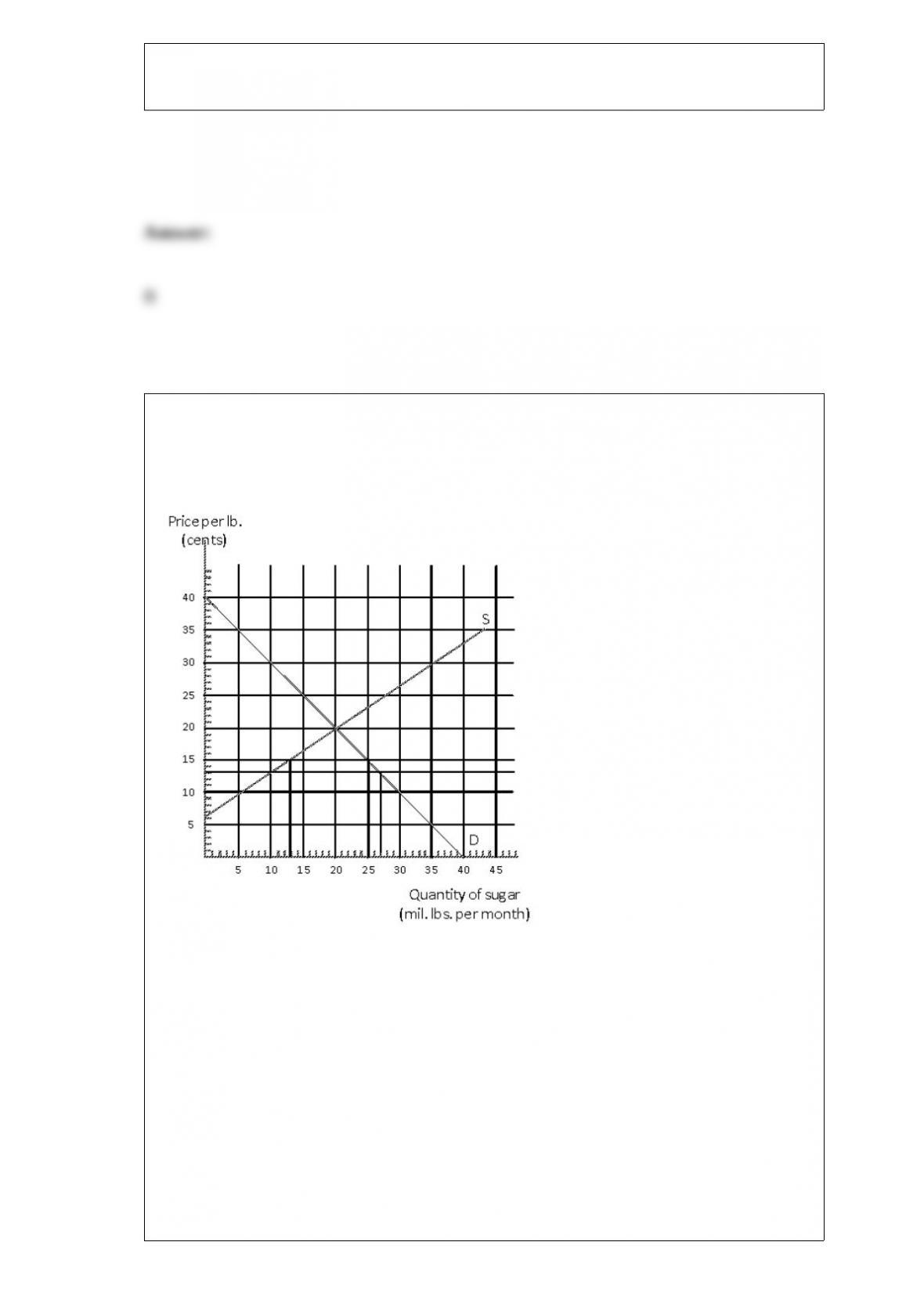
Exhibit 19-10
In Exhibit 19-10 the domestic demand for sugar is represented by D and the domestic
supply is represented by S and the world price of sugar is $.13 per pound with a
domestic tariff of $.02 per pound of sugar. This tariff will increase producer surplus by
a. $50,000
b. $170,000
c. $230,000
d. $300,000

e. $360,000
The opportunity cost of a resource
a. includes both explicit and implicit cost
b. includes explicit cost only
c. includes implicit cost only
d. is equal to the market price of the resource
e. is not related to the market price of the resource
Exhibit 4-2
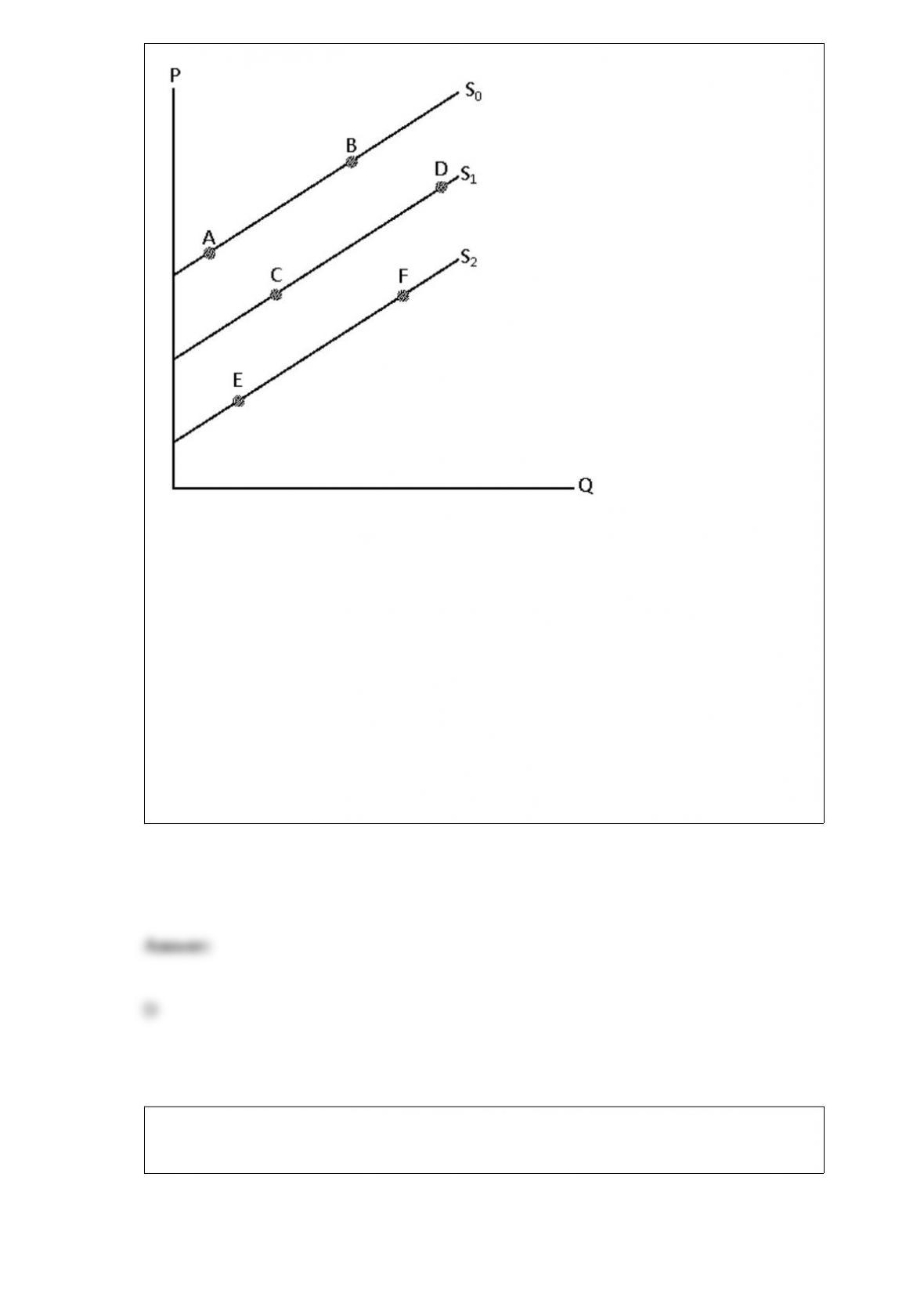
Consider Exhibit 4-2 which shows 3 supply curves for milk. Which of the following
would shift the supply curve for milk from S1 to S2?
a. an increase in the price cattle feed
b. the expectation of a lower price in the near future
c. an increase in the price of milk
d. a decrease in the price of beef
e. a decrease in the number of dairy farmers
Exhibit 10-15
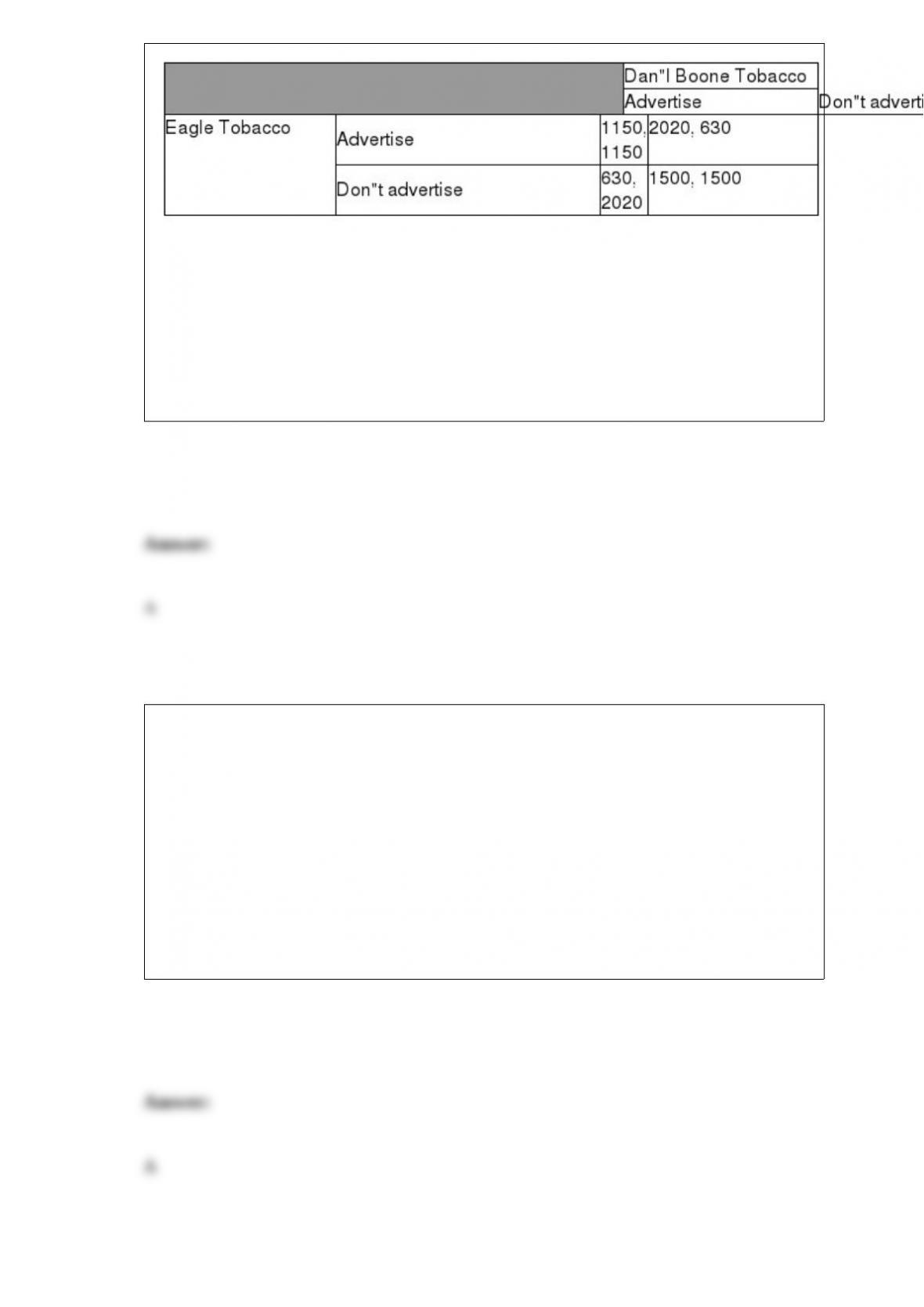
Exhibit 10-15 depicts the payoff matrix facing Eagle Tobacco and Dan”l Boone
Tobacco with respect to their decisions to advertise or not. Eagle Tobacco and Dan”l
Boone Tobacco have the same dominant strategy.
a. True
b. False
The demand for foreign currency in the United States
a. increases as the level of imports increases
b. increases as the level of exports increases
c. decreases with the lowering of the inflation rate abroad
d. decreases as foreign interest rates rise
e. is unaffected by U.S. demand for goods and services abroad

The horizontal (labor) intercept of Manny Motors’ isocost line is 3 million, and the
vertical (robot) intercept is 5 million. Which of the following best describes what would
happen to the isocost line if Manny Motors’ operating budget decreased?
a. It would shift rightward to a parallel position.
b. It would shift rightward to a nonparallel position.
c. It would shift leftward to a parallel position.
d. It would shift leftward to a nonparallel position.
e. Nothing.
When marginal product is decreasing, marginal cost is
a. less than zero
b. equal to zero
c. constant
d. decreasing
e. increasing
If an electricians’ union is successful in its attempts to restrict entry into that craft, it

will shift
a. the supply curve of electricians to the right
b. the supply curve of electricians to the left
c. the demand curve for electricians to the right
d. the demand curve for electricians to the left
e. both the supply and demand curves for electricians
An increase in the demand for automobiles will increase the demand for labor used to
produce the automobiles due to a(n)
a. increase in the marginal revenue product of labor
b. decrease in the marginal revenue product of labor
c. increase in the marginal revenue product of automobiles
d. decrease in the marginal revenue product of automobiles
e. decrease in the price of automobiles
For the typical consumer, present consumption is

a. preferred to future consumption
b. not preferred to future consumption
c. preferred to future saving
d. not preferred to future saving
e. financed out of present saving
A TV actor used to be a teacher. Aside from the salary, he likes both jobs equally well.
If he can earn $50,000 as a teacher and $300,000 as an actor, what are his economic
rent and opportunity costs as an actor?
a. Economic rent is $250,000; opportunity costs are $50,000.
b. Economic rent is $50,000; opportunity costs are $250,000.
c. Economic rent is $50,000; opportunity costs are $300,000.
d. Economic rent is $300,000; opportunity costs are $50,000.
e. Economic rent is $300,000; opportunity costs are $350,000.
Production and exchange depend on an reliable infrastructure of
a. transportation
b. communication
c. sanitation

d. electricity
e. All of the answers are correct
When market exchange occurs voluntarily in a competitive market
a. choice incurs no opportunity cost
b. the sum of consumer surplus and producer surplus is maximized
c. both consumer surplus and producer surplus are eliminated
d. buyers benefit at the expense of producers
e. the exchange confers no net benefit to the participants
Featherbedding ultimately results in greater worker efficiency and therefore greater
productivity and higher wages.
a. True
b. False

Which of the following is an example of resources that are substitutes?
a. steel and glass used in auto manufacturing
b. glue and wood used in furniture manufacturing
c. buttons and cotton used in shirt manufacturing
d. leather and rubber used in basketball manufacturing
e. eggs and flour used in baking
As the price of foreign exchange decreases relative to the U.S. dollar,
a. U.S. products become cheaper for foreigners
b. foreign goods become cheaper for Americans
c. more foreign currency is required to purchase a U.S. dollar
d. the U.S. demand curve for foreign exchange shifts to the right
e. the supply curve of foreign exchange to U.S. markets decreases
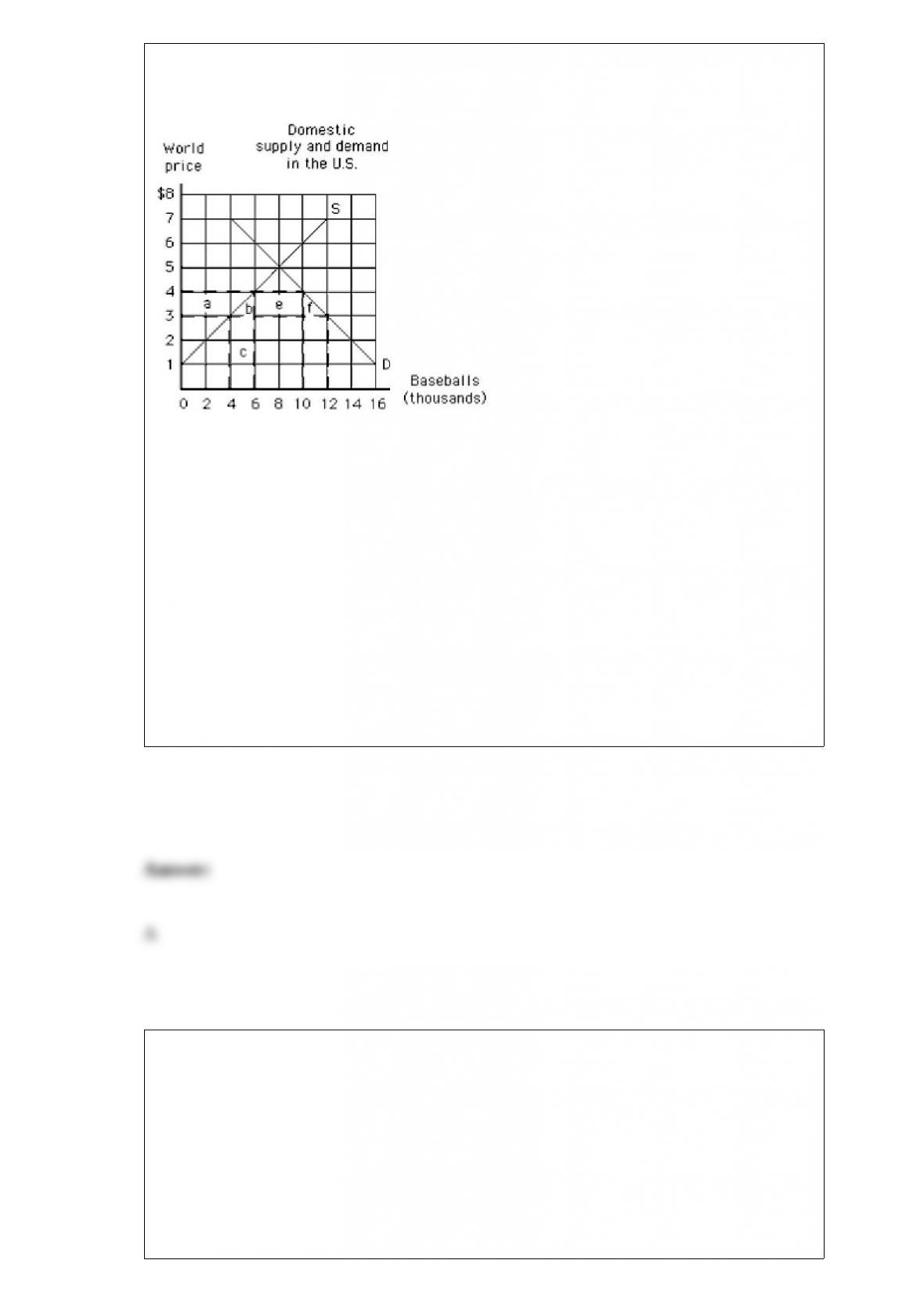
Exhibit 19-6
In Exhibit 19-6, if the world price of a baseball is $3 and a tariff of $1 per baseball is
imposed in the United States, how much tariff revenue will the United States
government collect?
a. $4,000
b. $16,000
c. $20,000
d. $24,000
e. $48,000
In a circular-flow model, firms demand all of the following except
a. labor
b. goods and services
c. capital
d. entrepreneurial ability

e. natural resources
Which of the following taxes is most clearly based on the benefits-received principle of
taxation?
a. corporate income tax
b. gasoline tax
c. personal income tax
d. payroll tax
e. value added tax
Which of the following is not an example of an oligopolistic barrier to entry?
a. diseconomies of scale
b. legal restrictions
c. advertising and brand proliferation
d. high start-up costs
e. control over an essential resource
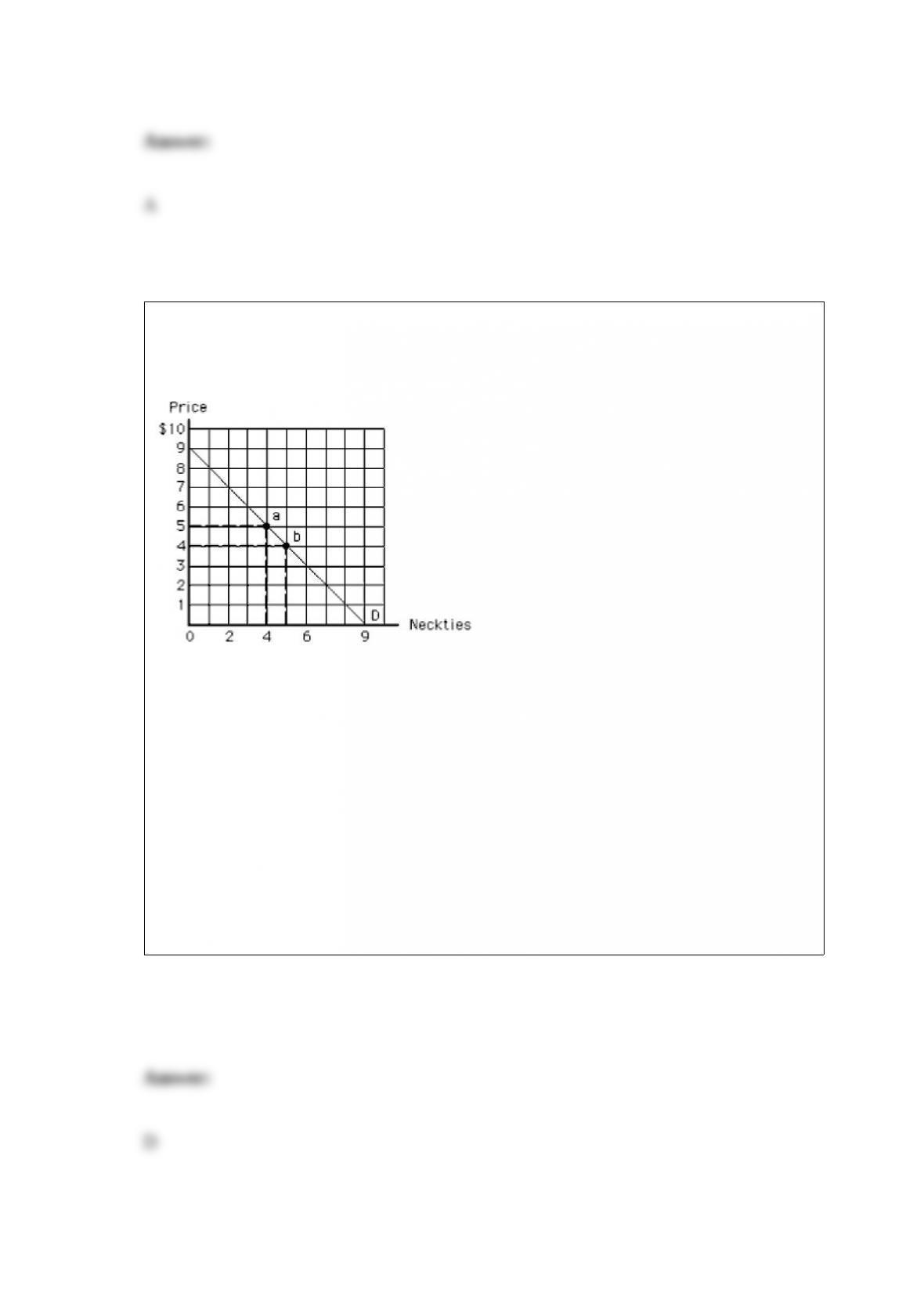
Exhibit 6-11
At point a in Exhibit 6-11, the monetary value that approximates the total utility
received is
a. $5
b. $9
c. $20
d. $26
e. $45
The socially efficient level of output is determined where
a. marginal social cost equals marginal social benefit
b. marginal private cost equals marginal social benefit
c. average social cost equals average social benefit
d. average private cost equals average social benefit
e. total social cost equals total social benefit
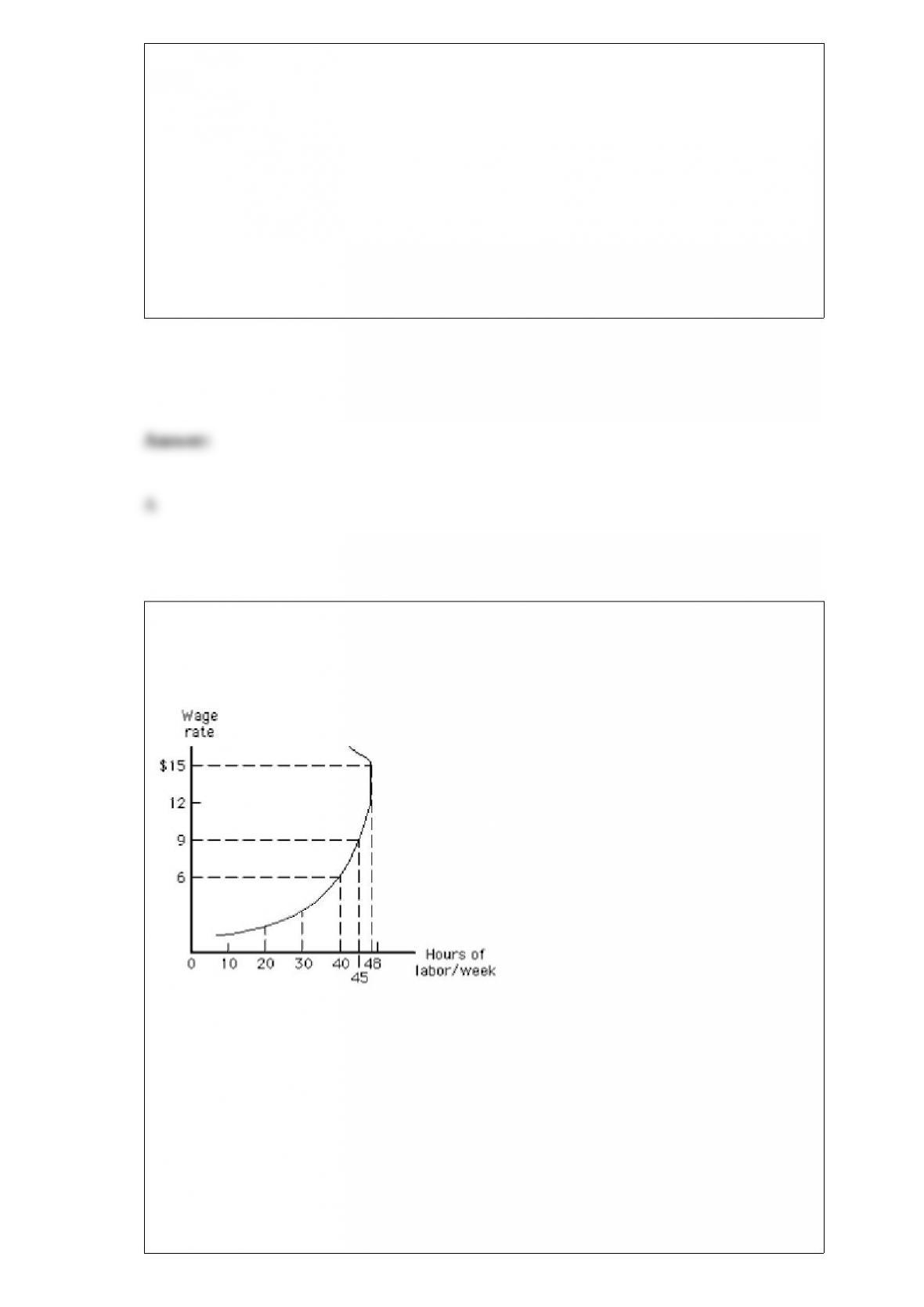
Exhibit 12-4
Consider Exhibit 12-4. If the wage rate is $9, how many hours per week will this person
work?
a. 30 hours
b. 36 hours
c. 40 hours
d. 45 hours

e. 48 hours
If I own a share of stock in IBM, I own
a. only the right to vote in elections of corporate directors
b. a claim to a share of IBM’s assets and earnings as well as the right to demand annual
dividend payments
c. the right to demand annual dividend payments as well as the right to vote in elections
of corporate directors
d. only the right to demand annual dividend payments
e. a claim to a share of IBM’s assets and earnings as well as the right to vote in elections
of corporate directors
An economic model
a. omits critical elements
b. must be presented in mathematical terms
c. simplifies reality in order to focus on its essential elements
d. can never be proven wrong if its assumptions are realistic
e. produces poor predictions if it includes an unrealistic assumption

Fernando allocates his lunch money between pizza and Coke. A Coke has a price of $1
and a slice of pizza has a price of $1.50. The marginal utility of the last slice of pizza
Fernando ate today was 30, and the marginal utility of his last Coke was 25. Fernando
spent all of his lunch money. From this information we can conclude that
a. Fernando allocated his money in a way that maximized his total utility
b. Fernando’s total utility would have been greater if he had purchased more Coke and
less pizza
c. Fernando’s total utility would have been greater if he had purchased more pizza and
less Coke
d. Fernando could have increased his total utility by purchasing more Coke but the
same quantity of pizza
e. Fernando could have increased his total utility by purchasing more pizza but the same
quantity of Coke
A country has an absolute advantage in the production of a good if that country
a. can produce the good using fewer resources than another country would require
b. has the lowest opportunity cost of producing the good and can produce it with the
fewest resources
c. has the lowest opportunity cost of producing the good regardless of whether it is
produced with the fewest resources
d. has the greatest opportunity cost of producing the good regardless of whether it is
produced with the fewest resources
e. has the greatest opportunity cost of producing the good and produces it with the
fewest resources
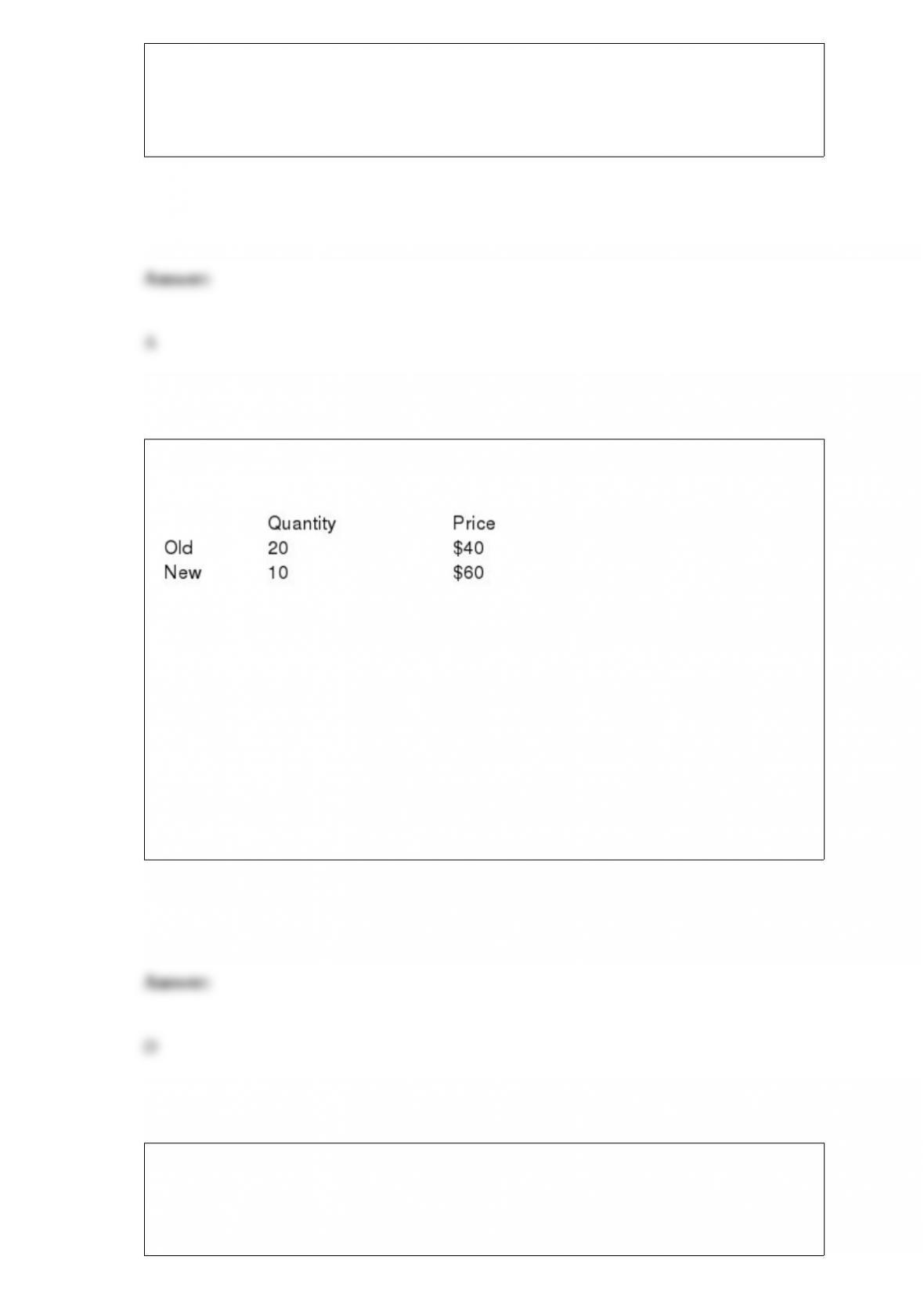
Exhibit 5-2
Use the information in Exhibit 5-2 to calculate the value of price elasticity of demand.
a. -2/3
b. -1/3
c. -3/5
d. -5/3
e. 0
A decrease in demand will result in a(n)
a. increase in equilibrium price and quantity

b. decrease in equilibrium price and quantity
c. decrease in equilibrium price and an increase in equilibrium quantity
d. increase in equilibrium price and a decrease in equilibrium quantity
e. change in equilibrium price and quantity only if supply changes too
Consumers need information to make good choices. Which of the following is correct
regarding this information?
a. Advertising is always harmful to consumers.
b. Information is scarce and therefore valuable.
c. Brand names offer no informational content.
d. Acquiring more information is always rational.
e. Marginal analysis does not apply to the acquisition of information.