
A call option is a contract
a. that gives the owner the right, but not the obligation, to buy shares of a stock at a
specified price within the time limits of the contract.
b. that gives the owner the right, but not the obligation, to sell shares of a stock at a
specified price within the time limits of the contract.
c. in which the seller agrees to provide a particular good to the buyer on a specified
future date at an agreed-upon price.
d. that gives the owner the right, but not the obligation, to buy or sell shares of a stock
at a specified price within the time limits of the contract.
In the long run, the purchasing power parity theory predicts exchange rates accurately,
particularly when there is a large difference in inflation rates across countries.
a. True
b. False
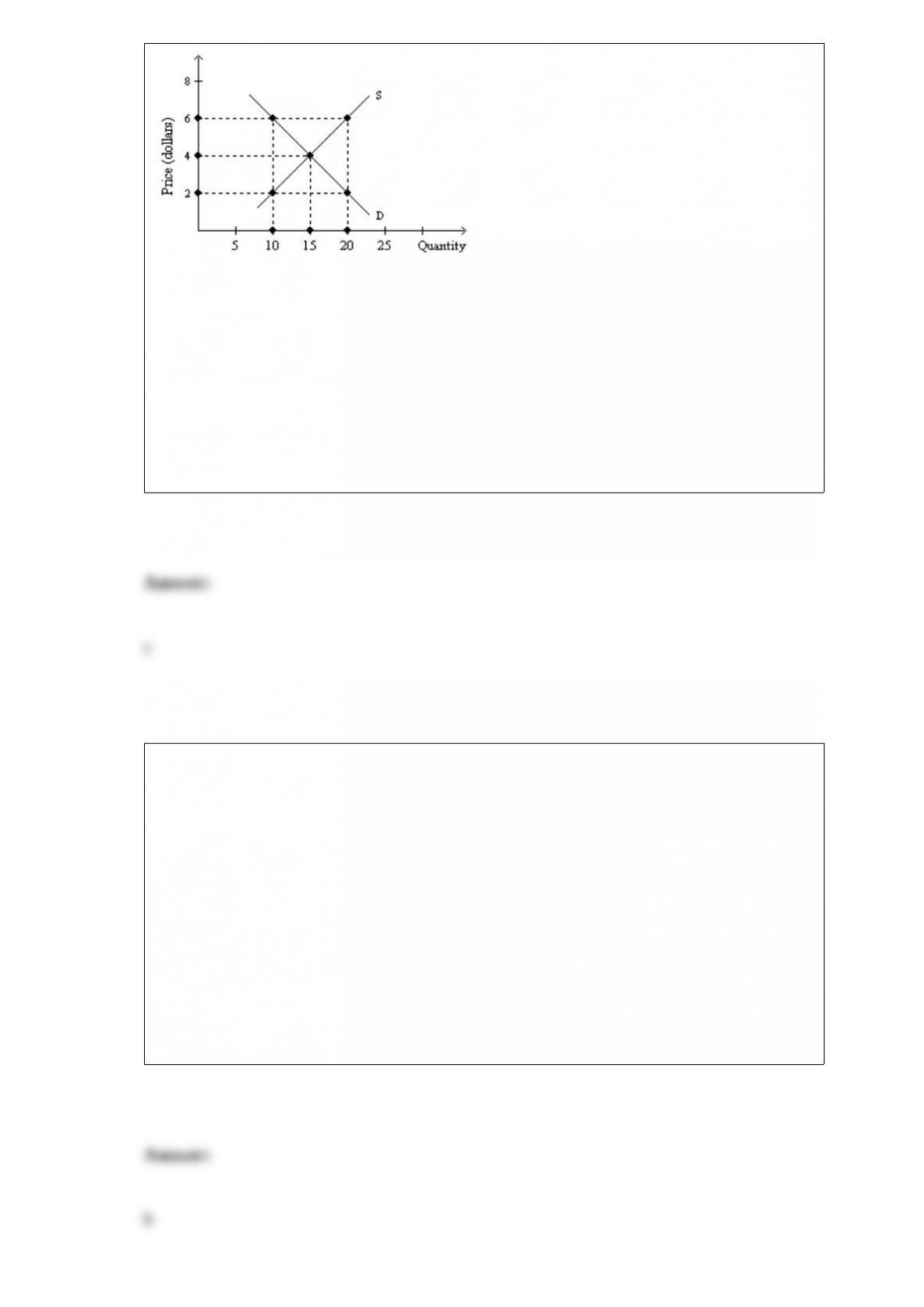
Refer to Exhibit 3-4. If this is a competitive market, price and quantity will gravitate
toward
Exhibit 3-4
a. $6 and 10 units, respectively.
b. $6 and 20 units, respectively.
c. $4 and 15 units, respectively.
d. $2 and 15 units, respectively.
A firm operating in a perfectly competitive market finds itself producing a level of
output for which marginal revenue is less than marginal cost. In order to maximize
profits (or minimize losses), the firm should
a. increase its level of output.
b. decrease its level of output.
c. shut down operations.
d. lower its price.
e. raise its price.
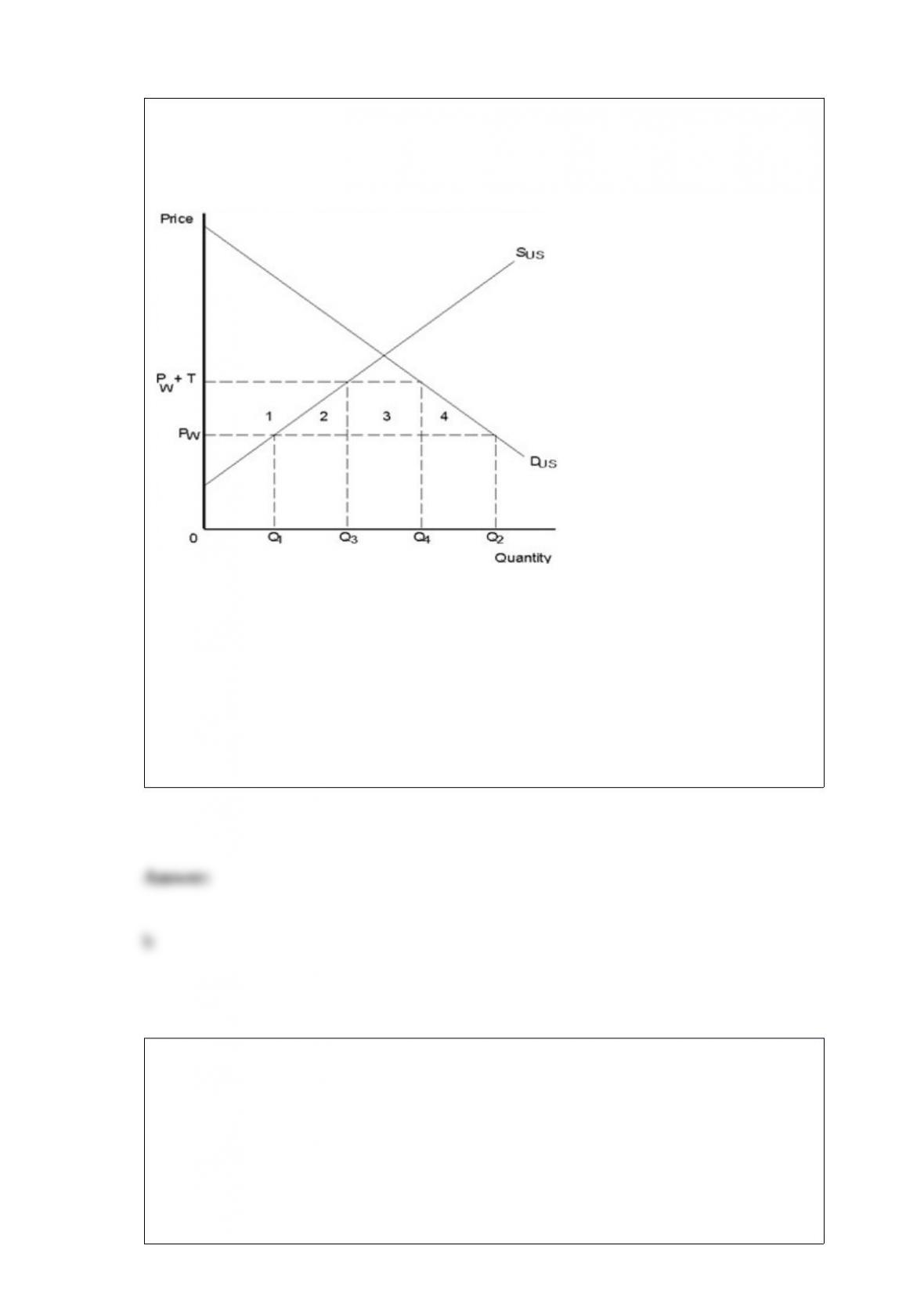
Refer to Exhibit 34-3. The world price is PW. At this price, Americans purchase Q1
from U.S. producers and import the quantity __________ from foreign producers.
Exhibit 34-3
a. Q4 – Q1
b. Q2 – Q1
c. Q2 – Q4
d. Q2 – Q3
Public choice economists often explain low voter turnouts in terms of
a. dissatisfaction of many voters with the limited choice of candidates.
b. lack of civic responsibility of the electorate.
c. net costs of voting that many voters perceive.
d. rational ignorance of many voters of the actual date of the elections.
Which of the following is the best example of a barrier to entry into a monopolistic
industry?
a. diminishing returns
b. comparative advantage
c. high price elasticity of demand
d. a public franchise
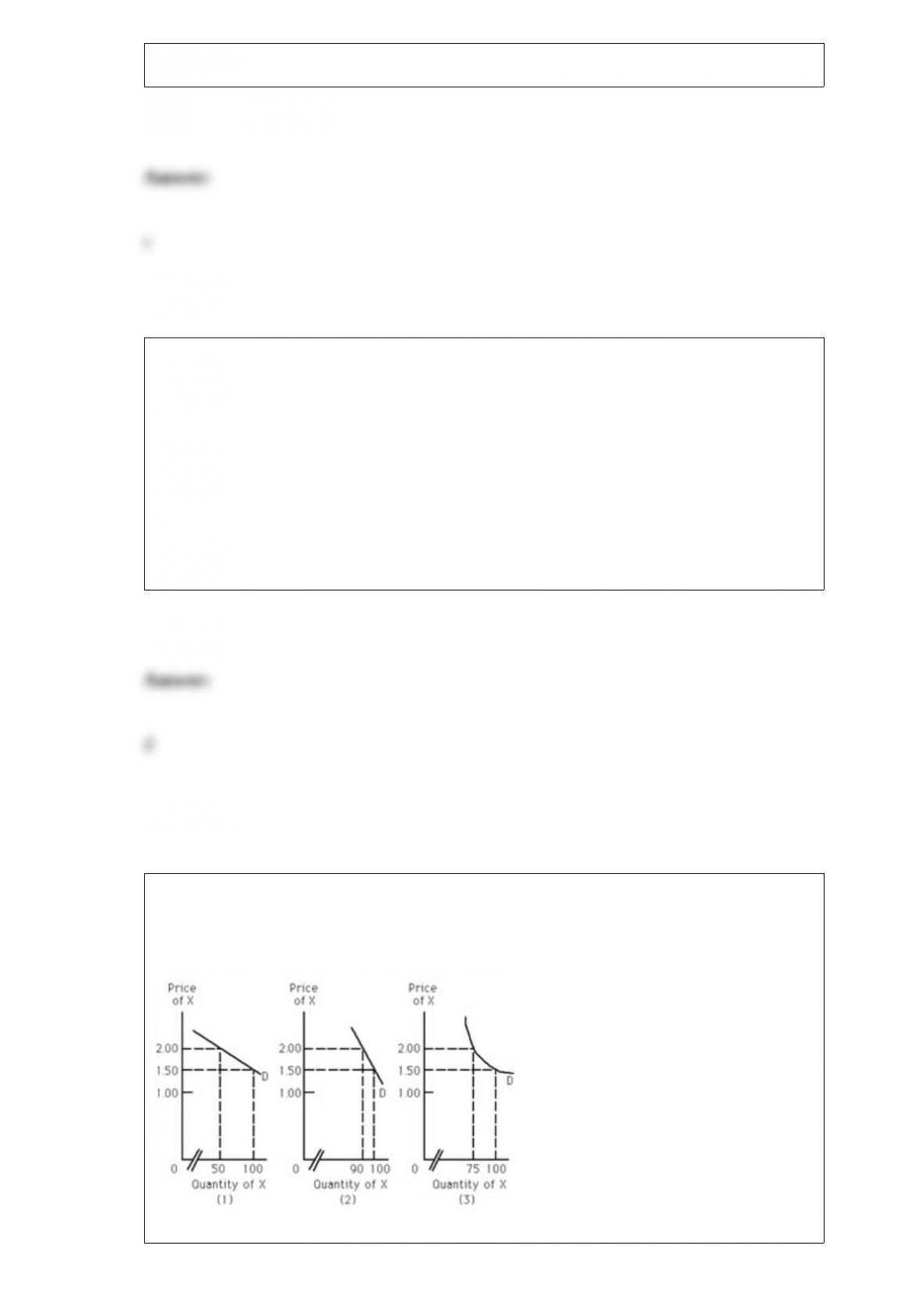
Refer to Exhibit 20-5. For graph (1), what is the price elasticity of demand going
between $2.00 and $1.50?
Exhibit 20-5
a. 0.02
b. 0.43
c. 2.33
d. 42.8
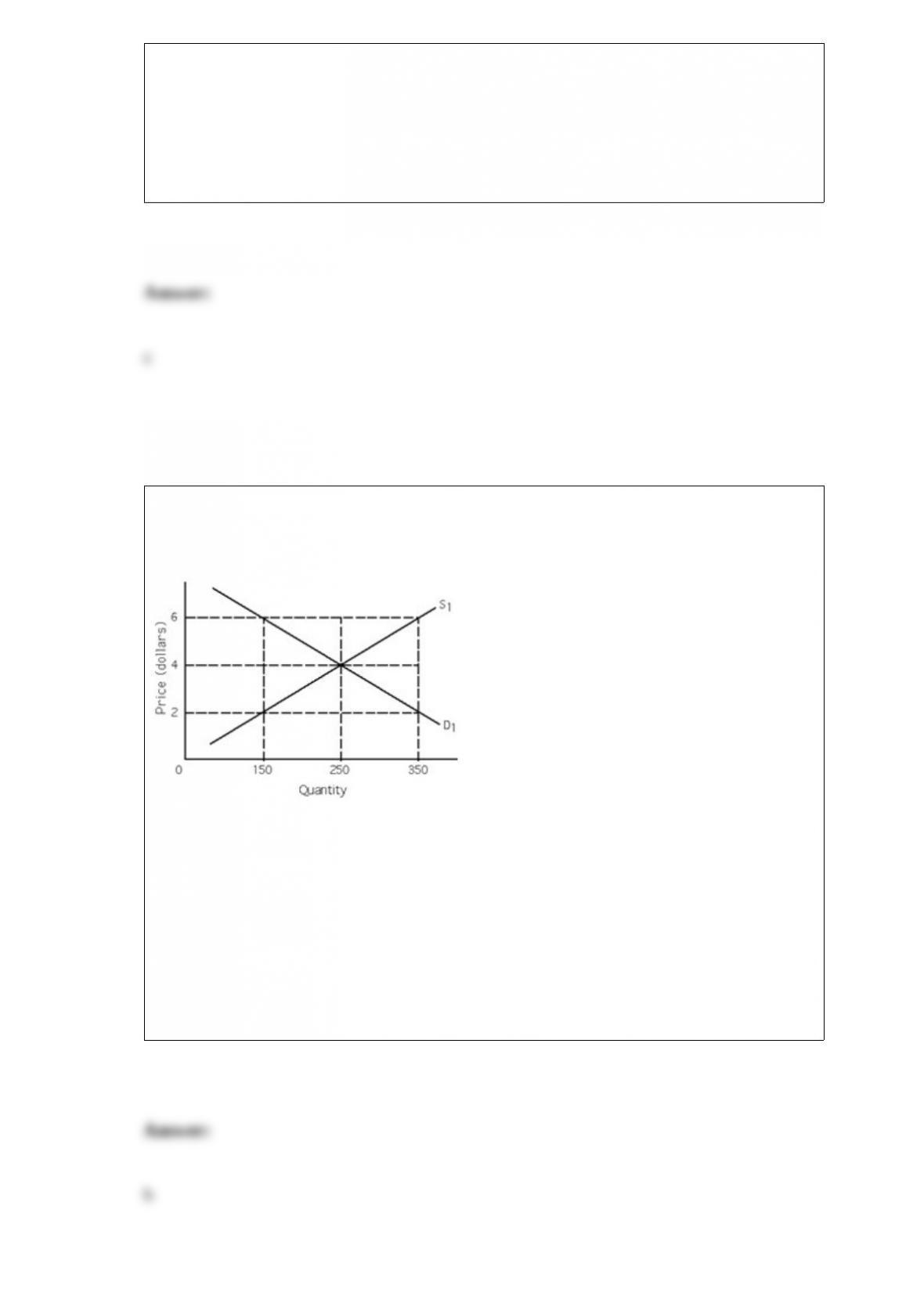
Refer to Exhibit 3-1. At a price of $2 there is a
Exhibit 3-1
a. shortage of 100 units.
b. shortage of 200 units.
c. shortage of 150 units.
d. surplus of 200 units..
e. surplus of 150 units.
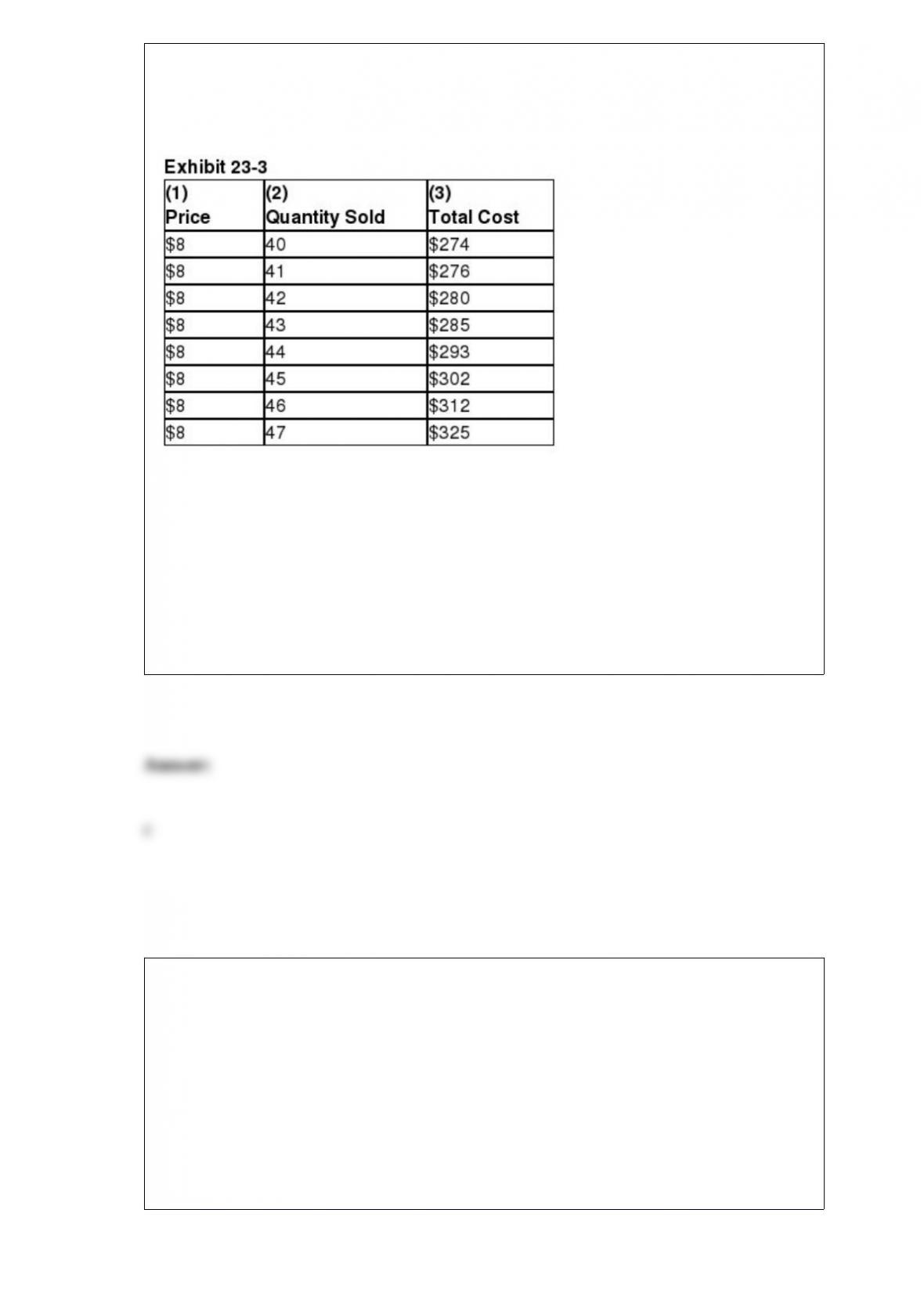
Refer to Exhibit 23-3. What quantity of output should the profit-maximizing firm
produce?
a. 41 units
b. 42 units
c. 44 units
d. 45 units
e. 46 units
Unlike a monopoly, a monopolistic competitive firm in long run equilibrium is likely to
produce a level of output at which
a. MR = MC.
b. P > MC.
c. P = ATC.
d. resource-allocative efficiency is achieved.

Something that provides disutility is called a
a. good.
b. want.
c. need.
d. bad.
e. none of the above
If a labor union wanted to employ all its membership it would most likely negotiate for
a __________ than if it wanted to maximize the income of a limited number of union
members.
a. wage that discounted for fixed costs
b. higher wage
c. wage that accounted for a percentage of sales revenues
d. lower wage
e. none of the above
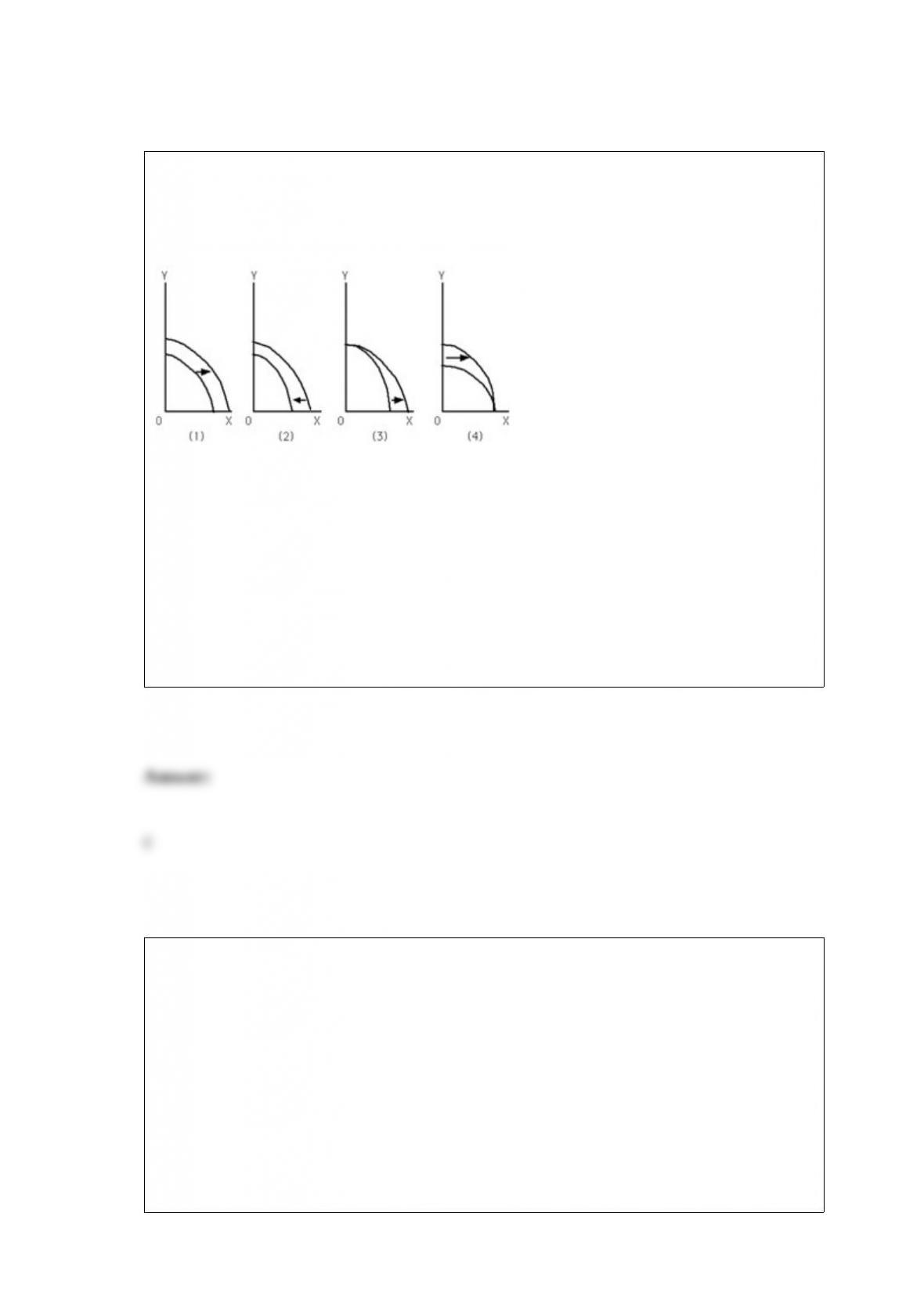
Refer to Exhibit 2-6.Which graph depicts a technological breakthrough in the
production of good X only?
Exhibit 2-6
a. (1)
b. (2)
c. (3)
d. (4)
e. none of the above
The white rats in the Texas A & M study acted the same way a person who
a. sought to achieve consumer equilibrium would act.
b. is irrational would act.
c. didn’t want to assume any risk would act.
d. didn’t like any goods would act.
e. There was no study done at Texas A & M with white rats.

Which of the following statements best represents the law of supply?
a. Price and quantity supplied are inversely related.
b. Price and quantity supplied are directly related.
c. Price and quantity supplied are inversely related, ceteris paribus.
d. Price and quantity supplied are directly related, ceteris paribus.
e. Price and supply are directly related, ceteris paribus.
If the seller of good X raises the price of good X, it follows that the total revenue of
good X will __________, if demand is __________.
a. rise; unit elastic
b. rise; elastic.
c. fall; unit elastic.
d. fall; inelastic.
e. fall; elastic

A perfectly competitive market is initially in long-run competitive equilibrium. Then,
market demand falls. By the time all adjustments have been made, price will be
__________ its original level if the industry is a(n) __________ costs industry.
a. above; decreasing
b. at; constant
c. at; increasing
d. below; increasing
e. a and d
The lower the price of medical care in general, the higher the
____________________________ medical care and the ______________________
specific items that make up medical care (such as x-rays).
a. quantity demanded of; higher the demand for
b. demand for; higher the demand for
c. quantity demanded of; lower the demand for
d. demand for; higher the quantity demanded of
Suppose Valerie is consuming lipstick (L) and eye shadow (E) and nothing else. MUL =
24 and MUE = 40. The price of eye shadow is $10, and the price of lipstick is $8. What
should Valerie do?
a. Consume more eye shadow and less lipstick.
b. Consume more lipstick and less eye shadow.
c. Consume less of both.
d. Consume more of both.
e. Not change her consumption of either good.
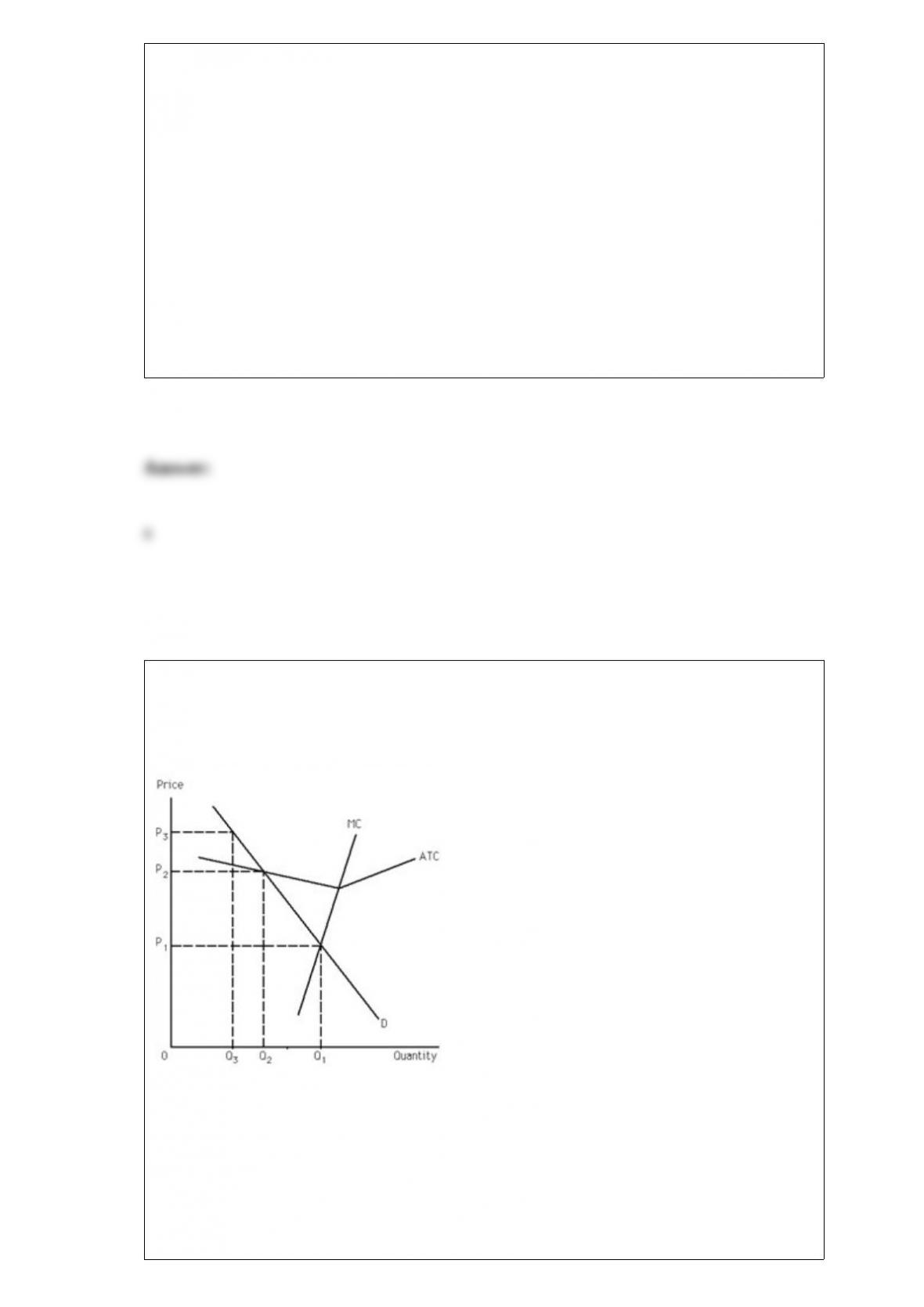
Refer to Exhibit 26- 1. If average-cost pricing is imposed on the natural monopoly firm,
what price is charged?
Exhibit 26-1
a. P1
b. P2
c. P3
d. any of the three prices
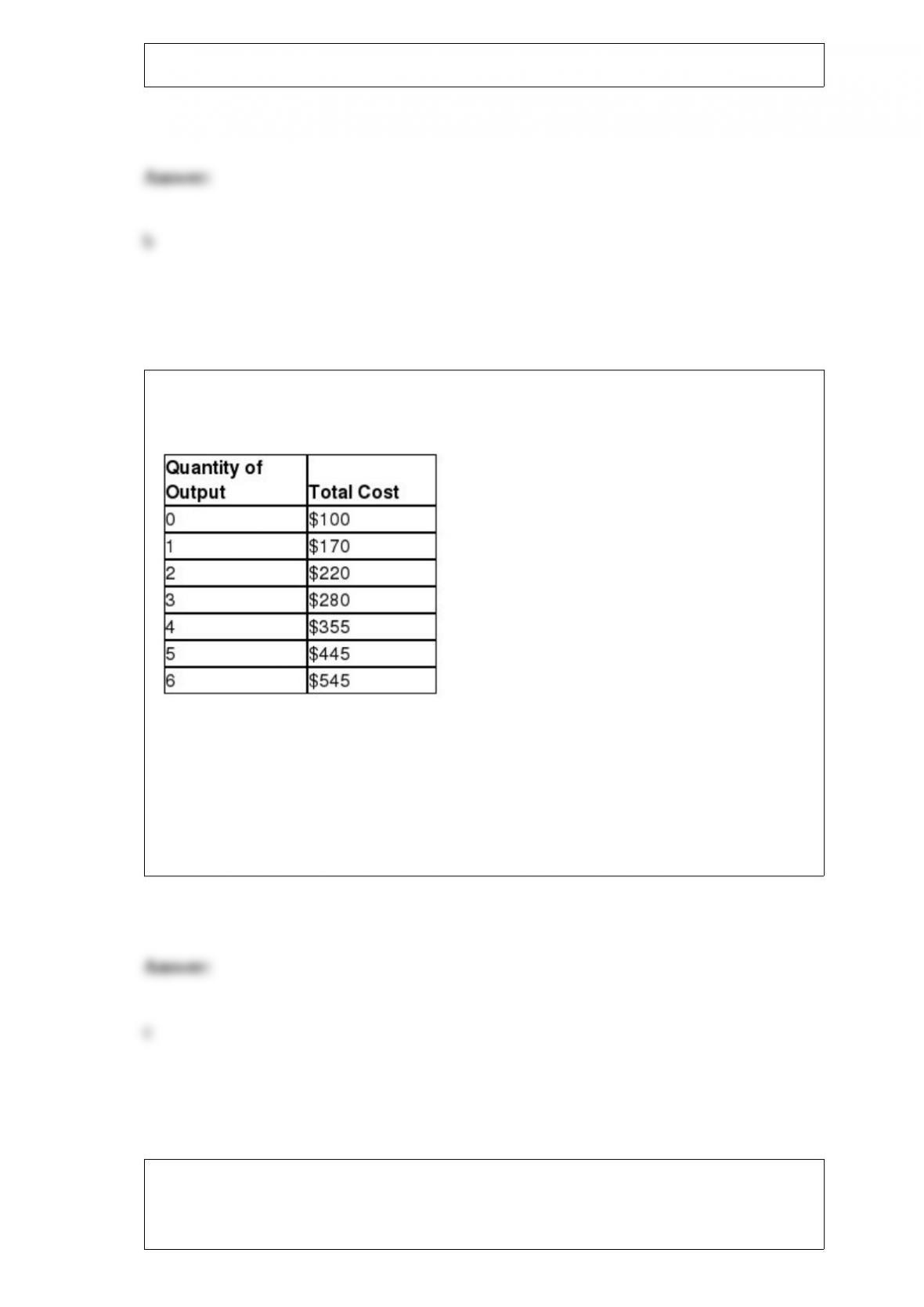
Refer to Exhibit 22-11. Marginal cost of the first unit of output is
Exhibit 22-11
a. $170.
b. $150.
c. $70.
d. $90.83.
A gift-givers efficient number of gifts (to give to a gift-recipient) has fallen from 10 to
8.This could be because
a. the gift-givers marginal benefit curve for giving gifts shifted down and left.
b. the gift-givers marginal cost curve of giving gifts shifted up and left.
c. the gift-recipient “fell out” of the gift-givers utility function.
d. a and b
e. none of the above