Suppose that when the price of ice cream increases, Liza decreases her purchase of hot
fudge. To Liza,
A) ice cream and hot fudge are complements.
B) ice cream and hot fudge and substitutes.
C) ice cream and hot fudge are normal goods.
D) ice cream is a normal good and hot fudge is an inferior good.
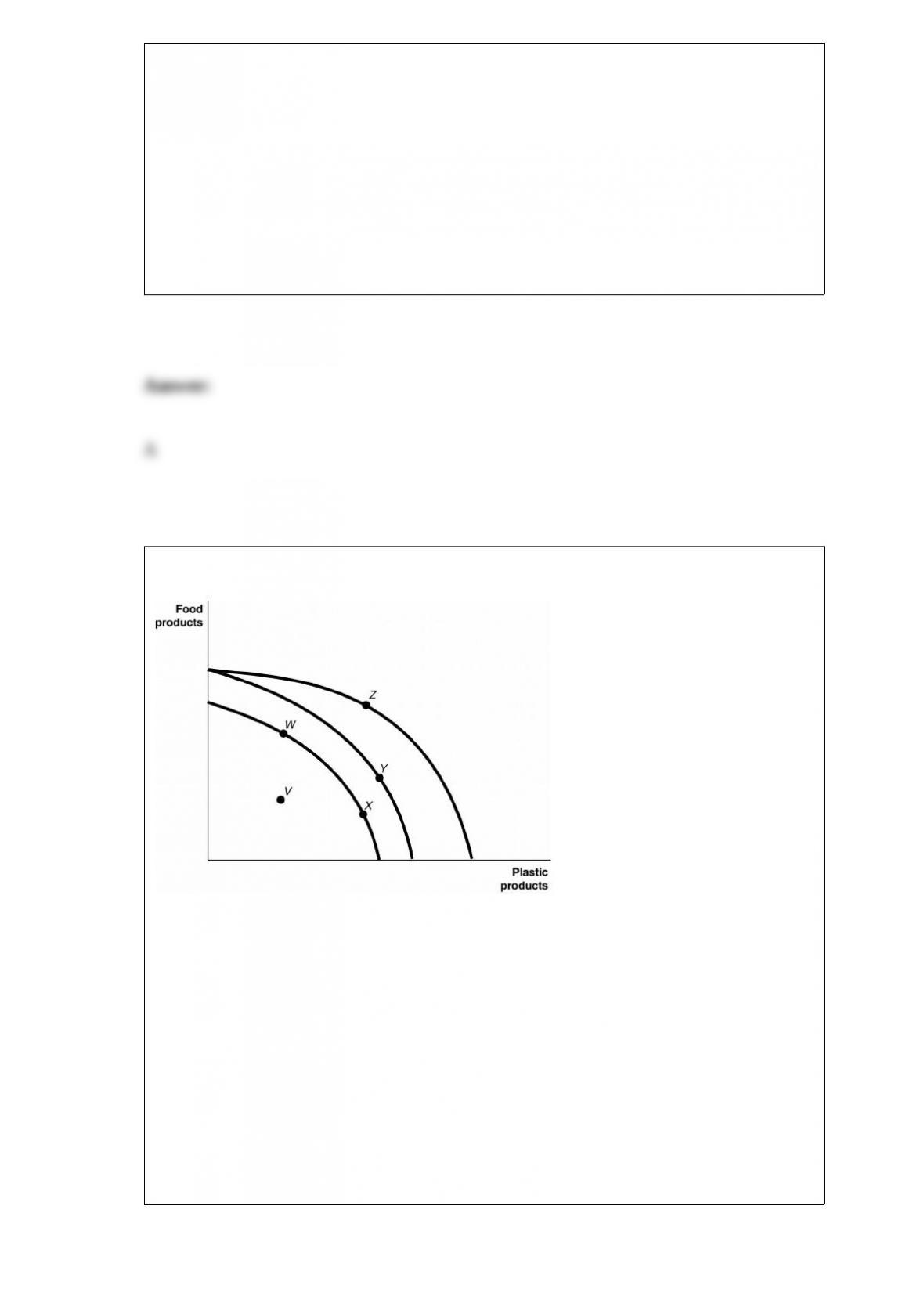
Figure 2-4
Figure 2-4 shows various points on three different production possibilities frontiers for
a nation.
Refer to Figure 2-4. A movement from ________ could occur because of additional
government restrictions toward allowing immigrant labor.
A) X to W
B) Y to X
C) V to W
D) W to X

Crowding out, following an increase in government spending, results from (the
exchange rate is the foreign exchange price of the domestic currency)
A) higher interest rates and a lower exchange rate.
B) higher interest rates and a higher exchange rate.
C) lower interest rates and a lower exchange rate.
D) lower interest rates and a higher exchange rate.
The principle of ________ is that the economic cost of using a factor of production is
the alternative use of that factor that is given up.
A) marginal cost
B) opportunity cost
C) normative economics
D) entrepreneurship
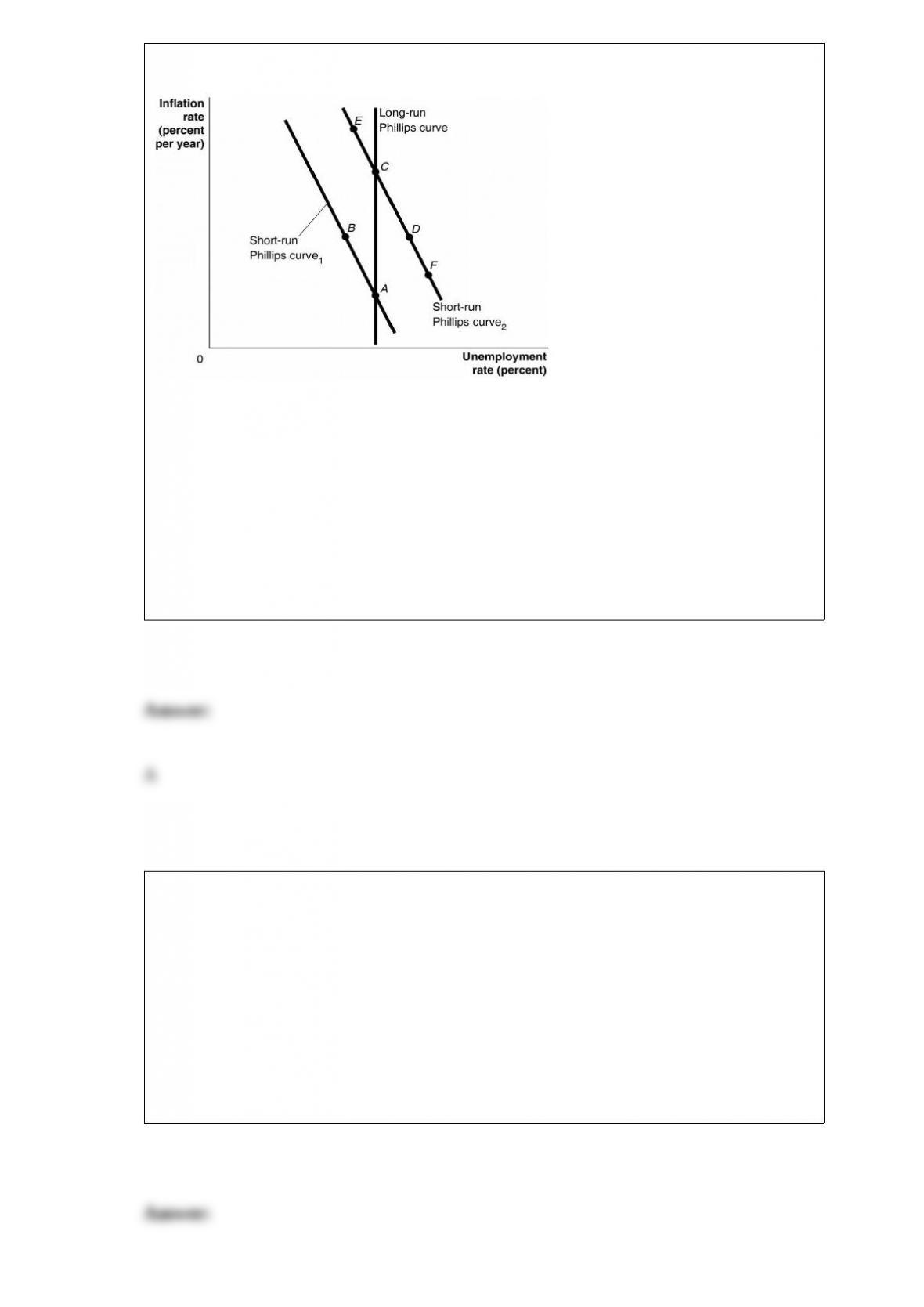
Figure 17-9
Refer to Figure 17-9. A(n) ________ would be depicted as a movement from A to D to
C.
A) supply shock, such as rising oil prices,
B) increase in aggregate demand
C) implementation of contractionary monetary policy
D) increase in short-run aggregate supply
If the consumption function is defined as C = 7,250 + 0.8Y, what is the value of the
multiplier?
A) 0.2
B) 0.8
C) 1.25
D) 5
Why doesn’t the Fed have both a money supply target and an interest rate target?
A) Short-term interest rates do not respond to changes in the money supply, which the
Fed can control.
B) The Fed does not control money demand.
C) The Fed cannot offset the impact of changes in cash management by the public or
changes in lending policies of commercial banks on the money supply.
D) Only the level of interest rates matters when we consider rates of growth in real
GDP, employment, and rates of price inflation.
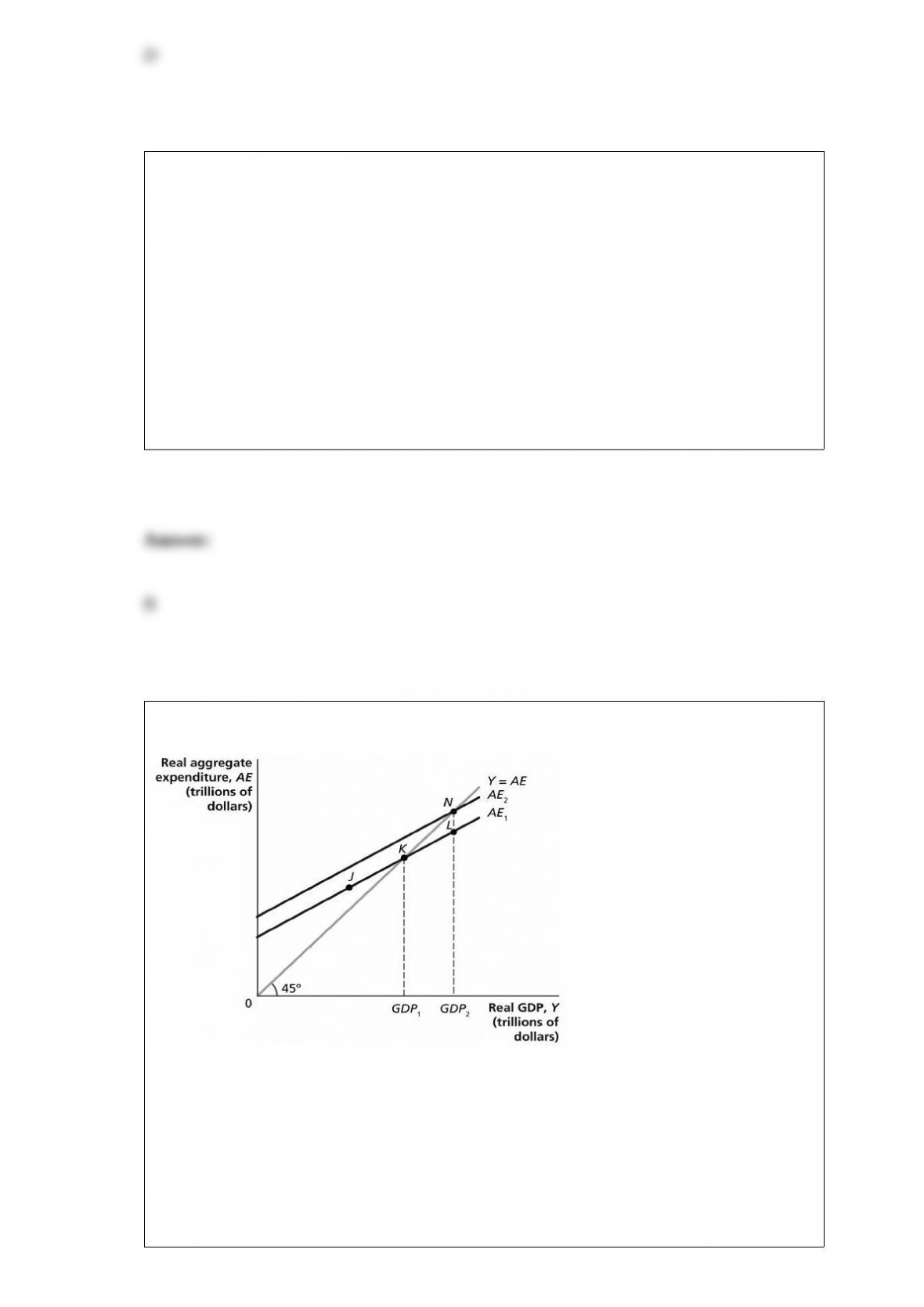
Figure 12-3
Refer to Figure 12-3. Suppose that government spending increases, shifting up the
aggregate expenditure line. GDP increases from GDP1 to GDP2, and this amount is
$400 billion. If the MPC is 0.75, then what is the distance between N and L or by how
much did government spending change?
A) $10 billion
B) $100 billion

C) $200 billion
D) $300 billion
Who selects the board of directors of a corporation?
A) the state where the corporation is chartered
B) employees
C) stockholders
D) managers
An increase in the government budget surplus will shift the ________ curve for
loanable funds to the ________ and the equilibrium real interest rate will ________.
A) supply; right; fall
B) supply; left; rise
C) demand; right; rise
D) demand; left; fall
Lowering the interest rate will
A) decrease spending on consumer durables.
B) increase investment projects by firms.
C) decrease spending on new homes.
D) decrease the value of the dollar and lower net exports.
Which of the following is an objective of fiscal policy?
A) energy independence from Middle East oil
B) health care coverage for all Americans
C) discovering a cure for AIDs
D) high rates of economic growth
E) homeland security
Figure 7-3
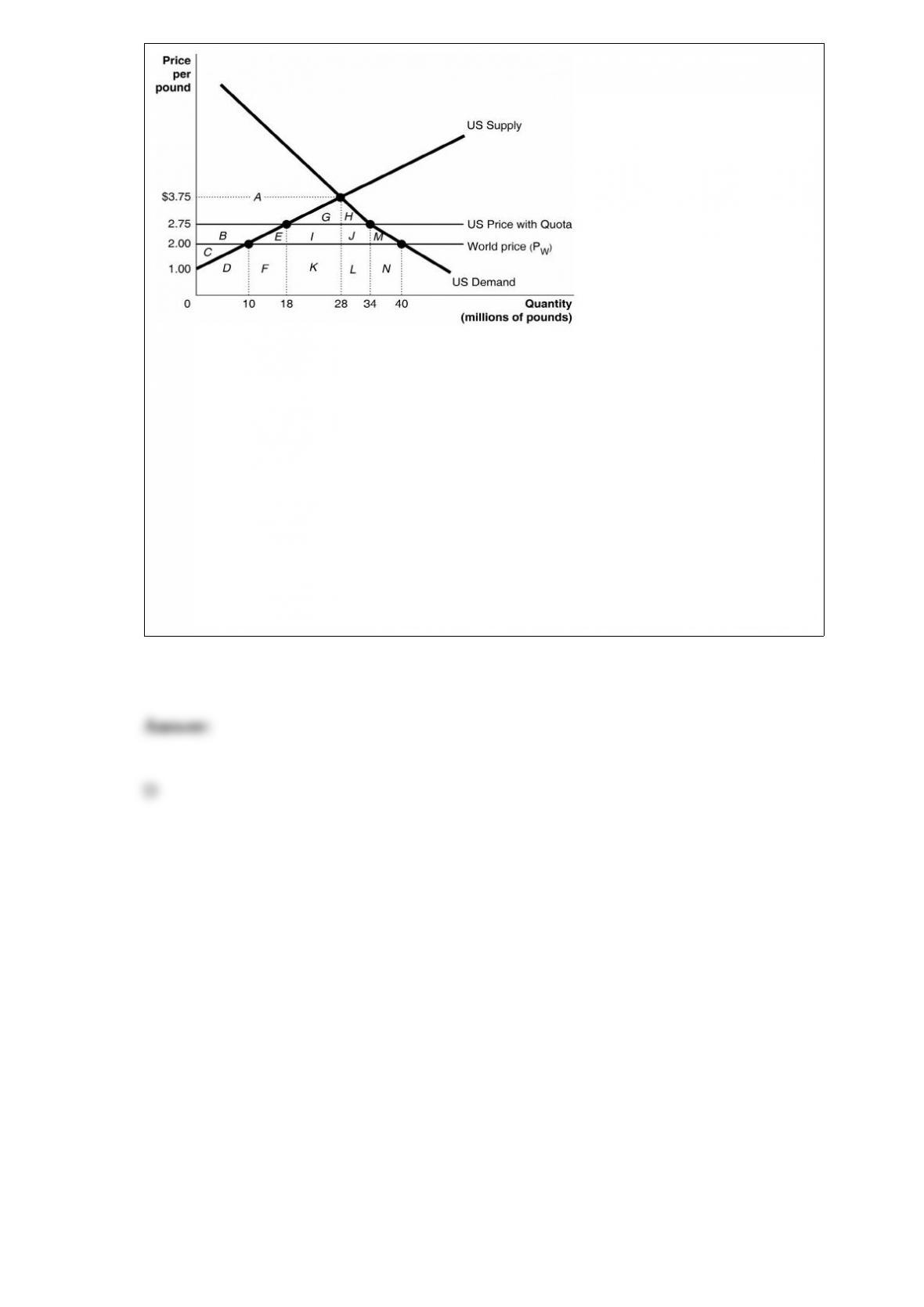
Since 1953 the United States has imposed a quota to limit the imports of peanuts.
Figure 7-3 illustrates the impact of the quota.
Refer to Figure 7-3. What is the value of revenue to foreign producers who are granted
permission to sell in the U.S. market when there is a quota?
A) $12 million
B) $17.25 million
C) $20 million
D) $44 million