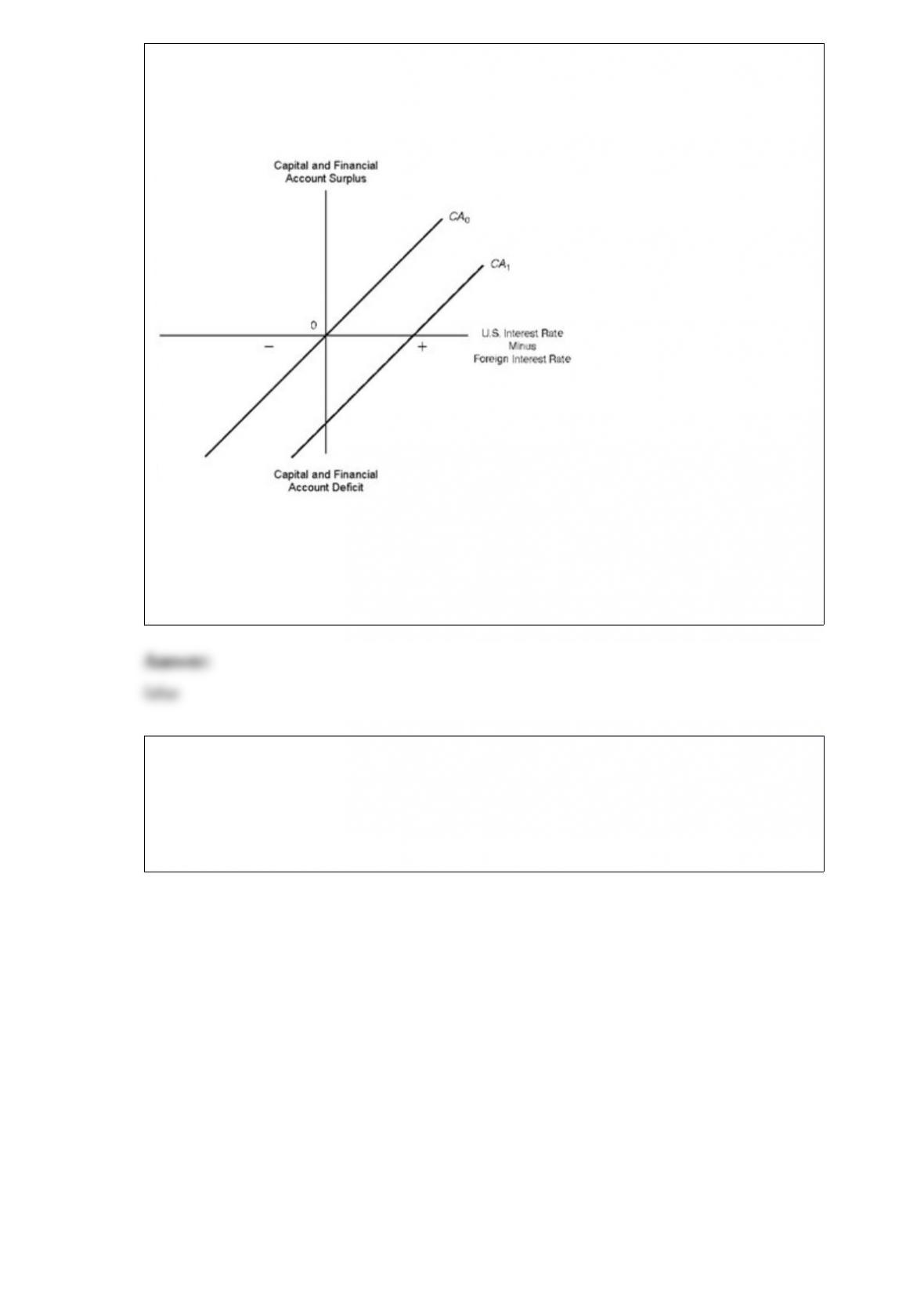
1) figure 13.3. u.s. capital and financial account under a fixed exchange rate
system
refer to figure 13.3. decreases in u.s. interest rates relative to foreign interest rates
would shift u.s. capital and financial account schedule ca0 downward toward ca1,
resulting in net financial outflows from the united states.
a.true
b.false
2) figure 4.1 illustrates the demand and supply schedules for pocket calculators in
mexico, a ‘small” nation that is unable to affect the world price.
figure 4.1. import tariff levied by a ‘small” country
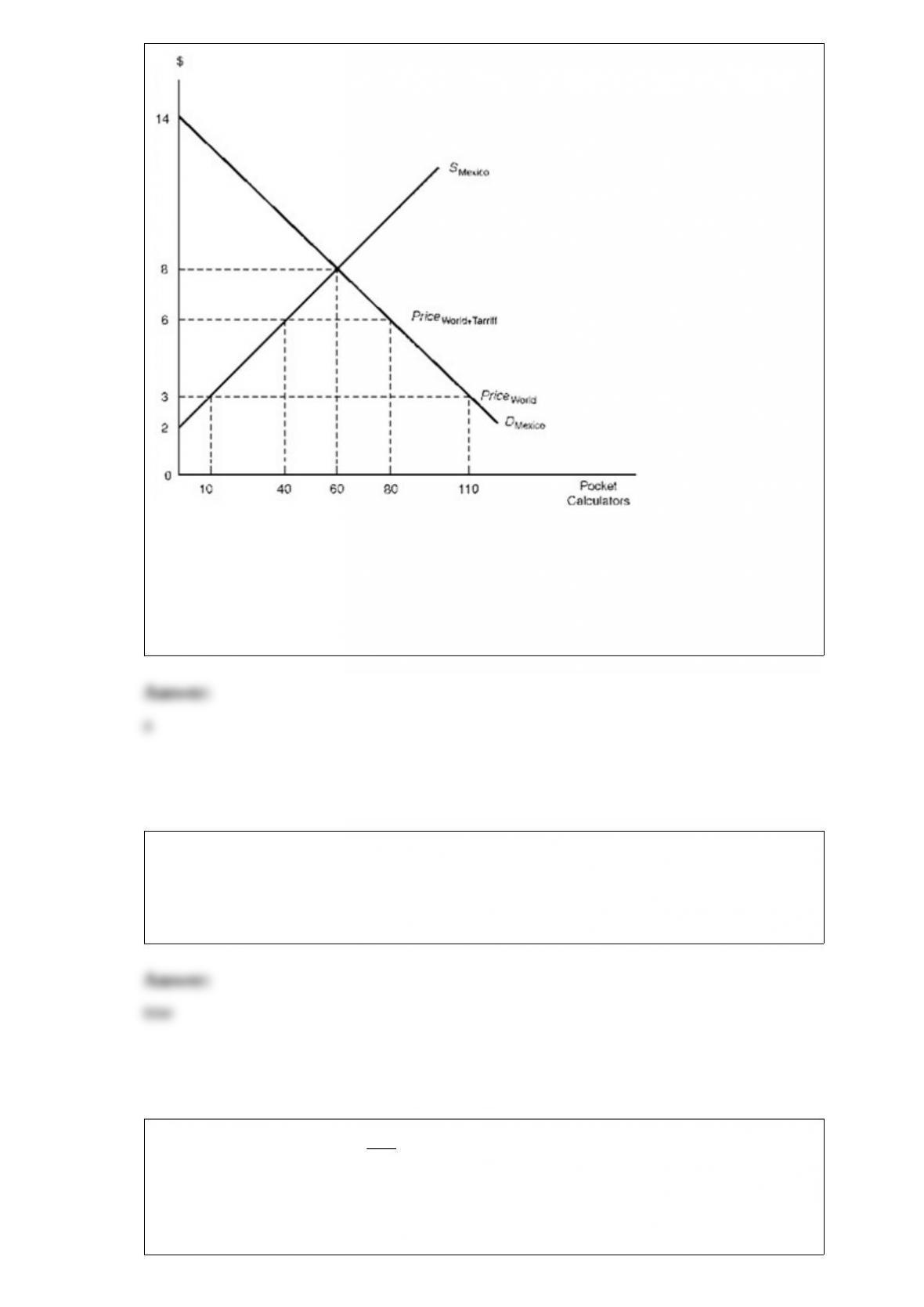
consider figure 4.1. with free trade, mexico’s producer surplus and consumer surplus
respectively equal:
a.$5, $605
b.$25, $380
c.$45, $250
d.$85, $195
3) intra-industry trade can be explained by product differentiation, economies of scale,
seasons of the year, and transportation costs.
a.true
b.false
4) which of the following is true concerning a specific tariff?
a.it is exclusively used by the u.s. in its tariff schedules.
b.it refers to a flat percentage duty applied to a good’s market value.
c.it is plagued by problems associated with assessing import product values.
d.it affords less protection to home producers during eras of rising prices.
5) the absorption approach suggests that one of the following causes a trade deficit to
decrease following currency depreciation:
a.a decline in domestic interest rates
b.a rise in domestic imports
c.a rise in government spending
d.a decline in domestic absorption
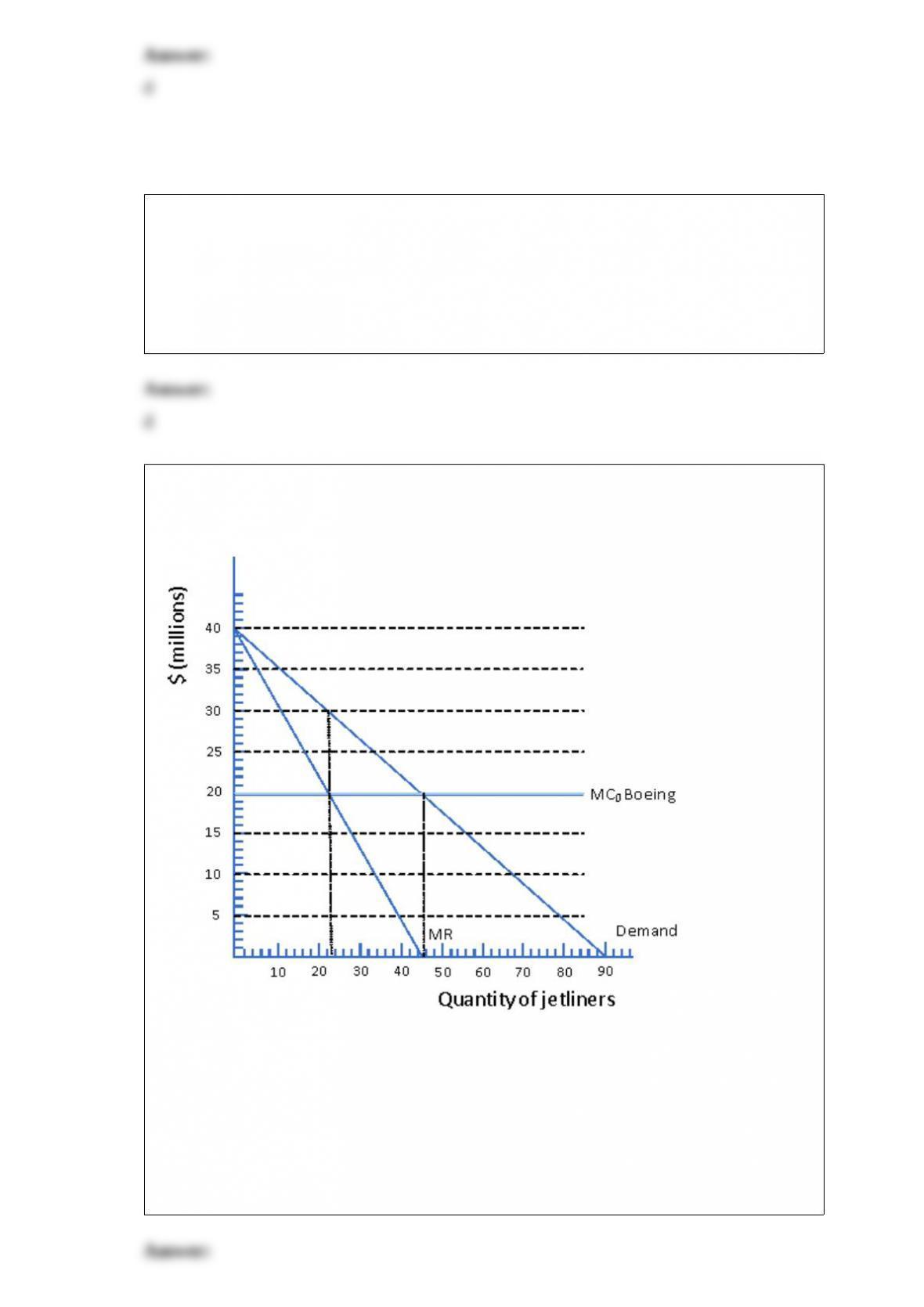
6) figure 6.4japanese market for jetliners
consider the japanese market for jetliners as depicted in figure 6.4.suppose lone
producer of jetliners in the world is boeing and boeing faces a constant marginal cost of
$20 million per jetliner.what price will boeing charge for jetliners in the japanese
market and how many will they sell?
a.$20 million, 23
b.$20 million, 46
c.$30 million, 46
d.$30 million, 23

7) the capital account of the balance of payments includes private-sector transactions as
well as official-settlements transactions of the home country’s central bank.
a.true
b.false
8) according to the price-adjustment mechanism, trade deficits can occur only in the
long run rather than in the short run.
a.true
b.false
9) local content laws stipulate the maximum percentage of a product’s total value that
must be produced domestically for that product to be sold domestically.
a.true
b.false
10) given an open economy with high capital mobility and fixed exchange rates,
suppose an expansionary fiscal policy is implemented to combat recession. the initial
and secondary effects of the policy cause aggregate demand to increase, thus
strengthening the policy’s expansionary effect.
a.true
b.false
11) to defend a pegged exchange rate that overvalues its currency, a country could:
a.discourage commodity exports
b.encourage commodity imports
c.purchase its own currency in international markets
d.sell its own currency in international markets

12) the task of creating an economic union is:
a.difficult
b.relatively easy
c.similar to creating a customs union
d.none of the above
13) suppose that government procurement liberalization results in the u.k. government
importing automobiles from germany, the low-cost eu manufacturer. cost savings could
result from all of the following except:
a.competition effect
b.scale-economy effect
c.protective effect
d.trade effect
14) for the united states, empirical studies indicate that over the past two decades the
cost of international transportation relative to the value of u.s. imports has:
a.increased
b.decreased
c.not changed
d.none of the above
15) multilateral trade negotiations have led to
a.continued trade liberalization
b.financial liberalization
c.increased investment
d.all of the above