
Which of the following statements is true?
a. Concentration ratios take into account competition from substitute goods.
b. The four-firm concentration ratio is likely to be larger than the eight-firm
concentration ratio.
c. There are assumed to be insignificant barriers to entry in the theory of oligopoly.
d. A designer label on a pair of jeans is a way of differentiating one seller’s jeans from
another seller’s jeans.
e. all the above
For each additional lamp produced, aconstant opportunity cost is incurredin terms of
bookshelves. This means
a. that it takes more resources to produce a lamp than a bookshelf.
b. that it takes fewer resources to produce a lamp than a bookshelf.
c. that for every lamp produced, a constant number of bookshelves is forfeited.
d. that for every lamp produced, a different number of bookshelves is forfeited.
The market demand curve in a perfectly competitive market is
a. downward sloping.

b. upward sloping.
c. perfectly horizontal.
d. perfectly vertical.
e. downward or upward sloping depending upon the type of product offered for sale.
If society is experiencing a net social cost from the production of a good, this implies
that
a. the socially optimal level of output is being produced and society is willing to accept
the costs that result.
b. producers would rather produce the output at which marginal social cost equals the
demand for the good.
c. negative externalities are involved in the production of this good.
d. none of the above
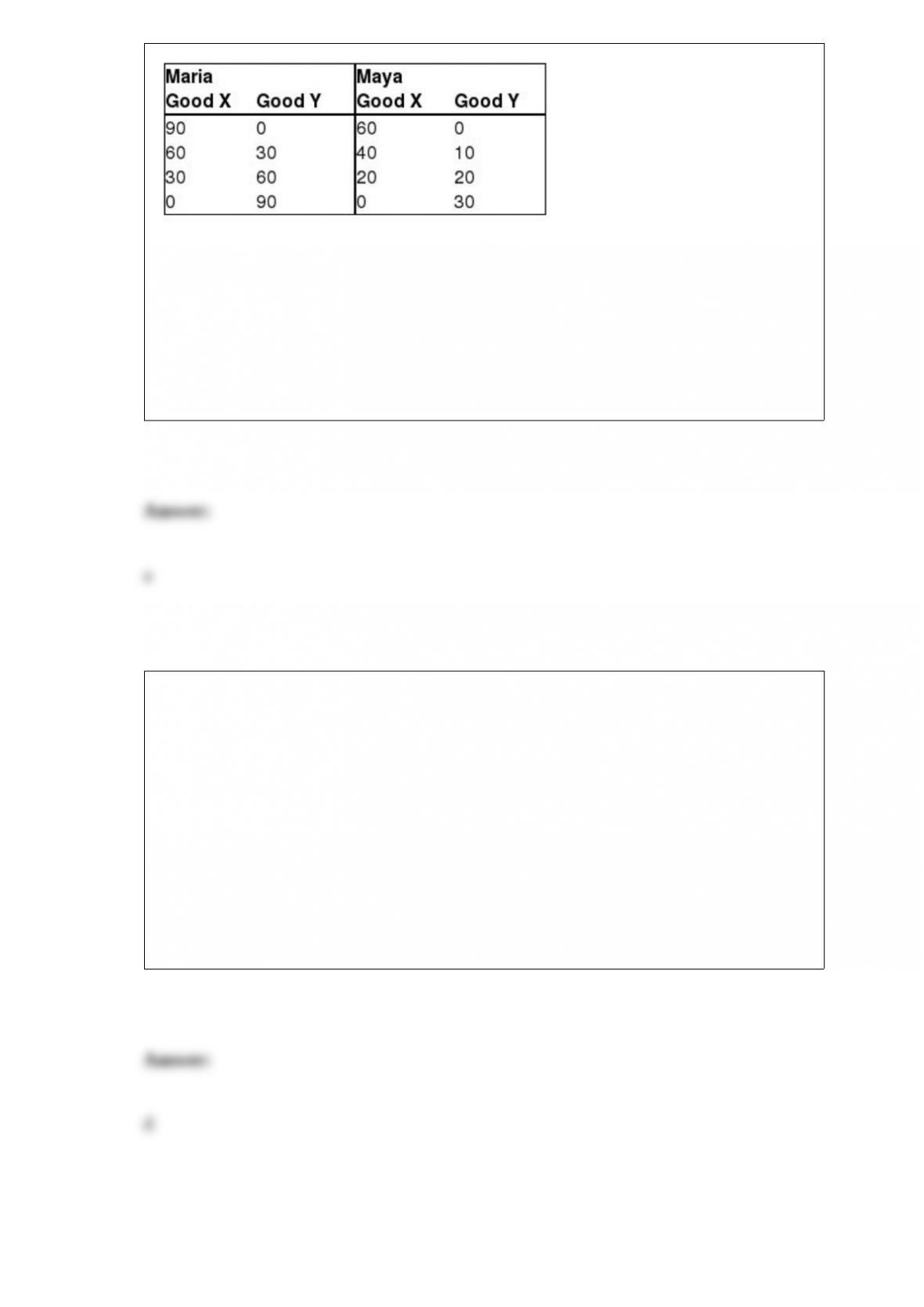
Refer to Exhibit 2-8. For Maya, the opportunity cost of producing one unit of good Y is
___________ unit(s) of good X.
Exhibit 2-8
a. 2.00
b. 1.00
c. 10.00
d. 0.50
If the rate of increase of total utility declines as the quantity consumed of a good
increases, it follows that marginal utility must be
a. declining.
b. rising.
c. staying constant.
d. negative.
e. There is not enough information to answer the question.
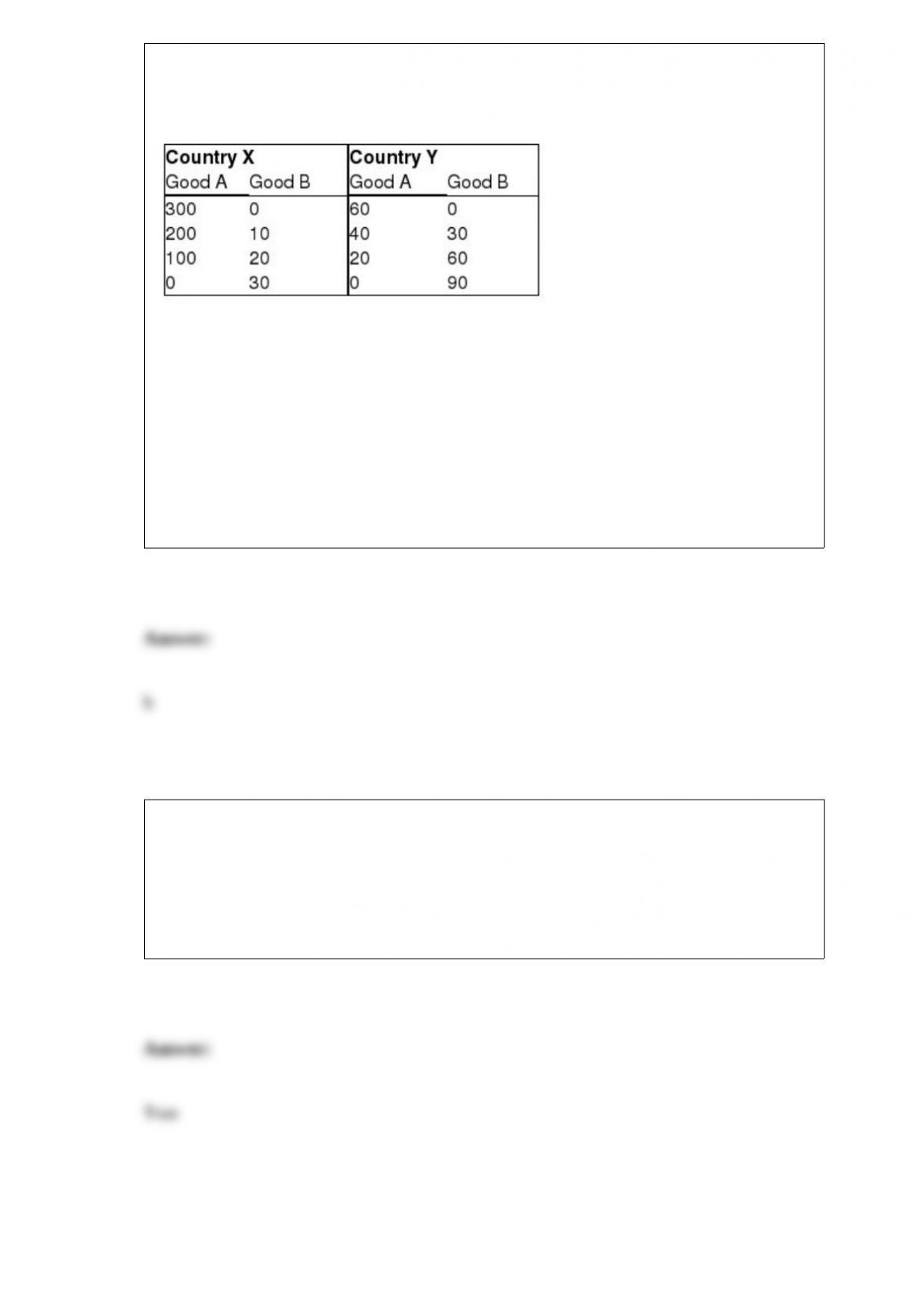
Refer to Exhibit 34-9. For country X, the opportunity cost of producing one unit of
good A is __________ unit(s) of good B.
Exhibit 34-9
a. 2
b. 1/10
c. 1/2
d. 1/3
e. 10
The perfectly price-discriminating monopolist achieves resource allocative efficiency,
while the single-price monopolist does not.
a. True
b. False
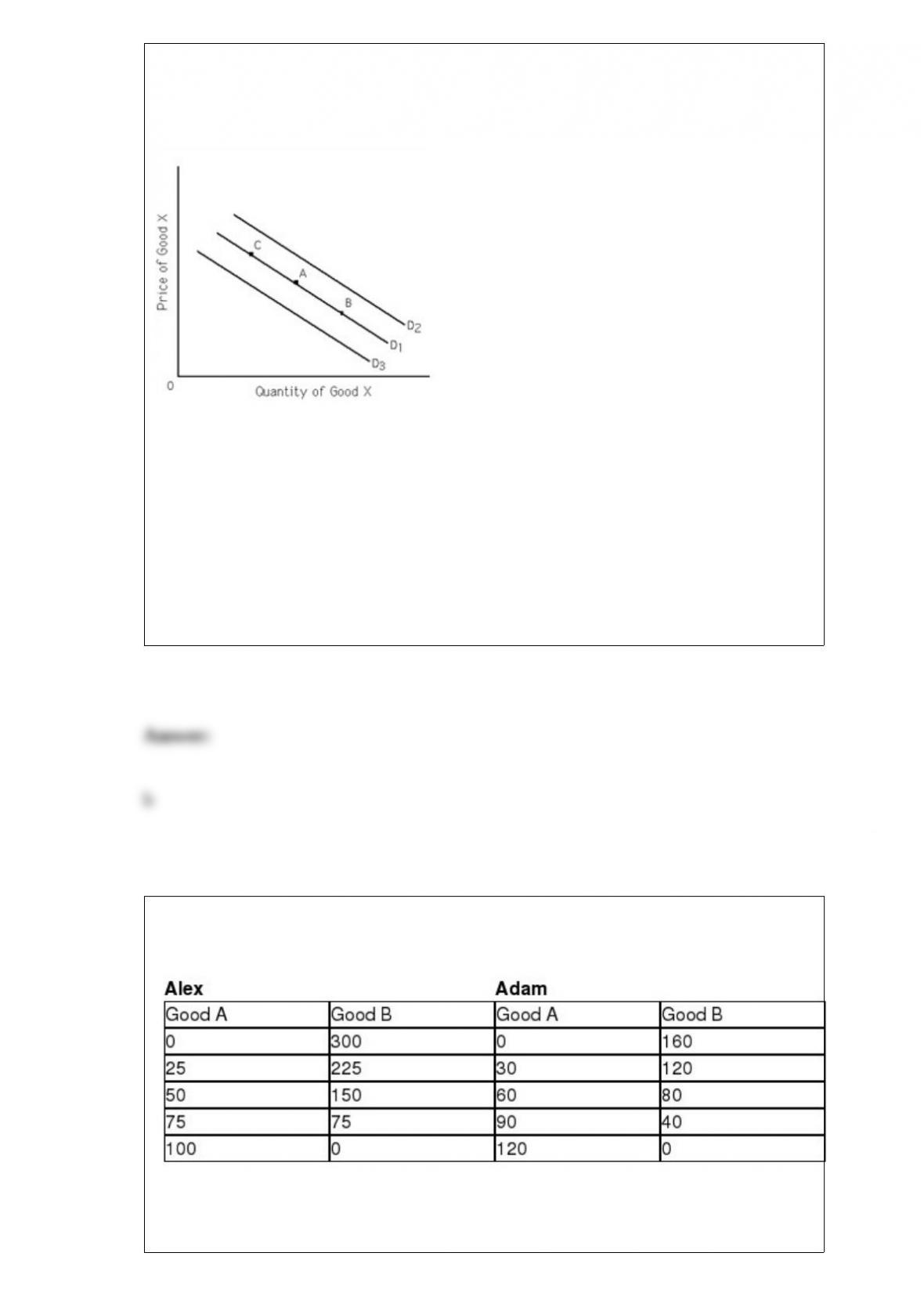
Refer to Exhibit 3-6. If a decrease in income causes the demand for good X to shift
from D1 to D2, then good X is
Exhibit 3-6
a. a normal good.
b. an inferior good.
c. a substitute good.
d. a complementary good.
e. a neutral good.
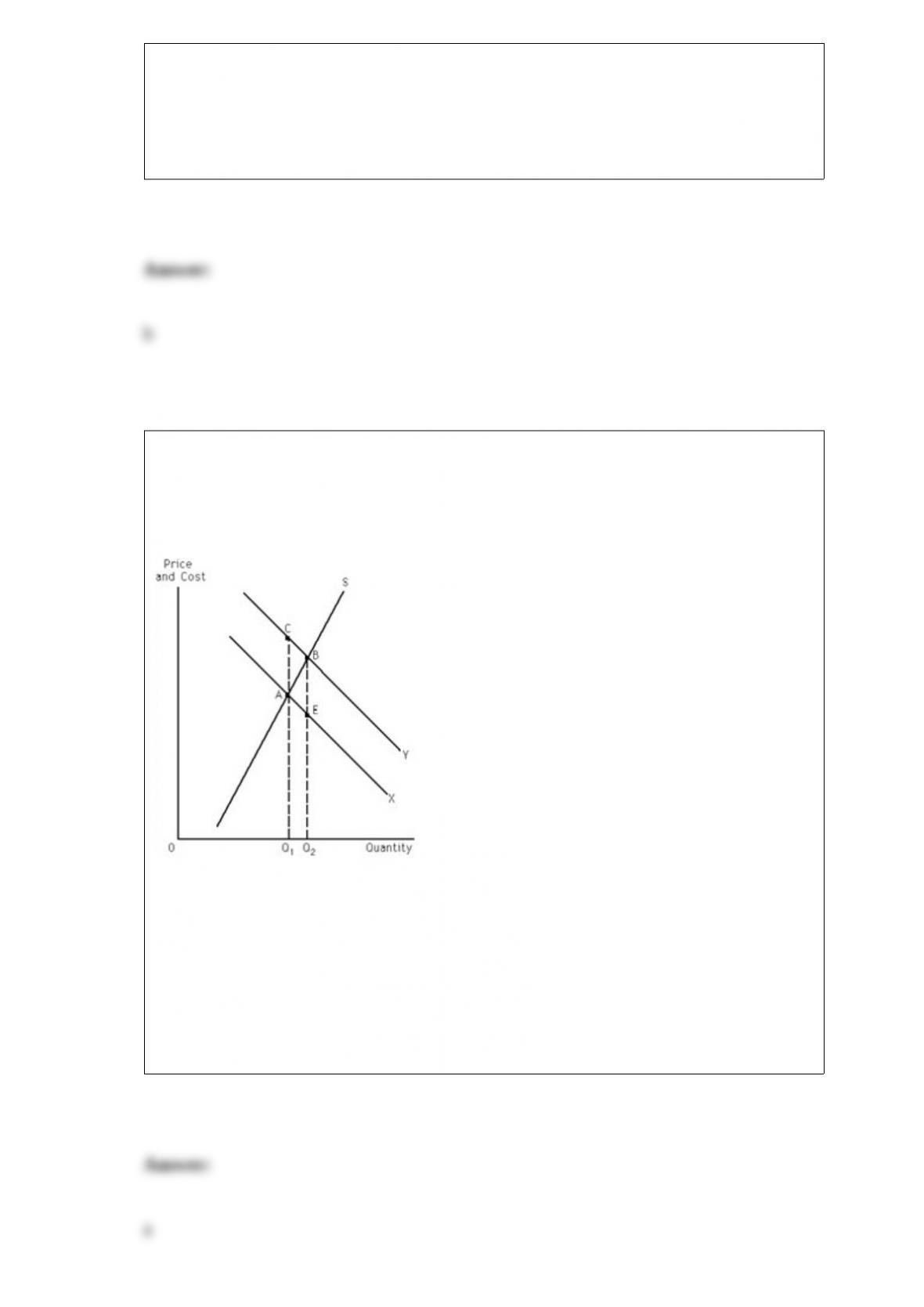
Refer to Exhibit 2-9. Who has the comparative advantage in the production of good A?
Exhibit 2-9
a. Alex
b. Adam
c. Both Alex and Adam
d. Neither Alex nor Adam
Refer to Exhibit 31-2. If the exhibit represents a positive externality situation, the
private cost of expanding output from Q1 to Q2 is the area of
Exhibit 31-2
a. Q1ABQ2.
b. Q1AEQ2.
c. Q1CBQ2.
d. ABE.

Sometimes, when goods are produced and consumed, side effects are felt by people
who are not directly involved in the market exchanges. In general, these side effects are
called
a. Coase effects.
b. externalities.
c. public goods.
d. internalities.
e. none of the above
Refer to Exhibit 34-8. Assume that the current price of sugar in the United States is
$300 per ton (which includes a $100 per ton tariff on sugar imports). The removal of the
$100 per ton tariff would increase consumers’ surplus by an amount equal to area
Exhibit 34-8
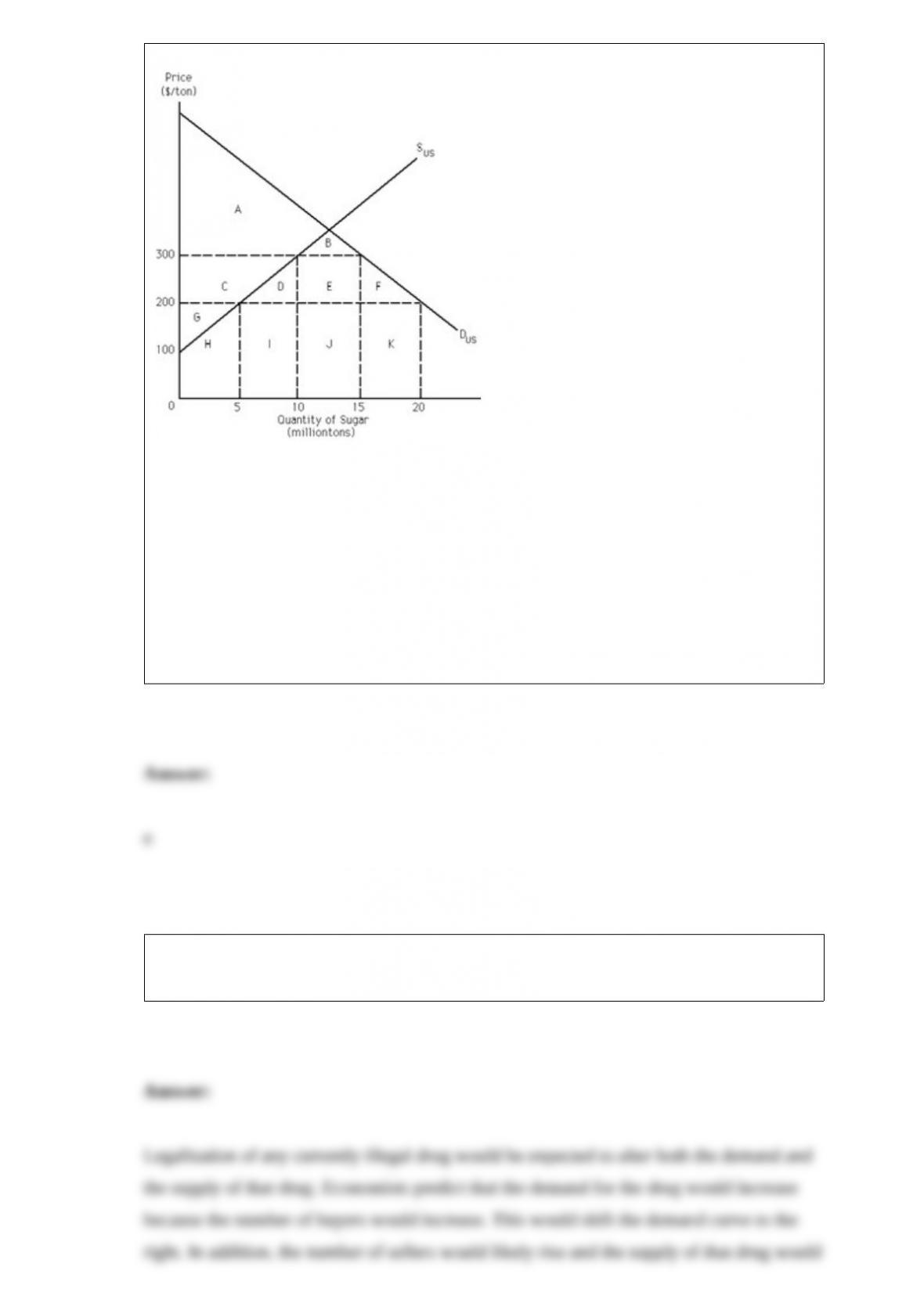
a. C.
b. C + G.
c. D + E + F.
d. C + D + E + F + G + H.
e. none of the above
Explain in detail how the legalization of marijuana would be expected to impact the
supply, demand, equilibrium price and quantity for marijuana.
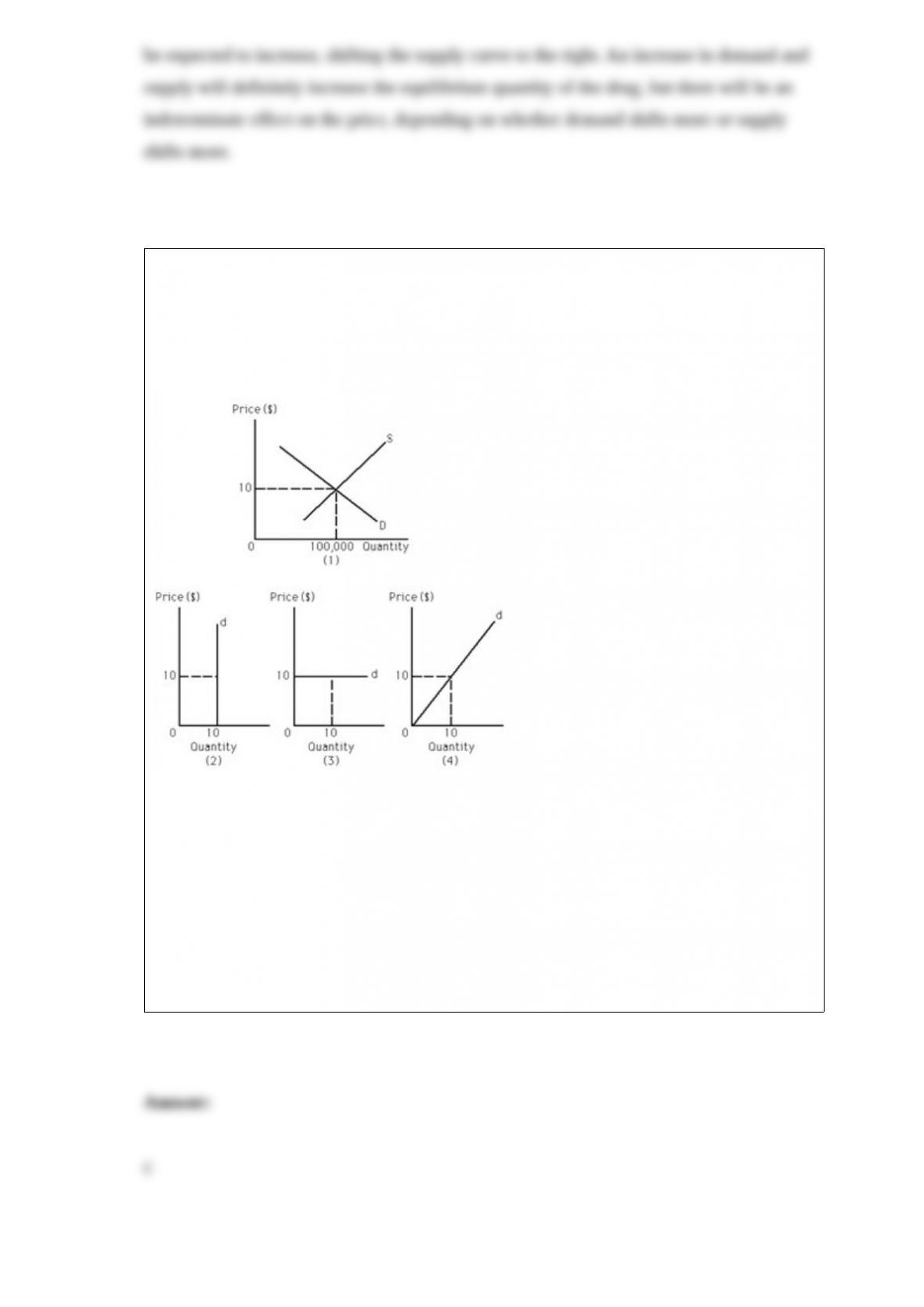
Refer to Exhibit 23-6. A perfectly competitive firm operating in the market depicted in
graph (1) is producing 311 units of output at the profit-maximizing level. What is the
marginal revenue of the 312th unit?
Exhibit 23-6
a. $0.312
b. $1
c. $10
d. $312
e. This cannot be determined based on the information provided.

Assume that a decreasing-cost industry experiences an increase in demand. In the long
run, this will
a. lead to a price increase.
b. lead to a price decrease.
c. have no influence on price.
d. a or b, depending on the marginal cost curve
If the quantity of output rises as more of a variable input is added to a fixed input,
a. the law of diminishing marginal returns does not hold.
b. total fixed cost must be declining.
c. marginal cost must be constant.
d. marginal physical product of the variable input is necessarily rising.
e. none of the above
A nonexcludable public good is
a. rivalrous in consumption and nonexcludable
b. nonrivalrous in consumption and excludable
c. nonrivalrous in consumption and nonexcludable
d. rivalrous in consumption and excludable
e. none of the above
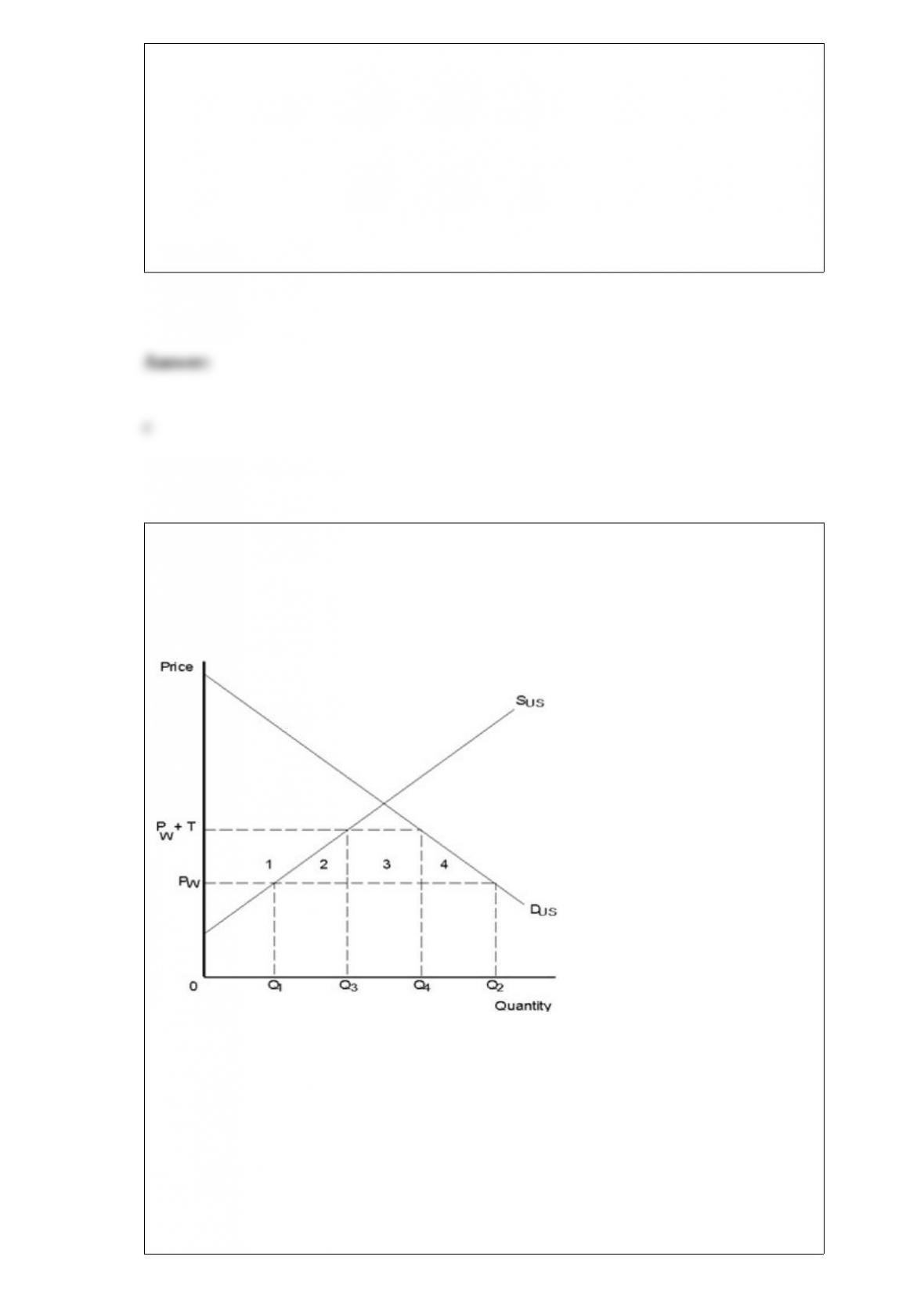
Refer to Exhibit 34-3. The world price is PW. If a tariff is imposed the price rises to PW
+ T. Because of the tariff, consumers’ surplus is reduced by an amount equal to the area
of
Exhibit 34-3
a. 1 + 2 + 3.
b. 1 + 2.
c. 1 + 2 + 3 + 4.
d. 3 + 4.
e. 2 + 3 + 4.