One of the conditions necessary for price discrimination is that the seller be a price
searcher.
a. True
b. False
Refer to Situation 27-1. If good X is produced in the U.S. the output per $1 of cost
would be ___________________ than if good X were produced in Mexico, thus it
would be best to produce good X in
Situation 27-1
a. higher; Mexico.
b. lower; Mexico.
c. higher; the United States.
d. lower; the United States.
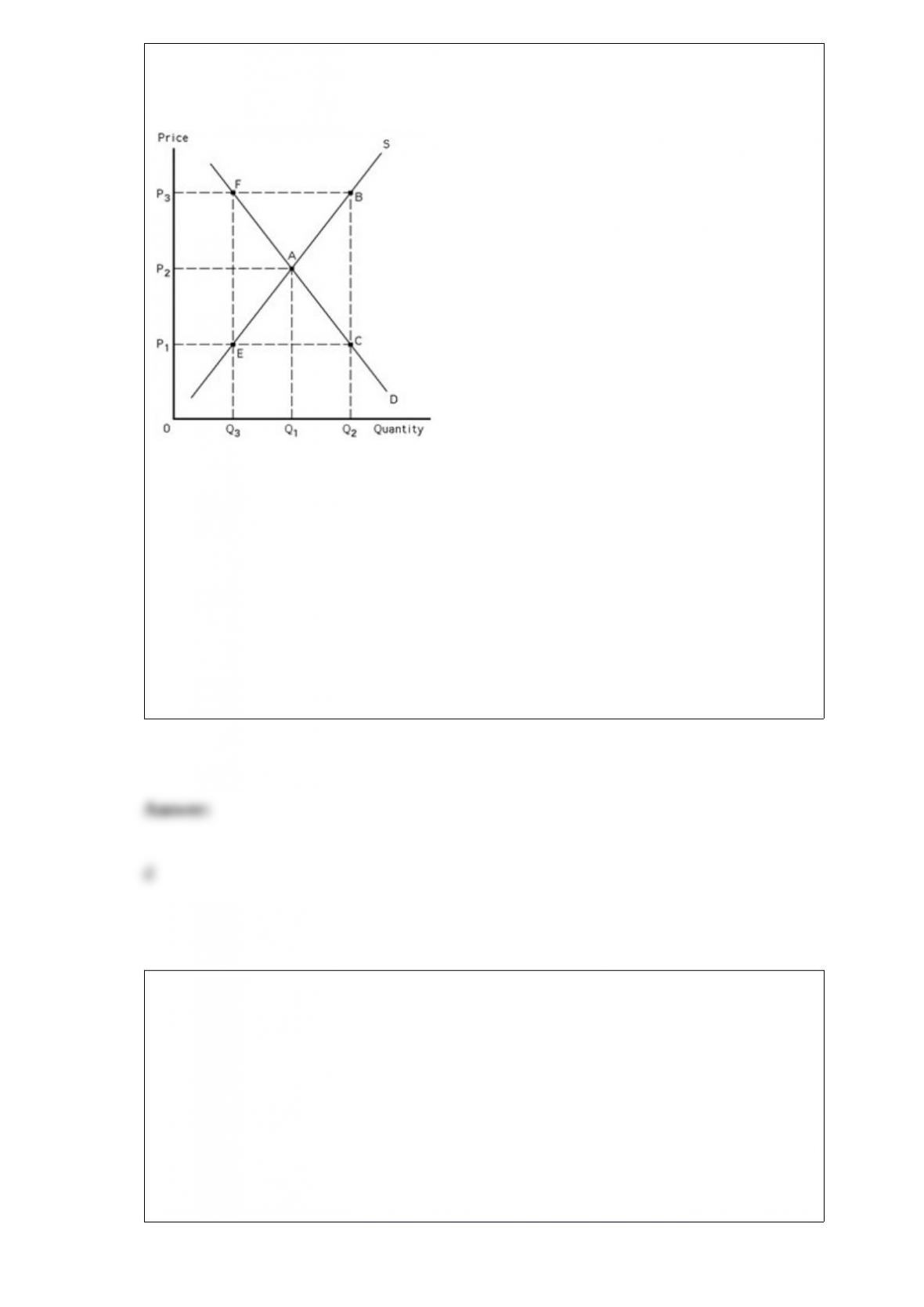
Refer to Exhibit 39-3. If P3 is a target price, the deficiency payment per unit is
Exhibit 39-3
a. P1.
b. P2.
c. P3.
d. P3 – P1.
e. P3 – P2.
Between 1910 and today, the number of farmers in the United States _____________
dramatically as a result of ___________________ in farming in the twentieth century.
a. dropped; technological improvements
b. rose; technological improvements
c. dropped; technological declines
d. rose; technological declines
A person will become informed on a political issue if
a. it is considered an important issue to society at large.
b. he perceives the benefits of becoming informed as greater than the costs of becoming
informed.
c. it is regularly discussed on television news shows.
d. it is regularly written about in the daily newspapers.
e. none of the above
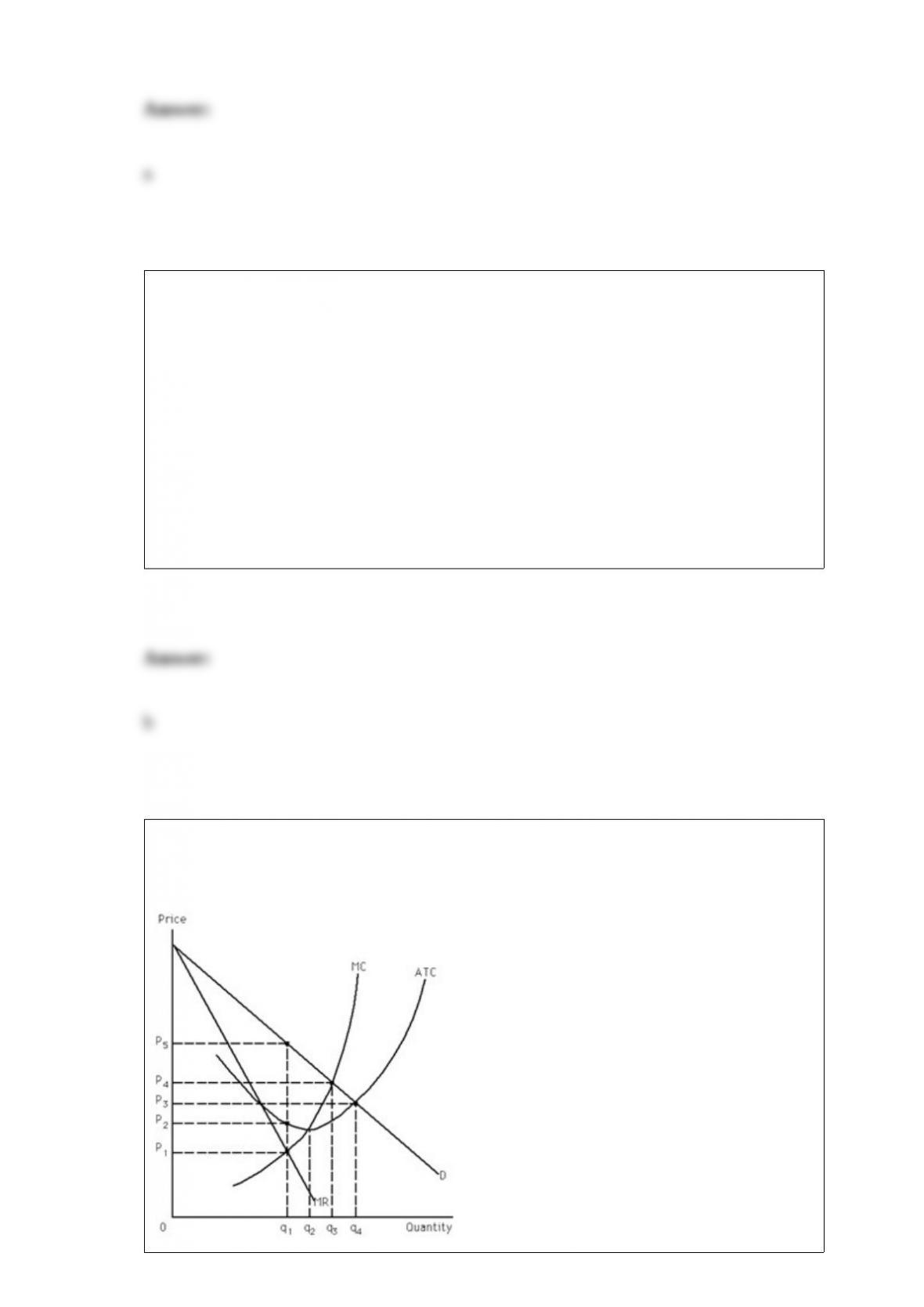
Refer to Exhibit 24-3. The profit of the single-price monopolist is
Exhibit 24-3
a. positive.
b. zero.
c. negative.
d. uncertain without more information.
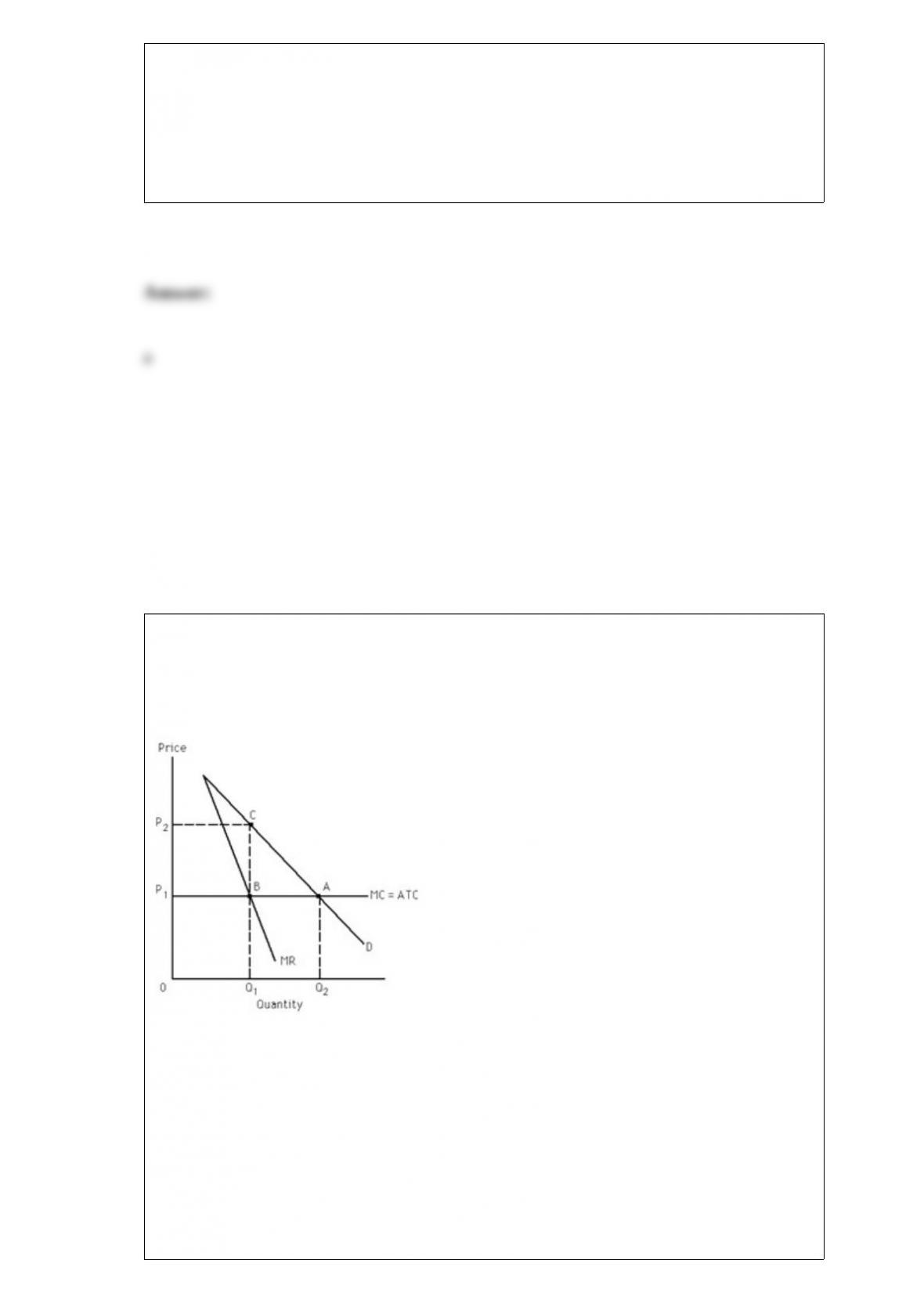
Refer to Exhibit 24-1. If the product is produced under single-price monopoly, what
quantity will be produced and what price will be charged in order to maximize profit?
Exhibit 24-1
a. Q2 units at P1
b. Q1 units at P1
c. Q1 units at P2
d. Q2 units at P2

Regulatory lag refers to
a. the fact that most regulated firms are slow to change their structures of production.
b. the fact that most regulated firms are slow to respond to their customers’ preferences.
c. the time period between when a natural monopoly’s costs change and when the
regulatory agency adjusts prices for the natural monopoly.
d. the time period between when natural monopoly begins to produce its output and
when it sells its product.
e. none of the above
Which of the following is definitely not a nonexcludable public good?
a. national defense
b. elementary education
c. flood control
d. charitable giving
e. None of the above; all are nonexcludable public goods.

If the return on capital is 12 percent and the price for loanable funds is 9 percent, then
a. firms will not be willing to borrow loanable funds until either the return on capital
decreases or the price for loanable funds increases, because the market for loanable
funds is not in equilibrium and businesses will be wary of further investment.
b. firms will realize that if they borrow loanable funds and invest in capital goods, it
will cause the return on capital to decrease, so they won’t want to borrow the funds.
c. savers will realize that they can earn more if they invest their savings in capital, so
they will withdraw their savings and supply them to firms at 14 percent.
d. none of the above
“Managerial coordination” refers to the
a. behavior of a worker who is putting forth less than the agreed-to effort.
b. process whereby individuals perform certain tasks based on changes in market
forces.
c. process whereby persons share in the profits of a business firm.
d. process whereby managers direct employees to perform certain tasks.
When the government implements an agricultural price support (above the equilibrium
price), a surplus results and the government buys the surplus at the support price.
a. True
b. False
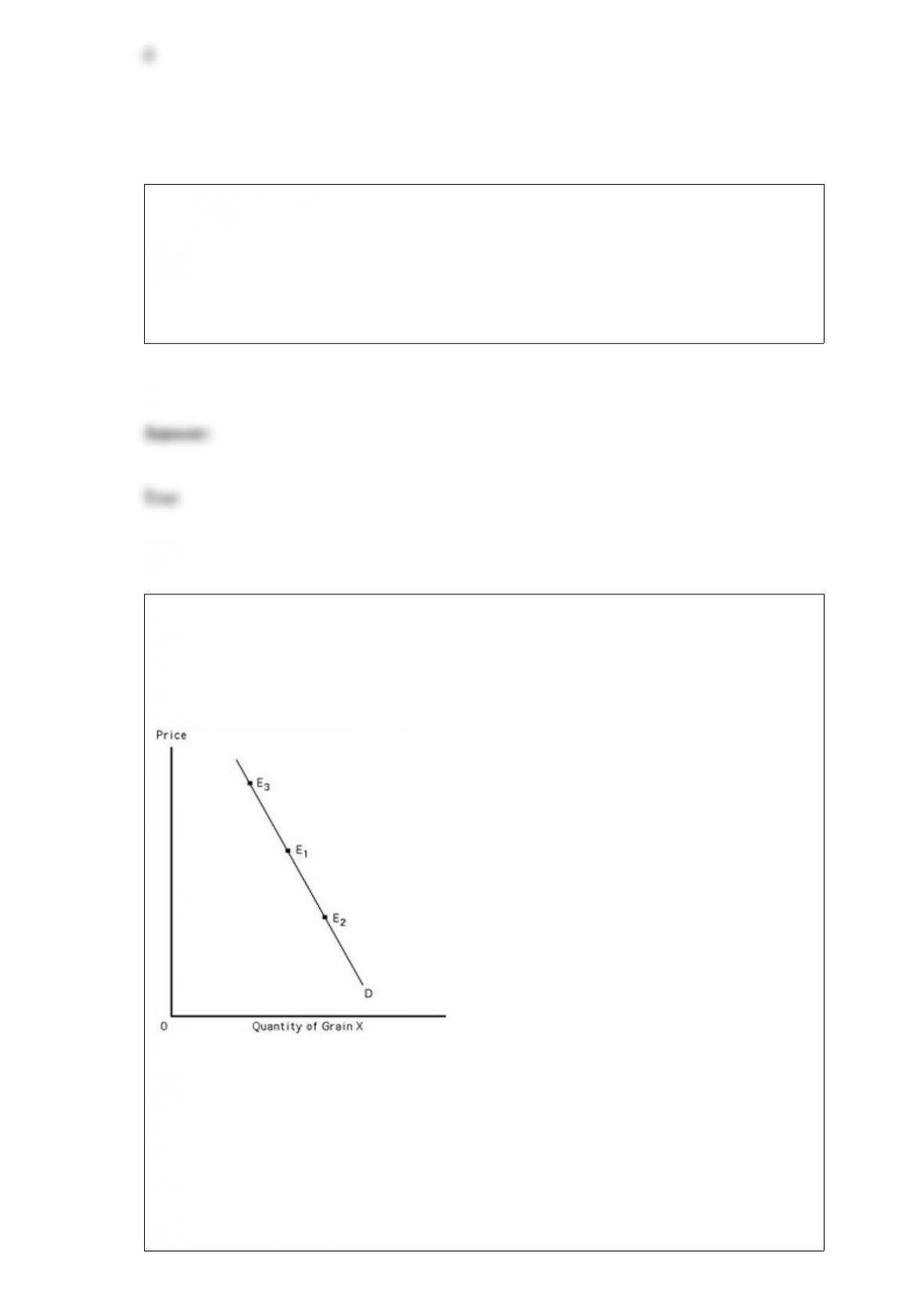
Refer to Exhibit 39-8. Assume that E1 represents the initial equilibrium in the market
for grain X. As a result of increased agricultural productivity, total revenues for farmers
in this market will
Exhibit 39-8
a. increase if the demand curve is perfectly inelastic.
b. increase if the demand curve is inelastic between E1 and E2.
c. decrease if the demand curve is inelastic between E1 and E2.
d. decrease if the demand curve is inelastic between E1 and E3.

e. none of the above
Firm X is a monopolistic competitive firm and a factor price taker. For this firm at the
profit-maximizing factor quantity,
a. VMP = MRP > MFC = factor price.
b. VMP>MRP = MFC > factor price.
c. VMP > MRP = MFC = factor price.
d. VMP < MRP = MFC = factor price.
Refer to Exhibit 20-3. When price decreases from $5.50 to $4.50, the price elasticity of
demand is
Exhibit 20-3
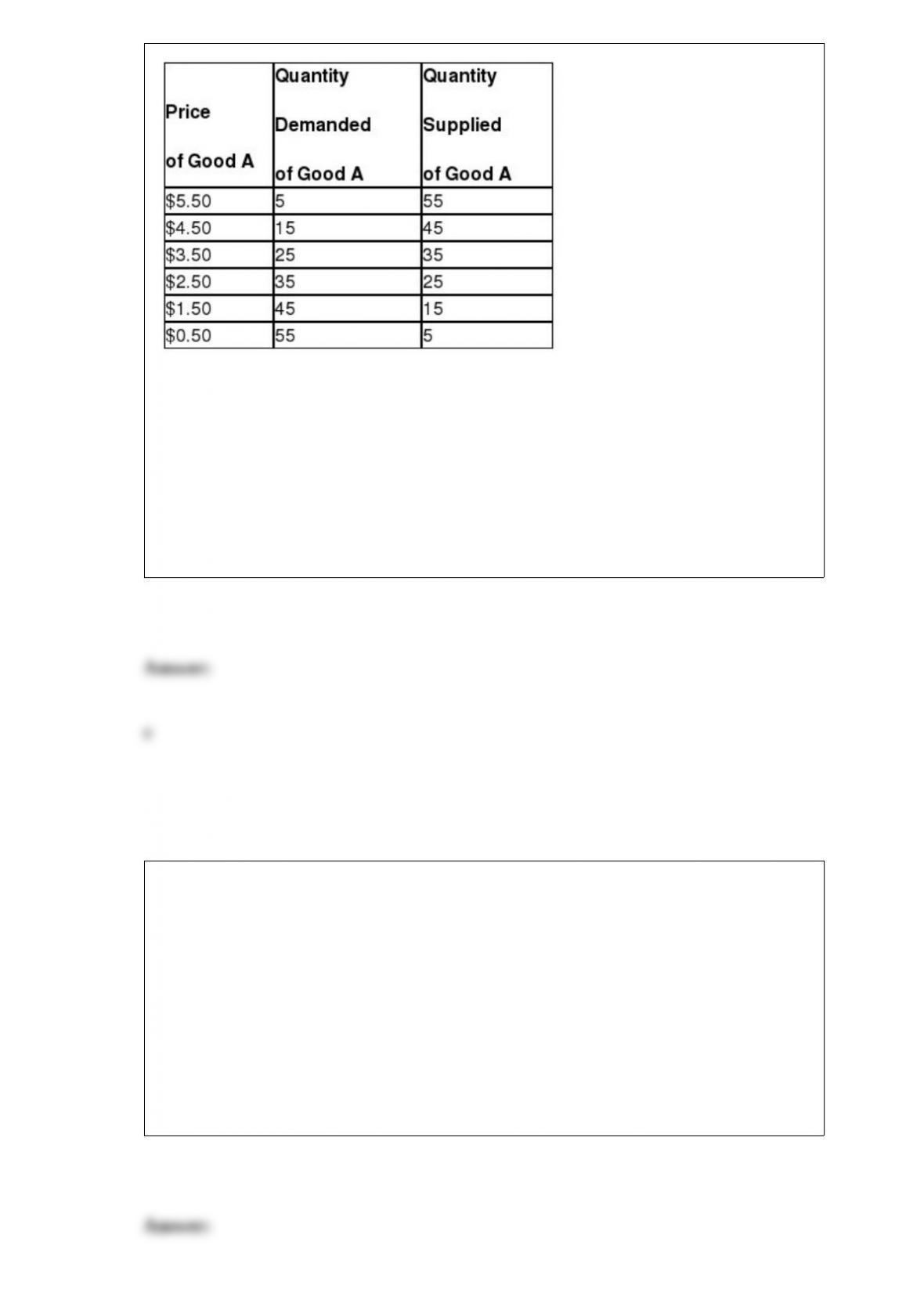
a. 0.2.
b. 0.5.
c. 1.0.
d. 2.0.
e. 5.0.
If the minimum wage is set above the equilibrium wage, then
a. more people will work than at the equilibrium wage.
b. the same number of people will work as at the equilibrium wage.
c. fewer people will want to work than at the equilibrium wage.
d. there will be fewer labor hours purchased by employers than at the equilibrium wage.
e. none of the above