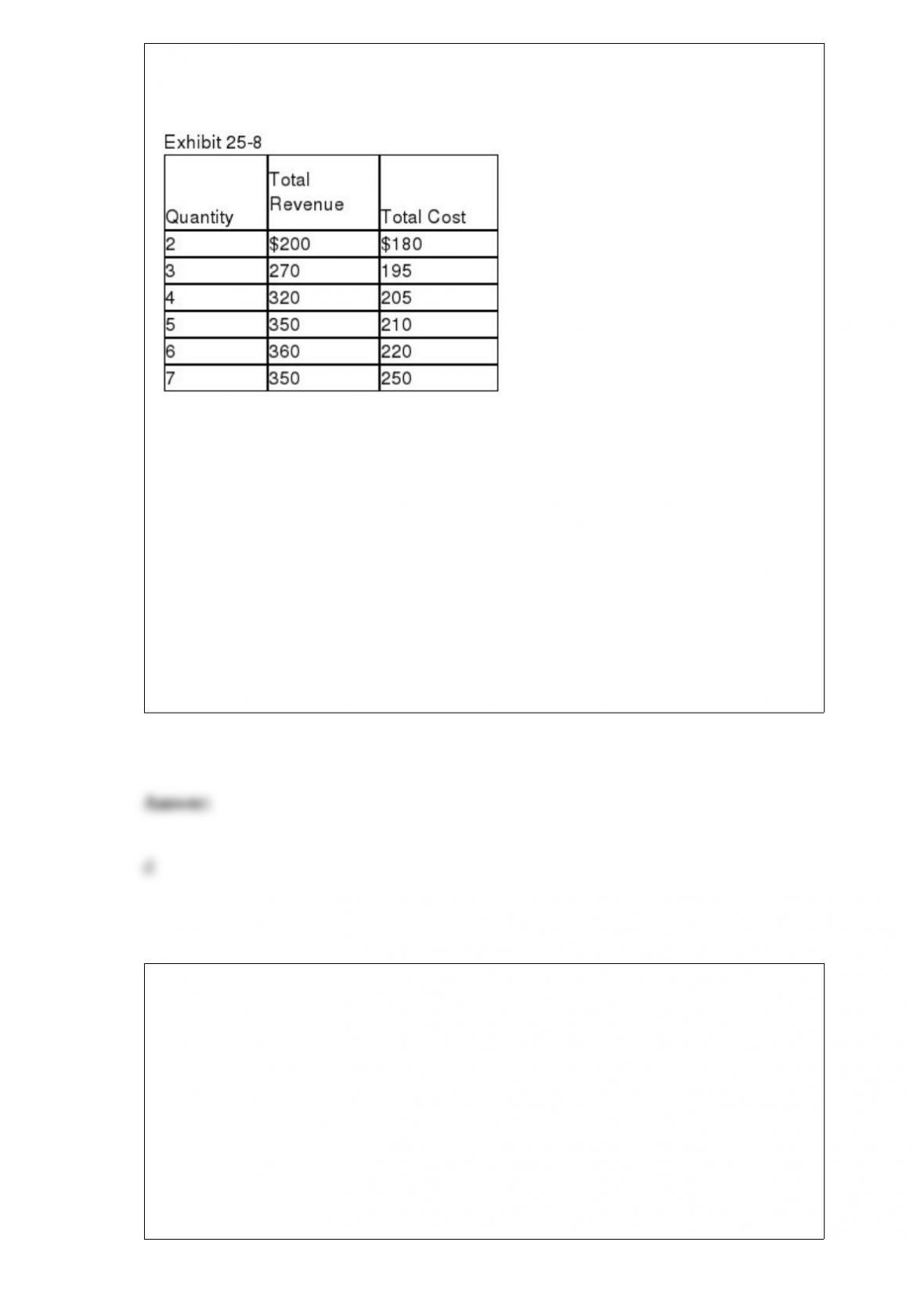
A profit-maximizing monopolistic competitive firm that produces at the level of output
where MR = MC will set the price at
a. $100 per unit.
b. $90 per unit.
c. $80 per unit.
d. $60 per unit.
e. $50 per unit.
Congressperson A: “If you approve that new water treatment plant in my district, I’ll
vote to keep the Air Force base open in your district.”Congressperson B:”It’s a deal.”
This is an example of
a. logrolling.
b. lobbying.
c. median voting.
d. logtumbling.
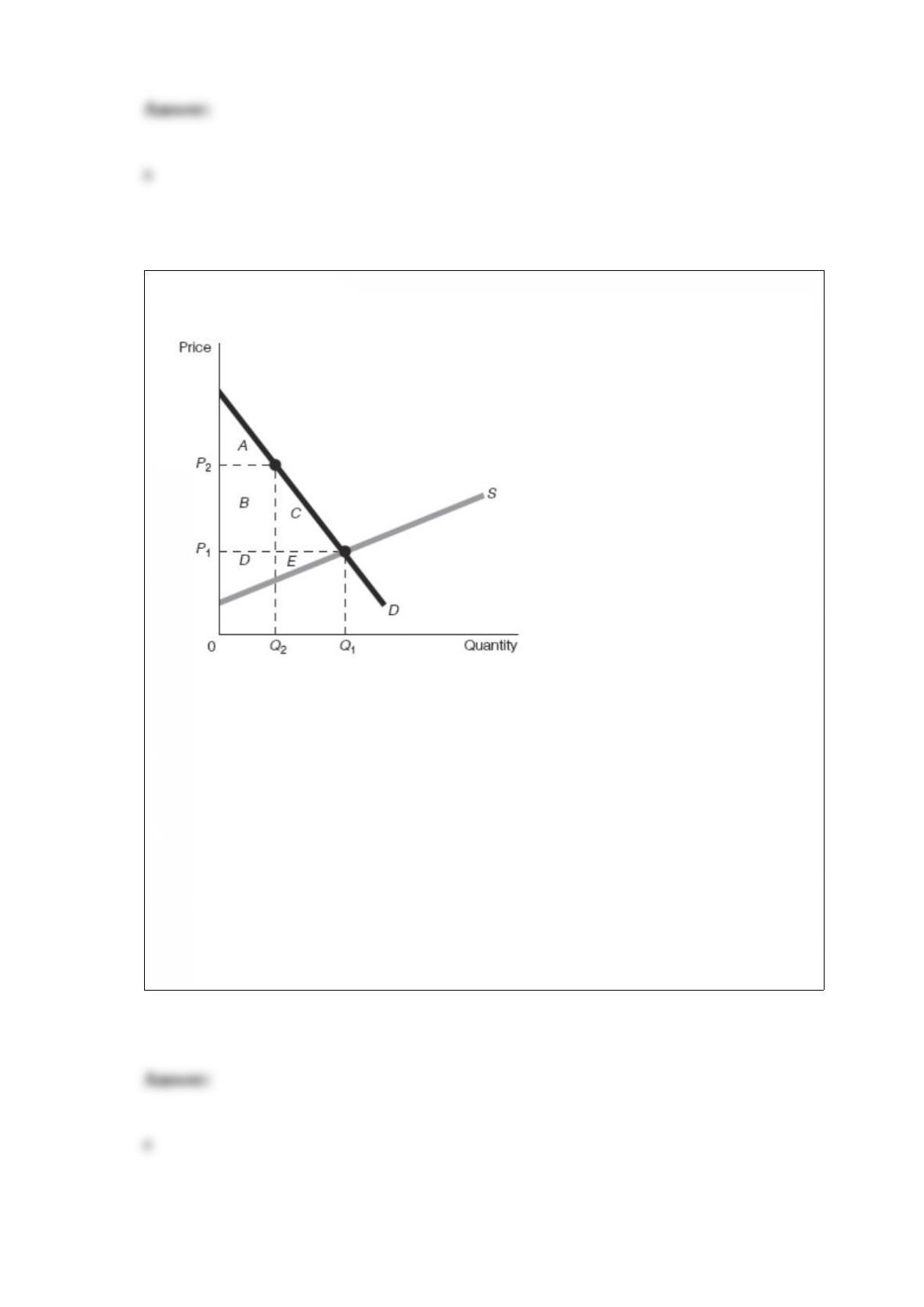
Exhibit 32-4
If producers of this good engage in rent seeking which results in the government
imposing a price floor of P2, then consumers€ surplus ends up being area
a. D + E
b. A + B + C + D + E
c. A + B + C
d. C + E
e. A
If it is discovered that using drugs enhances a person’s chance of contracting a lethal
disease, the cost of using drugs
a. increases.
b. decreases.
c. is not affected.
d. is irrelevant, since they are illegal anyway.
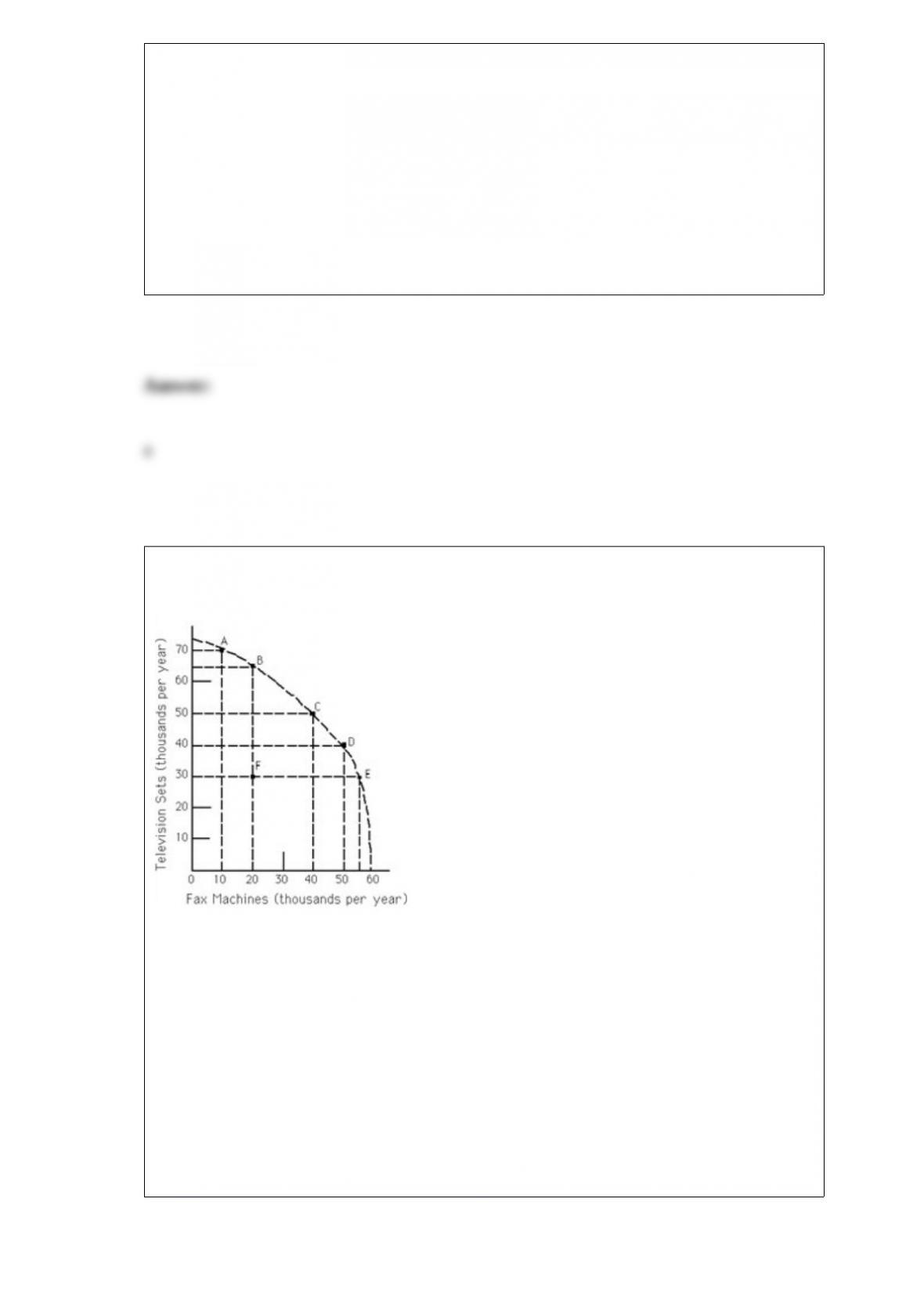
Exhibit 2-5
Which of the following labeled points are productive efficient?
a. A, B, C, D, and E
b. B, C and D only
c. C only
d. All of the points are productive efficient.
e. None of the points are productive efficient.
Consumers’ surplus is the difference between the maximum price the buyer is willing
and able to pay for a good and the actual price paid.
a. True
b. False
The firm negotiates a new agreement with its workers for lower wages. The ATC curve
should be __________ and the AFC curve should be __________ after the agreement
goes into effect.
a. lower; lower
b. lower; unchanged
c. higher; higher
d. lower; higher
e. unchanged; lower
Suppose a consumer is purchasing Coke and pretzels in quantities such that she is

achieving consumer equilibrium. Then the price of Coke decreases. The consumer will
likely __________ her consumption of Coke and the marginal utility of Coke will
__________ while the total utility from Coke will __________.
a. increase; increase; increase
b. increase; decrease; decrease
c. increase; decrease; increase
d. decrease; increase; increase
e. decrease; decrease; decrease
For a monopoly firm, marginal revenue equals marginal cost at 100 units (of output). At
100 units, price is above marginal cost. It follows that the monopoly firm
a. earns profits.
b. takes losses.
c. faces some close substitutes for its product.
d. faces no substitutes for its product.
e. is not resource-allocative efficient.
How are changes in opportunity cost predicted to affect behavior?
a. The lower the opportunity cost of doing X, the less likely X will be done.

b. The higher the opportunity cost of doing X, the less likely X will be done.
c. The lower the opportunity cost of doing X, the more likely X will be done.
d. a and c
e. b and c
A government agricultural policy that sets a limit on the quantity of a product that a
farmer is allowed to bring to market is the
a. marketing quota system.
b. acreage allotment program.
c. price support program.
d. target price system.
e. paying farmers not to produce system.
The existence of which of the following leads to an overestimate of the number of
persons in poverty?
a. unreported income
b. in-kind benefits received by the poor
c. uncounted homeless persons

d. a and b
e. a, b, and c
Which of the following statements is true?
a. Special interest groups are more likely to push for policies that increase the size of
the economic pie than to increase their slice of the pie.
b. Special interest groups are likely to push for policies that increase the size of their
slice of the economic pie even if it means that the overall size of the economic pie will
shrink.
c. Special interest groups are more likely to favor policies that increase the size of their
slice of the economic pie than policies that favor economic growth.
d. a and c
e. b and c