
Which of the following is probably not an acceptable solution to the problem of
diseconomies of scale?
a. reorganization
b. building a larger plant
c. dividing operations
d. hiring new managers
If the nominal interest rate is 9 percent and expected inflation rate is 7 percent, the real
interest rate equals
a. 2 percent.
b. 16 percent.
c. 11.5 percent.
d. 8 percent.
e. none of the above
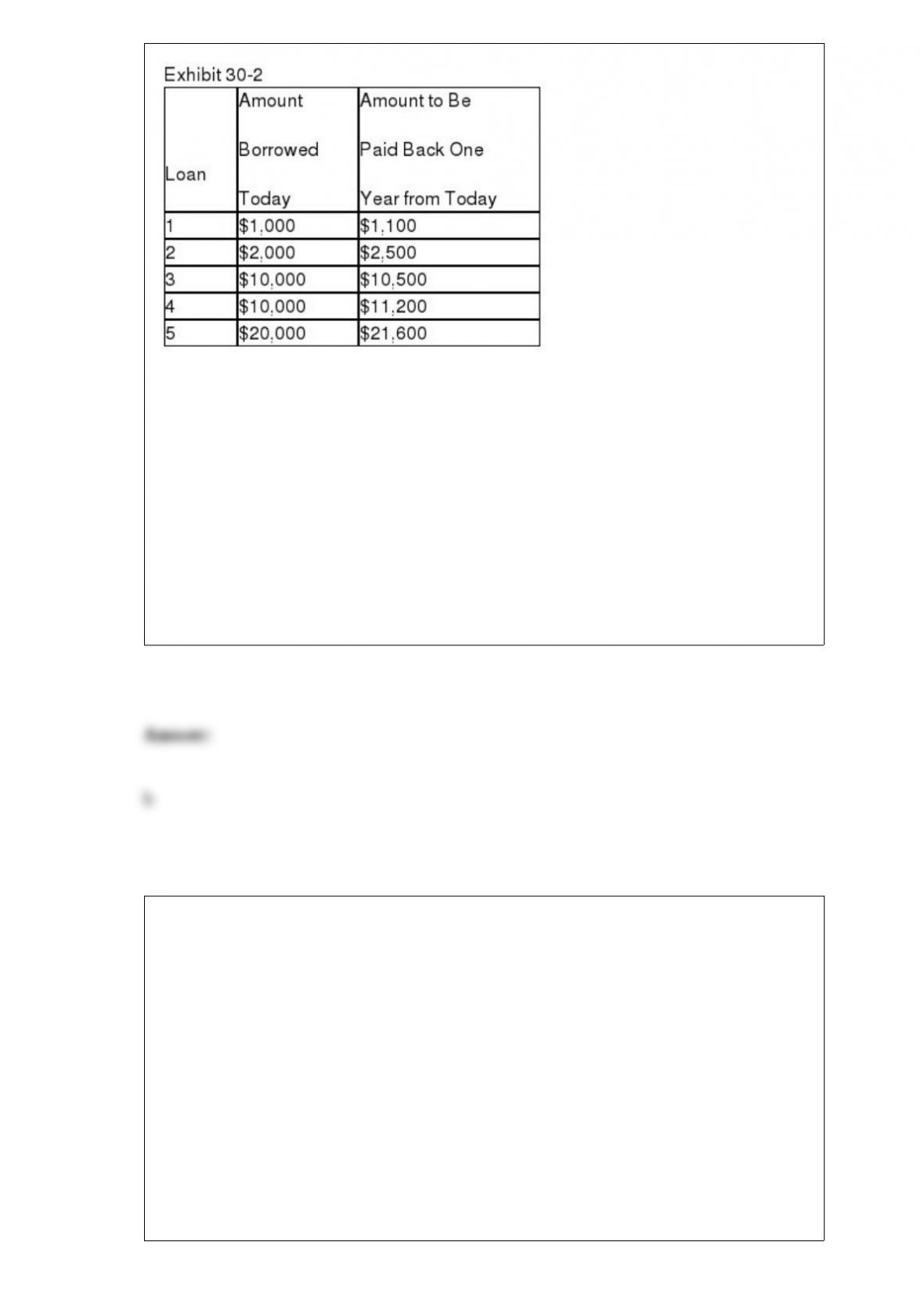
The interest and interest rate for loan 4 are, respectively,
a. $11,200 and 12.0 percent.
b. $1,200 and 12.0 percent.
c. $11,200 and 11.2 percent.
d. $1,200 and 11.2 percent.
e. none of the above
Situation 32-1
In the early 1980s, the U.S. automobile industry managed to influence the government
to negotiate a voluntary export restraint agreement with Japan that was in effect from
1981 until 1985. The predictable result was an average increase in the price of Japanese
cars by about $1,000 and of U.S. cars by about $370. Also, as a result of the import
quotas, 26,000 new jobs were “created” in the U.S. automobile industry.
This episode can be seen as an instance of
a. rational ignorance.
b. logrolling.
c. special interest politics.
d. a zero sum game.
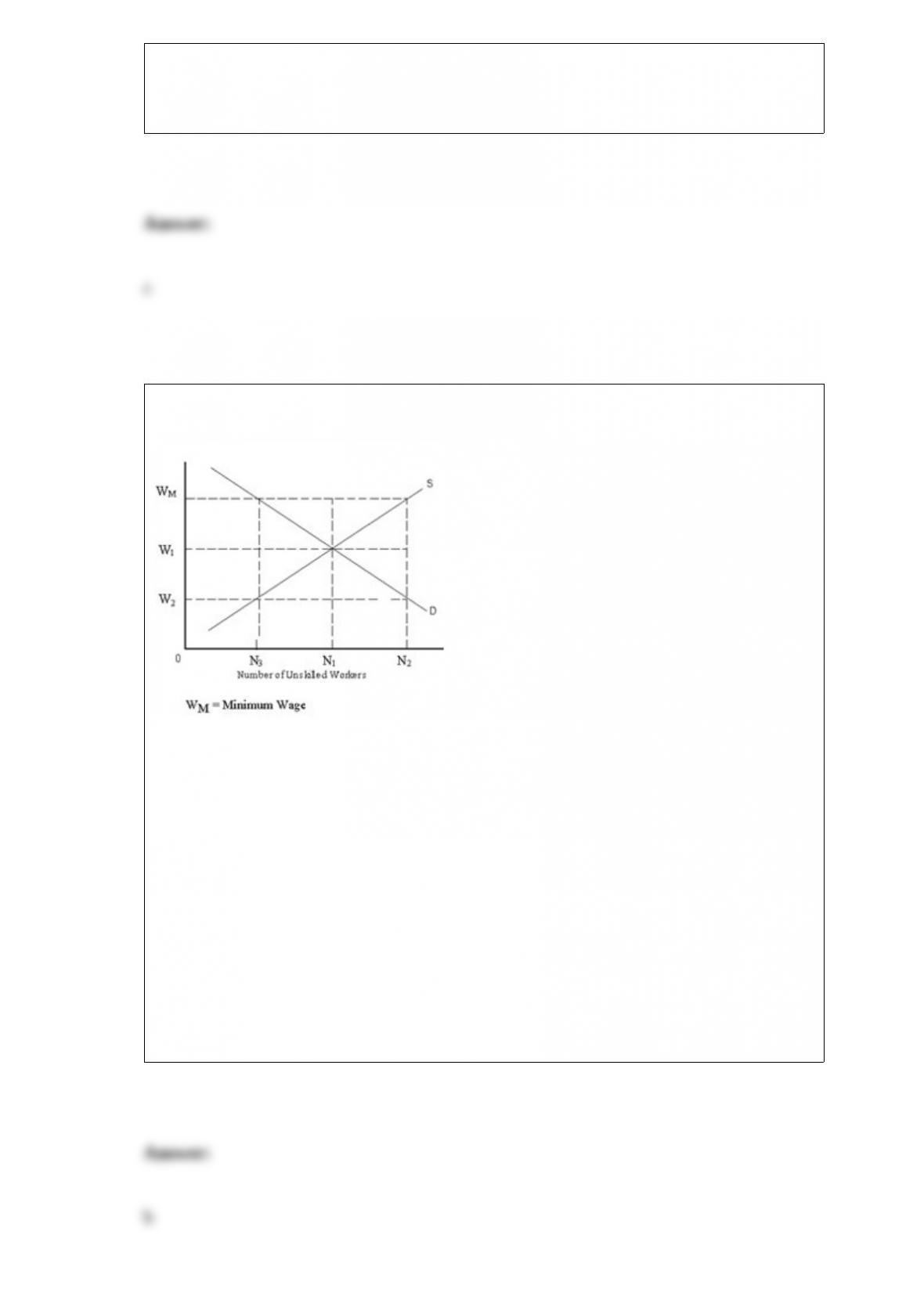
Exhibit 4-7
How many fewer persons work in the unskilled labor market at the minimum wage
(WM) than at the equilibrium wage (W1)?
a. (N2 – N1) persons
b. (N1 – N3) persons
c. (N2 – N3) persons
d. N3 persons
e. none of the above

“As the price of apples goes up, the demand for apples goes down.” The author of this
statement
a. implies that price and demand are unrelated.
b. uses the word “demand” when he should use the word ‘supply.”
c. uses the word “demand” when he should use the words “quantity demanded.”
d. implies that demand and price have a direct relationship.
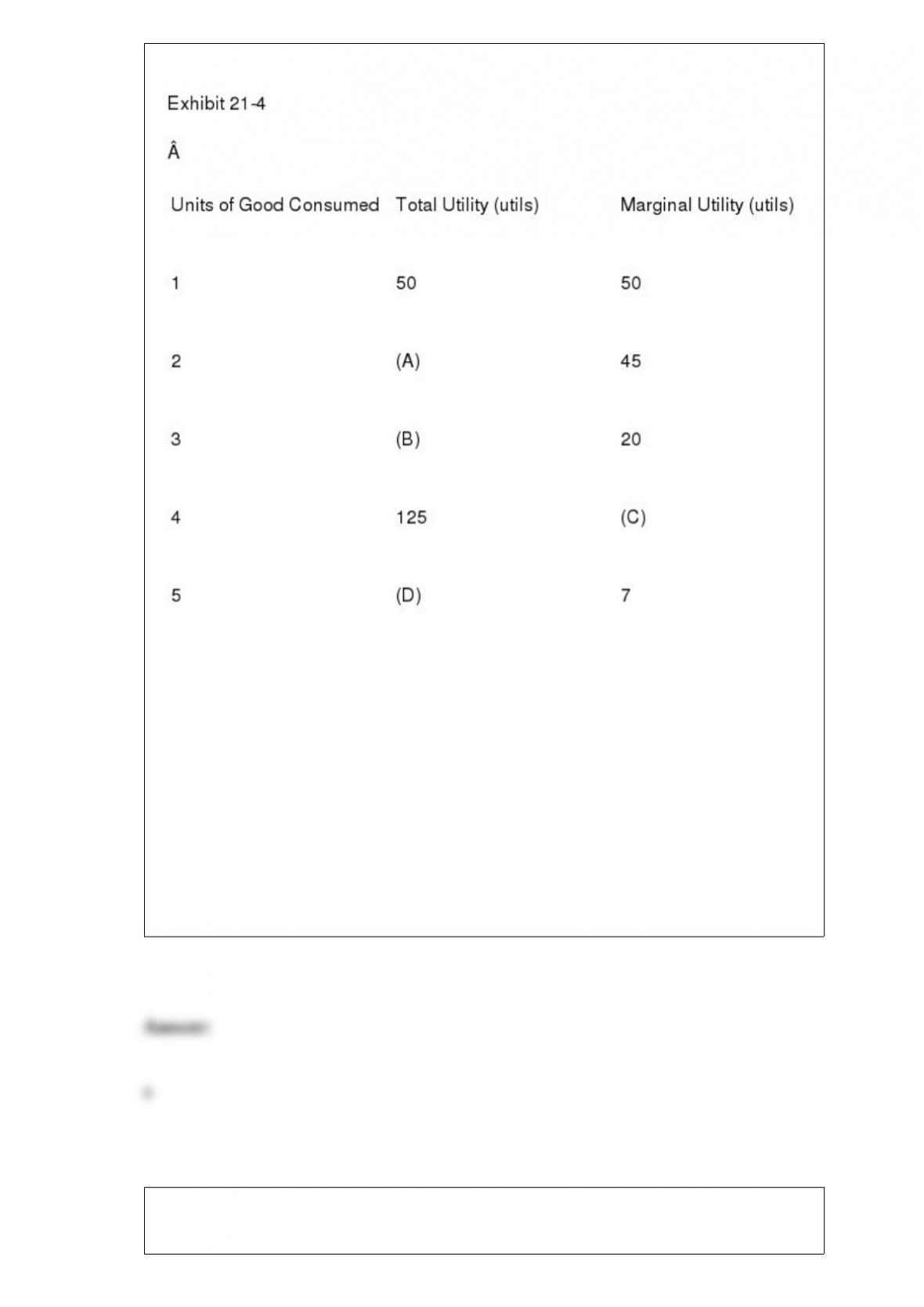
What value goes in blank (D)?
a. 132
b. 111
c. 118
d. 25
e. There is not enough information to answer this question.
Which of the following is the best example of price discrimination?
a. a cellular telephone company charging lower rates to weekend callers than weekday
callers
b. a gas station charging less per gallon to customers who pay cash than customers who
use a credit card
c. an auto insurance company charging a higher premium to a seventeen year old boy
with a driving record that includes three accidents than the premium charged to a
middle-aged driver with a clean driving record
d. a private attorney charging higher fees to clients receiving special services than
clients receiving regular services
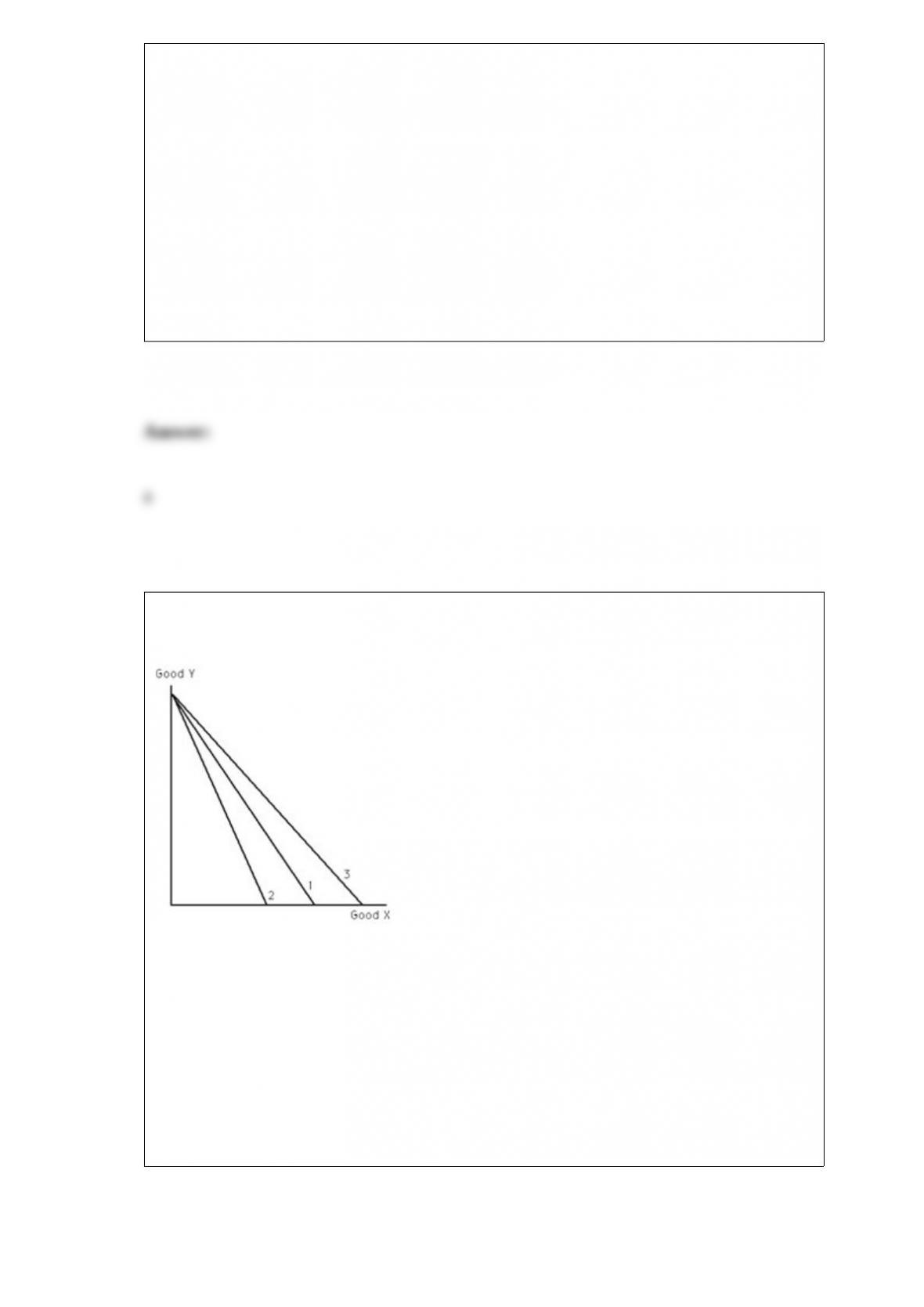
Exhibit 21-8
A move of the budget constraint from 1 to 2 is caused by a
a. rise in the price of good X.
b. fall in the price of good X.
c. rise in the price of good Y.
d. fall in income.

If a market is contestable, then
a. a cartel will form in the industry.
b. economic profits are small or zero.
c. firms face a vertical demand curve.
d. there is a dominant firm in the market.
e. none of the above
The lower the elasticity of demand for labor,
a. the larger the cutback in labor for a given wage increase.
b. the smaller the cutback in labor for a given wage increase.
c. the higher the wage rate that a labor union receives for its membership.
d. the lower the wage rate that a labor union receives for its membership.
e. the more members of a given union.
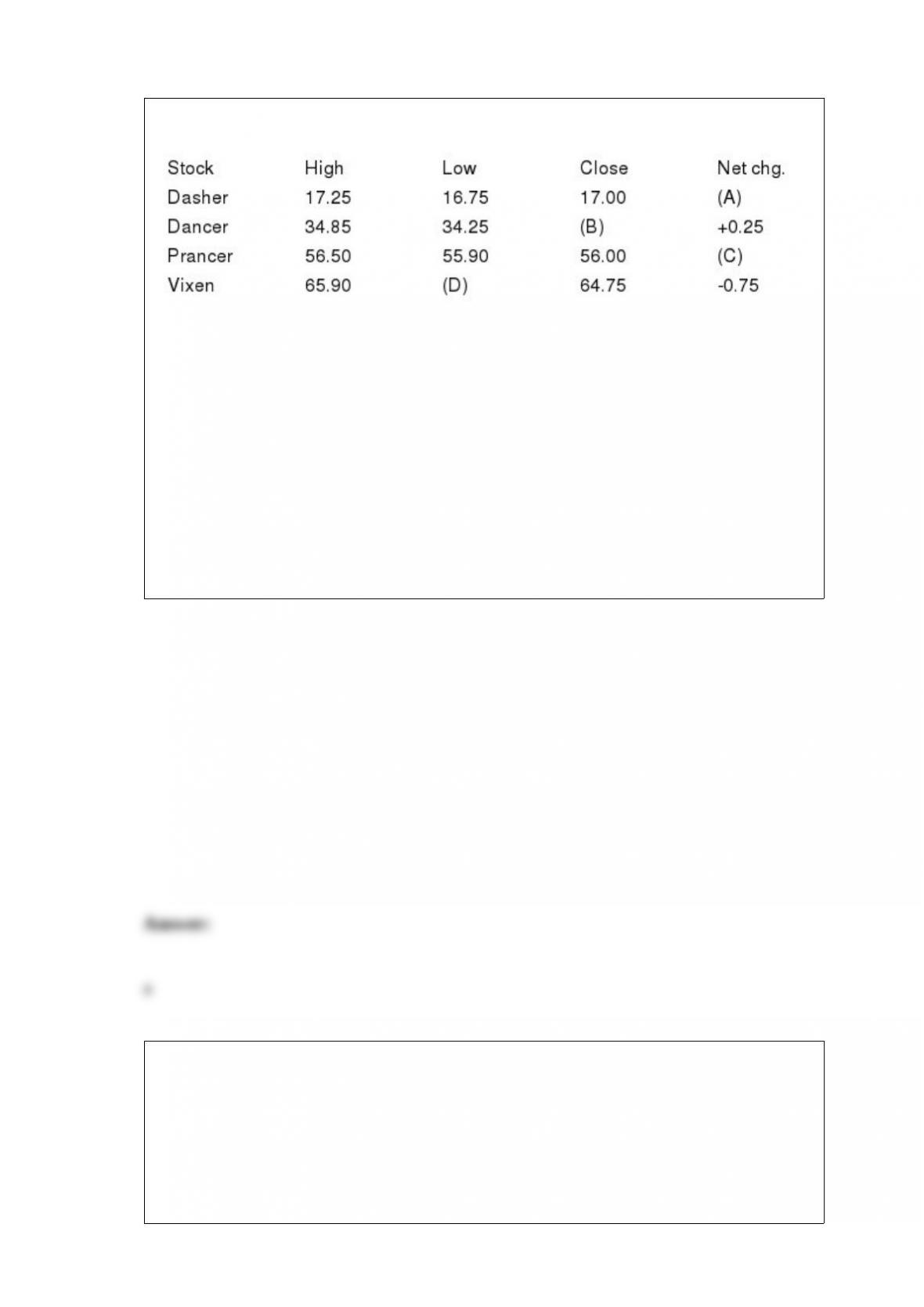
Exhibit 38-2
If the closing price of Dasher’s stock on the previous day was $17.50, what value goes
in blank (A)?
a. -0.50
b. +0.50
c. -0.25
d. -0.75
e. There is not enough information given to answer this question.
A quota raises the price of the product on which the quota has been placed, decreases
consumers’ surplus, increases producers’ surplus, and generates tariff revenue for the
government.
a. True
b. False

What is the maximum value of the Herfindahl index?
a. 10
b. 100
c. 1,000
d. 10,000
e. There is no maximum value of the Herfindahl index.
A government agricultural policy in which a mandated minimum price is set is the
a. marketing quota system.
b. acreage allotment program.
c. price support program.
d. target price system.
e. paying farmers not to produce system.
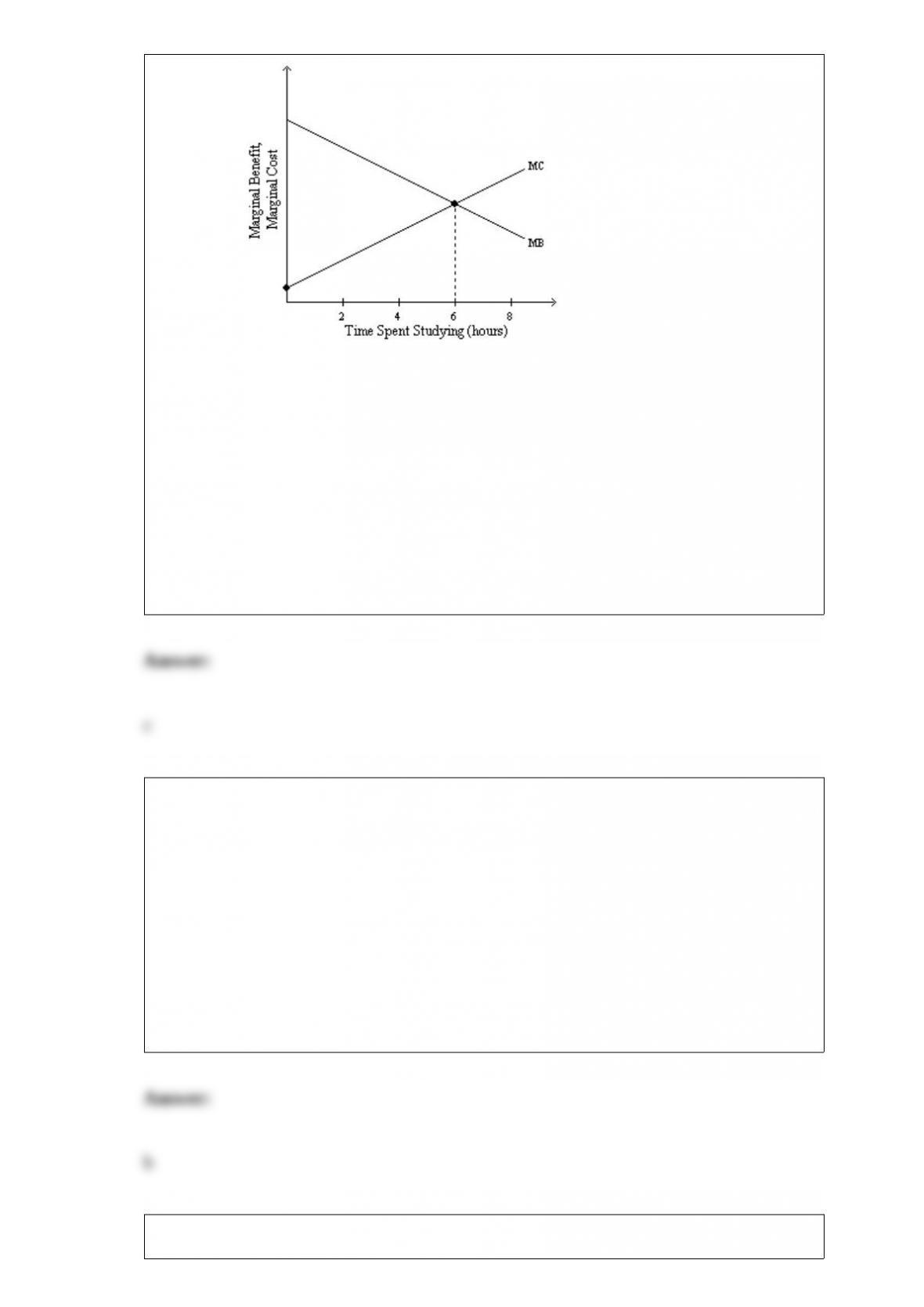
Exhibit 1-1
The student whose study habits are illustrated here will maximize the net benefits of
studying when she has studied
a. 2 hours
b. 4 hours
c. 6 hours
d. 8 hours
If the price elasticity of demand for a good is zero, then demand is
a. perfectly elastic.
b. perfectly inelastic.
c. unit elastic.
d. inelastic.
e. none of the above
If the demand curve for agricultural products is inelastic and farmers as a group become

more productive, then prices of agricultural goods will __________ and total revenue
earned by farmers will __________.
a. decrease; increase
b. decrease; decrease
c. increase; increase
d. increase; decrease
e. We cannot answer this question without knowing how inelastic the demand curve is.