
If a negative externality exists, then there is a __________ when society produces the
market output instead of the socially optimal output. This exists because the
__________ to sellers and third parties are __________ the __________ derived by
buyers.
a. net social benefit; costs; greater than; benefits
b. net social cost; benefits; less than; costs
c. net social cost; costs; greater than; benefits
d. net social cost; costs; less than; benefits
e. none of the above
The longer you hold stocks in the stock market, the more likely you will earn a positive
return, ceteris paribus.
a. True
b. False
The law of increasing opportunity cost helps to explain why PPF€s are typically
bowed-outward.
a. True
b. False

“Logrolling” is
a. the exchange of votes to gain support for legislation.
b. pressure that special interest groups place on politicians.
c. when politicians refuse to go into detail and speak only in generalities.
d. the process by which government agencies make sure they spend their allotted annual
budget.
Countries that engage in specialization and trade can consume at a level beyond their
production possibilities frontier.
a. True
b. False
Suppose health-care reform X makes it unlawful for insurance companies to deny
insurance to persons with a preexisting disease.One unintended effect of this reform is
that some people

a. will buy more health insurance than they would have without reform X.
b. may wait until they have a particular disease before they buy health insurance.
c. will try to work longer hours, to earn more income, to pay for increasing health
insurance premiums.
d. a and c
e. none of the above
The reason people can’t have everything they want is because
a. people are selfish.
b. scarcity exists.
c. there is not enough economic growth in the world.
d. none of the above
One difference between a perfectly competitive firm and a monopoly firm is
a. a perfectly competitive firm maximizes profit by producing the quantity of output at
which MR = MC, and the monopoly firm does not.
b. a monopoly firm is resource allocative efficient, and a perfectly competitive firm is
not.
c. the monopoly firm charges the highest per-unit price for its product, and the perfectly

competitive firm does not.
d. the demand curve and the marginal revenue curve are the same for the perfectly
competitive firm, but they are not the same for the monopoly firm.
e. c and d
If a supply curve shifts rightward, this means
a. suppliers are willing and able to offer less of the good for sale at every price.
b. suppliers are willing and able to offer more of the good for sale at every price.
c. quantity supplied is greater at every price.
d. suppliers are willing and able to offer more of the good for sale only at a particular
price.
e. b and c
Assume that a decreasing-cost industry experiences an increase in demand. In the long
run, this will
a. lead to a price increase.
b. lead to a price decrease.
c. have no influence on price.
d. a or b, depending on the marginal cost curve
Which of the following does not affect wages?
a. number of persons who can do a particular job
b. degree of effort employees exert while on the job
c. workers’ abilities and skills
d. product demand
e. none of the above; i.e., all of the factors affect wages
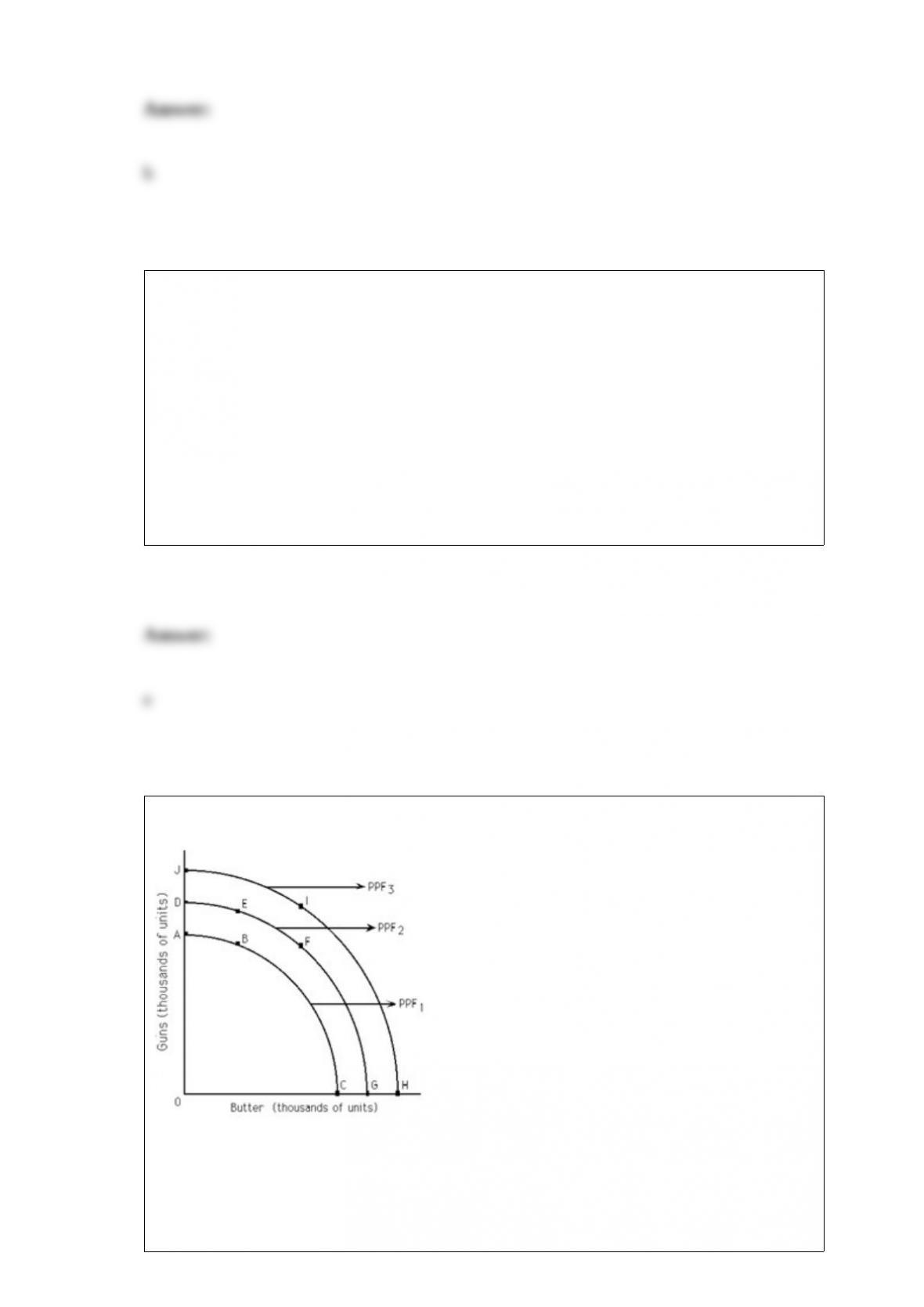
Exhibit 2-2
If PPF2 is the relevant production possibilities frontier, then point __________ is
productive efficient.
a. B
b. D
c. I
d. F
e. both b and d
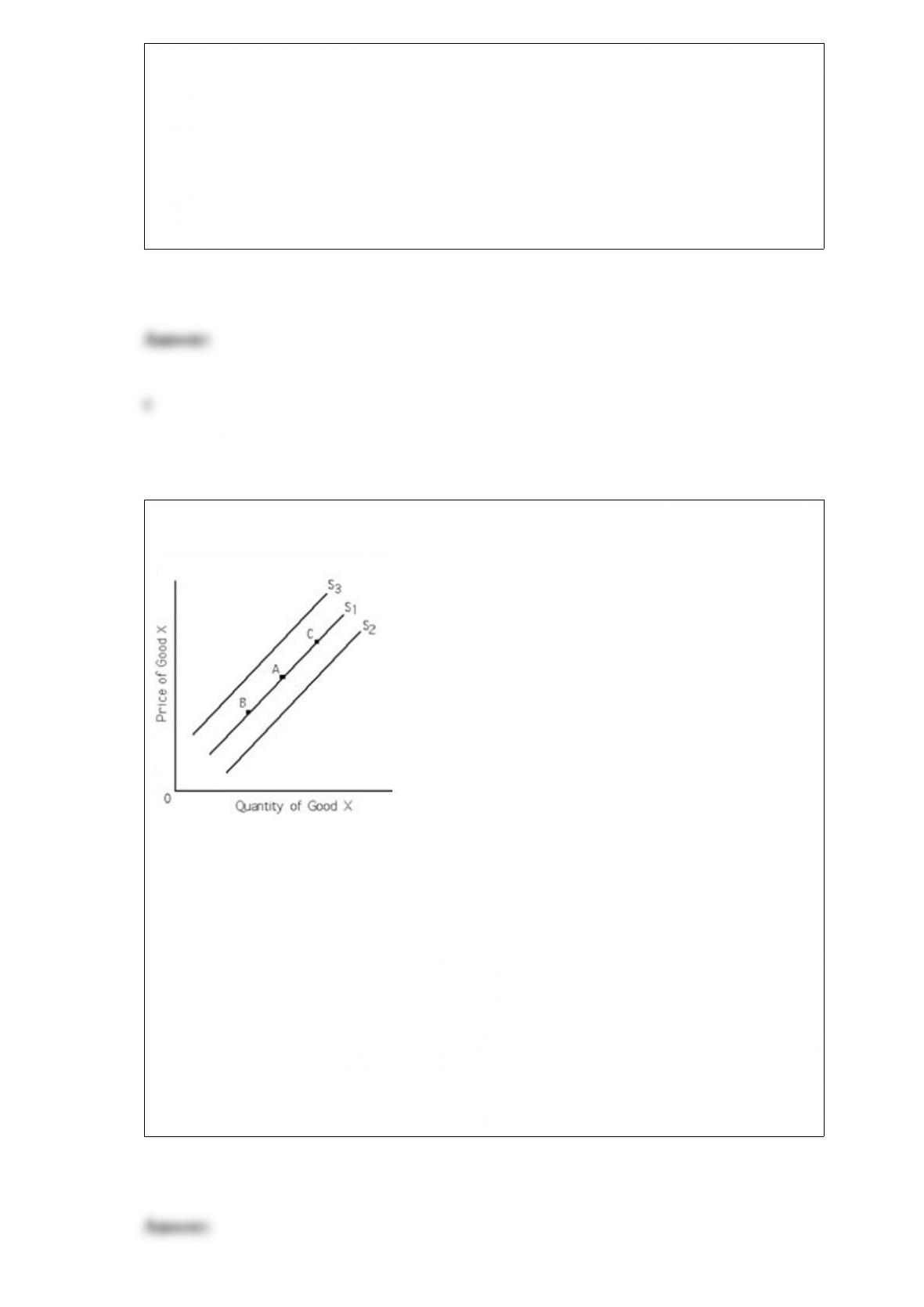
Exhibit 3-7
If S1 is the relevant supply curve, an increase in the price of good X may cause
a. the supply of good X to shift from S1 to S2
b. the supply of good X to shift from S1 to S3.
c. a movement along S1 perhaps from point A to point B.
d. a movement along S1 perhaps from point A to point C.
e. no change in the quantity supplied of good X.

Public choice is concerned with
a. relative prices.
b. government decision making.
c. marketing techniques.
d. consumer surveying.