The situation described in the book as “Smart for One, Dumb for All” occurs when:
A. individuals, when acting rationally, benefit society as a whole.
B. individuals make better decisions when acting alone than when in groups.
C. individuals, when acting rationally, fail to take advantage of all opportunities for
social benefit.
D. a market is in equilibrium.
In the short run, with predetermined prices, when output is greater than planned
aggregate expenditures:
A. potential output is greater than short-run equilibrium output.
B. potential output is less than short-run equilibrium output.
C. planned investment is less than actual investment.
D. planned investment is greater than actual investment.
Governments contribute to increased average labor productivity in each of the

following ways except by:
A. establishing well-defined property rights.
B. maintaining political stability.
C. imposing taxes on wages.
D. allowing the free and open exchange of ideas.
Shel and Fran are neighbors. They work at the same firm and hold the same title. Shel
finds that when Fran’s consumption rises, Shel feels worse off. Fran feels the same way
about Shel’s consumption. Suppose the firm that employs both Fran and Shel begins to
offer one hour of overtime at 1.5 times their base hourly wage. It is likely that:
A. Fran will work more but not Shel.
B. Shel will work more but not Fran.
C. neither Fran nor Shel will work more.
D. both Fran and Shel will work more.
You won a free ticket to see the latest Star Trek movie this Friday night (which you can
costlessly resell for its face value of $15). Your favorite band is also performing on
Friday and is your only alternative activity. Friday is your last chance to see either the
movie or the band. Tickets to see your favorite band cost $30, and on any given day,
you would be willing to pay as much as $50 for a ticket. Based on this information,
what is your opportunity cost of going to see the Star Trek movie on Friday?
A. $0
B. $30
C. $35
D. $50
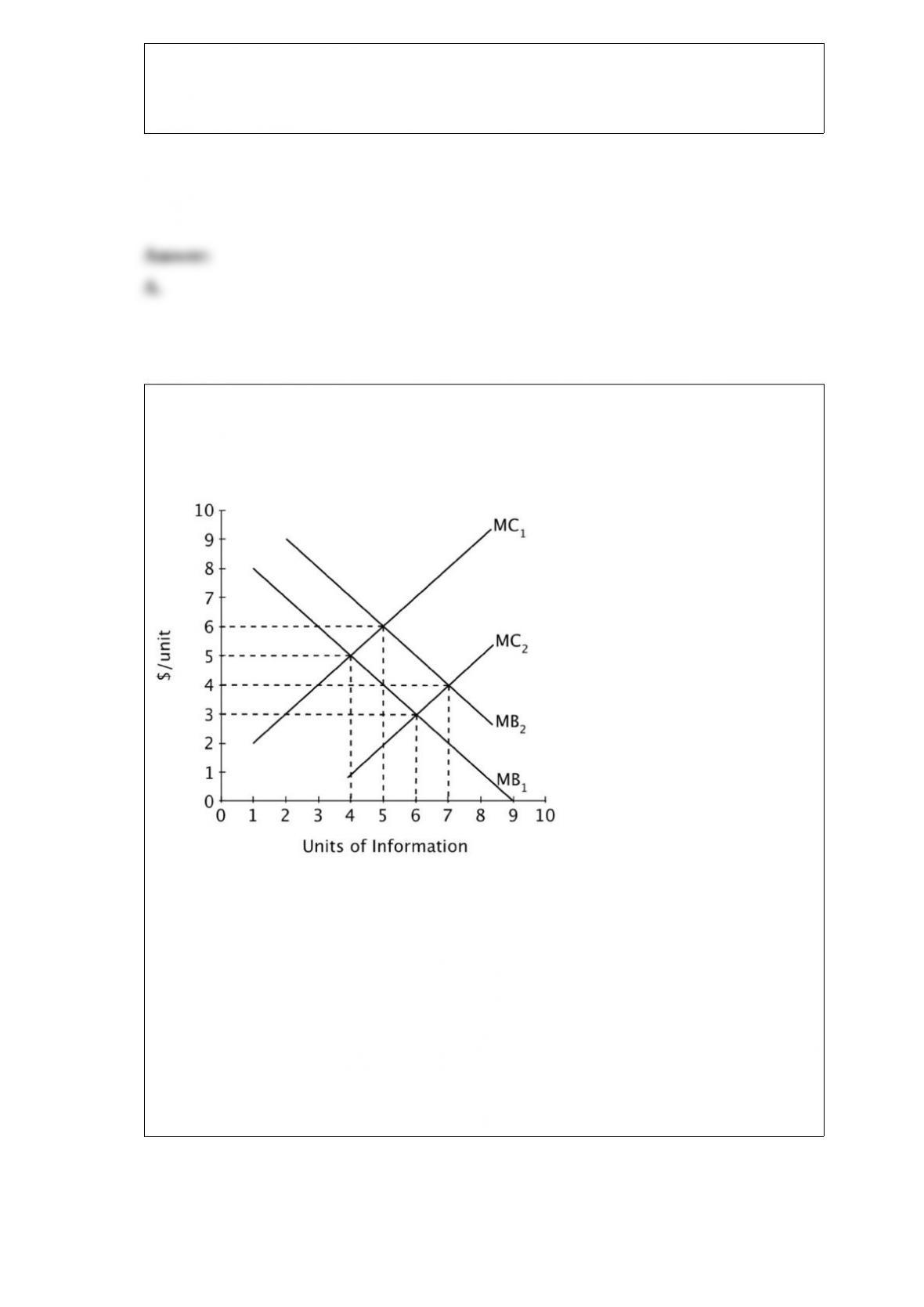
Consider a police department trying to decide how to allocate its crime prevention
resources between motor vehicle thefts and burglaries. The marginal benefit of one less
motor vehicle theft is $20,000, and the marginal benefit of one less burglary is $1,000.
Suppose the annual number of motor vehicle thefts and the annual number of burglaries
depends on the number of detectives assigned to each type of crime, as shown in the
table below. Each detective costs $35,000 each per year, regardless of whether the
detective is assigned to motor vehicle thefts or burglaries.
The marginal benefit of the fourth detective assigned to burglaries is ______ per year.
A. $10,000
B. $0
C. $200,000
D. $20,000
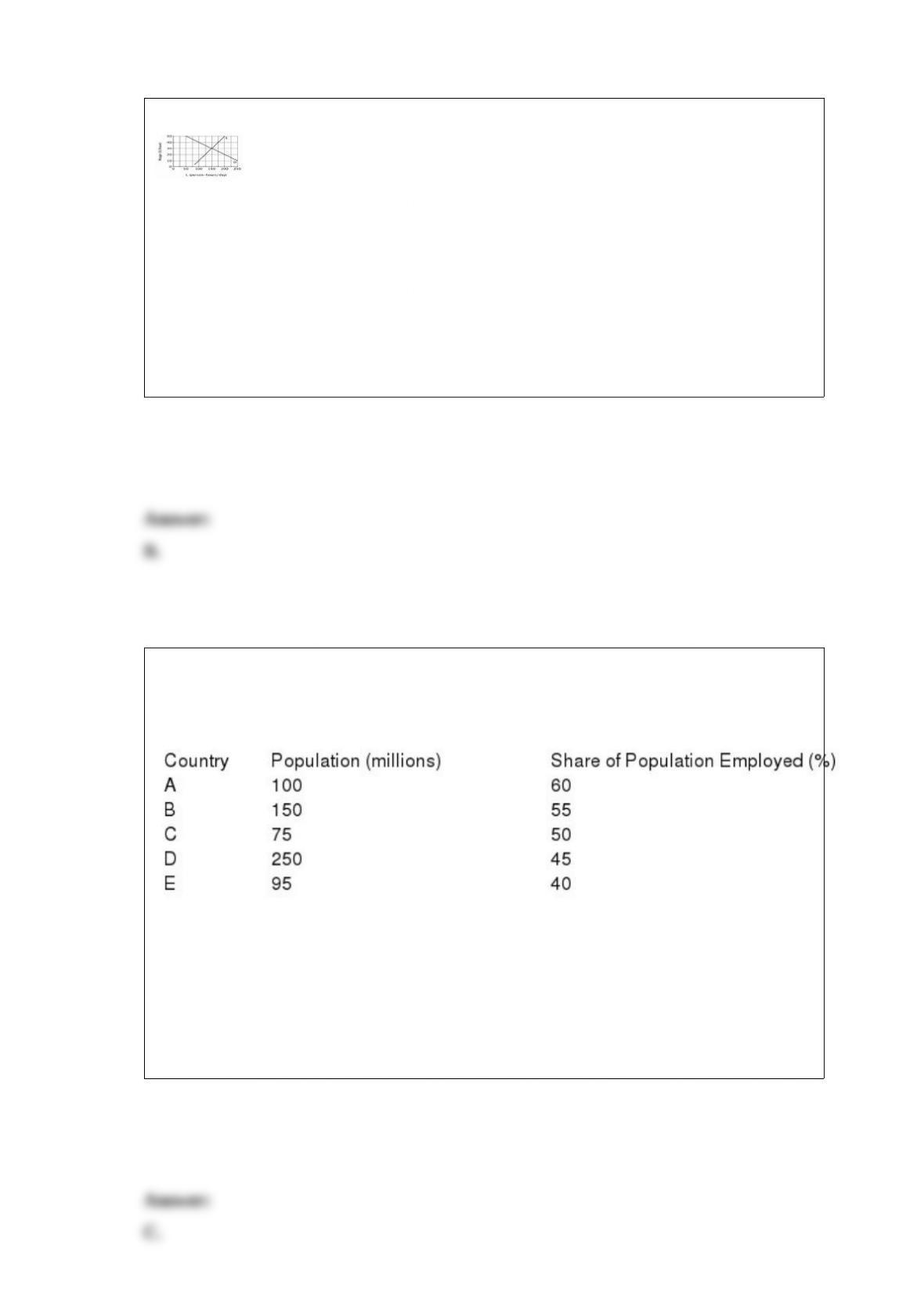
Refer to the figure below. Suppose MC1 is the marginal cost of information and MB1 is
the marginal benefit of information. Should a rational consumer pay $6 to get a 5th unit
of information?
A. Yes, because at this price, the marginal benefit of the 5th unit exceeds its marginal
cost.
B. No, because at this price, the marginal cost of the 5th unit exceeds its marginal
benefit.
C. Yes, because at this price, the marginal benefit of the 5th unit equals its marginal
cost.
D. No, because at this price the marginal benefit of the 5th unit exceeds its marginal
cost.

A firm is most likely to experience economies of scale if its start-up costs are high and
its marginal cost is ______.
A. increasing
B. low
C. high
D. decreasing
According to Okun’s law, when the output gap is negative, cyclical unemployment:
A. equals structural unemployment.
B. equals frictional unemployment.
C. is negative.
D. is positive.

Getting a college degree is an example of investing in:
A. human capital.
B. physical capital.
C. technology.
D. research and development.
Higher education is a ______ and assigned textbooks are ______.
A. need; needs
B. want; wants
C. need; wants
D. want; needs
Assume that this graph illustrates a perfectly competitive labor market.
In this market, at a wage of $40:
A. the market would be in equilibrium.
B. more people would want to work than number of job openings.
C. firms would not be able to find enough workers to fill all their positions.
D. approximately 175 worker hours would be hired.
Suppose that average labor productivity in Country C is $6,000, and that Countries C
and A have the same real GDP per capita. Based on the information in the table, what
must be the average labor productivity in Country A?
A. $1,800
B. $2,400
C. $5,000
D. $7,200
If workers’ compensation premiums reflected the full social cost of the injuries
sustained by each employer’s workers, then this would lead to:
A. fewer workplace injuries than is socially optimal.
B. more workplace injuries than is socially optimal.
C. the socially optimal number of workplace injuries.
D. the elimination of workplace injuries.
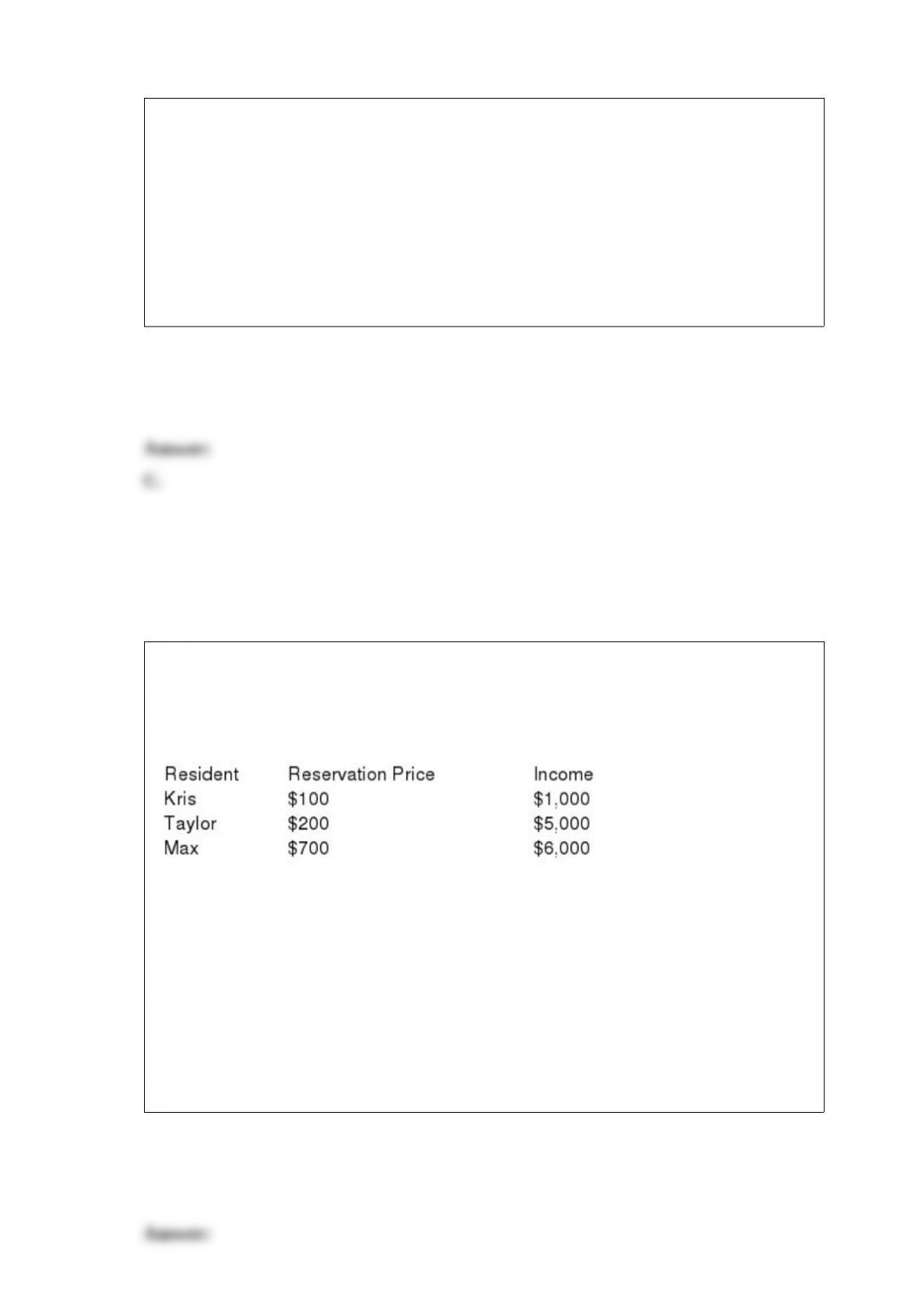
Kris, Taylor and Max are the only three residents in a neighborhood. A public good that
would benefit all of them has a one-time installation cost of $900. The value of the
public good to each resident is shown in the table below. Any tax plan must be
approved by simple majority.
If the government proposes to pay for the public good with a proportional income tax of
8 percent, then:
A. all three voters will vote in favor of the tax.
B. Max and Taylor will vote against the tax, but Kris will vote in favor of it.
C. Kris and Max will vote in favor of the tax, but Taylor will vote against it.
D. all three voters will vote against the tax.

The current price of a stock increases when:
A. expected future dividends decrease.
B. the expected future price of the stock decreases.
C. interest rates decrease.
D. the perceived riskiness of the stock increases.
For an economy starting at potential output, a decrease in planned investment in the
short run results in a(n):
A. expansionary output gap.
B. recessionary output gap.
C. increase in potential output.
D. decrease in potential output.
Compared to the level of real GDP per person in 1870, by 2010, real GDP in the U.S
was ______ times larger, while real GDP per person in Japan was _______.
A. 12; smaller
B. 12; 12 times larger
C. 12; 30 times larger
D. 30; 12 times larger
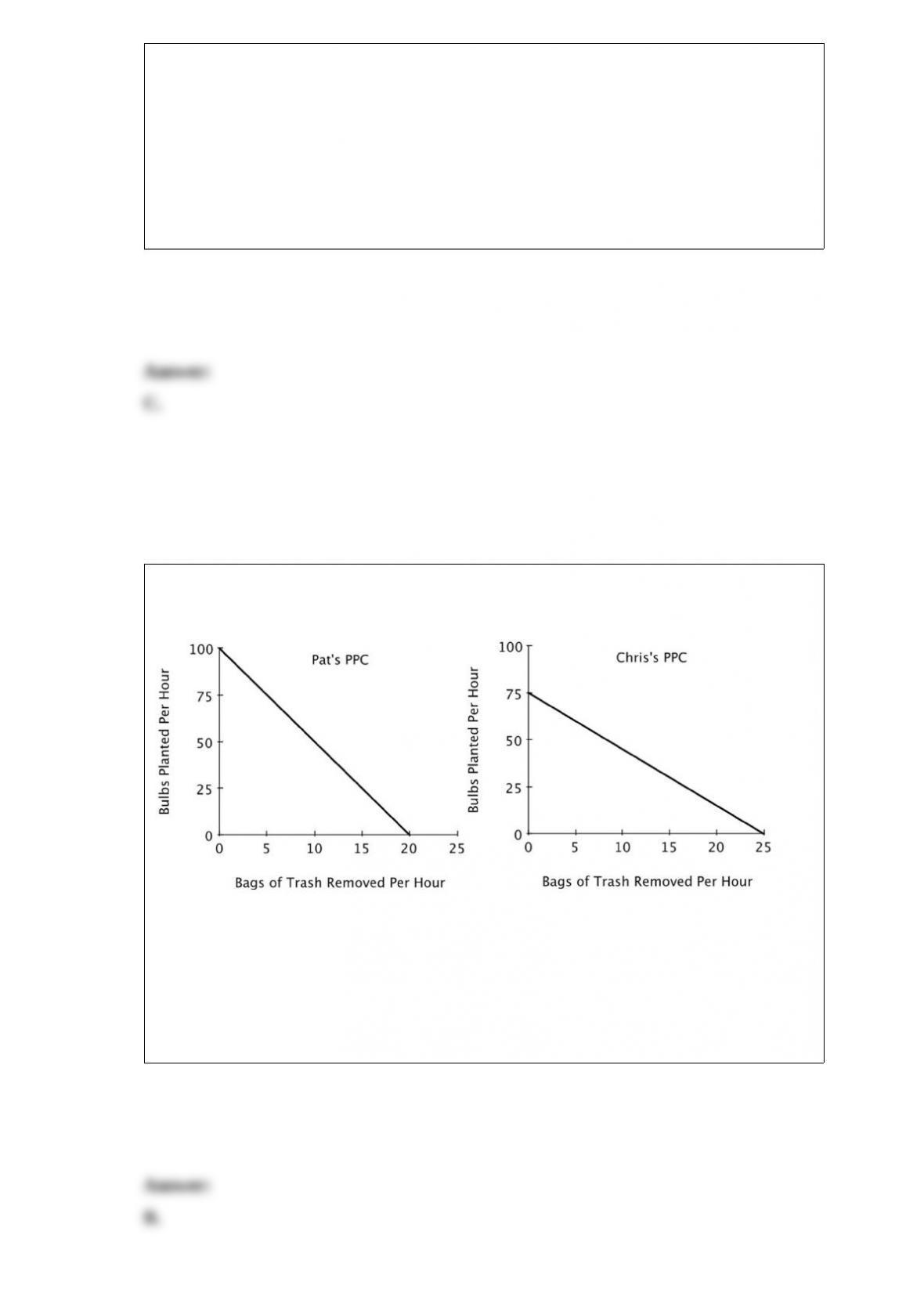
Refer to the figure below. For Pat, the opportunity cost of removing one bag of trash is
planting:
A. 100 bulbs.
B. 5 bulbs.
C. 1/100 of a bulb.
D. 1/5 of a bulb.
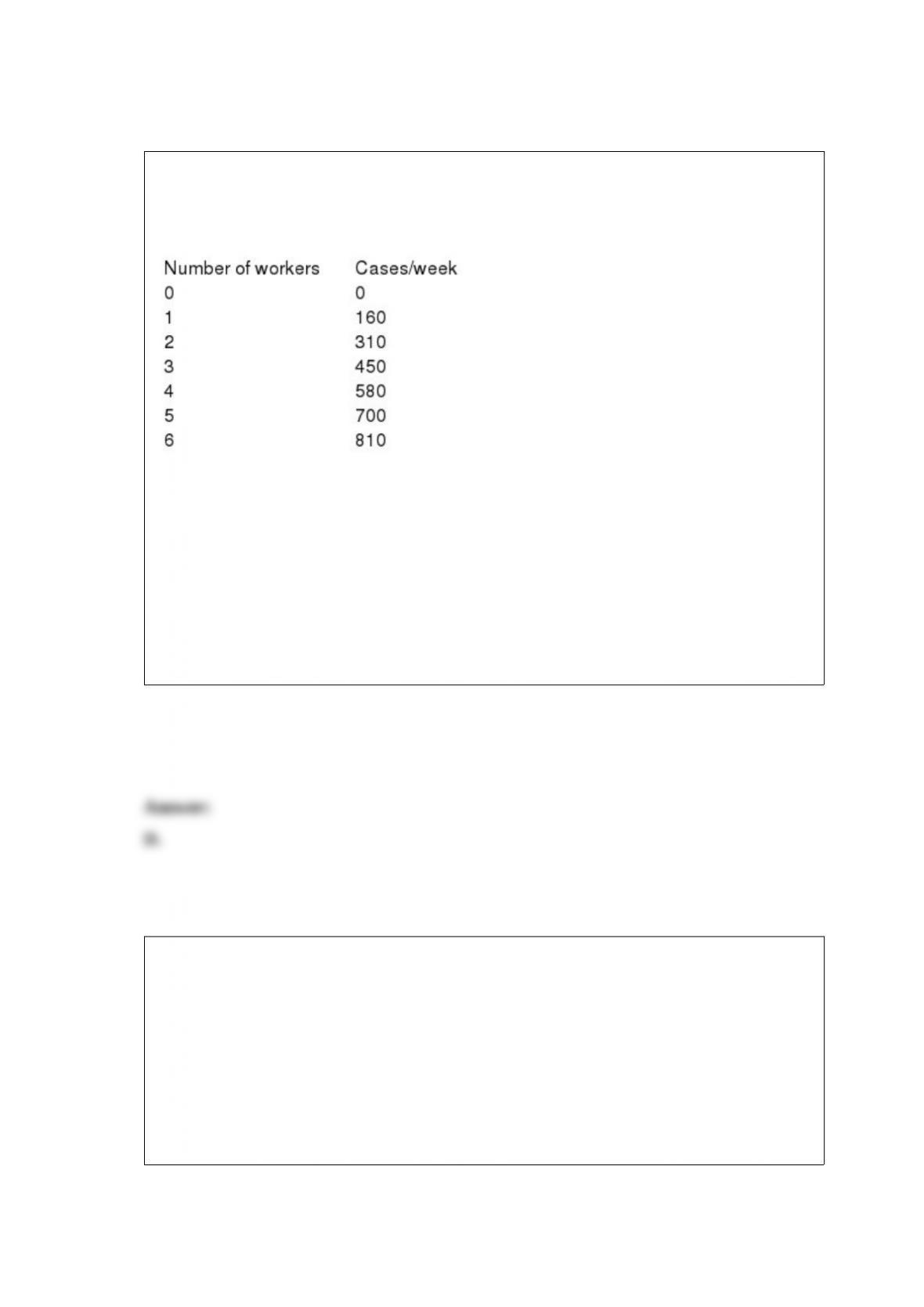
Sam owns a candy factory and hires workers in a competitive labor market to pack
cases of candy. The company’s weekly output of cases of candy varies with the number
of workers hired, as shown in the following table:
If each case sells for $5 more than the cost of the materials used in producing it, then
the value of marginal product of the 2nd worker is ______ per week.
A. $150
B. $310
C. $315
D. $750
In Macroland potential GDP equals $20 billion and real GDP equals $19.2 billion.
Macroland has a(n) ______ gap equal to ______ percent of potential GDP.
A. expansionary; 8
B. expansionary; 4
C. recessionary; -8
D. recessionary; -4

Under a head tax, the amount of tax paid is:
A. the same for all taxpayers.
B. proportional to each taxpayer’s income.
C. a linearly increasing function of the taxpayer’s income.
D. the same for all taxpayers who use the public good.
Finding both parties to a trade who have something the other party wishes to trade for is
called a:
A. unit of account.
B. store of value.
C. medium of exchange.
D. double coincidence of wants.

Wealth equals:
A. current income minus spending on current needs.
B. assets minus liabilities.
C. saving minus investment.
D. investment minus saving.
Which of the following workers is least likely to lose his/her job during a recession?
A. Carpenter
B. Automobile assembly line worker
C. Roofer
D. Police officer
Changes in the expected rate of inflation will:
A. not shift the AS curve.
B. shift the AS curve leftward or rightward.

C. cause the AS curve to become vertical.
D. cause the AS curve to become downward-sloping.
Refer to the figure below.
If both firms offer reduced rates, each earns ______, and if both firms keep their rates
high, each earns ______.
A. 300; 50
B. 50; 300
C. 300; 500
D. 500; 300
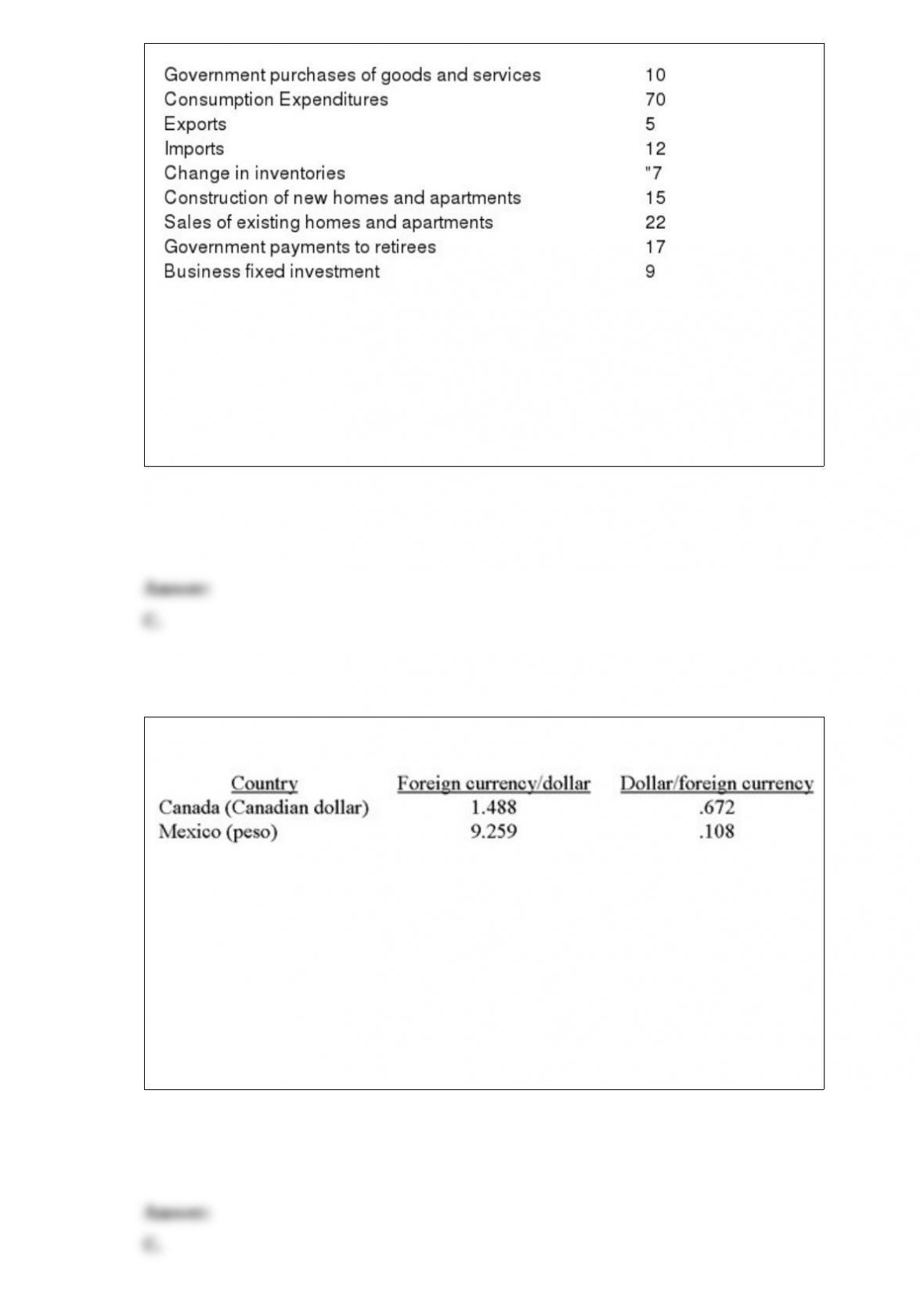
Given the following data for the economy, compute the value of GDP.
A. 56
B. 83
C. 90
D. 141
The following table provides nominal exchange rates for the U.S. dollar.
Based on these data, the nominal exchange rate equals approximately ______ pesos per
Canadian dollar or, equivalently, ______ Canadian dollars per peso.
A. 0.672; 1.488
B. 9.259; 0.108
C. 6.222; 0.161
D. 7.771; 0.129

Game theory is not useful in understanding perfect competition because in a perfectly
competitive market:
A. no single firm can influence the market price, so firms’ decisions are not
interdependent.
B. each firm only cares about its own profit, so there is no interdependence.
C. there are too many firms to be able to model their behavior accurately using game
theory.
D. the payoffs to firms’ choices are unknown.