
In every age group, average income in the United States increases with education.
a. True
b. False
If, as a firm increases its rate of output, total cost increases as well,
a. profit cannot be maximized
b. revenue cannot be maximized
c. cost cannot be minimized
d. marginal cost is increasing
e. marginal cost is positive
Economists
a. believe that tastes are the major influence on consumers’ income expectations
b. have observed that tastes vary with changes in the number of consumers
c. recognize that tastes have an important impact on demand
d. can say a great deal about the origin of tastes
e. suspect that tastes can cause a movement along the demand curve

An increase in the U.S. demand for foreign exchange will cause a(n)
a. increase in the price of foreign exchange, which is a depreciation of the U.S. dollar,
making foreign goods cheaper to U.S. residents
b. increase in the price of foreign exchange, which is a depreciation of the U.S. dollar,
making foreign goods more expensive to U.S. residents
c. decrease in the price of the U.S. dollar, which is an appreciation of the U.S. dollar
d. increase in the price of foreign exchange, which is an appreciation of the U.S. dollar
e. decrease in the price of foreign exchange, which is an appreciation of the U.S. dollar
Generally, the longer the maturity on a bond, the lower the interest rate.
a. True
b. False

Suppose that workers in Transylvania can produce only two goods — yo-yos or
sweatsocks. The Transylvanian currency is the daler. In what unit is the opportunity cost
of yo-yos measured?
a. dalers
b. dalers per yo-yo
c. dalers per sweatsock
d. yo-yos
e. sweatsocks
A downside to foreign aid is that
a. developing countries have not necessarily increased their ability to become
self-supporting at higher standards of living
b. many recipient countries are doing less of what they had done well
c. the agricultural sectors of recipient countries have suffered
d. government officials have been insulated from their own incompetence
e. All of the answers are correct

Relative to private firms, we should expect public bureaus to be
a. smaller
b. more cost-efficient
c. less responsive to consumer demand
d. more concerned with adopting new technologies
e. more in tune with consumer desires
Which of the following falselydescribes a nondiscriminating monopolist at profit
maximization?
a. Price is greater than marginal cost.
b. Economic profit is always positive.
c. Marginal revenue is equal to marginal cost.
d. Marginal revenue will typically be less than price.
e. Average total cost will not be at a minimum.
A payoff matrix is a table listing the expected economic profit resulting from different
possible strategies.
a. True
b. False

A point outside the production possibilities frontier
a. represents unemployment of resources
b. represents full employment of resources
c. would not represent an efficient combination of goods
d. cannot be reached using the available technology
e. is less desirable than one that lies inside the frontier
Which of the following describes a situation in which demand must be inelastic?
a. The price of pens rises by 10 cents, and quantity of pens demanded falls by 50.
b. The price of pens rises by 10 cents, and total revenue rises.
c. A 20 percent increase in the price of pens leads to a 20 percent decrease in the
quantity of pens demanded.
d. Total revenue does not change when the price of pens rises.
e. Total revenue decreases when the price of pens rises.
Markets for pollution rights
a. have never been tried in the United States
b. assign property rights to those who value them least
c. allow the government to assign property rights
d. enable those who value them most to pollute
e. are less efficient than pollution standards
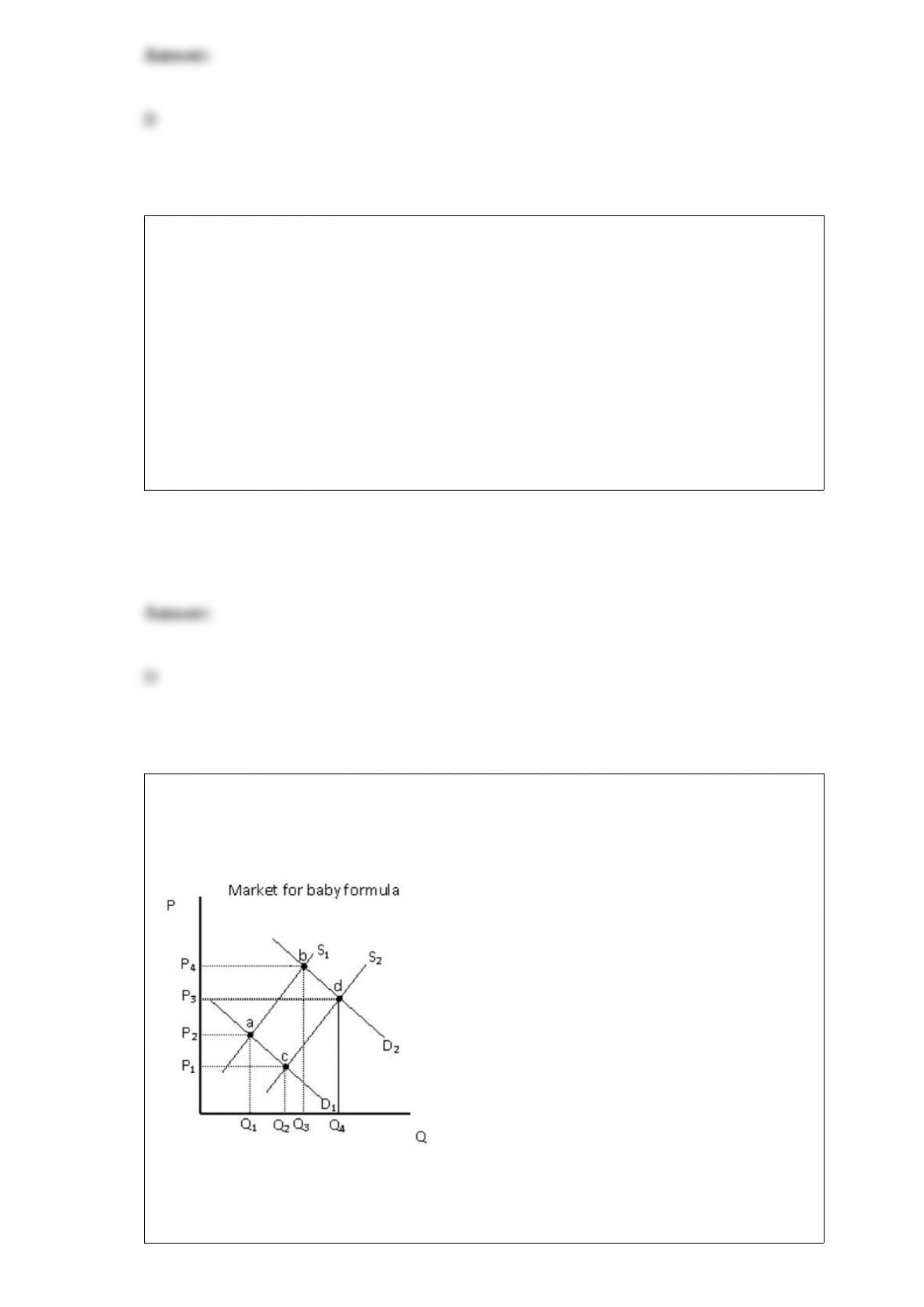
Exhibit 4-16
Refer to exhibit 4-16. If the market for baby formula is given by the demand curve D1
and the supply curve S1, what is the equilibrium price and quantity?

a. P1, Q2
b. P3, Q4
c. P4, Q3
d. P2, Q1
e. P1, Q1
Which of the following best defines supply?
a. the amount of a good that producers want to sell at a particular price
b. the amount of a good that consumers will buy
c. the amount of a good that producers are willing and able to sell at each possible price,
other things constant
d. the amount of a good that producers are willing to sell at each possible price, other
things constant
e. the amount of a good that producers are willing and able to buy at each possible
price, other things constant

Suppose Ernie gives up his job as financial advisor for P.E.T.S., at which he earned
$30,000 per year, to open up a store selling spot remover to Dalmatians. He invested
$10,000 in the store, which had been in savings earning 5 percent interest. This year’s
revenues in the new business were $50,000, and explicit costs were $10,000. Calculate
Ernie’s accounting profit.
a. $10,000
b. $50,000
c. $20,000
d. $40,000
e. $9,500
The present discounted value of $100 to be received in one year and with an interest
rate of 10 percent is closest to
a. $100
b. $10
c. $110
d. $91
e. $80
Compared to industrial market countries, developing countries usually have

a. exports consisting mostly of agricultural products and raw materials
b. faster population growth
c. higher unemployment
d. higher rates of illiteracy
e. All of the answers are correct
The law of demand assumes that as the price of a good increases,
a. people recognize that its price may be even higher in the future, so they buy now
rather than later
b. consumers tend to shift their purchases to relatively cheaper substitutes
c. people will buy less of it in the hope that the good will be cheaper in the future
d. the consumer’s money income increases, and he or she is less able to buy all goods,
including the good whose price has increased
e. the consumer’s money income decreases, and if the product is a normal good, more
will be purchased
“The second glass of Evian water was very good. May I have another?” Which of the
following is necessarily true regarding this statement?
a. The marginal utility of the second glass is negative.
b. The marginal utility of the second glass is less than the marginal utility of the first
glass.
c. The marginal utility of the second glass is positive.
d. The water is free.
e. The marginal utility of the third glass is negative.
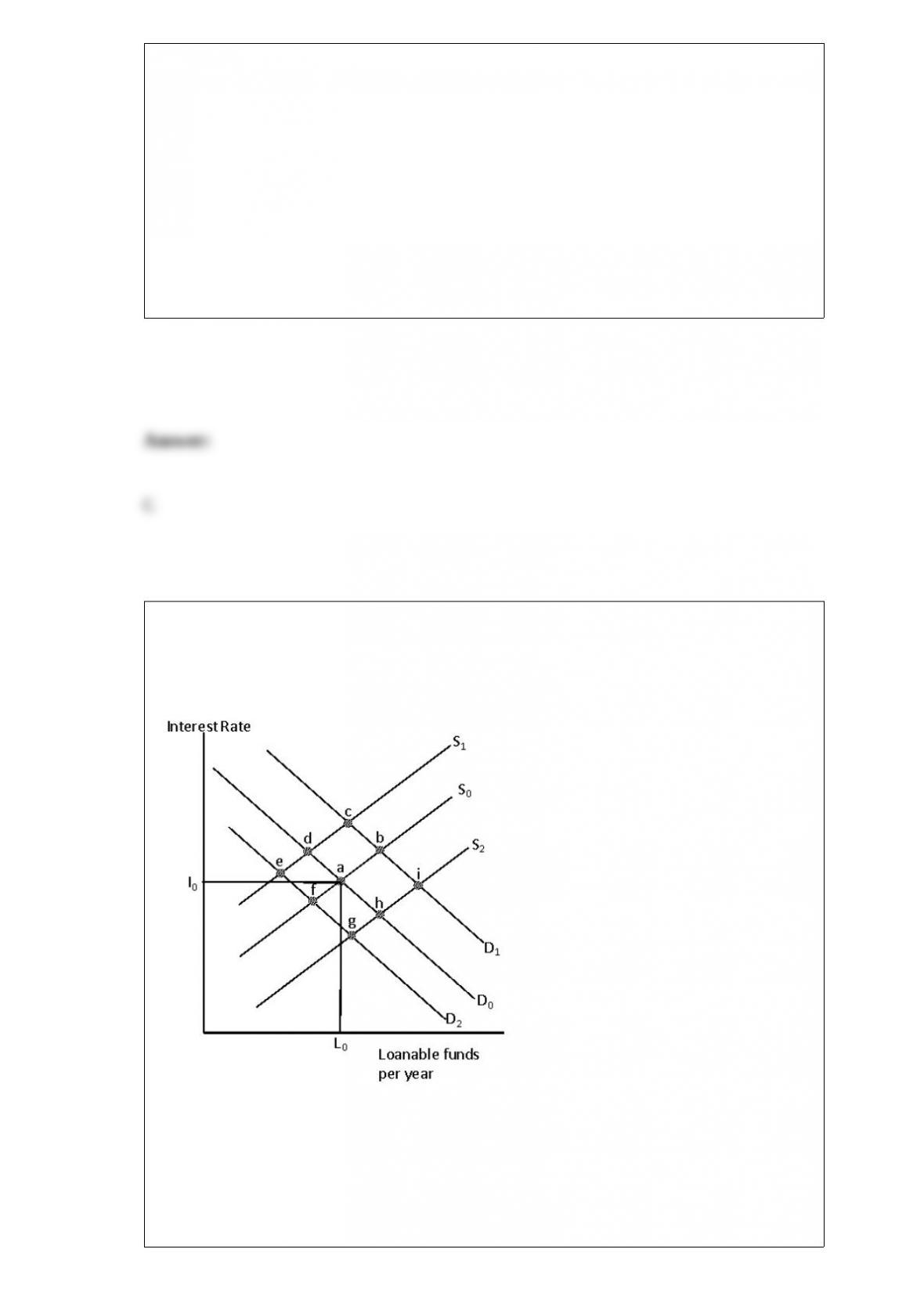
Exhibit 13-8
In Exhibit 13-8, D0 and S0represent the initial demand and supply of loanable funds. A
decrease in the expected rate of inflation would shift the equilibrium in this market
from point a to
a. point b
b. point c
c. point d
d. point f
e. point g
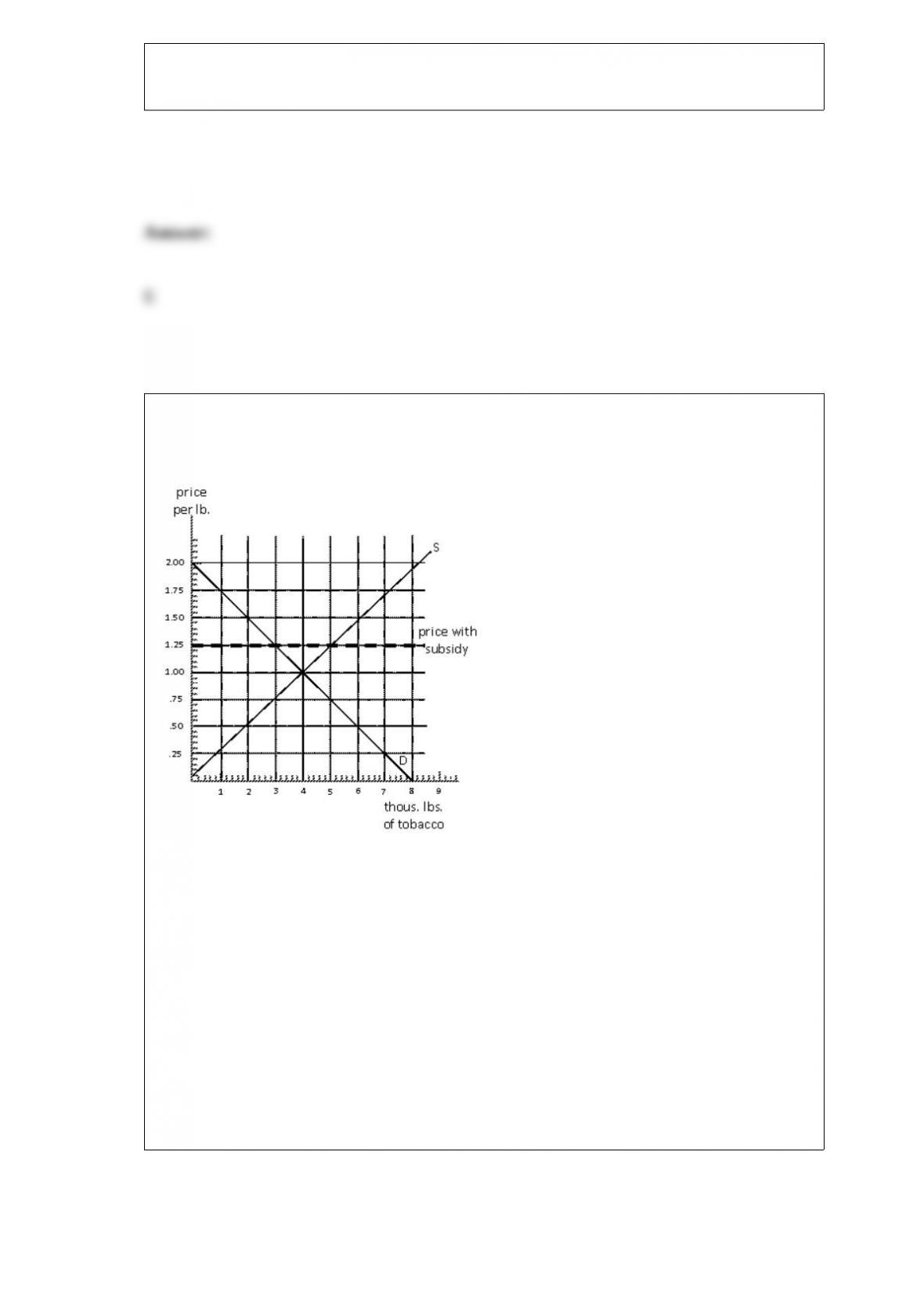
Exhibit 16-5
Exhibit 16-5 represents the market for leaf tobacco. In the absence of any government
intervention, how much consumer surplus would there be?
a. $500
b. $1,000
c. $1,500
d. $2,000
e. $2,500
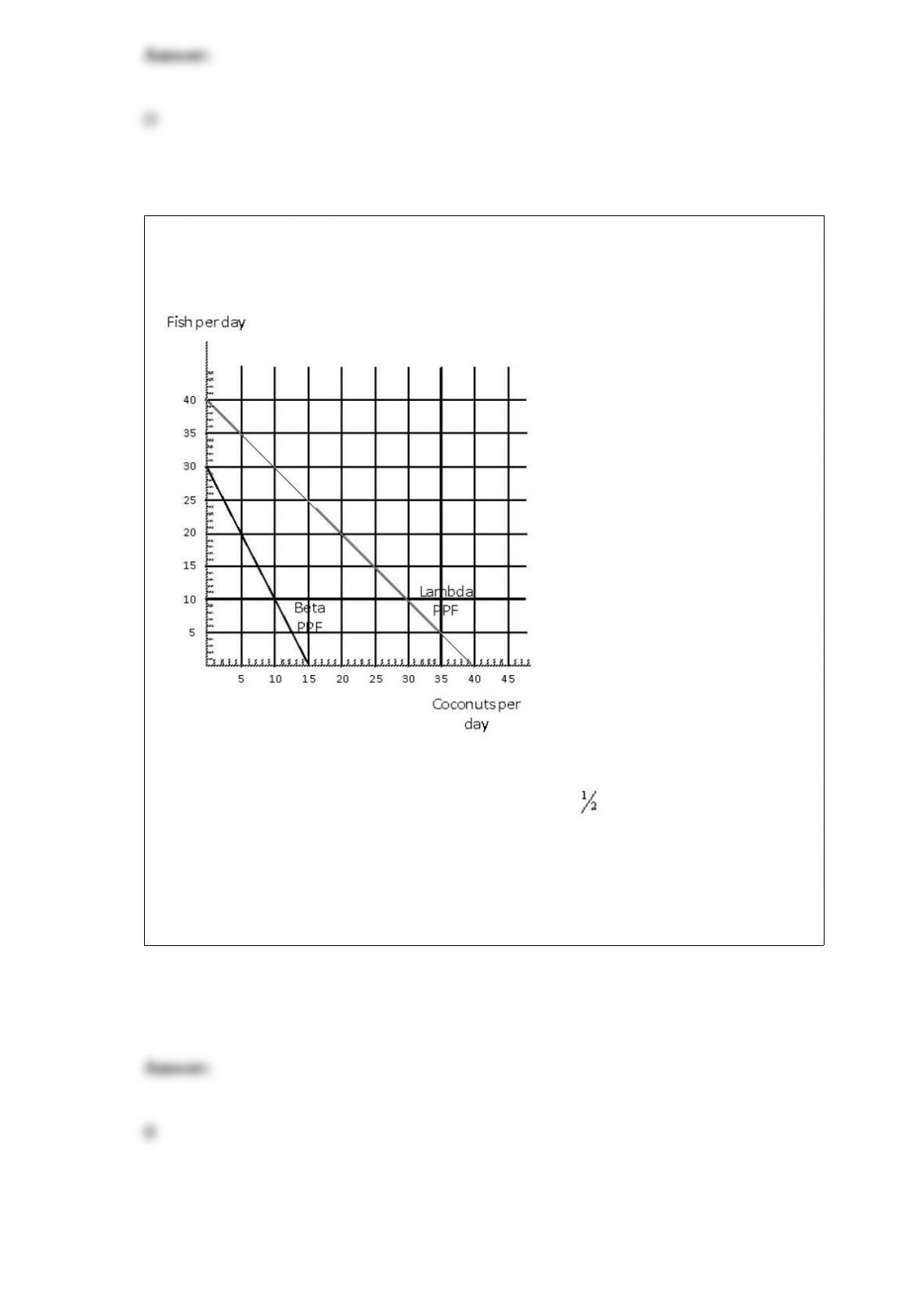
Exhibit 19-1
Exhibit 19-1 shows the production possibilities frontiers for the countries of Lambda
and Beta for fish and coconuts. If the terms of trade are 2 fish per coconut, then
Lambda and Beta would be able to benefit from specialization and trade.
a. True
b. False

A major advantage of the corporate form of business organization is the limited
personal liability of the owners.
a. True
b. False
Elasticity rises as price falls along a linear, downward-sloping demand curve.
a. True
b. False
A rational decision maker engages in an activity if that activity is more attractive than
the best alternative.
a. True
b. False

In the long run, Bubba’s Baby Boutique, a monopolistically competitive firm,
a. earns zero normal profit but positive economic profit
b. earns normal profit but zero economic profit
c. earns normal and economic profit
d. earns zero normal and economic profit
e. might earn any level of economic profit; no level is guaranteed
A variable cost is one that changes
a. in the long run only
b. in the short run only
c. year to year
d. month to month
e. as output changes
Which of the following statements about markets is not true?

a. A market is an impersonal mechanism.
b. Markets coordinate the independent decisions of buyers and sellers.
c. Markets reduce the transaction costs of exchange.
d. More specialized markets are generally found in urban areas.
e. All markets provide the same amounts of information.
The concept of marginal productivity is applicable to
a. all of the following
b. capital
c. entrepreneurial talent
d. land
e. labor
If two goods have the same price, a consumer will buy equal quantities of those two
goods.