
When banks gain ________, they can ________ their loans; and the money supply
________.
A) reserves; increase; contracts
B) withdrawals; increase; expands
C) withdrawals; decrease; expands
D) reserves; increase; expands
The quantity theory of money was derived from the quantity equation by asserting that
A) real output was fixed.
B) the money supply was fixed.
C) the velocity of money was fixed.
D) the velocity of money was zero.
In the United States, consumption per-person of carbonated soft drinks ________
between 2005 and 2013.
A) declined by more than 15 percent
B) increased by approximately 22 percent
C) fell by almost 80 percent

D) remained virtually unchanged
In 1931, the first major country to abandon the gold standard – in order to increase its
policy options in face of the Great Depression – was
A) Great Britain.
B) the United States.
C) Germany.
D) France.
In the long run, the Phillips curve is a ________ at ________.
A) horizontal line; 0% inflation
B) negatively sloped line; the intersection of aggregate demand and short-run aggregate
supply
C) vertical line; the natural rate of unemployment
D) None of the above is correct.

Worker discrimination occurs when
A) workers refuse to perform risky tasks.
B) workers refuse to work with persons of a different race.
C) customers refuse to buy products produced by a racially diverse workforce.
D) employers pay different employees different wages based on race.
Suppose a negative technological change in the production of disease-resistant wheat
caused the price of wheat to rise. Holding everything else constant, how would this
affect the market for corn (a substitute for wheat)?
A) The supply of corn would decrease and the equilibrium price of corn would increase.
B) The demand for corn would increase and the equilibrium price of corn would
increase.
C) The demand for corn would decrease because consumers could afford to buy less
wheat and corn.
D) The demand for corn would increase and the equilibrium price of corn would
decrease.
Figure 2-8
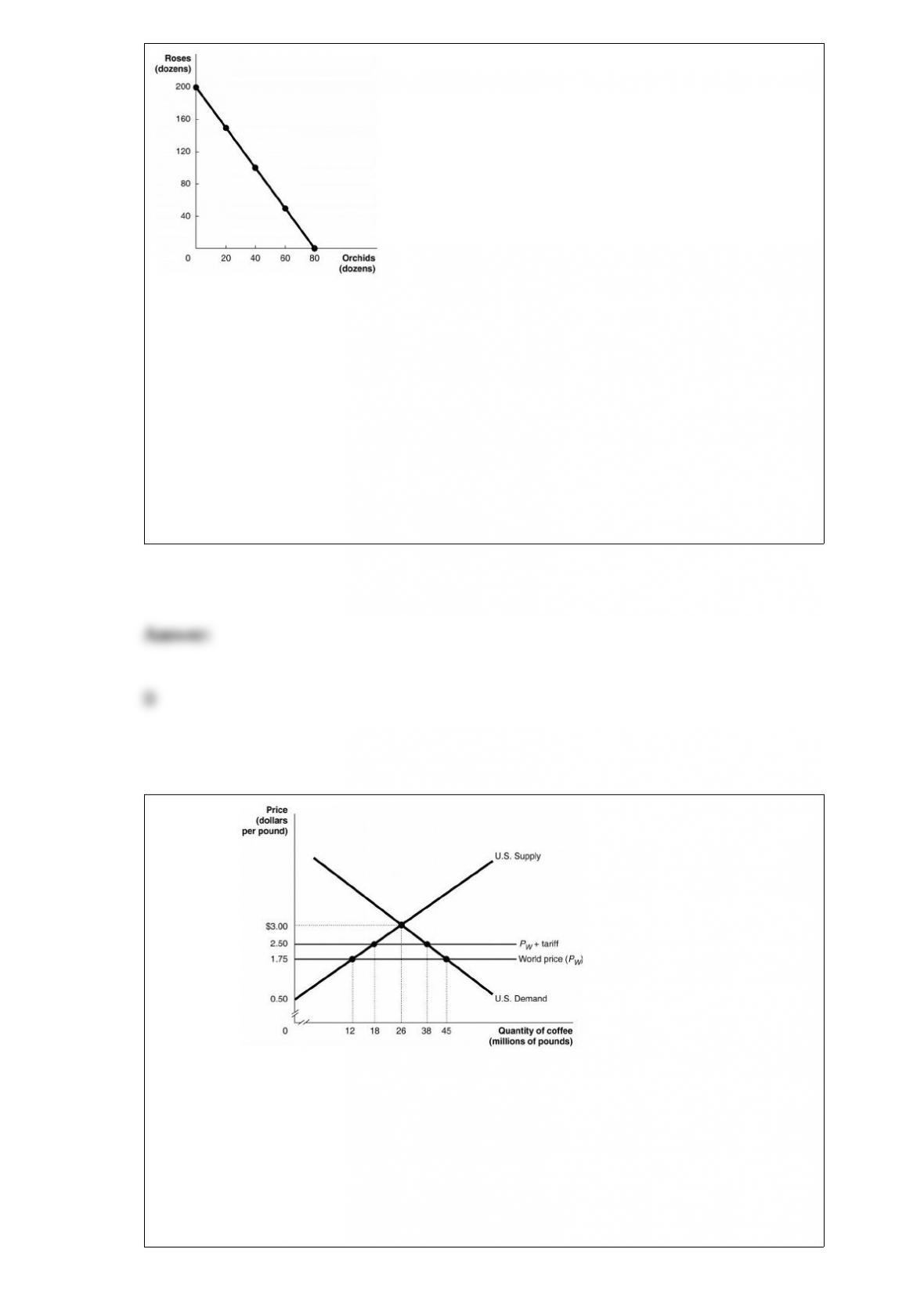
Figure 2-8 above shows the production possibilities
frontier for Vidalia, a nation that produces two goods, roses and orchids. Suppose
Vidalia is currently producing 60 dozen orchids per period. How many roses is it also
producing, assuming that resources are fully utilized?
A) 40 dozen roses
B) 50 dozen roses
C) 60 dozen roses
D) 100 dozen roses
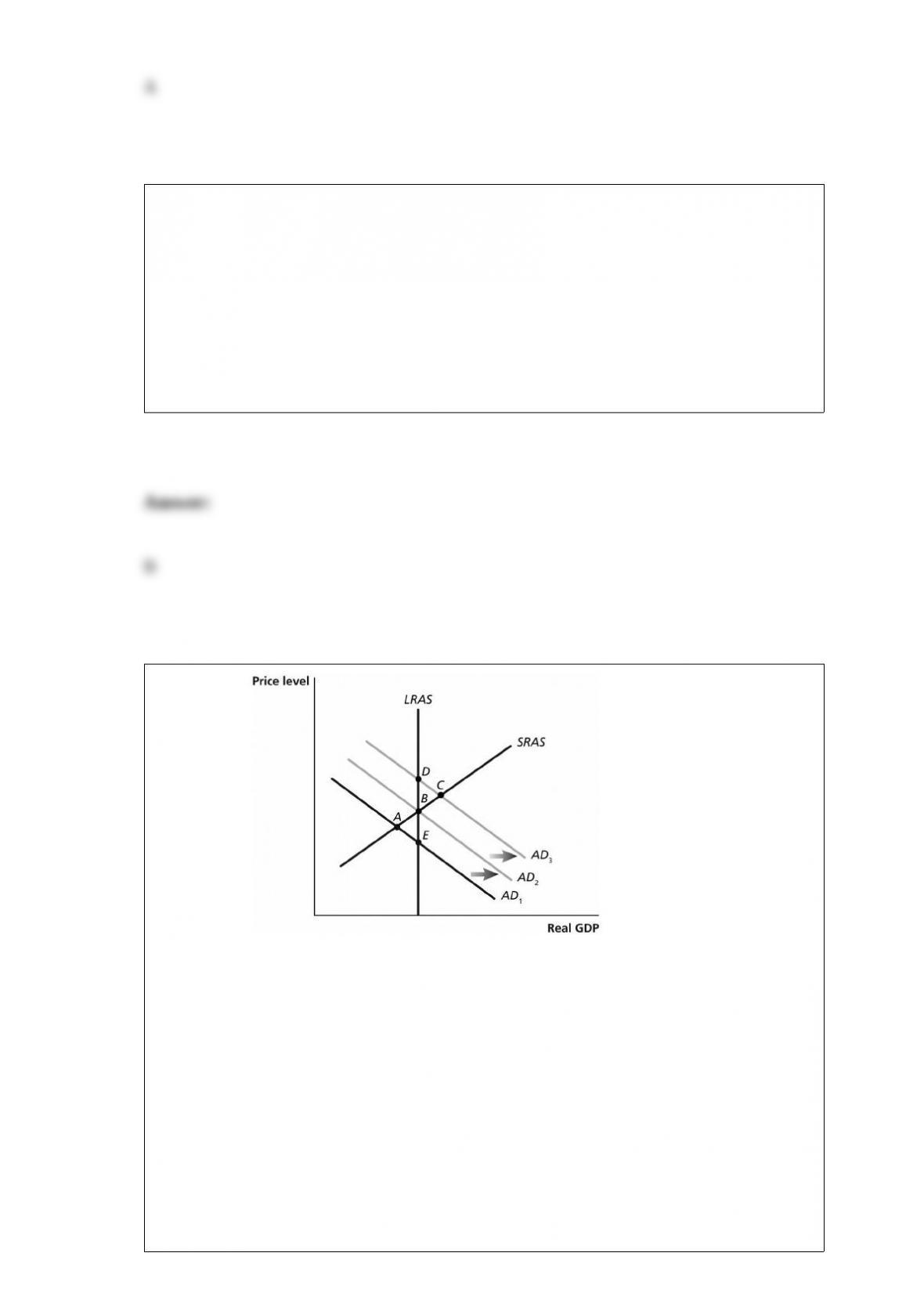
Figure 9-5 Suppose the U.S. government
imposes a $0.75 per pound tariff on coffee imports. Figure 9-5 shows the impact of this
tariff. The tariff causes domestic consumption of coffee
A) to fall by 27 million pounds.
B) to fall by 7 million pounds.
C) to rise by 6 million pounds.

D) to rise by 20 million pounds.
How would the equilibrium quantity of loanable funds respond to a change from an
income tax to a consumption tax?
A) The equilibrium quantity of loanable funds would rise.
B) The equilibrium quantity of loanable funds would fall.
C) The equilibrium quantity of loanable funds would be unaffected.
D) The equilibrium quantity of loanable funds may rise or fall based on whether
household saving increases or decreases as a result of the change from an income tax to
a consumption tax.
Which of the following would increase the natural rate of unemployment?
A) an increase in the number of younger, less skilled workers in the economy
B) a reduction in the generosity of unemployment insurance programs
C) restrictions on the ability of unions to negotiate wage changes with companies
D) an increase in government-sponsored programs that train unemployed workers so
they can find new jobs quickly
A major source of inefficiency in barter economies is that they require
A) a standard of deferred payment to make trade possible.
B) a double coincidence of wants in exchange.
C) more liquid stores of value than do monetary economies.
D) All of the above are correct.
Figure 16-1
Suppose the economy is in short-run equilibrium above potential GDP and wages and
prices are rising. If contractionary policy is used to move the economy back to long run
equilibrium, this would be depicted as a movement from ________ using the static
AD–AS model in the figure above.
A) D to C
B) C to B
C) A to E
D) B to A

E) E to A
Using the Taylor rule, if the current inflation rate equals the target inflation rate and real
GDP is greater than potential GDP, then the federal funds target rate ________ the sum
of the current inflation rate plus the real equilibrium federal funds rate.
A) will be greater than
B) will be less than
C) will be the same as
D) may be greater than or less than
If the government implements a price ceiling on insulin, this will have all of the
following effects on the market for insulin except
A) an increase in consumer surplus.
B) an increase in producer surplus.
C) an increase in deadweight loss.
D) a more efficient equilibrium.