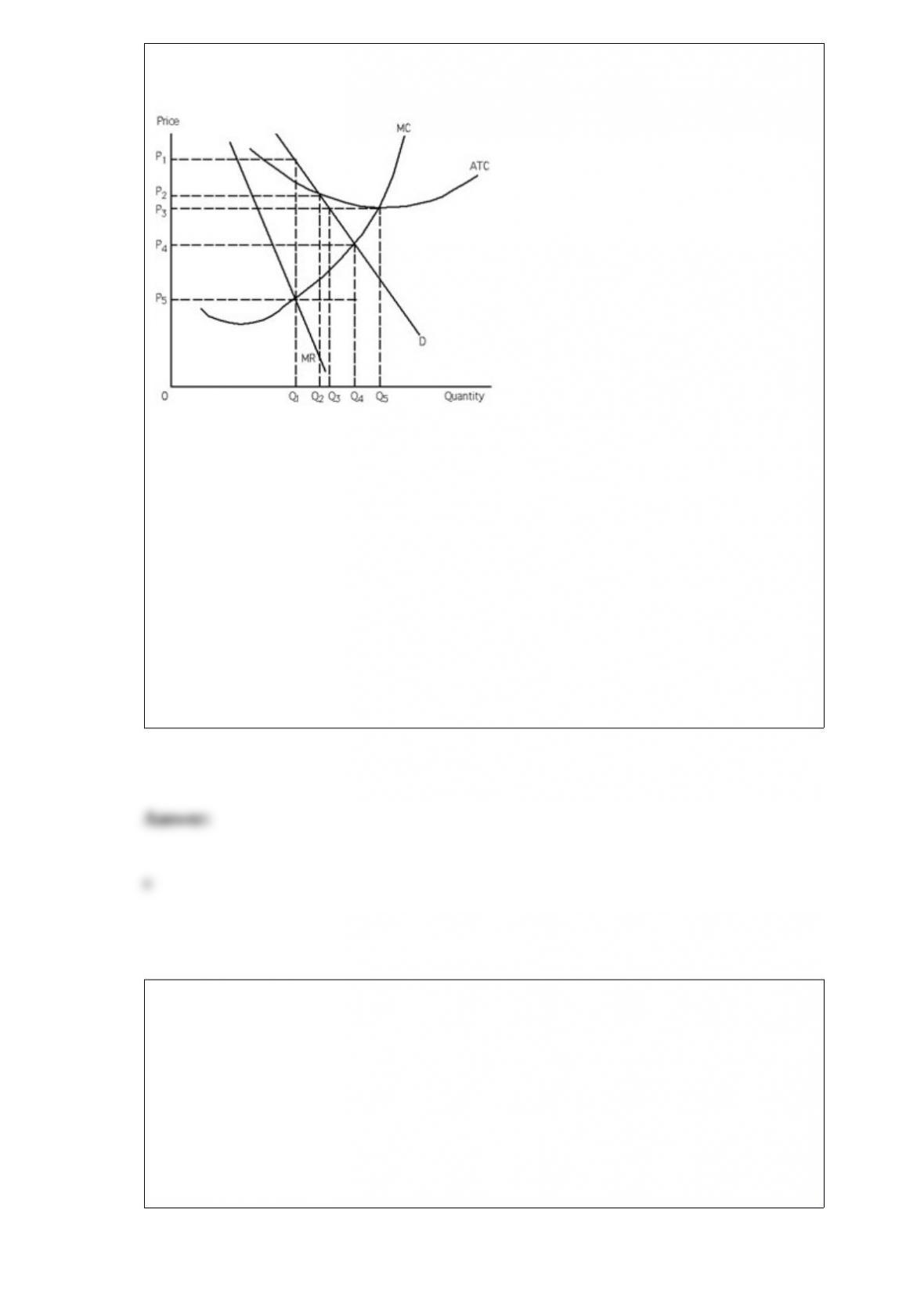
Exhibit 26-4
What is the productive-efficient level of output?
a. Q1.
b. Q2.
c. Q3.
d. Q4.
e. Q5.
A good will tend to have a low price elasticity of demand if
a. the good has few substitutes.
b. a person spends a high percentage of his or her budget on the good.
c. a person has a long period of time to adjust to price changes.
d. the good is a luxury.

If the “minimum efficient scale” in an industry is at 25 percent of market sales, what is
the maximum number of efficient firms the economy can support in this industry?
a. 75
b. 25
c. 10
d. 4
A futures contract is a contract in which the seller agrees to provide a given good to the
buyer on a predetermined future date at an agreed-upon price.
a. True
b. False
Both country 1 and country 2 are located on their respective production possibilities
frontiers (PPFs) for consumer goods and capital goods, but country 1 produces twice
the output of both types of goods compared to country 2. It follows that

a. country 1’s PPF lies further to the right than country 2’s PPF.
b. country 1 has a smaller population than country 2.
c. country 1 has a bigger population than country 2.
d. country 1 is efficient and country 2 is inefficient.
e. none of the above
With respect to the stock market, the acronym IPO stands for
a. investment proposal option.
b. immediate public offering.
c. internal public offering
d. initial public offering.
If a good is a normal good, it can not also be income inelastic.
a. True
b. False
Given a 10 percent increase in wages, firm A cuts back on labor more than firm B. It
follows that, ceteris paribus,
a. firm A likely has a higher labor cost-total cost ratio than firm B.
b. firm B likely has a higher labor cost-total cost ratio than firm A.
c. the elasticity of demand for labor is likely higher for firm B than firm A.
d. firm B likely has higher fixed costs than firm A.
e. firm A likely has higher per-unit costs than firm B.
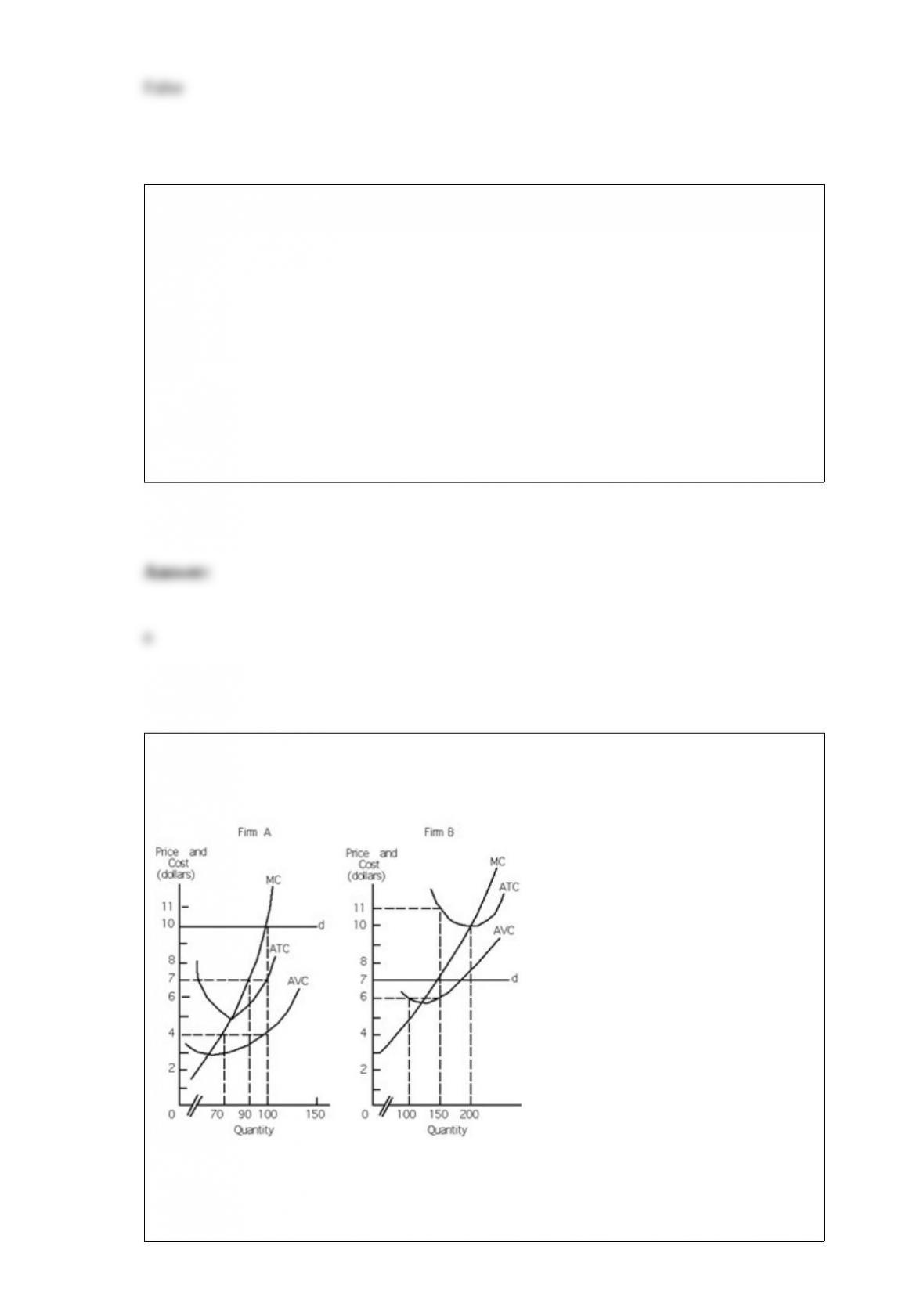
Exhibit 23-8
What is the total cost for firm A at the profit-maximizing (or loss-minimizing) level of
production?

a. $300
b. $700
c. $1,000
d. $400
A factor that does not contribute to income inequality is
a. innate abilities and attributes.
b. the amount of work a person chooses to do.
c. education and training.
d. luck.
e. none of the above; that is, all factors contribute to income inequality.
According to the Coase theorem, under certain conditions the market can internalize
externalities.
a. True
b. False
Which of the following can bring about an increase in the demand for labor?
a. an increase in the demand for the product that labor produces
b. an increase in the marginal physical product of labor
c. a decrease in the price of labor (wage rate)
d. a and b
e. a, b, and c
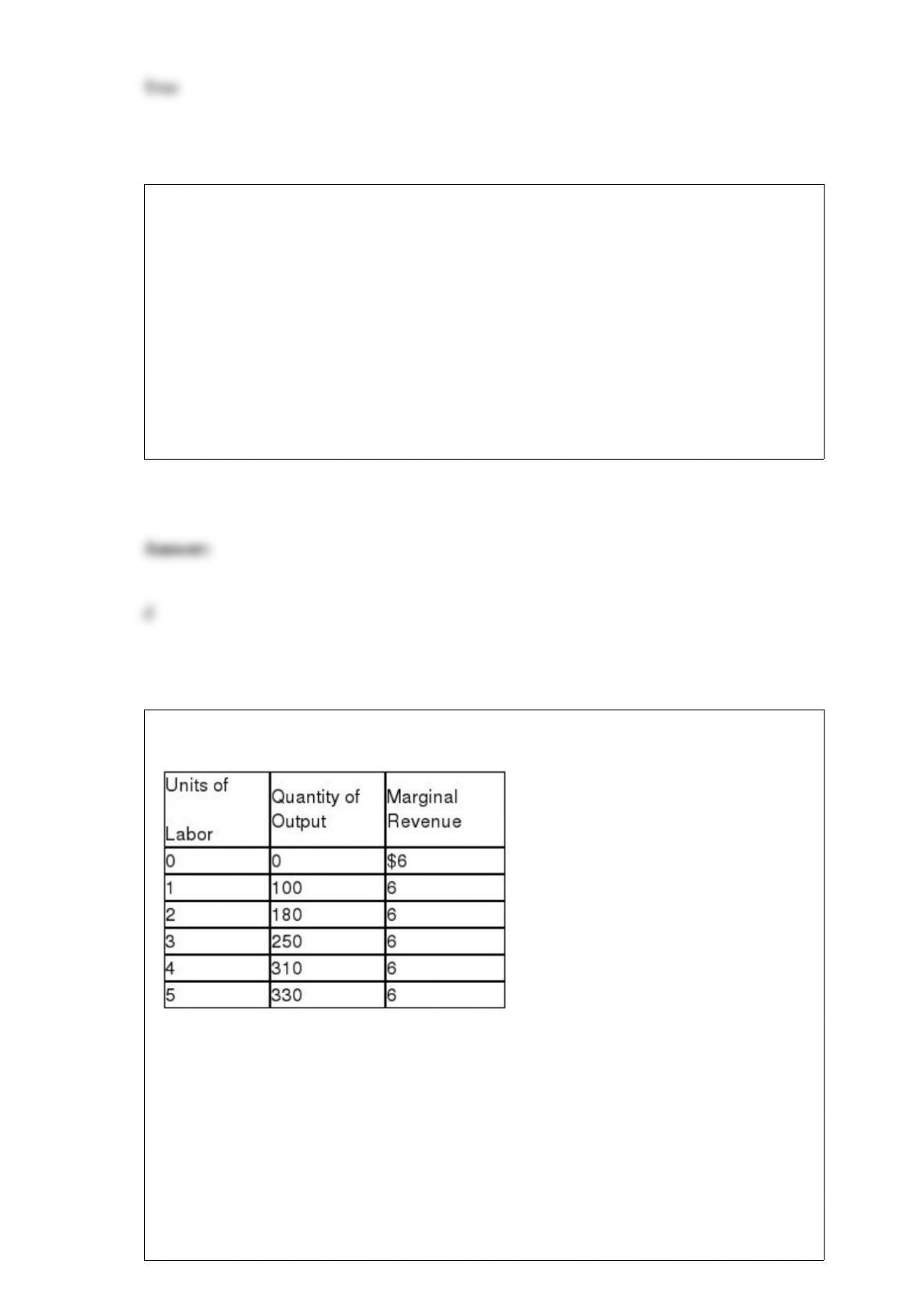
Exhibit 27-5
Assume that the firm is a factor price taker and that the price of a unit of labor is
constant at $480. The firm should hire __________ of labor.
a. one unit
b. two units
c. three units
d. four units
e. five units
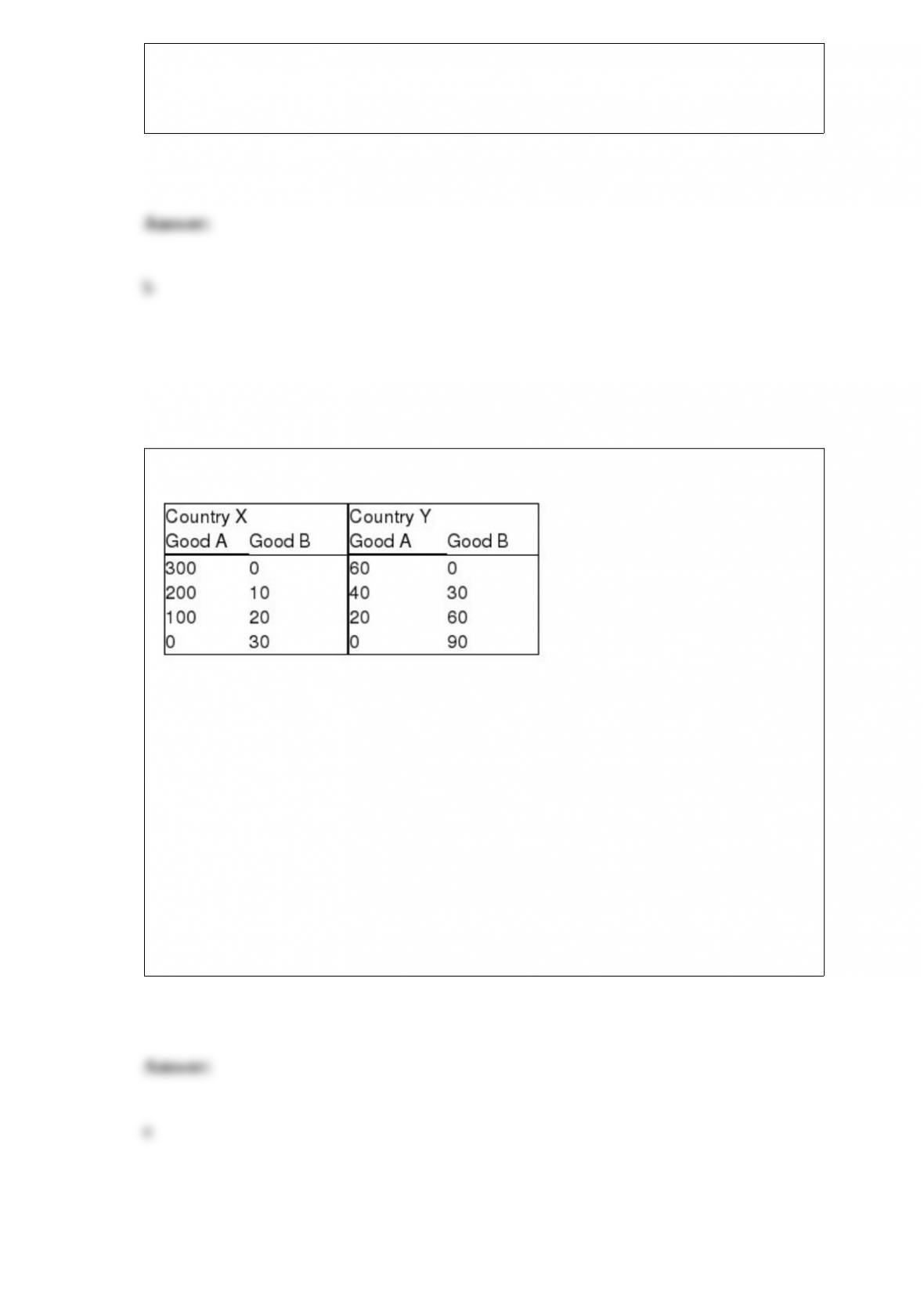
Exhibit 34-9
For country X, the opportunity cost of producing one unit of good B is __________
unit(s) of good A.
a. 3
b. 1/10
c. 1/2
d. 1/3
e. 10