
1) the opec nations during the 1970s manifested their market power by utilizing:
a.export tariffs levied for revenue purposes
b.export tariffs levied for protective purposes
c.import tariffs levied for protective purposes
d.import tariffs levied for revenue purposes
2) long-run determinants of exchange rate include labor productivity levels, inflation
rates, consumer preferences for goods and services, and trade barriers.
a.true
b.false
3) ____ attempt to produce a fair and free-trading environment in which there exists a
level playing field.
a.trade-remedy laws
b.industrial policies
c.strategic trade policies
d.economic sanctions
4) a tax of 20 cents per unit of imported cheese would be an example of:
a.compound tariff
b.effective tariff
c.ad valorem tariff
d.specific tariff

5) throughout the post-world war ii era, the importance of tariffs as a trade barrier has:
a.increased
b.decreased
c.remained the same
d.none of the above
6) government subsidies may take the form of all of these except:
a.cash disbursements
b.tax breaks
c.bank credits
d.insurance arrangements
7) for an american investor, the expected rate of return on european securities depends
on all of the following factors except the:
a.rate of return on equivalent american securities
b.the current exchange rate between the dollar and the pound
c.exchange rate anticipated to prevail when the securities mature
d.interest rate paid on european securities
8) the u.s. balance of trade is determined by:
a.exchange rates
b.growth of economies overseas
c.relative prices in world markets
d.all of the above
9) with floating exchange rates, payments imbalances tend to be corrected by
market-induced fluctuations in the exchange rate, and the need for exchange-rate
stabilization and international reserves disappears.
a.true
b.false

10) with trade, a country will maximize its satisfaction when it:
a.moves to the highest possible indifference curve
b.forces the marginal rate of substitution to its lowest possible value
c.consumes more of both goods than it does in autarky
d.finds its marginal rate of substitution exceeding its marginal rate of transformation
11) “the equilibrium relative commodity price at which trade takes place is determined
by the conditions of demand and supply for each commodity in both nations. other
things being equal, the nation with the more intense demand for the other nation’s
exported good will gain less from trade than the nation with the less intense demand.”
this statement was first proposed by:
a.alfred marshall with offer curve analysis
b.john stuart mill with the theory of reciprocal demand
c.adam smith with the theory of absolute advantage
d.david ricardo with the theory of comparative advantage
12) when increases in nonrestraint supply offset part of the cutback in shipments that
occur under an export quota, the overall inefficiency loss for the importing country is
less than that which would have occurred in the absence of nonrestrained exports.
a.true
b.false
13) figure 13.4. canadian economy under a fixed exchange rate system
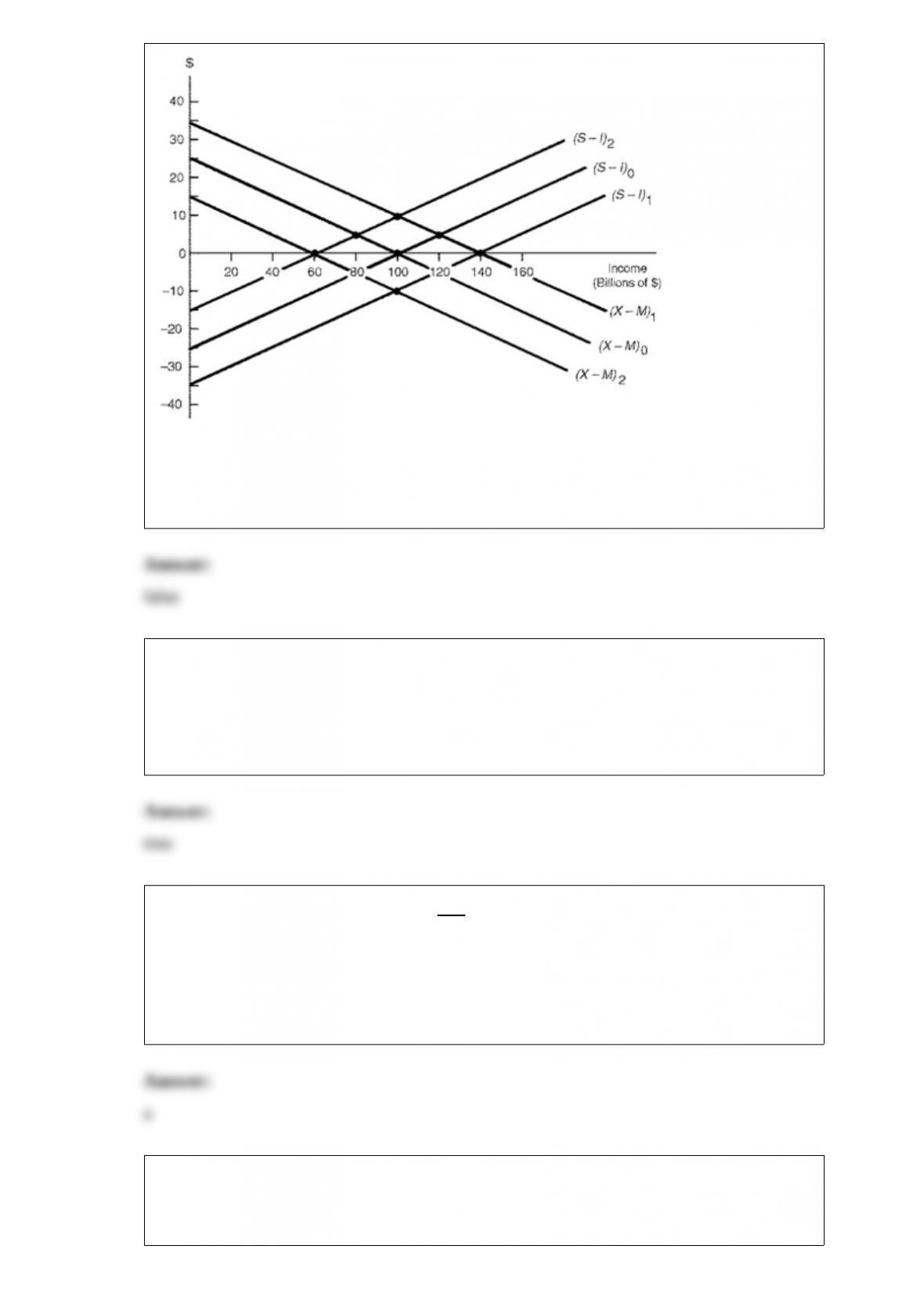
referring to figure 13.4, canada’s marginal propensity to save equals 0.25 and marginal
propensity to import equal 0.5.
a.true
b.false
14) the international monetary fund has sometimes demanded that financially-troubled
nations, that borrow from the imf, undergo austerity programs including slashing of
public spending and private consumption.
a.true
b.false
15) suppose sweden’s inflation rate is less than that of its trading partner. under a
floating exchange rate system, sweden would experience a:
a.appreciation in its currency
b.depreciation in its currency
c.fall in the level of its exports
d.rise in the level of its imports
16) the absorption approach to currency depreciation focuses on the
a.purchasing power of money
b.relative price effects

c.income effects
d.price elasticity of demand
17) the u.s. dollar is generally regarded as the major “key currency” of the international
monetary system.
a.true
b.false
18) countervailing duties are intended to neutralize any unfair advantage that foreign
exporters might gain over domestic producers because of foreign:
a.tariffs
b.subsidies
c.quotas
d.buy-national policies
19) a subsidy granted to import-competing producers is intended to lead to increased
domestic production and decreased imports for the home country.
a.true
b.false
20) during the last century, the relative importance of international trade for the u.s. has:
a.significantly increased
b.slightly increased
c.significantly decreased
d.slightly decreased