1) The assumption that the legal reserve ratio is 20 percent. Suppose that the Fed sells
$500 of government securities to commercial banks (paid for out of commercial bank
reserves) and buys $500 of securities from individuals, who deposit the cash in
checking accounts.
As a result of the above transactions, reserves in the banking system will:
A.remain unchanged.
B.rise by $100.
C.fall by $100.
D.rise by $1,000.
2)
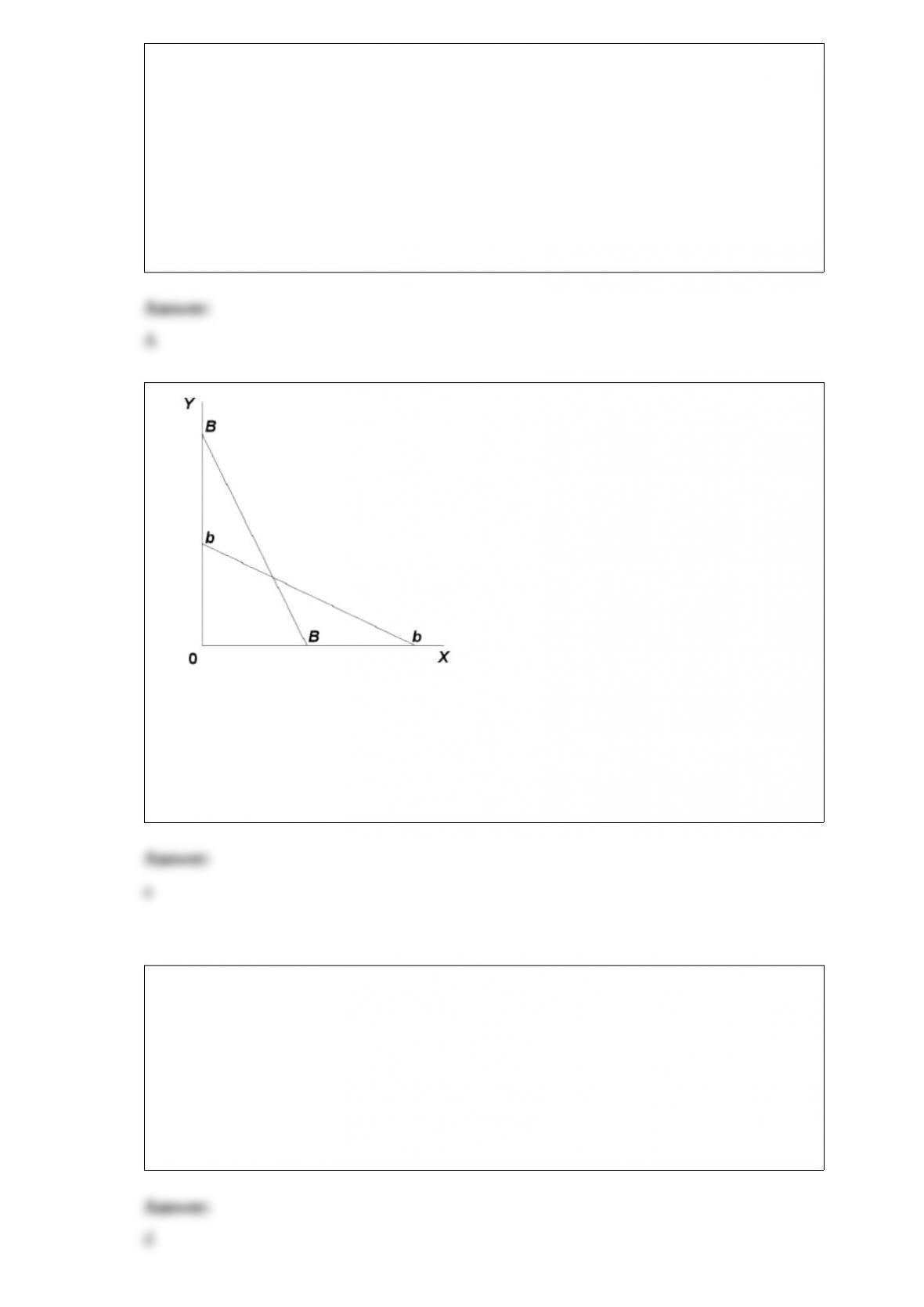
if the budget line shifts from bb to bb in the above diagram we can infer that the:
a.price of y has increased and the price of x has decreased.
b.price of y has decreased and the price of x has increased.
c.prices of both x and y have increased.
d.prices of both x and y have decreased.
3) which of the following factors has contributed to rising health care prices in the
united states?
a.the supply of physicians per 100,000 people has decreased since 1975.
b.productivity growth in the health care industry has been negative in recent years.
c.improvements in medical technology have significantly increased the number of
patients that can be treated each year.
d.the supply of physicians per 100,000 people has risen since 1975, but not as fast as
the increase in the demand for physicians’ services.
4) When the Fed auctions and loans reserves using the term auction facility, what
determines the interest rate that will be charged for those reserves?
A.The interest rate of the highest bidder.
B.The interest rate of the lowest bidder whose bid is accepted.
C.The interest rate of the lowest bidder.
D.Each bank with an accepted bid is charged whatever interest rate it bid.
5) total fixed cost (tfc):
a.falls as the firm expands output from zero, but eventually rises.
b.falls continuously as total output expands.
c.varies directly with total output.
d.does not change as total output increases or decreases.
6) Wealth in the United States is:
A.distributed in a way that reduces the degree of income inequality.
B.more unequally distributed than is income.
C.less unequally distributed than is income.
D.distributed in a way that has no effect on income inequality.
7)
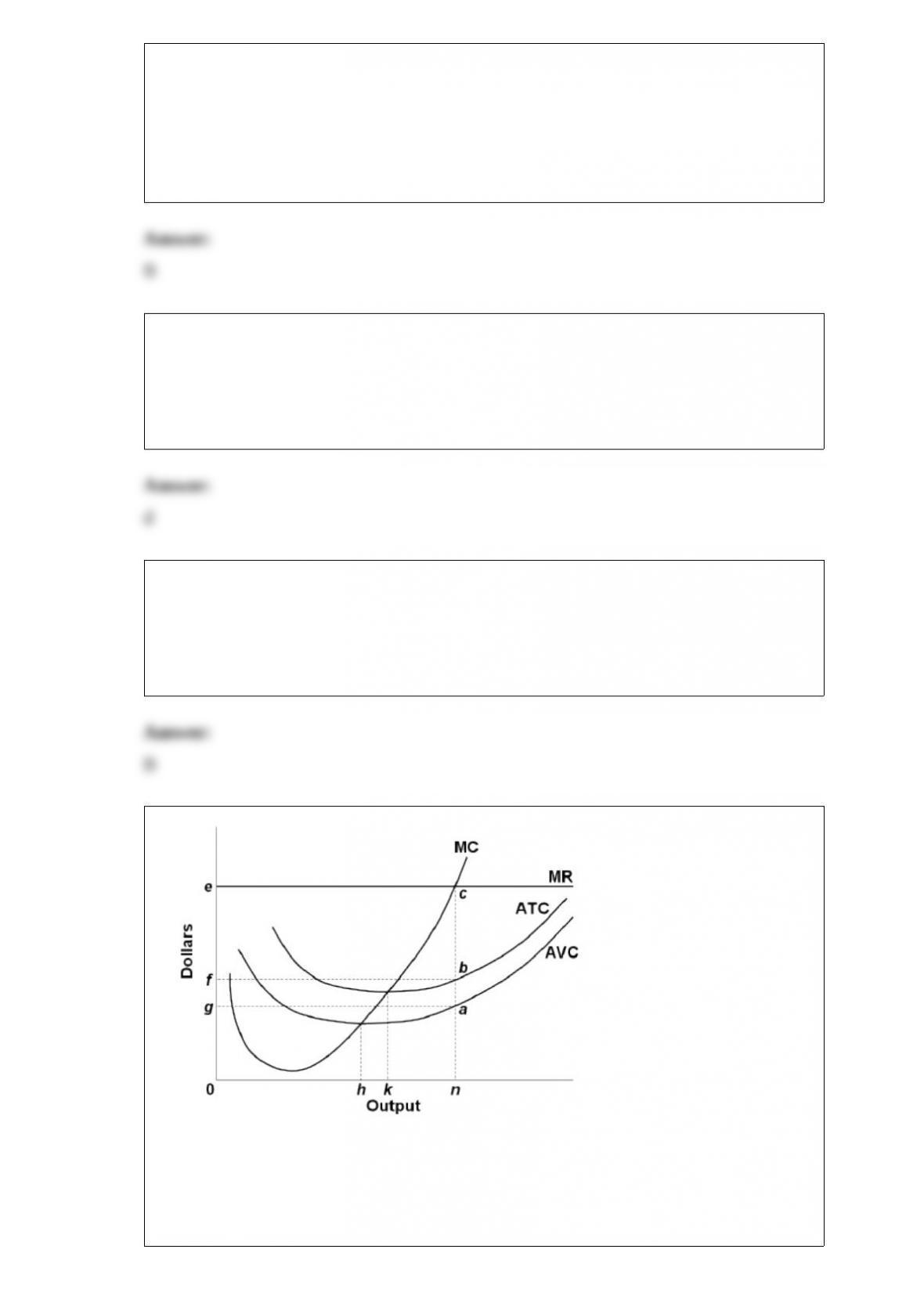
refer to the above diagram. for any level of output, total fixed cost:
a.is fgab
b.is 0gan
c.is ba
d.is efbc

8) which of the following is not seen by economists as an underlying cause of business
cycle fluctuations?
a.unexpected financial bubbles that eventually burst.
b.shocks to the money supply by the nation’s central bank.
c.supply shocks caused by major innovations.
d.all of the above are identified as causes of business cycle changes.
9) the demand curve shows the relationship between:
a.money income and quantity demanded.
b.price and production costs.
c.price and quantity demanded.
d.consumer tastes and the quantity demanded.
10) Suppose Slow Ketchup requires that, as a condition of purchase, all restaurants
using its product must buy and make available its new sales product. This arrangement
is an example of:
A.price fixing.
B.an interlocking directive.
C.a tying contract.
D.price discrimination.
11) One policy dilemma posed by cost-push inflation is that:
A.an increase in aggregate demand will increase inflation and the unemployment rate
simultaneously.
B.tax rates can be reduced without lowering tax revenues.
C.the reduction of aggregate demand to restrain inflation will cause a further reduction
in the real GDP.
D.the adjustment of aggregate demand can neither increase real GDP nor reduce
inflation.
12) the diamond-water paradox occurs because:
a.the price of a product is related to its total utility, not its marginal utility.
b.the price of a product is related to its marginal utility, not its total utility.
c.water is, in fact, very scarce in certain regions of the world.
d.diamonds are more useful than water.
13)
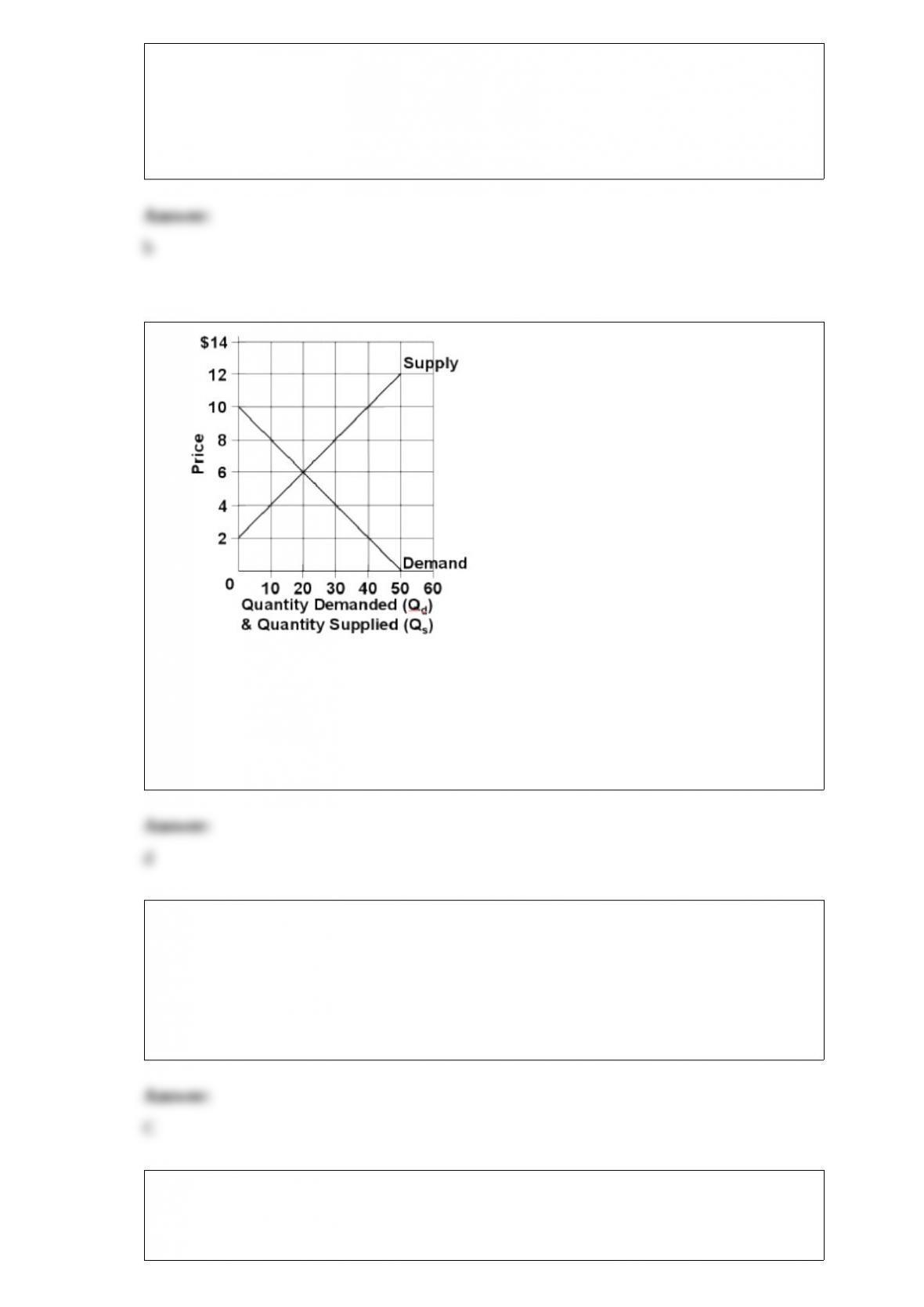
refer to the above graph. using qs for quantity supplied and p for price, which of the
following equations correctly states the supply of this product?
a.p = 4 + .2qs.
b.p = 60/qs.
c.p = 10qs – 2p.
d.p = 2 + .2qs.
14) A higher wage could result in a lower labor cost per unit of output than a lower
wage if the higher wage:
A.is accompanied by an offsetting decline in fringe benefits.
B.increases supervision costs.
C.reduces job turnover.
D.increases worker absenteeism.
15) the demand for a product is inelastic with respect to price if:
a.consumers are largely unresponsive to a per unit price change.
b.the elasticity coefficient is greater than 1.

c.a drop in price is accompanied by a decrease in the quantity demanded.
d.a drop in price is accompanied by an increase in the quantity demanded.